


"The World's Loudest Banjo Player"...Ray Montana of Bacon & Day Montana banjo and Vaudeville fame.
His son created the Archie comic books and newspaper funny page inclusions.
Every so often grandson Ray shows up at a jam playing fine bass.
Their family still has old Ray's Ne Plus Ultra #6 (all ebony) plectrum banjo.
Edited by - steve davis on 10/02/2026 14:34:09


quote:
Originally posted by Old HickoryNot any one person's job to know enough about all the styles of banjo to have opinions on essential recordings. Those who participated listed their opinions of essential recordings for the type of playing they're/we're familiar with.
In regard to the OP's specific request for lists that reflect the full range of banjo history it is revealing that every list contributed to a topic on a banjo website is exclusively U.S. I don't buy the 'not everyone is an expert' excuse. In regard to banjo history a person doesn't need to be an expert to know that the banjo story was equally and independently the product of U.S and U.K. popular activity c.1843- 1930. The introduction of the banjo to England by American touring musicians was a 'genie out of the bottle' moment. Subsequent to that very early 1843 introduction banjo playing and repertoire developed simultaneously and independently in the U.S. and U.K.; not secondary or subservient to the U.S. Simultaneous, separate development (with mutual influence) shaped by the British social context.
Your comment really only holds up if you are saying that American banjo players aren't aware of this duel regional development. That would be an immense gap in their undestanding (and respect for) the history of the banjo.
The reason for the incredulity this statement is met with here is the extent to which banjo history has been rewritten by Americans to build the totem of the banjo as solely America's instrument. What is external to this narrative is minimised to the point of neglect. The absurdity from an English perspective is not American disinterest, it is how this selective narrative denies English an understanding of the extent of their own unique banjo heritage. Since the 1960's this incomplete historic narrative has convinced British interest that the banjo is bluegrass and old-time to the neglect of our own historic genius. It is a niche example of the process of dominant narrative in plain sight. Sadly.
Edited by - EEB on 10/02/2026 15:02:48
I enjoy playing old-time but it is not and never can be a form that I as an English musician can have cultural ownership of. It is not my heritage.
My cultural ownership and banjo heritage and repertoire is Spratt, Ballantine, Vane, F.G. Chapman, Daniels, Angel, Heath, Tilley, Read, Nice, Spencer, Newton, Payne, Morris, Pepper, Woods, Ellis, Greenop and many, many more. Through to the recorded banjoists of the 1900's- 1930's and later in the 1950's the late-bloom genius of Middleton, and R.W White. Also the thousands of grassroots composers of unpublished original English banjo music.
Edited by - EEB on 10/02/2026 15:35:07
The OP asked for albums that fill out and inform about banjo history.
I can suggest a continent. India.
The unique scale of popularity of the banjo in England gave rise to the volume importation of the banjo and banjo sheet music, largely from London via India’s port cities, to cater for the leisure and recreation of the vast colonial administration and military. Music businesses were established in situ in Calcutta, Bombay and Delhi. Indigenous skilled Indian artisans were employed to meet demand.
Is this fact minimised in versions of the history of the banjo? No. It is entirely absent as if it never happened. Astonishingly not a single reference to this long-standing and large scale aspect of the banjo narrative appears in current historical texts on the banjo.
Edited by - EEB on 10/03/2026 02:05:36
Nobody credited Pete Seeger in this topic???
My vote for Pete
as far as I Know has been the first to write a banjo method and he has made a big work to popularize banjo
https://banjonews.com/2014-03/pete_seeger_and_the_5-string_revival.html
Edited by - banjopaolo on 10/03/2026 05:22:16
quote:
Originally posted by EEB
In regard to the OP's specific request for lists that reflect the full range of banjo history it is revealing that every list contributed to a topic on a banjo website is exclusively U.S. I don't buy the 'not everyone is an expert' excuse. In regard to banjo history a person doesn't need to be an expert to know that the banjo story was equally and independently the product of U.S and U.K. popular activity c.1843- 1930.
So everyone, everywhere, who plays banjo has a societal obligation to know the "essential banjo listening" in all styles in all places where banjo evolved parallel to and independently of its development in the U.S.?
I won't be shamed into admitting I have no idea what the *essential* banjo listening is for styles of banjo I don't play or listen to. This is, after all, exactly and actually what the OP sked for: "What albums do YOU consider essential banjo listening? The albums you would play to show someone 'This is what [insert style] is all about.' "
Maybe you don't buy the "not everyone is an expert" excuse. But how, then, does someone name the *essential* listening in worldwide styles of play they're not even familiar with, let alone expert in?
I'm familiar with Canadian Nick Hornbuckle's amazing two-finger work that sounds like three-finger though not sufficiently familiar with his work to name his recordings. I'm also familiar with the Irish band We Banjo 3 that included no 5-string. Bought one or two of their records early in our trip to Ireland and listened in the car every day. I forgot to mention these artists. So shoot me.
Edited by - Old Hickory on 10/03/2026 06:53:01
quote:
Originally posted by banjopaoloNobody credited Pete Seeger in this topic???
My vote for Pete
Absolutely, the class will cover Pete (Rainbow Quest, the method/LP) and the folk revival more broadly. Pete has so many albums, it's hard to choose just one or two. Sing Out with Pete!, perhaps?
I should have perhaps been more clear, by "essential" I do not necessarily mean "the best of the best musically" (although it certainly could be) or your personal choice for a desert island album. I mean albums that are of special artistic/historical/commercial significance. I'm surprised at the relative lack of references to influential figures in the OT world -- Kazee, Boggs, Lunsford, Creed, Smith, Ashley, Proffitt, etc.
quote:
Originally posted by EEBI enjoy playing old-time but it is not and never can be a form that I as an English musician can have cultural ownership of. It is not my heritage.
I'm an American-born three-finger, mostly bluegrass, 5-string player. No form of banjo is my cultural heritage. I was certainly exposed to traditional American music by virtue of being born here and growing up in an area that produced several major bluegrass, old-time, and country music artists. But it wasn't what my Jewish Russian-born mother or son of immigrants father grew up listening to in the Bronx. It wasn't played in our house.
For me, it's an adopted art form. I took up guitar at 13 in 1964 because of the folk boom and the Beatles. I started playing banjo 8 years later mostly because I liked the sound. I kept at it early on because I got very good very fast (as in being sent home from my first lesson with "Earl's Breakdown"), so learning was self-reinforcing. Banjo is not the only instrument I play. Banjo music is not the only music I listen to.
What obligation do I have to myself or others to know anything (let alone enough) about all the ways my instruments are played so that I can name the essential listening for banjo, guitar and electric bass? I believe it's none.
quote:
Originally posted by banjoboyd
I should have perhaps been more clear, by "essential" I do not necessarily mean "the best of the best musically" (although it certainly could be) or your personal choice for a desert island album. I mean albums that are of special artistic/historical/commercial significance. I'm surprised at the relative lack of references to influential figures in the OT world -- Kazee, Boggs, Lunsford, Creed, Smith, Ashley, Proffitt, etc.
I believe that's a reflection of who participated. People can't recommend the essential listening for styles of music they don't know well or may not even listen to.
To get input from people familiar with other styles, you might revise the title of this thread to make it clear you're looking for essential listening in all styles of banjo playing on all styles of banjo. Or you might post a message in the forums on other styles with a link to this discussion (since double-posting isn't allowed).
Yes, you did state in your original post that you're looking for essential listening in all styles of banjo. But yours isn't the first post, and won't be the last, that people didn't respond to in exactly the way hoped for by the poster.
quote:
Originally posted by Dan GellertPete Seeger's "Goofing Off Suite" belongs on the list for sure.
Somebody mentioned him.... 
IMO, no other individual has ever had as wide an impact on the history of the banjo. (Yes, Earl's is arguably deeper, but....)
AFAIK, Pete's adaptation of lute tablature for his banjo book was the origin of all modern string-instrument tablature.
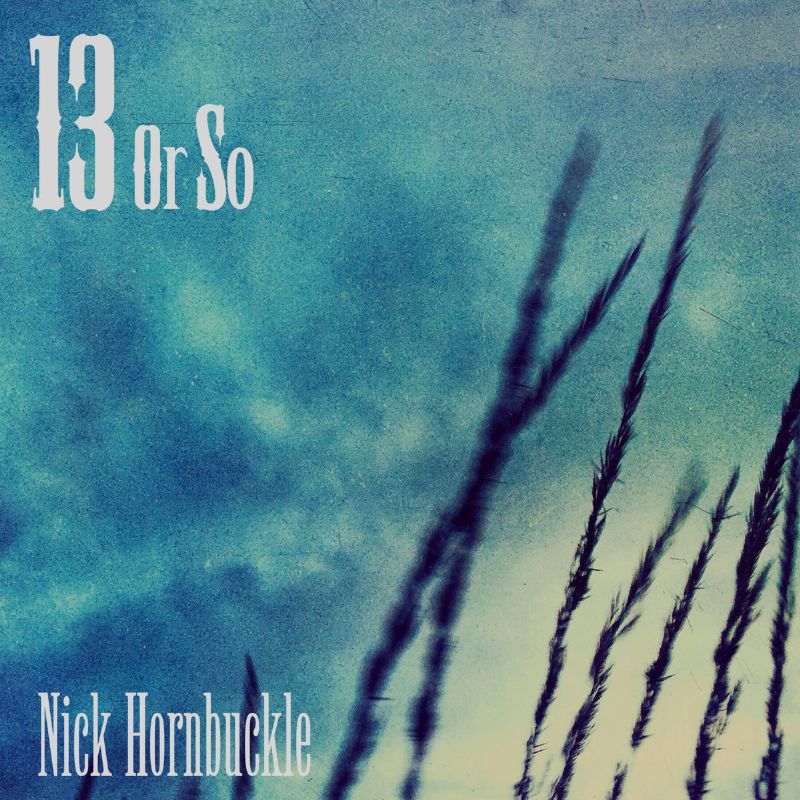
Nick Hornbuckle’s album of excellent original tunes
Ken — That is a good suggestion. I will share it to the other forums.
"I'm surprised at the relative lack of references to influential figures in the OT world -- Kazee, Boggs, Lunsford, Creed, Smith, Ashley, Proffitt, etc. "
What does "old time" mean to you? What differentiates old time from some other style?
Is this a test?
quote:
Originally posted by Alex Z"I'm surprised at the relative lack of references to influential figures in the OT world -- Kazee, Boggs, Lunsford, Creed, Smith, Ashley, Proffitt, etc. "
What does "old time" mean to you? What differentiates old time from some other style?
I am not the arbiter of what is and isn't old time, so my opinion on the subject is not really relevant. I will instead defer to the definition given in the Grove/Oxford dictionary of music:
A loosely defined term that is applied variously to older (i.e. pre–World War II) forms of country music, to a variety of traditional fiddling styles, and to modern performers who draw on or seek to perpetuate older styles. The history of the term has yet to be fully researched, but it was being used at least as early as the mid-1920s...The term was also used liberally during the nationwide, nostalgia-driven craze for "old-time" fiddling and dancing that was instigated by industrialist Henry Ford; this fad peaked in 1926. The term gained renewed currency during the folk revival when northern, urban musicians and fans developed an interest in the older forms of rural music. One key use of the term is to distinguish the older String band style of music from the more modern form of Bluegrass music...
I suppose it depends on who you ask and their life experiences.
quote:
Originally posted by Old HickoryI'm an American-born three-finger, mostly bluegrass, 5-string player. No form of banjo is my cultural heritage. I was certainly exposed to traditional American music by virtue of being born here and growing up in an area that produced several major bluegrass, old-time, and country music artists. But it wasn't what my Jewish Russian-born mother or son of immigrants father grew up listening to in the Bronx. It wasn't played in our house.For me, it's an adopted art form. I took up guitar at 13 in 1964 because of the folk boom and the Beatles. I started playing banjo 8 years later mostly because I liked the sound. I kept at it early on because I got very good very fast (as in being sent home from my first lesson with "Earl's Breakdown"), so learning was self-reinforcing. Banjo is not the only instrument I play. Banjo music is not the only music I listen to.
We all have a more complex relationship with culture. We can choose not to engage with specific elements of our cultural heritage. But the totality of our cultural heritage exists whether we engage with it or not. We don't individually define what is or isn't imbued with heritage status.
As an example: I've never served in the British armed forces. From day to day the existence of British Military heritage has limited relevance to how I live my life. Yet when I visit the RAF Museum at Hendon or Duxford to get a close-up view of the aircraft types that my father flew I'm then engaging with my military heritage which was present reality throughout my life.
Does that make sense?
Edited by - EEB on 10/03/2026 09:54:41
' The albums you would play to show someone "This is what [insert style] is all about." I am looking at the whole gamut of banjo playing, including tenor/plectrum styles and contemporary/experimental/fusion contexts.'
If you have a list of banjo playing styles you want to include in the course, listing them here would be a good way for respondents to recommend recordings of those styles.
If the list is of musical styles that include a banjo, that works too.
quote:
Originally posted by EEBquote:
Originally posted by Old HickoryNot any one person's job to know enough about all the styles of banjo to have opinions on essential recordings. Those who participated listed their opinions of essential recordings for the type of playing they're/we're familiar with.In regard to the OP's specific request for lists that reflect the full range of banjo history it is revealing that every list contributed to a topic on a banjo website is exclusively U.S. I don't buy the 'not everyone is an expert' excuse. In regard to banjo history a person doesn't need to be an expert to know that the banjo story was equally and independently the product of U.S and U.K. popular activity c.1843- 1930. The introduction of the banjo to England by American touring musicians was a 'genie out of the bottle' moment. Subsequent to that very early 1843 introduction banjo playing and repertoire developed simultaneously and independently in the U.S. and U.K.; not secondary or subservient to the U.S. Simultaneous, separate development (with mutual influence) shaped by the British social context.
Your comment really only holds up if you are saying that American banjo players aren't aware of this duel regional development. That would be an immense gap in their undestanding (and respect for) the history of the banjo.The reason for the incredulity this statement is met with here is the extent to which banjo history has been rewritten by Americans to build the totem of the banjo as solely America's instrument. What is external to this narrative is minimised to the point of neglect. The absurdity from an English perspective is not American disinterest, it is how this selective narrative denies English an understanding of the extent of their own unique banjo heritage. Since the 1960's this incomplete historic narrative has convinced British interest that the banjo is bluegrass and old-time to the neglect of our own historic genius. It is a niche example of the process of dominant narrative in plain sight. Sadly.
I think it is this level of snobbery and hollier-than-thou-ness that prevents a vast majority of banjoists from this side of the Atlantic from either caring or even wanting to dig deeper into historical banjo stuff from the UK.
That, and the fact that the music you refer to simply never comes up at all for most of us in our formative banjo-learning years.
People want to play what they like hearing, mostly. You can't like what you've never heard.
You are doing a great disservice to the type of music you claim to champion.
My cultural heritage resides in Port Clyde Maine growing up in a tiny fishing village,surrounded by relatives and friends that play music and also built boats and caught sardines,groundfish and lobsters.
I don't know much about England,but my Great Grandfather on my mother's side,Thomas Underwood, came here from Yorkshire.
quote:
Originally posted by ChunoTheDogI think it is this level of snobbery and hollier-than-thou-ness that prevents a vast majority of banjoists from this side of the Atlantic from either caring or even wanting to dig deeper into historical banjo stuff from the UK.
That, and the fact that the music you refer to simply never comes up at all for most of us in our formative banjo-learning years.
People want to play what they like hearing, mostly. You can't like what you've never heard.
You are doing a great disservice to the type of music you claim to champion.
The neglect and disservice to English banjo culture predates me by 40 years.
Address the points I've raised and I might take time to reply. But resorting to ad hominem simply demonstrates that you have nothing worthwhile to contribute.
Edited by - EEB on 10/03/2026 11:33:09
Look up uncle Dave macon, Grandpa Jones and Stringbean. The Carolina chocolate drops, and Rhiannon Giddens would be a good source and don't forget all the minstrel history, even though some find it " offensive" it is still a part of history ,warts and all. In the northeast there is a tradition called the "Mummers" who play plectrum banjos and have a big parade on new years day in Philadelphia. Local t.v. stations used to air commercials selling albums of these string bands. There has also been much written about the African roots of the banjo. PBS aired a documentary called "give me the banjo" that traced the history of the banjo and different styles. Good luck with the class and look forward to hearing about your progress.
quote:
Originally posted by EEB
We all have a more complex relationship with culture. We can choose not to engage with specific elements of our cultural heritage. But the totality of our cultural heritage exists whether we engage with it or not. We don't individually define what is or isn't imbued with heritage status.
My question remains unanswered: For those of us who submitted artists or recordings that we considered essential listening for the types of banjo music we're familiar with, how was it incumbent upon any of us to offer essential listening for types of banjo music we're not familiar with?
And does simply being unaware of or uninterested in something the same as choosing not to engage with it? To what extent is American mountain music part of my cultural heritage? I believe a stronger case can be made for no than yes. My family has only been in this region since WWII. And wasn't in America for very long before that.
I have to admit I enjoy playing any Beatles song.
My parents performed in a minstrel troupe.
They performed in Grange,Odd Fellows and Mason halls and used the money earned to pay for the hot lunch program at our grammar school in Tenants Harbor.Nice kitchen and three local ladies making real food every day.
Edited by - steve davis on 10/03/2026 17:06:06
quote:
Originally posted by Old Hickoryquote:
Originally posted by EEB
We all have a more complex relationship with culture. We can choose not to engage with specific elements of our cultural heritage. But the totality of our cultural heritage exists whether we engage with it or not. We don't individually define what is or isn't imbued with heritage status.My question remains unanswered: For those of us who submitted artists or recordings that we considered essential listening for the types of banjo music we're familiar with, how was it incumbent upon any of us to offer essential listening for types of banjo music we're not familiar with?
And does simply being unaware of or uninterested in something the same as choosing not to engage with it? To what extent is American mountain music part of my cultural heritage? I believe a stronger case can be made for no than yes. My family has only been in this region since WWII. And wasn't in America for very long before that.
Nowhere in my posts did I refer to anything being incumbent on anyone. I commented that an absence - specifically in relation to a banjo historical request - was revealing. Two very different concepts. The former would be dictatorial (which by upbringing and personality I'm the furthest from being); the latter is an observation.
The specific relationship to banjo history is the inherent relevant factor. If Ethan had instead asked for banjo player's favourite or personally influential album/recording that factor vanishes.
Do you now see the significant difference? In practice it appears that a number of posts do only refer to the poster's most influential or judged 'best' recording. That wasn't actually the OP's purpose in requesting.
Turn it around and I may not have in-depth knowledge of bluegrass but if asked to compile a list of recordings in relation to the full gamut of banjo history I would at least refer to what I know e.g Earl Scruggs, Greg Cahill, Special Consensus, Bela Fleck. That I get beaten-up on for an observation and told Americans 'aren't interested' and don't know anything about historical English banjo playing, ironically (and humorously) only reinforces the point I'm making.
My observation in relation specifically to the banjo's history is relevant (to the OP's request), polite and 100% valid.
nb. thankfully Ethan himself is aware of the historical importance of the English banjo context :-)
Edited by - EEB on 10/04/2026 02:10:56
Terms of Use | Privacy Policy | Privacy Consent (EU/GDPR Only)
Copyright 2026 Banjo Hangout. All Rights Reserved.


