


quote:
Originally posted by Mark Douglasquote:
Originally posted by EEBThe OP will be teaching an academic college unit where - by definition and academic accreditation - balanced factual context will be a core requirement. He even alluded to this using the phrase ‘…the whole gamut of banjo playing’.
15 replies so far and not one non-U.S banjoist. College education aims to broaden knowledge and understanding; not to perpetuate a selective and distorted view of a subject.
0/15 grade Fail (F).
Do you have any recorded suggestions?
Edited by - steve davis on 10/01/2026 07:10:45


quote:
Originally posted by Alex Z" . . . course on the banjo and its history"
So you might want a play list that illustrates the chronology of the styles of playing. Not just a variety of players.
I disagree with this approach for a number of reasons, but the main one in this case is that distinctions of technique (as opposed to overarching musical genre/style, geography, performance context, etc.) are of limited relevance to a general audience. Of course, I will discuss and demonstrate technique where appropriate, but "the banjo world is divided into camps based on how people move their fingers" is not the takeaway message here.
quote:
Originally posted by John YerxaNot a direct answer to your question, but if you haven't read this book I highly recommend - probably too thick for your students, but excellent background and perspective.
press.uillinois.edu/books/?id=p082849
And please include the Altamont recordings of Gribble, Lusk and York. The Black contribution is under appreciated.
Yes, I read it some time ago and was planning on revisiting it. I might assign a chapter (not the whole book) if it seems relevant.
And thanks for the Altamont recordings suggestion.
Edited by - banjoboyd on 10/01/2026 07:40:00
Do you have any recorded suggestions?
More to the point, do you? I'm more curious to read fellow banjo players suggestions that don't emanate from the usual cultural bubble of exclusive self-reference. Suggestions that actually refer to the full and inclusive banjo narrative.
Edited by - EEB on 10/01/2026 09:52:54
foggy mountain banjo album of course
vic jordans - banjo nashville album
belas - drive album
trischkas - banjoland album
john hartford - aereo- plain album
' 1st-year college course on the banjo and its history '
' The albums you would play to show someone "This is what [insert style] is all about." '
So, what do you mean by the "styles" that you want to insert?
Would that be styles of music, with examples that are played on a banjo? Or styles of banjo playing? Play lists would be quite different. Bela Fleck has played Bach pieces and Gershwin pieces on a banjo. What style(s) of music would these pieces fall under? What styles of banjo playing? Will the differences between Bach and Gershwin be a relevant topic in the course?
If the focus is history of the banjo, that history progressed around playing styles -- which seems to be what you're asking for: "This is what [insert style] is all about."
Maybe a little more explanation of how the course will progress. So far, most of the play recommendations are of favorite modern bluegrass-style pickers. The students are not a general audience -- they have decided they want to learn more about the banjo and its history.
Hope this helps.
County Records Clawhammer Banjo Vols. 1, 2, and 3.
Edited by - Noah Cline on 10/01/2026 10:42:36
Alex -- For example, "bluegrass" would be one category within the larger playlist. We can do this because bluegrass is a clearly defined musical practice with a distinct history and culture. That playlist would only include examples of bluegrass music, regardless of whether some bluegrass banjo players do other things. So Bela might make one in appearance the bluegrass category, a second appearance in a "fusion" category (e.g., the Flecktones, his Tabula Rasa album), and a third in a "classical" category (which will be separate from any examples of classical music arranged for the banjo from the turn of the 20th century). So it will be primarily organized around musical style/context/repertoire, and to a lesser extent time period. But I don't want to get ahead of myself assigning categories before I have a decent collection.
Students should know that playing with 3-fingers and picks on metal strings is standard practice for bluegrass. But these things are not exclusive or even original to bluegrass. Nor are the rudiments i.e. rolls that make up much of bluegrass banjo playing, for that matter. The problem with placing playing techniques in some kind of linear progression is that virtually every technique which has existed, still exists in some form. People didn't stop frailing when bluegrass appeared (and OT music and bluegrass have more in common than, say, contemporary clawhammer banjo and the 19th-century published stroke style repertoire despite the connection in technique). Progression also implies newer = better, which is not a position I take as a musicologist.
Edited by - banjoboyd on 10/01/2026 12:53:19
Let me suggest Ryan Cavanaugh, who used to be a member here. Although he started out in Bluegrass, he is gone as far with electric banjo and modern jazz as anybody I know.
Ethan, so the style is the style of the banjo music, not the style of the various techniques, nor the style of only the music itself apart from the instrument it is played on. That makes sense as a course offering, and provides a guide to the playlists you are asking for.
I think at some point someone will ask, "How'd they do that? How do they get that sound?" Then you'll have to bring in the ol' five string and show 'em.
The demo will differentiate the "history of the banjo" class from a "history of the violin" or some other instrument.
Hope all goes well -- and there's a waiting list for next semester's class!
For progressive bluegrass. Has 3 legends and knocks it out the park
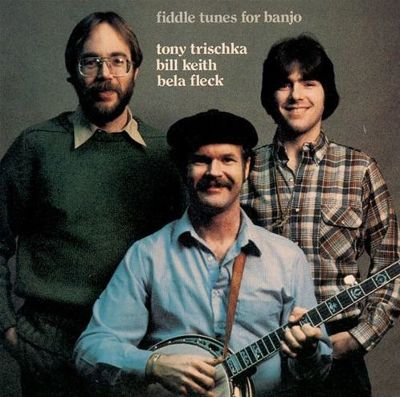
Edited by - pghmatt on 10/01/2026 21:20:40
quote:
Originally posted by banjoboydHi all. Next spring, I have the very special opportunity to teach a 1st-year college course on the banjo and its history. It will be lecture-based and probably have a mix of music and non-music majors. I will likely post additional threads in the upcoming weeks/months, but I figured a good place to start is to put together a course playlist.
What albums do YOU consider essential banjo listening? The albums you would play to show someone "This is what [insert style] is all about." I am looking at the whole gamut of banjo playing, including tenor/plectrum styles and contemporary/experimental/fusion contexts.
In accord with the historical perspective I'd suggest thematically exploring two main sound threads:
a) the grassroots activity that was the overwhelming impetus and active influence for the first c.100 years of white uptake.
b) the 'top-down', consumed, commercial activity that has been the overwhelming passive influence post-WW2
Students would need an understanding of where sound originates and why to gain and maintain consistent insight into the shape of a narrative over such a wide timespan, and in very differently structured societal contexts 1840-2026.
To that end recordings of grassroots (non-professional) banjoists could be examined in conjunction with the massive growth of commercial recording. This would likely not be a neat and simple 'early' and 'later' relationship. There are swathes of recordings of grassroots playing from before and within the era of commercial dominance. These are a prime resource from which to analyse behaviours. Getting students to assess the effect of these two key contexts would get to the heart of the arc of the banjo narrative in a way that is directly understandable via the origin of the banjo sound. And also how banjoist's diverse approach and behaviour has altered as a result of these changing patterns.
FRC collection, LoC, British Library, many and various university collections, home-recorded wax cylinders, digitised home reel-to-reel recordings, 16mm home movies, and the explosion of video and YouTube are all informative, accessible sources.
Edited by - EEB on 10/02/2026 02:02:29
The extraordinary ease of self-reference and projection facilitated by YouTube has never, to my knowledge, been 'reverse analysed’ i.e. the individual and isolated uploads quantified and related as collective data.
Digital savvy young students would relate to this medium and probably be all over it analytically in ways the lecturer probably had never conceived.
Give them the research grounding and let them at it…
Edited by - EEB on 10/02/2026 02:15:47
Any attempt to consolidate a comprehensive overview of the banjo has to encompass the context of those such as Rufus Kasey who continued living on a sharecropper plot in Bedford County, VA pre and post-war; the London Banjo Club finger-style player engaged with BMG banjo assessment and grading programme in the 1930’s; the kid in Knoxville, TN inspired by watching Flatt and Scruggs on TV in the 1950’s; the working class cotton spinner in East London in 1889 writing and publishing original banjo sheet music and the vast, now silent cohort of similar across continents.
Monumental task. But hugely worthwhile. I wish you and your students all the best.
Edited by - EEB on 10/02/2026 05:49:05
quote:
Originally posted by pghmattFor progressive bluegrass. Has 3 legends and knocks it out the park
I traveled to Cambridge and saw these guys play this album live at Johnathon Swift's.
Any history study would need to include minstrel banjo playing.
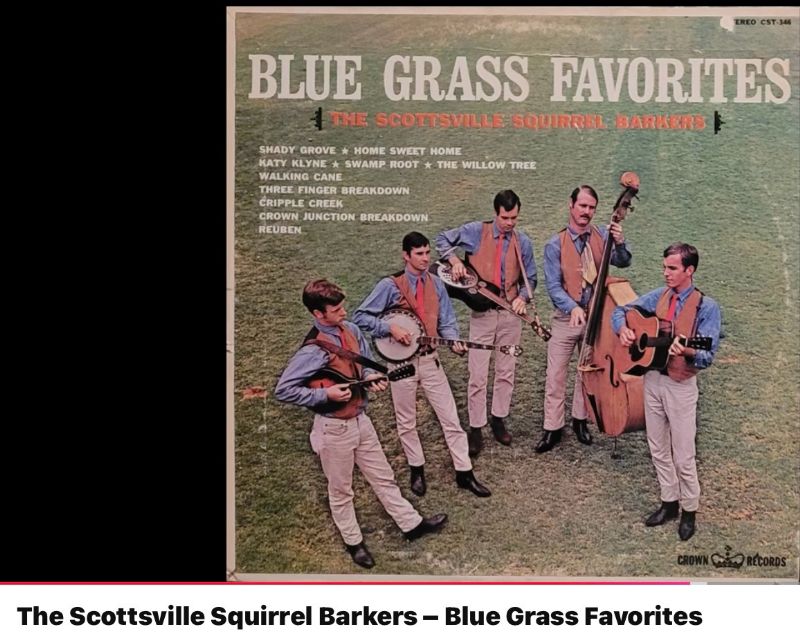
One of my first albums ,, Chris Hillman on mandolin,, Kenny Wertz on banjo.
Hillman talks a bit about it here : fb.watch/v/3VQFQaX1e/?fs=e
My former bandmate Richard Hood has opined that this is the best banjo album (despite its not technically being a banjo album): youtube.com/watch?v=Sy7pVSERf_...t_radio=1 .
Great album,Ira.
What a hoot reading the rolling captions.
The word lawyer was never mentioned in Philadelphia Lawyer.
A little late to the party but here's my suggestion, Let's Kick It by Ross Nickerson. Great rhythm feel especially on Cluck Old Hen.
Tongue-in-cheek, I'm wondering if a list of non-essential recordings would be somewhat shorter. 
Maybe the most commercially successful frailers before "Texas Hold'em":
Edited by - earlstanleycrowe on 10/02/2026 10:26:46
For some real “country music” I highly recommend the Fiddle and Banjo Recordings of Cousins, Joe and Odell Thompson.
quote:
Originally posted by EEBThe OP will be teaching an academic college unit where - by definition and academic accreditation - balanced factual context will be a core requirement. He even alluded to this using the phrase ‘…the whole gamut of banjo playing’.
15 replies so far and not one non-U.S banjoist. College education aims to broaden knowledge and understanding; not to perpetuate a selective and distorted view of a subject.
0/15 grade Fail (F).
Not any one person's job to know enough about all the styles of banjo to have opinions on essential recordings. Those who participated listed their opinions of essential recordings for the type of playing they're/we're familiar with.
What essential recordings of non-U.S. banjoists would you suggest?
quote:
Originally posted by EEB15 replies so far and not one non-U.S banjoist.
Martyjoe above listed Irish and English players.
Terms of Use | Privacy Policy | Privacy Consent (EU/GDPR Only)
Copyright 2026 Banjo Hangout. All Rights Reserved.


