DVD-quality lessons (including tabs/sheet music) available for immediate viewing on any device.
Take your playing to the next level with the help of a local or online banjo teacher.
Weekly newsletter includes free lessons, favorite member content, banjo news and more.
Premier Sponsors


|
Please note this is an archived topic, so it is locked and unable to be replied to. You may, however, start a new topic and refer to this topic with a link: http://www.banjohangout.org/archive/337943
mipake - Posted - 12/22/2017: 11:56:00
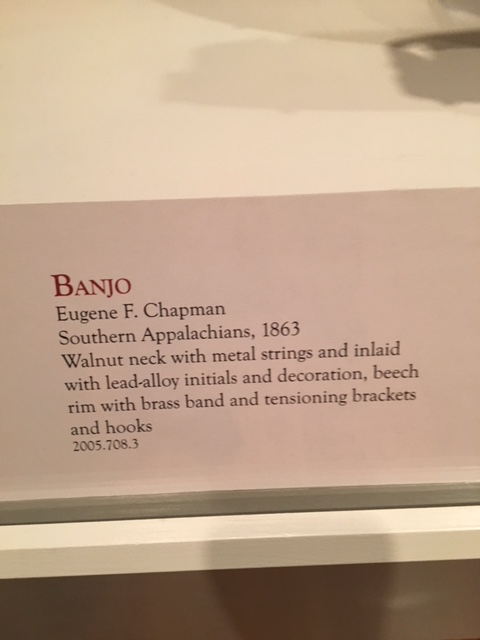
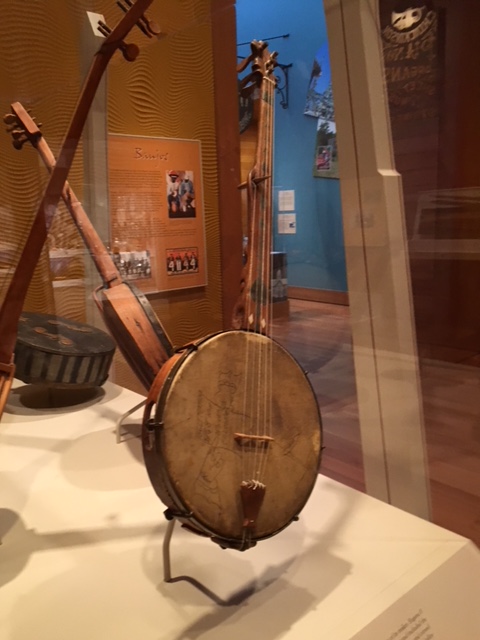
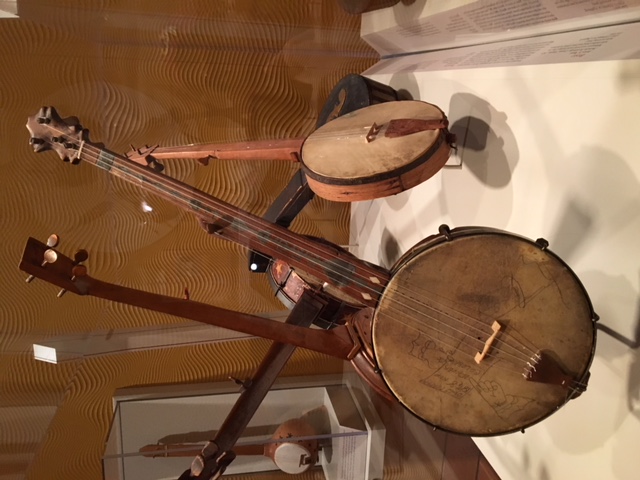
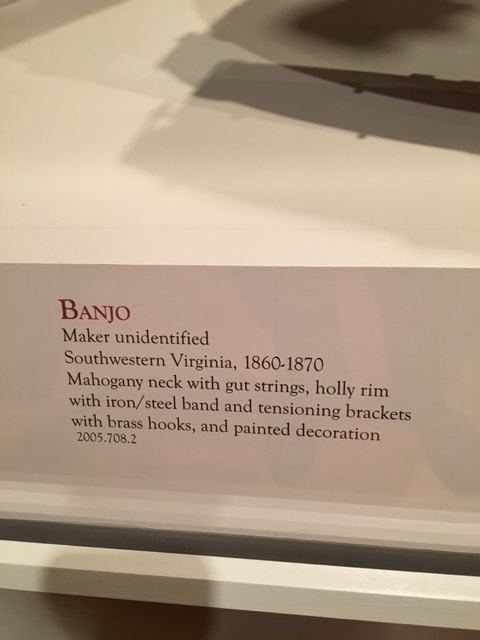
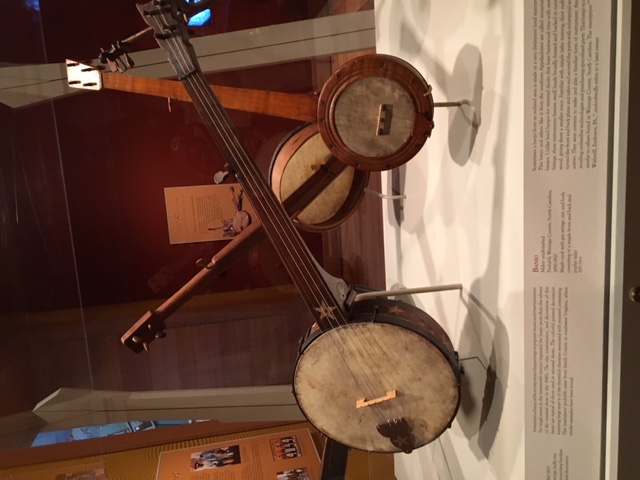
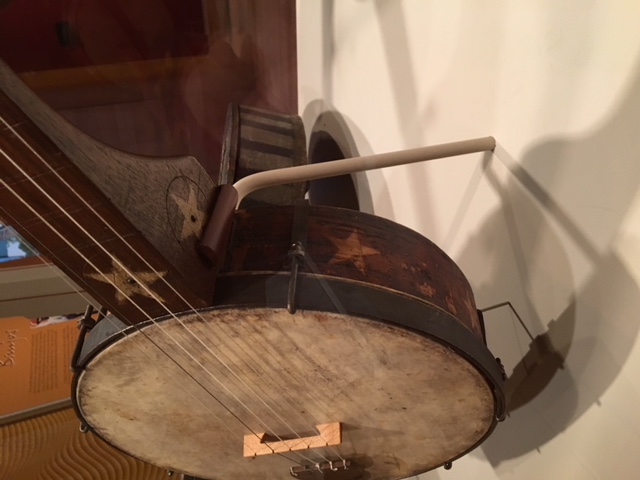
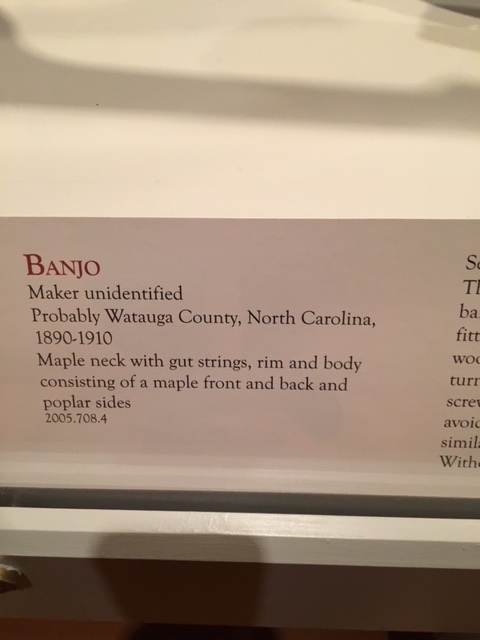
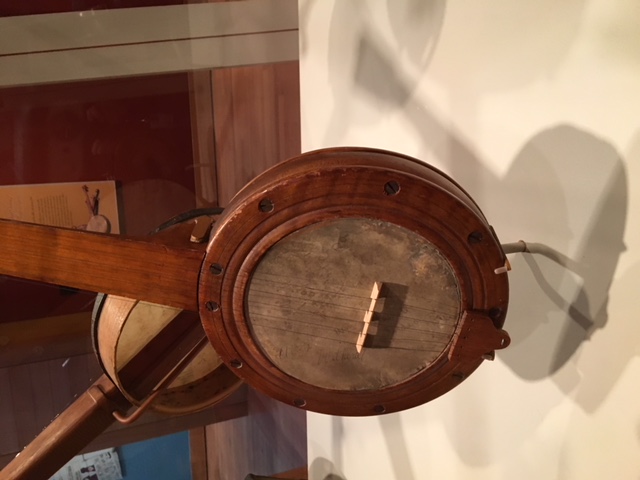
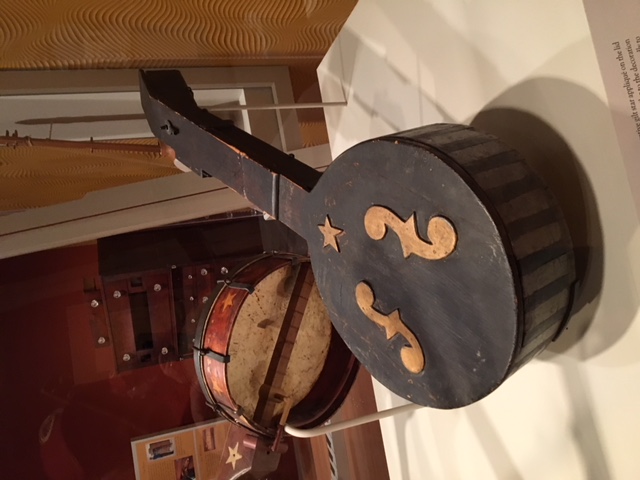
My wife and I sent two wonderful days in Colonial Williamsburg and made it to the art museum which has a large folk art collection. I saw these interesting folk art banjos on display. since I had not seen them published I thought I would share the pics.
beezaboy - Posted - 12/23/2017: 04:49:16
Thanks for the photos.
Looks like the museum has some interesting banjos.
Would be fun to see the curator's notes about the way in which he dated the examples.
We often have lively discussions on BHO about the vintage of the real old banjos.
csacwp - Posted - 12/24/2017: 01:23:32
Well, the mountain banjo is dated incorrectly. I’d be interested to see how they arrived at dates for the other two.
Having been to Colonial Williamsburg, they suffer from all the typical reenactorisms and anachronisms. It’s as if they sourced their history from The Magic School Bus.
Edited by - csacwp on 12/24/2017 01:24:57
mipake - Posted - 12/25/2017: 21:42:23
CSACWP
Well seems like you have yet made another other the top completely unsupported comment about some thing you know nothing about. As someone with a Masters in American History with focus on Colonial America I can say Colonial Williamsburg does a very good job recreating life in the settlement of Williamsburg just prior to the revolution. I am sure they would discuss how they dated the banjos displayed with anyone willing to carryon an informed civil dialogue. Something I doubt you could do.
In fact I would like to hear what qualifies you as a banjo historian which you claim to be on your hangout page. What degrees do you possess? What books have you published?
AndrewD - Posted - 12/26/2017: 10:05:10
CSACWP is probably not a candidate for the diplomatic corps. But if the mountain banjo is dated correctly then it is - by decades - the oldest such banjo known. Misdating through ignorance is much more likely. Searching here the only references to 19th or very early 20th C mountain banjos link back to this one. All of the others seem to suggest a tradition that started in the 1930's. The attribution of the "Chapman" banjo also seems a bit iffy. Strange to know exactly who made it and the precise year of manufacture but only have the vague "Southern Appalachians" as its place of origin. It would be interesting to see the research or provenance that went into these museum labels. My guess is that it's pretty much anecdotal and comparatively recent.
cbcarlisle - Posted - 12/26/2017: 10:37:00
There is plenty of room to argue about the dating of particular banjos but the canard about "beginning in the 1930s" is completely bogus. The major families of mountain banjos all trace the tradition to, at least, the turn of the century. Anyone examining an instrument from one of the masters will realize the subtleties and refinements of construction which evidence considerable age.
The Glenn family branch goes back through Clifford to Leonard to Nathaniel Glenn (1886-1955).
A different Glenn line goes back from Charlie, who has his grandfather's banjo (ca. 1920), William Plummer (1873-1943).
Frank Proffitt learned from his father, Noah, and his grandfather, William (1874-1954).
Stanley Hicks (who made his first banjo in 1925), learned from his father Roby and grandfather Samuel (1848-1929), who is said to have brought the original pattern from Wilkes County (just to the east) after the Civil War.
Yes, it is important to insist on independent dating, but to willfully deny the entire oral history of a county is perverse and downright snobbery.
MWBailey - Posted - 12/26/2017: 10:39:16
Howdy, it's been a while since I've bothered to comment on anything but the Games subforum (or whatever it's referred to as these days). I'm not much of a banjo historian beyond the dilletante level, and what I've managed to research and compose to tell the people who ask about banjos at the period performances that I participate in.
I do wonder, though, if that style of banjo (meaning the "Mountain Banjo" referred to by csacwp, mipake and AndrewD) actually dates that late or earlier? I seem to remember Foxfire and other similar type articles referring to one or a couple of people as a "manufacturer" of that type of banjo, but cannot remember what was said in those articles about how far back they go (?).
Edit: Whoops, didn't see the reply above. Sorry about that...
Edited by - MWBailey on 12/26/2017 10:42:15
mipake - Posted - 12/26/2017: 10:57:10
I would not defend or contest what the museum stated. My last comment was aimed at what I considered unwarented comments by csacwp ref Colonial Williamsburg.
I think it is interesting what museums say about the instruments displayed. The dating of any Folkart banjo is certainly problematic.
MWBailey - Posted - 12/26/2017: 11:05:10
I could get all pedantic and suggest carbon or electron microscope dating, but I sort of doubt that that museum (or most others) have sufficient resources to do that with several banjos, let alone every artifact in their inventory.
AndrewD - Posted - 12/26/2017: 14:37:22
quote:
Originally posted by MWBaileyI could get all pedantic and suggest carbon or electron microscope dating, but I sort of doubt that that museum (or most others) have sufficient resources to do that with several banjos, let alone every artifact in their inventory.
Not too sure what use an electron microscope would be. Carbon dating is not much use on recent artifacts. Not accurate enough to distinguish incontrovertibly between 1900 and 1930. And would only tell you when the tree was chopped down not when it was turned into a banjo anyway.
Jim Bollman - Posted - 12/28/2017: 23:31:53
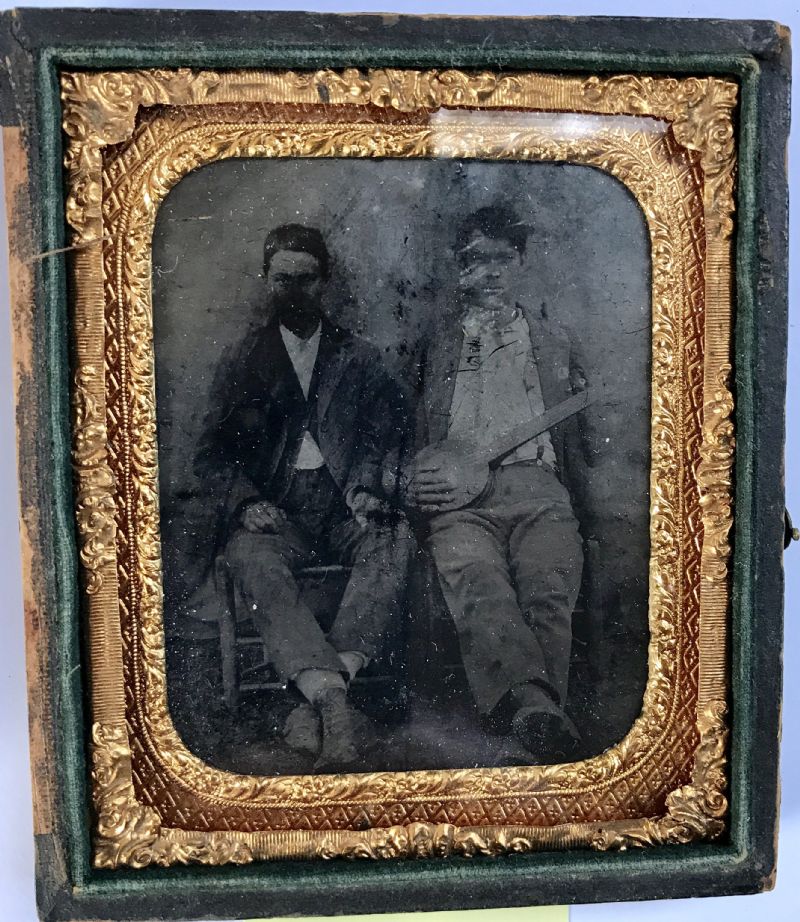
I don't have a problem with the dates of these three banjos from Colonial Williamsburg. The mountain banjo is somewhat problematic as this style of banjo continues to be made up to the present day. The Williamsburg mountain banjo in question ( which I owned many years ago ) exhibits patination and construction details that to my eye could easily date to a pre-WW1 era. Roddy Moore, probably the country's leading expert on these so-called mountain banjos, sold the instrument to the museum and probably suggested the attribution and date. I have a very primitive mountain banjo in my collection that was made in Texas in 1904 so I feel at least some of these banjos probably predate 1900. In addition I own an ambrotype photograph that dates no later than the late 1860s/early 1870s that clearly shows a mountain style fretless banjo. A special exhibition at The Banjo Gathering that was held at Ferrum College some years back featured about 50 of these wonderful early Appalachian mountain style banjos, most were pre WWII vintage and many much earlier.
Joel Hooks - Posted - 12/29/2017: 13:00:39
Here is the photo that Jim referred to (posted with his permission).
It is a great photo and very interesting.
csacwp - Posted - 12/29/2017: 14:55:30
Haven’t we discussed this photo before? The clothing looks to be from the 1920s and the banjo an unplayable prop.
Jim, how do you know your 1904 banjo is really from that date? Most “antique” mountain banjos I’ve encountered had made up provenance and dates... all part of the lore that sells them.
csacwp - Posted - 12/29/2017: 14:58:19
quote:
Originally posted by mipakeCSACWP
Well seems like you have yet made another other the top completely unsupported comment about some thing you know nothing about. As someone with a Masters in American History with focus on Colonial America I can say Colonial Williamsburg does a very good job recreating life in the settlement of Williamsburg just prior to the revolution. I am sure they would discuss how they dated the banjos displayed with anyone willing to carryon an informed civil dialogue. Something I doubt you could do.
In fact I would like to hear what qualifies you as a banjo historian which you claim to be on your hangout page. What degrees do you possess? What books have you published?
There are as many anachronisms at Colonial Williamsburg as there are at a typical Civil War reenactment... meaning there are a lot. On a banjo-related note, they have a white woman who plays “old-time” tunes on a 5-string gourd banjo... since you have a degree in the subject, explain that one to me.
As for my degree, I don’t feel the need to throw it around here as some sort of proof of my intellectual superiority. I can read books and primary sources as well as you can, and that’s what really matters.
Edited by - csacwp on 12/29/2017 15:00:22
Andy FitzGibbon - Posted - 12/30/2017: 07:45:24
quote:
Originally posted by csacwpHaven’t we discussed this photo before? The clothing looks to be from the 1920s and the banjo an unplayable prop.
Yes, we did, but neither of those conclusions were established with any certainty.
banjohangout.org/topic/334096/2
Andy
mipake - Posted - 12/30/2017: 14:45:18
John
No amount of reading books or primary sources makes you a historian. It makes you a history “buff”. That is fine and most of us on the BHO are banjo history buffs. A real historian looks at as many facts as possible, analyzes them objectively, and then draws conclusions. The conclusions are not new facts just what he has learned from his research. Objectivity is the most important quality of a historian. That means to always look at the facts without allowing prejudices to cloud your thinking. Most of your posts are your opinions based on assumptions. You see a banjo dated outside the dates you already have established as acceptable and then you state your opinion as fact. By doing this you destroy your credibility. I recommend you audit a course on Historical methods.
As far as Colonial Williamsburg, I would agree that there are things present that were not found in 1776. You may see a black person dressed richly or a white person playing a gourd banjo (I did not). I might agree that it should not have been played at all since, I am not sure we know any tunes that slaves would have played. But I feel that it being played, even in old time style, in the slave history area, was better for the history of the banjo than not being there at all.
Happy New Year.
Mike
IMBanjoJim - Posted - 12/30/2017: 15:03:21
So here is what we know definitively about mt. banjos: There seem to be no books devoted exclusively to them. No dissertations and/or original research exclusively about them has occurred (a good PhD thesis idea). Very few contemporary photographs have been discovered. They seem to originally be from one particular area of North Carolina. Frank Proffitt and also the Foxfire books popularized them with the rest of the folk music community. Several banjos exist in museums that may or may not be pre-mid 1930s. Oral history seems to point to earlier origins for the mt banjo design, but written and photographic proof is lean as of this time.
Did I miss anything?
Joel Hooks - Posted - 12/30/2017: 16:56:29
quote:
Originally posted by IMBanjoJimSo here is what we know definitively about mt. banjos: There seem to be no books devoted exclusively to them. No dissertations and/or original research exclusively about them has occurred (a good PhD thesis idea). Very few contemporary photographs have been discovered. They seem to originally be from one particular area of North Carolina. Frank Proffitt and also the Foxfire books popularized them with the rest of the folk music community. Several banjos exist in museums that may or may not be pre-mid 1930s. Oral history seems to point to earlier origins for the mt banjo design, but written and photographic proof is lean as of this time.
Did I miss anything?
That is about it. All roads seem to return to the Hicks and Proffitts when it comes to this pattern.
While it is possible that these families could have been making these as early as their claims, it seems to be exclusive to them. They became popular and more widely known when they became used by the folk revivalists.
I can see the charm of them. If I were looking for a true "folk" banjo, one that was not anything like the "modern" or Stewart based banjos that were designed during the "classic banjo" era, then I would be attracted to them too. They look the part as being homemade, old fashioned, and different. They are very "old timey" in form. The pattern is almost perfectly "old fashioned."
csacwp - Posted - 12/30/2017: 23:44:31
quote:
Originally posted by mipakeJohn
No amount of reading books or primary sources makes you a historian. It makes you a history “buff”. That is fine and most of us on the BHO are banjo history buffs. A real historian looks at as many facts as possible, analyzes them objectively, and then draws conclusions. The conclusions are not new facts just what he has learned from his research. Objectivity is the most important quality of a historian. That means to always look at the facts without allowing prejudices to cloud your thinking. Most of your posts are your opinions based on assumptions. You see a banjo dated outside the dates you already have established as acceptable and then you state your opinion as fact. By doing this you destroy your credibility. I recommend you audit a course on Historical methods.
As far as Colonial Williamsburg, I would agree that there are things present that were not found in 1776. You may see a black person dressed richly or a white person playing a gourd banjo (I did not). I might agree that it should not have been played at all since, I am not sure we know any tunes that slaves would have played. But I feel that it being played, even in old time style, in the slave history area, was better for the history of the banjo than not being there at all.
Happy New Year.
Mike
Mike, I do review the facts and analyze them to come to my own conclusions. My posts here are not based on my assumptions. For your information, I took history classes in college and excelled in them, but decided to pursue degrees in the sciences, which also require analytical skills and the ability to reach new conclusions from broader sets of facts and data.
Andy FitzGibbon - Posted - 12/31/2017: 09:42:00
quote:
Originally posted by Joel HooksWhile it is possible that these families could have been making these as early as their claims, it seems to be exclusive to them. They became popular and more widely known when they became used by the folk revivalists.
I disagree with this somewhat. I have seen enough examples that appeared to have been built prior to the folk revival (ie., roughly WWII), and did not match the craftsmanship of Proffit, Glenn, or Hicks, to conclude that the construction style must have been reasonably popular before the folk revival. It does seem that it was primarily concentrated around the VA/NC/TN/KY border country. As Jim mentions, the display we had at the banjo gathering in Ferrum a few years ago brought together quite a few early examples. The Museum of Appalachia also has a number in their collection.
The folk revival did have a significant effect on awareness and popularity of the style, bringing it to a national level.
Andy
Joel Hooks - Posted - 12/31/2017: 13:37:33
quote:
Originally posted by Andy FitzGibbonquote:
Originally posted by Joel HooksWhile it is possible that these families could have been making these as early as their claims, it seems to be exclusive to them. They became popular and more widely known when they became used by the folk revivalists.
I disagree with this somewhat. I have seen enough examples that appeared to have been built prior to the folk revival (ie., roughly WWII), and did not match the craftsmanship of Proffit, Glenn, or Hicks, to conclude that the construction style must have been reasonably popular before the folk revival. It does seem that it was primarily concentrated around the VA/NC/TN/KY border country. As Jim mentions, the display we had at the banjo gathering in Ferrum a few years ago brought together quite a few early examples. The Museum of Appalachia also has a number in their collection.
The folk revival did have a significant effect on awareness and popularity of the style, bringing it to a national level.
Andy
My favorite exhibit from the Museum of Appalachia is the so called "Murder Banjo."

It shows a willingness to take any story at face value. Displaying this without any research, difficult in 1989 but easy now, makes me question the credibility of other exhibits.
(For those who are reading this that do not get what I mean, Henry Dobson was a famous banjoist, banjo teacher, and promoter who jobbed banjos made by J. H. Buckbee. He was one of a whole family of banjoists who were active around NYC from the early 1860s. There was a Dobson banjo school in operation in NYC well into the 1940s. This banjo was one of those made by Buckbee and the two "inscribed" dates are the years of two of H. Dobson's patents.)
csacwp - Posted - 12/31/2017: 14:06:00
Andy, how do you know they date to the pre-WWII era? There are folk art instruments from the 60s that look 500 years old... we want some sort of definitive proof since the existing evidence that isn’t speculation points to them being a profitt/hicks/folk revival phenomenon.
Andy FitzGibbon - Posted - 01/01/2018: 06:06:39
quote:
Originally posted by Joel
It shows a willingness to take any story at face value. Displaying this without any research, difficult in 1989 but easy now, makes me question the credibility of other exhibits.
(For those who are reading this that do not get what I mean, Henry Dobson was a famous banjoist, banjo teacher, and promoter who jobbed banjos made by J. H. Buckbee. He was one of a whole family of banjoists who were active around NYC from the early 1860s. There was a Dobson banjo school in operation in NYC well into the 1940s. This banjo was one of those made by Buckbee and the two "inscribed" dates are the years of two of H. Dobson's patents.)
I was not speaking to the credibility of the museum's exhibits or background material- just that they have some mountain banjos in their collection that look, to my eye, as if they were built pre-folk revival. I agree that attributions and provenance in the museum's exhibits is often suspect.
Andy
Andy FitzGibbon - Posted - 01/01/2018: 06:15:25
quote:
Originally posted by csacwpAndy, how do you know they date to the pre-WWII era? There are folk art instruments from the 60s that look 500 years old... we want some sort of definitive proof since the existing evidence that isn’t speculation points to them being a profitt/hicks/folk revival phenomenon.
I don't know for sure, just as you don't know for sure that they DON'T date to the pre-WWII era. That's why I didn't frame my post as fact.
I have formed my opinions based on 20 years of repairing and examining thousands of antique banjos of all types.
Andy
Bob Sayers - Posted - 01/01/2018: 21:31:30
It's interesting that the surprising (and often counter-intuitive) history of the Appalachian dulcimer has been worked out over the past 30-some years--but not the history of the so-called "mountain banjo." We've heard from Jim Bollman here, but I wonder what Roddy Moore and Scott Odell might have to say about the subject.
By the way, I'd love to get rid of the term "folk art banjo" which has no particular meaning, but which has taken on a kind of pejorative cast. What the heck is a "folk art banjo" anyway?
cbcarlisle - Posted - 01/02/2018: 15:07:18
As a historian and archeologist I recognize the pitfalls of attributed dates. I also am well aware of the elitist, scholarly attitude toward folk knowledge and testimony.
It takes more than skeptical reluctance - based on preconceived bias - to negate first-hand testimony from Stanley Hicks that he made his first banjo in 1926, at the age of fifteen. Or, that he copied the pattern his father and grandfather had used; the question of receiving the prototype "just after the Civil War" is, indeed unproven.
Clifford Glenn and Frank Proffitt both claimed to continue the models of their grandfathers.
Robert Winslow Gordon, the founding head of the Library of Congress folk music collections, made numerous contributions to the history of traditional American music and took photographs of early mountain banjos and their probable maker. The fact that the date was during a field trip in "Western North Carolina" during 1924 and 1925 - and that the exact date is not specified - doesn't make the uncertainty of the same order as our original discussion's "1859 or 1860."
Thus, I believe that "pre-WWII" has already been established; "pre-WWI," however, may very well need further documentation.
Curtis C. Bouterse, PhD
[I don't care, but some are hung up on those letters.]
csacwp - Posted - 01/02/2018: 17:09:10
I think the primary reason that some of us question Hicks/Glenn/Profitt is that they were trying to make money off of these things. It really makes it more difficult to believe their vague stories about the banjos, provided without proof or evidence.
Some here on BH who are saying otherwise are invested in “mountain banjos”, either financially (owners, collectors) or intellectually (folklorists). There is an inherent bias to their opinions. All I’m trying to do is look objectively at the evidence to draw conclusions. It’s not that I care if these banjos are older than I think- it hardly affects my narrative...
Edited by - csacwp on 01/02/2018 17:20:31
mmm Bacon - Posted - 01/02/2018: 18:52:47
Both of the comments below are on the Smithsonian website and were beneath photos of "mountain banjos"...
I was not able to post the photos, so here is the link:
si.edu/spotlight/banjos-smiths...struments
This statement was directly below a photo of an "around 1963" mountain banjo, "Banjos with small diameter fixed heads set into a heavy wooden rims are a traditional kind of home-made banjo. They persisted in rural Appalachia long after inexpensive commercial instruments became easily available in the second half of the 19th century."
This statement was shown under a mountain banjo that Frank Proffitt purchased used, "This banjo was made by an unknown maker in the United States around 1875-1899. The instrument’s body is made from oak, and the body’s rim is ornamented with 12 furniture tacks. This banjo was acquired from noted traditional musician Frank Proffitt, who said that he had bought it from a local second hand store with the understanding that it had originally come from the family of a local wagoner. It is a finely crafted example of the traditional thick rim style banjo, a style which was never adopted by urban manufacturers but which continues to be made and used in the southern mountains."
John, you better head down to Washington right away and set those Smithsonian folks straight.
Andy FitzGibbon - Posted - 01/02/2018: 19:26:55
quote:
Originally posted by csacwpI think the primary reason that some of us question Hicks/Glenn/Profitt is that they were trying to make money off of these things. It really makes it more difficult to believe their vague stories about the banjos, provided without proof or evidence.
Some here on BH who are saying otherwise are invested in “mountain banjos”, either financially (owners, collectors) or intellectually (folklorists). There is an inherent bias to their opinions. All I’m trying to do is look objectively at the evidence to draw conclusions. It’s not that I care if these banjos are older than I think- it hardly affects my narrative...
S. S. Stewart was also trying to make money off of his banjos, and he said a lot of things about them that are demonstrably false. Yet his statements are taken as gospel, at least by some.
For the record, I have no investment in mountain banjos. They are interesting in the context of banjo history in the Appalachians, but I don't really enjoy playing them, or have a desire to own one.
Andy
Bob Sayers - Posted - 01/02/2018: 20:16:16
Quote: "I think the primary reason that some of us question Hicks/Glenn/Profitt is that they were trying to make money off of these things. It really makes it more difficult to believe their vague stories about the banjos, provided without proof or evidence."
I was a festival worker and folklife student at the time of the second Smithsonian Festival of American Folklife in 1968. A few people that I knew had purchased Frank Profitt banjos for a less-than-princely sum (under $100 as I recall). I myself purchased (by mail order) a mountain dulcimer from Jethro Amburgey for $35.00. I worked on the folklife festival once again in 1981 and ordered a Clifford Glenn banjo with an inlaid wooden star in the peghead (his take on a Vega banjo--there's an interesting story there) like an identical one he made for the auction tent at the festival. I think I paid about $80 for it and later gave it to the musical instrument museum at the University of Michigan where I was a visiting professor in 1991. None of the purported makers of mountain banjos at the time--Frank Profitt, Stanley (?) Hicks, and Leonard and Clifford Glenn--was getting rich making these things. They did it to make a little extra family income and also because they were being encouraged (first by outsiders like festival director Ralph Rinzler and then by members of their own communities) to keep their family traditions alive. How far back those family traditions stretch is still to be determined. By the way, I think the famous Foxfire article on mountain banjos was published a bit later.
Robert H. Sayers, Ph.D.
csacwp - Posted - 01/02/2018: 23:24:56
It’s a well known fact that the Smithsonian knows little about the banjos in their collection, just like some other large museums. I am told by someone there that they are working on correcting this.
Edited by - csacwp on 01/02/2018 23:26:53
csacwp - Posted - 01/02/2018: 23:29:46
quote:
Originally posted by Andy FitzGibbonquote:
Originally posted by csacwpI think the primary reason that some of us question Hicks/Glenn/Profitt is that they were trying to make money off of these things. It really makes it more difficult to believe their vague stories about the banjos, provided without proof or evidence.
Some here on BH who are saying otherwise are invested in “mountain banjos”, either financially (owners, collectors) or intellectually (folklorists). There is an inherent bias to their opinions. All I’m trying to do is look objectively at the evidence to draw conclusions. It’s not that I care if these banjos are older than I think- it hardly affects my narrative...
S. S. Stewart was also trying to make money off of his banjos, and he said a lot of things about them that are demonstrably false. Yet his statements are taken as gospel, at least by some.
For the record, I have no investment in mountain banjos. They are interesting in the context of banjo history in the Appalachians, but I don't really enjoy playing them, or have a desire to own one.
Andy
Stewart was a banjo maker and wasn’t in the business of profiting off myth. Could you provide an example of one of his falsehoods? I’ve found him to be a very realiable source, but you have to acknowledge that he was into the satirical marketing that was popular in his day.
Andy FitzGibbon - Posted - 01/03/2018: 03:53:32
quote:
Originally posted by csacwp
Stewart was a banjo maker and wasn’t in the business of profiting off myth. Could you provide an example of one of his falsehoods? I’ve found him to be a very realiable source, but you have to acknowledge that he was into the satirical marketing that was popular in his day.
Nearly every claim that Stewart made about the construction and quality of his instruments has been contradicted by extant instruments. That makes me question his integrity when it comes to other matters. He was a salesman, and willing to bend the truth or create a narrative when it suited his needs. In that sense, I think he indeed was in the business of profiting off myth, particularly in his efforts to "elevate" the banjo and minimize the unsavory aspects of its history.
That's not to say that the mountain banjo makers didn't do the same thing, but I have seen no evidence presented that they did. Just opinions, based on a lack of evidence that they didn't. A lack of evidence is not proof that something didn't happen.
As Bob says, these guys weren't getting rich selling mountain banjos. Any of the folks I know who bought banjos from Frank Proffit or the Glenn family really didn't care about the details of how far back the design went historically. They were just excited to buy an instrument made and played by someone directly connected to the tradition. A false historical narrative wasn't necessary to sell the instruments, particularly at the low prices they asked for them.
A friend of mine mail-ordered a banjo from Frank Proffit in the '60s- he sent the instrument out without asking for advance payment, and included a note which read (in part, from memory):
"Hello Dick,
Here is the banjo you requested, made of curly maple. Normally I get sixty dollars for this type, but if you could send an extra ten dollars this would be good. If not, no hard feelings."
Wouldn't "satirical marketing" imply that the target audience was in on the joke? I think perhaps "hyperbolic marketing" would be a better choice.
Andy
Joel Hooks - Posted - 01/03/2018: 05:50:07
quote:
Originally posted by Andy FitzGibbonquote:
Originally posted by csacwpStewart was a banjo maker and wasn’t in the business of profiting off myth. Could you provide an example of one of his falsehoods? I’ve found him to be a very realiable source, but you have to acknowledge that he was into the satirical marketing that was popular in his day.Nearly every claim that Stewart made about the construction and quality of his instruments has been contradicted by extant instruments. That makes me question his integrity when it comes to other matters. He was a salesman, and willing to bend the truth or create a narrative when it suited his needs. In that sense, I think he indeed was in the business of profiting off myth, particularly in his efforts to "elevate" the banjo and minimize the unsavory aspects of its history.
I know it is off subject, but could you provide more specific examples of this? Just the publication issue and page, I can post a scan of the article or claim. There are only a few publications from his lifetime that I am missing so I should be able to find it to share.
On price, $70 to $100 was not necessarily small money in 1968, especially to someone who is living in an area known for poverty. Minimum wage was $1.60. That said, it also seems reasonable. I have not built a mountain banjo so I am not sure what is involved, they don't look too difficult and there is not much in the way of parts expense. Maple is easy to get here in New Hampshire.
csacwp - Posted - 01/03/2018: 06:44:47
Andy, please provide an example of Stewart minimizing negative aspects of banjo history.
Andy FitzGibbon - Posted - 01/03/2018: 19:13:55
quote:
Originally posted by Joel Hooksquote:
Originally posted by Andy FitzGibbonquote:
Originally posted by csacwpStewart was a banjo maker and wasn’t in the business of profiting off myth. Could you provide an example of one of his falsehoods? I’ve found him to be a very realiable source, but you have to acknowledge that he was into the satirical marketing that was popular in his day.Nearly every claim that Stewart made about the construction and quality of his instruments has been contradicted by extant instruments. That makes me question his integrity when it comes to other matters. He was a salesman, and willing to bend the truth or create a narrative when it suited his needs. In that sense, I think he indeed was in the business of profiting off myth, particularly in his efforts to "elevate" the banjo and minimize the unsavory aspects of its history.
I know it is off subject, but could you provide more specific examples of this? Just the publication issue and page, I can post a scan of the article or claim. There are only a few publications from his lifetime that I am missing so I should be able to find it to share.
On price, $70 to $100 was not necessarily small money in 1968, especially to someone who is living in an area known for poverty. Minimum wage was $1.60. That said, it also seems reasonable. I have not built a mountain banjo so I am not sure what is involved, they don't look too difficult and there is not much in the way of parts expense. Maple is easy to get here in New Hampshire.
I couldn't provide specific page numbers, even if I owned what I had read (which I don't). I have read some of the journals- not near as many as you, certainly- but I don't own them, and didn't keep any record of what I read.
My impression, from what journals I have read, is that Stewart had an interest in elevating the banjo beyond the minstrel show and pushing it as an instrument of the middle and upper classes. If I have a mistaken impression, perhaps I need to read more.
My reference to the quality and construction of his instruments pertains to the Stewart catalogs I have seen. Many claims- "the best seasoned wood", solid Ebony", ect., aren't always true. I know that such hyperbole was common at the time, but I feel it still bears pointing out.
Andy
csacwp - Posted - 01/03/2018: 23:09:29
Andy, I’d read more of them if I were you. Stewart got his start by copying Clarke banjos (professional minstrel instruments) and later endorsed Horace Weston. He continued to promote stroke style playing as well as fingerstyle, and while he certainly had an interest in popularizing the banjo (he was a hotshot player himself), the “elevation” of the instrument that he promoted was really in its construction... he regularly railed against tub banjos in the journals. He also seems to have had an interest in showing that the banjo was an instrument capable of more than the simple tunes found in minstrelsy, although the vast majority of the music he published was quite easy to play and aimed at amateurs and clubs, unlike say the later publications from Frank Converse. Stewart did enthusiastically endorse Farland which was good for business, but the journals don’t concern the classical music that he was playing.
As far as his banjos went, he would make you anything you wanted and did lots of custom orders, which results in some of the variation we see today. Aside from the student grade budget banjos, his earliest instruments (which were Clarke copies) and the banjos made after his death, his banjos are quite consistent in quality and live up to his descriptions.
Lastly, when reading the journals it is important to recognize the tone and satire in them. They are filled with dry humor, satire, and exuberant marketing that was commonplace at the time. Don’t forget that Stewart came from a family that sold patent medicines. Karen Linn seems to have gotten hung up on this in her book and drew many false conclusions from it... she read Stewart’s period hyperbole and thought it made him a classist snob.
Edited by - csacwp on 01/03/2018 23:22:21
Andy FitzGibbon - Posted - 01/04/2018: 04:49:30
Well, you are right, John. I should read more of them, because there is always more to learn. By the same token, I hope you will spend more time around the environs in which mountain banjos were created, and spend more time with people who were directly involved with their makers- as I, and others have- before forming your opinions.
Regarding Stewart banjo quality- I am not talking about variations or custom ordered. I am talking about genuine lapses in construction quality. I have seen banjos with fingerboards pieced together from scraps of ebony, with cheap plate brass on the rim instead of German silver, large voids in the neck filled with shellac stick or hide glue, and other such examples of poor craftsmanship. While such examples are not the norm, they are also not isolated, at least in the large sampling of Stewart banjos that I've examined over the last twenty years. He was definitely letting products out of his factory that didn't match the high standads described in his catalog.
Andy
Edited by - Andy FitzGibbon on 01/04/2018 04:50:16
csacwp - Posted - 01/04/2018: 08:37:48
Andy, are you sure those were genuine Stuarts? SSS often complained about the problems he had with counterfeiters. Many of the forgeries were nearly identical to the real thing, sometimes even including look-alike stamps and numbers.
Joel Hooks - Posted - 01/04/2018: 10:31:52
I'd love to find a manufacturer of anything that has a 100% track record (we would not need a lemon law if this was possible).
I have seen shoddy workmanship on most makes of classic era banjos, one of the reasons I always say that the banjos being made today are much better than then (esp for old time).
Anything below a Universal Favorite including all 2nd grade an Amateur styles will have corners cut--but he was clear about that. He had to hit that $10 price point.
Some german silver will turn yellow (after all it is just "white brass") when tarnished. If the nickel plating has been polished off it can turn to yellow in spots.
He did use nickel plated brass on models below the UF so with those anything is possible.
SSS followed trends and built what people wanted. Earlier banjos had thicker fingerboards (I've got a mid 80s Orchestra with an ebony fingerboard over a 1/4" thick). Later banjos got thinner boards. He got the idea that the thicker fingerboard would shrink at a different rate than the neck and could potentially cause problems. SSS decided that the thinner fingerboard would make a more stable neck. Models with extensions would get a second thicker piece added for the extension. That was common. I have also seen two thin pieces of ebony glued together as a laminated fingerboard. Again, it seems this was an attempt to make more stable necks.
After SSS had his first stroke in 1897 (I think) all bets are off on quality. When he died in 98, George Bauer found lots of ways to cut costs. I've seen some pretty terrible "Monogram" banjos with all kinds of problems and oversights that look like they came from the factory.
There was a reason so many pros (and amateurs) are pictured holding SSS banjos, they preferred them. He also did not give them to pros for endorsements. In one issue of the Journal Fred Van Eps evidently wrote in asking for a discount or free banjo and SSS basically tells him he can pay full price. I'll have to see if I can find that clipping.
Edited by - Joel Hooks on 01/04/2018 10:34:12
Andy FitzGibbon - Posted - 01/04/2018: 11:30:22
quote:
Originally posted by csacwpAndy, are you sure those were genuine Stuarts? SSS often complained about the problems he had with counterfeiters. Many of the forgeries were nearly identical to the real thing, sometimes even including look-alike stamps and numbers.
Yes, I am absolutely sure. I can tell a genuine Stewart from an imitation.
Andy FitzGibbon - Posted - 01/04/2018: 11:46:38
quote:
Originally posted by Joel HooksI'd love to find a manufacturer of anything that has a 100% track record (we would not need a lemon law if this was possible).
I have seen shoddy workmanship on most makes of classic era banjos, one of the reasons I always say that the banjos being made today are much better than then (esp for old time).
Anything below a Universal Favorite including all 2nd grade an Amateur styles will have corners cut--but he was clear about that. He had to hit that $10 price point.
Some german silver will turn yellow (after all it is just "white brass") when tarnished. If the nickel plating has been polished off it can turn to yellow in spots.
He did use nickel plated brass on models below the UF so with those anything is possible.
SSS followed trends and built what people wanted. Earlier banjos had thicker fingerboards (I've got a mid 80s Orchestra with an ebony fingerboard over a 1/4" thick). Later banjos got thinner boards. He got the idea that the thicker fingerboard would shrink at a different rate than the neck and could potentially cause problems. SSS decided that the thinner fingerboard would make a more stable neck. Models with extensions would get a second thicker piece added for the extension. That was common. I have also seen two thin pieces of ebony glued together as a laminated fingerboard. Again, it seems this was an attempt to make more stable necks.
After SSS had his first stroke in 1897 (I think) all bets are off on quality. When he died in 98, George Bauer found lots of ways to cut costs. I've seen some pretty terrible "Monogram" banjos with all kinds of problems and oversights that look like they came from the factory.
There was a reason so many pros (and amateurs) are pictured holding SSS banjos, they preferred them. He also did not give them to pros for endorsements. In one issue of the Journal Fred Van Eps evidently wrote in asking for a discount or free banjo and SSS basically tells him he can pay full price. I'll have to see if I can find that clipping.
All good points, and (though I'm using him as an example) I don't mean to single SSS out. I, too, have seen shoddy workmanship from all manufacturers of the era, and I think that all of them made somewhat inflated claims regarding their workmanship. That's advertising, particularly in that era.
The greater point I'm trying to make is that nothing should be taken as gospel, just because it was written down. In the discussion about mountain banjo origins, there seems to have been a lot of weight put on this by some parties- ie., because there's no detailed written evidence, those histories didn't occur. I'm using SSS as an example of how, despite there being a detailed written record of "how things were" with regard to the workmanship of his instruments, said record should always be taken with a grain of salt.
The multi-piece fingerboards I have seen were clearly attempts to use up scrap Ebony- or, perhaps they had run out of fingerboards and needed to get an order out. I'm talking about anywhere from five to eight random chunks pieced together, in a haphazard fashion. I have also, more than once, seen plated brass cladding used on banjos whose rims should have had nickel silver- and, yes, I can tell the difference between brass with nickel plating flaking off, and nickel silver which has oxidized yellow.
I have seen such poor/out-of-spec workmanship on a fair number of Stewart banjos, but I have also had the opportunity to examine a larger sampling of Stewart banjos than many folks have- one of the perks of being a banjo repairman. I've worked in this business full time for over eighteen years now, and would estimate that I've probably looked at or worked on roughly 100 Stewarts a year.
Andy
csacwp - Posted - 01/04/2018: 13:29:48
quote:
Originally posted by Joel HooksI'd love to find a manufacturer of anything that has a 100% track record (we would not need a lemon law if this was possible).
I have seen shoddy workmanship on most makes of classic era banjos, one of the reasons I always say that the banjos being made today are much better than then (esp for old time).
Anything below a Universal Favorite including all 2nd grade an Amateur styles will have corners cut--but he was clear about that. He had to hit that $10 price point.
Some german silver will turn yellow (after all it is just "white brass") when tarnished. If the nickel plating has been polished off it can turn to yellow in spots.
He did use nickel plated brass on models below the UF so with those anything is possible.
SSS followed trends and built what people wanted. Earlier banjos had thicker fingerboards (I've got a mid 80s Orchestra with an ebony fingerboard over a 1/4" thick). Later banjos got thinner boards. He got the idea that the thicker fingerboard would shrink at a different rate than the neck and could potentially cause problems. SSS decided that the thinner fingerboard would make a more stable neck. Models with extensions would get a second thicker piece added for the extension. That was common. I have also seen two thin pieces of ebony glued together as a laminated fingerboard. Again, it seems this was an attempt to make more stable necks.
After SSS had his first stroke in 1897 (I think) all bets are off on quality. When he died in 98, George Bauer found lots of ways to cut costs. I've seen some pretty terrible "Monogram" banjos with all kinds of problems and oversights that look like they came from the factory.
There was a reason so many pros (and amateurs) are pictured holding SSS banjos, they preferred them. He also did not give them to pros for endorsements. In one issue of the Journal Fred Van Eps evidently wrote in asking for a discount or free banjo and SSS basically tells him he can pay full price. I'll have to see if I can find that clipping.
I should have been more clear... Stewart was endorsed by Weston, Farland, and others- not the other way around.
mbuk06 - Posted - 01/04/2018: 15:54:44
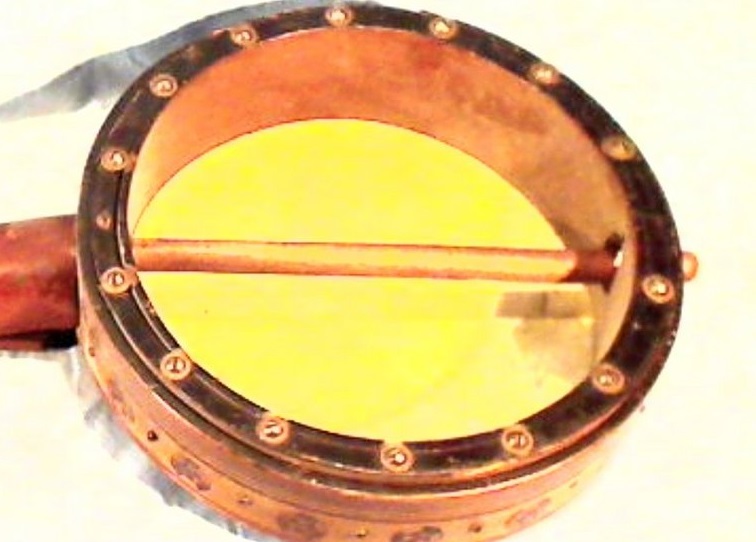
On the theme of old banjos in folk museum collections we got a surprise when we recently visited the new Somerset Rural Life Museum in Glastonbury and happened upon this example of a fretless banjo (complete with a 'scoop') exhibited among other more conventional English rural folk instruments.
The museum is highly professionally curated and no item makes it onto display without authentication that it was sourced from the county of Somerset. The fact that the item card referred only to: 'early five-string banjo. Somerset.' indicates that they know for sure no more than it was played locally. I spoke to them about it but wasn't able to shed light on it's origin. I wonder if it's an American import? Some emigrees to the US moved back to their English homes so that could be one import route. It certainly doesn't resemble the English-made banjos I'm aware of (and own) from the period 1880 -1900.
If anyone can add date and maker information detail to the museum description I'll be happy to pass it on and fully credit the source.
Edited by - mbuk06 on 01/04/2018 16:01:02
Joel Hooks - Posted - 01/04/2018: 17:44:39
You were clear John, I just wanted to point out that the pros that endorsed SSS banjos paid for the banjos at or near full price. I understand that it is common practice to give pros discounts, at cost, or free instruments for promotion but SSS did not need to.
Andy, your points are valid too. "Getting an order out" says a lot. One also can't always watch all your employees all the time. Friday afternoon, payday, boss traveling all can equal quality issues. I don't doubt that you have seen all that you say. Could we agree that the vast majority of his very large output of product was of decent or higher quality (for the time)? At least the ones I have played have been.
Mike, that is a common seven string British banjo circa 1870-80 to ??? perhaps even 1900. These never caught on in the US and the few American made versions that turn up were for export as they would not sell in the US. These show up off and on for sell on eBay and other places. Usually they sit for a while then are pulled down only to show up again later.
mbuk06 - Posted - 01/05/2018: 02:50:05
quote:
Originally posted by Joel Hooks>Mike, that is a common seven string British banjo circa 1870-80 to ??? perhaps even 1900. These never caught on in the US and the few American made versions that turn up were for export as they would not sell in the US. These show up off and on for sell on eBay and other places. Usually they sit for a while then are pulled down only to show up again later.<
Thanks Joel, I will do some research on makers here as you've identified it as an English-made banjo. As I mentioned, it's not a construction style or materials that I've seen before though in my post I made the unintentional typo of referring to '5-string' instead of 7-string. I have seen pictures of 7-string banjos of that period but I recall their construction seem to differ from the simplicity and unusual wood used in this example.
Edited by - mbuk06 on 01/05/2018 02:53:40
Terms of Use | Privacy Policy | Privacy Consent (EU/GDPR Only)
Copyright 2026 Banjo Hangout. All Rights Reserved.