


I just bought a banjo that is a bit of a mystery and I’m hoping someone can help me identify it!
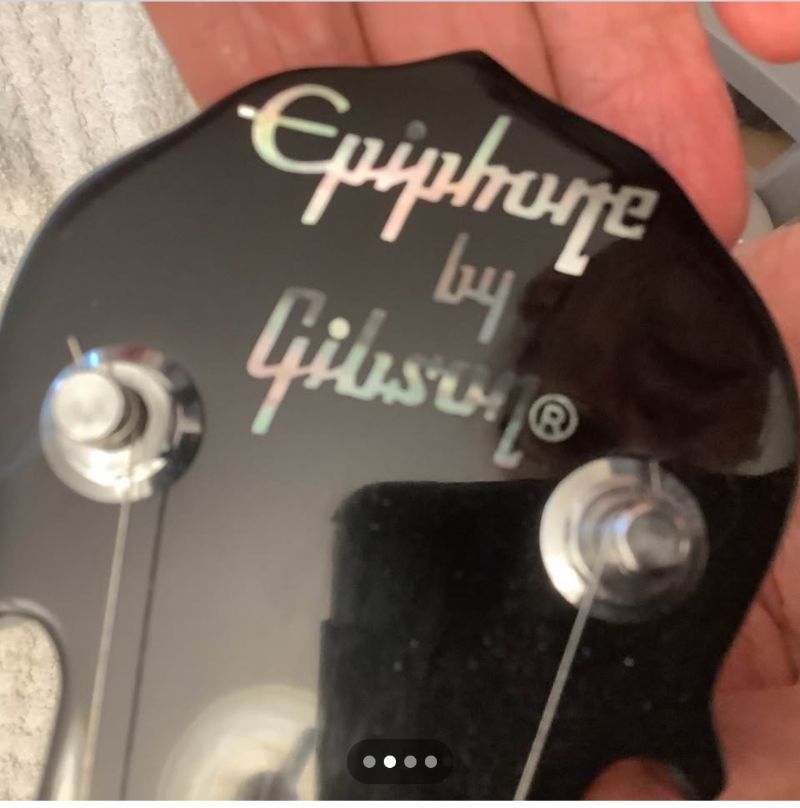
- says ‘Epiphone by Gibson’ on headstock
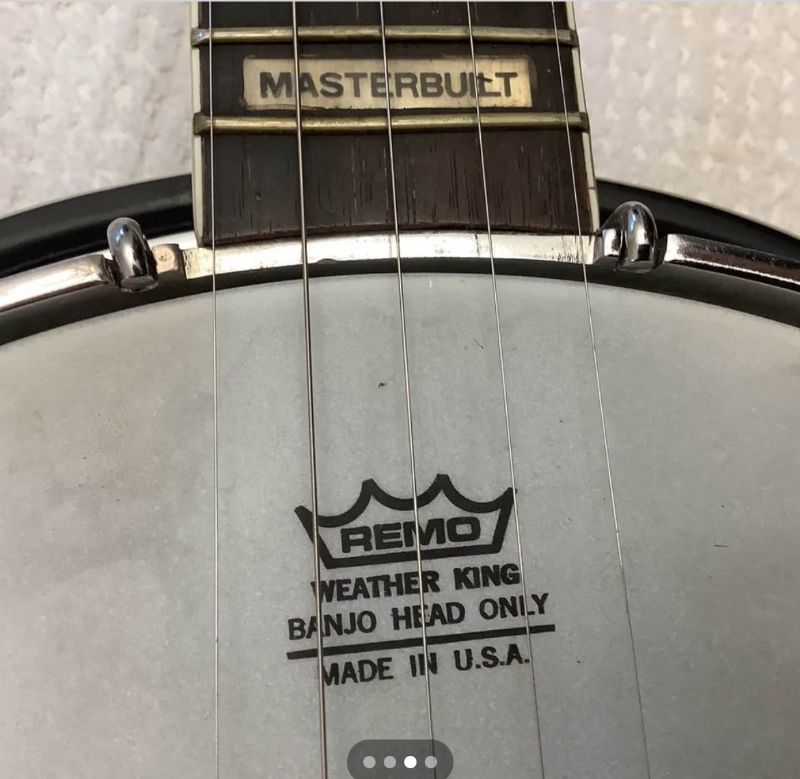
- has simple dot inlay on neck
- has inlay block that says ‘masterbuilt
- has sticker on headstock that says MB 100 (maybe mislabelled?)
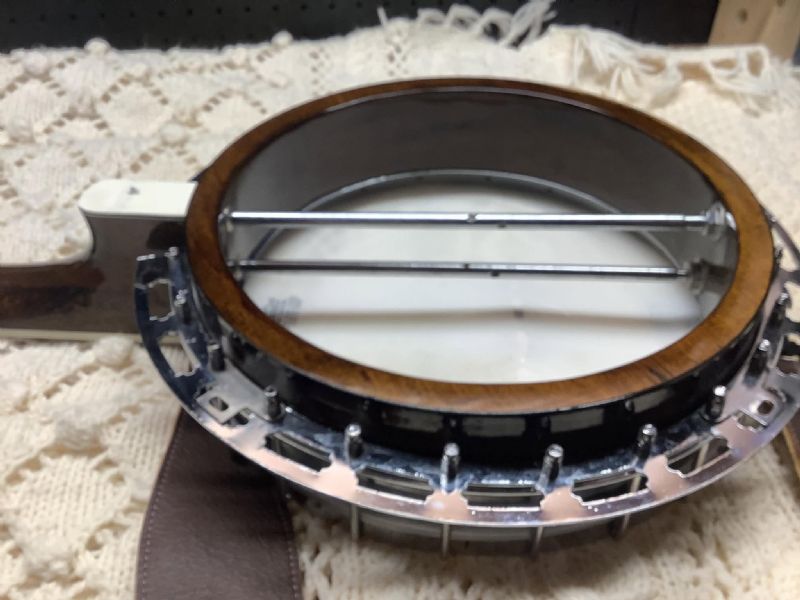
- this banjo also has a wooden resonator with concentric circles on the back
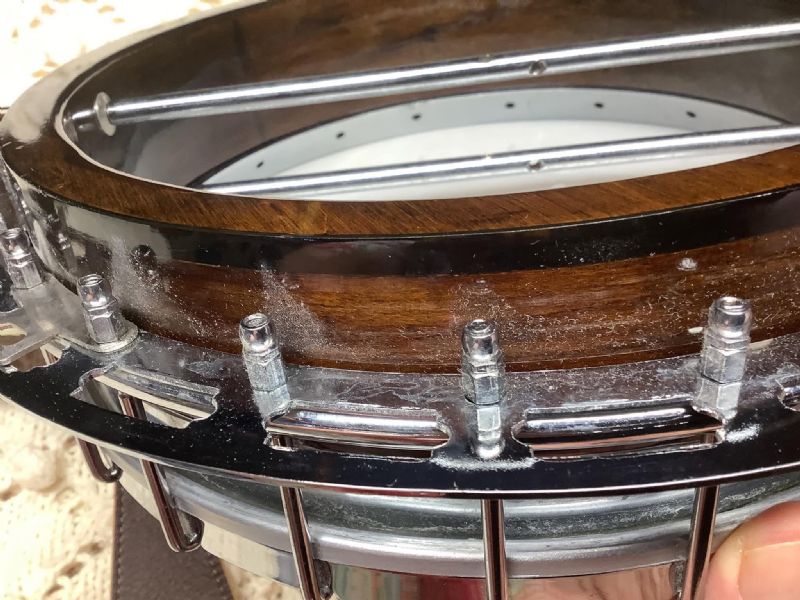
- has a tone ring and wooden rim
- has a two piece flange (tube and plate) and hook style tension hoop
From what I’ve researched, it’s definitely not an MB 100. I think it may be a late 1970s or early 1980s resonator banjo, but I can’t find any evidence of ‘Epiphone by Gibson’ on the headstock from that era. I’ve also read the the necks from the late 1980s that did say ‘Epiphone by Gibson’ didn’t have the simple dot inlay pattern. I can’t find any serial number. Can anyone help me identify what I just bought??
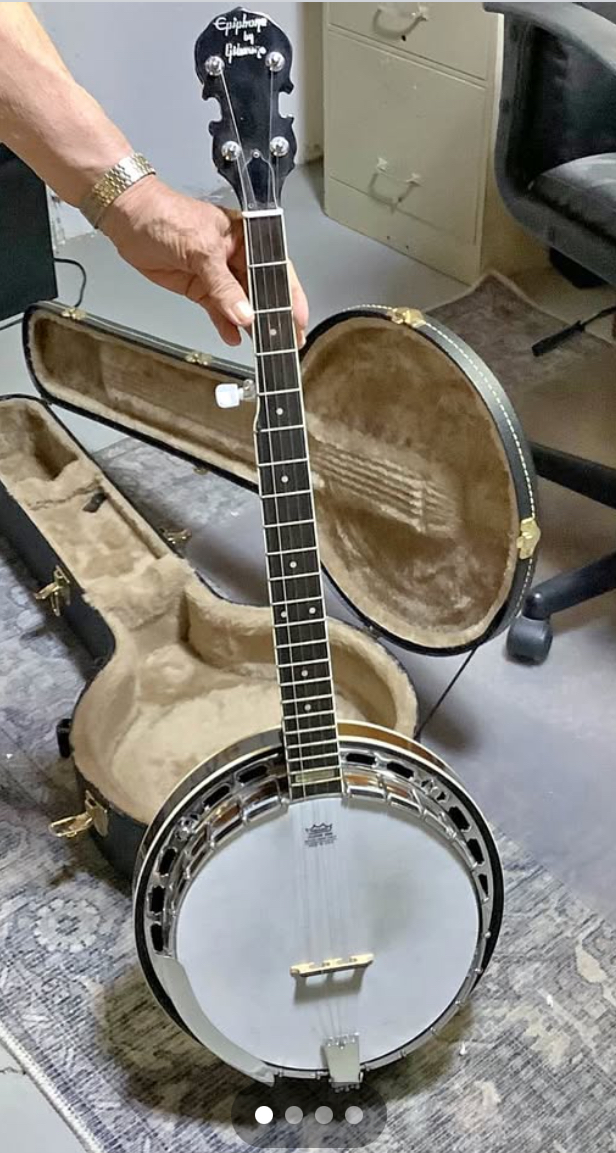
Edited by - johnnyb123 on 07/07/2026 21:15:20

PLease post photos.

quote:
Originally posted by The Old TimerPLease post photos.
I just attached a few pics to my original post. Thanks for your help!
My knowledge is hardly expert, but my guess is it’s an early Japanese-made model (ca. 1970) from right after Gibson moved the top-end Epiphone production out of the U.S .
I would initially imagine it's one of the incarnations of the MB250. Although the dot inlay is not typical -it's usually more fancy than that. I can see one search result dot inlay being described as a MB250.
However I can also see one listing for an MB100 that is of this type. The listing says not to be confused with the modern version of the MB100.
reverb.com/uk/item/96590816-vi...ing-banjo
One thing we do know (I think) is that the MB200, which is typically a bottlecap banjo, was also for a little while a banjo much more like the MB250. So perhaps this was also the case with the MB100.
Here's another listing:
banjobuyer.com/banjo/73704
An early and different MB100 seems possible.
It looks like a good banjo, how's it sound?
I wouldn't be surprised if the Asian assembler simply reached for the wrong model's neck when assembling this Masterclone. A 100 style neck on a 250 style body.
As Epiphone moved from Japan to Korea to China design changes came about. There are several variations of the MB100. The one shown in the original post looks like it might be Korean. The MB100 Epiphone makes now is a cheap, open back model with guitar style tuning pegs, and the pictures below are of a different model, possibly made in Japan.
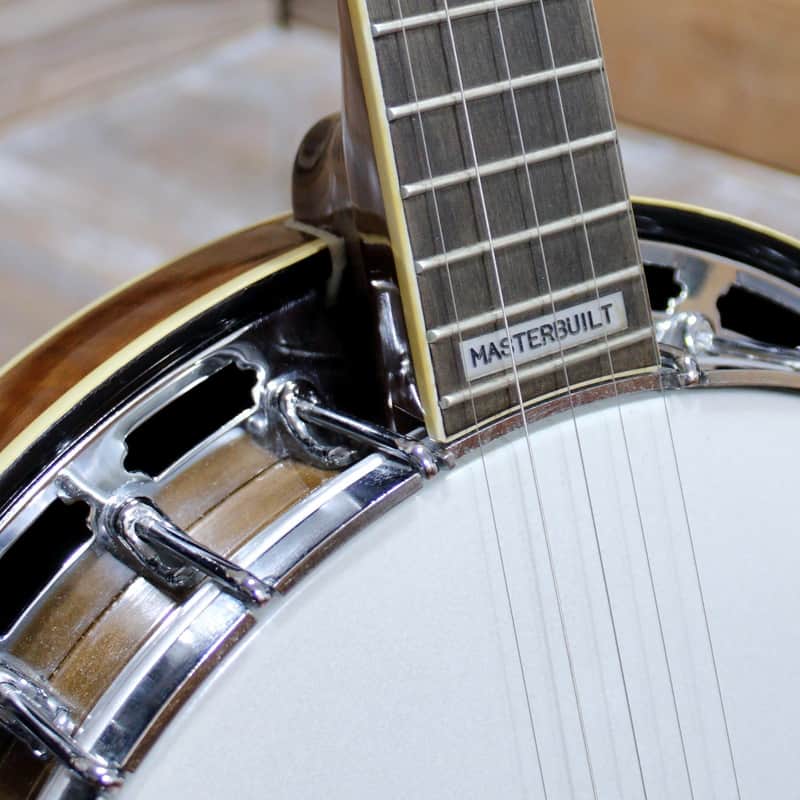
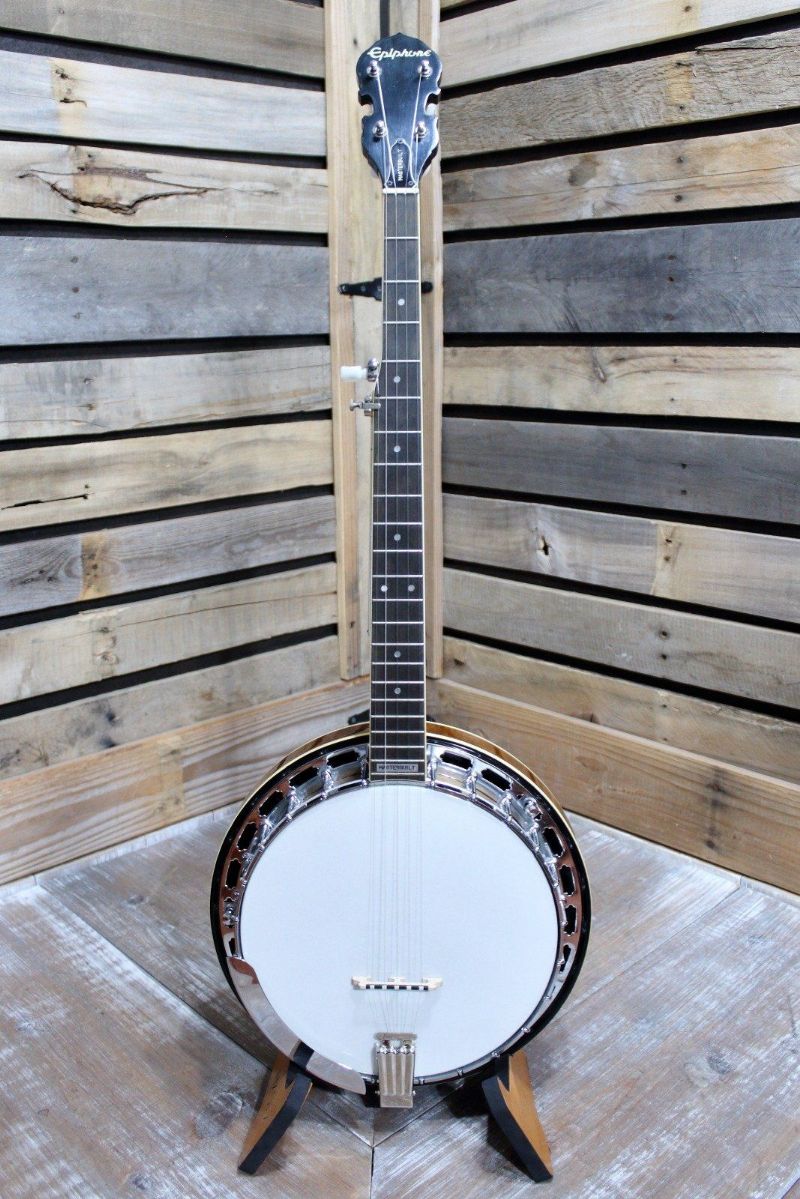
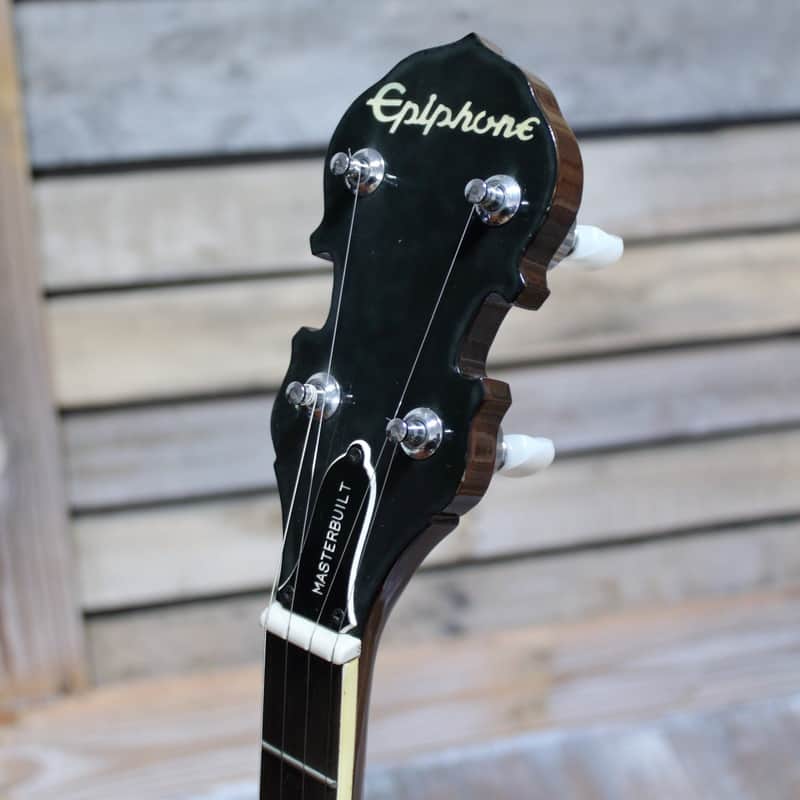
Edited by - Culloden on 07/08/2026 08:43:02
This same banjo is being discussed in the Banjo Forum on Facebook.
I don't think I've ever seen a plain dot inlaid neck on what looks to be an MB-250 pot: thick rim, flathead tone ring, two-piece flange, resonator with concentric rings. So this ie either an early model or as Dick suggests, a banjo assembled with the wrong neck. Or maybe it's a replacement neck.
Anyway, from photos I've seen and maybe history I've read, the Epiphone branding on the Asian-made "Masterbuilt" banjos evolved. First it was as seen here: "Epiphone by Gibson" in "pearl." (I think they did this on guitars, too) Then (on banjos, anyway) it became Epiphone alone with GIBSON in vertical letters on the truss-rod cover. Then the Gibson branding went away and Epiphone "E" logo went on the truss rod cover.
You already know this but "Epiphone by Gibson" for guitar history was put on many guitars in 1986 following the sale of those companies to a different investment group which I would take as my biggest clue unless they were just using a design that had already been used on banjos before 1986. (guitarworld.com/features/150-y...-epiphone)
I also wanted to show this wiki you've probably already found, and that in the image of the 1979 catalog, the MB250 used simple inlays. I can't vouch for the website's safety since it's http only. I also doubt the information for the years because they don't talk about your model neck at all, but I'm guessing the catalog image is legitimate.
epiphonewiki.org/index/MB-Series.php
Edit: grammar
Edited by - KirbyInKentucky on 07/08/2026 09:46:12
quote:
Originally posted by Old HickorySo this ie either an early model or as Dick suggests, a banjo assembled with the wrong neck.
I'm sure it's an early model. The Epiphone Wiki says the Masterbuilt MB100 was made from 1979 and then lists the open back version from 2006. There is a picture on this site from a catalogue which shows this early model.
It has a two piece flange instead of shoes; it's not the MB-100 rim assembly. The lack of inlay on the neck is not right for a MB-250 or 233 spec. Looks like a floor sweep or prototype MB-250.
Specifications were/are mobile. Looks like a Japanese or, more probably, Korean made Epiphone "Masterbuilt" model... 
It's a solid tank of a banjo.
https://www.banjohangout.org/archive/374824
https://jakewildwood.blogspot.com/2021/05/1970s-iida-model-233-masterclone.html
Edited by - pinenut on 07/08/2026 10:06:41
quote:
Originally posted by Old Hickory So this ie either an early model or as Dick suggests, a banjo assembled with the wrong neck. Or maybe it's a replacement neck.
Following on from my last post you might be right about the wrong neck. I can see now that the MB100 shown in the wiki is not a masterclone type bajo but has the standard brackets shoes of cheaper banjos.
By that wiki page, I'd say it's a '79-'81 MB250-- 2-pc. flange, flathead ring, dot inlays. Just the wrong sticker. I reckon there were a few leftovers after the '82's came out (with fancy fb inlay), and they might have offered them on clearance, with a downgraded sticker to distinguish them from the new model.
quote:
Originally posted by WildemanIt looks like a good banjo, how's it sound?
I put a new head on it and new strings. Sounds awesome! Hardly any fret wear as I think it probably sat in the case for most of its life
Thanks everyone - confirmed what I thought might be the case.... Probably an early mb250 with mismatched neck, or assembled from leftover parts.
Edited by - johnnyb123 on 07/08/2026 12:24:15
Terms of Use | Privacy Policy | Privacy Consent (EU/GDPR Only)
Copyright 2026 Banjo Hangout. All Rights Reserved.


