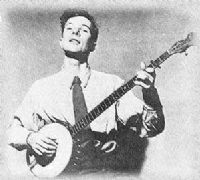
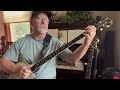
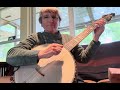
For me it was the way it looked on stage; the way it popped up almost vertical above the head of the banjo player.( contrast to the almost horizontal position of some bluegrass players.) I never found a use for the open key. In fact most players pushed up to the fifth fret for a singing key and for the sound.
So to make this version of the banjo popular again we will have to find out what the young people want in an open back banjo, how they want to look on stage.
With that thought in mind I would suggest we start with a different picture for this group blog. Something more current than 1950.
29 Comments |
 | wesrichards says:
11/24/2016 1:17:52 PM
About the picture: It shows the instrument has a history. About the popularity: It got popular because of Pete Seeger. I can't think of anyone current who is that prominent and so closely associated with the long neck banjo. If I'm forgetting someone, please let me know. :)
|
 | John Gribble says:
11/24/2016 2:13:16 PM
Hi, Michael--I think one reason the long neck became popular was hero worship. There were an awful lot of players who wanted to "be Pete" or one of his close disciples. Having the banjo was part of having the look. The practice aspects of the instrument were less important. A less dated photo, but still of Pete, might be a little more hip, but at my age (almost 70) who cares? If there's a reason, practical or otherwise, for the instrument to come back in popularity, it will happen.
|
 | Joe Connor says:
11/24/2016 2:30:48 PM
For those of us of a certain age, we fell in love with the banjo and this type of music from listening to Pete, or the Kingston Trio, of the Weavers, or the Limeliters. When we looked at the album covers or saw these guys in concert, we saw longneck banjos, so the message was pretty clear. If you wanted to sound like Pete, or Dave Guard, or Erik Darling or Alex Hassilev, you needed a longneck banjo. I can still remember how cool the Vega PS-5 looked on the album cover of At Large, the Kingston Trio's third album.
Also, the longneck was a metaphor for Pete: long and lean. It just looked cool. Think of how many of these folk era guys were tall and thin: Dave Guard, Erik Darling, John Stewart, Alex Hassilev.
One of the hallmarks of all these performers was that they made the music seem like such fun. They made you want to grab a guitar or banjo, and throw back your head and sing. It was such a participatory type of music.
|
 | darwinyarwin says:
11/24/2016 2:31:31 PM
I've always felt that the Kingston Trio did more for long necks than anybody else. When I started playing folk music I just took it for granted that you had to have a Vega Seeger Model long neck just like on the cover of all the KT albums if you were going to play. (It turns out that I could play an Ode long neck just fine, instead.) I vote keep the picture we have.
|
| Joe Connor says:
11/24/2016 2:53:17 PM
I vote to keep Pete's picture. He invented the longneck and if it wasn't for him, the Kingston Trio would never have used longnecks. After all, it was Pete's popularity that caused Vega to market longnecks. Otherwise, none would have been available unless you had a luthier build a new neck or splice an existing one.
I do think the Trio did a lot to popularize longnecks. If you look at the covers of their best-selling albums, the instruments were featured very prominently. You could see that they were playing Martin guitars and Vega banjos. If you knew something about instruments, you could see that they played a D-28, an O-18T and a PS-5.
In this group photo of Pete, is that his first longneck, the one he had John D'Angelico do the neck splice on?
|
CleitusDELETED says:
11/24/2016 3:46:06 PM
I used mine at the open position for two songs many years ago - Len Cohen's Suzanne and Tom Paxton's (?) Hold on to me babe. I'd also use it for Belfast mill. Most of the time I used a capo to fit in with guitarists or singers.
|
CleitusDELETED says:
11/24/2016 3:51:07 PM
I think the difference is Pete mostly performed by himself with the banjo, whereas the normal one is associated with bluegrass and hence Scruggs style lead breaks etc. requiring a piercing high tone. I like the longneck open for trad frailing tunes as well - things like shady grove or east Virginia played solo.
|
 | giweb says:
11/24/2016 4:01:28 PM
My two cents worth: A long neck looks like a banjo should for folk singing, even if the capo stays on the third fret. Same thing for open back vs. resonator. Holding it vertical kept it from hitting the guitar player.
Keep PETE picture!
giweb
|
 | Michael R says:
11/24/2016 7:49:16 PM
Winston Marshall plays banjo for Mumford and Sons. Do we have a song, or interpretation of one of their songs that the Long Neck would work for them?
Thanks for all the responses to my post. I am happy to see the interest. We were all touched by the banjo and Pete. Just a case of letting others know about the value it has.
Lets come up with as many Long Neck songs for the current singing groups as we can.
|
 | Helix says:
11/25/2016 7:57:32 AM
The first 125 Odes were Longnecks, such was the interest. We could go LOOK at a Gibson longneck in Jenkins music window, but we could go into Luyden's music and view a carved heel, champhered headstock, planetary tuners and the coolest skunk stripe with the amazing aluminum rim.
I never even dreamed of a Vega.
We were 16 then, so we went and made ourselves a 2x4 longneck from a Harmony Resotone, even though we were forbidden to do so, wasn't classical music
Personally I think John Stewart made great progress playing real bluegrass patterns on the longneck, Dave Guard was an innovator and a big fan of Pete. The other two Trio were more college fraternity oriented just at the right time when college aged people began to think for themselves.
I spoke with the guitar player from Grada about using a long neck instead of a guitar, it isn't just Tommy Makem for these young players, the rhythms they use have yet to be exploited in Folk Rock fashion like Bernie Leadon and claw to vamp.
I also want to mention the lack of other longnecks after the craze, so newer innovations like a black head or gold hardware do not make a better long neck.
Modern Folk Quartet used the Vegas, but "Home is Where the Heart is" is definitive bluegrass.
Newer long necks in this decade helped bring them back like a bunch of ugly ducklings, now a fine looking flock of adult swans. We're hard to kill.
The music won't stand still. I jam with the Cranberries with my longneck in E.
I've hit a couple of ceiling fans with my neck, no damage to either party.
( ))===='=== :: }
|
| Helix says:
11/25/2016 8:03:40 AM
Some say La Quince Brigada, but it was Wimoweh and the Weavers showing that Folk Singers could look good, sound good and have good taste. They were pro scum, just what the Jedi's needed to help change the world
|
 | john bange says:
11/27/2016 6:32:48 AM
I wouldn't mind seeing a new picture once in a while but I like the one being used too.
I have caught the peg head of my banjo in Christmas decorations during a song...never missed a beat.
|
 | Banjo Lefty says:
11/29/2016 8:14:28 AM
E is an easy key to play in on guitar, and not terribly hard on fiddle and mando, although I know they both prefer A. Also, it's easier to sing in E, so why do so many long-neck players capo up to G??? After all, the point of a long neck is not the look, it's to make it easier on the voice.
|
 | phdm says:
11/29/2016 11:02:27 AM
I strongly agree with wesrichards and others who urge retaining the historic photo of Pete playing history's very first long neck banjo which is this group's homepage photo. (I have a cleaner copy of that very photo, which was taken around 1947, and I would be happy to send to our administrator if he wants to use it instead of his copy.)
History is important and there is no style of banjo so directly linked to one player, who invented the very instrument being discussed, than the Vega long neck with a tubaphone ring played by Pete. The photo was taken within 3 years of Pete having the neck extended on his Whyte Laydie and before it was stolen in 1949 from the back of his car. For a more complete history, here is a link to the article I wrote on the Seeger long neck for Banjo Newsletter at the time of Pete's death in 2014:
banjonews.com/2014-03/the_seeg...anjo.html
As to its popularity in the 1950s, I agree with much of what others have written. Pete set the standard for the look and sound of urban banjo playing of folk music back then. Because of this, Dave Guard and many others initially followed his lead and got long neck banjos. With the release of the Kingston Trio's Tom Dooley in 1958, played by Guard on a Seeger model with its tubaphone tone ring, the sound of a folk banjo was set for the folk revival. It is a distinctive tone that cannot be fully replicated on, say, a Gibson bluegrass banjo. And for me, having the extra three frets to be able to play easily inthe lower keys of E or F (out of G), or A or B (out of C tuning) makes it especially useful as I get older and my high range starts to fade.
|
 | pastorharry says:
11/30/2016 1:23:21 AM
A lot of accurate and interesting,(to some), history there however one slight error above. The banjo intro that brought banjo into homes across the world,(Tom Dooley by the Kingston trio), was actually played by Bob Shane on a 4 string plectrum banjo. Several today play long necks and well such as Mike Iverson and Kaia Kater, who's picture I just posted. I just got home from a good jam enjoying my 1961 Pete Seeger, it still works and is the most versatile banjo I have.Aloha,ph
|
| john bange says:
11/30/2016 8:48:53 AM
I wondered if anyone would catch that...I think I read somewhere that it was tuned D,G,B,E
Chicago tuning
|
| Michael R says:
11/30/2016 9:44:01 AM
What a great Group! Great feedback on the picture and history. Just to keep us honest, Pete added two frets, not three. The nut ( open) is the key of E.
But back to the music and performers. We have the following songs:
La Quince
Wimoweh
Suzanne
Hold on to Me Babe
Belfast Mill
Nobody plays La Quince...
What songs does Kaia Kater play on a long neck in the lower keys? Are there any instrumentals played up the neck that would benefit for the lower open register?
Think about it. Post a TAB.
|
| pastorharry says:
11/30/2016 12:16:38 PM
youtube.com/watch?v=mliWTa9W9WY
|
| pastorharry says:
11/30/2016 12:19:21 PM
I play Dirk Powell's "Waterbound" in an F tuning, but at the 2nd fret so it's actually in E, also Ola Belle Reed's "Iv'e endured" in double C tuning but on the 2nd fret.
|
| Michael R says:
12/1/2016 7:06:23 AM
If we tune to the Seeger "C" tuning and play open, then we are in A. Are there fiddle tunes that will adapt to that setup? Playing above the 12th fret and using the open lower strings?
|
 | VPS says:
12/1/2016 8:17:59 AM
What about "Baby You've Been On My Mind" from the last Kingston Trio album? No capo there. I'm also thinking Jim McGuinn played "Whup Jamboree" with the Chad Mitchell Trio sans clamp.
To Joe Connor-I had to smile at your height comparison. Alex Hassilev is actually much smaller than you'd think from the album covers.
|
| phdm says:
12/1/2016 11:06:26 AM
Thanks, pastorhardy, for catching my error on the banjo playing on Tom Dooley. I had actually thought of that, but got confused, and for some reason, thought Shane played the plectrum banjo on MTA. Thanks for correcting this.
|
 | Sean ONeel says:
12/19/2016 7:53:21 AM
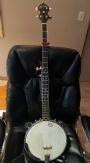
If a different photo was used I think it should always be another picture of Pete.
|
| Sean ONeel says:
12/20/2016 9:23:16 AM
If memory serves The Kingston Trio did "Away Rio". "Long Black Veil" and "Ballad of The Thresher" in open E. In Pete's "Compleat Folk Singer" he mentioned that Jimmy D'Aquisto did the original neck splice while he was John D'Angelico's apprentice. I love this picture of The Kingston Trio's dressing room...both Dave Guard's PS-5's together with a mirror view:
banjohangout.org/photo/6032
|
| Sean ONeel says:
12/20/2016 9:25:02 AM
Let's try this again: banjohangout.org/photo/60321
|
| pastorharry says:
12/20/2016 2:52:10 PM
with a long neck you don't need a cello banjo, a bluegrass banjo, a folk banjo or a clawhammer banjo....you have them all rolled into one. The world's most versatile instrument ! ;)
|
| Michael R says:
12/20/2016 4:12:38 PM
OK, lets push the versatility. Key of A, open, no capo, PS "C" tuning. Give me a common tune that the banjo can use all those octaves! NAME THAT TUNE
|
| darwinyarwin says:
12/20/2016 4:13:30 PM
Here's one of Pete's versions of Woody's "Hobo's Lullaby". I've heard Pete play it in several keys, and in several tunings. It does indeed show how well the Long Neck can stand alone and hold the audience spellbound. The pictures I've seen have Pete with his capo behind the first fret on a couple of versions. In this one it sounds like he has the 5th string tacked up real high. What a versatile instrument just on this one song. youtube.com/watch?v=RsfcZgnXapE It's (obviously) one of my favorite long neck folk tunes.
|
| darwinyarwin says:
12/20/2016 4:18:30 PM
Ooopos. Hobo's Lullaby was composed by Goebel Reeves. Woody just made it famous. :)
|
Post a Comment
|
You must be logged in and a member of this group to post a comment.
|