DVD-quality lessons (including tabs/sheet music) available for immediate viewing on any device.
Take your playing to the next level with the help of a local or online banjo teacher.
Weekly newsletter includes free lessons, favorite member content, banjo news and more.
Premier Sponsors


|
Please note this is an archived topic, so it is locked and unable to be replied to. You may, however, start a new topic and refer to this topic with a link: http://www.banjohangout.org/archive/397868
Patrick1962 - Posted - 06/14/2024: 05:59:55
From what I understand Recording King banjos were made for Montgomery Ward by Gibson, right? Basically MW was the amazon of the early 1900's. If that's the case I'm wondering where all of those early original RK's are now? Anybody know?
BobbyE - Posted - 06/14/2024: 06:51:55
Montgomery Wards were local department stores that catered to the needs of most folks in the USA in the 1900s. I bought my first shotgun from them at about age 12 or 13. They also printed a catalog that many people used to order from, mostly rural people, who could not get to the local store, or did not have one to get to. Not sure I would call them the Amazon of the 1900s because their business model was so different, but won't quibble that. Anyway, they, and Sears (and Roebuck), were the main players on the national scene of department stores in the 1900s. I do believe that they carried the RK line but not sure that would have been the name on them in the store. As far as where they are now, many of the folks who would have been looking for instruments would not have had the resources to buy Gibsons so went to MW because they would have offered an instrument of lesser quality and price. My guess is that many are not around today based on the original quality of the instrument.
Bobby
Edited by - BobbyE on 06/14/2024 07:04:08
waystation - Posted - 06/14/2024: 06:52:27
My guess - the majority of RKs were built as tenors. Other than the neck, they pretty much matched equivalent Gibson models. In the wave of tenor to 5-string conversions the only part that had RK identification, the neck was replaced. Most people probably preferred the more familiar Gibson branding and had their 5-string necks built that way.
Also, I could be wrong about this, but I believe banjos built by Gibson for others generally didn't have serial numbers. Their second line banjos like Kel Kroydon usually didn't. So RKs wouldn't show up in the Gibson serial number lists. Of course, as with everything Gibson in that era, there were exceptions, so there are RK batches with standard format Gibson FONs. You can find them in the Earnest and banjophiles lists, but there aren't many, reflecting the rarity of RKs with FONs more than the rarity of RKs overall.
RioStat - Posted - 06/14/2024: 07:08:43
They're out there. They show up for sale fairly regularly on Hangout, ebay, etc....
Just like their more famous, older cousins the Gibsons, a lot of the old RK's have been converted into 5 string banjos.
Here's a few old RK's, though not for sale, earnestbanjo.com/wp/recording-...y-gibson/
TreyDBanjoKS - Posted - 06/14/2024: 07:29:29
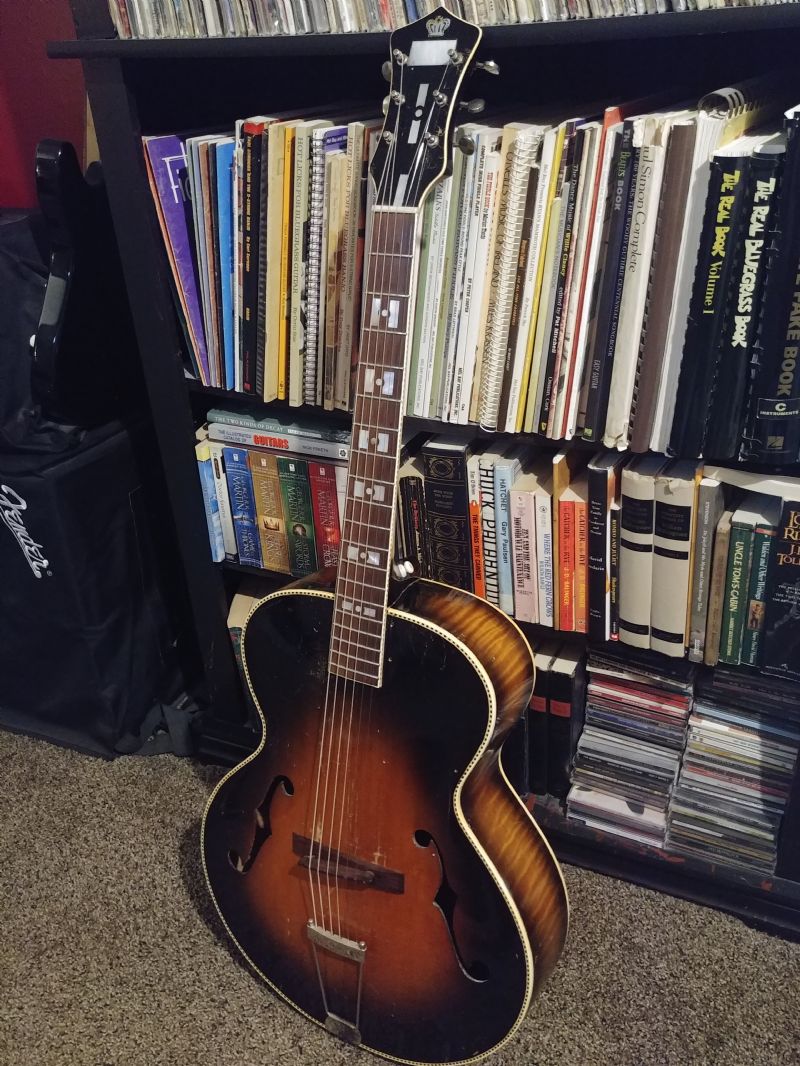
I had an old RK guitar- 38' M5. It was a truly high end vintage archtop, a "poor man's L5" (almost identical specs.) Same fit and finish as the old pre-war Gibsons, the major difference was a lack of adjustable truss rod.
I almost never played it because the neck was egregiously thick- a perfect example of a "baseball bat" neck. I injured my wrist trying to adapt my play style to this guitar, so in the end I sold it. It was a cool looking and sounding guitar, but nobody should have to fight their instrument that way.
-TD
beezaboy - Posted - 06/14/2024: 08:58:18
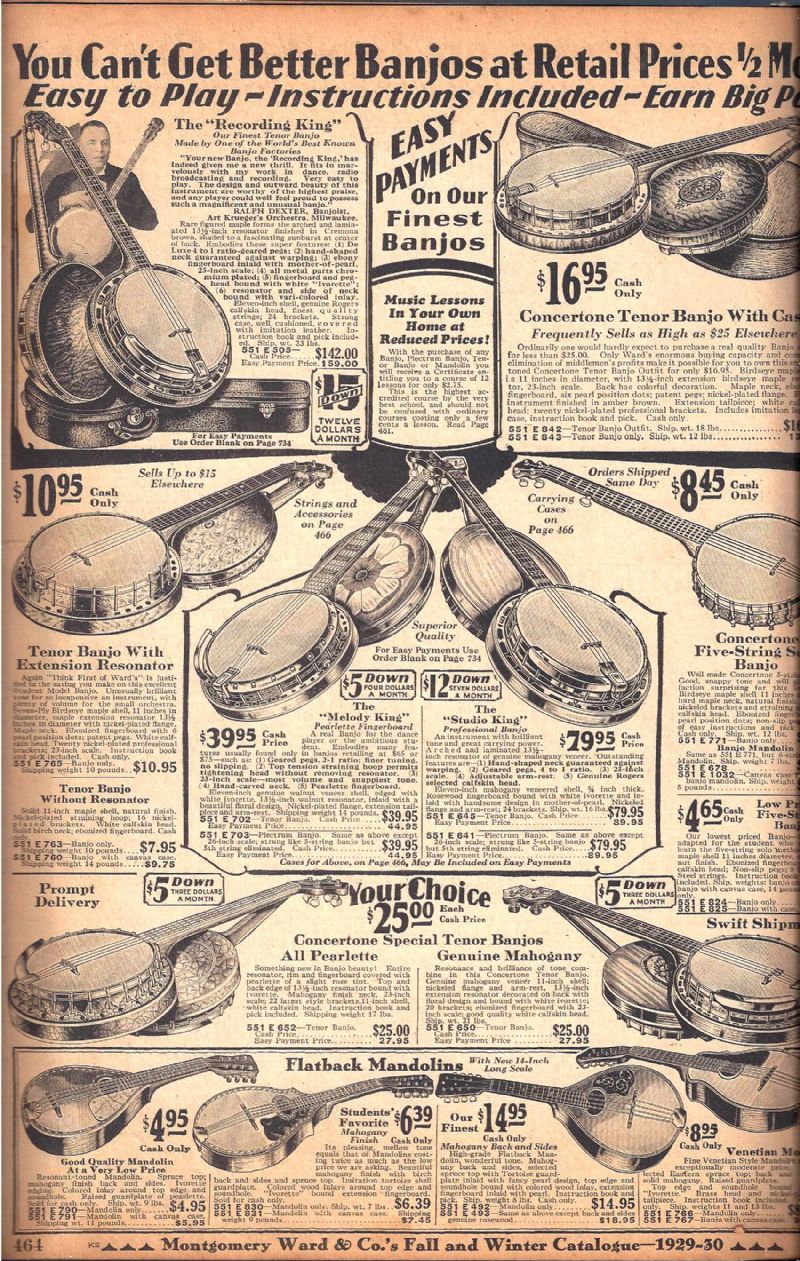
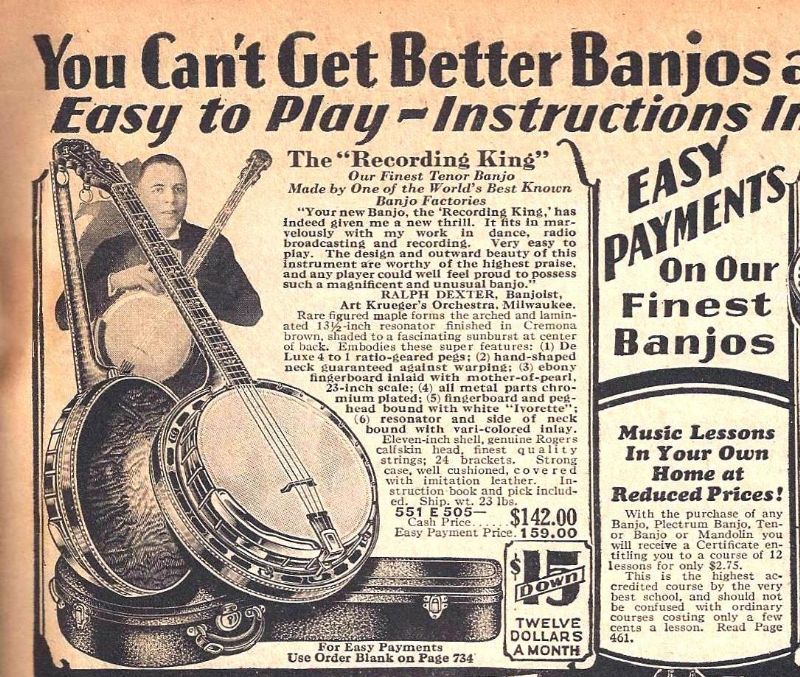
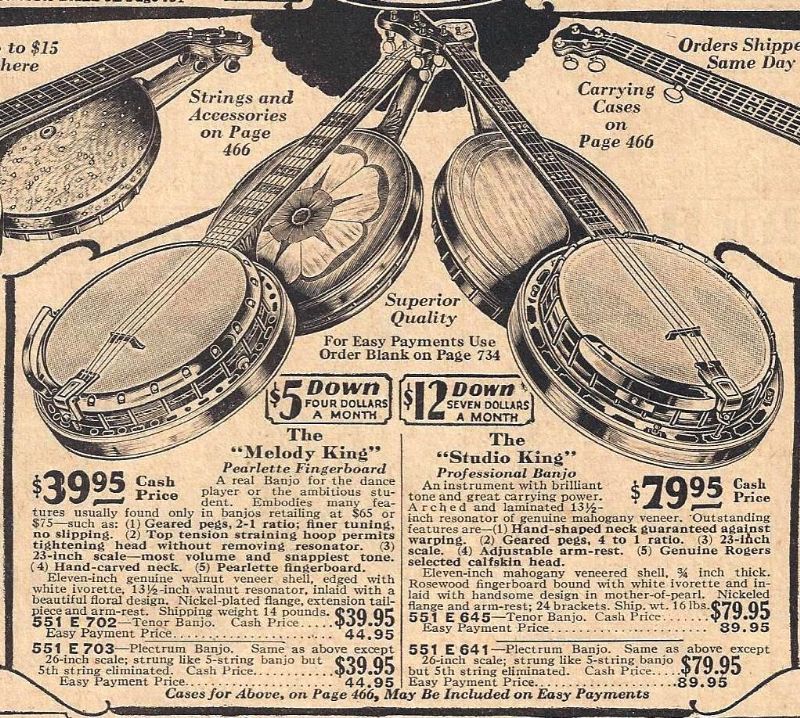
Montgomery Ward Catalog 111 Fall/Winter 1929-'30.
Recording King and Studio King.
waystation - Posted - 06/14/2024: 10:05:07
quote:
Originally posted by TreyDBanjoKSI had an old RK guitar- 38' M5. It was a truly high end vintage archtop, a "poor man's L5" (almost identical specs.) Same fit and finish as the old pre-war Gibsons, the major difference was a lack of adjustable truss rod.
Gibson built banjos and mandolins under many names for other companies, and even built a few budget lines that they sold themselves. Many of these instruments duplicated the specs of standard Gibson models, but one of the few features they reserved for Gibson-branded instruments was the adjustable truss rod. Even the Kel Kroydons, which matched equivalent Gibsons feature for feature, lacked the adjustable rod, and if you look at any Depression-era Kel Kroydon neck you'll see that it has no truss rod cover. Just about every Gibson down to the
The banjo in John Hoft's post with the checkerboard binding is basically a chrome-plated version of the Gibson Style 6, one of Gibson's highest-end instruments. Note that the description doesn't mention an adjustable truss rod, which is featured in almost every single Gibson banjo and guitar ad from the era. That's because in spite of the high cost, that RK banjo didn't have one, but a Gibson TB-1, and probably even the lower -0 and -00 models, would have.
Bridgebuster - Posted - 06/14/2024: 14:12:27
quote:
Originally posted by beezaboyMontgomery Ward Catalog 111 Fall/Winter 1929-'30.
Recording King and Studio King.
The ad says banjos are "Easy to play". SAY WHAT???!!!! I didn't think they had crack back in those days!
rcc56 - Posted - 06/14/2024: 14:57:07
Recording King was a brand name used by Montgomery Ward from 1929 through 1943. Ward contracted several companies to build RK instruments.
While a large number of instruments with the Recording King brand were built by Gibson, some RK's were built by Regal, Kay, and [according to George Gruhn] Gretsch.
Although I don't recall hearing of a prewar RK banjo that was not built by Gibson, I have seen a number of RK guitars that were built by Regal. I've also seen a few RK guitars that were built by Kay.
Prewar Recording King banjos are not something that we see very often.
Edited by - rcc56 on 06/14/2024 15:01:28
Patrick1962 - Posted - 06/14/2024: 17:36:57
Trey-that is one purdy lookin' guitar!
John-love those pages you posted..like I said earlier, MW and Sears Roebuck were the amazon of the early 1900's..for a lot of rural folk getting the MW catalog every year was a big deal...I love history
fotoguzzi - Posted - 06/14/2024: 19:50:09
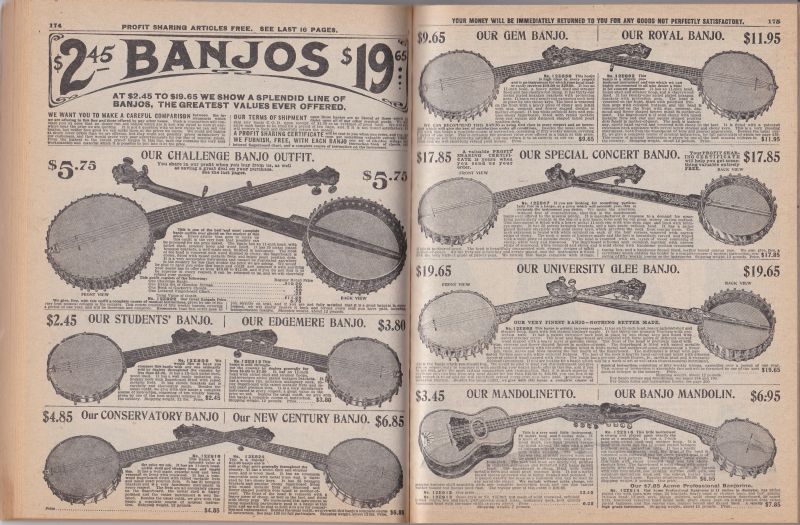
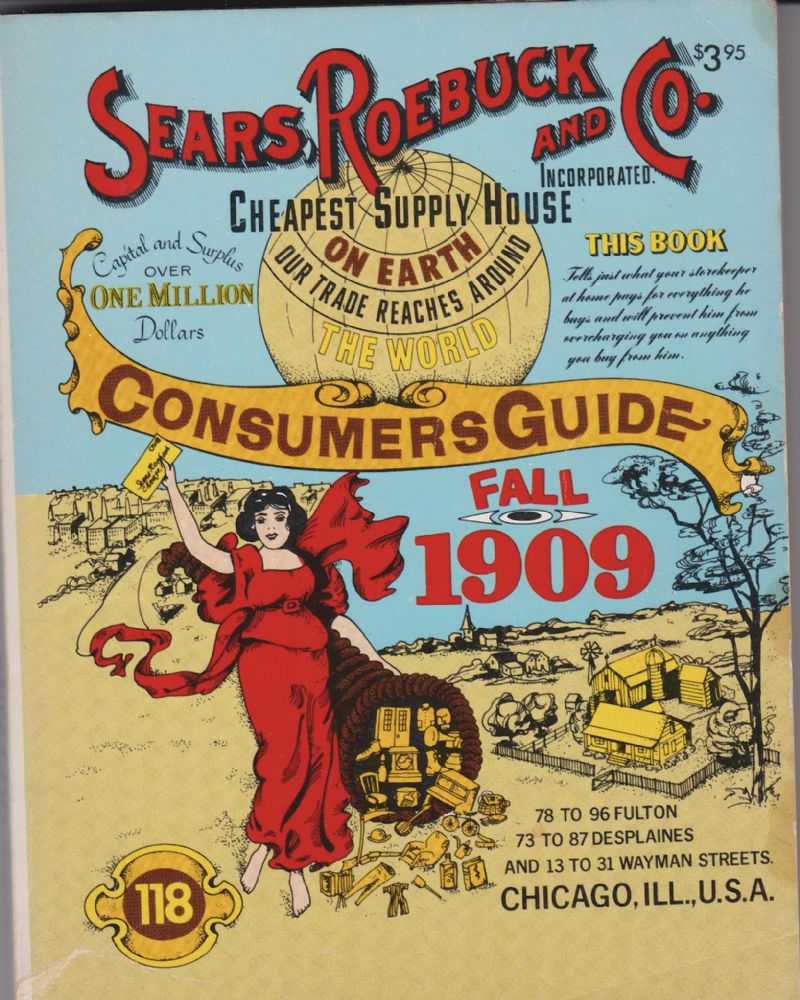
Sears and Roebuck 1909 catalog.. 2 pages of banjos 30 pages of firearms.
You could order almost anything. They list Grand Pianos and pump Organs. Talking machines and Brown’s vegetable cure for female weakness..
Edited by - fotoguzzi on 06/14/2024 19:51:05
beezaboy - Posted - 06/15/2024: 05:49:59
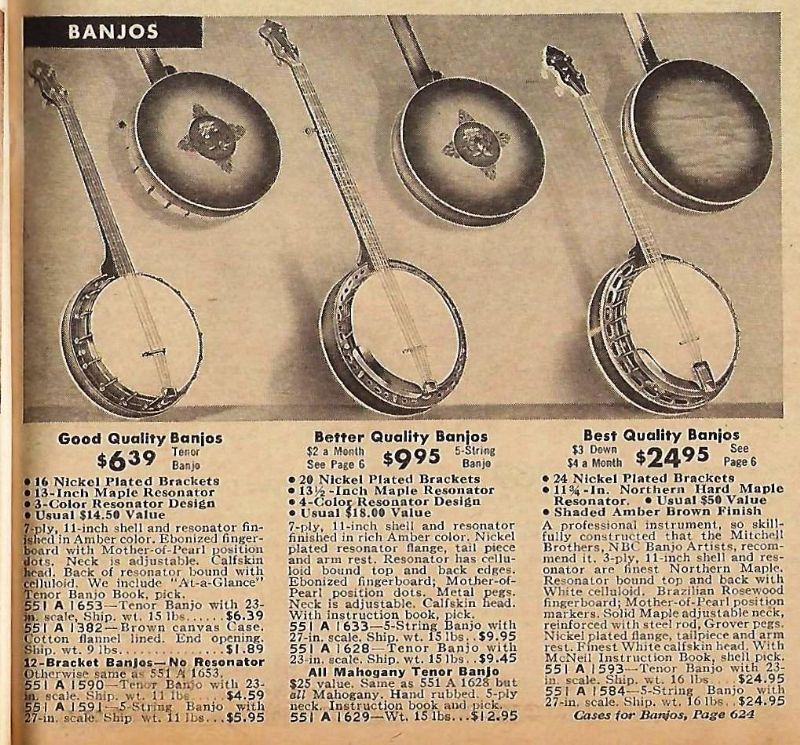
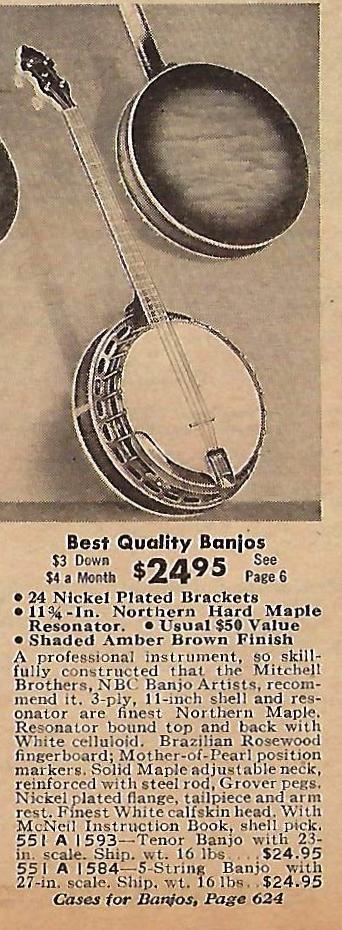
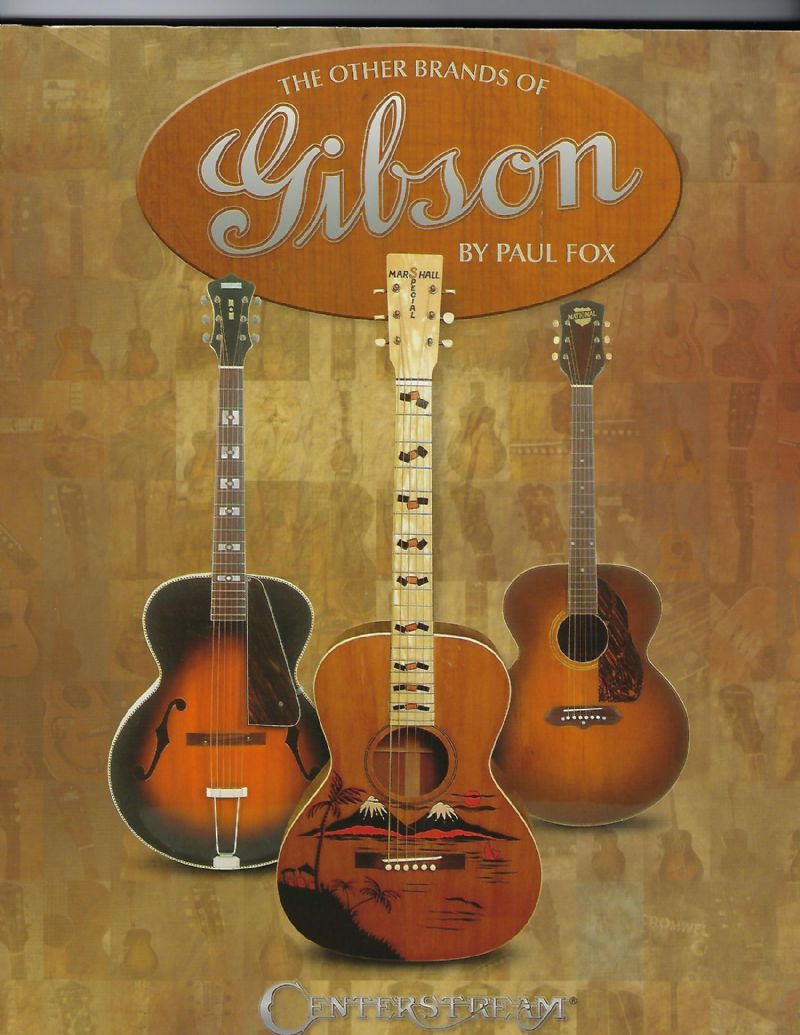
Here's a thought. Gibson made Recording King banjos for Montgomery Ward throughout the 1930's. Over the years the M/W Recording King's price steadily declined. Attached is M/W Catalog 129 Fall/Winter 1938-'39 for example. Question: Did the characteristics and quality of Gibson's Recording King banjos change or decline during that time-frame? For example, are the characteristics of the 1929 Recording King banjo different from the 1938 version? I don't know much about Gibson banjos. I have been just a M/W catalog collector over the years looking for Gretsch banjos. You can learn much more about the history of Recording King banjos etc. from Paul Fox's great book "The Other Brands Of Gibson".
Edited by - beezaboy on 06/15/2024 05:53:56
Joel Hooks - Posted - 06/15/2024: 06:54:39
beezaboy , I am going to presume that selling to "major" retailers has not changed much. This is something that I do for my day job. Every so often, heads of buying departments decide they need bigger bonuses so they send out "opportunities to bid" to all current and prospective vendors. Basically this "opportunity" is an offer to the vendors to lower their prices (generally accompanied by a threat that they "have other bidders" which is often a bluff, but not always.
This can happen multiple times a year, or sometimes years go by without this chiseling of cost. It is pretty random.
I presume that the lowering of price is result of the buyers browbeating the vendors.
With my experience this is particularly bad with private label products. The tactic works because these customers dominate the market and many mfgs are reliant on the business.
As a vendor you have a few choices. Tell the buyer to pound sand (this sometimes works and they relent, temporarily on the price beating). Accept it and make less money (usually with a layoff or two of your workers). Offer a cheaper option to the buyer.
The buyer will sometimes (but not always) accept the cheaper option.
beezaboy - Posted - 06/15/2024: 07:49:52
Joel - Thanks for the heads-up for the workings of the industry. Montgomery Ward had some leverage on Gibson since "Recording King" was a M/W brand and so Gibson Recording King banjos could only be purchased wholesale by M/W and sold thru the catalog or M/W dept. stores I presume. Note that the original 1929 RK 505 was priced at $142.00. Along the way M/W changed the RK catalog numbers and I think the "Recording King" disappeared from the peghead but I really don't know about that for sure. By 1938 (sooner actually) the "RK" M/W number was1593 and the 1593 was priced at just $24.95. Quite a discount from the original if the 1593 was really built like the 505. Hence, my question : Did the RK parts and build characteristics change over time so that it became more of a student or budget instrument than the original 1929 model?
Old Hickory - Posted - 06/15/2024: 09:57:31
I'm sure that most of the potentially durable items sold by Montgomery Ward before 1940 can't be accounted for. I also expect no one knows how many RK banjos were made and sold in the first place.
beezaboy - Posted - 06/15/2024: 10:51:44
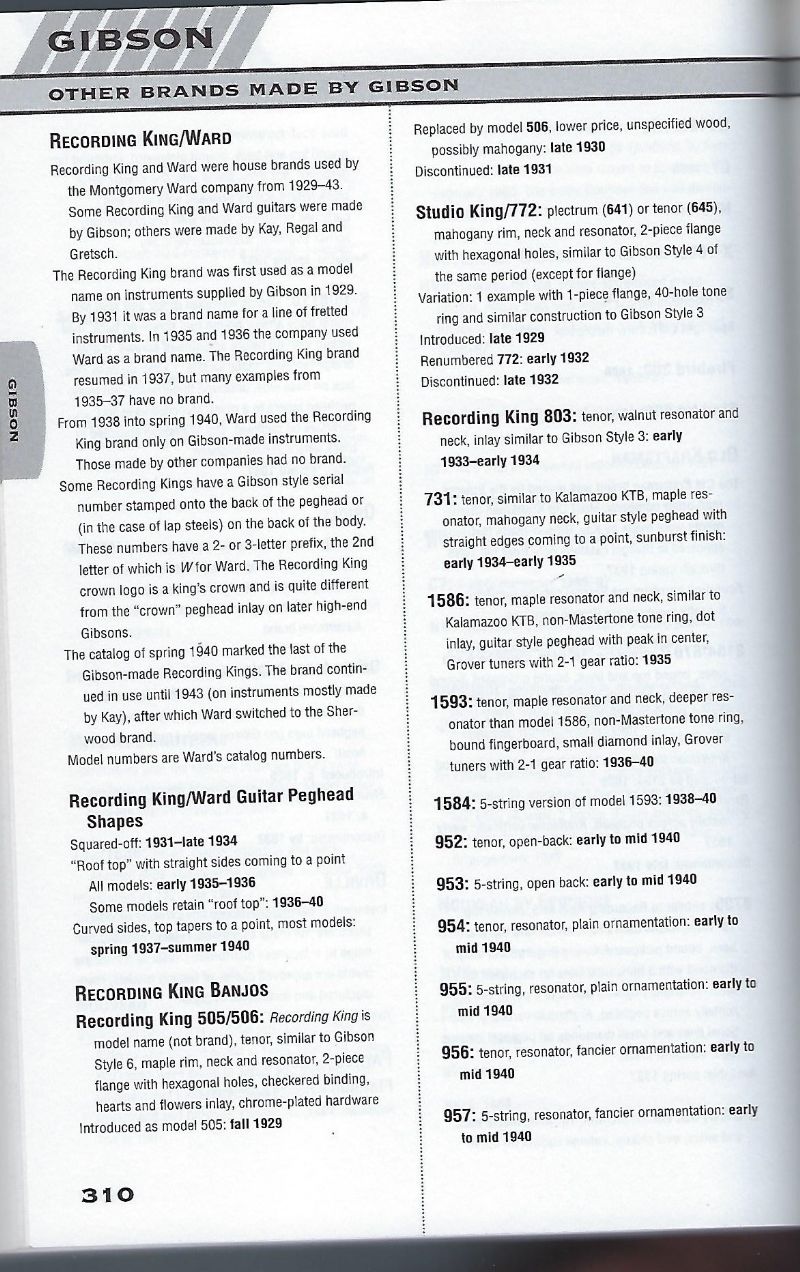
Further to my question above: Joe Spann has a few Recording King banjos listed in his book ("Spann's Guide To Gibson 1902-1941") but in that book Joe referred us to "Gruhn's Guide To Vintage Guitars" for RK chronology and structural changes. Attached is Gruhn's Guide's Recording King Banjos chronology and model descriptions with dates. Yes. RK 1593 ($24.95) is a far cry from the original RK 505 ($142). Over time during the 1930's Gruhn's Guide shows that the RK was downgraded to a more popular priced instrument comprised of less expensive parts and probably craftsmanship as well.
I would guess that this would be of interest to Recording King Banjo collectors as not all Recording King Banjos were of equal quality.
Edited by - beezaboy on 06/15/2024 10:55:59
beezaboy - Posted - 06/15/2024: 11:11:18
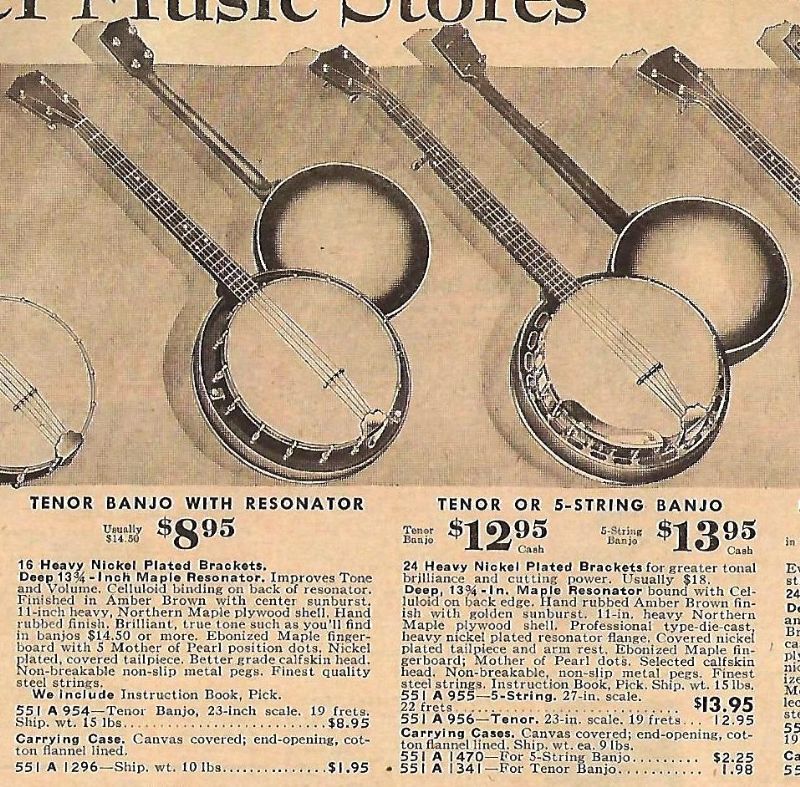
FYI - Attached is Montgomery Ward Catalog 132 - Spring/Summer 1940 that show RK Banjos 954 and 956 referred to in Gruhn's Guide as the last of the Gibson Recording King banjos.
Joel Hooks - Posted - 06/15/2024: 11:56:17
quote:
Originally posted by beezaboyFYI - Attached is Montgomery Ward Catalog 132 - Spring/Summer 1940 that show RK Banjos 954 and 956 referred to in Gruhn's Guide as the last of the Gibson Recording King banjos.
Hey, look at that, "ebonized maple fingerboard"... where did this "pearwood" nonsense come from, every time I see a catalog description it is maple.
Old Hickory - Posted - 06/15/2024: 13:54:12
"Brilliant, true tone such as you'll find in banjos $14.50 or more."
Patrick1962 - Posted - 06/17/2024: 03:18:27
Damn bro! and I thought I was old..LOL..I was born in '62. 15 bucks? crazy, right?
writerrad - Posted - 06/20/2024: 16:18:49
There are two Recording Kings. One was an early 20th century American banjo company or label put on musical instruments that died out which I think was a store brand.
About 2005-7, a Chinese company that used to call itself Johnson making guitars and banjos hired Greg Rich, a great designer of banjos who had once worked for Gibson away from Saga, which i think is either a Chinese or Korean company. Johnson put Rich in charge of a premium string instrument line called Johnson Carolina instruments. About a year or 2 later they changed their name to Recording King and expanded their line of guitars and banjos. They seem to make nice instruments for the money.
Edited by - writerrad on 06/20/2024 16:19:31
writerrad - Posted - 06/20/2024: 16:20:55
quote:As a former Monkey Ward employee of low rank, I would say Monkey Ward was always second to Sears in sales and extent and lines.
Originally posted by Patrick1962From what I understand Recording King banjos were made for Montgomery Ward by Gibson, right? Basically MW was the amazon of the early 1900's. If that's the case I'm wondering where all of those early original RK's are now? Anybody know?
Patrick1962 - Posted - 06/20/2024: 20:09:21
Tony-did not know that there was a break in the continuity like that..interesting. Oh well..I really like the sound and look of RK's (and the price) and I suppose at the end of the day that's the most important thing, right?
Old Hickory - Posted - 06/22/2024: 16:53:33
quote:
Originally posted by writerrad. . .Saga, which i think is either a Chinese or Korean company.
I believe Saga is an American-owned company headquartered in San Francisco. As recently as last year, founder Richard Keldsen was still president and CEO. Saga manufactures instruments and accessories in many countries, including China, of course.
Parent company of Recording King (owner of the brand, I should say) is The Music Link, which is headquartered in Hayward, California. It's my understanding their products are designed in the US and manufactured overseas, largely China I guess. I don't know if it's really a Chinese company with the American executives answering to Chinese bosses.
writerrad - Posted - 06/22/2024: 17:49:07
Thanks for an explicit explanation of all of this. I am sure your corrections of what I wrote are an improvement. After I posted that I tried to delete it because it comes from hazy memory from 20 years ago when I was in contact with a guy I met at the Black Banjo Gathering I organized in 2005 who worked for Blue Ridge instruments where Rich was employed at the time when I contacted him about 2007 about getting a guitar, but he and Rich had gone on from there, and some other how I ended up with Johnson Carolina II which became Recording King and jacked up its prices a bit for the guitar I got when I did.,
'I am quite sure whatever you say is more correct than what I typed. Like I said, I think I even tried to delete that part of my posts as I had no researched it.
To me something made in China is made in China. I have nothing against anything made in China as opposed to anywhere else. I have great love for my first decent banjo a Goldtone WL-250 I bought 21 years ago, an open back that was apparently assembled in Florida from parts made in Korea, but think the ones Goldtone is having manufactured in China now and set up in Florida are better.
I have a bottom of the line RK dirty 30s resonator banjo that I cannot get my hands off of, even though I have a couple nice Tubaphones, an 1890s Fairbanks, an Enoch open back, etc. .
But again, thanks for using your superior knowledge and care for these matters to correct my hazy incorrect post..
Keep picking and keep correcting the aged and inaccurate like me,
Originally posted by Old Hickoryquote:
Originally posted by writerrad. . .Saga, which i think is either a Chinese or Korean company.
I believe Saga is an American-owned company headquartered in San Francisco. As recently as last year, founder Richard Keldsen was still president and CEO. Saga manufactures instruments and accessories in many countries, including China, of course.
Parent company of Recording King (owner of the brand, I should say) is The Music Link, which is headquartered in Hayward, California. It's my understanding their products are designed in the US and manufactured overseas, largely China I guess. I don't know if it's really a Chinese company with the American executives answering to Chinese bosses.
rcc56 - Posted - 06/22/2024: 20:13:28
The owner of my friendly neighborhood music store keeps up with the trade magazines, and often gives me a heads up when one company takes over another. Takeovers are happening at such a quick rate these days that I can no longer keep track of who owns what.
I'm not sure who owns Music Link or Saga. I think they're both still independent, but I wouldn't swear to it in court. Greg Rich could give us the answer for Music Link if he wants to.
Did y'all know that Eastman is the current owner of Haynes Flutes? And Gold Tone now owns Ome banjos.
And I don't know who the owners of Eastman or Gold Tone are, or what their owners' nationalities might be.
"There's always a bigger fish."
Edited by - rcc56 on 06/22/2024 20:18:21
desert rose - Posted - 06/23/2024: 02:49:00
The whole history from day one of modern RK era was reported here on the hangout daily by both Greg Rich and me. Greg OWNED the trademark for Recording King musical instruments, he and MarkTaylor made a series of prorotypes in the ninetys but never took it further, When Greg was hired by Musiclink to work on their acoustic line they bought the Recording king trademark from Greg. As many here remember I was hired by them and set up completely first their acoustic guitar production then itwas my responsibility to totally from ground zero set up the Recording king banjo production factory, every machine even the tone ring alloy which Greg supplied was under my control, in total I soent over two years setting up the guitar and banjo production, some times sending 10 to twelve weeks a year working in China, and when as agreed in my contract they reached my required quality level, I signed off, and turned every thing over to AXL Music Link, and the rest is history
As I said this was all reported daily on the banjo cafe back when it was happening
desert rose - Posted - 06/23/2024: 05:56:22
To answer the question about rk ownership, The Musiclink runs Recording king, and both are owned by the parent company AXL headquartered in California and Shanghai, the owner is Alan Liu a Chinese American
axl-international.com/
AXL Music Instruments (axlusa.com)
Edited by - desert rose on 06/23/2024 05:58:26
Old Hickory - Posted - 06/23/2024: 08:48:24
quote:
Originally posted by writerradThanks for an explicit explanation of all of this. I am sure your corrections of what I wrote are an improvement. . . . thanks for using your superior knowledge and care for these matters to correct my hazy incorrect post..Keep picking and keep correcting the aged and inaccurate like me
I didn't mean anything personal. And I don't refute anything in your version of the history of how Recording King came to be.
writerrad - Posted - 06/23/2024: 10:46:48
You didn't do anything that I do not admire in your post!
I applaud the tone and content of your response. I salute whatever concern you showed that got you in possession of the right information.
I think it was a generous act to take a bit of your time and share it with us.
You knew the proper information about this correcting my foggy memory. Thanks.
Edited by - writerrad on 06/23/2024 10:47:57
Patrick1962 - Posted - 06/23/2024: 16:26:23
Scott-thanks for posting all of that..very informative. I love the look and sound of RK's..good to know they were in more than capable hands starting out.
banjonz - Posted - 07/28/2024: 22:12:44
quote:
Originally posted by waystationquote:
Originally posted by TreyDBanjoKSI had an old RK guitar- 38' M5. It was a truly high end vintage archtop, a "poor man's L5" (almost identical specs.) Same fit and finish as the old pre-war Gibsons, the major difference was a lack of adjustable truss rod.
Gibson built banjos and mandolins under many names for other companies, and even built a few budget lines that they sold themselves. Many of these instruments duplicated the specs of standard Gibson models, but one of the few features they reserved for Gibson-branded instruments was the adjustable truss rod. Even the Kel Kroydons, which matched equivalent Gibsons feature for feature, lacked the adjustable rod, and if you look at any Depression-era Kel Kroydon neck you'll see that it has no truss rod cover. Just about every Gibson down to the
The banjo in John Hoft's post with the checkerboard binding is basically a chrome-plated version of the Gibson Style 6, one of Gibson's highest-end instruments. Note that the description doesn't mention an adjustable truss rod, which is featured in almost every single Gibson banjo and guitar ad from the era. That's because in spite of the high cost, that RK banjo didn't have one, but a Gibson TB-1, and probably even the lower -0 and -00 models, would have.
I have physically seen here an original KK here that a luthier removed the part of the peghead where access to a truss rod would be only to find a truss rod with an adjustor. He then made a wooden cover for it.
waystation - Posted - 07/29/2024: 07:59:19
There's a long history of luthiers finding truss rod adjusters hidden under the veneer of RK and KK necks. If Gibson received an order for a second-line banjo they would take a neck blank and decorate it appropriate to the model. Adjustable truss rods were a patented feature exclusive to Gibson-branded instruments, so if it didn't say Gibson on the headstock it didn't get one. So an RB-11 had an adjuster (and, in my case, a very nice bubble-shaped truss rod cover), but a KK-11 never would.
I recall someone stripping the blue paint finish off a style 11 neck in the 80s and finding it was a highly figured curly maple blank with gold sparkle under the binding, obviously originally built for a Style 6. I had no such luck; mine was straight grain mahogany.
The stories of Gibson cutting corners back in the day to save a nickel were legendary. Case in point: I once saw a Granada archtop that belonged to Herb Hooven, who played banjo for Joe Val in the early days. It was apparently built during the period when Gibson was transitioning from ball bearing rings to cast archtops, which required a taller rim than the ball bearings. Not only was Herb's banjo rim built up with a wooden shim, but that shim had a small sliver of gold in one spot - a piece of a Mastertone label. Gibson had the good sense not only to use already-built but obsolete ball bearing rims, but to make their shims out of other already-built (and in this case, already-finished) rims. They wasted literally nothing.
By the way, since Kel Kroydon is part of this discussion, did you know that Gibson originally started the brand during the Depression to sell wooden toy boats made from the scrap wood from the instrument-making process? Again, nothing went to waste.
BanjoLink - Posted - 07/29/2024: 08:55:14
quote:
Originally posted by waystationThere's a long history of luthiers finding truss rod adjusters hidden under the veneer of RK and KK necks. If Gibson received an order for a second-line banjo they would take a neck blank and decorate it appropriate to the model. Adjustable truss rods were a patented feature exclusive to Gibson-branded instruments, so if it didn't say Gibson on the headstock it didn't get one. So an RB-11 had an adjuster (and, in my case, a very nice bubble-shaped truss rod cover), but a KK-11 never would.
I recall someone stripping the blue paint finish off a style 11 neck in the 80s and finding it was a highly figured curly maple blank with gold sparkle under the binding, obviously originally built for a Style 6. I had no such luck; mine was straight grain mahogany.
The stories of Gibson cutting corners back in the day to save a nickel were legendary. Case in point: I once saw a Granada archtop that belonged to Herb Hooven, who played banjo for Joe Val in the early days. It was apparently built during the period when Gibson was transitioning from ball bearing rings to cast archtops, which required a taller rim than the ball bearings. Not only was Herb's banjo rim built up with a wooden shim, but that shim had a small sliver of gold in one spot - a piece of a Mastertone label. Gibson had the good sense not only to use already-built but obsolete ball bearing rims, but to make their shims out of other already-built (and in this case, already-finished) rims. They wasted literally nothing.
By the way, since Kel Kroydon is part of this discussion, did you know that Gibson originally started the brand during the Depression to sell wooden toy boats made from the scrap wood from the instrument-making process? Again, nothing went to waste.
Rich, you are indeed correct about what was going on at Gibson in the 30's and early 40's. There have been a number of instances where the veneer under a Style 11 resonator turned out to have been originally skinned for a Style 6. I own a TB-2 that came with an arch top tone ring. Inside the rim, there is a dowel plugging the hole where the second coordinator rod was to have been. It was obviously built for a Mastertone banjo.
waystation - Posted - 07/29/2024: 11:47:17
quote:
Originally posted by BanjoLinkquote:
Originally posted by waystationThere's a long history of luthiers finding truss rod adjusters hidden under the veneer of RK and KK necks. If Gibson received an order for a second-line banjo they would take a neck blank and decorate it appropriate to the model. Adjustable truss rods were a patented feature exclusive to Gibson-branded instruments, so if it didn't say Gibson on the headstock it didn't get one. So an RB-11 had an adjuster (and, in my case, a very nice bubble-shaped truss rod cover), but a KK-11 never would.
I recall someone stripping the blue paint finish off a style 11 neck in the 80s and finding it was a highly figured curly maple blank with gold sparkle under the binding, obviously originally built for a Style 6. I had no such luck; mine was straight grain mahogany.
The stories of Gibson cutting corners back in the day to save a nickel were legendary. Case in point: I once saw a Granada archtop that belonged to Herb Hooven, who played banjo for Joe Val in the early days. It was apparently built during the period when Gibson was transitioning from ball bearing rings to cast archtops, which required a taller rim than the ball bearings. Not only was Herb's banjo rim built up with a wooden shim, but that shim had a small sliver of gold in one spot - a piece of a Mastertone label. Gibson had the good sense not only to use already-built but obsolete ball bearing rims, but to make their shims out of other already-built (and in this case, already-finished) rims. They wasted literally nothing.
By the way, since Kel Kroydon is part of this discussion, did you know that Gibson originally started the brand during the Depression to sell wooden toy boats made from the scrap wood from the instrument-making process? Again, nothing went to waste.Rich, you are indeed correct about what was going on at Gibson in the 30's and early 40's. There have been a number of instances where the veneer under a Style 11 resonator turned out to have been originally skinned for a Style 6. I own a TB-2 that came with an arch top tone ring. Inside the rim, there is a dowel plugging the hole where the second coordinator rod was to have been. It was obviously built for a Mastertone banjo.
Yes, after I posted I remembered hearing about Style 11 resonators with fancy wood under the plastic veneer.
I wonder if people pulled off the plastic after that to see what was underneath their own resonators, only to find trash wood and end up having to reskin it themselves. I doubt Gibson used too many of those Style 6 resonators on their $15 blue banjos...
BanjoLink - Posted - 07/29/2024: 12:40:30
quote:
Originally posted by waystationquote:
Originally posted by BanjoLinkquote:
Originally posted by waystationThere's a long history of luthiers finding truss rod adjusters hidden under the veneer of RK and KK necks. If Gibson received an order for a second-line banjo they would take a neck blank and decorate it appropriate to the model. Adjustable truss rods were a patented feature exclusive to Gibson-branded instruments, so if it didn't say Gibson on the headstock it didn't get one. So an RB-11 had an adjuster (and, in my case, a very nice bubble-shaped truss rod cover), but a KK-11 never would.
I recall someone stripping the blue paint finish off a style 11 neck in the 80s and finding it was a highly figured curly maple blank with gold sparkle under the binding, obviously originally built for a Style 6. I had no such luck; mine was straight grain mahogany.
The stories of Gibson cutting corners back in the day to save a nickel were legendary. Case in point: I once saw a Granada archtop that belonged to Herb Hooven, who played banjo for Joe Val in the early days. It was apparently built during the period when Gibson was transitioning from ball bearing rings to cast archtops, which required a taller rim than the ball bearings. Not only was Herb's banjo rim built up with a wooden shim, but that shim had a small sliver of gold in one spot - a piece of a Mastertone label. Gibson had the good sense not only to use already-built but obsolete ball bearing rims, but to make their shims out of other already-built (and in this case, already-finished) rims. They wasted literally nothing.
By the way, since Kel Kroydon is part of this discussion, did you know that Gibson originally started the brand during the Depression to sell wooden toy boats made from the scrap wood from the instrument-making process? Again, nothing went to waste.Rich, you are indeed correct about what was going on at Gibson in the 30's and early 40's. There have been a number of instances where the veneer under a Style 11 resonator turned out to have been originally skinned for a Style 6. I own a TB-2 that came with an arch top tone ring. Inside the rim, there is a dowel plugging the hole where the second coordinator rod was to have been. It was obviously built for a Mastertone banjo.
Yes, after I posted I remembered hearing about Style 11 resonators with fancy wood under the plastic veneer.
I wonder if people pulled off the plastic after that to see what was underneath their own resonators, only to find trash wood and end up having to reskin it themselves. I doubt Gibson used too many of those Style 6 resonators on their $15 blue banjos...
Maybe not Rich, but I suspect they were selling a lot more 11's than 6's, so I don't doubt that quite a few were used. I know for sure that I'm not checking my all original RB-11 to find out!
I should have also mentioned that I have an original gold plated RK tenor, with no truss rod cover that I have converted to a 5-string. The original neck has a rectangular pearl inlay where the RK name should be with "Gibson" engraved into the pearl. I am pretty positive that even that is original, as I have seen a couple others just like it.
Edited by - BanjoLink on 07/29/2024 12:43:28
geoB - Posted - 07/30/2024: 05:54:36
quote:
Originally posted by writerradThere are two Recording Kings. One was an early 20th century American banjo company or label put on musical instruments that died out which I think was a store brand.
About 2005-7, a Chinese company that used to call itself Johnson making guitars and banjos hired Greg Rich, a great designer of banjos who had once worked for Gibson away from Saga, which i think is either a Chinese or Korean company. Johnson put Rich in charge of a premium string instrument line called Johnson Carolina instruments. About a year or 2 later they changed their name to Recording King and expanded their line of guitars and banjos. They seem to make nice instruments for the money.
I picked up a Dirty '30's tenor blem for $75, blem'd it some years back (?).... stuck a set of stewmac Grover's on it. For some odd reason it had a small drilled hole through the peg head, and a few small dents on the backside of the neck. I call it my "camp banjo" it does just fine and loves those beach excursions...
Edited by - geoB on 07/30/2024 05:55:50
waystation - Posted - 07/30/2024: 08:06:45
quote:
Originally posted by BanjoLinkquote:
Originally posted by waystationquote:
Originally posted by BanjoLinkquote:
Originally posted by waystationThere's a long history of luthiers finding truss rod adjusters hidden under the veneer of RK and KK necks. If Gibson received an order for a second-line banjo they would take a neck blank and decorate it appropriate to the model. Adjustable truss rods were a patented feature exclusive to Gibson-branded instruments, so if it didn't say Gibson on the headstock it didn't get one. So an RB-11 had an adjuster (and, in my case, a very nice bubble-shaped truss rod cover), but a KK-11 never would.
I recall someone stripping the blue paint finish off a style 11 neck in the 80s and finding it was a highly figured curly maple blank with gold sparkle under the binding, obviously originally built for a Style 6. I had no such luck; mine was straight grain mahogany.
The stories of Gibson cutting corners back in the day to save a nickel were legendary. Case in point: I once saw a Granada archtop that belonged to Herb Hooven, who played banjo for Joe Val in the early days. It was apparently built during the period when Gibson was transitioning from ball bearing rings to cast archtops, which required a taller rim than the ball bearings. Not only was Herb's banjo rim built up with a wooden shim, but that shim had a small sliver of gold in one spot - a piece of a Mastertone label. Gibson had the good sense not only to use already-built but obsolete ball bearing rims, but to make their shims out of other already-built (and in this case, already-finished) rims. They wasted literally nothing.
By the way, since Kel Kroydon is part of this discussion, did you know that Gibson originally started the brand during the Depression to sell wooden toy boats made from the scrap wood from the instrument-making process? Again, nothing went to waste.Rich, you are indeed correct about what was going on at Gibson in the 30's and early 40's. There have been a number of instances where the veneer under a Style 11 resonator turned out to have been originally skinned for a Style 6. I own a TB-2 that came with an arch top tone ring. Inside the rim, there is a dowel plugging the hole where the second coordinator rod was to have been. It was obviously built for a Mastertone banjo.
Yes, after I posted I remembered hearing about Style 11 resonators with fancy wood under the plastic veneer.
I wonder if people pulled off the plastic after that to see what was underneath their own resonators, only to find trash wood and end up having to reskin it themselves. I doubt Gibson used too many of those Style 6 resonators on their $15 blue banjos...
Maybe not Rich, but I suspect they were selling a lot more 11's than 6's, so I don't doubt that quite a few were used. I know for sure that I'm not checking my all original RB-11 to find out!
I should have also mentioned that I have an original gold plated RK tenor, with no truss rod cover that I have converted to a 5-string. The original neck has a rectangular pearl inlay where the RK name should be with "Gibson" engraved into the pearl. I am pretty positive that even that is original, as I have seen a couple others just like it.
I have seen a number of those fancy RK tenors with the engraved Gibson pearl headstock plate in place of the corresponding RK plate. Not sure what the message was there, since it was labeled as a Gibson but still didn't have the adjustable truss rod, but they apparently did that pretty commonly.
Using the inlay that matched the dimensions of the standard RK nameplate allowed them to turn an RK into a Gibson with minimal effort, since they didn't have to replace or patch the headstock veneer and inlay a script Gibson. With the RK design, it clearly didn't match any of the Gibson catalog specs, so the engraved Gibson headplate was just a variation on top of variations. It also was much less expensive, carrying on the theme of previous posts.
BanjoLink - Posted - 07/30/2024: 09:29:18
quote:
Originally posted by waystationquote:
Originally posted by BanjoLinkquote:
Originally posted by waystationquote:
Originally posted by BanjoLinkquote:
Originally posted by waystationThere's a long history of luthiers finding truss rod adjusters hidden under the veneer of RK and KK necks. If Gibson received an order for a second-line banjo they would take a neck blank and decorate it appropriate to the model. Adjustable truss rods were a patented feature exclusive to Gibson-branded instruments, so if it didn't say Gibson on the headstock it didn't get one. So an RB-11 had an adjuster (and, in my case, a very nice bubble-shaped truss rod cover), but a KK-11 never would.
I recall someone stripping the blue paint finish off a style 11 neck in the 80s and finding it was a highly figured curly maple blank with gold sparkle under the binding, obviously originally built for a Style 6. I had no such luck; mine was straight grain mahogany.
The stories of Gibson cutting corners back in the day to save a nickel were legendary. Case in point: I once saw a Granada archtop that belonged to Herb Hooven, who played banjo for Joe Val in the early days. It was apparently built during the period when Gibson was transitioning from ball bearing rings to cast archtops, which required a taller rim than the ball bearings. Not only was Herb's banjo rim built up with a wooden shim, but that shim had a small sliver of gold in one spot - a piece of a Mastertone label. Gibson had the good sense not only to use already-built but obsolete ball bearing rims, but to make their shims out of other already-built (and in this case, already-finished) rims. They wasted literally nothing.
By the way, since Kel Kroydon is part of this discussion, did you know that Gibson originally started the brand during the Depression to sell wooden toy boats made from the scrap wood from the instrument-making process? Again, nothing went to waste.Rich, you are indeed correct about what was going on at Gibson in the 30's and early 40's. There have been a number of instances where the veneer under a Style 11 resonator turned out to have been originally skinned for a Style 6. I own a TB-2 that came with an arch top tone ring. Inside the rim, there is a dowel plugging the hole where the second coordinator rod was to have been. It was obviously built for a Mastertone banjo.
Yes, after I posted I remembered hearing about Style 11 resonators with fancy wood under the plastic veneer.
I wonder if people pulled off the plastic after that to see what was underneath their own resonators, only to find trash wood and end up having to reskin it themselves. I doubt Gibson used too many of those Style 6 resonators on their $15 blue banjos...
Maybe not Rich, but I suspect they were selling a lot more 11's than 6's, so I don't doubt that quite a few were used. I know for sure that I'm not checking my all original RB-11 to find out!
I should have also mentioned that I have an original gold plated RK tenor, with no truss rod cover that I have converted to a 5-string. The original neck has a rectangular pearl inlay where the RK name should be with "Gibson" engraved into the pearl. I am pretty positive that even that is original, as I have seen a couple others just like it.
I have seen a number of those fancy RK tenors with the engraved Gibson pearl headstock plate in place of the corresponding RK plate. Not sure what the message was there, since it was labeled as a Gibson but still didn't have the adjustable truss rod, but they apparently did that pretty commonly.
Using the inlay that matched the dimensions of the standard RK nameplate allowed them to turn an RK into a Gibson with minimal effort, since they didn't have to replace or patch the headstock veneer and inlay a script Gibson. With the RK design, it clearly didn't match any of the Gibson catalog specs, so the engraved Gibson headplate was just a variation on top of variations. It also was much less expensive, carrying on the theme of previous posts.
Makes sense. I figured if I had seen a couple there were probably more out there.
Ks_5-picker - Posted - 07/30/2024: 15:40:00
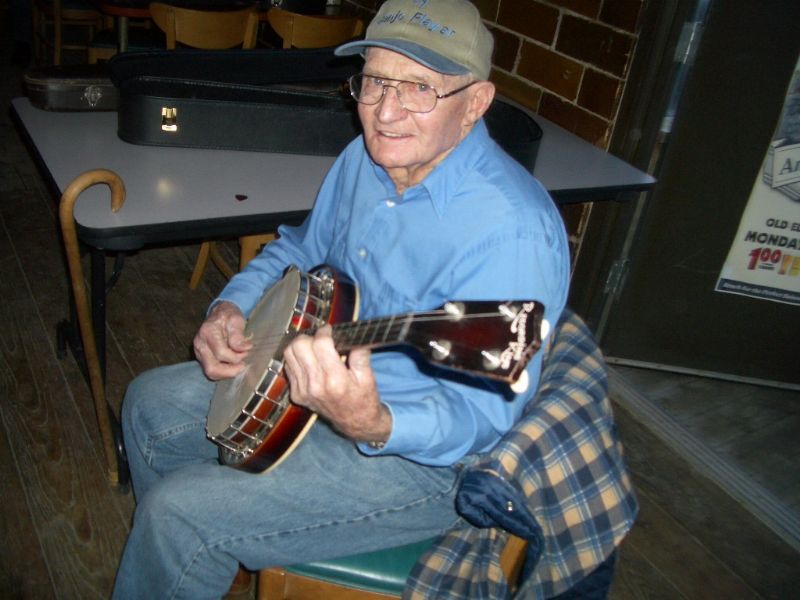
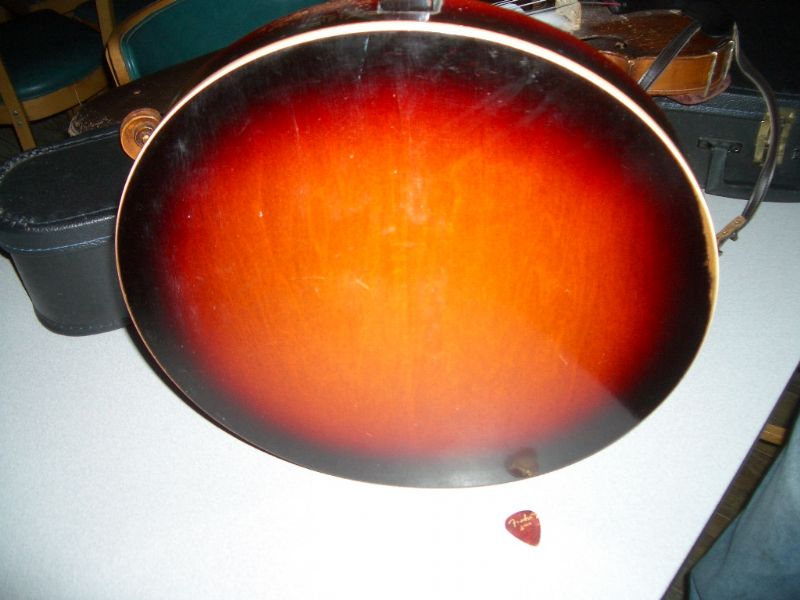
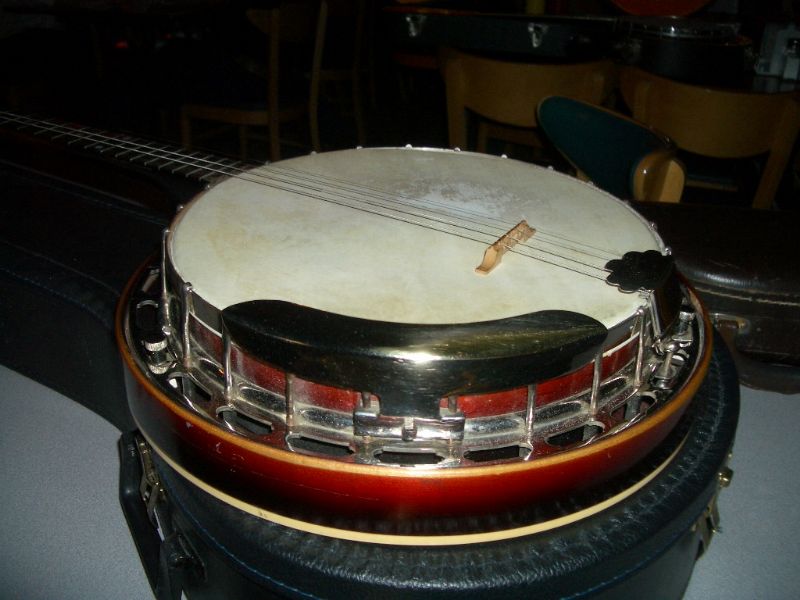
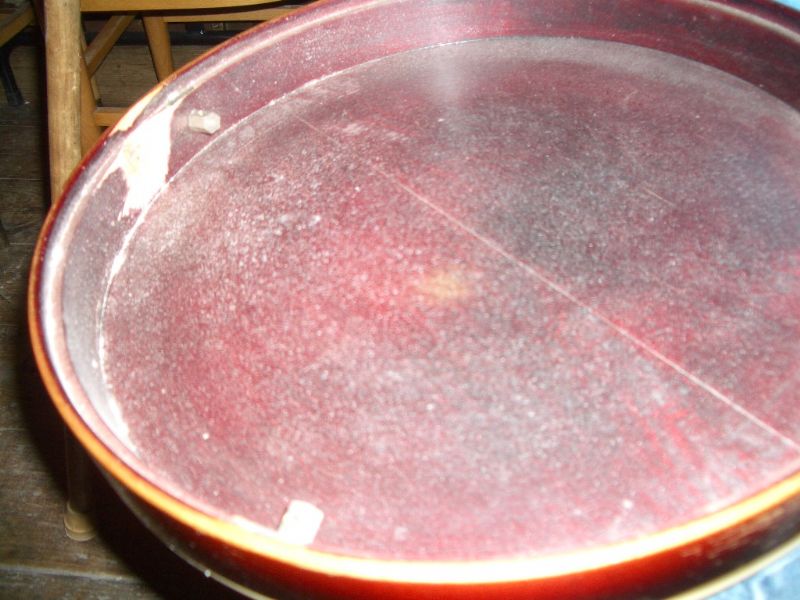
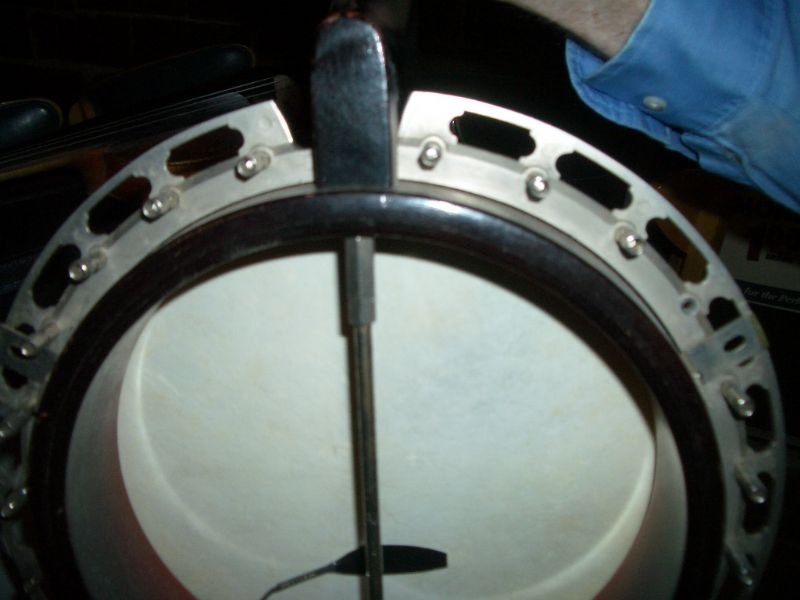
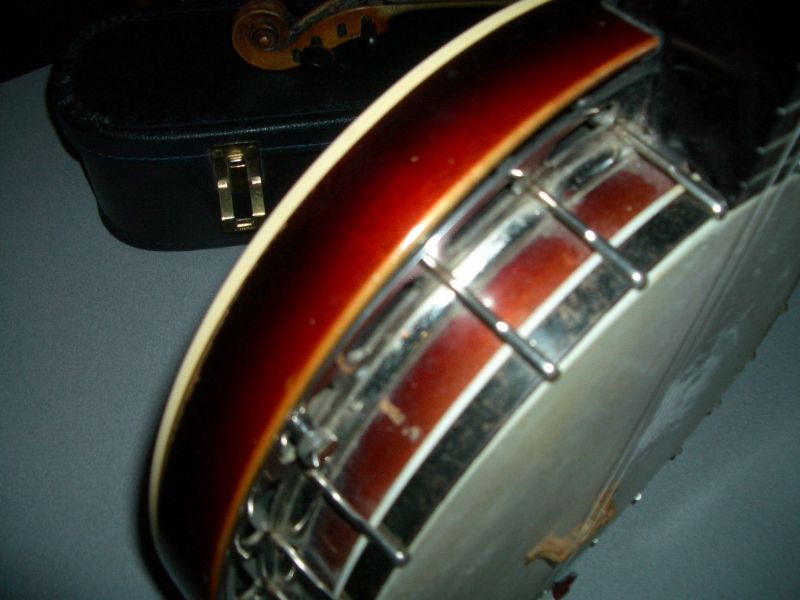
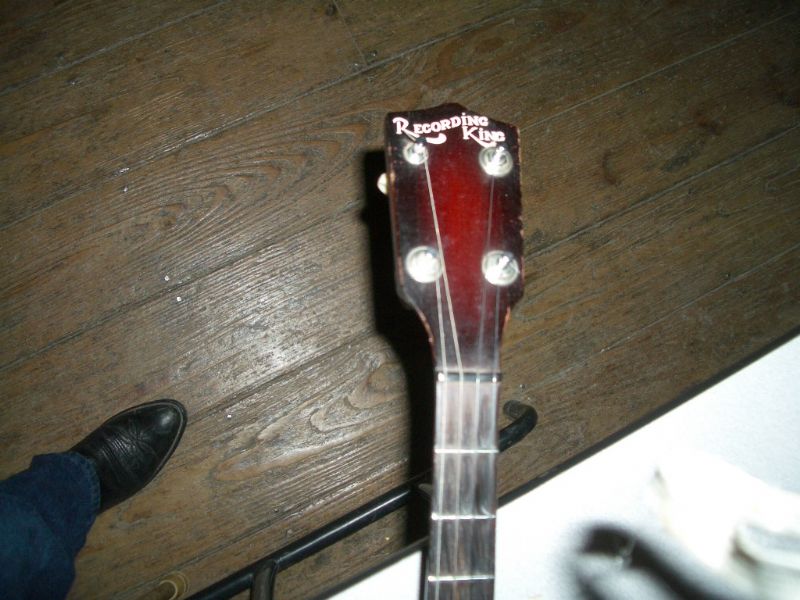
I posted a thread several years ago if an old gentleman is met named Wendell Sales. When he was 15 yrs old he ordered a $9 banjo from Montgomery Wards but it back ordered so they gave him the $30 banjo for his $9. Wendell was born in 1920 so this was 1935. He lived to past 100 yrs old and I reached out to his son some time later but they’re keeping the banjo in the family. He played for dances through the depression for spending money,he played it regularly all that time.
Edited by - Ks_5-picker on 07/30/2024 15:40:43
Terms of Use | Privacy Policy | Privacy Consent (EU/GDPR Only)
Copyright 2026 Banjo Hangout. All Rights Reserved.