DVD-quality lessons (including tabs/sheet music) available for immediate viewing on any device.
Take your playing to the next level with the help of a local or online banjo teacher.
Weekly newsletter includes free lessons, favorite member content, banjo news and more.
Premier Sponsors


|
Please note this is an archived topic, so it is locked and unable to be replied to. You may, however, start a new topic and refer to this topic with a link: http://www.banjohangout.org/archive/293881
schlange - Posted - 11/03/2014: 12:38:31
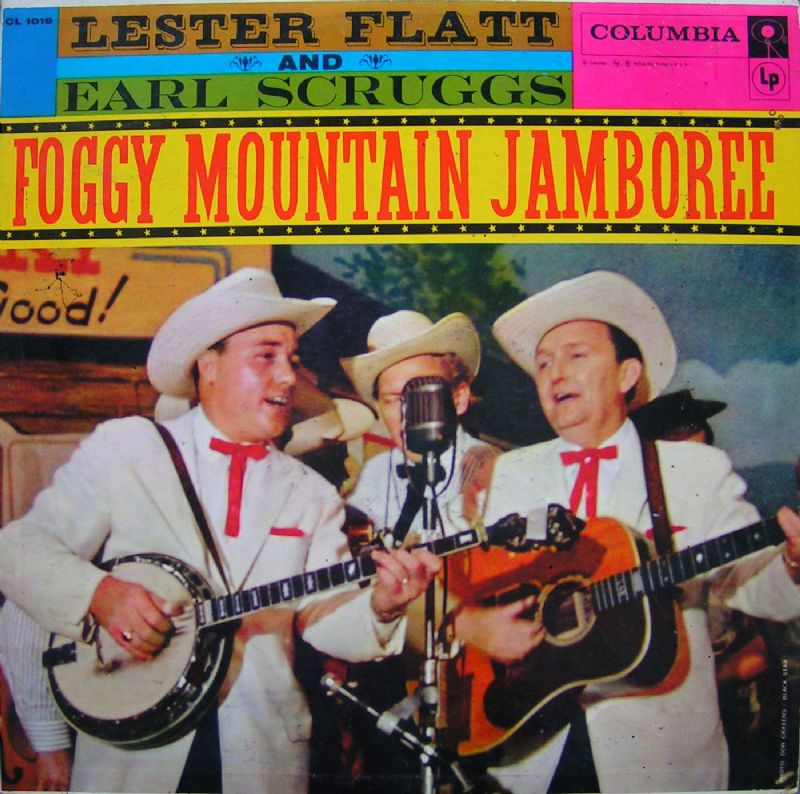
Here's a very popular Flatt & Scruggs instrumental number. A fast one, too--Earl played it around 155BPM!
"Shuckin' the Corn" was first released on their Foggy Mountain Jamboree album in 57. It seems to be generally known as one of Earl's tunes, but all the album credits I found actually have it credited to Josh Graves (Flat & Scruggs' dobro player) and Flatt & Scruggs' wives, Gladys Stacey and Louise Certain.
This is a more challenging tune to play than most we've featured--Casey Henry categorizes Earl's break as "advanced" in her list of lessons. So be ready for a bit of a challenge!
Typically played in the key of G.
I (and others) would love to hear (and see!) you play your version of this tune--post it in a reply below!
BanjerKen - Posted - 11/03/2014: 13:52:28
I may not have great timing but Eric does. I just started learning this one yesterday. Thanks Eric
Jack Baker - Posted - 11/03/2014: 14:27:32
Hi Eric,
My two tab breaks of Shuckin' The Corn ash played by Earl should be on their way to you soon as per your request...Jack
Originally posted by schlange
1957 Foggy Mountain Jamboree album
Edited by - Jack Baker on 11/03/2014 14:40:10
chuckv97 - Posted - 11/03/2014: 14:42:33
The hard part will be getting the studio echo on the high "hook" riff.
Also getting in the backward roll on the C7 smoothly. Definitely a paint-peeler. Thanks for posting.
Jack Baker - Posted - 11/03/2014: 16:17:19
Paul Warren's fiddle break in this piece is really something to marvel at, not mention Josh Grave's incredible Dobro break. Just one of Earl's best tunes ever in my opinion...Jack
Originally posted by schlange
1957 Foggy Mountain Jamboree album
Edited by - Jack Baker on 11/03/2014 16:19:59
Kenneth Logsdon - Posted - 11/03/2014: 16:21:01
Yept... That long C 7 in the first phase is missing in about half the examples and you rarely hear it played "right" nowadays anywhere, Glad to see it posted complete as it goes..
Prof - Posted - 11/03/2014: 17:23:12
Great timing on this one -- I've just started to revisit this tune after abandoning it for quite awhile. I always got frustrated on the roll pattern in the measures after the C7...going to try to stick with it this time!
Edited by - Prof on 11/03/2014 17:24:20
Jack Baker - Posted - 11/03/2014: 17:48:12
Hi Dan,
Just take your time on this one. Earl really doesn't know why he put in that extra C7--I've asked him about that over the years and he had no idea, at least not when I asked him. Just follow the slow break in my tab and it shouldn't be too difficult to grasp...Jack
quote:
Originally posted by ProfGreat timing on this one -- I've just started to revisit this tune after abandoning it for quite awhile. I always got frustrated on the roll pattern in the measures after the C7...going to try to stick with it this time!
Edited by - Jack Baker on 11/03/2014 17:53:50
3 finger ninja - Posted - 11/05/2014: 12:39:14
quote:
Originally posted by DoconcThe tuba on the Roy Clark version is a nice touch...
I dont know why, but I absolutely love the idea of a TUBA in a bluegrass band...wow!!
KidfromDeliverance - Posted - 11/05/2014: 17:08:10
quote:
Originally posted by Jack BakerHiDan,
Just take your time on this one. Earl really doesn't know why he put in that extra C7--I've asked him about that over the years and he had no idea, at least not when I asked him. Just follow the slow break in my tab and it shouldn't be too difficult to grasp...Jack
Pete Wernick supposedly wrote an article which explored this tendency of Earl's, called "Earl Scruggs Doesn't Know What He's Doing". Anyone know about this?
Patrick
Jack Baker - Posted - 11/05/2014: 18:03:05
Hi Patrick,
I edited Pete's book for Herb Wise, the owner of Oak Pub. many years ago. I don't remember anything like that ("Earl Scruggs Doesn't Know What He's Doing".) being mentioned in Pete's book. Pete may have mentioned that Earl wasn't formally educated in Music but that would be it. I'm on the cover of "Bluegrass Banjo" in the white shirt. It was the first teaching book of its kind as I recall...Jack
quote:
Originally posted by KidfromDeliverancequote:
Originally posted by Jack BakerHi
Dan,
Just take your time on this one. Earl really doesn't know why he put in that extra C7--I've asked him about that over the years and he had no idea, at least not when I asked him. Just follow the slow break in my tab and it shouldn't be too difficult to grasp...Jack
Pete Wernick supposedly wrote an article which explored this tendency of Earl's, called "Earl Scruggs Doesn't Know What He's Doing". Anyone know about this?
Patrick
Edited by - Jack Baker on 11/05/2014 18:08:01
chuckv97 - Posted - 11/06/2014: 08:28:51
In one of Pete's blogs (homepage or website) he mentions his time spent with Earl and Louise. I think he meant that Earl played by instinct- being at it so long- rather than thinking out his approach while playing. Also, he implies that Earl didn't analyze banjo playing microscopically the way us later pickers do. We use pedagogy-like terminology that he was unfamiliar with. I think that Wernick comment was tongue-in-cheek.
BTW Jack, after all these years-I had BG Banjo (Oak)- in the 70's, now I finally find out who that guy was on the cover! I had Sonny Osborne's book(Mel Bay) ,Pete Seeger's,with the bluegrass chapter by Mike Seeger, and Earl's book. But Wernick's book was valuable in that he broke it down methodically. It was a leap in understanding when I first got down that simple version of "She'll Be Coming Round The Mountain",with the accented melody notes, even though I had already played a bit of Earl's "Cripple Creek".
Edited by - chuckv97 on 11/06/2014 08:36:40
GHohwald - Posted - 11/06/2014: 08:57:36
Here's a video that plays all the versions of Shucking the Corn in our two part lesson series. (Down and Up the Neck versions)
The lessons each contain 4 breaks. Each is broken down in detail and played individually at slower speeds. They are $5.99 each and include background tracks and tab. Hope you enjoy these and i would appreciate any feedback
Sincerely,
Geoff
Jack Baker - Posted - 11/06/2014: 10:21:20
Hi Geoff,
Very nice likeness to Earl's classic version...well done...Jack
Originally posted by GHohwald
Jack Baker - Posted - 11/06/2014: 10:23:19
Chuck,
Quite right and I remember consorting with Pete many times on that book...Herb Wise was great to work for. He let me edit several of his banjo books which helped pay my tuition to NYU...Jack
Originally posted by chuckv97
Edited by - Jack Baker on 11/06/2014 10:25:08
KidfromDeliverance - Posted - 11/06/2014: 12:19:35
quote:
Originally posted by chuckv97In one of Pete's blogs (homepage or website) he mentions his time spent with Earl and Louise. I think he meant that Earl played by instinct- being at it so long- rather than thinking out his approach while playing. Also, he implies that Earl didn't analyze banjo playing microscopically the way us later pickers do. We use pedagogy-like terminology that he was unfamiliar with. I think that Wernick comment was tongue-in-cheek.
I figured forum readers would get the idea that the title was intended to be humorous - I thought it was pretty clever, so that's why I brought it up. Don't know where the article may have appeared, I just recall Pete mentioning it at some workshop I was at.
Patrick
Jack Baker - Posted - 11/06/2014: 12:47:15
Ha Patrick,
You know that it's life or death here on BHO and that every keystroke counts....Ha! not to worry...Jack
"Pete Wernick supposedly wrote an article which explored this tendency of Earl's, called "Earl Scruggs Doesn't Know What He's Doing". Anyone know about this?"
Edited by - Jack Baker on 11/06/2014 12:48:52
Kenneth Logsdon - Posted - 11/06/2014: 13:56:07
Not about the article.... But I would venture that its because, like many of the self taught and natural pickers in our area (home of Bluegrass), no one really thinks about rolls or patterns , what the right hand is doing, (I know I don't)... You just play it the way it sounds and listen to the music, as it developes or comes out.. It just comes out different a lot of the time..
And I betcha Earl was the same way... I see many of the same idios in his picking.. ( Didn't Earl say he didn't know what a roll was, until someone else called it that and told him..
chuckv97 - Posted - 11/06/2014: 14:07:00
I get it Kenneth. I was playing through his version of "Blue Ridge Mountain Home" from the tab in his book this morning. I used to just fake it,relying on the cliche licks I usually play,trying for as many melody notes as I could snag. But I see where he ends the C measure with a 5th string quarter note,something I'd never do- it surprised me. So I went back to listen to it from the FM Jamboree album,and realized how good that slight pause actually sounds. I wonder when he worked up a new tune,if he slowly had to figure it out,or if he more or less winged it- relying on his instincts.
Kenneth Logsdon - Posted - 11/06/2014: 15:21:16
I would say "that he just played it".. A person might run over a new tune a few times to "get it in their head", Ah that's how it goes.. and then you just play it.. And what comes out is what it is, especially for Earl..
Shucking the corn has many variations by Earl, if you listen to different times and analyse each one, But the "hook" and the long C 7, Benchmarks of the song(?) remain the same... So you know its Shucking the Corn when you hear it!!
Edited by - Kenneth Logsdon on 11/06/2014 15:27:16
Jack Baker - Posted - 11/06/2014: 16:47:52
Funny, I rarely use the term "hook" in Bluegrass. What I hear is a 1V chord being played a little differently. People use the term "hook" as a notable phrase or catch phrase in a vocal tune, not an instrumental. Could certainly work in Shuckin' I guess. ..Jack
Originally posted by Kenneth Logsdon
Terms of Use | Privacy Policy | Privacy Consent (EU/GDPR Only)
Copyright 2026 Banjo Hangout. All Rights Reserved.