DVD-quality lessons (including tabs/sheet music) available for immediate viewing on any device.
Take your playing to the next level with the help of a local or online banjo teacher.
Weekly newsletter includes free lessons, favorite member content, banjo news and more.
Premier Sponsors


|
Please note this is an archived topic, so it is locked and unable to be replied to. You may, however, start a new topic and refer to this topic with a link: http://www.banjohangout.org/archive/278414
Page: 1 2
britcarfan - Posted - 01/25/2014: 05:58:22
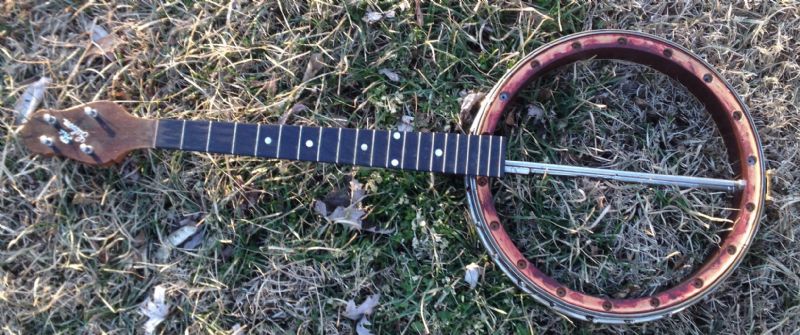
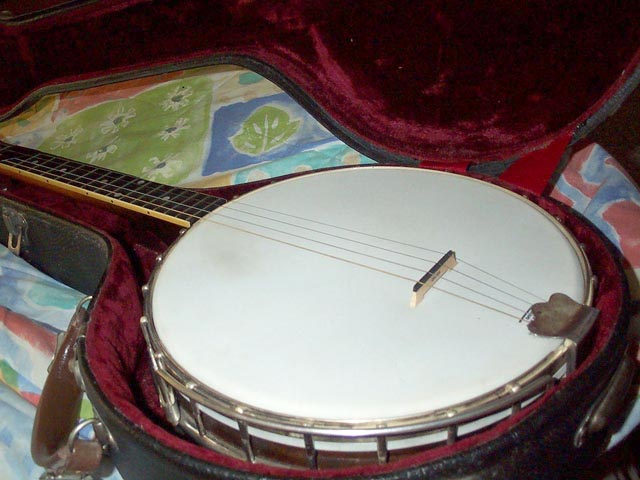
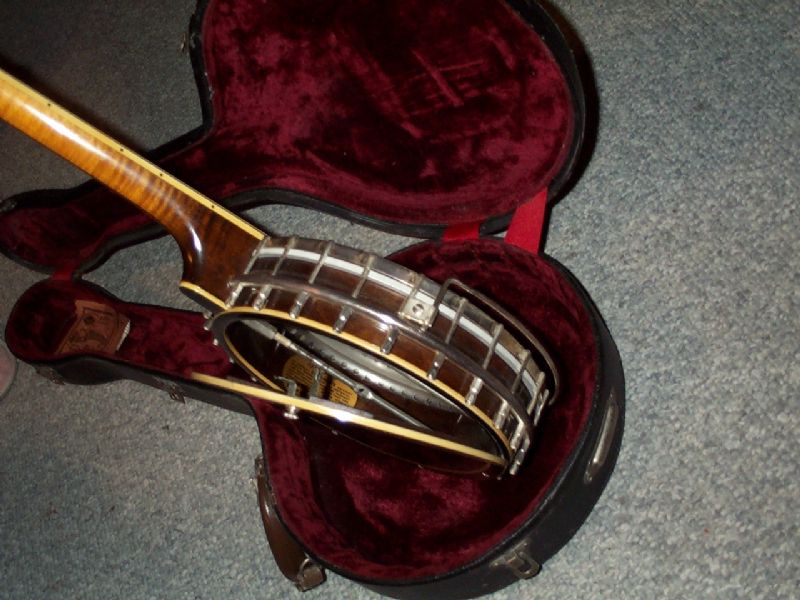
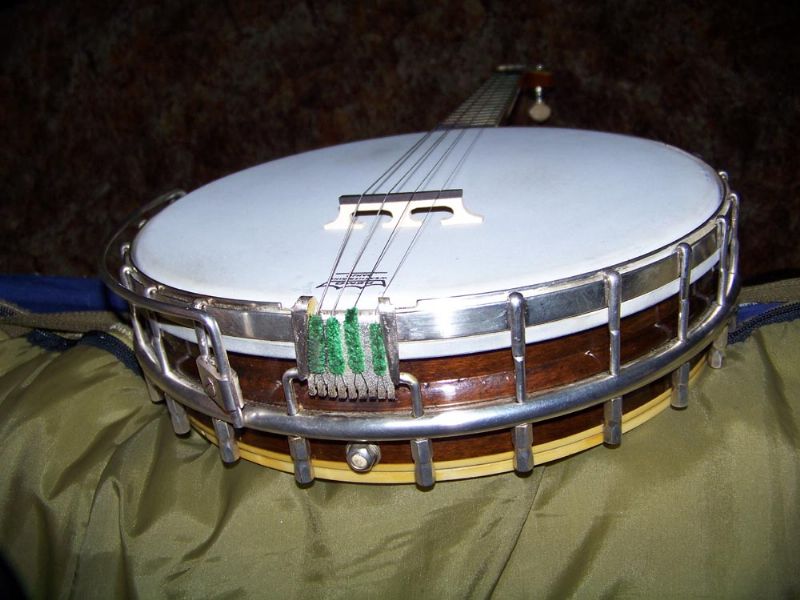
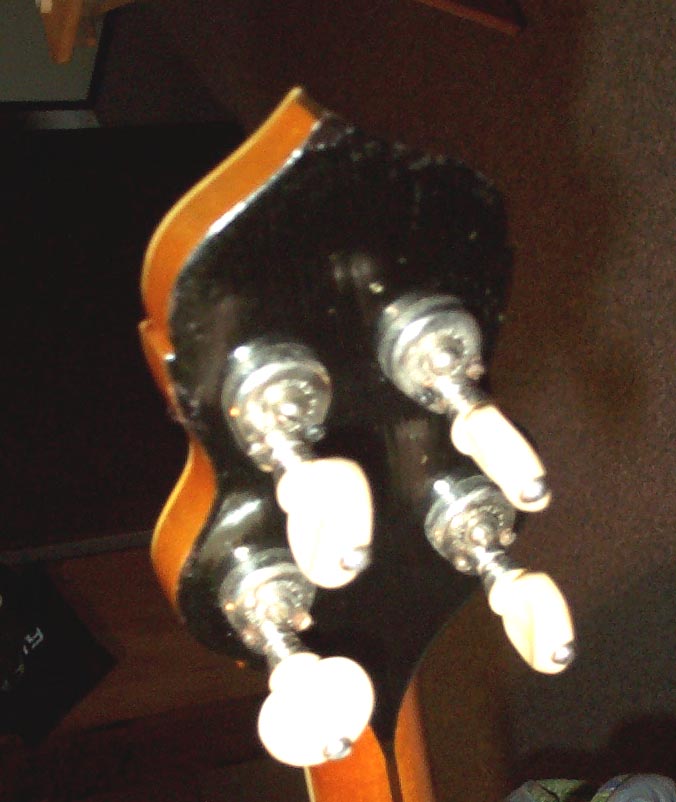
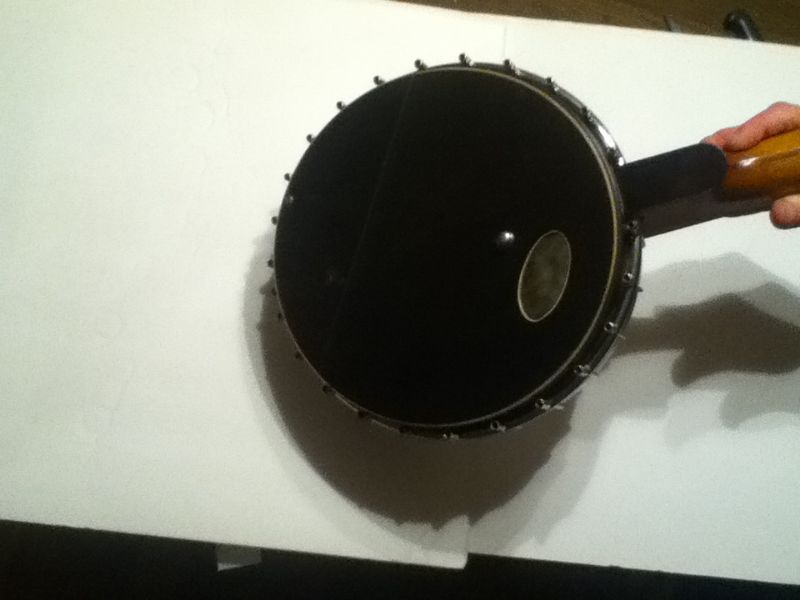
First let me say I'm not a banjo player, but my father is. I found an early 20s The Gibson tenor (missing parts) at an antique store this week. The price was less than it cost me to fill the has tank of my wife's van so I bought it. I'd like to get it playable for my dad. What it's missing, bridge, drum head, nut and tone ring. Our local music store person said all the parts but the tone ring will be easy to get. Anyone here know an of an option. Would like to get it back to original.
beegee - Posted - 01/25/2014: 06:14:43
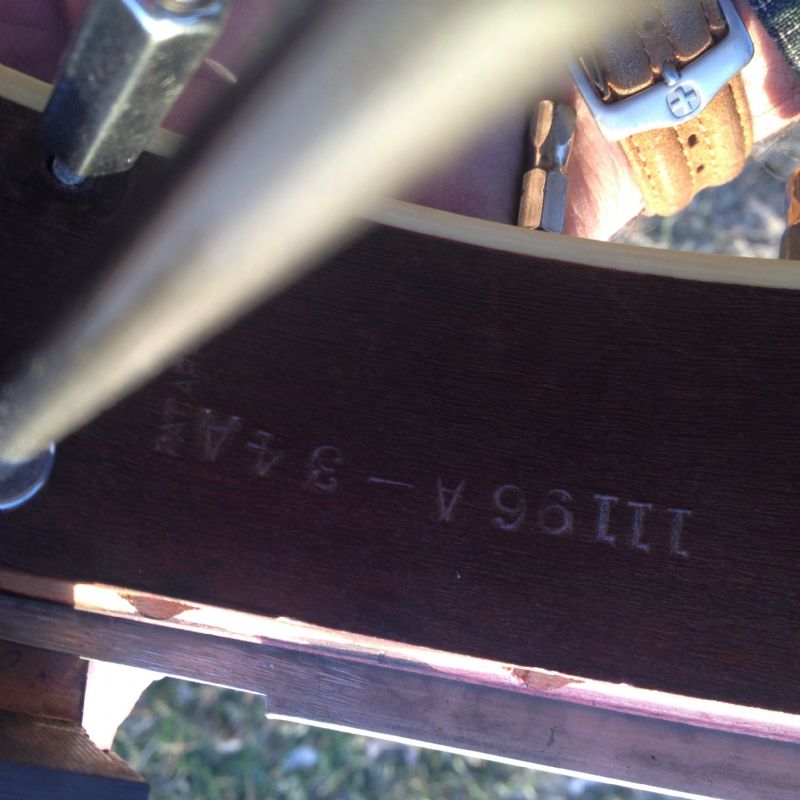
Do you know what model it is? The head, bridge and nut are no problem. I'm not sure what kind of tone ring it may have had or why it would be missing, if it is. Depends on the model and the exact vintage. Pictures would be very helpful, as well as any numbers stamped inside the rim.
britcarfan - Posted - 01/25/2014: 06:28:37
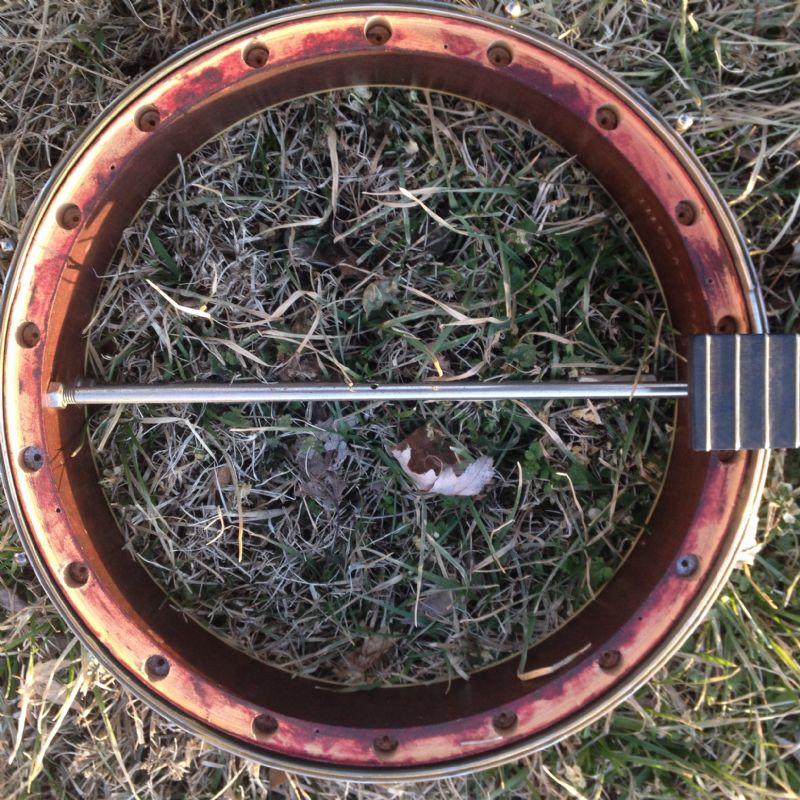
Numbers are 11196a-34a. From pictures on the net it looks to be a tb-1. As soon as I can I'll post pictures. The body of the banjo is 10 1/2 in in diameter and has 18 holes drilled in it. From what I've read it takes a ball bearing one.
Fathand - Posted - 01/25/2014: 06:32:51
Depending on which Model of 1924 TB it was it may or may not have had any tone ring or maybe a 1/4" tone hoop. Those are easy. If it was an early Ball bearing that would be harder but could still be made. Bridge, Head and nut are easy. Provide pics and serial number that is stamped in the rim.
Are there about 24 Holes 3/8" dia. drilled into the top of the rim? That would make it a Ball Bearing.
Is the rim 11" Diameter at the top?
britcarfan - Posted - 01/25/2014: 20:19:17
Went back to the antique store that I got it from today. Thought I'd look around see if the tone ring was in his booth, it wasn't. So I asked if they would give my name and number to the person who rented the booth so I could ask him about it. He is no longer alive. If it is a ball bearing how hard (and expensive) will it be to find? Also could another type be used without doing modifications to the body of the banjo?
Joe Connor - Posted - 01/25/2014: 20:23:55
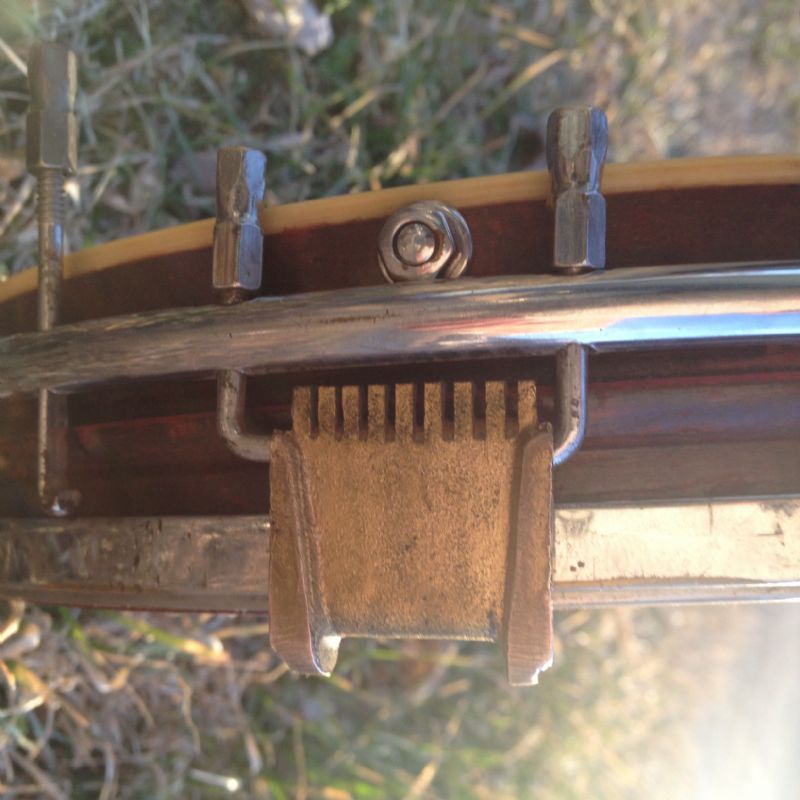
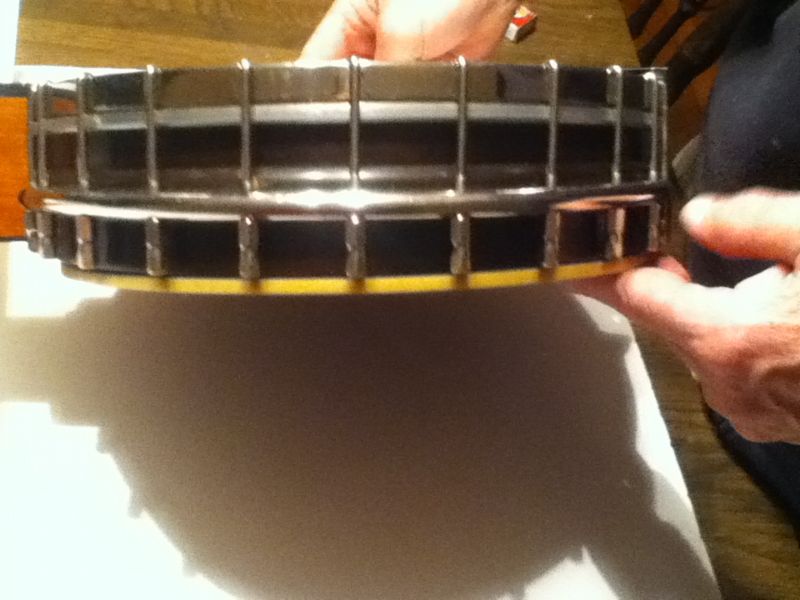
I'll be following this thread with interest. The rim looks a lot like the rim of my 1924 TB-1 trap-door, which was converted to five-string some time in the '70s. The differences that I see are: (1) mine has a notched tension hoop; and (2) mine does not have the holes in the top of the rim. Mine also has no tone ring and has a 10 1/2-inch head.
Your rim certainly looks like the rim of a TB-1. earnestbanjo.com/gibson_banjo_...786-7.htm However, the non-notched tension hoop and the holes in the rim suggest that it may be another model. earnestbanjo.com/gibson_banjo_...6A-34.htm
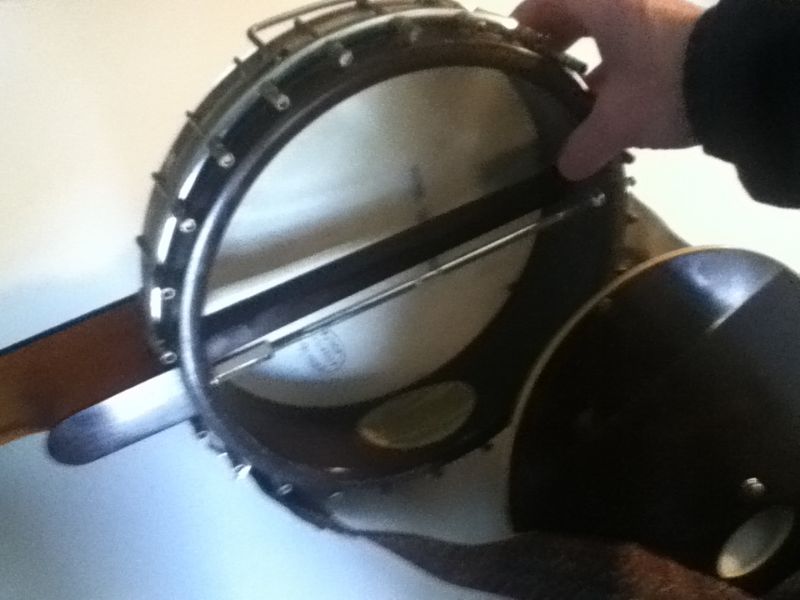
I'm attaching pictures of my rim.
Edited by - Joe Connor on 01/25/2014 20:27:06
 |  |  |
REarl - Posted - 01/25/2014: 20:28:44
From my reading of Joe Spann's book this is a 1924 TB-4!! These take a "tone tube" type tone ring. I have never seen one of those, but that's what Mr. Spann says. It should have a trap door resonator, but at this price no great loss. IMHO this is a great buy and well worth restoring.
britcarfan - Posted - 01/25/2014: 20:31:04
Mine does not appear to have ever had a resonator on it. There are no holes in the wood on the back side.
Joe Connor - Posted - 01/25/2014: 20:47:22
To see if you ever had a trap-door, look to see if there is a screw hole on the bottom of the rim. Look at the back of the rim and imagine it as a clock. If the heel is 12 o'clock, the screw hole should be at about 7 o'clock. If you look at the first picture I posted, you can see this screw. That would probably be the only visible indication of whether you originally had a trap door. I could see a prior owner removing the trap door because it is more of a gimmick than something useful.
britcarfan - Posted - 01/25/2014: 21:03:41
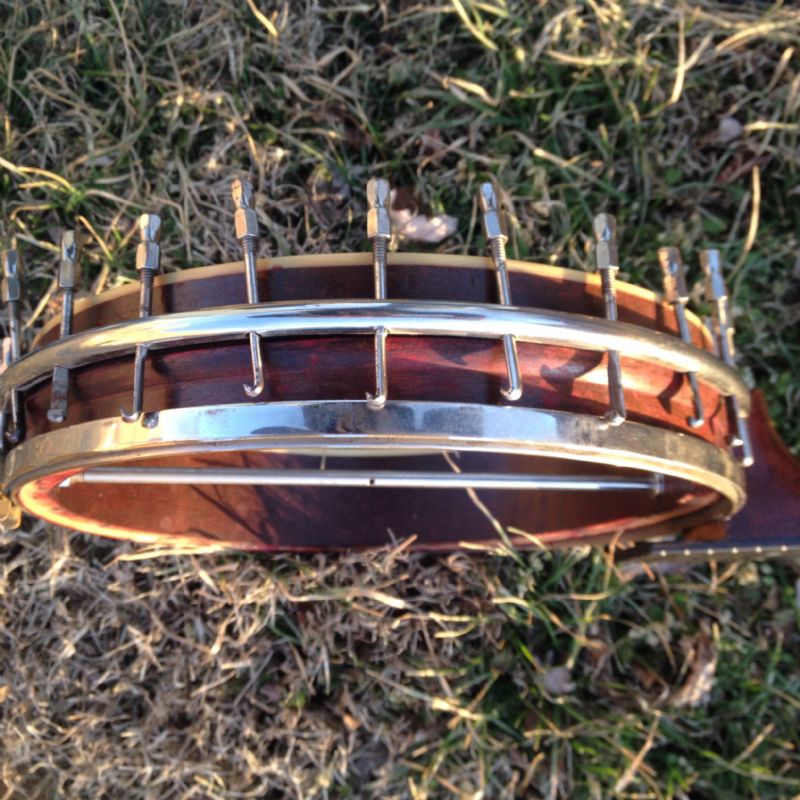
There are no holes that I can see on the back side of the rim. Is the tension hoop the part that holds the head on? If so mine has what I'd call a notch in it that runs all the way around it for the hooks to fit in.
Joe Connor - Posted - 01/25/2014: 21:05:44
Here are some pictures off the 'Net of 1924 TB-4s. See how they compare to yours:
gbase.com/gear/gibson-tb-4-192...-sunburst
gbase.com/gear/gibson-tb-4-192...-sunburst
There's one for sale in the classifieds:
banjohangout.org/classified/40840
My tension hoop (which holds the head down) has a separate notch for each hook.
Edited by - Joe Connor on 01/25/2014 21:07:06
britcarfan - Posted - 01/25/2014: 21:12:48
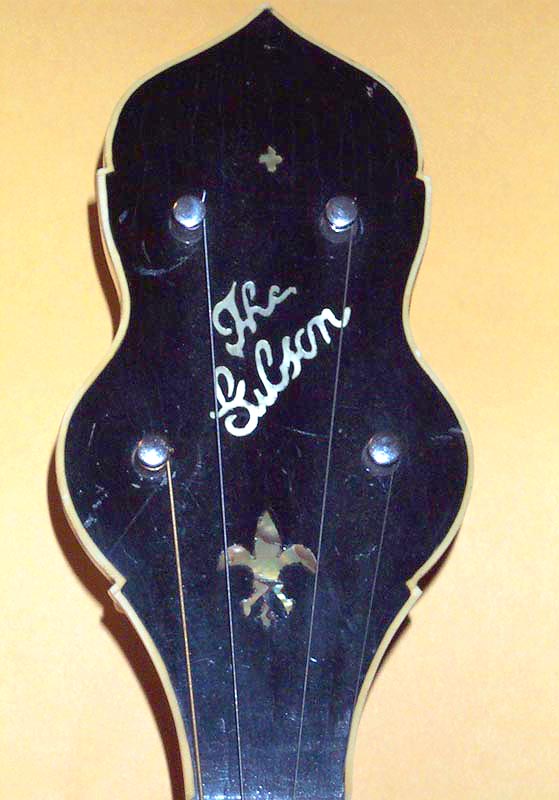
It would be interesting to find out its a tb-4. It seems to be to plain to be a tb-4 though. Wouldn't a tb4 have fancier inlays and better tuners?
britcarfan - Posted - 01/25/2014: 21:25:41
Looked at the Tb-4 links. There are a lot of similarities, but still some differences. Mine doesn't have binding around the peg head or a stripe down the back of the neck.
Joe Spann - Posted - 01/26/2014: 06:08:31
What you have here is parts of two different Gibson banjos assembled into one unit.
The rim is a style 4, but the neck is a style 1.
The entire tone ring assembly is missing as well.
Someone tried to make a tenor banjo from parts, but they didn't have all the parts.....
Joe Spann
Fathand - Posted - 01/26/2014: 06:18:21
Looking at your rim, you have the holes for the Ball Bearings. This should make yours either a TB3 or TB4. Your tone ring should be one of these versions shown with either Springs under the balls or the balls just sitting on washers. You will know based on the depth of your holes. Your tone ring will be a hollow brass tube with about 60 holes in it. At least the 11" diameter banjos had 60 holes. I do not know how many for 10.5" Rim but probably about 2 less. Someone should be able to roll you a ring from brass tubing but I am unsure if it is 3/8 or 1/2" diameter tubing, I have 7/16 or 1/2" in my head. Washers and Ballbearings are simple enough to buy. The springs are tougher to find, they are immensely strong and will not compress under the tension of the head. If you need springs but cannot find them I would suggest steel rod cut to length with a washer and ball bearing on top until you can find suitable or original springs.

britcarfan - Posted - 01/26/2014: 06:54:49
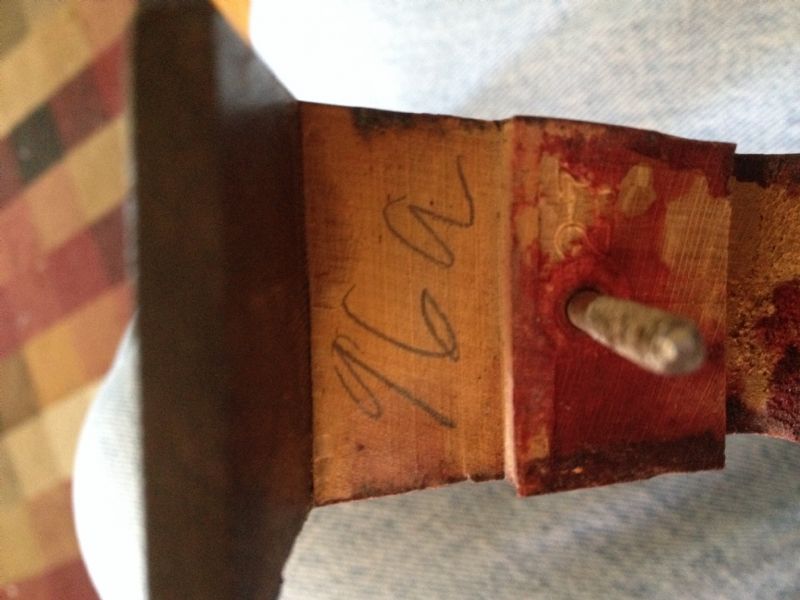
After I got the banjo I took the neck off, it has 96a written on it in pencil. That's the last two numbers and letter of the FON. Does this mean anything.
britcarfan - Posted - 01/26/2014: 07:01:07
The 18 holes are deep. What kind of business would make the tone ring for me? I would like to get it up and running and give it to my dad, but of the tone ring is going to be to costly I may have to put it on hold for awhile.
Joe Connor - Posted - 01/26/2014: 07:25:34
Someone here should be able to tell you whether your banjo can be repaired and, if so, by whom. However, it seems cost will be a factor. I skimmed the classifieds and it seems that there are some 1920s Gibson tenors selling for under $1,000. Again, the guys who really know Gibson tenors can tell you if that is the going price. If so, it might be less expensive and easier to buy a playable Gibson tenor for your dad. After all, the one you have is not a family heirloom or the one your dad played years ago. If you went that route, perhaps the parts you have would have some resale value to help cover the cost of buying a playable Gibson. Just my 2 cents. Your mileage may vary.
REarl - Posted - 01/26/2014: 09:15:51
Looking at the photo you provided of the rim I suspect this is not a rim that had springs. It looks about the depth of a large ball bearing. Those won't cost you too much. One thing I would do is to check for a luthier in your area who handles banjos. That person should be able to help you with the details including who can manufacture a tube for you. All you need is someone who can bend a brass tube into a ring the correct size. If all else fails you can get a brass ring which will cost you about $30. I suspect that when you are finished the banjo will be worth a lot more than you put into it. But I am not a luthier so you should really talk with one.
britcarfan - Posted - 01/26/2014: 09:20:47
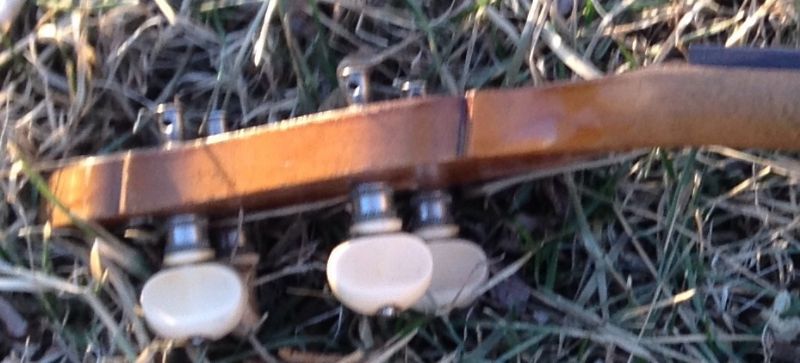
Depth of holes in rim are about 5/16 to 6/16 of an inch. Is there any way to use a more cost effective tone ring on this rim? Also I'm attaching pictures of the end of the neck. Also there is the number 22 stamped in the rim where the neck attaches.
 | 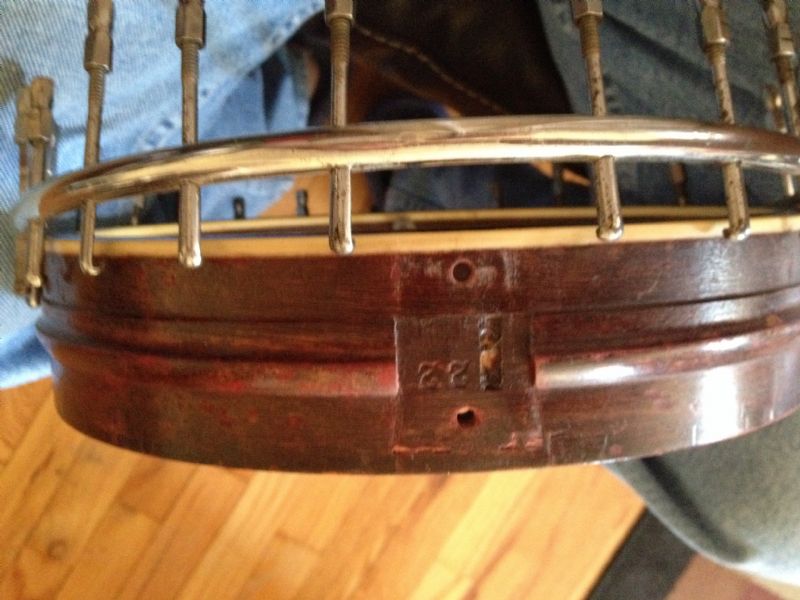 |
britcarfan - Posted - 01/26/2014: 09:27:18
Yes right now I'm into it for less than $50.00, so I can afford to spend a little more on it. I posted the depth of the holes before your reply. Does that depth still seem about right. Also how can I find a good banjo Luther near me. I'm not far from St Louis and my son goes to school in Nashville TN so we are there a couple of times a year.
Fathand - Posted - 01/26/2014: 09:30:19
If the 5/16" to 6/16" they didnt likely have springs. Spring holes are about 3/4" to 1" deep. Just stack washers in the holes until the largest ball bearing that fits in the hole pokes out a little.
There are several people here on the BHO that make rolled 1/4" Brass rings. I make those for myself. That is one option and it could just sit on top of your rim with no ball bearings. Stew Mac sells those for about $30.00 but they are 11". Another option would be to have a thicker rolled brass rod if someone has a rolling machine big enough to handle 3/8". Otherwise you would be looking for metal Fabrication shops.
quote:
Originally posted by britcarfanThe 18 holes are deep. What kind of business would make the tone ring for me? I would like to get it up and running and give it to my dad, but of the tone ring is going to be to costly I may have to put it on hold for awhile.
G Edward Porgie - Posted - 01/26/2014: 11:11:46
I have to disagree with Joe Spann on this one. Noting that the number on the neck matches the last numbers of the FON, I'd say that this started out as one banjo, not a group of parts. I have a plectrum model with pretty much the same features (plain neck, ball-bearing rim, grooved tone ring). It's neck/rim numbers also match, and it has budget tuners. About the only real difference is that mine has the trapdoor, which makes no real tonal contribution that I've ever heard. As far as I know, it came thaty way from the manufacturer. The "someone" who "tried to make a tenor" was most likely someone at the Gibson factory and the missing parts just got lost sometime in the last 90 years.
If you decide to have an original type tone ring fabricated, I can measure mine, count the number of holes, and possibly even determine the aproximate thickness of the metal and send at l;east some reasonable specs.
I once had a trapdoor tenor much like yours, too, so I can tell you I didn't think it was a great banjo. It's still probably worth the investment to get yours playing, though.
REarl - Posted - 01/26/2014: 12:43:56
I will stick with the TB-4 rim. Look at the ivoroid binding on the bottom of the rim. As far as I can tell the TB-1 didn't have that. As regards the TB-1 neck, never expect catalog from Gibson. Recently an original 1928 RB-4 turned up with a 1928 RB-3 neck.
TB-4 Guy - Posted - 01/26/2014: 17:05:21
The TB-4 would have a Fleur De Lis on the face of the headstock. My TB-4 is 11057-11, IIRC. According to Joe Spann's book, it's a 1924. It has a ball-bearing tone ring and a 10-1/2" pot. The deep holes shown in the pot for the one in question are for the springs and washers that the round tone ring sits on. I have to take more pictures since I don't have a picture of the tone ring now.
I could be wrong but a TB-3 might have had the "sea horse" inlay while the TB-4 as mentioned would have a Fleur De Lis. The pot looks like my TB-4 however.
Edited by - TB-4 Guy on 01/26/2014 17:11:13
britcarfan - Posted - 01/26/2014: 17:43:09
G Edward if you could give me the inside and outside diameter of the tone ring plus the number of holes and there spacing from each other I will see if I can find someone to make it. Unless someone here wants to shoot me a price to make one. I'm not real worried about if the neck came from the factory on this rim. Over a 90 year period of time who knows what's what.
britcarfan - Posted - 01/26/2014: 17:50:54
TB4 Guy thanks for the pictures. Your rim and hardware look like what I have. Though I am missing (I think it's an arm rest) that yours has. Wish my neck and tuners were like your but you get what ya get.
REarl - Posted - 01/26/2014: 17:59:37
I was thinking about that 22 stamped on the rim where it meets the heel so I looked it up and 11022A was another group of TB-4's. Another case where a rim might have been prepared for one group and later used in another. My own RB-4 has this same feature with one number on the rim where it meets the heel and another inside the rim. Both numbers belonging to RB-4's. Maybe they moved the rim from one group to another because of some problem with the original neck and then just used what neck they had to finish the banjo. So you get a TB-4 rim with a TB-1 neck. Not the first (or last) time something like that happened at the Gibson factory. Whatever the case I think that under $50 sounds like a reasonable price these days, even if it needs some work.
TB-4 Guy - Posted - 01/26/2014: 18:09:02
I believe that you have an original TB-1 with matching pot. The wood on a TB-4 is more ornate, both in the neck and pot and is bound on the bottom of the pot. I would think that the one in question is a real TB-1. Nothing wrong with that, either.
If it were mine, I would look for a 10-1/2" tone ring. Otherwise, one could be turned from a blank piece of bronze, although it would be pricey. Finding an original ring might be possible on eBay.
Elderly and others have new heads and the tail piece would be easy to locate.
REarl - Posted - 01/26/2014: 21:28:41
Without seeing it in person it isn't possible to make a definite judgement. However, I feel that the evidence for a style 4 rim (the two FON#'s both being tied to style 4's, the binding on the rim, etc.) strongly suggest that the rim is a style 4. Can't tell about the metal. Was it originally nickel plated or silver plated? Only close inspection might, or might not, tell that. The neck appears to be a TB-1 so IMHO it probably is, as Mr Spann says, a mismatched set. Possibly, as he suggests, it was a later attempt to put a banjo together, or it might have come from the factory this way. Regardless, it is a great find at the price and well worth bringing back to life.
britcarfan - Posted - 01/27/2014: 11:46:23
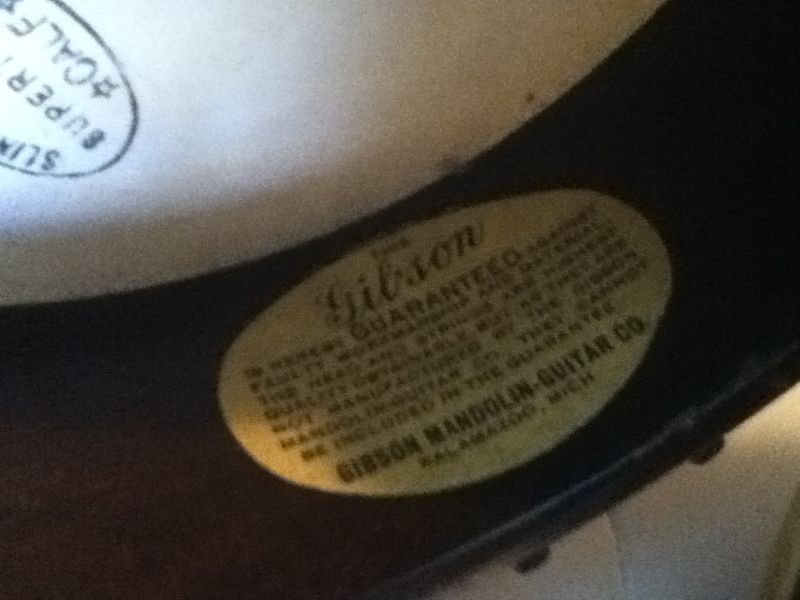
I've been doing some reading during a break at work. Article I read said lower end banjos didn't get the Gibson label put in them. Mine doesn't have a label in it, I thought at first it was just removed by somebody over the years. If you look at my pictures it looks like someone has applied stain around the rim.
Joe Connor - Posted - 01/27/2014: 12:13:50
That's interesting. My conversion was originally low end (1924 TB-1 with no tone ring) but it has the label.
Joe Connor
Fathand - Posted - 01/27/2014: 12:20:17
Early low end models have the same label as the early 1925 Mastertones. "This Gibson is guaranteed" etc.
britcarfan - Posted - 01/27/2014: 13:24:48
What is the inside and outside heights of your rim. If it's the same as mine I may try installing a head with out a tone ring.
REarl - Posted - 01/27/2014: 14:14:07
Others will know better than I do. But I suggest that you put on at least a 1/4" brass/bronze ring sitting on washers and ball bearings. The rim does not seem designed for a head to sit directly on it. In addition the sound should be much better that way. Getting a ring isn't that hard. If all you can find is an 11" ring get that, cut it to size and solder the ends. If you really want to drive yourself crazy you can buy a bronze rod at Amazon and bend it to shape yourself. It can be done, I did it, but unless you know a lot more about it than I did you will drive yourself absolutely nuts, never again.
G Edward Porgie - Posted - 01/27/2014: 17:01:26
I've taken some approximate measurements (I didn't want to remove everything, especially taking the tone ring off the rime; it's held in place by what appear to be bent over nails, probably to keep the springs from sending it across the room. Anyway, hers what I believe to be about right:
The tone ring is a tube about 1/2 inch or 13mm in diameter. It appears to be about 1mm thick, so the inside diameter is about 27/64 inches. Ther are fifty-nine 1/4 holes drilled into it on approximately 1/2 inch centers. This leaves an undrilled portion of the ring at the tailpiece, just the size and spacing for the hole Gibson left out. Note that the holes are drilled so that they are in the upper inside quadrant of the ring (not directly from the side, nor directly from the top, but halfway in between).
I don't know just what the thing is made of. It has a slightly different color than brass or bronze, although it's close, so it's most likely an alloy of one or both of those metals.
Exact hole spacing could probably be determined a little more accurately by measuring the inside diameter of the overall ring (my math says it's 9 1/2 inches) and using simple math (pi) to get the circumference, and thus a better idea of just how to space the 1/4 inch holes. (Circumference divided by the 59 holes and one blank space.) A good machinist probably has equipment to drill evenly spaced holes in any size tube.
In putting this banjo together, in my opinion you will need more than that 1/4 inch rod that's been suggested. That lesser overall height of rim/ring could spell trouble getting the tension hoop and head to seat properly, the fretboard could wind up too high above the head, and you might run out of threading on the hooks.
One other thing I've noticed with my own instrument: It's hard to find the right head. I'm using a medium crown Remo, but had to cut away a little bit of the aluminum to get it to clear the cutout in the banjo neck. These banjos were designed for skin heads (that's all they had in 1924) which had smaller flesh hoops.
Good luck, whatever you chose to do. If you need any other information, feel free to email me and I will feebly attempt more measurements or try to photograph things.
Fathand - Posted - 01/27/2014: 17:43:56
Comments in italics.
quote:
Originally posted by G Edward PorgieThe tone ring is a tube about 1/2 inch or 13mm in diameter. It appears to be about 1mm thick, so the inside diameter is about 27/64 inches.
Tubing is sold by outer diameter, Pipe is sold by inner dia. so you need 1/2" Tubing.
There are fifty-nine 1/4 holes drilled into it on approximately 1/2 inch centers. This leaves an undrilled portion of the ring at the tailpiece, just the size and spacing for the hole Gibson left out. Note that the holes are drilled so that they are in the upper inside quadrant of the ring (not directly from the side, nor directly from the top, but halfway in between).
My 1925 11" Style 3 has 60 holes so that makes sense that the smaller ring would have about 1 less hole. One of my holes is not drilled completely through, I think this is where the tube was welded together.Some of the "Tone Tubes" did not have holes in the Style 2 Banjos I think, The banjo might turn out just fine without holes.
I don't know just what the thing is made of. It has a slightly different color than brass or bronze, although it's close, so it's most likely an alloy of one or both of those metals.I Always believed them to be unpolished nickel plated brass but I could be wrong on that.
In putting this banjo together, in my opinion you will need more than that 1/4 inch rod that's been suggested. That lesser overall height of rim/ring could spell trouble getting the tension hoop and head to seat properly, the fretboard could wind up too high above the head, and you might run out of threading on the hooks.I think that that thicker than 1/4" is a good idea too, in order to keep the fretboard height in correct relationship to the head.
One other thing I've noticed with my own instrument: It's hard to find the right head. I'm using a medium crown Remo, but had to cut away a little bit of the aluminum to get it to clear the cutout in the banjo neck. These banjos were designed for skin heads (that's all they had in 1924) which had smaller flesh hoops.Ball Bearing Banjos usually work best with a Low Crowned head, as do those with the 1/4" rod or Archtop tone ring. Elderly lists Rennaisance Low Crown 10.5" Heads although currently out of stock until March.
TB-4 Guy - Posted - 01/27/2014: 18:05:35
The tone ring on my 1924 TB-4 is made of German Silver. This is an alloy of 60% Copper, 20% nickel and 20% zinc. It's generally very durable in a thck, round section like a tone ring but does not age well in thin sections. My 1917 Gibson A-3 mandolin has a German Silver pick guard mount that clamps to the body and I had to silver solder it about 30 years ago when I got it from my Uncle who also owned the TB-4.
The hooks and outer rim ring on my banjo are silver plated over what I would presume is German silver.
en.wikipedia.org/wiki/German_silver
Edited by - TB-4 Guy on 01/27/2014 18:06:51
britcarfan - Posted - 01/27/2014: 18:32:24
Everyone....thanks for all the information. I'm going to do some checking around locally and see if I can get one made. When I make some progress I'll make a new post.
G Edward Porgie - Posted - 01/28/2014: 11:18:33
Perhaps the low crown heads from Rennaisance are a bit different than the standard Weather Kings, because on my particular banjo configuration, a medium crown puts the tension hoop at the perfect height above the head. Back when I installed the thing, the only heads available were the Weather Kings, and they didn't offer a low crown in 10 1/2 size. (Yes, the head's been on the banjo that long. It still sounds good, so I'm not changing it.)
Tubing IS generally sold by the outside diameter. The inside (approximate) diameter was mentioned because the thickness of the chosen tubing can make a difference in the tone. You also don't want something too thin due to possible distortion when forming the ring. German silver sounds like it's probably correct, although the German silver I've encountered has always had that "unpolished nickel plate" look to it, and my tube is decidedly yellowish. Perhaps Gibson experimented a bit with alloys at that time. Also, to my knowledge, there are some slight variations in the exact ratios of the three metals contained in various German silvers. Unless a person is willing to vaporize some metal from his tone ring and see what it produces on a spectrogram or someone comes up with an ancient Gibson specification, we'll probably never know the exact composition here. It's probably easiest to just go with what the machinist can order.
I've dealt with two of these banjos. I had a tenor for a very short time, which was rather unimpressive tonally, and I still have the plectrum banjo, which is very impressive in sound quality, playability, and volume. Musical instruments aren't created equal, even the ones from the same batch. I hope yours turns out more like my plectrum model; it's a joy to play.
Edited by - G Edward Porgie on 01/28/2014 11:22:41
G Edward Porgie - Posted - 01/28/2014: 11:28:36
One other thing I'll mention: Although Fatheand has a tone ring with sixty holes, I don't think it's due to being 11 inches instead of 10 1/2. Mine, at 10 1/2, would have had sixty holes, too, had Gibson chosen not to leave that blank spot at the tailpiece. I suspect that the spacing on his must be slightly different than on mine.
britcarfan - Posted - 01/28/2014: 19:54:08
I thought I was done asking questions for a while but I was wrong. My rim has 18 holes in its rim for the ball bearings. The info I've read list 20 or 24 holes. Could someone tell me what it should be for a 10 1/2" rim?
Also the distance from the top of the rim to the fretboard is 5/8". Does that sound right for 1/4" or 1/2" tone ring (my fretboard is a 20 fret that sticks out over the head?
Thanks for your help,
Mark
TB-4 Guy - Posted - 01/28/2014: 20:56:26
My '24 TB-4 has 20 ball bearings/holes supporting the tone ring. If I recall correctly from when I put a head on it, there is a washer on the bottom and the top of each spring under each ball bearing. It appears that the 5/8" measurement you gave is the same as mine. It's difficult to get an exact measurement on that since the aluminum ring on the 10-1/2 mid-height Remo plastic head covers the top of the rim. It looks correct, however.
The tone ring has sixty holes in it facing towards the center of the pot. There is a small spring every 11 holes. The 60 holes are each 1/4" diameter and the tone ring is 1/2" in diameter, It's definitely German silver. Looking into the holes, it appears that the tone ring is appoiximately 1/16" wall. It's tough to tell since there is a burr on the inside of each hole where the drill went through those many years ago.
The tuners are side-geared Waverlys.
I hope this helps.
Edited by - TB-4 Guy on 01/28/2014 21:02:47
REarl - Posted - 01/29/2014: 09:32:08
Because none of us can actually look at the banjo I suggest that you take it to a luthier who can look at and give you some suggestions. Seeing someone familiar with pre-war banjos is a necessity as anyone else might just be guessing. Take your time, you want to get it right the first time. If you are unsure about the first suggestions wait until you get to Nashville and you will have no problem finding someone there with the expertise that you need. Gruhn is a good place to start.
G Edward Porgie - Posted - 01/29/2014: 20:27:10
I think Gibson must have varied their processes a lot in the early twenties. There's a 1924 up on ebay now, I think a TB4, which has a tone tube with no holes (I believe Mr Fathand mentioned some style 2s without holes in an earlier comment). In the photos it appears much more like unpolished nickel than mine does, but photos aren't always color accurate. So if your banjo only has 18 pockets for springs and washers, I certainly wouldn't worry about it not having the same number you've been told it should have. You're lucky; you won't need to buy as many springs, washers, and bearings; you'll actually save maybe a buck or two.
Since it seems pretty obvious that this had the ball bearings, and thus a tone tube supported by them, it's most likely that a 1/2 inch tube should be the one to use, as that's the measurement everyone else has gotten for these.
You should definitely take this instrument to a pro, as REarl suggests. Even if we here can supply measurements, I doubt anyone who's commented so far can tell you where to have things made, waht size springs will work, and no one can really ascertain whether your banjo has any other issues needing to be addressed. A good luthier can set the entire thing up for maximum playabilty, too, once the parts are made/acquired and installed.
JRushing - Posted - 01/30/2014: 17:57:13
banjohangout.org/classified/40840
This is a 1924 TB4 BB Tenor I've had for sale in the classifieds. Same pot. This ones no longer for sale. I'm in the process of converting it to a 5 string trapdoor.
Page: 1 2
Terms of Use | Privacy Policy | Privacy Consent (EU/GDPR Only)
Copyright 2026 Banjo Hangout. All Rights Reserved.