
DVD-quality lessons (including tabs/sheet music) available for immediate viewing on any device.
Take your playing to the next level with the help of a local or online banjo teacher.
Weekly newsletter includes free lessons, favorite member content, banjo news and more.
Premier Sponsors


|
Please note this is an archived topic, so it is locked and unable to be replied to. You may, however, start a new topic and refer to this topic with a link: http://www.banjohangout.org/archive/256702/2
Fid - Posted - 04/15/2013: 23:25:28
If tuning once or twice a night is good enough for Segovia, it's sure as hell good enough for me  .
.
And yes, Jim Yates, I took your post as lighthearted, as I'm sure you meant it.
Banjophobic - Posted - 04/16/2013: 06:17:39
quote:
Originally posted by Fid
Yes, I am saying, said it over and over, that if you have to tune your instrument more than once a sitting, then something is wrong - that's what I think, based on my own experience - my own, and by watching other players -
Yep, that may be your view and you life experiences but I don't believe that its accurate for everyone, in real life, for a professional or amateur. All the other stuff you spoke of about my 'intent' is your opinion and i respect it, but its not accurate either. Its about the statements you make and the rebuttals, and only that. No malice, or anger intended and certainly no attempt to be 'ugly'--maybe some unfunny humor injected, but certainly never ugly.
This was a simple statement from the O.P about him using a tuner at a jam,while other players didn't like it. Which you turned into all this 'your instrument must be crap as well as your set-up" since it must be a fact that anyone who tunes more than 'once' has those obvious problems. I find not only these statements to be inaccurate across the board, but that they also have nothing congruent with the topic.
Oh well, I'll punch out of here. In regards to the original topic, I would tell the O.P to ignore any and all advice and statements here he doesn't like or need, including my own. He should also make using a tuner his own decision. The only option in that situation, if he wants to play with them, is to tune to them even if they are not standard. 
phb - Posted - 04/16/2013: 07:37:12
In my experience the most common reasons for retuning are changes in temperature. Opening the case some time before playing to allow the instrument to adapt to the room temperature can alleviate this to some degree, however, I don't see how I could keep the instrument and strings from heating up from my body heat. Another common reason to retune is the use of capos. Using spikes for the fifth string requires some retuning when changing from one key to another. I don't think that this qualifies a banjo having spikes as being broken or set up badly.
Common reasons for retuning that indeed are related to bad instruments and set up are excess string/nut friction, loose neck-pot joint, loose tuners. Somewhere on the neutral side are new strings and heads needings some time to settle.
Personally I tune by ear when I practice alone but I have a tuner and use it when playing with others (which unfortunately is a rare thing for me to do). I tune using the beat frequency of the chimes of the two strings which makes it easy to tune to a fraction of a single Hz of difference. However, even in this way the tuning will always be a compromise because you simply cannot tune right for more than one key at a time. With a banjo this one key happens to be G.
Edited by - phb on 04/16/2013 07:40:35
DJBob - Posted - 04/16/2013: 08:02:07
I think I have a problem with my banjo..... I had to tune it this morning.
I don't understand... I have had it 2 years and it was in tune when I bought it. 
LOL!
GlennM - Posted - 04/16/2013: 08:26:20
I had a job at a music shop where every day the first thing I had to do was tune every instrument in the shop. I got to the point that i could tell if the strings were bad by the way they looked when vibrating under a neon light. A new string makes a clean oscillation wave and old strings with corrosion on them had a chaotic wave form.
Fid - Posted - 04/16/2013: 09:54:38
Ok, as with any group of people, there are those who feel the need to be offended by anything they don't like or agree with, to make smartass remarks, and the usual mocking and ridiculing, and, "that's not accurate" - par for the course, I guess (Yikes, but well...). I find it funny that you, Banjophobic, have ignored everything I said, except for the things you didn't like or agree with, the things you were trying to pick apart and destroy. You even indicated that I was on the side of not using a tuner - even when I said clearly more than once that a tuner should always be used when tuning. This tells me you weren't looking for my point, you were only trying to destroy things you didn't like hearing - as I said - argumentative and antagonistic; and you want so badly to believe that I'm insulting other people's banjos. You have a couple of people in your corner, including at least one moderator - also par for the course, but if you think that makes you right, well eek, there are those who know how childfish and ridiculous that is.
For those who are honestly looking for information, I do have to agree with Banjophobic on this one point - take what makes sense to you, and discard the rest.
That being said, I'll try to put this in still another way O_O . You have two Gibson Granadas side by side - both made in the same factory, the same year. One holds its tune, the other doesn't. So, why do you suppose that is? Magic? Gremlins? Bugs? Little monsters that live inside one and not the other, tweaking and twisting the thing out of tune (and please, if you can't take this as humor, I don't know what to tell ya)? The one that doesn't hold its tune - there will always be a reason. Nobody is calling the owner stupid, or the banjo a "piece of crap". Saying again, not here to insult anybody's banjo, only saying that it would be an easy fix. If this stuff offends you, Banjophobic, then it's apparent you're not really looking for information, you're only looking for a fight - you've denied this, but you haven't addressed it - not demanding you do, just making still another observation. You also haven't addressed why it bothers you so much that somebody (that nasty Fid guy) would want to help the players who are tuning all the time. As for "crappy banjos", all banjos are not created equal - if you paid $95 for your banjo, and it doesn't hold its tune, well, there's your reason. But, if a $2000 banjo doesn't hold its tune, probably a setup problem. If your banjo actually is in tune, and you are constantly retuning, then probably operator error - all things that can be fixed.
If you're one of those people who needs to be offended by anything you don't like or agree with, probably best to scroll past my posts, that way you can keep your blood pressure down.
Banjophobic - Posted - 04/16/2013: 10:13:02
Well, my blood pressure is and was fine,haha. And your comments, again, about not needing to tune more than once , and you never need to tune, etc, and if you do your instrument is in horrible condition./need of repair, has nothing to do with a simple post from the O.P about using a tuner or not, when others do or not. He never said he was playing a el cheapo (POC to paraphrase this), or that by using a tuner it meant his banjo was out of whack or that his ear is. All of this came from you and has nothing to do with the questions asked.
You shouldn't' be diagnosing folks banjos as el-cheapo, or that their ears are bad, or both, based on your 'never having to tune but once' comments, which i do find, well, you know what I think about that. All he asked was what the deal was with folks not using a tuner and him using one, in that particular situation. He was not asking for anyones assessment of his ear , banjo, or approval.
Oh well, hopefully you'll see that at some point and stop this ridiculous attempt to turn this into something ugly, which it never was on my end. I'm just responding to posts I dont agree with or think is valid in this topic. There's nothing else to it-period. Mods will maybe erase part of this discussion from us (meaning we both get something removed) and thats fine with me. 
Edited by - Banjophobic on 04/16/2013 10:25:57
GlennM - Posted - 04/16/2013: 10:26:47
quote: Just ignore him FID we all know john has that mental thing going on. :)
Originally posted by Fid
Ok, as with any group of people, there are those who feel the need to be offended by anything they don't like or agree with, to make smartass remarks, and the usual mocking and ridiculing, and, "that's not accurate" - par for the course, I guess (Yikes, but well...). I find it funny that you, Banjophobic, have ignored everything I said, except for the things you didn't like or agree with, the things you were trying to pick apart and destroy. You even indicated that I was on the side of not using a tuner - even when I said clearly more than once that a tuner should always be used when tuning. This tells me you weren't looking for my point, you were only trying to destroy things you didn't like hearing - as I said - argumentative and antagonistic; and you want so badly to believe that I'm insulting other people's banjos. You have a couple of people in your corner, including at least one moderator - also par for the course, but if you think that makes you right, well eek, there are those who know how childfish and ridiculous that is.
For those who are honestly looking for information, I do have to agree with Banjophobic on this one point - take what makes sense to you, and discard the rest.
That being said, I'll try to put this in still another way O_O . You have two Gibson Granadas side by side - both made in the same factory, the same year. One holds its tune, the other doesn't. So, why do you suppose that is? Magic? Gremlins? Bugs? Little monsters that live inside one and not the other, tweaking and twisting the thing out of tune (and please, if you can't take this as humor, I don't know what to tell ya)? The one that doesn't hold its tune - there will always be a reason. Nobody is calling the owner stupid, or the banjo a "piece of crap". Saying again, not here to insult anybody's banjo, only saying that it would be an easy fix. If this stuff offends you, Banjophobic, then it's apparent you're not really looking for information, you're only looking for a fight - you've denied this, but you haven't addressed it - not demanding you do, just making still another observation. You also haven't addressed why it bothers you so much that somebody (that nasty Fid guy) would want to help the players who are tuning all the time. As for "crappy banjos", all banjos are not created equal - if you paid $95 for your banjo, and it doesn't hold its tune, well, there's your reason. But, if a $2000 banjo doesn't hold its tune, probably a setup problem. If your banjo actually is in tune, and you are constantly retuning, then probably operator error - all things that can be fixed.
If you're one of those people who needs to be offended by anything you don't like or agree with, probably best to scroll past my posts, that way you can keep your blood pressure down.
Banjophobic - Posted - 04/16/2013: 10:36:08
quote:
Originally posted by GlennM
quote: Just ignore him FID we all know john has that mental thing going on. :)
Originally posted by Fid
Ok, as with any group of people, there are those who feel the need to be offended by anything they don't like or agree with, to make smartass remarks, and the usual mocking and ridiculing, and, "that's not accurate" - par for the course, I guess (Yikes, but well...). I find it funny that you, Banjophobic, have ignored everything I said, except for the things you didn't like or agree with, the things you were trying to pick apart and destroy. You even indicated that I was on the side of not using a tuner - even when I said clearly more than once that a tuner should always be used when tuning. This tells me you weren't looking for my point, you were only trying to destroy things you didn't like hearing - as I said - argumentative and antagonistic; and you want so badly to believe that I'm insulting other people's banjos. You have a couple of people in your corner, including at least one moderator - also par for the course, but if you think that makes you right, well eek, there are those who know how childfish and ridiculous that is.
For those who are honestly looking for information, I do have to agree with Banjophobic on this one point - take what makes sense to you, and discard the rest.
That being said, I'll try to put this in still another way O_O . You have two Gibson Granadas side by side - both made in the same factory, the same year. One holds its tune, the other doesn't. So, why do you suppose that is? Magic? Gremlins? Bugs? Little monsters that live inside one and not the other, tweaking and twisting the thing out of tune (and please, if you can't take this as humor, I don't know what to tell ya)? The one that doesn't hold its tune - there will always be a reason. Nobody is calling the owner stupid, or the banjo a "piece of crap". Saying again, not here to insult anybody's banjo, only saying that it would be an easy fix. If this stuff offends you, Banjophobic, then it's apparent you're not really looking for information, you're only looking for a fight - you've denied this, but you haven't addressed it - not demanding you do, just making still another observation. You also haven't addressed why it bothers you so much that somebody (that nasty Fid guy) would want to help the players who are tuning all the time. As for "crappy banjos", all banjos are not created equal - if you paid $95 for your banjo, and it doesn't hold its tune, well, there's your reason. But, if a $2000 banjo doesn't hold its tune, probably a setup problem. If your banjo actually is in tune, and you are constantly retuning, then probably operator error - all things that can be fixed.
If you're one of those people who needs to be offended by anything you don't like or agree with, probably best to scroll past my posts, that way you can keep your blood pressure down.
Yeah Glen knows me well...........
archtop717 - Posted - 04/16/2013: 10:49:09
I have a very good ear, and I still use a tuner. I really don't understand why anyone would not use a tuner, but to each his own. Sure, I tune by ear sometimes, for Jams, etc. But on stage, I use the tuner. The whole band must be in tune, not just me. I have been playing 36 years and there are some days I can not get in tune. Might be my ear, my mood, hell it can be a lot of things, real life situations are a bummer, but it happens. My Banjo is set up correct and the intonation is as good as its going to get. Maybe its karma, ................ my 2 cents.
By the way Fid, your Banjo is out of tune on your FMB posting, maybe you should check it.................
Edited by - archtop717 on 04/16/2013 11:05:16
Laurence Diehl - Posted - 04/16/2013: 11:27:44
I have seen cases of "excessive tuning" but I think it is just a nervous habit, their instrument is fine but they are just - stalling.
With electronic tuners there is really no excuse to be out of tune anymore, and nothing turns me off faster than an out of tune instrument. I know you have to tweak it by ear, and tune for the specific key on a banjo, which all comes with experience.Make sure you tune UP to the note, not down (duh)! I suppose I could tune by ear if I had to, but why make things harder than they need to be? I would rather spend time picking, not tuning.
banjoak - Posted - 04/16/2013: 11:42:53
I don't think I have been in a jam or band where everyone's instrument stayed actually in tune for the whole sitting. It's fairly common, but doesn't mean there is anything wrong with an instrument. Nor necessarily their ears.
Besides heat as mentioned, a big factor is humidity; and that you have a different overall environment from where you came from, like your home, to the club, jam.. An instrument has to acclimate to the environment. Different materials and parts of instruments, acclimate at different rates and degrees; Some instruments are more sensitive, including some very good responsive instruments. These effect can be noticed on the tone (especially fiddles and skin head banjos). And the environment can change though the course of the sitting. How many folks are in the room (and dancing really pumps up temp and humidity) - Going from a backstage area to the stage, and those can be different. If you play outdoor festivals, you can't always avoid the sun entirely, and in the course of sitting, or even just a stage set, temps can easily rise or fall by 5 degrees.
So these things are going to require tweaking the tuning. My luthier friends tell me that's usually somewhat a good thing; it goes with responsiveness and tone. (you don't want something so stiff)
Then there is the capo. No doubt some folks tighten (with tall frets) more than they need to, and many capos, and how they put on, don't pull all the strings equally. And the fitfh string often needs fine tuning, hence affecting the other strings. And the repeated changing of the capo can play a role on the strings.
Strings gage and composition, can play a role. Lighter strings seem to need tuning more often. Then as well the string are being constantly struck, slightly stretched and released. Besides effect on the string, that action is pulling on the tuners. Some folks strike quite heavy, the harder the playing and the lighter the strings, the more likely it will need refine tuned.
BTW, these things are really noticed on mandolins (I think because of the unisons make it obvious) - they are fine tuning way more. But there is nothing wrong with their instruments.
Then there is this other thing that happens (though usually early on).
While all tuners are set to 440, (I believe they all still use fairly quartz crystal) - they are different in how they read the info out, some offer finer readout; some will appear in tune range of +/-7 cents. Then some folks only look at in the center area. The end result is that different strings from different instruments and the same instrument can be quite a bit different. But it might not be immediately noticeable (especially if in a rush to get playing) - even on a few tunes, the out of tune string because of the key and composition, the out of tune string might not be that noticeable, but then another composition or key it stands out. Sometimes just ambiguously noticeable, the sum just doesn't quite out of tune, but doesn't seem locked in; but which string is the culprit, is on my instrument or another players? Many folks (often because they have really good ears), like to fine tune that latter aspect by ear, to hit the sweet spot.
Of course some folks actually use different tuning in the course of a sitting - it's not a big deal. But going from G to C and then back. And in haste didn't quite get the sweet spot, repeating the process above.
Not to challenge anyone's ability and instrument that stays in tune, but I have been at jams with folks that got the kind of help offered here; bought an good instrument, had a professional set it up; arrived at the sitting, tuned to a digital tuner, put it away, convinced that they are in tune - the whole sitting - then this conversation
"dude, I think you are out of tune"
"No way, I tuned to a tuner at the beginning, (and instrument is perfect) so I can't be offf"
I don't know if they are really convinced, just can't hear the out of tune-ness and are satisfied with the close enough (often the case) or having heard opinions some folks offered, if they re-tune it will imply something about their quality of tuning or instrument; make them look less of a player. (I tend to think the opposite). Some folks simply have a little phobia about tuning, it's not based on they really know how to tune.
IMO - that advice, opinion - does little to help folks - folks have the instruments they have, and access to set-professionals they have. And I don't understand actually why someone re-tuning in the course of a sitting would be get someone's shorts in a wad. You are either in tune or not, if not take 30 seconds to get in tune, it just isn't a big problem. I would think if your ear is good, you would not be bothered by and encourage frequent tuning checks and readjustments.
Edited by - banjoak on 04/16/2013 11:50:18
Fid - Posted - 04/16/2013: 11:44:19
Still ignoring everything except what you want to pick apart and destroy - again - par for the course for guys who don't want to discuss, only wanting to antagonize. You claim "no malice" and all that, but I don't buy it - all the smartass comments, the mocking, ridiculing, and whatever else - so no, I ain't buyin' it.
As for what I post, I'm pretty sure there are no rules that dictate where a discussion or a thread goes. It's only guys like you - who are in the habit of using cheap tactics to "take the other guy down" who use that - among boatloads of other cheap, bullying tactics to "win" the argument.
I see that you still have not said why it bothers you so much that I would want to help players who tune all the time - I guess if it's a valid point, ignore it, right? And, this became "ugly" the minute you came here with your first smartass remark, and continued the "ugly" with the mocking and ridiculing.
Sheesh, why do I let myself get sucked into these inane exchanges - one of my shortcomings, I guess. Ah well, if I helped one person, I'm good with that.
quote:
Originally posted by Banjophobic
Well, my blood pressure is and was fine,haha. And your comments, again, about not needing to tune more than once , and you never need to tune, etc, and if you do your instrument is in horrible condition./need of repair, has nothing to do with a simple post from the O.P about using a tuner or not, when others do or not. He never said he was playing a el cheapo (POC to paraphrase this), or that by using a tuner it meant his banjo was out of whack or that his ear is. All of this came from you and has nothing to do with the questions asked.
You shouldn't' be diagnosing folks banjos as el-cheapo, or that their ears are bad, or both, based on your 'never having to tune but once' comments, which i do find, well, you know what I think about that. All he asked was what the deal was with folks not using a tuner and him using one, in that particular situation. He was not asking for anyones assessment of his ear , banjo, or approval.
Oh well, hopefully you'll see that at some point and stop this ridiculous attempt to turn this into something ugly, which it never was on my end. I'm just responding to posts I dont agree with or think is valid in this topic. There's nothing else to it-period. Mods will maybe erase part of this discussion from us (meaning we both get something removed) and thats fine with me.
WildJimbo - Posted - 04/16/2013: 11:50:42
I use a tuner, and I tune when I'm out of tune.
I find that people that claim to never have to tune much generally play out of tune a lot.
banjoak - Posted - 04/16/2013: 12:13:59
quote:
Originally posted by Fid
I'll try to put this in still another way O_O . You have two Gibson Granadas side by side - both made in the same factory, the same year. One holds its tune, the other doesn't. So, why do you suppose that is? Magic? Gremlins? Bugs? Little monsters that live inside one and not the other, tweaking and twisting the thing out of tune
all banjos are not created equal -
You answered your own question. Each instrument is unique, the wood used (each piece of wood is unique); the conditions it was built (summer/winter can have an effect) and the individual maker, varies from day to day. - This is probably MORE true when you get into more expensive individually made instruments. Even from the same maker differences in tone can be quite noticeable. Some folks don't just buy off the rack, select their instruments for the unique qualities, even from the same maker. You might not be able to set up the two Granada's to be exactly the same. A friend of mine went with David Grissman to the mandolin factory; they tried hundreds of the exact same model (same retail price) - narrowed it down to a few. It's noticeable on used instruments, why the same model can differ in price (some D-18s are crap, a few are awesome) - within that context, individuals often have their instruments set-up different - but honestly I think most do that for tone, playability - the concern that it never needs re tuned in the course of a sitting is not something they worry about - as they know how to fine tune and it isn't a big deal. The other qualities are far more important to them.
BTW some of those crappy cheap instruments, despite not having a high skilled set-up involved, stay in reasonable tune quite well. As a matter of fact my son's cheap factory made banjo, while doesn't sound great, always seems to be in reasonable tune.
rgoad - Posted - 04/16/2013: 13:30:24
Tuning is a fascinating subject for me as a beginner. You can tune each string using an electronic tuner and they still might sound out of tune to the other strings even in an open chord! So you have to tweak it so the strings all sound pretty with the strong tuned to the root. Then someone shows up with another instrument and you have to decide who is going to be the reference instrument, so you might have to tune again. Yet if you go back to the electronic tuner, only one string out of everybody might be 'in tune' and that is the root string of the reference, or boss, instrument.
There is a class on how to tune by ear at Midwest Banjo Camp this year. I want to go to that one.
Bill Rogers - Posted - 04/16/2013: 13:46:29
Of course, if you play old-time banjo, you're always retuning....
arnie fleischer - Posted - 04/16/2013: 14:17:22
quote:
Originally posted by Bill Rogers
Of course, if you play old-time banjo, you're always retuning....
I beg to differ, Bill. If you play old-time banjo, you're not "re-tuning" - you're always playing the same tune (over and over and over and over and over . . . ).
Sorry, I can't resist a bad pun.
Banjophobic - Posted - 04/16/2013: 14:17:35
quote:
Originally posted by Fid
Still ignoring everything except what you want to pick apart and destroy - again - par for the course for guys who don't want to discuss, only wanting to antagonize. You claim "no malice" and all that, but I don't buy it - all the smartass comments, the mocking, ridiculing, and whatever else - so no, I ain't buyin' it.
As for what I post, I'm pretty sure there are no rules that dictate where a discussion or a thread goes. It's only guys like you - who are in the habit of using cheap tactics to "take the other guy down" who use that - among boatloads of other cheap, bullying tactics to "win" the argument.
I see that you still have not said why it bothers you so much that I would want to help players who tune all the time - I guess if it's a valid point, ignore it, right? And, this became "ugly" the minute you came here with your first smartass remark, and continued the "ugly" with the mocking and ridiculing.
Sheesh, why do I let myself get sucked into these inane exchanges - one of my shortcomings, I guess
Good grief Fid, I've stated over and over, and over again what I find 'wrong' with your comments in regards to this thread. I don't think your 'heard' or read anything I've said, honestly. I do not think you are trying to 'help' anyone here but just want to say , ' look at me, Im in tune all the time and you're not and your instruments must be wacked out or cheap...or your ear is bad, I know this since my instruments don't go out tune but once ,ever."
Give me a break here and give this nonsense a rest. I have not been ugly to you-heck you are the one call folks 'arses' and other things, haven't you? All I'm doing is replying to some outlandish comments that you seem unwilling to talk about. Its a forum and if you write something on it, folks will and do have the right to disagree and to call you on things. But we do it in a civilized manner without name calling.
I'm out for good and I'll leave it up to other posters to comment on the validity and the real world truth behind those statements you made. They can disagree or agree with you 100% and thats cool too-its what happens on forums. You'll figure this out eventually I hope. In the meantime, i'm going on with my forum life, feeling light as a daisy,lol. This has been a 'trip'.. You remind me of this guy :
youtube.com/watch?v=98MNisZJyFI
Edited by - Banjophobic on 04/16/2013 14:27:01
Joe Larson - Posted - 04/16/2013: 15:36:01
I will agree with fid - if you have a banjo that has to be constantly put back in tune then something is wrong and it's probably a set up problem. But a banjo that needs to be tuned two or three or (gasp) even four times a night does not have anything "horribly wrong" with it and I hope that newbies who may be reading this and tuning more than once a night don't go running to their nearest set up guy and laying down cash for something they don't need.
I think there are guys out there who hear just or pure temperament and try to tune their instruments accordingly and become frustrated because their instruments are built to play in equal temper.
j
Fid - Posted - 04/16/2013: 22:41:22
quote:
Originally posted by Fid
Ok, first things first. Best you be damn careful about calling an instrument a "piece of crap", or, "some D-18s are crap...", because there is at least one person here who will take that to the letter of literal, and jump up your rear end - unless of course, he's a friend of yours.
I'll answer on both sides of your point. On "each instrument is unique...", yes, of course they are, but I don't see how one (speaking on quality instruments) will hold its tune, while another won't, unless the construction or setup is inferior in one - which, of course, is not out of the question. If that is the case, and the player is having tuning problems, why not take it to a good luthier or tech and have it checked? My educated guess is that it could be brought to the condition where it would at least stay in tune. Now, if you want to talk about sound, yes, there can be differences - not necessarily that there will be, but there can be. If it's not possible to get a higher priced, quality instrument to play and/or stay in tune, wouldn't at least some folks call it a "piece of crap", without being treated like he committed murder? I would think that if you pay a good amount of money for an instrument, at the very least it should play in tune, and stay in tune for at least one set. Somebody here did mention that constant tuning could be a nervous habit, and yes, it certainly can be that - such a person should sign up for a lifetime membership of therapy, or, be burned in effigy
So, if you say that one instrument can hold its tune, and another cannot, then it makes sense to me that there is something wrong with the one that doesn't. I can say this till I turn blue in the face, which I think I already have, but there will be those who will still try to pick it apart - destroy it, bully it into submission. I think, by now, though, that anybody who has been following these threads will have taken what makes sense to him or her, and toss the rest out. I hope this means I can finally rest my case.
\quote:
Originally posted by banjoak
quote:
Originally posted by Fid
I'll try to put this in still another way O_O . You have two Gibson Granadas side by side - both made in the same factory, the same year. One holds its tune, the other doesn't. So, why do you suppose that is? Magic? Gremlins? Bugs? Little monsters that live inside one and not the other, tweaking and twisting the thing out of tune
all banjos are not created equal -
You answered your own question. Each instrument is unique, the wood used (each piece of wood is unique); the conditions it was built (summer/winter can have an effect) and the individual maker, varies from day to day. - This is probably MORE true when you get into more expensive individually made instruments. Even from the same maker differences in tone can be quite noticeable. Some folks don't just buy off the rack, select their instruments for the unique qualities, even from the same maker. You might not be able to set up the two Granada's to be exactly the same. A friend of mine went with David Grissman to the mandolin factory; they tried hundreds of the exact same model (same retail price) - narrowed it down to a few. It's noticeable on used instruments, why the same model can differ in price (some D-18s are crap, a few are awesome) - within that context, individuals often have their instruments set-up different - but honestly I think most do that for tone, playability - the concern that it never needs re tuned in the course of a sitting is not something they worry about - as they know how to fine tune and it isn't a big deal. The other qualities are far more important to them.
BTW some of those crappy cheap instruments, despite not having a high skilled set-up involved, stay in reasonable tune quite well. As a matter of fact my son's cheap factory made banjo, while doesn't sound great, always seems to be in reasonable tune.
Fid - Posted - 04/16/2013: 23:03:23
Trying to shut me up ain't workin' so well for ya, is it.
When dealing with guys like you, it doesn't take long before their true intentions rear their less than honest heads. You have tried every cheap trick known to man - to try to destroy my statements - when one fails, go right to the next. So, now you want people to believe I'm not here to help, I'm only here to thump my chest about how great my instruments are - yeah, otay. As if that's not enough, I'm "calling people arses". You see, all of your earlier nit picking, distortions, silly accusations - didn't work, so now, you've resorted to making stuff up. I mentioned "smartass remaks" - because that's what they were, a bunch of times, but I'm pretty sure I never called anybody an "arse", or anything else for that matter. You get no points for that one.
You finally said, "and I'll leave it up to other posters to comment on the validity and the real world truth behind those statements you made". Why was that so difficult for you? You weren't about to let anybody make the decision him or herself before now, you were bound and determined to bully what I was saying into submission - all because you didn't like it, didn't agree with it.
"You'll figure this out eventually" - gotta love it - still another nice try on clamoring for superiority. One thing you might want to remember, when you start out hiding behind B.S., eventually somebody is going to show it for what it is.
P.S. Not to worry, I'll be back to my busy schedule in a couple of weeks, so you'll have your kingdom to yourself once again - in fact, probably before that, because, well, I guess I'm kinda bored now.
quote:
Originally posted by Banjophobic
Good grief Fid, I've stated over and over, and over again what I find 'wrong' with your comments in regards to this thread. I don't think your 'heard' or read anything I've said, honestly. I do not think you are trying to 'help' anyone here but just want to say , ' look at me, Im in tune all the time and you're not and your instruments must be wacked out or cheap...or your ear is bad, I know this since my instruments don't go out tune but once ,ever."
Give me a break here and give this nonsense a rest. I have not been ugly to you-heck you are the one call folks 'arses' and other things, haven't you? All I'm doing is replying to some outlandish comments that you seem unwilling to talk about. Its a forum and if you write something on it, folks will and do have the right to disagree and to call you on things. But we do it in a civilized manner without name calling.
I'm out for good and I'll leave it up to other posters to comment on the validity and the real world truth behind those statements you made. They can disagree or agree with you 100% and thats cool too-its what happens on forums. You'll figure this out eventually I hope. In the meantime, i'm going on with my forum life, feeling light as a daisy,lol. This has been a 'trip'.. You remind me of this guy :
youtube.com/watch?v=98MNisZJyFI
Edited by - Fid on 04/16/2013 23:04:46
banjoak - Posted - 04/17/2013: 02:14:30
quote:
Originally posted by Fid
Ok, first things first. Best you be damn careful about calling an instrument a "piece of crap", or, "some D-18s are crap...", because there is at least one person here who will take that to the letter of literal, and jump up your rear end - unless of course, he's a friend of yours
I think you took my statement out of context, but IMO some instruments are crap (my opinion is my opinion has nothing to do with telling someone their instrument is crap) - but I was speaking more about the tonal quality. It doesn't necessarily matter the name on the headstock, or how much someone pays for it, or wants to sell it for. And pointing out that sometimes folks think because they see pros using the same label, and paid a lot of money that they have a little false expectations about that instrument.
Like I mentioned earlier, there are a lot of reasons strings go out of tune in a live environment. Good it never has happened to you. But they are fairly common. Even seen folks like Earl tune quite a bit on stage, in the middle of sets, sometimes after one song; sometimes in the middle of of playing a song. I am pretty sure those instruments were set up just fine.
I think it's important for folks to know what is common and normal.
But just curious what are your set-up procedures to assure banjos don't go out of tune? What could you teach these other professional set-up folks about what they are doing wrong, how to achieve that stay in tune set-up? (they are not achieving it) I was wondering what aspects of set-up could really affect. As well many folks in the banjo world are DIY folks, or would at least want to know what to look for, to see if they can fix it themselves. If strings are slipping out a lot, I would guess the tuners first and foremost.. The only thing I could think of with actual set-up is a slightly loose neck, or brackets being loose (which is DIY). Even if a shim is in their, it should settle in and be as stable as without. What else is there?
overhere - Posted - 04/17/2013: 03:46:38
For those who may think that seeing someone on stage always tinkering with tuning seemingly a problem…there are those who have just a habit of twisting things. In another words instrument is perfectly in tune but compulsion forces twittering with something while waiting for next song (habitual undertaking)…has nothing to do with bad equipment or going out of tune bad strings, neck or anything…it’s a mind control thing (relaxer)….tuner no tuner ignore the fidgeting and enjoy the music…its right on
Banjophobic - Posted - 04/17/2013: 05:03:38
quote:
Originally posted by SReynolds
Can anyone tell me the proper use of a tuner?
One one hand, there is the crowd who clips the tuner to the peg head and there it remains, during the entire jam. It is used time to time during said event.
Then we have the crowd who simply do not believe in the use of a tuner what-so-ever and only employ their ears. They tune to one another and fiddle and fiddle with the tuner machines (pegs if you will) while they tilt their heads down towards the instrument. They do not encourage the use of a tuner.
It would be helpful if there was a warning on the building left of the door, just below the one informing us we can't carry guns.
I just don't get it.
Here's the O.P.s original post. So tell me what these statements have to do with it Fid?:
Originally posted by Fid
On my guitars, fiddle, banjo, and whatever else, I never have tuning problems, when I tune my instrument at the beginning of a gig or recording session, I never have to retune.
It makes me cringe when I see players tuning after every song - if you have to tune your instrument more than once a night, you should have it checked, because something is horribly wrong - with either the instrument, or your hearing mechanisms (ears, brain, eyes, preconceived ideas, etc.).
What in the Sam Hill does help answer these questions which are simply 'ettiquette' questions about why some jam situations encourage tuner use and some don't.. What evidence is there in this original post that suggests his instrument is 'horribly wrong' or that his 'ears/brain/eyes..preconceived notions' are rotten ? And what does your wonderful ability to never have tuning problems have to do with others who might sometimes need to tune more than once?
These are questions you still refuse to answer because the answer is they have 'nothing to do with those question' but simply seek to put your situation on a pedestal for some wierd reason. And instead of simply answering this you continue to rant about me and why I asked it and choose to ignore it. I did confuse this thread with the 'string breaking ' thread where you did call some folks names, but they got removed by a mod-sorry my mistake. But I see the same attitudes presented here.
Some other experienced players and posters have called out these statements too, so maybe I'm not the lone wolf,haha. And who has tried to shut you up ? Certainly not me as Ive been trying to get you to simply answer how those statements relate to the questions he asked and why you do not see how what you wrote is condescending to most everyone who has ever had to use a tuner and or turn a tuner knob more than once a day which includes 99.9 percent of the banjo population on this site,haha.
Do you want to take to just have the last word each time or do you want to answer? And again, no malice intended and my blood pressure inst high, or any of that other stuff. This topic is interesting to me in a number of ways, one of which is clarifying what those statements really mean. If you can just clarify it for me and maybe some readers who may see it like me (or maybe its just me), I will shut up and then you can have the last word as many times as you like.
Edited by - Banjophobic on 04/17/2013 05:17:06
Ric in Richmond - Posted - 04/17/2013: 05:39:35
Tony Tischka says....
"Tuners are a huge boon to human kind...."
artistworks.com/blog/banjo-tun...i=8090193
The 1st string you'll hear is the high D. The 2nd string is a B. Listen to how it sounds as compared to the D, you'll notice the pitch gets lower for each string you tune. The 3rd string is a G. Then another D on the 4th string, and lastly the top string is another G.
The next banjo tuning method is tuning one string to another. For this, it's a good idea to tune the 4th string to a piano or tuning fork so that you can use it as your reference. Once you have the 4th string in tune, you can turn the 3rd string by putting your finger on the 5th fret of the 4th string to produce a G note. Tune the 3rd string to that G. Then to tune the 2nd string, go to the 4th fret of the 3rd string and tune the 2nd string. To tune the 1st string, compare it to 2nd string on the 3rd fret - it should be the same notes. Next, fret the 5th fret of the 1st string. The 5th string should be in tune with the 1st string on the 5th fret. Careful with this method, it can be tricky.
For a sure way to get your banjo in tune, go with modern banjo tuner. Many fit right on the headstock, making it easy to tune because all you need to do is match it to the green light that lights up when you play each note. It's also great for anyone playing live because you can do a quick banjo tuning right before you head out on stage.
Michael Smith - Posted - 04/17/2013: 09:03:57
I'm not sure why, but when I see a long thread on here, I want to read it from the beginning. But if it is long, I always get this feeling that contained somewhere within will be some sort of misunderstanding or argument. :-) I guess it is just from being here for years and reading a lot and the fact that there are so many members. I usually don't even comment about it. But I think banjophobic has a point here. The original question was not about whether or not a banjo ought to stay in tune for a long period of time or not. it was about some folks who feel a need to speak out against tuners.
It seems to me, to comment on the original question, that it is really nobody's business but your own if you have a tuner clipped to your head stock or not. if someone there says he doesn't like them, and can be in tune when it counts, then that's cool. if he wants to make a big deal of it, well... then how big a deal he makes of it will have some bearing on if I want to stay or not.
It is pretty common to change tunings for different songs or put on a capo and want to check it. I personally don't have the ear for that without my tuner. if some guy wants to deride me because of the tuner, I think it shows he has some underlying issue. So it's his problem, not mine. :-)
I don't personally believe that fid's banjo will stay in tune as good as he says, unless it was acclimated to the site for a while before he tunes it. But then again, if it does, that's great. I have a cheap banjo and 3 others that are all Deerings. the better quality Deerings all stay in tune better than the cheap one, but they are not perfect. I am certain that there is nothing "horribly wrong" with them.
Fid, just relax. I think most folks would agree that you missed the original question and went off on a tangent. This is just an internet forum, not a big deal to get frustrated with. I think you just related the question to your frustration at folks who check their tuning a lot. If they are interfering with others when they do it, say something to them or try to help them. if they do it quietly and don't mess anyone up, just let them do it. It's their banjo. :-) Maybe they are trying to get more familiar with it and it's characteristics. Maybe they are not aware that they bother you.
Maybe you are bothered by them for no good reason. Maybe you are just like the guy at the jam described in the original post.... Just food for thought.
banjoak - Posted - 04/17/2013: 10:19:56
@banjophobic - since you are a one who does set-up, (other set-up folks could answer) part of the discussion about this just has me wondering, as I am a DIY type of person. I think of set-up to involve action/playability, tone, and then and bridge and nut size shape and angle. But none of those things would in my mind affect a banjo staying or slipping out of tune - is there something an experienced set-up person can do more than that that would affect this?
Maybe I'm missing some of the physics involved?
Edited by - banjoak on 04/17/2013 10:21:11
Banjophobic - Posted - 04/18/2013: 14:53:01
quote:
Originally posted by banjoak
@banjophobic - since you are a one who does set-up, (other set-up folks could answer) part of the discussion about this just has me wondering, as I am a DIY type of person. I think of set-up to involve action/playability, tone, and then and bridge and nut size shape and angle. But none of those things would in my mind affect a banjo staying or slipping out of tune - is there something an experienced set-up person can do more than that that would affect this?
Maybe I'm missing some of the physics involved?
A bad neck fit/connection,slipping gears in tuners,bad nut/bridge slots, instability at the tailpiece, rim movement issues,etc, can also cause tuning issues., among other things.
Tam_Zeb - Posted - 04/18/2013: 15:29:44
Some may say the electronic tuner is a crutch but I would say it is a great tool for educating the ear. When I first started playing. I couldn't tell if my banjo was out of tune or not. But over the years I have learned to hear when the tuning drops away. A quick check of the tuner confirms when I hear that change. Some folks love them some folks don't. If it helps me stay in tune, crutch or not --- I LOVE MY TUNER. If some folks want to spend all night trying to find perfect pitch by ear I take my hat of to them and say good on them - I suffer from tinnitus so I don't trust my hearing too much.
banjoak - Posted - 04/18/2013: 17:46:03
quote:
Originally posted by Banjophobic
quote:
Originally posted by banjoak
@banjophobic - since you are a one who does set-up, (other set-up folks could answer) part of the discussion about this just has me wondering, as I am a DIY type of person. I think of set-up to involve action/playability, tone, and then and bridge and nut size shape and angle. But none of those things would in my mind affect a banjo staying or slipping out of tune - is there something an experienced set-up person can do more than that that would affect this?
Maybe I'm missing some of the physics involved?
A bad neck fit/connection,slipping gears in tuners,bad nut/bridge slots, instability at the tailpiece, rim movement issues,etc, can also cause tuning issues., among other things.
Thanks, I get the bad neck fit, if it's not snug wobbles; and obviously slipping gears. By bad nut or bridge slots do mean that the sting 'hangs up" instead of gliding smoothly (causing a sudden release)? Rim movement? is that more than just the head tension? Then instability of the tailpiece, what's that, loosening nut?
I just was wondering how much of this can fairly easily be trouble shooting by the player inspection; and how easy for most DIY banjo folks to easily fix (with out taking it to a set-up pro)? For example slipping gears, IMO are easy to inspect and replace DIY. As compared to a fiddle, that and many aspects of banjo seem much easier to fix yourself.
Edited by - banjoak on 04/18/2013 17:48:41
Banjophobic - Posted - 04/19/2013: 05:50:44
quote:
Originally posted by banjoak
quote:
Originally posted by Banjophobic
quote:
Originally posted by banjoak
@banjophobic - since you are a one who does set-up, (other set-up folks could answer) part of the discussion about this just has me wondering, as I am a DIY type of person. I think of set-up to involve action/playability, tone, and then and bridge and nut size shape and angle. But none of those things would in my mind affect a banjo staying or slipping out of tune - is there something an experienced set-up person can do more than that that would affect this?
Maybe I'm missing some of the physics involved?
A bad neck fit/connection,slipping gears in tuners,bad nut/bridge slots, instability at the tailpiece, rim movement issues,etc, can also cause tuning issues., among other things.
Thanks, I get the bad neck fit, if it's not snug wobbles; and obviously slipping gears. By bad nut or bridge slots do mean that the sting 'hangs up" instead of gliding smoothly (causing a sudden release)? Rim movement? is that more than just the head tension? Then instability of the tailpiece, what's that, loosening nut?
I just was wondering how much of this can fairly easily be trouble shooting by the player inspection; and how easy for most DIY banjo folks to easily fix (with out taking it to a set-up pro)? For example slipping gears, IMO are easy to inspect and replace DIY. As compared to a fiddle, that and many aspects of banjo seem much easier to fix yourself.
I could get in depth with those adjustments but I wont here. Seems like the o.p's thread has been hijacked enough, me being a part of that, so I'll pass on any more. Check over on the set-up forum and you'll find a ton of info there and if not, I would discuss it there. But even with a perfectly set-up banjo with no mechanical or fit issues, there will be times that the instrument wants to be persnickety and not tune as well as we like. Its a fact of acoustic instruments and anyone who says not has little real life experience playing out on them or just want chooses to live in denial-
Paulie W - Posted - 04/20/2013: 04:37:18
For the last ten years or so, I have been assisting the Peterson Strobe Tuners Company in developing their tuner line with
the on-board preset temperaments for pedal steel guitar. My experience with banjos has begun more lately. Banjos are
much easier to tune than pedal steel guitars which require "just intonation" temperaments-not equal. Tuning a 5-string
banjo in "G" tuning to just intonation requires the "B" string to be a little bit flat for a "pure third". Similarly, Dobro players
who use a "G' tuning also tune the "B" notes (thirds) flattened to a pure third. The newer model Peterson tuners have
a "G-Dobro" temperament that flattens the thirds to perfect pure thirds. As the five sting banjo in "G" tuning has the
first through fourth strings tuned the same as the first through fourth strings of the "G" Dobro, I use the Peterson Dobro
temperament to tune my Banjo with excellent intonation in result.
Two more points to consider when using a tuner...
1) If you use a tuner on your banjo and tune your "B" string straight up to 440 equal like your "G' and "D' strings, your
banjo will probably not sound as good as one tuned by somebody who tunes by ear because they will tune the third naturally
hearing it until it is"beatless" (pure third).
2) If you use a cheapo tuner (with a VU. meter) be mindful that they are much less accurate than a strobe often being several
cents sharp or flat of a 440 setting. Peterson Strobes on the other hand are accurate to 1/10th of a cent. (That's probably more
accurate than your tuning gears can perfectly tune)
I suggest that if you are going to use a tuner...
1) Use a quality strobe like a Peterson
2) Learn a little about the finer points of tuning your instrument-be it in equal temperament, just intonation, or the compromise
of a "meantone" temperament
3) If you are playing in a group setting and tuners are being used, Try to get everyone to use the same tuner. For years as the
pedal steel player in the band I always had the most accurate tuner and would usually get the guitar and bass players to use mine
as well.
I'm sure some will have contradictory opinions to my post, So let her go boys. I am not gonna argue the points I have just made.
JoeDownes - Posted - 04/20/2013: 05:42:47
When you tune like that, with the B in just intonation, does your 3rd fret D note match the D note on the first string?
John Steele - Posted - 04/20/2013: 06:28:27
Joe, no, it'll be flat.
Paulie, to quote Emmons himself: "Five cents flat is five cents flat".
- John
Paulie W - Posted - 04/26/2013: 00:26:41
John S-I certainly would not be one to dispute "The Big E" a man considered the 'Word's Foremost" and Zen Guru of the pedal steel guitar. However, Buddy is the exception-not the rule. I have it on good authority-a friend who is a Nashville pro of many years who studied under Buddy's personal tutelage at his home- that Buddy tunes "straight up". He then often "tweaks" by picking and matching harmonics across the necks (I've seen him do it)
I fully expected a question like Joe's. To expand on that let me first say that I'm a simplistic banjo player who has never played banjo professionally.I have taken up banjo recently and besides playing for my own enjoyment, I've only otherwise played less frequently in a friendly small jam setting. I play simple country tunes mostly in the tonic key of "G" tuning and use a lot of simple single fret barre (Major) chords. So, what about when changing to alternate fingering chord positions up the neck? Lets say that we have tuned the second string "B" flat and beatless and now we are going to play in the key of "C" chording that in the first position. The "C" root note is on the first fret of the second string. Yes it might sound flat to you as now as we have a first inversion with the pure third of "G" becoming the tonic of the "C" which should be 440 equal. Say we don't like that. Well, the alternative is to use a "meantone' temperament. What is that? Quite simply it is a middle-of-the-road compromise between just intonation and equal temperament. Having the roots and fifths of the banjo tuned equal 440 and the pure third is about 437, the meantone temperament tunes the third in between them at about 438.5 The compromise takes the harsh edge off the equal third some but not being as flat as the pure third. The theory is that chords will be ideally closest to purity in MOST positions played up the neck while in actually they will never all be pure in ALL positions regardless of how you tune.Peterson Strobe tuners also now have on-board meantone temperaments for "G" Dobro which can be used for banjo. I have some favorable results using a meantone tempered third when playing bottleneck slide guitar in open tuned "D" or "E" Major tunings.
Edited by - Paulie W on 04/26/2013 00:39:48
JoeDownes - Posted - 04/26/2013: 01:37:23
In 1/4 comma meantone, the most common meantone temperament, the major third is a just major third, about 14 cent flat of the equal temperament major third. You seem to be referring to a variation of meantone temperament. Maybe you can share some details, is it a 1/8 comma meantone temperament that you refer to or some other variation? Do you tune the 5th slightly flat, too or do you tune to perfect fifths?
If you want your octaves and fifth to be as pure as possible all over the neck and in all keys you have to live with the major thirds being sharp from the just interval. I can imagine that just thirds sound better on a fretless banjo, when playing in the 'home key'. For all other scenarios I find the imperfections of the fifth and octaves much more disturbing than the imperfection of the major third.
You say you're getting 'excellent intonation' when tuning the B string 14 cents flat. That may be true for the two B notes on that string, but all the other intervals will be 14 cent flat, too. A fifth or an octave being 14 cents flat is not 'excellent intonation' and when you play a B on any other string, like 3rd string 4th fret, it will still be 14 cent sharp from the just interval. Your story doesn't make much sense to me.
Edited by - JoeDownes on 04/26/2013 01:56:34
Paulie W - Posted - 04/26/2013: 02:51:14
Joe D-Your knowledge of the meantone is greater than mine-I humbly admit. The meantone temperament settings on the tuner as I understood was to provide the "compromise" primarily on the third. In order to remedy any confusion that I may have caused, I have asked John Norris of Peterson tuners to chime into this thread here and clarify.Thank You.
Paulie W - Posted - 04/26/2013: 03:56:41
Joe D-While I have learned much about J.I. vs. E.T. from assisting the folks at Peterson by playing pedal steel, I obviously have not learned enough about meantone. In hindsight, what I was relating about the tuning presets should have been properly called 1/2 tempered thirds temperaments. I don't know if that then equates to what you could be called 1/2 meantone (if there is such an animal). I understand that in meantone the 5th in not perfect interval to the root but slightly flat of it..
Edited by - Paulie W on 04/26/2013 04:03:33
JoeDownes - Posted - 04/26/2013: 04:17:39
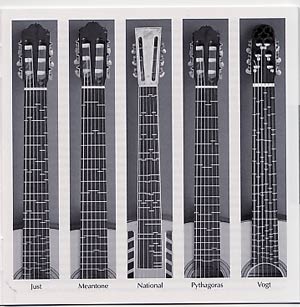
Whenever you tune your B string flat, the unisons, octaves and perfect fifths on that string will sound out of tune. Every step closer to the sweetness of the just M3 is a step away from perfect octaves, fifth and unisons, which tend to be much more noticeable and unpleasant. You can't change the temperament of a fretted instrument by tuning one string flat. The frets are positioned to achieve good intonation for ET. To get a banjo to play in any other temperament than ET you would need to change the spacing of the frets, like this:
Edited by - JoeDownes on 04/26/2013 04:20:08
steve davis - Posted - 04/26/2013: 04:25:09
I tune my B string 5 cents flat using my 30 year old Korg DT-2.
About keeping a tuner clipped to the banjo while performing.
I don't do that.
I check my tuning before the first song and then put the tuner in my case until the next time I play.
A stable banjo stays in great tune for hours at a time.
This has a lot to do with "seating" the strings onto the posts and tailpiece.
Strings are stable when you can pull the strings 1 inch off the fretboard at the 20th fret and they are still right in tune when you release them.
This stretching/seating trick also removes that new string hollow/oversustain tone right away.
Just repeat pulling each string up an inch at 20 and retuning from flat until it stops changing...usually 5 or 6 tugs does the job.
Edited by - steve davis on 04/26/2013 04:32:20
Banjophobic - Posted - 04/26/2013: 05:21:44
quote:
Originally posted by Paulie W
I fully expected a question like Joe's. To expand on that let me first say that I'm a simplistic banjo player who has never played banjo professionally.I have taken up banjo recently and besides playing for my own enjoyment, I've only otherwise played less frequently in a friendly small jam setting. I play simple country tunes mostly in the tonic key of "G" tuning and use a lot of simple single fret barre (Major) chords. So, what about when changing to alternate fingering chord positions up the neck? Lets say that we have tuned the second string "B" flat and beatless and now we are going to play in the key of "C" chording that in the first position. The "C" root note is on the first fret of the second string. Yes it might sound flat to you as now as we have a first inversion with the pure third of "G" becoming the tonic of the "C" which should be 440 equal. Say we don't like that. Well, the alternative is to use a "meantone' temperament. What is that? Quite simply it is a middle-of-the-road compromise between just intonation and equal temperament. Having the roots and fifths of the banjo tuned equal 440 and the pure third is about 437, the meantone temperament tunes the third in between them at about 438.5 The compromise takes the harsh edge off the equal third some but not being as flat as the pure third. The theory is that chords will be ideally closest to purity in MOST positions played up the neck while in actually they will never all be pure in ALL positions regardless of how you tune.Peterson Strobe tuners also now have on-board meantone temperaments for "G" Dobro which can be used for banjo. I have some favorable results using a meantone tempered third when playing bottleneck slide guitar in open tuned "D" or "E" Major tunings.
paulie
Im a long time banjo player and this is how I 'sweeten' the B string. Its a simple process of finding a spot that is somewhere between the ''beatless" tuning that gives you a perfectly good sounding B string, when played open against the open "G" chord voicing, and the "too sharp" sounding effect of tuning the B string to a typical tuner setting. I've never measured exactly where it is, cents wise, but its 'in-between'. Its also good to take note that all banjos are not equal, scale wise. This typically means that what 'tweeks' you do to any strings tuning on one banjo wont be universally transferable to all. Banjos are really hard to tune anyway as its the nature of the instrument,haha.
I have used Peterson strobes for years on stage and in my shop (Im also a long time luthier/repairman) and they are excellent. The 'sweetened' settings on the last model VS-II that I use in the shop, and the clip on model I use for gigs are really cool. I have used them on both my reso and banjo and they do seem to help in 'some' areas of tuning. But overall it seems i keep going back to doing my own 'sweetning' for the B string. Even with using the setting on the tuner to sweeten, I find that on some chords its just, well, weird,haha. I know some of this is we musician's training our own ears to hear things a particular way. Once you've done this for almost 40 years, it gets ingrained. But many players I know adopted the sweetened settings on their Peterson's and they love it.
JoeDownes - Posted - 04/26/2013: 05:44:41
When I tune the 2nd string 3rd fret in unison with the 1st string open and the 2nd string 8th fret in unison with the open fifth (tuning it by ear that is) I get an open B string that's perfectly in tune with an ET tuner. When I sweeten the 3rd, the unisons start beating, which sounds worse to me than the sharp M3 of ET.
Edited by - JoeDownes on 04/26/2013 05:45:45
steve davis - Posted - 04/26/2013: 05:57:22
A very good tuning can be achieved by comparing harmonics and removing the waivering.
Dave Magram - Posted - 04/27/2013: 20:19:55
quote:
Originally posted by JoeDownesI tune the 2nd string 3rd fret in unison with the 1st string open
I agree with Joe.
Here are some tuning tips I have learned over the years:
- Always rub some graphite from a sharp pencil into the nut slots every time you change the strings. The graphite keeps the string from sticking in the nut when you tune it and this can cause tuning problems.
- Periodically compare harmonics at the 12th fret with the fretted note at the 12th fret of strings 1 and 4-- to make sure that your bridge hasn’t shifted from the correct position when the banjo is carried in the case. Also if your strings are really old you may need to adjust the bridge position.
The "Magic Tuning Method" for banjos (and they said it couldn't be done! ):
- To tune a banjo to gDGBD (or to check your tuning), tune the 3rd (G) string to a tuner, tuning fork, or a guitar.
- Fret the 3rd string at fret 7 (D), and tune the 1st string open. Then tune the 4th string open from the 3rd string at fret 7 (D).
- Tune the 5th string from the 1st string at fret 5 (G) or the open 3rd string (G).
Here’s the “magic trick”: Fret the 2nd string at fret 3 (D), and tune it (while fretted) from the open 1st string (D). Do not tune the 2nd string (B) open from the third string at the fourth fret as most instruction books suggest. And when I tune the 2nd string with an electronic tuner, I also fret the 2nd string at the 3rd fret (D).
The reason why this method works so well is that you are always tuning between the root tone (G) to the fifth tone (D), and avoiding the problematic equal-tempered 3rd tone (B in the key of G).
-----------------------------------------------------------------------------------------------------
The other issue being debated on this thread makes no sense to me. I can tune very well by ear (using The Magic Tuning Method above) and I never use a tuner at home. But when I am performing, I have a small Snark electronic tuner clipped on my banjo. With a tuner I can tune with harmonics that are very quiet on stage, and ensure that I am in tune with the rest of the band. For new players who have not yet developed a good ear for tuning, electronic tuners are a blessing. 
-Dave
Edited by - Dave Magram on 04/27/2013 20:32:20
Hankon5 - Posted - 04/27/2013: 21:03:52
All that said....I'll keep my tuner clipped to one of my brackets near the neck..so it's out of normal site to all except me! I LOVE MY TUNER..we will never separate nor leave each other in distress!!! "Till death do us part!! I think you get the idea!!!!
phb - Posted - 04/28/2013: 01:43:03
I tune similar to what Dave Magram recommends:
1. Tune 3rd to reference
2. Tune 4th to 3rd comparing the 5th fret harmonics 4th string to the 7th fret harmonics 3rd string
3. Tune 1st string to 3rd comparing the 12th fret harmonic 1st string to the 7th fret harmonic 3rd string
4. Tune 2nd string fretted at 3rd fret to the 1st string open
5. Tune the 5th string to the 5th fret 1st string
6. Repeat once if banjo was heavily out of tune or in a different tuning because retuning all strings may lead to slight changes in neck bow putting the banjo out of tune again
When using harmonics for tuning, listen for the beat frequency of the two notes which will be proportional to the frequency difference between the two. When the beat frequency vanishes, the two strings are in tune. It is a good idea to dampen the other strings with your free fingers while doing this.
Terms of Use | Privacy Policy | Privacy Consent (EU/GDPR Only)
Copyright 2026 Banjo Hangout. All Rights Reserved.


