Hi everybody, my first post here is about the possibilities of getting an "Old-Time-Sound" out of a "standard" Bluegrass-Resonator-Banjo.
This is a journey some of my customers describe and I personally experienced, too...
Not everybody can afford or is willing to buy another banjo for a different kind of sound.
This post cares about certain steps you take to change the tone with some adjustments like
- removing the resonator
- lowering the head tension (drum-dial suggested!)
- changing type of head you use
- trying different strings (Nylon/Nylgut strings or lighter steel strings ?)
- changing the bridge ;-)
etc.
Well, my experience is, that you can't change the sound of your banjo completely, but it is still possible to a certain degree.
For me all these tasks were small steps towards the tone I wanted.
I guess some of us would be very interested in your little tweaks and tricks to get the sound you desire...

My tweaks and tricks are playing bluegrass and country after changing strings every two months or less. Its a small step but a big satisfying sound of fresh strings.

You want your banjo to sound like not-a-banjo?
Listen to Wade Ward and others of his era that played resonator banjos.
There isn’t (or wasn't) a ‘singular designated banjo sound’. The basis is cultural sensibility; surround yourself with, and absorb, the music and dance in all its variety until it becomes second nature. And then let that inform as you develop your sound.
You can't express what isn't first within you. Spend the time and what you absorb comes out. That just is the natural order.
Edited by - EEB on 09/08/2026 06:25:44
Stephan,
I'd try a couple of your simple tweaks first. ...
Reduce the head tension a little at a time.
Install a heavier bridge.
Those steps should increase the plunk with minimal effort.
You'll still be left with plenty other things to try.
Happy Plunkin' !
Edited by - mrphysics55 on 09/08/2026 06:21:43
On my bottlecap banjo I wrapped bubblewrap around the single coordinator rod, positioned underneath the head where the bridge touches to make it quieter and less bright. I've thought about getting a banjo bolster but haven't felt the need to change my setup other than that and lowering the tailpiece to increase the attack. I usually use medium strings because it also increases the attack more and has heavier tension than light strings.
If you’ve got a Deering Truetone tailpiece, you can raise it up, off the tension hoop, to remove some of the bluegrass sparkle. I also recently put a white suede head on my Sierra, and the pluck is more powerful, and the sparkle and shrill is reduced. I’m hunting for a sound more percussive, and compatible with country gospel and hymns, without blasting my friends out. Heavier strings can also strengthen the pluck, while reducing the shrill sparkle and sustain.
Many old timer players in the US already use an open back banjo but to make their sound even MORE plunky, they roll up a cloth hand towel and tuck it up inside the pot between the dowel stick (or coordinator rod) and the head, near the neck attachment to the pot. Or a piece of soft furniture foam, or a cotton sock, or whatever you can find that is conformable to the space under the banjo head.
The only other thing I can think of is replacement of your "bluegrass" tailpiece, with a minimalist tailpiece like the so-called "No Knot". This too will help eliminate "bluegrass brightness". And a repro No Knot is cheap, so it doesn't cost much to try it.
Have fun experimenting!
quote:
Originally posted by Bart VeermanYou want your banjo to sound like not-a-banjo?
First, please excuse my English and my maybe sometimes 'clumsy' way to express... ;-)
A banjo should always sound like one!
But certain adjustments in tone, like smoother Attack, faster decay, more or less sustain etc., are possible to achieve, for example by changing the bridge, lowering the downforce of the tailpiece...
The banjo sound gets a slightly different impression.
To control the impacts on sound by certain 'hardware changes' to ones banjo seemed to me like a rewarding topic, because this is often (maybe especially for less experienced players) a field of trial and error.
quote:
Originally posted by Dean TIf you’ve got a Deering Truetone tailpiece, you can raise it up, off the tension hoop, to remove some of the bluegrass sparkle. I also recently put a white suede head on my Sierra, and the pluck is more powerful, and the sparkle and shrill is reduced. I’m hunting for a sound more percussive, and compatible with country gospel and hymns, without blasting my friends out. Heavier strings can also strengthen the pluck, while reducing the shrill sparkle and sustain.
Thanks a lot for your input! This is what I was aiming at... Do you have a recommendation for certain strings? I use D'addario medium gauge at the moment but now would try heavier ones.
quote:
Originally posted by The Old TimerMany old timer players in the US already use an open back banjo but to make their sound even MORE plunky, they roll up a cloth hand towel and tuck it up inside the pot between the dowel stick (or coordinator rod) and the head, near the neck attachment to the pot. Or a piece of soft furniture foam, or a cotton sock, or whatever you can find that is conformable to the space under the banjo head.
The only other thing I can think of is replacement of your "bluegrass" tailpiece, with a minimalist tailpiece like the so-called "No Knot". This too will help eliminate "bluegrass brightness". And a repro No Knot is cheap, so it doesn't cost much to try it.
Have fun experimenting!
Thanks for your answer! The tailpiece seems to be another important part; not only the downforce, but also the construction of the tailpiece. Did I get it right?
I've already built myself a wooden tailpiece for Nylgut-strings, but this should also work for loop-ends... I'll try!
I expect it's of no help to anyone, but my tricks and tweaks are primarily rooted in ignorance is bliss and leave well-enough alone. 
[.... or, maybe ^^ just another way of saying I can contribute by serving as a bad example?? ]
.... and now back to regular programming. 
quote:
Originally posted by ELBEBanjosquote:
Originally posted by Dean TIf you’ve got a Deering Truetone tailpiece, you can raise it up, off the tension hoop, to remove some of the bluegrass sparkle. I also recently put a white suede head on my Sierra, and the pluck is more powerful, and the sparkle and shrill is reduced. I’m hunting for a sound more percussive, and compatible with country gospel and hymns, without blasting my friends out. Heavier strings can also strengthen the pluck, while reducing the shrill sparkle and sustain.
Thanks a lot for your input! This is what I was aiming at... Do you have a recommendation for certain strings? I use D'addario medium gauge at the moment but now would try heavier ones.
I was using GHS 190 lights 10-11-12-20-10, but tried GHS 180 mediums which are 11-13-16-24-10 and lost some shrill, and gained some good pluck. It's tempting me to go just a bit heavier
When I'm in the mood for a change in tone, I slap a mute (a Gold Tone in my case) on the bridge. Depending on the banjo and where it's sitting on the bridge, it can get an almost fuzzed-out electric feel, which sounds pretty great for a bluesy groove. Raising it up a bit milds out the sound, makes it suitable for playing late night without disturbing the wife, but still gives it enough sustain.
The easiest way for us to understand the kind of sound/tone you want your banjo to sound like is to look around on Youtube, find a video of a banjo being played with the sound/tone you want and post the link to it here.
quote:
Originally posted by MickhammerWhen I'm in the mood for a change in tone, I slap a mute (a Gold Tone in my case) on the bridge. Depending on the banjo and where it's sitting on the bridge, it can get an almost fuzzed-out electric feel, which sounds pretty great for a bluesy groove. Raising it up a bit milds out the sound, makes it suitable for playing late night without disturbing the wife, but still gives it enough sustain.
This is an interesting idea definitely worth trying! :-)
I discovered something while looking for ways to slightly reduce the twang for some church songs. I did not use this method but found it a good data point. I inserted a bit of foam rubber under the Presto tailpiece. Instant decay, maybe a little reduction in volume, but it may do exactly what you need. I would have said it went from clang to clunk. Or pling to plunk, lol.
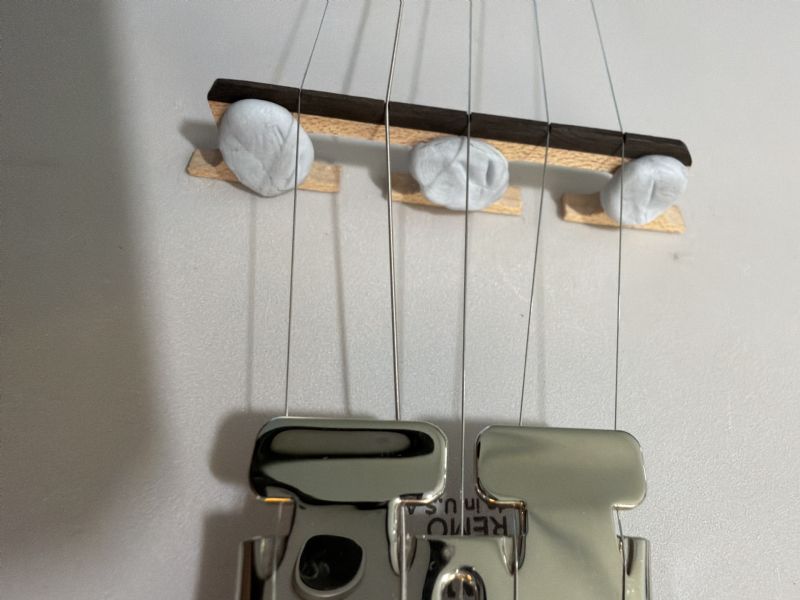
FYI I tried a bunch of mutes and various things, but Blue Tack on the back side of the bridge gave me the right tone for what I was doing. It’s what kids use to hold up their artwork on a wall…I used to call it Plastitack. I geeked out a bit and used a Niosh db app to get approximate volume. A small scale I used to weigh bridges was used to test varying amounts of BlueTack. I also did 3 banjos wide open and unaltered and it made sense which was loudest. Banjo players can into the weeds very quickly…
quote:
Originally posted by Bart VeermanThe easiest way for us to understand the kind of sound/tone you want your banjo to sound like is to look around on Youtube, find a video of a banjo being played with the sound/tone you want and post the link to it here.
Sure, I will look for examples... My own example is a Höfner HBA-5, a mid-range Resonator-Banjo which I tried to push into a warmer, more 'woody', less harsh and shrill sounding instrument (Yes, I love Old Time tunes) and therefore did some adjustments to it...
quote:
Originally posted by Mastertone BanjoI discovered something while looking for ways to slightly reduce the twang for some church songs. I did not use this method but found it a good data point. I inserted a bit of foam rubber under the Presto tailpiece. Instant decay, maybe a little reduction in volume, but it may do exactly what you need. I would have said it went from clang to clunk. Or pling to plunk, lol.
FYI I tried a bunch of mutes and various things, but Blue Tack on the back side of the bridge gave me the right tone for what I was doing. It’s what kids use to hold up their artwork on a wall…I used to call it Plastitack. I geeked out a bit and used a Niosh db app to get approximate volume. A small scale I used to weigh bridges was used to test varying amounts of BlueTack. I also did 3 banjos wide open and unaltered and it made sense which was loudest. Banjo players can into the weeds very quickly…
Thanks for your post! Great... Whereas this seems to be more about muting, this is an interesting idea and a good approach!
I will definitely try this at home (I know the material you're talking about).
The bridge and especially the way the energy,provided by plucking the strings, is transported through this little 2-and-a-half-gram piece of wood is a crucial part in shaping the tone of a banjo...
Just throwing this out there, but has anyone considered focusing on dynamics before physically altering their instrument? Could the loudest and sharpest banjo not be played pp with some focus on right hand dynamic control?
completely agree,very easy to change the sound ,
I had a cheap openback ,so changed the steel strings to nylon,the frosted head changed for a renaissance,deer antler bridge instead of maple .
Head tension adjusted to get the right sound,new brass hardware,( not sure if it changes the sound but it sure looks good.)
No-knot tailpiece instead of the standard thing.
The sound and look have been transformed ,it is now a pleasure to play,and easier on the fingers and ears.
quote:
Originally posted by Mastertone BanjoI discovered something while looking for ways to slightly reduce the twang for some church songs. I did not use this method but found it a good data point. I inserted a bit of foam rubber under the Presto tailpiece. Instant decay, maybe a little reduction in volume, but it may do exactly what you need. I would have said it went from clang to clunk. Or pling to plunk, lol.
FYI I tried a bunch of mutes and various things, but Blue Tack on the back side of the bridge gave me the right tone for what I was doing. It’s what kids use to hold up their artwork on a wall…I used to call it Plastitack. I geeked out a bit and used a Niosh db app to get approximate volume. A small scale I used to weigh bridges was used to test varying amounts of BlueTack. I also did 3 banjos wide open and unaltered and it made sense which was loudest. Banjo players can into the weeds very quickly…
X = playing in front of the bridge for lots of snap
Y = playing halfway between the bridge and the end of the fingerboard for more crackle.
And…
Z = playing out over the 19th fret harmonic and even further South if desired to get real POP.
I don’t play with a scoop, I don’t reverse one fingerpick.? I only play without picks on Sunday Mornings as a reference of respect to those who went before.
I never use nylon or gut strings. I have heard some great nylon strung bluegrass or 3-finger with and without resonator and different tailpieces. I rarely break strings. In leaner days I changed annually or more
On one open back longneck I use
8 golden spoons cupped to the next spoon and so forth to make a turbine-shaped passive distribution device
Instead of a G or B bender, it allows a FIVE bender that curves the music at will by shaking the neck at the right time and circularly!
The audience always responds positively to the claw at the nineteenth area.
I concur with Mr. Hooks about dynamic control of both hands. I build these rigs so I have learned my own set up. I wash dishes, thus the spoons.
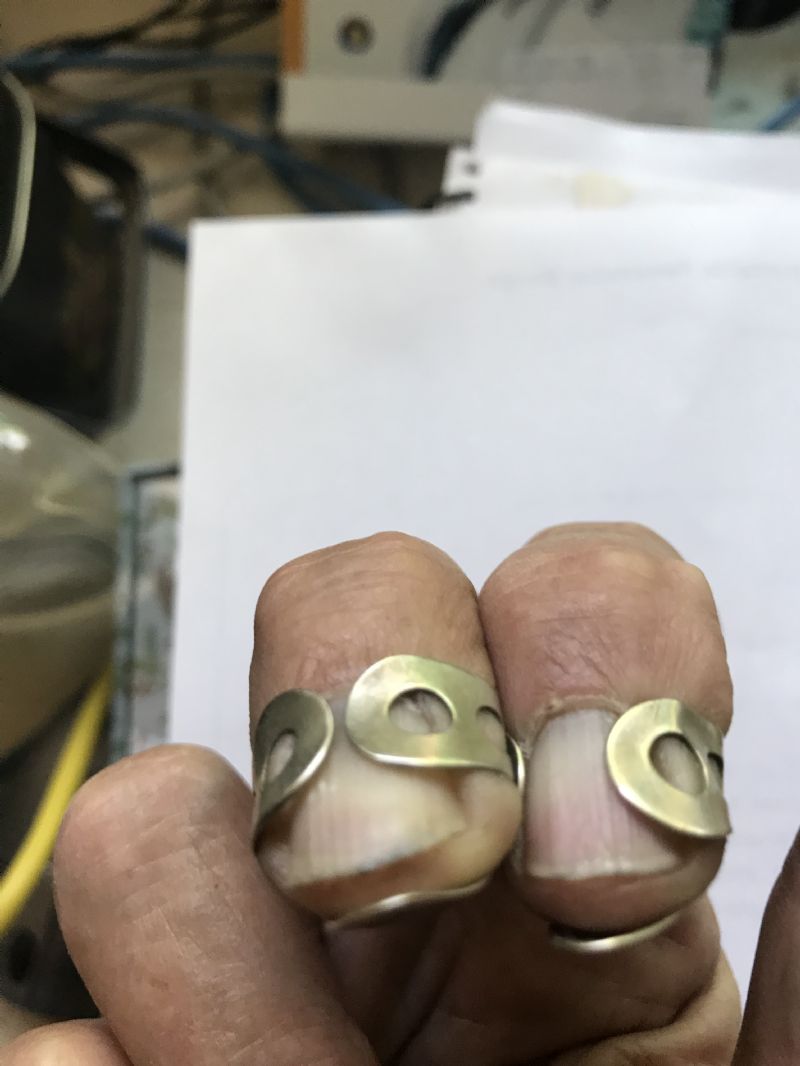
Here’s a photo of the fingerpicks, I can afford better ones these days
I frail and claw at will, usually during verses and others’ solos, and I am happy in my skin, I hope this helps someone.
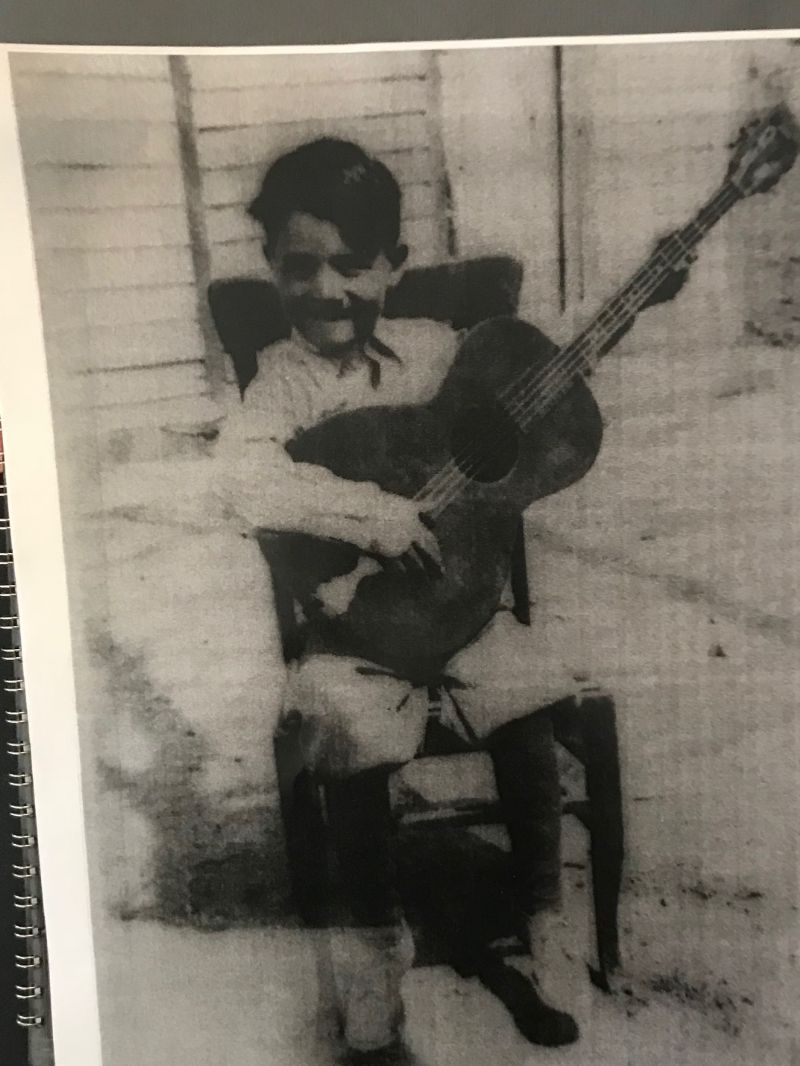
( the little guitar is a nine-yr-old’s private project from walking the tracks for scraps. I met his brother at a copy store. The instrument resides in a museum in North Dakota.)
( ):)====‘== : :]}
Edited by - Helix on 09/12/2026 01:41:59
Terms of Use | Privacy Policy | Privacy Consent (EU/GDPR Only)
Copyright 2026 Banjo Hangout. All Rights Reserved.