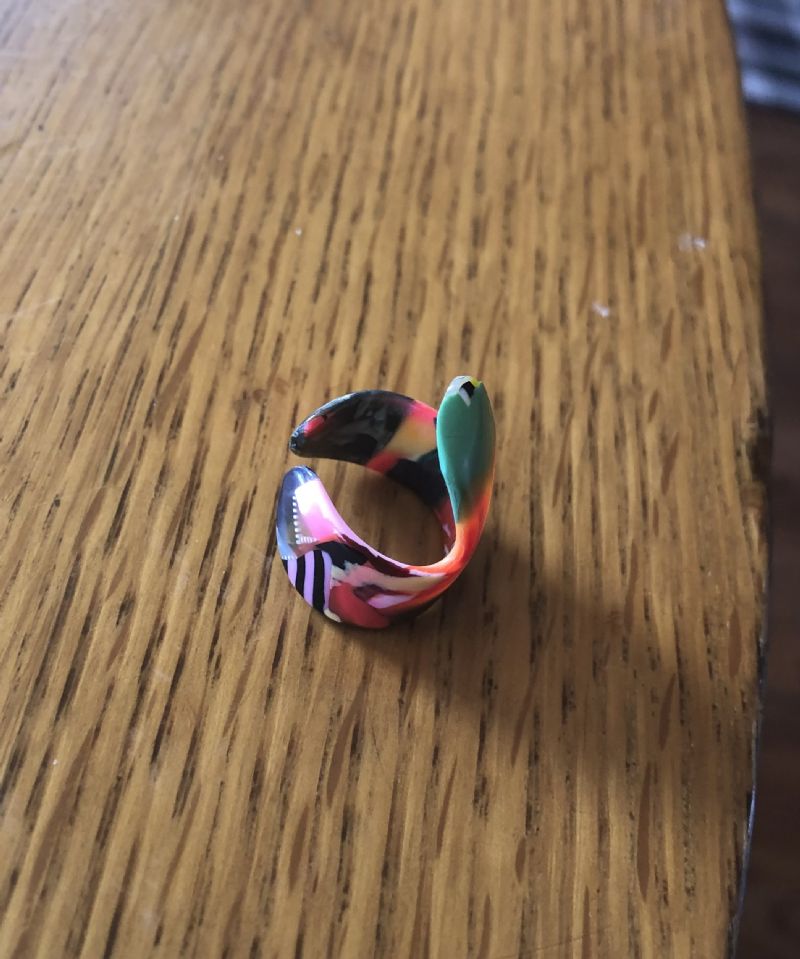
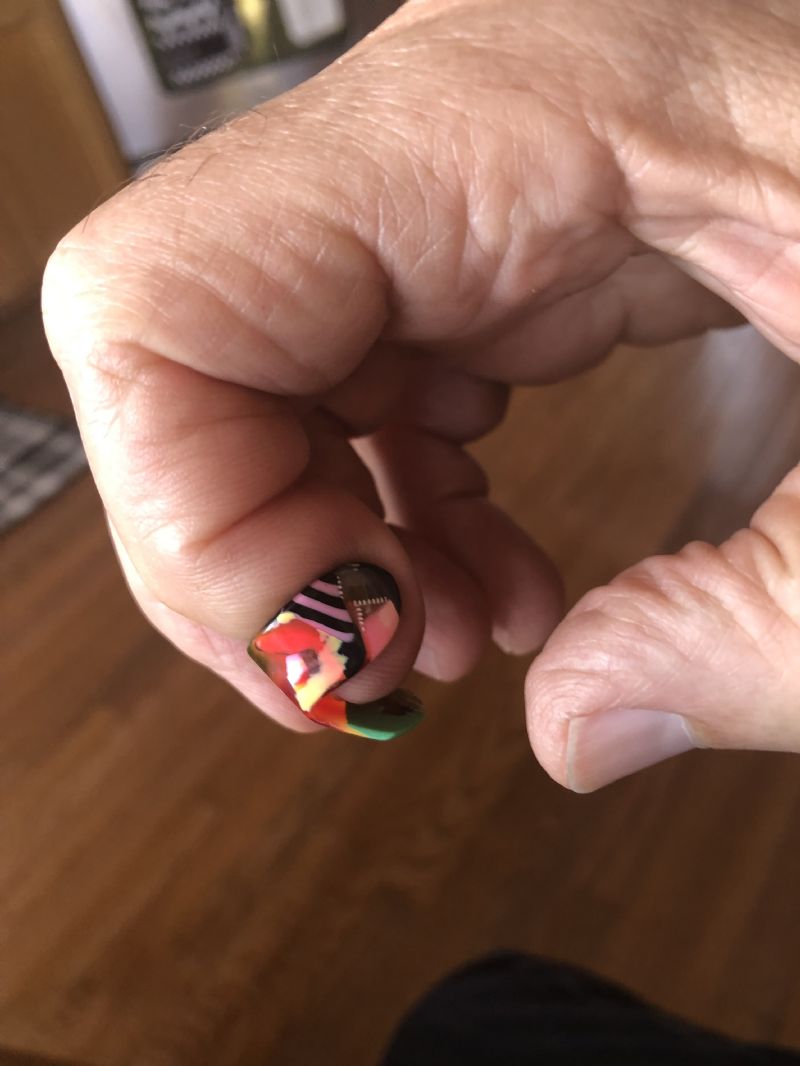
Hi there banjo family. I am new to Clawhammer. I am having difficulty sounding the strings with the nail of my finger. My nails are not strong enough or long enough. I have been using a regular finger pick turned around so that it strikes the string. It works ok but I am continually adjusting it. I see some people put crazy glue on their striking fingernail. Not so sure I want the toxins in my skin. Any one have any suggestions?

I let my nail grow out for clawhammer when I started playing. There are clawhammer picks that work quite well.

You might try the old "lick and stick" trick to keep your finger pick on. Works pretty well for 3-finger bluegrass style so it might also work for clawhammer. If not, look up Gorilla Snot, you can put it on your finger and it'll hold the pick on very well and for a long time. You have to be careful with it and not get it anywhere else or whatever it gets on, it'll stick to whatever touches it.
Check out banjothimble.com. I use these all the time and they work very well for me.
Check out Fred Kelly picks
I have tried half a dozen fingerpicks and none have suited me more than the Fred Kelly white Freedom picks. To be clear, I use these on my middle finger when playing at weekly contra dances and in the occasional jam but use my fingernail when playing at home.
David
My current favorite are these from the Ozark Banjo Company: ozarkbanjo.com/store1/nails
They are made from the same material used for guitar flat picks and attached with a little bit of putty. They emulate the sound of natural nails better than anything else I’ve tried; the putty holds them firmly in place, and peels off easily when you need.
A shoutout to @JimPankey for turning me on to these.
Edited by - ssduke on 05/29/2026 08:52:35
+1 for Joel Hooks https://banjothimble.com/ his thimbles are the easiest to use and best sounding of the finger picks.
notes:
1) I have had issues with soft nails. The other viable solution is to keep your nail(s) trimmed so just a sliver of white shows (~1mm), cover the front of the nail with a corner of scotch tape (pointing toward the quick) and lightly file the edge to trim the tape. It's not as good as having thick strong nails that stay stiff at longer lengths; sigh, it works. Use light or med/light strings too.
2) "Crazy glue" cyanoacrylate was used by medics/surgeons in Vietnam and is still used in a rebadged FDA approved form (dermabond) as a medical skin adhesive.
Edited by - pinenut on 05/29/2026 09:44:16
I’ve tried out everything listed above minus the Ozark picks, and my preference is Alaska Piks. Some of the other ones don’t work as well on my small hands
quote:
Originally posted by TexasbanjoYou might try the old "lick and stick" trick to keep your finger pick on. Works pretty well for 3-finger bluegrass style so it might also work for clawhammer. If not, look up Gorilla Snot, you can put it on your finger and it'll hold the pick on very well and for a long time. You have to be careful with it and not get it anywhere else or whatever it gets on, it'll stick to whatever touches it.
Thank you. I shall investigate. Sounds like a good solution.
quote:
Originally posted by clarinetagogoI’ve tried out everything listed above minus the Ozark picks, and my preference is Alaska Piks. Some of the other ones don’t work as well on my small hands
Thank you. I will check them out!
Lukas Pool uses a chunk of ping pong ball cut to the shape of his nail and held on with double back tape or glue.
Chris Coole and Jason Romero both use acrylic nails. Chris gets his applied at the nail spa and Jason does his own. They did a little show and tell at a festival I attended. It was funny. You had to be there.
They all know me at the local nail shop. Someday I'll use the translator on my phone and find out what they're actually saying when I come through the door in overalls and ask for one nail. One of the girls speaks some English, but she didn't know what a banjo is.
I think this is just one more example of the banjo bringing people together across all the barriers of language and culture.
...or something like that... :-)

No real experience with Clawhammer picks but am going to try these: clingpropicks.com/store/frailing-pick
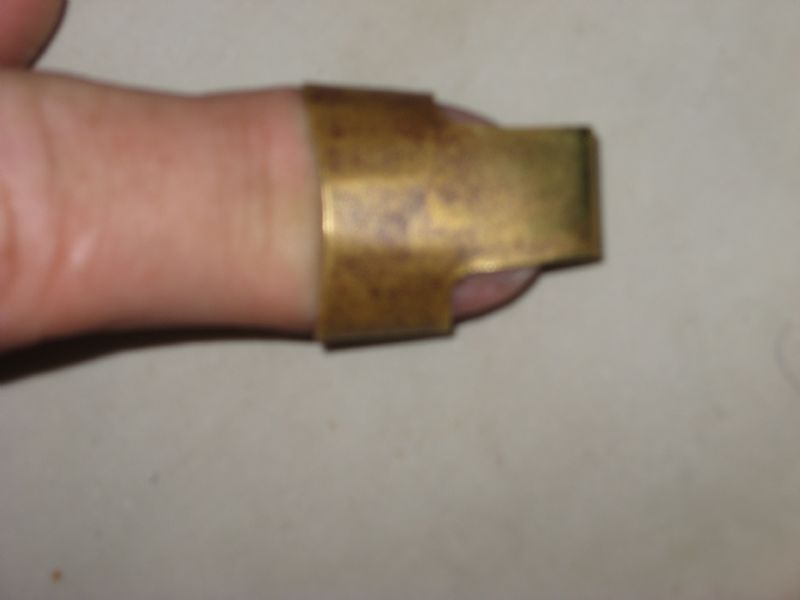
Here's a couple of things to think about. When I'm playing alone or with just a few folks I don't use a pick. When I'm at a larger session I use the plastic finger pick (with the tip filed down and bent to a curve that feels right to me). The other item is a link to a video by Reed Martin, who doesn't use a pick) where he explains how his finger nail strikes the string. I found that very helpful. As far as I know (in asking folks who knew him), they said he didn't do anything special with his nails at all, trimmed normal etc. Anyway, hope this is helpful. Oh, and I tried the heavier metal pick, as in the Kyle Creed pick style photo and found it too heavy, but there it is if you want try it. It sure worked for him. Also, have tried some of the commercial picks and always found the reversed plastic works best for me.
youtube.com/watch?v=IqrLzJXpkg0
Sorry, but I can't seem to get the photos up load.
Edited by - pmiller510 on 06/01/2026 04:37:56
Hopefully here are the photos
If you shape the pick so as much of it as possible contacts the surface of the nail (and as little as possible extends past the fingertip), it will be less likely to wobble its way off in playing.
Here's how I modify a standard Dunlop pick as a banjo thimble:
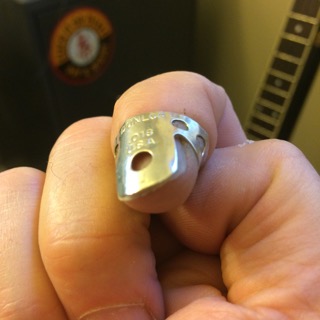
Truncate the tip with tin snips or wire cutter, file the corners and edge smooth, and reshape with round-nose jeweler's pliers (or tap into shape on a finger-sized dowel or rod, with soft hammer). I see that one's a .018 (very light)-- a heavier one would be better.
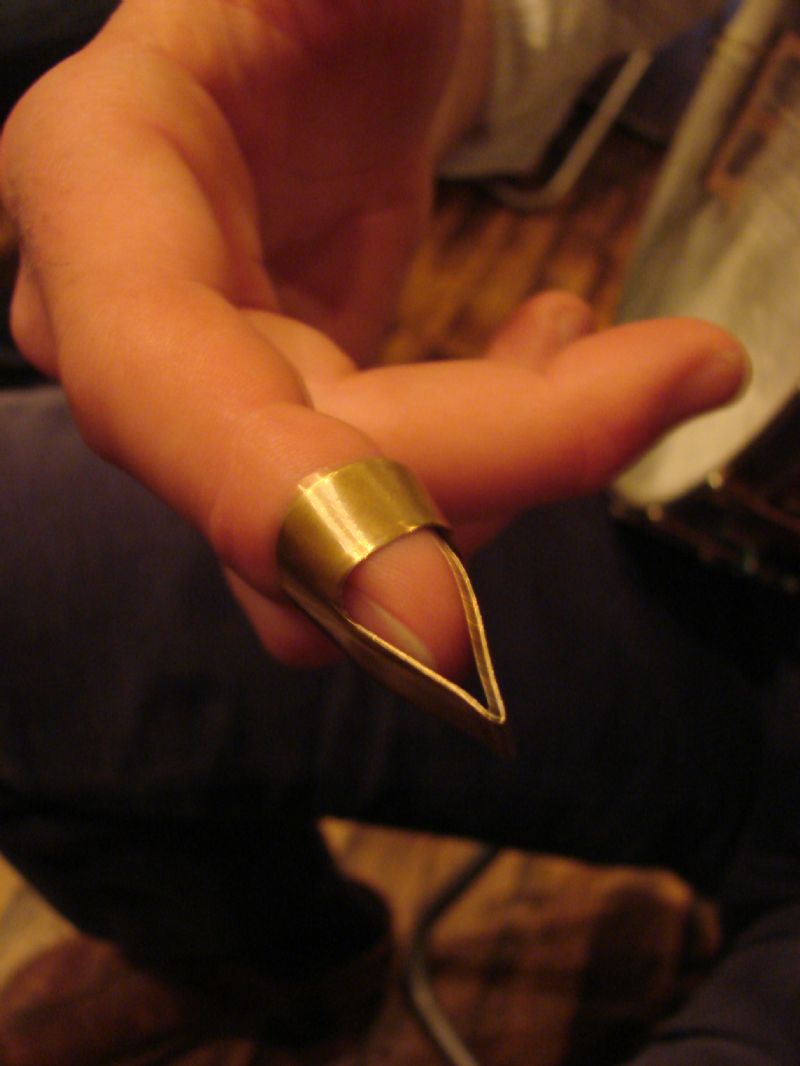
I prefer a thimble of the sort shown in Converse's old banjo book:
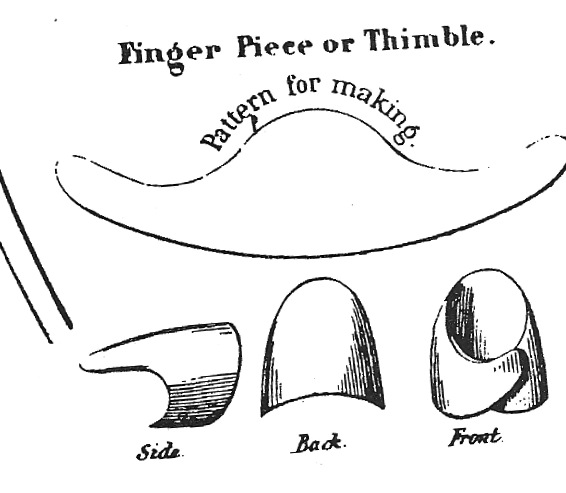
A decade or two back, someone produced very similar ones under the name "Atomic Claw Pick", but I don't think those are still available.
I also really like the Ozark picks and they're a great price too. Second best would be the Cling Pro but I did end up modifying mine a bit to fit my finger.
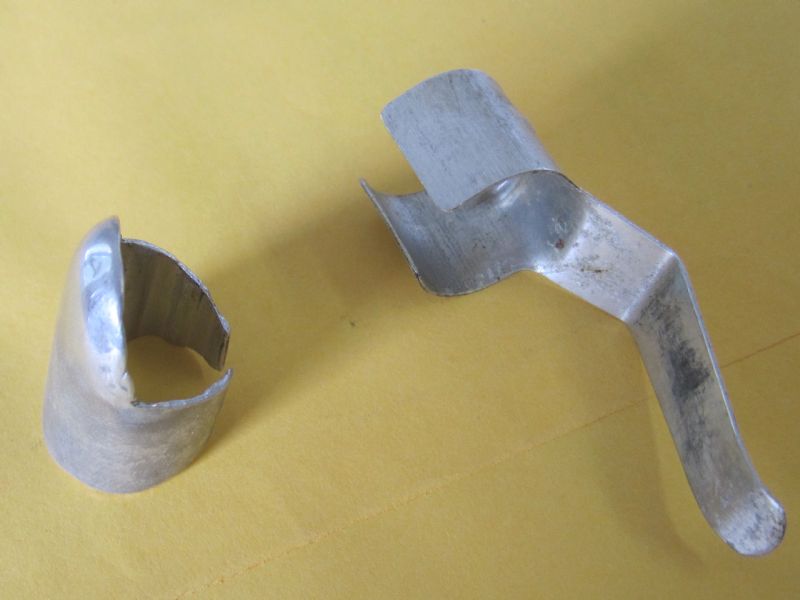
IF one likes to putter [and can find suitable tubing], making a thimble-style one isn't particularly difficult.* With a pic of Joel's ^^ for inspiration/guidance I came up with this one.
* if playing was as easy, I'd be out there ... how does the saying go?? ... making tens of dollars. 
[The "funny" thing on the right is the clip from a glass candy thermometer, that I thought had possibilities].
Here is the full fold out from the 1865 "Frank Converse's Method for the Banjo, With or Without a Master" that features that thimble patten.
https://archive.org/details/converse-fold-out-scan-9.75-x-24-in
I have found that the tabs on this are much too long and it is a little short in length. But it is a good starting place if you want to get into trying to make one. Just change the design to suit.
The more common variety (the style I make), which is shaped like a shield for the nail, is likely the style that was first developed (and used) by Tom Briggs' from the mid 1840s and was on the market until the 1920s.
As far as making them, it is not too hard. Get a jeweler's saw set with some decent blades and a block of wax (and old candle, beeswax, bar of soap). It is also helpful to have a "V board". Then get some sheet metal, nonferrous.
Saw out the shape, sand the edges, and then bend and shape it around a wooden dowel. It might take a little practice to get the hang of the saw. There are plenty of how to videos on youtube. Buy extra metal and expect to mess up some before you get a good cutout.
Below is the pattern from the Pete Seeger book, though you will want to make the tabs longer. As shown, they are not long enough.
Several years ago I tried the Dunlop clawhammer picks, but then switch to two finger. So I can't say how well they work, but they can obviously be filed to the desired shape, and maybe even stretched a bit if the size isn't quite right. $18 for 12, so you'll have plenty to experiment with.
jimdunlop.com/dunlop-clear-d-m...er-picks/
stringsandbeyond.com/dunlop-pi...dium.html
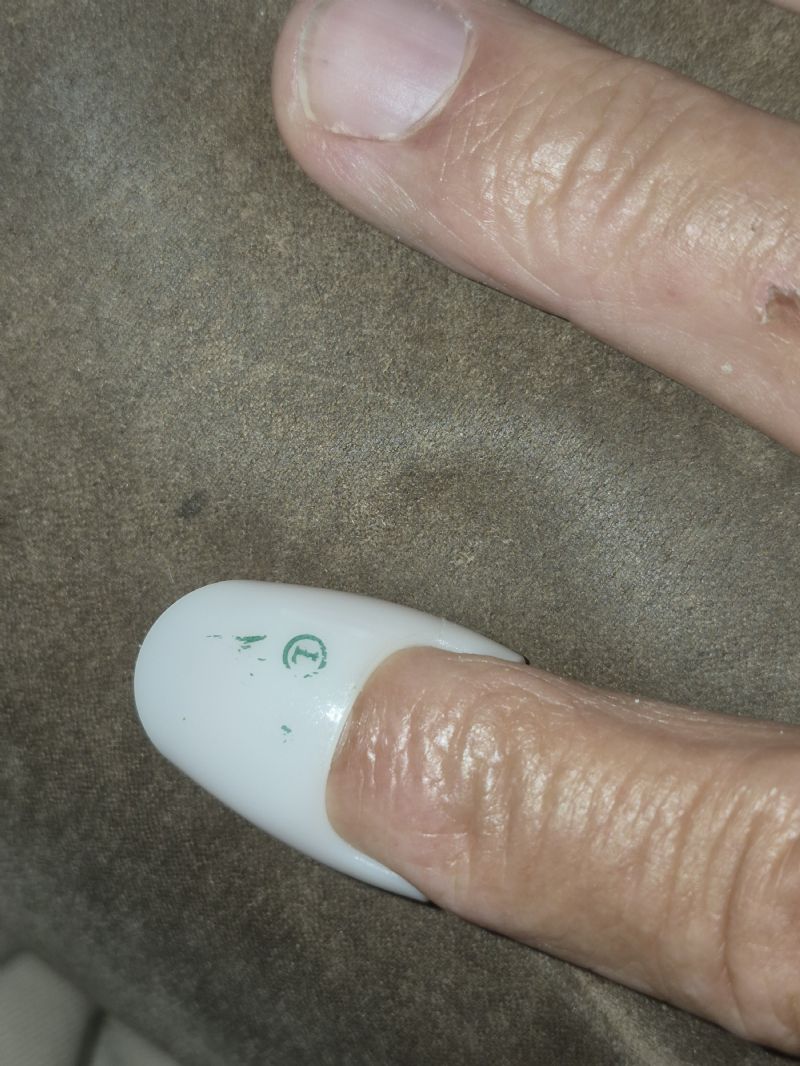
Fred kelly freedom pick.
Slips over the fingernail
Edited by - cb56 on 06/10/2026 15:05:06
Terms of Use | Privacy Policy | Privacy Consent (EU/GDPR Only)
Copyright 2026 Banjo Hangout. All Rights Reserved.