<
Back to Home
Interested in ODE, but have questions
From capo matt on 10/24/2013 8:40:28 AM
Hello,
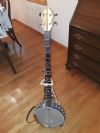
I had the chance to play a 78 or 79 ODE model C the other day. I liked it, but had some concerns and was hoping to get your advice... I've been playing bluegrass banjo for 18 months (guitar for 18 years). I currently play a Goodtime, but looking to upgrade to an instrument that will last me the rest of my life. I don't want to spend a ton (under $1500). I like simple designs that are not too over the top, and I like vintage instruments, so the ODE model C really caught my eye.
My concerns: First, the neck was very narrow (meaning the nut was shorter than other banjos, making the strings close together). As I said, I currently play a Deering Goodtime, which is substantially wider. It took a few minutes, but I adjusted pretty quickly to the ODE. But its hard to tell when you only play it for a few minutes... The owner of the instrument mentioned that his hands a a little to big for this neck. Is this narrow neck going to be a problem? I have thin (but long) fingers, so I think I might be ok...
Second question - what should I expect to pay for an ODE model C from this era? I did a quick search online and it looks like anywhere between $1000 and $1500 is reasonable, depending on the condition of the instrument and accessories (case).
Third question - Since ODE is no longer manufactured, do you have problems/concerns about repairs? How do you handle this?
Almost done with questions! The tone seemed pretty nice to me, but different than other banjos, also this banjo was in need of new strings and a setup so I think it will improve. How would you describe the tone of the ODE model C?
Final question - why ODE over something else? In this price range, there are things like GoldStar, Recording King, GoldTone, etc. Personally, I like the idea of owning an older instrument. I like the heritage and history of the ODE brand. I like the fact that they are not made anymore. And I like the way it looks.
5 Comments |
 | bbjork says:
10/24/2013 10:06:43 AM
I have a 1979 ODE model C purchased from Elderly around 1995, paid $900. I'm 6'3" and have long thin fingers and had no problem adjusting to the thin neck for both 3 finger style and clawhammer. I've played bluegrass guitar since the mid 60's and I'm used to a dreadnought style guitar neck so I'm thinking you'll be ok. My ODE was in great shape when I purchased it and I've had no mechanical problems. I did need a neck shim but a buddy of mine took care of that with a slice of an old credit card (best use of a credit card I've ever seen). Tone is a very subjective subject, good strings (I use mediums), a properly tightened head and sampling different tail pieces should get you what you want.
|
 | darwinyarwin says:
10/24/2013 10:47:40 AM
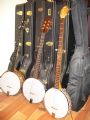
I have two Odes currently and have had a couple of others over the years.
Question 1 - adequate width for you is subjective, but Model C necks are not *that* much narrower than others. I think you may adjust easily. Try before you buy, that'll be important.
Question 2 - You are about right in your price estimates. maybe expect a little higher price for an exceptional Model C.
Question 3 - Repairs for most of us Ode owners are handled by independent luthiers with whom we've developed a good relationship. (Parts, however, can be hard to find and expensive.) The typical issues Odes have are not significantly different from other banjos. A competent luthier likely will be able to accomplish what you need. BHO is an excellent resource for you to obtain advice, recommendations and expertise on any issues you might have in the future. Folks who worked for Ode monitor this group and are very good people, very helpful.
Why buy an Ode? I like your reasons a lot, but the chief one for me is that they really do sound and play better than the others of similar age or design. Oh sure, you'll find there's a majority of folks who've bought into the mythology of other vintage banjo manufacturers, but they're victims of confirmation bias. They don't have confidence in what their ears actually tell them. ;)
Happy hunting!
|
 | mikehalloran says:
10/25/2013 8:32:18 AM
Well, ODE is still around - kind of. After Badwin let it die, Chuck Ogsbury started Ome which is very much alive and well. The Ome web site is a wealth of information and old catalogs as is the BHO.
The only service issues that may set certain Baldwin era ODEs apart is the truss rod in the neck. Baldwin used different ones and there are experts here who know them and can tell you which this has should you buy it. Otherwise, a banjo is a banjo is a banjo as far as set up and service goes. The hardware is practically military grade it is that rugged.
These are not in the same league as the RK, Gold Star and other banjos you'll find in this price range. I say that as a dealer of some of those other banjos.
If you like it, buy it. A new banjo of the same quality would cost you a whole lot more. It's a piece of Americana and they aren't making them anymore. Baldwin is owned by Gibson and even if Gibson were to re-start banjo production, they'll never bring ODE back. Ome is making banjos just as fine - try pricing them.
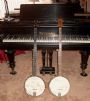
Mine is the plainest model they ever made, I believe. I've never seen a 29/0 cataloged. I wouldn't sell mine for what you're looking at that C.
If you like it, buy it. Selling it for what you paid should be very easy if you desire something else later. If you pass, let your new friends on the BHO know about it. Someone around here would get interested.
|
 | stanger says:
10/28/2013 4:01:13 PM
All Baldwin/Odes are their own thing entirely. They sound different from other makes, and have a different feel and appearance.
Most new banjos these days are essentially Gibson Mastertone clones. For sure, there is nothing 'wrong' at all with the Mastertone sound, but like Stellings, which are also totally different, the Ode tone simply appeals more to some players.
It's better balanced than most Gibsons, and has a distinctive silvery quality. Odes also tend to sustain a note longer than a Mastertone, and are clearer and stronger on the highest notes.
They have a longer scale length, which makes the strings feel slightly stiffer, and there is more room between all the frets from the bottom to the top.
These playing qualities are what makes them popular with melodic style players. The stiffer strings allow for cleaner fretting in rapid scale passages, the roomier frets allow for easier fretting about the 12th fret especially, and the evenness of the tone makes melodic style songs sound very crisp and clear.
The relative narrowness of the neck also aids in the complex chord shapes and unusual fretting of the melodic style; wider necks make some of the finger stretches harder to manage.
They also have a very distinctive and striking appearance that is all their own. One always stand out in a jam full of Mastertones and clones.
None of the parts are the same as a Gibson, so finding original parts can be difficult. But the upside is the Odes are extremely sturdy. Their one weak spot is their co-ordinator rods. The rods work in an entirely different manner than a Gibson's, and are made of brass, not steel. They can and do break if someone tries to adjust them like a Gibson, but, when the banjo is set up correctly, the rods are not needed to lower the action as it is with some Gibsons.
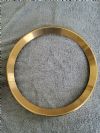
On the other hand, the Ode flange is massive brass. They never warp or distort like the Gibson flanges, and the rims very seldom go out of round because the flange won't allow warpage.
Their tailpieces are the heaviest ever made, and are somewhat over-engineered, but are extremely adjustable. They are a pain in the butt to change strings on, but they definitely contribute a lot to the distinctive Ode tone.
Their construction creates a low-medium action using a 5/8 bridge, and if a 9/16th bridge is installed, the action is low. They were originally designed for the 9/16.
The price range you mention is good for a C in good condition.
Setup always varies to the player's tastes. The Ode tailpiece is very adjustable and very heavy. Cranking it down puts a ton of downward pressure on the bridge, enough that it can choke off the tone. I personally lower my tailpieces very little- just enough to hold the bridge firmly on the banjo.
I like a Renaissance head on my Odes, as they mellow and deepen the overall tone, but I also like a top-frosted 5-star head quite well on them.
|
 | capo matt says:
11/29/2013 6:35:32 PM
thanks for the comments. the jury is still out. I'll wait until the new year to make the decision.
|
Post a Comment
|
You must be logged in and a member of this group to post a comment.
|