DVD-quality lessons (including tabs/sheet music) available for immediate viewing on any device.
Take your playing to the next level with the help of a local or online banjo teacher.
Weekly newsletter includes free lessons, favorite member content, banjo news and more.
Premier Sponsors


|
Please note this is an archived topic, so it is locked and unable to be replied to. You may, however, start a new topic and refer to this topic with a link: http://www.banjohangout.org/archive/406287
Page: 1 2
Daniel11 - Posted - 12/03/2025: 16:38:28
I want to play blues on the banjo. I think I want a gourd banjo. I'm a little dkidfidh on buying one because it seems like you have to buy them without knowledge of tone or feel..
But I also know I want as banjo I saw Rhianna Gideon play on CBS Sunday morning I think she called it a " bass banjo" but it's not a bass, it's more of an tenor but aren't most banjos tenor? But it had a deeper tone, just not full on bass.
Can anyone offer any advice?
jenorma1 - Posted - 12/03/2025: 16:48:35
Rhiannon Giddens is often playing a Hartel Banjo that is a modern reproduction of a "Minstrel banjo" from the late 1800's (so-called because this style was played in "Minstrel Shows" of the era). They're typically fretless and tuned lower than standard tuning using thicker nylon or nylgut string sets (Aquila makes a "Minstrel" set)..
For a budget option, I'd recommend getting a kit from Brian Carver and building one yourself (more finishing/assembling than building really). He has varieties with hardware (like Rhiannon Giddens' banjo) that allows the head to be tightened or tack-head versions where the head tension can't easily be changed:
carverbanjos.com/product-tag/t...ad-banjo/
kwl - Posted - 12/03/2025: 17:38:27
I you can get to Lark Street Music in Teaneck, NJ they usually have a good selection of new and used banjos on hand. Here is their website: larkstreetmusic.com/index.html Note that they are closed on Saturday's, but open from 12 - 5 pm on Sundays. I've been in the shop and few times and they seem like good folks.
The Old Timer - Posted - 12/03/2025: 19:05:53
I think building your own gourd banjo is successful after you have learned from lots of failed attempts. Starting with growing and selecting gourds.
Adam Hurt famously plays a gourd banjo. I'll Private Message you his email so you can ask his advice.
I slightly remember "somebody" offering a gourd banjo or two here in our Classifieds. Keep on eye open there.
Edited by - The Old Timer on 12/03/2025 19:07:09
writerrad - Posted - 12/03/2025: 20:30:47
No one in the era of blues used gourd banjos? The major blues players with the banjo who played the banjo used large, loud tone ring banjos produced in the early 20th century and late 19th century when the Blues came in. There is absolutely no evidence of anyone playing gourd banjos playing the blues which would have been impossible, since the blues was a dance music and the instrument had to be loud enough to play over the other instruments in a juke joint or dance.,
It is just ignorant to suggest blues were played with gourd banjos,. The blues playing 5 string banjoist we know about the most is Gus Cannon from Mississippi who spent most of his life in Memphis. He recorded 30 blues and rag recordings in the 1920s and 1930s and had a revival of performing in the late 50s and 60s including the success of his song Walk Right In.
The three major banjos Cannon are known to play were all fairly developed high end professional banjos. In the 1910s Cannon on Medicine shows Cannon would challenge anyone to pay $1000 (1919 1000 not 2025 1000) to anyone the audience beat him on the banjo. The chief banjo he used in that period was a Wasburn Professional Banjo. In the 1930s and early 1940s in Memphis when he was busking and doing local shows and dances he used a 5-string Van Eps Recording banjo which is about as far from a gourd banjo as you can get, The last banjo we know that Cannon used when he was more or less of active performer was a Gretsch Broadcaster 5 string, a huge heavy resonator banjo that Cannon sometimes played without the resonator. In his last years when it became impossible for him to play the Broadcaster, someone got hilm a Gretsch "Bacon" Belmont, a small banjo originally produced to be sold to folkies, lol, the first decent banjo I ever owned,.
The blues was a dance music and mostly getting paid to play for dancers in a loud juke house or at a country supper or in shows. No one would hear anyone playing a gourd banjo in the real situation of the real Blues the way Black people played it.
There were many blues recordings that were also made by people playing banjos without a fifth string either plectrum or tenor banjos. One of the most famous first African American blues artists, Poppa Charlie Jackson played a 6 string guitar banjo,
Gourd banjos were pretty quickly out of use except as something to give a kid who could not get a "real" banjo after frame headed banjos became common in the 1840s and 1850s. No blues musicians used them,
Edited by - writerrad on 12/03/2025 20:57:33
cow_tools - Posted - 12/03/2025: 21:32:14
I don't think OP is suggesting that the blues was historically played on gourd banjos, just that he likes the sound of them and wants to play blues on one.
If you don't want to deal with the nuances of a gourd banjo, such as lack of adjustability, friction pegs, and skin head, perhaps consider getting a fretless banjo with a larger 12" pot and nylon strings. Gold tone makes a budget one that sounds pretty good for what it is. Won't sound quite the same but might get you close enough to be happy.
youtube.com/watch?v=jqCQ9fZn_Xk
Bob Buckingham - Posted - 12/04/2025: 04:59:50
I've played blues on the banjo for 60 years and any old banjo will work just fine. It's the player not the instrument that brings the goods. The old songster material works real well on the banjo as well. Darker sounding, deeper pitched banjos are in favor these days but any banjo will be a viable vehicle to put the blues across. Some of my favorite old banjo players used whatever they could afford. That was often and Harmony or Kay banjo that were available and cheap. I bought a Harmony in 1968 for $15. They had music to come out and not much money. There are thousands banjos out there for sale, that was not always the case.
Joel Hooks - Posted - 12/04/2025: 06:16:59
"Minstrel banjo" is a meaningless term that has no use and at best gives a false impression of history. I wish our friend RG would stop using it.
The banjo in ALL forms were used throughout minstrelsy that was still being staged into the 1970s.
If it was used on the minstrel stage it was a "minstrel banjo".
That means tenor banjos are "minstrel banjos", plectrum banjos are "minstrel banjos", Gibson Mastertone banjos are "minstrel banjos", ukulele banjos are "minstrel banjos.
Joel Hooks - Posted - 12/04/2025: 06:29:47
For historical clarity, the "gourd banjo" as we know it today, with 5 strings, is an invention of Scott Didlake and Clarke Buehling circa 1980-1990. In parallel, Pete Ross.
Somehow this nostalgic version has been presented as "representing the early banjo" for so long that many makers (and players) are either ignorant of this modern creation or willfully presenting false impressions.
Old Hickory - Posted - 12/04/2025: 07:19:27
Daniel:
Was the "bass banjo" you saw Rhiannon play on CBS this one?
This song sounds to me like the blues. And it doesn't sound like dance music.
Edited by - Old Hickory on 12/04/2025 07:19:49
writerrad - Posted - 12/04/2025: 08:47:12
This is a banjo of a type we could call a minstrel banjo, but is really the type of banjo entertainers and banjo makers were making in the big cities of the Northeast down to say Baltimore in the mid 19th century up to say the 1870s. It is certainly not a gourd banjo. It is certainly not a gourd banjo,
That Rhiannon a few months ago played such a banjo does not mean that historically people played such banjos when the blues was being played. Those of us with ears and who know what the blues is know she is NOT playing the blues on this banjo in the clip you supplied. However, I would wager that the depth of such banjos might be interesting for blues playing, although not historically accurate. Certainly, no one played such banjos at all anywhere in the period when the blues arose and flourished between say 1890 and 1930, No one.
No one was playing such banjos when the blues developed and flourished in the late 19th century and the early 20th century. You can play any kind of music with a variety of instruments, but it does not make it appropriate or what people used historically. I have provided pictures of an actual Blues playing African American banjoist, one quite famous, Gus Cannon and explained what banjos he used.
If you can rent or pay for Rhiannon's for pay history of the banjo "10-part series "The Banjo: Music, History, and Heritage,", you can see me explain these things in an organized manner. Rhiannon whom I have known for about 20 years whom I met when she was still singing opera in pizza parlors--no joke--considers me an expert on the questions involved, as do most Banjo historians especially of Black music and the blues, expert enough to have paid me good money, and sent an entire film crew to West Palm Beach where I live, and rented a house for them to stay in and me to be interviewed. It was weird they had this enormous camera and she was sitting in her living room in Ireland where she lives.
There is a certain point to it. In the 1840s and 50s when the minstrel type banjo she is playing was developed, banjos were pitched three or sometimes 4 steps lower than banjos became pitched in the late 19th century and since. In formal terms in banjo history we talk about the shift from A or E notation and tuning of the banjo to C or G notation which took place in the late 19th century. That is to say the tuning that represents C in banjos today was pitched three steps down so it would be A, or the tuning now representing G was pitched 3 steps down so it would be E, and the architecture of banjos was not one that would support them being tuned higher, The architecture of banjos made in the 40s or 50s like the one in the picture could not support metal strings being tuned to the current pitching of the banjo. Such banjos have a depth because they are tuned 3 steps down from the way people have tuned their banjos for the last 150 years.
What killed banjos for the blues ultimately was that the pitching of banjos as it got higher and other parts of banjo architecture got manipulated to produce a more distinct treble sound for the higher pitching, meant a conflict between where a banjo works the best and where a human voice especially for the vocals in blues singing are most suited. A banjoist in the era of the blues where this was true could not operate as a soloist. This was the big problem for Gus Cannon, who worked juke joints and medicine shows in the South from around 1913 until around 1930. He always needed to have a guitarist who could supply bottom for the dancing or for that matter or for the dancing, while a guitarist could supply both for him or herself.
Had banjos remained on the earlier pitching the A notation or E notation pitching, they might not have had that problem. On the other hand they would not have obtained the kind of dramatic leads the treble strings on a guitar can achieve. In the era of the blues in the early 20th century, many of the blues guitarists actually tuned their guitars to even higher than standard pitching often three steps up from the standard E.
But again, no one was playing banjos like the 1850s style banjo Rhiannon is playing in this video in the 1890s or early 1900s when the blues was vernacular music. This is not a gourd banjo.
On a personal note,Rhiannon herself considers me an expert on this issue sufficiently to pay me and put up what I say on an educational video, You can rent her educational series on banjo history where I explain some of these things a 10-part seriesrt series called "The Banjo: Music, History, and Heritage,". She felt my wisdom was required for this series so much that she sent a film crew of 4 or 5 people to W Palm where I live, rented a house for them to stay in and me to be interviewed, and paid me more than I have ever been paid for 2 or 3 hours of work.
Edited by - writerrad on 12/04/2025 09:17:03
1935tb-11 - Posted - 12/04/2025: 08:51:36
the gourd 5 STRING was brought and first noted and developed by africans in the caribbeans. it didn't really hit the us mainland until the mid 1800s ,,,around 1840 or so. blues played on the banjo was i would guess 1920s or so. or that is the earliest recording i have ever heard. i ain't 100% on that .
if you want a cheap open back to get your feet wet , here is one on ebay
Edited by - 1935tb-11 on 12/04/2025 09:05:14
banjered - Posted - 12/04/2025: 09:20:53
"Banjers" were around a long time. I think president Jefferson mentioned them. I imagine they were built with whatever was around including gourds. Just another part of history that came and went, forgotten, just like we all will be at sometime. banjered
writerrad - Posted - 12/04/2025: 09:41:47
When I right above "A banjoist in the era of the blues where this was true could not operate as a soloist. " I did not men a banjoist could not succeed playing solos. In the context of blues performance, the banjo itself is too thin and treble by itself to provide the kind of bass support for the dancing which was the real context of blues, dancing.
Gus Cannon made only 1 solo banjo recording in all of his 1920s and 30 banjo recordings, his first, the Paramount 1927 Recording of Jonestown Blues. It would be useful to contrast Cannon's February 1927 Paramount solo banjo recording with his 1929 Victor recording where he has guitar backup as well as the brilliant harmonica of Noah Lewis.
If you play the 1927 Paramount recording, it, the banjo sounds brilliant, but thin and not sustaining. You could not imagine a juke house full of people partying to it. Immediately Paramount Records had him go home with Blind Blake and work out with Blake guitar accompaniment for his remaining recordings. Blake's guitar accompaniment on Cannons remaining Paramount sides are master works of guitar. For that matter, Cannon never made a single banjo-only recording again on a commercial record. His problem with the bands he put together was to get accompanist to provide bottom for the high treble in his banjo. He had a brilliant guitarist and vocalist Ashley Thompson who played with Cannon and harmonica genius Noah Lewis on Cannon's first 1928 Victor Recordings. Thompson was a brilliant treble lead player and a wonderful singer but did not provide the bass oriented or chord oriented rhythm needed as an anchor for Cannon's treble banjo playing or for the vocals. Unfortunately, for music, for the next Victor session in 1928, Cannon purposefully told Thompson the wrong day for the session and for the train trip from where he lived to Memphis. Cannon got Elijah Avery, a chord oriented guitarist and guitar banjoist for his second session. Gus Cannon did not see Ashley Thompson again until the 1970s!!!
A banjoist needed a band, with someone to second him and provide bottom. Blues was essentially a dance music. You made money in a juke joint and other venues if you could provide beats for dancers, and for that you needed bottom. You did not make money to sustain yourself selling records. The guitar has a bottom that the banjo especially as it was configured by the 1890s and 1900s did not have. A guitarist could work juke joints on his or her own. Cannon with his banjo needed more of a band to provide what a guitar could provide. In the struggle for gigs, he needed gigs that could support three musicians playing, where a guitarist could do it by himself or herself.
This was pretty much why the banjo, especially the 5-string banjo exited vernacular black music with the onset of the blues. The pitching of the instrument. The tenor and guitar banjos had a little push in the era of pre-swing jazz but they died out completely with the switch to swing and other forms of music where the guitar reigned supreme as the rhythm instrument for bands small and large because it is much better pitched to accompany the kind of vocals that the newer musics required.
It should be said that until then there had been a variety of African American 5-string banjoists who were top stars, a few even known internationally in the era of ragtime and the period before hand, including well-know vocalists. However, this largely ended with the coming of the blues. There was some usage of tenor banjos, and Poppa Charlie Jackson of Chicago who played the guitar banjo was actually the first African American male blues singer of any kind to be recorded in any context. However, it was the pitching of banjos that just did not mix in solo vocal situations with blues playing and the general vocal drift of that vernacular and popular music took in the 20th century. It was this musical conflict really that led to the general change of the banjo's place in most musics between the 1920s when the banjo reigned supreme to say the 1950s because the trend in most forms of popular and vernacular commercial and folk music was toward more vocal music and to broader forms of singing and dancing that banjo playing did not really work as well with.
Of course, the real switch across the 20th century and beyond was from people getting their music from going where a musician played and people sang, to electronic media,
Edited by - writerrad on 12/04/2025 10:05:07
writerrad - Posted - 12/04/2025: 10:24:59
We noted the earliest banjos in Jamaica in the 1680s. We note the first banjos in North America in New York City around 1730. The real big bang and generalization of banjo beyond religious cult use takes place across the late 1700s and early 1800s exclusively among Black people. The real big bang of banjo playing comes in the 1830s when minstrel entertainers like Sweeney popularize the frame headed banjo which replaces the gourd banjo definitively.,
The gourd banjo is a limited instrument, limited by what nature limits gourds and calabashes (some gourd banjos are actually calabash banjos LOL) to. When you replace the gourd as the sound chamber with something like a drum head, then you can design an instrument that has infinite capacities. Frame or hoop headed banjos are actually much easier to make than gourd banjos. My friend Pete Ross, the world's leading expert on the gourd banjo, explains that every gourd is unique, and the strategy you take to build it starts with that gourd. You cannot manufacture gourds, and they grow only in limited areas, and they are fragile and biodegradable,
Replacing the gourd with a drum-like sound chamber made it possible to design an infinite number of banjos, making them easier to make both for an ordinary person with a few tools, or great instrument makers, and making it possible to manufacture banjos, something you cannot do with gourds.
It is quite true that banjos originated in the 1600s in the Caribbean, and appeared among Black people in North America in the 1700s. However, we now understand that they were limited to being made out of gourds and calabashes, often using design principles that limited their durability and playability, because the original makers designed them based on their spiritual/religious beliefs rather than what might provide the best music making strategy, and in their initial development in the Caribbean, they were often designed not to be too loud because their users built them for spiritual practices that faced repression from slaveholders, colonial officials, and adherents of both Christianity and African origin beliefs among the enslaved. Building a loud bright banjo in 1700 or 1765 might get a slave in trouble.
The success of entertainers like Sweeney who was a major international sensation across the late 1830 and the 1840s, popularized the banjo in genera, but especially the non-gourd frame-headed or skin headed banjo. Had this not happened, none of us would know anything about banjos,
writerrad - Posted - 12/04/2025: 10:30:56
quote:Exactly.
Originally posted by Joel Hooks"Minstrel banjo" is a meaningless term that has no use and at best gives a false impression of history. I wish our friend RG would stop using it.
The banjo in ALL forms were used throughout minstrelsy that was still being staged into the 1970s.
If it was used on the minstrel stage it was a "minstrel banjo".
That means tenor banjos are "minstrel banjos", plectrum banjos are "minstrel banjos", Gibson Mastertone banjos are "minstrel banjos", ukulele banjos are "minstrel banjos.
writerrad - Posted - 12/04/2025: 10:39:20
Lets be clear. The poster thought the banjo Rhiannon is shown playing was a gourd banjo. It is clearly not. I did not notice which of several banjos of that type I know Rhiannon plays whether it is the Hartel that Joel talks about or some others. She has a bunch of banjos., But what he thinks is a gourd banjo is NOT a gourd banjo.
The first obligation here is to clarify this so he is over this confusion.
writerrad - Posted - 12/04/2025: 10:42:48
quote:I certainly agree. I hope your first recording is still available, or wasn't it put out later with some other recordings later. If someone wants to listen to some good banjo and some good playing of the blues or anything else on the banjo, listen to Bob's recordings and see if he has some of that stuff on YouTube, About 12 years ago I did workshops on the banjo and the blues with three different banjoists, including Bob. He is music and wisdom need to respected more widely in the banjo world.
'Thanks Bob
Originally posted by Bob BuckinghamI've played blues on the banjo for 60 years and any old banjo will work just fine. It's the player not the instrument that brings the goods. The old songster material works real well on the banjo as well. Darker sounding, deeper pitched banjos are in favor these days but any banjo will be a viable vehicle to put the blues across. Some of my favorite old banjo players used whatever they could afford. That was often and Harmony or Kay banjo that were available and cheap. I bought a Harmony in 1968 for $15. They had music to come out and not much money. There are thousands banjos out there for sale, that was not always the case.
Joel Hooks - Posted - 12/04/2025: 10:46:23
quote:
Originally posted by 1935tb-11the gourd 5 STRING was brought and first noted and developed by africans in the caribbeans. it didn't really hit the us mainland until the mid 1800s ,,,around 1840 or so. blues played on the banjo was i would guess 1920s or so. or that is the earliest recording i have ever heard. i ain't 100% on that .
if you want a cheap open back to get your feet wet , here is one on ebay
This is not correct. The current version of the "gourd banjo", basically a early 1840s-1850s neck with a gourd body, is expressly a modern development of the 1980s with no known historical examples extant.
Joel Hooks - Posted - 12/04/2025: 10:55:12
quote:
Originally posted by writerradLets be clear. The poster thought the banjo Rhiannon is shown playing was a gourd banjo. It is clearly not. I did not notice which of several banjos of that type I know Rhiannon plays whether it is the Hartel that Joel talks about or some others. She has a bunch of banjos., But what he thinks is a gourd banjo is NOT a gourd banjo.
The first obligation here is to clarify this so he is over this confusion.
Just to be clear RG regularly refers to her Hartel as a "minstrel banjo". This would imply that minstrelsy was gone by the 1870s-- or that other banjos were not used in minstrelsy. Both are false. I would think that RG would want people to know just how long that nastiness persisted and not restrict it to a decade or two.
I know that this was the common term to use in the 1990s and early 2000s, but it is not correct and should go the way of other terms that were used in the 1990s.
Regarding the so called "gourd banjo". Today, when people generally demo or refer to "gourd banjos" what they mean are fantasy instruments composed of a gourd body and a later wood rim era 5 string neck. There is no evidence of these existing before Scott Didlake started making them.
Old Hickory - Posted - 12/04/2025: 12:39:18
quote:
Originally posted by writerrad
. . . no one was playing banjos like the 1850s style banjo Rhiannon is playing in this video in the 1890s or early 1900s when the blues was vernacular music. This is not a gourd banjo. Rhiannon herself considers me an expert on this issue sufficiently to pay me and put up what I say on an educational video,
I don't doubt your expertise or accuracy on the history of the banjo.
But to be clear:
I did not say this was a gourd banjo. Because of the low tuning, I asked Daniel if this was the "bass banjo" he saw Rhiannon play on TV.
I also said the song in the video sounds like blues to me and not like dance music. That the music sounds like blues to me and that no one played blues on this type of banjo over 100 years ago are two statements that can be true at once.
Emiel - Posted - 12/04/2025: 12:40:37
quote:
Originally posted by Joel Hooksquote:
Originally posted by 1935tb-11the gourd 5 STRING was brought and first noted and developed by africans in the caribbeans. it didn't really hit the us mainland until the mid 1800s ,,,around 1840 or so. blues played on the banjo was i would guess 1920s or so. or that is the earliest recording i have ever heard. i ain't 100% on that .
if you want a cheap open back to get your feet wet , here is one on ebay
This is not correct. The current version of the "gourd banjo", basically a early 1840s-1850s neck with a gourd body, is expressly a modern development of the 1980s with no known historical examples extant.
If that is so, what about this well-known painting, showed up many times here on the BHO, reportedly "The Old Plantation" – Watercolor by John Rose in South Carolina circa 1785-1790?
en.wikipedia.org/wiki/The_Old_Plantation
Edited by - Emiel on 12/04/2025 12:44:21
Joel Hooks - Posted - 12/04/2025: 12:45:55
quote:
Originally posted by Emielquote:
Originally posted by Joel Hooksquote:
Originally posted by 1935tb-11the gourd 5 STRING was brought and first noted and developed by africans in the caribbeans. it didn't really hit the us mainland until the mid 1800s ,,,around 1840 or so. blues played on the banjo was i would guess 1920s or so. or that is the earliest recording i have ever heard. i ain't 100% on that .
if you want a cheap open back to get your feet wet , here is one on ebay
This is not correct. The current version of the "gourd banjo", basically a early 1840s-1850s neck with a gourd body, is expressly a modern development of the 1980s with no known historical examples extant.
If that is so, what about this well-known painting, showed up many times here on the BHO, reportedly "The Old Plantation" – Watercolor by John Rose in South Carolina circa 1785-1790?
en.wikipedia.org/wiki/The_Old_Plantation
You think that is the same thing as what people are playing today-- a 1840s style neck on a gourd?
Joel Hooks - Posted - 12/04/2025: 12:47:06
Emiel This is not a 5 string "gourd banjo" as often represented today.
banjopete.com/old-plantation-banjo.html
Emiel - Posted - 12/04/2025: 12:56:37
quote:
Originally posted by Joel HooksEmiel This is not a 5 string "gourd banjo" as often represented today.
banjopete.com/old-plantation-banjo.html
Might be still a 4-string banjo, that is 3 long and 1 short (drone) string. Before maybe Sweeney added the long bass string. But it does show that gourd banjos did exist before the 1980s.
writerrad - Posted - 12/04/2025: 12:59:08
Joel is absolutely right here. Minstrels used all sorts of banjos, from gourd banjos originally to Gibson Mastertones. Minstrels in the 1920s and llowed the general trend to use tenor banjos and plectrum banjos and guitar banjos as they became available .
People certainly did make gourd banjos before Scott Didlake made them. By and large they were quickly superceded by the frame or hoop headed banjos fairly quickly in history. They did remain as a banjo someone might make for a child until she or he was old enough to get a real banjo. Doc Watson spoke of his banjo as his first banjo after his family's old cat passed away or was sacrificed for his musical career.
There is an unhistorical bias in favor of gourd banjos. Gourd banjos are hard to make. Makers who reproduce historical early gourd banjos tell me, even those who grow their own gourds, that each gourd has individual characteristics that a maker has to follow, so a maker has to develop an individual strategy for making a banjo out of each particular gourd she or he uses. They are also fragile and of course biodegradable. We know that people who made the early gourd banjos were guided by spiritual/religious beliefs and views of how the spirit world is structured, rather than how to make the most effective instrument.
If gourd banjos had been as plentiful or popular as people mistake them to be, we probably would not be here today, because the best thing that happened in banjo history was when people began to make frame or hood or whatever you want to call post-gourd banjos.
We have gross exaggeration of the extent of the gourd banjos in the early day and a kind of Volkish mystification of them, rather than an accurate assessment of what place they held in music,.
None of us would be here if banjo makers in the 1830s had not found ways to bypass the gourd banjo and create the frame or hoop or whatever you want to call it headed banjo. What do you call it Joel?
Edited by - writerrad on 12/04/2025 13:11:08
Emiel - Posted - 12/04/2025: 13:01:48
You think that is the same thing as what people are playing today-- a 1840s style neck on a gourd?
No, not really…
Joel Hooks - Posted - 12/04/2025: 13:12:05
Tony, I use "early banjo" for pre rim gourd banjos. For 1840-1870s (more or less) I use "early rimmed banjo". Then "classic era" comes in with the post war industrial revolution and fad that came with it. That leads to the plectrum era.
I know, "classic era" and all the others are linguistic anachronisms, but that is how later classifications work.
Bob Buckingham - Posted - 12/04/2025: 13:13:20
quote:
Originally posted by writerradquote:I certainly agree. I hope your first recording is still available, or wasn't it put out later with some other recordings later. If someone wants to listen to some good banjo and some good playing of the blues or anything else on the banjo, listen to Bob's recordings and see if he has some of that stuff on YouTube, About 12 years ago I did workshops on the banjo and the blues with three different banjoists, including Bob. He is music and wisdom need to respected more widely in the banjo world.'Thanks Bob
Originally posted by Bob BuckinghamI've played blues on the banjo for 60 years and any old banjo will work just fine. It's the player not the instrument that brings the goods. The old songster material works real well on the banjo as well. Darker sounding, deeper pitched banjos are in favor these days but any banjo will be a viable vehicle to put the blues across. Some of my favorite old banjo players used whatever they could afford. That was often and Harmony or Kay banjo that were available and cheap. I bought a Harmony in 1968 for $15. They had music to come out and not much money. There are thousands banjos out there for sale, that was not always the case.
Thanks Tony for the nice words. Yes I have copies of that CD which is still available if anyone wants to get one they can message me and we can get one out to them.
writerrad - Posted - 12/04/2025: 13:29:42
The important thing that we hav e clarified over the past 10 or 15 years with some of the discoveries of early gourd banjos from both the US and the Caribbean is the limitations of the gourd banjo. The originators of the banjo made banjos out of gourds and calabashes because of spiritual/religious belief, not out of what is the best strategy to make a musical instrument to carry out a particular tasks. All of the early gourd banjos we know of from the Caribbean and the one we identify as the "Lyon Banjo" that was made in the US perhaps as late as the 1870s, followed designs that would make them difficult to play because their builders wanted the banjos to follow design principles based on their beliefs about cosmology rather than effective design to make a musical instrument a person can play easily or hear easily.
Particularly in the Caribbean, but not just there, the context of these instruments was that they had to be played clandestinely because the spiritual practices they were designed for faced repression from slave holders and colonial officials on one side, and from Blacks who favored Christianity, and from people who followed African originated spiritual practices since we do not believe these spiritual practices originated in Africa but among enslaved people once they reached the Americas.
Gourd banjos are difficult to build. Builders I know say you have to develop a particular strategy to build each individual banjo because each gourd is particular and different. They are also quite fragile and are biodegradable, and they cannot be engineered..
We would not be here now doing this had the banjo not escaped the limitations of the gourd banjo. We cannot minimize how good and important and positively essential to the banjo's use that in the 1830s banjo builders began to go beyond the gourd banjo to make frame or hoop headed banjos and begin the task.
I do agree with Joel that five string gourd banjos are largely ahistorical. Five string banjos began to be popularized by Sweeney who was a decisive figure in leaving the gourd banjo behind and making or obtaining frame headed banjos.
Years ago when I first got into the banjo, I had a friend who had a farm and he thought now that he was into the banjo he would grow some gourds and make a banjo or two. I asked him if he could grow me a Mastertone, or perhaps a Bacon 5 string Silver Bell, or perhaps a VAn Eps Recording banjo,
writerrad - Posted - 12/04/2025: 13:37:23
:No, you are not reading right or you did not see the video correctly. He thought the frame headed replica of an 1840s banjo that Rhiannon plays in the video was a gourd banjo. It is not a gourd banjo. It does not help him identifying the banjo he is interested to advise him about gourd banjos except to tell him it is not.
writerrad - Posted - 12/04/2025: 13:47:20
quote:Thanks. I think that is useful terminology. Early banjo and early rimmed work. "Classic Era" sound evaluative on one hand and exclusive on the other, and tends to restrict one to US banjos,. It would be nice to have terminology that works for banjos after 1840 or 50 that apply to banjos made in England especially, because qfter 1840 or 50 you need terms tht work internationlly because the banjo has become more international.
Classic is evaluative and seems to be a bit close to the terminology that uses the term Classic to describe the guitar style. LOL a significant portion of the world's banjoists probably believe that "Classic" means the Mastertone and its imitators,
Thanks Joel
cow_tools - Posted - 12/04/2025: 13:57:33
quote:
Originally posted by writerrad:No, you are not reading right or you did not see the video correctly. He thought the frame headed replica of an 1840s banjo that Rhiannon plays in the video was a gourd banjo. It is not a gourd banjo. It does not help him identifying the banjo he is interested to advise him about gourd banjos except to tell him it is not.
Respectfully, it seems like you're the one who didn't carefully read the OP's post.
Hes making two separate statements " I think I want a gourd banjo." " But I also know I want a banjo I saw Rhianna Gideon play..."
Key words here being "but" and "also". He appears to be asking about more than one type of banjo and didn't know what to call the "Minstrel" style banjo RG is playing in the video.
Barnacle Joe - Posted - 12/04/2025: 14:14:06
If anyone wants to watch RG's 10-part series (Banjo: Music, History and Heritage), it is available on Hoopla right here. Hoopla is free to join (and use) if your local library is part of the Hoopla network. You can borrow a limited number of items per month, but fortunately a series like this counts as one item. Hoopla is a lot like Tubi (or Netflix, or any number of online media services), where finding anything good can feel like panning for gold, but I've found more than enough there to make it worth the time to visit the library and sign up. Your local library might not require that if you already have a library card. They also have Kristina Gaddy's Well of Souls as an audiobook.
Edited by - Barnacle Joe on 12/04/2025 14:15:23
writerrad - Posted - 12/04/2025: 14:34:47
quote:thanks
Originally posted by cow_toolsquote:
Originally posted by writerrad:No, you are not reading right or you did not see the video correctly. He thought the frame headed replica of an 1840s banjo that Rhiannon plays in the video was a gourd banjo. It is not a gourd banjo. It does not help him identifying the banjo he is interested to advise him about gourd banjos except to tell him it is not.Respectfully, it seems like you're the one who didn't carefully read the OP's post.
Hes making two separate statements " I think I want a gourd banjo." " But I also know I want a banjo I saw Rhianna Gideon play..."
Key words here being "but" and "also". He appears to be asking about more than one type of banjo and didn't know what to call the "Minstrel" style banjo RG is playing in the video.
reubenstump - Posted - 12/04/2025: 15:25:10
I respect and appreciate the historians, but it seems as though many times when such a topic is raised (as well as a few times when it isn't, e.g. this thread) the thread turns into an argument between ivory towers, overshadows the original post, and down the rabbit hole we go.
I'm not a fan of a large number of subforums, one for each little topic, but maybe there should be a sort of historical or academic subforum where such discussions and debates can happen without tainting the overall threads about listening, playing, materials, etc.
I don't know how the backroom of BHO works, but at a site I used to moderate threads, or parts thereof, could be moved to a new thread or other subforum as needed.
Edited by - reubenstump on 12/04/2025 15:33:40
Old Hickory - Posted - 12/04/2025: 16:56:23
quote:
Originally posted by writerrad:No, you are not reading right or you did not see the video correctly. He thought the frame headed replica of an 1840s banjo that Rhiannon plays in the video was a gourd banjo.
He also wrote:
But I also know I want as banjo I saw Rhianna Gideon play on CBS Sunday morning I think she called it a " bass banjo" but it's not a bass, it's more of an tenor but aren't most banjos tenor? But it had a deeper tone, just not full on bass.
To which I responded:
Was the "bass banjo" you saw Rhiannon play on CBS this one?
I posted a link to an NPR "Tiny Desk Concert" video, not the CBS Sunday Morning show on which Daniel had seen Rhiannon. In the linked video, she's playing a low-tuned banjo that I understand full well is not a gourd.
To my reading, when Daniel wrote "I think she called it a bass banjo" he indicated wasn't sure if the banjo he saw her play was a different banjo than a gourd banjo or a different name for a gourd. Either way, he's not clear what he's asking about. I chose to address "bass banjo" and ignore "gourd" -- because if the rimmed banjo in my linked video is similar to what he thinks he wants then I can perhaps recommend some rimmed instruments he might consider for getting started.
This is, after all, the "Shopping Advice" forum and the purpose of his post was to ask for advice on buying a banjo. Of course, I might not be reading right.
Edited by - Old Hickory on 12/04/2025 16:59:23
Old Hickory - Posted - 12/04/2025: 16:58:06
quote:
Originally posted by cow_toolsRespectfully, it seems like you're the one who didn't carefully read the OP's post. ... He appears to be asking about more than one type of banjo and didn't know what to call the "Minstrel" style banjo RG is playing in the video.
Thank you.
writerrad - Posted - 12/04/2025: 18:48:23
We know of no 5 string banjos anywhere until Joel Walker Sweeney popularized the five string banjo in the late 1830s. All the banjos we know about before Sweeney had less than 5 strings, most had either three strings or four strings.
That is Joel's point about five string banjos made as Gourd banjos. The Old Plantation which I have directly examined at Colonial Williamnsburg a number of times has only 4 strings. It does not have 5 strings. None of the historical gourd banjos we have from the Caribbean or early US have five strings. It is probably true that briefly Sweeney played a 5 string gourd banjo, but he switched to playing a frame headed banjo that he may have made himself, He later seems to have played a Boucher.
What Joel is talking about is that some makers now make 5 string banjos with gourd bodies, something that did not take place in general during the days when early banjos or early gourd banjos were the only banjos. Sweeney apparently made a 5 string gourd banjo but he abandoned it to popularize what has been the main line of the banjo since his time, the five string banjos with some kind of a fiber head,.
I have a friend a young (well in his 30s is young if you are 78 like me) man in his 30s who bought five string gourd banjo strung like banjos that he keeps strung and tuned at contemporary banjo pitching. There is no way that the gourd itself can adjust to the pressure he is putting on the strings. There is no way to adjust the banjo head. He brought it a few times and told me he does not bring it because it is no longer playable.
All the extant early gourd banjos we know of have 3 or 4 strings. It is true that a few gourd banjos were made as children's toys or something for someone to use until they got a banjo. I was curious about this question back when I started doing serious work on banjo history but most banjo historians I know of, including some of the makers of gourd banjos that Joel talks about were pretty clear that gourd banjos pretty much disappeared once the frame headed banjo appeared.
Frame headed banjos are much easier to make, either by the amateur home builder, a craftsperson, or a factory. Gourd banjos are more or less impossible to make by even the lowest level of manufacture let alone machines. Gourd banjos cannot deal with the development of stronger strings that came with banjos. There is nothing anyone can do to redesign a gourd
If that is so, what about this well-known painting, showed up many times here on the BHO, reportedly "The Old Plantation" – Watercolor by John Rose in South Carolina circa 1785-1790?
en.wikipedia.org/wiki/The_Old_Plantation
Originally posted by 1935tb-11the gourd 5 STRING was brought and first noted and developed by africans in the caribbeans. it didn't really hit the us mainland until the mid 1800s ,,,around 1840 or so. blues played on the banjo was i would guess 1920s or so. or that is the earliest recording i have ever heard. i ain't 100% on that .
if you want a cheap open back to get your feet wet , here is one on ebay
Alex Z - Posted - 12/05/2025: 07:54:56
This has been an interesting discussion. Thanks for everyone's knowledge.
On distinction I'm observing is the distinction between the number of strings on the banjo and whether or not there is a shorter drone string on the top side of the neck.
Nowadays, we use the term "5-string" banjo to mean those with a shorter string (our 5th string peg), and "4 string banjo" to mean those without a shorter string.
Back in the olden days  such as in the painting, banjos may have had 4 -- count 'em -- strings but one was shorter, and the necks appear shaped to account for the shorter string. When and how the shorter string came about, I don't know, but you darn well see a lot of that type of construction in old paintings and photos.
So maybe defining the old type of banjo only by the number of strings needs more clarity.
1935tb-11 - Posted - 12/05/2025: 08:20:33
quote:
Originally posted by Joel Hooksquote:
Originally posted by 1935tb-11the gourd 5 STRING was brought and first noted and developed by africans in the caribbeans. it didn't really hit the us mainland until the mid 1800s ,,,around 1840 or so. blues played on the banjo was i would guess 1920s or so. or that is the earliest recording i have ever heard. i ain't 100% on that .
if you want a cheap open back to get your feet wet , here is one on ebay
This is not correct. The current version of the "gourd banjo", basically a early 1840s-1850s neck with a gourd body, is expressly a modern development of the 1980s with no known historical examples extant.
well i admit i am not the worlds expert on gourd banjos,, but the guy i got my info from is. in fct he did write the book on gourd banjos,, David G Hyatt. don't know if you ever heard of him or not. if not check out his writings and research. i learned a lot from his research.
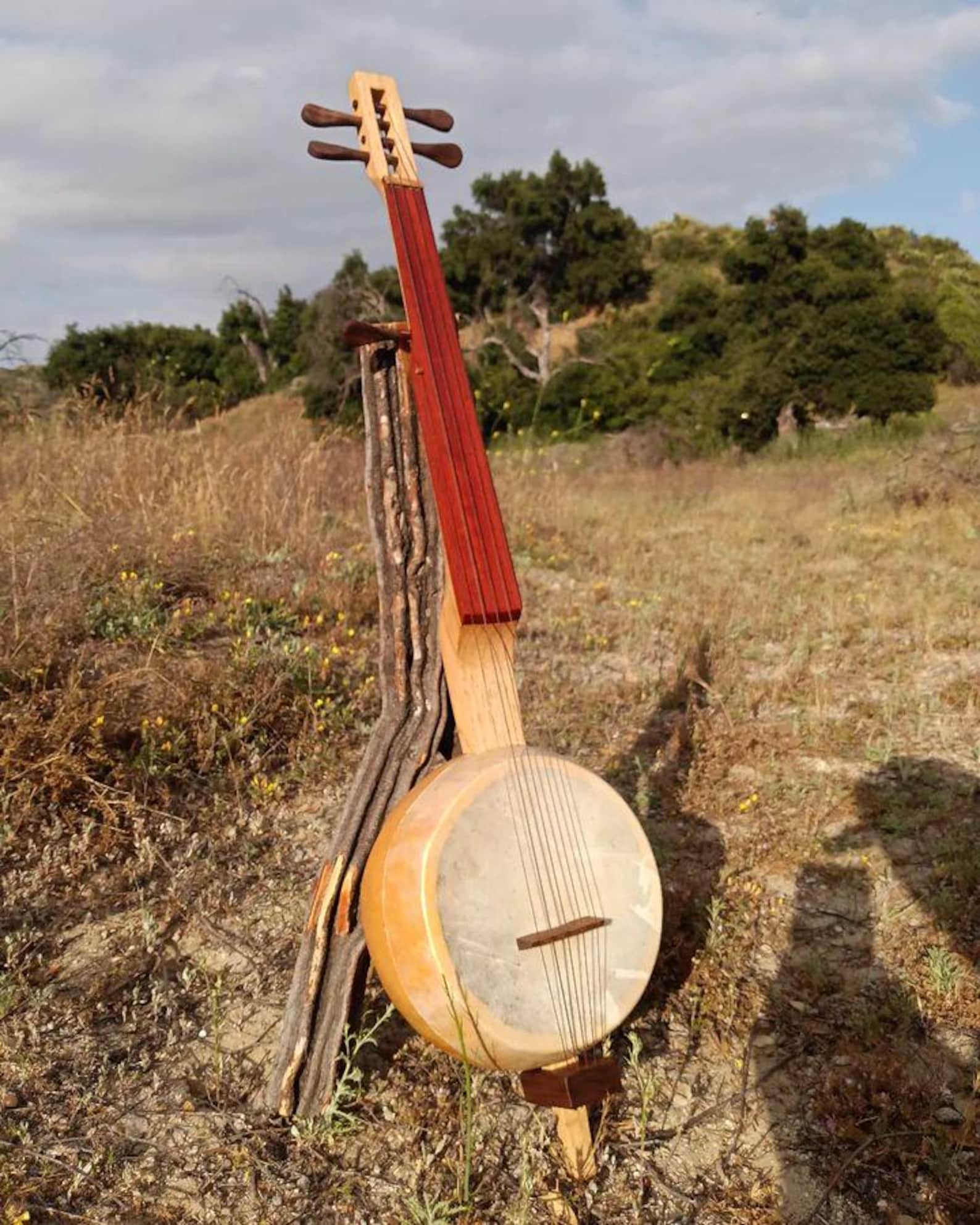
is this a modern gourd banjo ?
this is a brand new one and favors the banjo in the 1700s painting quite a bit.
and yes the 5 string version is only as old as the 1800s by mr. sweeney,, as far as we know. we need to get back to helping this guy find him a bass banjo or something to give him the sound he wants !!!
Edited by - 1935tb-11 on 12/05/2025 08:27:14
1935tb-11 - Posted - 12/05/2025: 08:43:48
gold tone makes a cello banjo with a 14 inch rim , 4 string.. that will give a more mellow tone but they are 1150.00 bucks.
here is an old open back for 450. looks like early 1900s
Edited by - 1935tb-11 on 12/05/2025 08:48:02
Joel Hooks - Posted - 12/05/2025: 09:31:19
quote:
Originally posted by 1935tb-11quote:
Originally posted by Joel Hooksquote:
Originally posted by 1935tb-11the gourd 5 STRING was brought and first noted and developed by africans in the caribbeans. it didn't really hit the us mainland until the mid 1800s ,,,around 1840 or so. blues played on the banjo was i would guess 1920s or so. or that is the earliest recording i have ever heard. i ain't 100% on that .
if you want a cheap open back to get your feet wet , here is one on ebay
This is not correct. The current version of the "gourd banjo", basically a early 1840s-1850s neck with a gourd body, is expressly a modern development of the 1980s with no known historical examples extant.
well i admit i am not the worlds expert on gourd banjos,, but the guy i got my info from is. in fct he did write the book on gourd banjos,, David G Hyatt. don't know if you ever heard of him or not. if not check out his writings and research. i learned a lot from his research.
is this a modern gourd banjo ?
this is a brand new one and favors the banjo in the 1700s painting quite a bit.
and yes the 5 string version is only as old as the 1800s by mr. sweeney,, as far as we know. we need to get back to helping this guy find him a bass banjo or something to give him the sound he wants !!!
Yes, that is modern or post 1980 Scott Didlake. Nothing like that is extant before the Didlake/Buehling/Ross revival.
Jon Borcherding - Posted - 12/05/2025: 10:07:32
quote:
Originally posted by 1935tb-11gold tone makes a cello banjo with a 14 inch rim , 4 string.. that will give a more mellow tone but they are 1150.00 bucks.
here is an old open back for 450. looks like early 1900s
And here is @JanetB from this very forum performing a previous TOW beautifully on a Gold Tone cello banjo!
youtube.com/watch?v=BlkA1rJMkGY&t=44s
writerrad - Posted - 12/05/2025: 10:25:04
What the guy wants and what the banjo is has been explained by world class experts. If you cannot understand that I will explain it to you succinctly. Part of the problem was the guy was deeply confused. The banjo in his one example is NOT playing the blues. What he imagined as a blues banjo is not such a thing. That has been explained.
One issue is the banjo in the video. That banjo is a replica of the kind of banjos that makers of banjos in the mid 19th century made that some people mistakenly call minstrel banjos that were used by many people other than minstrels. Banjos in that historical period were pitched about 3 or 4 steps down from the way banjo came to be pitched by the late 19th century. What produces a C in banjos since the late 19th century, would produce an A at that time.
The person requesting this had an idea that such pitching was associated with the blues, but it is not. Blues players on guitar often pitched their instruments higher than standard pitching of the guitar, often 2 or 3 steps up and higher. Blues players on the banjo did not pitch their banjos lower than other players. The most prominent and recorded blues player on the Banjo Gus Cannon who made more than 40 commercial recordings and other recordings by folklorists was always in concert pitch, except for one recording he made where it is obvious that the recording equipment was out of sync so that even the harmonica sounded off pitch. I have an interview a Memphis friend of Cannons and a music professor did by showing up unannounced at Cannon's house with a tape recorder, and ever single recording is in concert pitch.
If anything African American traditional banjoists, especially those from the most recorded areas of Black Banjoists in North Carolina, Virginia, Kentucky, and thereabouts if anything tended to tune their banjos high above concert pitch. Rufus Kasey of Virginia often had his banjo tuned up to B flat for G. Elizabeth Cotten's standard pitching for her banjo playing was in about 10 cents of a full pitch about G sharp which was a pretty standard position for Black banjoists recorded in the 60s, 70s, and 80s. I used to keep my Gold Tone WL-250 tuned to that pitch for about 3 or 4 years when I was working on that playing.''
There is no indication on the Earth that Black banjoists playing the blues or not playing the blues tuned their banjos down in the old three steps down way as shown in the video. There is no indication that blues players on the banjo or the guitar who were African American musicians, tuned their banjos or guitars down, rather than they tuned them up.
j
Edited by - writerrad on 12/05/2025 10:30:19
1935tb-11 - Posted - 12/05/2025: 12:04:04
i think this one looks similar to the modern one,,but thats just opinion
metmuseum.org/art/collection/search/501214
Jon Borcherding - Posted - 12/05/2025: 12:49:29
quote:
Originally posted by Daniel11I want to play blues on the banjo. I think I want a gourd banjo. I'm a little dkidfidh on buying one because it seems like you have to buy them without knowledge of tone or feel..
But I also know I want as banjo I saw Rhianna Gideon play on CBS Sunday morning I think she called it a " bass banjo" but it's not a bass, it's more of an tenor but aren't most banjos tenor? But it had a deeper tone, just not full on bass.
Can anyone offer any advice?
The OP begins his post by stating what he wants to do.
He expresses uncertainty about what kind of banjo he can use to achieve his goal.
It seems to me all this bickering about minstrelsy, history and race is entirely unnecessary and not relevant to the OP's question.
writerrad - Posted - 12/05/2025: 12:53:37
This banjo is more or less of a forgery that was put together when in the 1870s the Metropolitant hired someone to buy some banjos. We saw this about 10 years ago when the Banjo Gathering had our annual gathering on Morristown NJ and took a bus over to NYC to the Metropolitan where one of the Gathering's leaders Peter Szego had an exhibition on the history of guitar making in America. We examined this banjos and others in the Metropitans collection. It is not a real banjo but something someone put together to get money out of the Metropolitan.
I do not believe is any more exhibited as genuine by the Metropolitan museum. Someone in the 1800s made who was trying to sell this as a fraud to Metropolitan, The maker attached what is clearly neck manufactured for a Boucher (a 19th century banjo Baltimore instrument maker) onto a gourd and sold it as a gourd banjo.
To add insult to injury, we recently discovered someone made a copy of this thing and sold it to the Museum for the French Island of Guadaloupe claiming to be a reconstruction of an early banjo from Louisiana, which it is obviously not.
If you go to the Metropolitan Web site you will see Peter Szego's description of it is the most charitable explanation of what this is :
" the two parts were attached by a dealer simply to meet a collector’s request for a gourd banjo rather than to construct a playable instrument. (Peter Szego, 2020)"
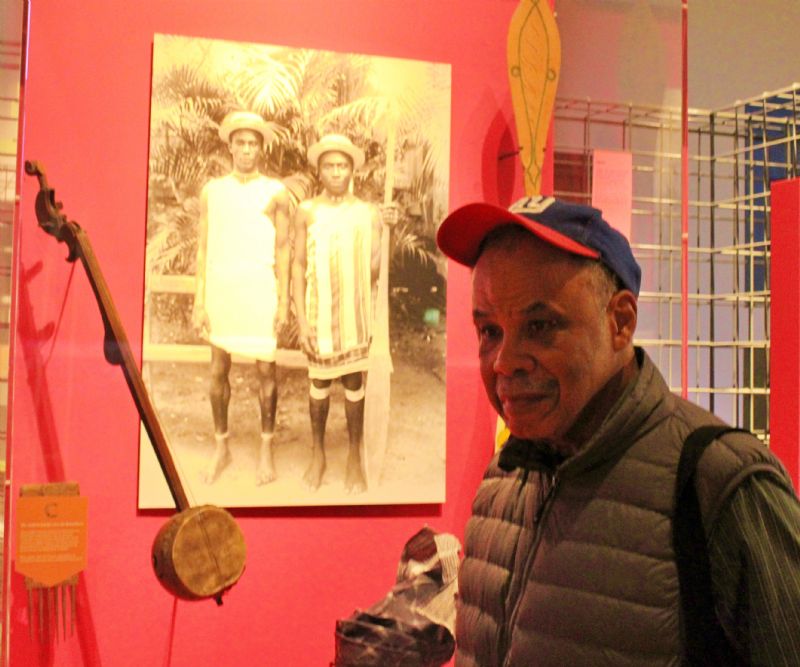
To make up for this, I attach a picture of myself in the Tropical Museum just outside of Amsterdam with Stedman's "Creole Banjo" from Suriname that was probably collected in the 1770s the late 1600s. It is the oldest banjo we know of.
Edited by - writerrad on 12/05/2025 13:13:25
Joel Hooks - Posted - 12/05/2025: 13:23:02
What Tony wrote.
This fabrication has been the basis for the concept of the modern "gourd banjo".
When I was a child I would enjoy the back cover of Highlights Magazine with their "Check and Double Check". I think many people who cannot tell the difference between the various known and confirmed versions of the early banjo from the modern 5 string gourd banjo (many times with an added fingerboard) might want to spend some with Highlights Magazine.
Page: 1 2
Terms of Use | Privacy Policy | Privacy Consent (EU/GDPR Only)
Copyright 2026 Banjo Hangout. All Rights Reserved.