DVD-quality lessons (including tabs/sheet music) available for immediate viewing on any device.
Take your playing to the next level with the help of a local or online banjo teacher.
Weekly newsletter includes free lessons, favorite member content, banjo news and more.
Premier Sponsors


|
Please note this is an archived topic, so it is locked and unable to be replied to. You may, however, start a new topic and refer to this topic with a link: http://www.banjohangout.org/archive/368663
KCJones - Posted - 09/13/2020: 07:05:31
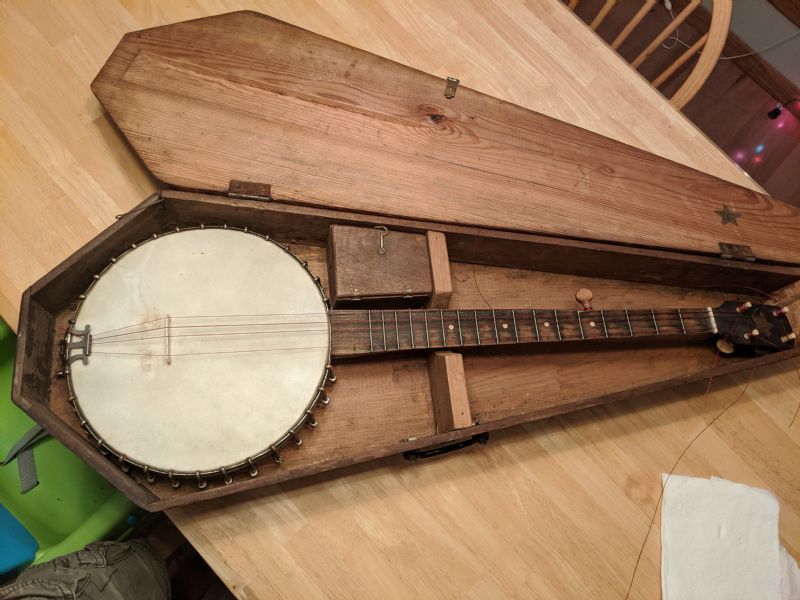
I recently brought home a decent old banjo.
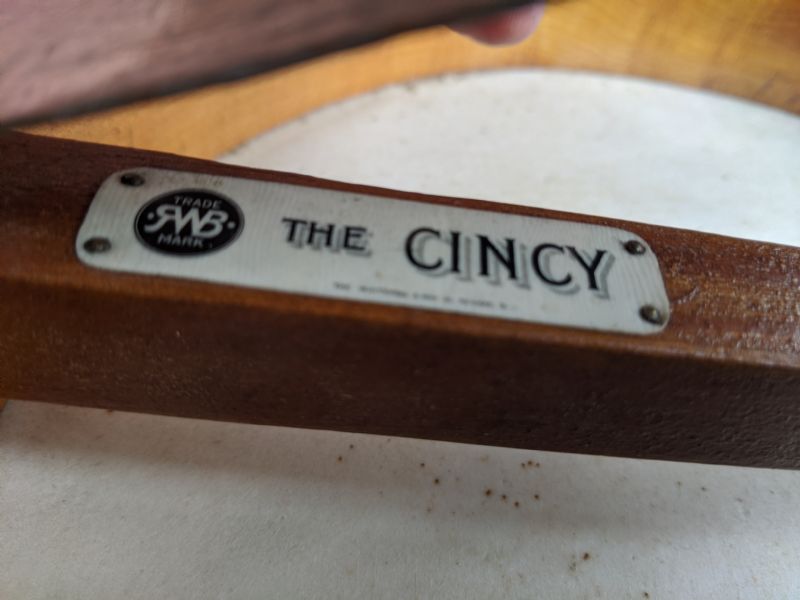
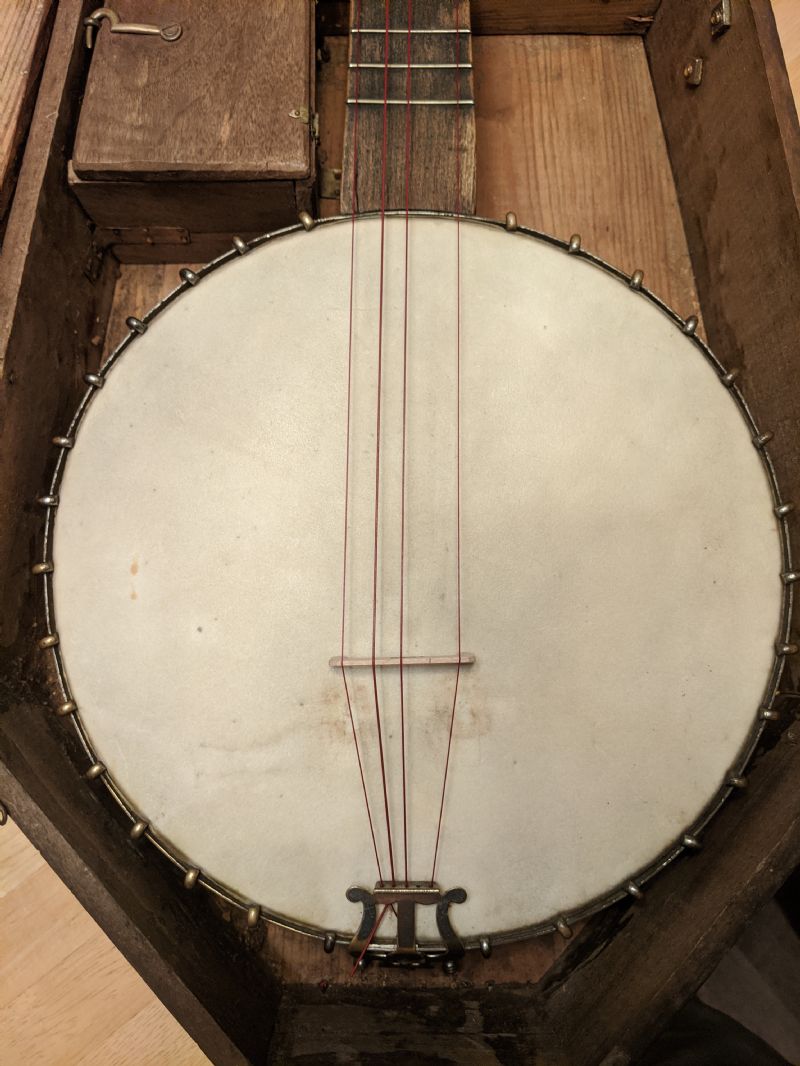
This is a 'The Cincy' built around the 1890s. It has '92' stamped into the rim and a tag on the dowelstick reads "The Whitehead and Hoag Co, Newark, New Jersey". I believe this was a lower end banjo offered through a mail order catalogue.
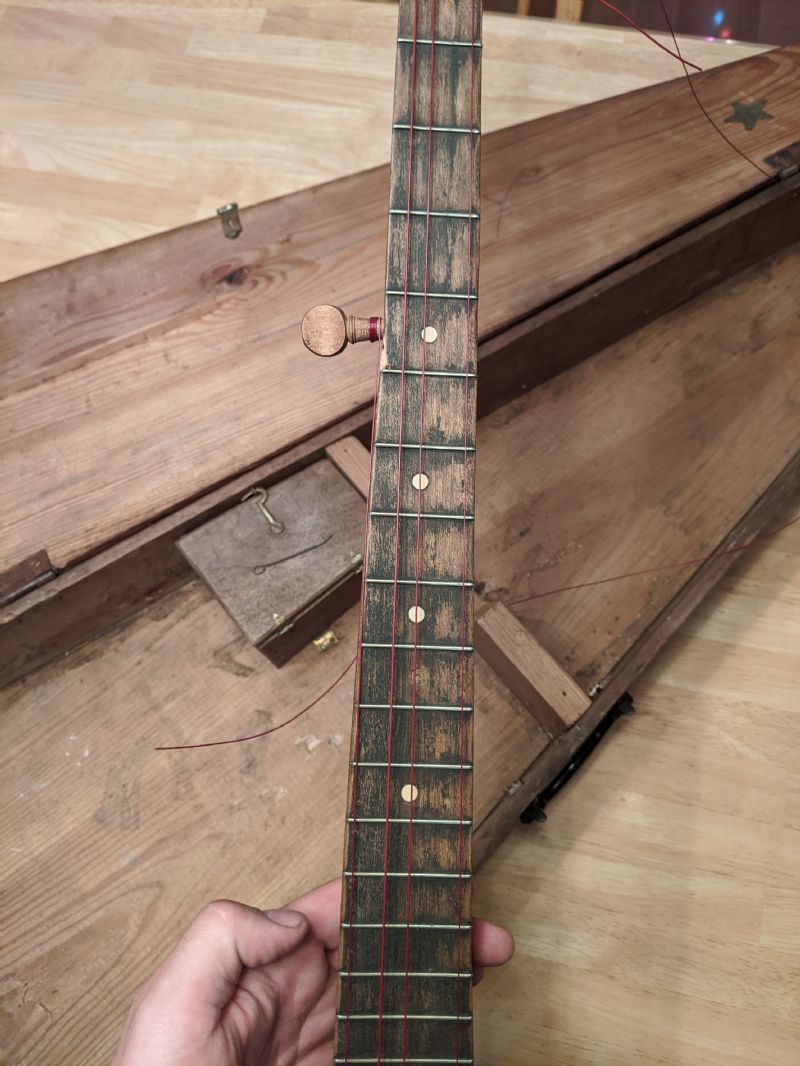
It has a 10-5/8" rim with a 25-7/8" scale length. The single-ply rim is 7/32" thick with a thin sheet of metal around it, and has 30 hooks. It has 17 frets, there's no fretboard, the frets are installed directly into the neck. It has an animal skin head, not sure what animal.
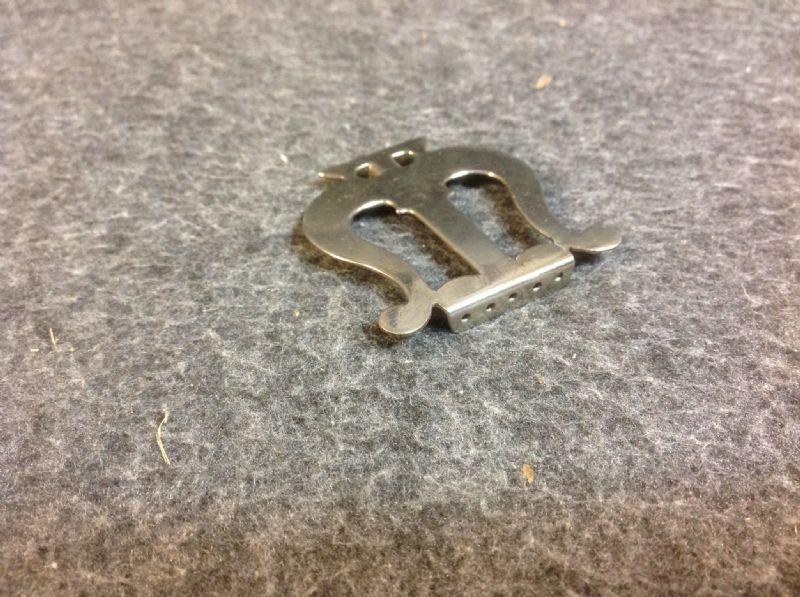
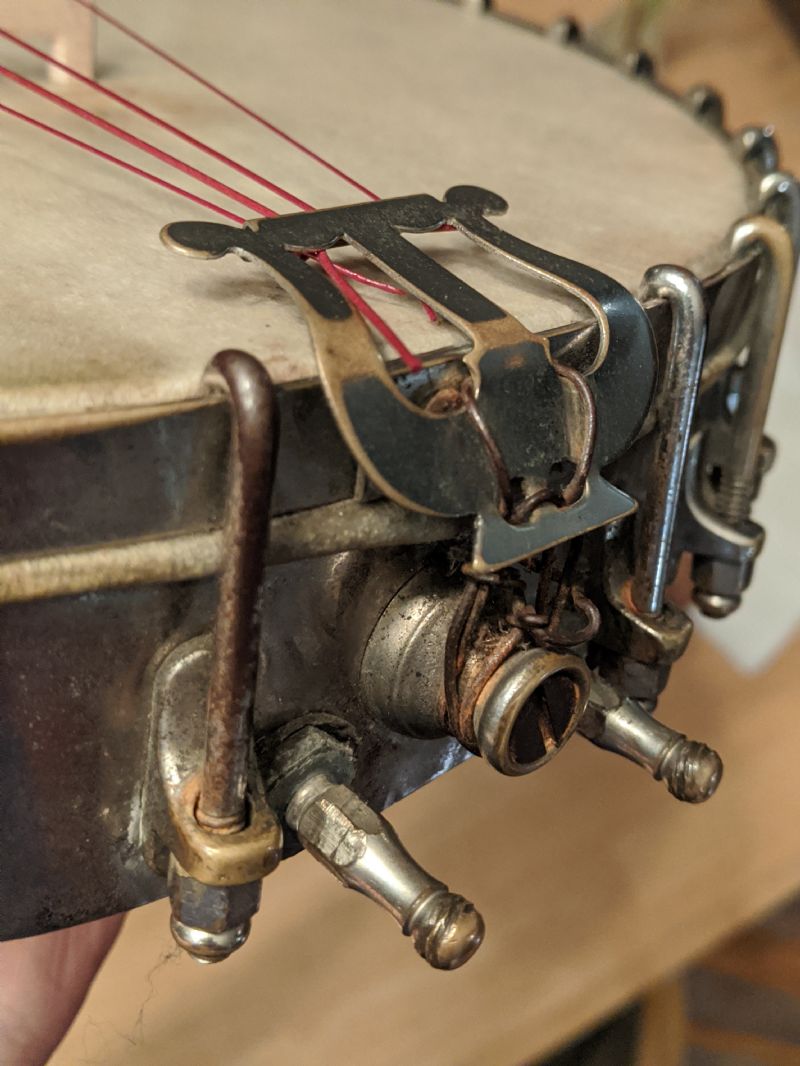
I'm not sure if the tailpiece is original. I'd like to replace it with a no-knot, but I'm not sure if those are "period accurate" and I'd like to keep it looking original.
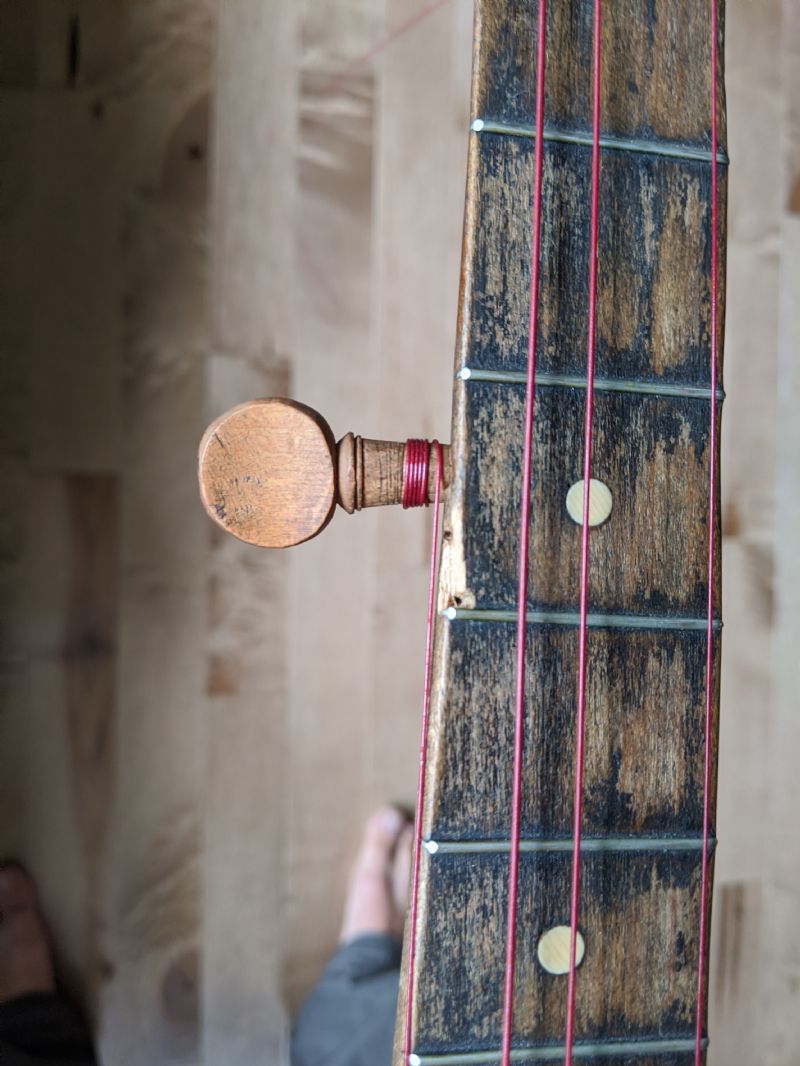
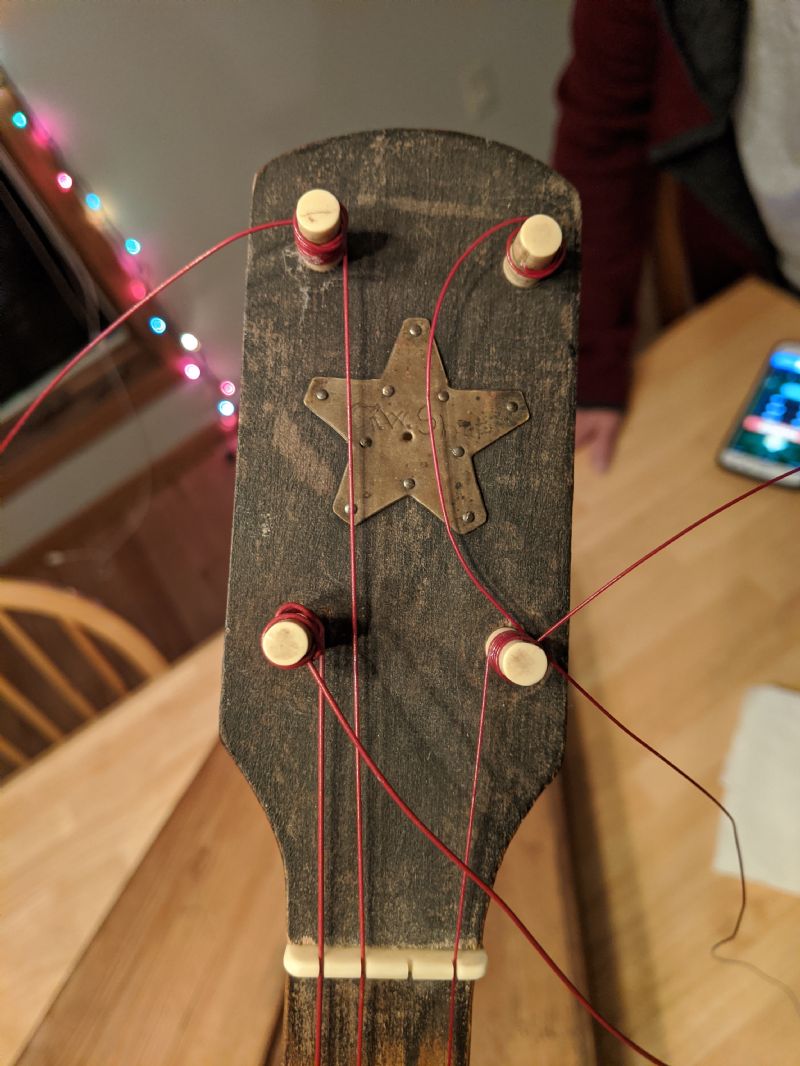
The 5th string nut was a flathead screw when I got it. That broke off and took a piece of the neck with it, and with the missing chunk I don't think I can get a new nut at the 5th fret. My idea is to put a railroad spike on the 6th fret and use that as a nut, would that work?
Tuning this thing is a bit of a bear, but I'd like to keep it as original as possible. Did they have friction tuners in the 1890s?
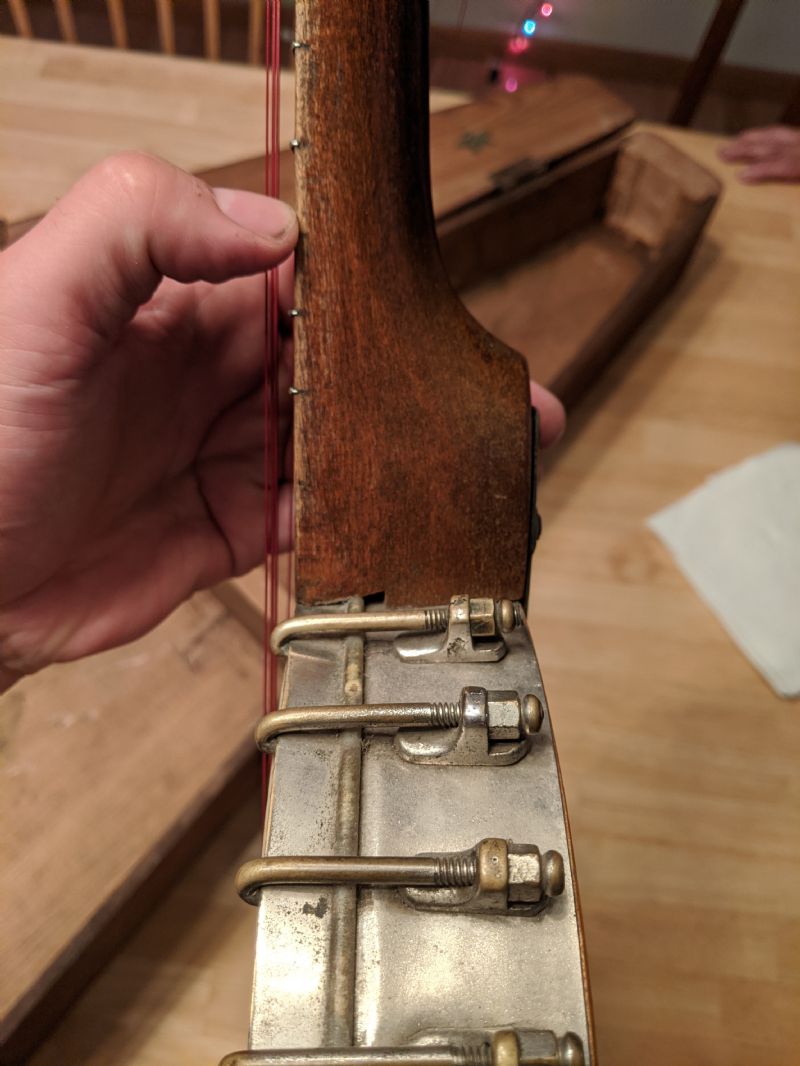
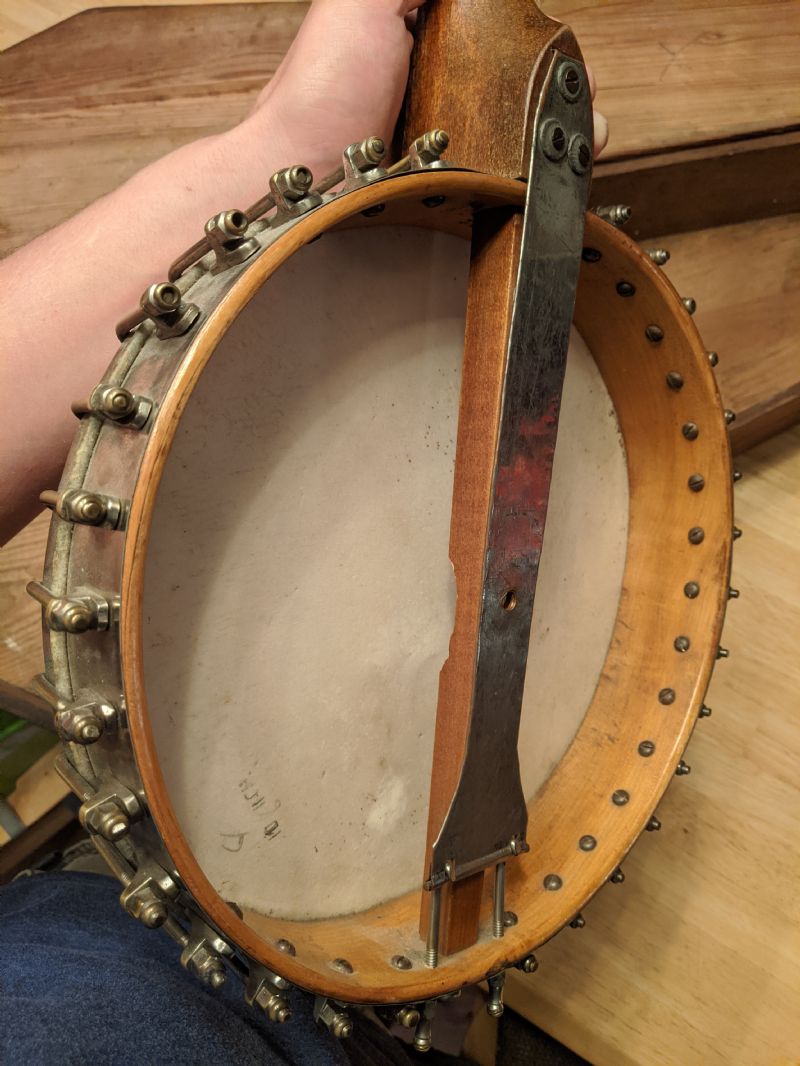
The action is a bit high but playable. It has some sort of neck/rim connection bar/plate, never seen that before.
Came in a neat coffin case.
Any information about this banjo or similar banjos of that era, are appreciated. Thanks.
Edited by - KCJones on 09/13/2020 07:21:36
banjocleaver - Posted - 09/13/2020: 07:21:59
A no-knot would be acceptable. That tailpiece looks like one you’d find on an English banjo. The neck adjuster/brace is not original to the banjo. I see a lot of Buckbee features to this banjo. Most of the “Cincy” branded banjos I have seen had a connection with Wurlitzer.
*edit* just noticed the Rudolph Wurlitzer trademark in the first photo.
Edited by - banjocleaver on 09/13/2020 07:28:50
gentrixuk - Posted - 09/13/2020: 09:14:38
I've got a couple of vintage banjos where the 5th string pip sits in front of the 5th fret, raised up above the fret to make a nut. It works ok tuning-wise. It might be risky trying to drill that near to the damage though.
Dan Gellert - Posted - 09/13/2020: 18:31:58
If those pegs are properly fitted and lubricated, they should work just fine with nylgut strings.
Your tailpiece looks to have been made out of one of those music clips that are used on marching-band horns. I would not want to replace it with a No-Knot (or any other standard bolt-mounted tailpiece), though. That banjo is made to use a wire or gut hanger attachment for the tailpiece, and it's easy enough to make a wood tailpiece that works that way.
As for the fifth string pip-- the neck doesn't widen much there at the 5th fret, so that screw had to be too close to the edge so the 5th string wasn't too close to the 4th. I had an old Kay with a similar problem, and glued a little outrigger on there just past the fifth fret, slotted so the thumb string was just a bit off the edge of the fingerboard-- no problem as long as you don't need to finger or capo the thumb string.
G Edward Porgie - Posted - 09/13/2020: 18:33:55
You can't use a No-knot on this banjo. It was made for a tie-on type tailpiece. The No-knot requires a bolt that mounted through a hole in the dowelstick end boltan end bolt; this one has a spindle with no hole for that bolt. I believe there are people on the hangout who can supply a proper tie-on tailpiece which would be made of a hardwood or bone.
It appears to me that some owner modifications have been made, particularly that metal doo-dad on the headstock and the oddball metal thing inside, which is probably some form of neck adjuster (I wouldn't use it, though. It could crack the neck heel).
These old banjos were originally set up with fairly high actions for the playing styles of the times. Also, keep using nylon strings.
Edited by - G Edward Porgie on 09/13/2020 18:36:23
Joel Hooks - Posted - 09/13/2020: 18:51:24
As much as I enjoy random speculation, I feel like turning to easily available documentation is a better option...
digital.cincinnatilibrary.org/...821/rec/8
You will notice that in this same catalog the very tailpiece that is on this banjo is for sale, so it is extremely likely that it came on the banjo (though it looks like it was a victim of wire strings).
digital.cincinnatilibrary.org/...823/rec/8
George pointed out the brace, that was likely added to try and compensate for the extra tension of wire strings. The broken off shoulder where the 5th string nut used to be—also common wire string damage.
This banjo is a good example of why pre 1920 banjos should only be strung with light nylon... Labella No. 17 or thinner.
G Edward Porgie - Posted - 09/14/2020: 07:21:23
Another reason to use only nylon strings on this banjo is that steel strings will cut those ivoroid tuners to pieces.
kyleb - Posted - 09/14/2020: 07:37:11
Some of those banjos here , well a lot of them, look like buckbee products
quote:
Originally posted by Joel HooksAs much as I enjoy random speculation, I feel like turning to easily available documentation is a better option...
digital.cincinnatilibrary.org/...821/rec/8
You will notice that in this same catalog the very tailpiece that is on this banjo is for sale, so it is extremely likely that it came on the banjo (though it looks like it was a victim of wire strings).
digital.cincinnatilibrary.org/...823/rec/8
George pointed out the brace, that was likely added to try and compensate for the extra tension of wire strings. The broken off shoulder where the 5th string nut used to be—also common wire string damage.
This banjo is a good example of why pre 1920 banjos should only be strung with light nylon... Labella No. 17 or thinner.
Joel Hooks - Posted - 09/14/2020: 07:42:09
quote:
Originally posted by kylebSome of those banjos here , well a lot of them, look like buckbee productsquote:
Originally posted by Joel HooksAs much as I enjoy random speculation, I feel like turning to easily available documentation is a better option...
digital.cincinnatilibrary.org/...821/rec/8
You will notice that in this same catalog the very tailpiece that is on this banjo is for sale, so it is extremely likely that it came on the banjo (though it looks like it was a victim of wire strings).
digital.cincinnatilibrary.org/...823/rec/8
George pointed out the brace, that was likely added to try and compensate for the extra tension of wire strings. The broken off shoulder where the 5th string nut used to be—also common wire string damage.
This banjo is a good example of why pre 1920 banjos should only be strung with light nylon... Labella No. 17 or thinner.
Buckbee lost his factory to bankruptcy 1897, so unless it was old stock (which is possible, but unlikely that inventory would not be turned over in 4 years).
More likely the banjos would be the product of R&L.
KCJones - Posted - 09/14/2020: 07:54:24
Thank you everyone for the info. My goal is to get this thing in playable condition while keeping it as original as possible.
For the tuning pegs, is there any maintenance I should do to keep them working properly? I feel like they are fairly smooth/slick and I need to push them into the peghead with a lot of force to make them hold, and I worry about breaking the peghead. Is there a rosin I should use, or should I sand the pegs to make them grippy?
Does anyone have any info on the tailpiece? I'm inclined to believe it is original based on the catalogue images. My main question is, has it been bent out of shape? Does anyone have a photo of what it should look like? And what should I do to prepare it to take nylon strings without it cutting the strings.
I plan on using nylon strings and tuning it to G, so that should keep the tension down to safe levels.
The weird metal plate in the rim is loose, I think I'll just remove it and fill the screw holes in the heel with putty or something.
I recently purchased a couple bridges from Joel Hooks for this banjo, so I'm glad to see your comment!
Edited by - KCJones on 09/14/2020 07:57:19
Dan Gellert - Posted - 09/14/2020: 08:35:23
Do not use rosin on those pegs. It works as an adhesive. If you need more grip, you want something mildly abrasive, like chalk. For smoother turning, hard soap is a good lubricant.
You can get a stick of peg dope, which is some combination of the two, from a violin shop. (not liquid "peg drops"!) Or... get a bar of Lava brand soap. That's what I use.
KCJones - Posted - 09/14/2020: 09:11:40
I just ordered some "W E Hill peg compound". Hopefully that helps.
joe28675 - Posted - 09/14/2020: 17:16:48
Does anyone have any info on the tailpiece? I'm inclined to believe it is original based on the catalogue images. My main question is, has it been bent out of shape? Does anyone have a photo of what it should look like? And what should I do to prepare it to take nylon strings without it cutting the strings.
PHOTO OF ONE THAT IS IN GOOD CONDITION......
Terms of Use | Privacy Policy | Privacy Consent (EU/GDPR Only)
Copyright 2026 Banjo Hangout. All Rights Reserved.