DVD-quality lessons (including tabs/sheet music) available for immediate viewing on any device.
Take your playing to the next level with the help of a local or online banjo teacher.
Weekly newsletter includes free lessons, favorite member content, banjo news and more.
Premier Sponsors


|
Please note this is an archived topic, so it is locked and unable to be replied to. You may, however, start a new topic and refer to this topic with a link: http://www.banjohangout.org/archive/351297
Page: 1 2
IMBanjoJim - Posted - 02/17/2019: 16:42:30
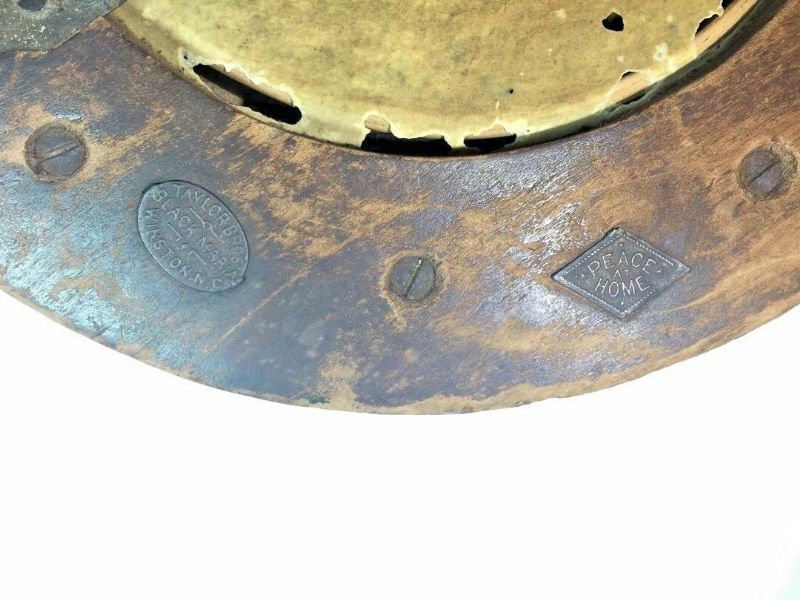
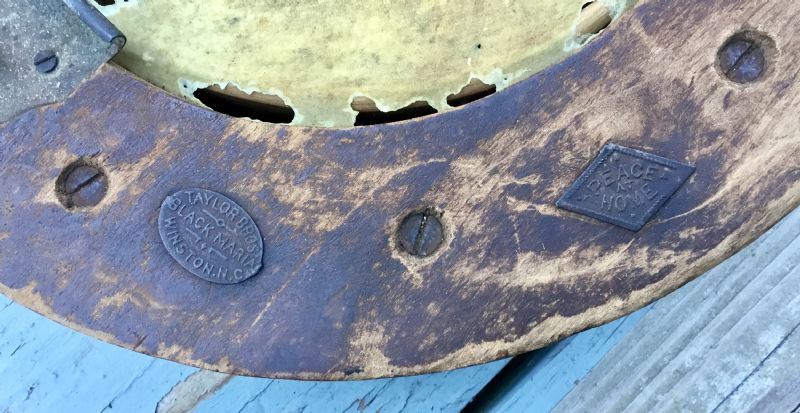
Just won the bid on an old mountain banjo. Not sure of the age. It LOOKS early 20th century. One of the metal tags attached to the face is a Black Maria chewing tobacco tag.
The seller sent me the following info:
'I purchased it at an Estate sale from a lady whose husband had died. All she knew was that it belonged to his father. The Black Maria Tobacco tag was made from the late 1800's to the early 1900's.'
A quick look online seems to indicate the stuff is still for sale, despite what she said, but perhaps the shape of the Black Maria tag would help date it.
Will obviously need a new skin head, etc. Hoping to bring it back to life...
csacwp - Posted - 02/17/2019: 18:03:49
The tags could have been added at any point. Not a good way to date it.
revellfa - Posted - 02/17/2019: 18:04:17
I’m glad you won that ole’ thing man. I saw it but didn’t put any bids in due to my growing family and banjo collection.
Congrats—it looks like it will be fun.
Please post pics and vids of your progress.
IMBanjoJim - Posted - 02/17/2019: 18:40:22
quote:
Originally posted by csacwpThe tags could have been added at any point. Not a good way to date it.
John...given that these banjos had no serial numbers or labels, how CAN they be dated? In previous threads you have pointed out the lack of photographic evidence from the 19th century, which I agree with, but it seems to me the chewing tobacco tabs would be a legitimate clue, especially given the lack of other clues.
Brian Murphy - Posted - 02/17/2019: 23:18:40
If you haven't already, you may want to start with Foxfire 3 and sites like this and this one. I can't put my finger on it, but I thought I read that this style of banjo actually doesn't likely go back that far. Somebody here will know and can correct me. Even if I am right, that is not inconsistent with the tags, which just tell you that the banjo was probably not built before the dates on the tag. That thing has a lot of personality, esp with the old strings still hanging off. It would look very cool as a wall hanging as is.
Edited by - Brian Murphy on 02/17/2019 23:20:22
Brian Murphy - Posted - 02/18/2019: 06:53:59
quote:
Originally posted by Clifton HicksThat's a cool one!
^^^ There is someone who likely knows. Clifton, do you know whether this style of construction was around in late 1800's to early 1900's?
Clifton Hicks - Posted - 02/18/2019: 07:03:20
There has been some mighty debate about that! I think the earliest photographic evidence is c . 1910 (although there's at least one photo that _could_ be as early as 1880).
Stanley Hicks asserted that his design dated back to the Civil War era and for that he was libeled on this forum as a "liar..."
I think it goes back before 1900.
Brian Murphy - Posted - 02/18/2019: 07:32:44
Thanks. I guess I remember the debate, but that's a more authoritative response than I can give.
MacCruiskeen - Posted - 02/18/2019: 08:43:35
quote:
Originally posted by IMBanjoJimquote:
Originally posted by csacwpThe tags could have been added at any point. Not a good way to date it.
John...given that these banjos had no serial numbers or labels, how CAN they be dated?
I guess you could try carbon-dating. That would get you within a few years, anyway. Whether it would be worth the ~$600 in lab fees is a different question.
Joel Hooks - Posted - 02/18/2019: 08:51:32
quote:
Originally posted by Clifton HicksThere has been some mighty debate about that! I think the earliest photographic evidence is c . 1910 (although there's at least one photo that _could_ be as early as 1880).
Stanley Hicks asserted that his design dated back to the Civil War era and for that he was libeled on this forum as a "liar..."
I think it goes back before 1900.
Well, I did not call him a "liar"... I believe that they were making banjos for that long.
I do remain skeptical that the novel rim design does not predate 1900. But that skepticism is only that and I would welcome newly discovered evidence to the contrary-- in fact I hope it turns up at some point as I would love to be able to credit the original designer of that pattern for their innovation.
IMBanjoJim - Posted - 02/18/2019: 11:33:33
It will be a week before I get the banjo. I'm hoping there will be a date on the inside of the head, although I know from previous discussions here that that is not considered conclusive.
I'm also looking online for any Tobacciana collectors who might be able to date the two metal tobacco tags.
There was a time I would have suggested that the type of screws holding it together would help date it, but it was pointed out (rather forcibly, in a previous thread) that screws and nails can sit around in someone's workshop for decades...
Maybe wood core samples ARE the only way...
dfwest - Posted - 02/18/2019: 17:44:19
Jim,
Even carbon or tree ring dating could be challenged. The wood may have come from a tree that died 50 years before it was turned into a banjo. Bummer, huh?
Dave
IMBanjoJim - Posted - 02/18/2019: 18:50:32
quote:
Originally posted by dfwestJim,
Even carbon or tree ring dating could be challenged. The wood may have come from a tree that died 50 years before it was turned into a banjo. Bummer, huh?
Dave
Ya...that occurred to me...
AlanCook - Posted - 02/19/2019: 03:19:18
Nice one, I had a couple of bids in on it, but glad it went to a good home! I have too many projects lined up anyway!
Edited by - AlanCook on 02/19/2019 03:19:35
AlanCook - Posted - 02/19/2019: 03:21:37
If you put a new skin on, can you please post some pics of inside the pot?
IMBanjoJim - Posted - 02/19/2019: 08:14:09
quote:
Originally posted by AlanCookIf you put a new skin on, can you please post some pics of inside the pot?
Will do. I'm curious about that, myself.
IMBanjoJim - Posted - 02/19/2019: 12:39:43
Interesting to note that there are 3 people on ebay auctioning off the same Black Maria tobacco tag. One of them responded to my question about age, and he said, probably 1920s, but he wasn't sure.
I keep thinking there must be a tobacciana reference book, or website that would have info on that sort of thing, but so far, no luck locating it.
And now I am getting ads for tobacco products...
revellfa - Posted - 02/19/2019: 19:41:50
quote:Originally posted by Clifton HicksThere has been some mighty debate about that! I think the earliest photographic evidence is c . 1910 (although there's at least one photo that _could_ be as early as 1880).
Stanley Hicks asserted that his design dated back to the Civil War era and for that he was libeled on this forum as a "liar..."
I think it goes back before 1900.
Heresy! Stanley Hicks wasn’t a liar—he was a “story teller.” And a damn good one at that!
joe28675 - Posted - 02/19/2019: 20:55:08
quote:
Originally posted by IMBanjoJimInteresting to note that there are 3 people on ebay auctioning off the same Black Maria tobacco tag. One of them responded to my question about age, and he said, probably 1920s, but he wasn't sure.
I keep thinking there must be a tobacciana reference book, or website that would have info on that sort of thing, but so far, no luck locating it.
And now I am getting ads for tobacco products...
I don't collect tobacco tags, but I know there is no longer a Winston North Carolina. It is now Winston Salem NC. I don't know when Winston merged with Salem but it shouldn't be difficult to find out. I suppose tobacco tags can be interesting. In the day, twist of chewing tobacco were bound with metal bands with the manufacture's name embossed on them. I have my grandad's old Remington pocket knife with a metal Axton chewing tobacco metal logo embedded in the bone handle. My dad told me that if you sent a certain number of Axton tobacco tags to the Axton tobacco company, they would send you a free Remington pocket knife, and I suppose my grandad did just that. My grandad was (and still is) my hero. It's a real treasure to me.
IMBanjoJim - Posted - 02/19/2019: 21:05:26
According to Google, Winston became Winstom-Salem in 1913. Interesting!
Not a definitive date for the banjo, but an interesting clue. Would also like to find out when that particular tobacco tag stopped being used...
IMBanjoJim - Posted - 02/19/2019: 21:29:26
And...just bought a book called Chewing Tobacco Tins and Tags 1870-1930, by Louis Storino.
I knew there had to be a book along those lines!
IMBanjoJim - Posted - 02/20/2019: 08:16:42
quote:
Originally posted by Joel Hooksbrooksbanjos.com/options/headstocks
Just saying...
Yes, that occurred to me as well. BUT, is the following scenario likely? I own a modern car, but decide to put an I LIKE IKE bumper-sticker on it. It IS possible, but is it probable?
csacwp - Posted - 02/22/2019: 05:07:51
quote:
Originally posted by IMBanjoJimquote:
Originally posted by Joel Hooksbrooksbanjos.com/options/headstocks
Just saying...Yes, that occurred to me as well. BUT, is the following scenario likely? I own a modern car, but decide to put an I LIKE IKE bumper-sticker on it. It IS possible, but is it probable?
Yes. Antique dealers do this sort of thing frequently.
IMBanjoJim - Posted - 02/22/2019: 09:56:41
This still seems unlikely to me, but if true, how can we ever know how old these instruments are? I understand the use of negative evidence when conducting a scientific experiment—you list possible reasons your hypothosis may be wrong—but then you try to come up with reasons why those arguments are not valid.
So again, what is the solution?
Cleitus - Posted - 02/22/2019: 10:28:09
quote:
Originally posted by MacCruiskeenquote:
Originally posted by IMBanjoJimquote:
Originally posted by csacwpThe tags could have been added at any point. Not a good way to date it.
John...given that these banjos had no serial numbers or labels, how CAN they be dated?
I guess you could try carbon-dating. That would get you within a few years, anyway. Whether it would be worth the ~$600 in lab fees is a different question.
That would only tell you when the wood was harvested/stopped living - NOT when the banjo was made.
Cleitus - Posted - 02/22/2019: 10:33:49
What I did notice are the wood screws around the rim - now I recall an online article years ago that outlined the changes in screws over the years - apparently the oldest ones were not pointed and later ones had a differing pitch etc etc. Sadly I cannot recall the article's location but that offers you another way of indicating the age. Also have a look at the wood for saw marks etc as sometimes the marks of older tools are quite different from modern ones.
Cleitus - Posted - 02/22/2019: 10:39:50
Oooh the finish as well - if there is one. Tests should show if it's French polish, nitrocellulose or (gasp) polyeurethane. It does not look like it's been refinisghed recently so it should be another indicator - taken with the screws, tobacco tab, tooling marks etc. you will get a pretty good idea of the age. Ah now one other test I recall that would rule out modern forgeries is if you have any turned piece of wood on the instrument. Turned wood starts circular but it dries out unevenly over time and becomes oval in shape after 30-100 years - (very difficult if not impossible to fake as well) so if you have any turned wood and can measure its ovality, you will know.
MacCruiskeen - Posted - 02/22/2019: 10:42:06
quote:
Originally posted by Cleitusquote:
Originally posted by MacCruiskeenquote:
Originally posted by IMBanjoJimquote:
Originally posted by csacwpThe tags could have been added at any point. Not a good way to date it.
John...given that these banjos had no serial numbers or labels, how CAN they be dated?
I guess you could try carbon-dating. That would get you within a few years, anyway. Whether it would be worth the ~$600 in lab fees is a different question.
That would only tell you when the wood was harvested/stopped living - NOT when the banjo was made.
True, but it's probably reasonable to think the wood was used within a few years of harvesting, not decades after. It puts a lower bound anyway, and if it's consistent with your other clues, then you have something. Practically speaking, it's probably not worth the expense unless you think the piece is museum-worthy.
Cleitus - Posted - 02/22/2019: 10:53:56
You are probably right re the use, but for example my father used to buy old victorian wardrobes in the 1960's when they were very cheap then pull them to bits for the brass handles and the sheets of mahogany to use in modern furniture. The wood was wonderfully seasoned and could be relied on not to split etc - which is also what you'd want in a musical instrument.
Edited by - Cleitus on 02/22/2019 10:55:18
MacCruiskeen - Posted - 02/22/2019: 11:07:43
If wood was reused from another thing, you'd probably see some evidence--cut marks, nail holes, bits that don't line up quite right, differences in the finish, etc. Though that in itself would be an interesting result.
AndrewD - Posted - 02/22/2019: 11:10:59
quote:
Originally posted by MacCruiskeenquote:
Originally posted by IMBanjoJimquote:
Originally posted by csacwpThe tags could have been added at any point. Not a good way to date it.
John...given that these banjos had no serial numbers or labels, how CAN they be dated?
I guess you could try carbon-dating. That would get you within a few years, anyway. Whether it would be worth the ~$600 in lab fees is a different question.
Not if you want to decide if it was made in 1880 or 1920. Not precise enough. Not accurate for recently ( newer than 300 years or so) harvested material. Summed up here. Haven't we had this exact same discussion recently ?
Cleitus - Posted - 02/22/2019: 11:24:59
How about dendrochronology - where you match the annual wood growth lines laid down to a dated wood specimen. As the lines vary in thickness from year to year, you can match the specific sequence closely. I assume the end of the neck would show growth rings or similar. last but not least if the banjo has any ceramic fired fittings (tuning pegs etc) thermoluminence dating is possible - although off hand I don't know the variation possible but like carbon dating it may be too large to be useful.
Edited by - Cleitus on 02/22/2019 11:27:02
csacwp - Posted - 02/22/2019: 11:52:32
quote:
Originally posted by IMBanjoJimThis still seems unlikely to me, but if true, how can we ever know how old these instruments are? I understand the use of negative evidence when conducting a scientific experiment—you list possible reasons your hypothosis may be wrong—but then you try to come up with reasons why those arguments are not valid.
So again, what is the solution?
For homemade instruments like this we have to go off of photographic evidence and other primary sources. For these mountain banjos, the earliest photos that have turned up date to just before WWI, and we also have evidence that the pattern may have come from a series of Appalachian craft schools that were started at that time. It's possible that these banjos were being made before then, but there has yet to be any evidence supporting it.
Edited by - csacwp on 02/22/2019 11:52:53
Joel Hooks - Posted - 02/22/2019: 12:17:10
At this point it is arguing a negative. Currently we have a photo that places a "mountain banjo" about 1910-1914-- and the photo is backed with good information to confirm that date.
That means that as of now we know that a banjo of "mountain banjo" pattern existed at that time or perhaps a little earlier. The interesting thing is that the pictured banjo has a slotted peghead and guitar tuners.
As of yet, no solid evidence has been produced of a "mountain banjo" that predates that photo. No newspaper descriptions of the specific rim, no dated family photos with named members that could be compared to their age, no journals or letters describing them.
What we do have are the stories of people who were building them in the 1940s-70s. The storytellers and builders were part of a school system when young that in part was to establish "mountain crafts." There is a current theory that Bob Sayers put forward that this pattern of banjo could have come from those schools. Again, no proof.
We also know that this pattern of banjo became very popular during the "folk era" from Seeger and Warner that gave the pattern a wide recognition. From that time we begin to see many of them.
Based on current available info, this banjo could be no earlier than 1910 and as late as the 1960s or 1970s ( I have seen 1960s Kay banjos at flea markets that look every bit as old and worn as this one).
We can't say definitively if they existed before 1910-- or did not exist.
I do have hope that we will get the full story in my lifetime and that the date will change.
IMBanjoJim - Posted - 02/22/2019: 17:16:39
Just got the book I bought on collecting tobacco tags. A bit of a disappointment, since it does not say when particular tags were used. I DID learn that the Taylor Bros Tobacco Co. began in 1883. And, since their Black Maria tag says Winston, N. Ca., and we already learned that the town became Winston-Salem in 1913, we can assume the tag was made between 1883 and 1913.
As both Joel Hooks and John Cohen have stated, that does not necessarily prove the age of the banjo bearing the tag...but it hints at it, in my opinion.
I found no information on the other, Peace at Home, tag.
Edited by - IMBanjoJim on 02/22/2019 17:18:58
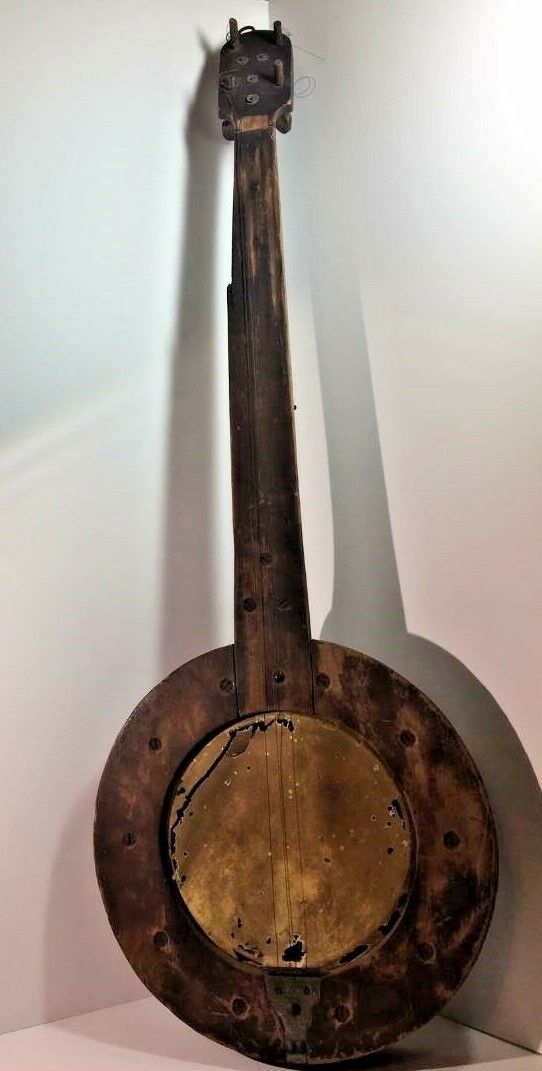
IMBanjoJim - Posted - 03/01/2019: 16:50:54
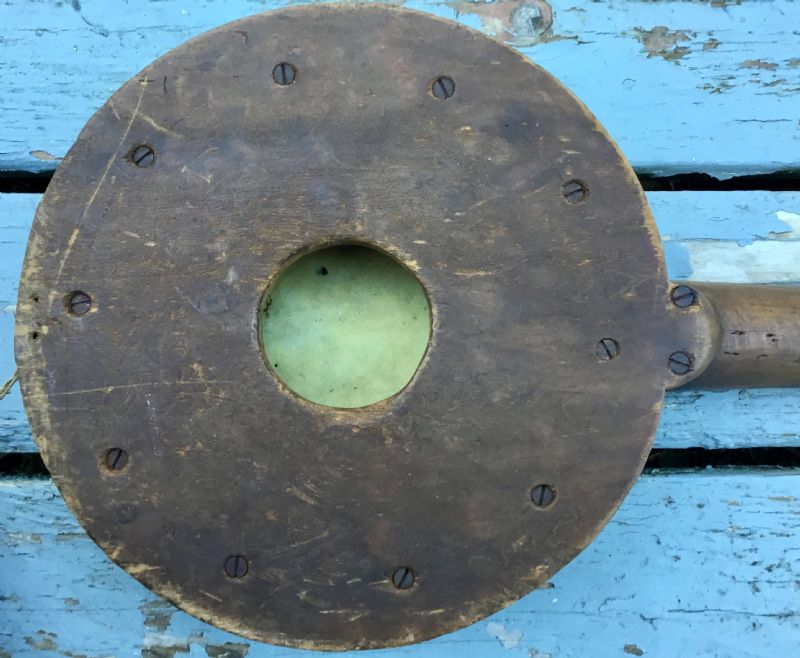
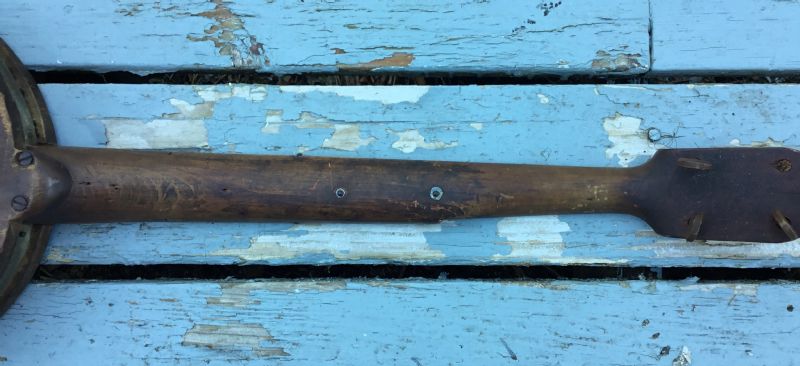
And...just got the mt.banjo. Here are some pre-disassembly photos...
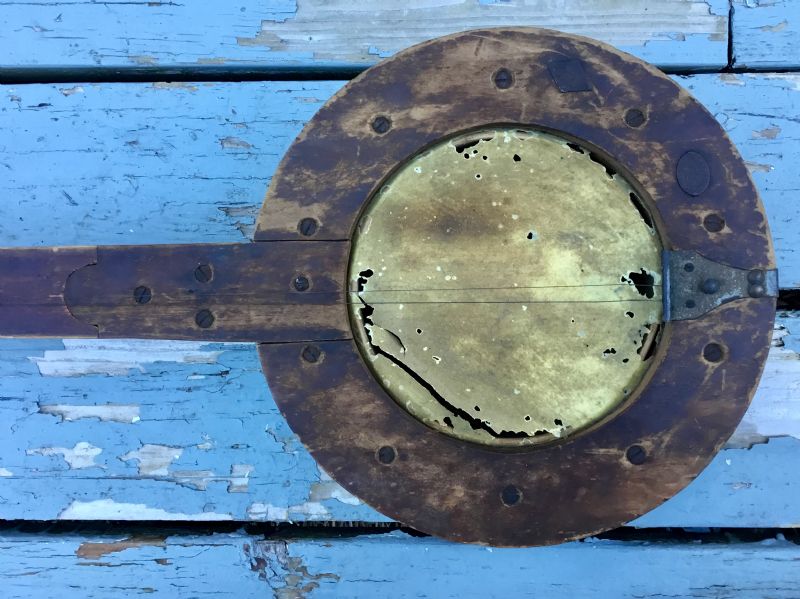
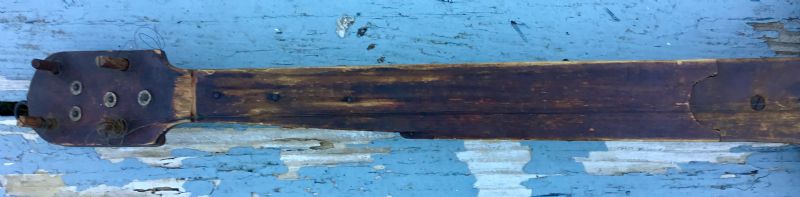
IMBanjoJim - Posted - 03/01/2019: 17:54:24
quote:
Originally posted by dfwestIt looks a little rough....
Dave
Dave...it IS that...
IMBanjoJim - Posted - 03/01/2019: 18:00:05
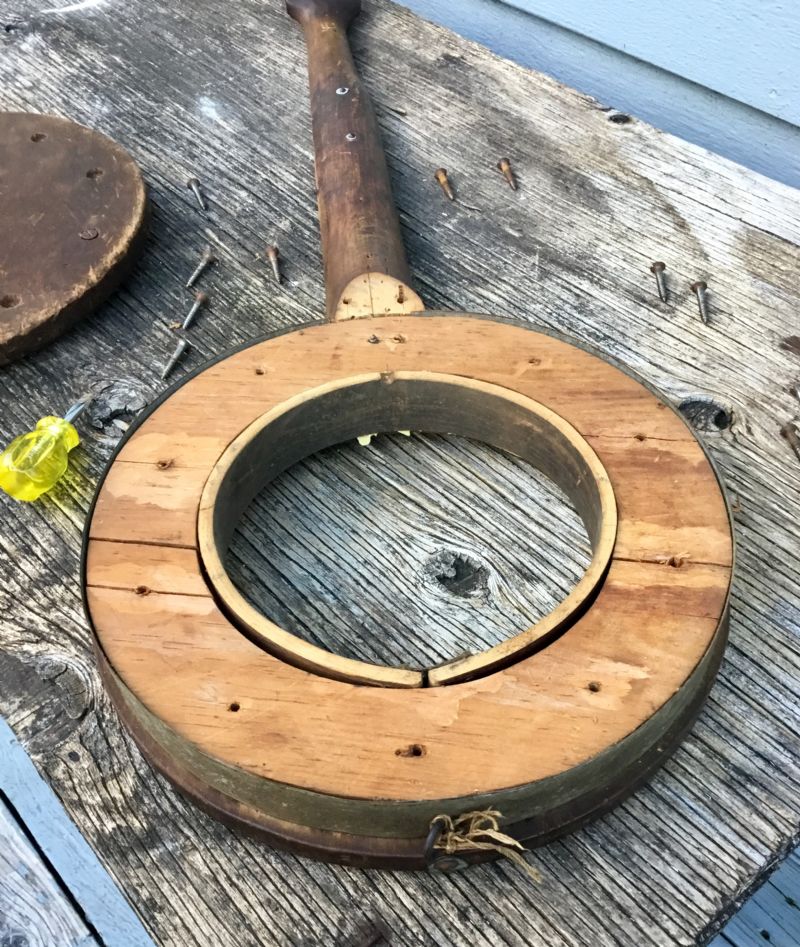
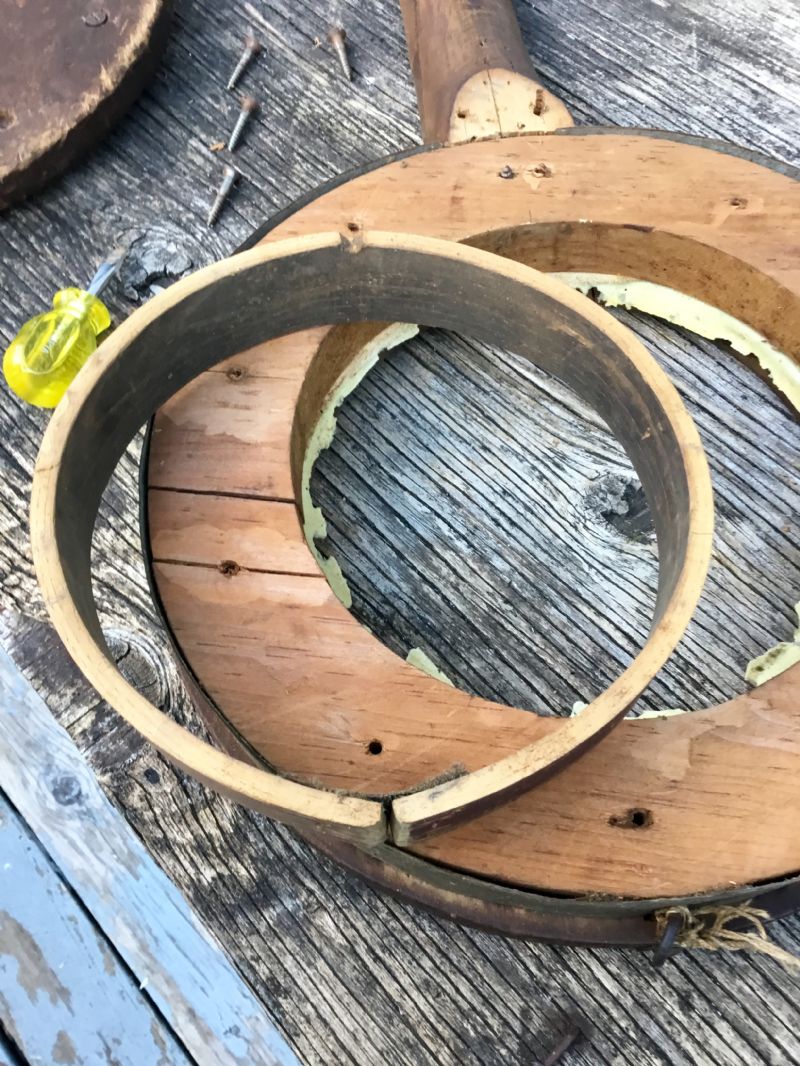
And taking off the front. Tacks holding down what is left of the skinhead, and the second photo shows a cloth that was apparently there to protect that part of the skin from the top wooden piece.
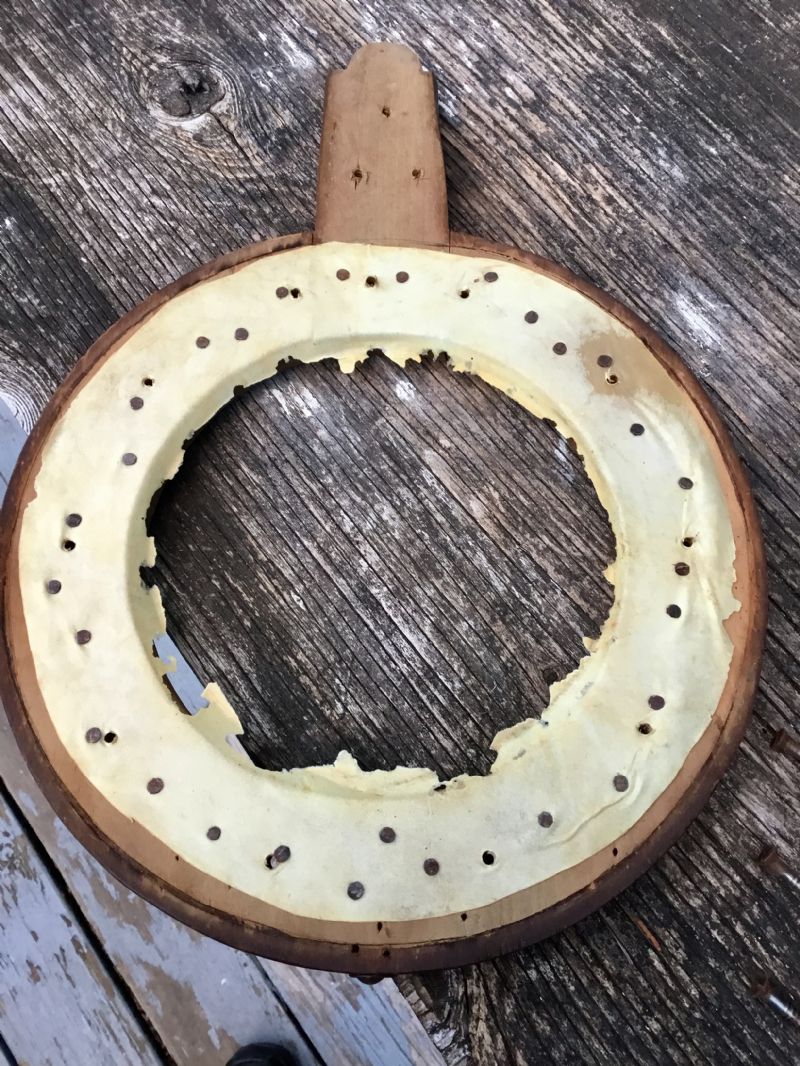
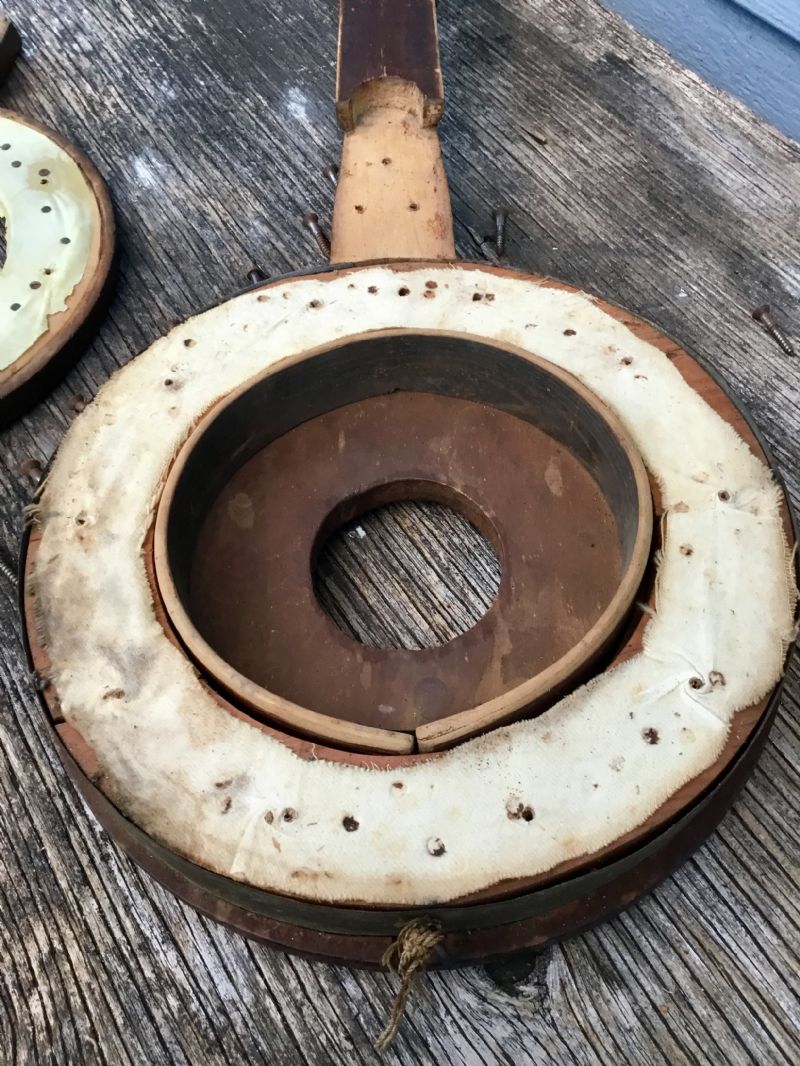
IMBanjoJim - Posted - 03/01/2019: 19:18:52
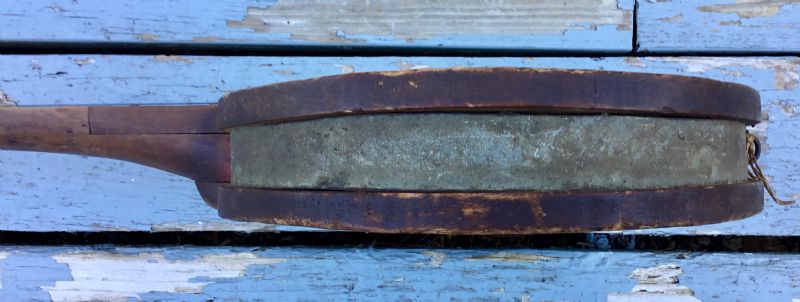
So...there is no plywood. This is a lighter colored wood, stained or painted brown.
The center piece of the pot is surrounded by a piece of metal, which is good, because that section is a bit splintered.
Screws are not hand made, but I have no idea how old they are. They all appear rusty.
Next step will be removing the tacks holding what is left of the skin, then installing a new skin.
The hand made wooden pegs are split and not useable. Will replace those, and it needs a nut and strings.
Should be playable at that point.
IMBanjoJim - Posted - 03/02/2019: 09:09:31
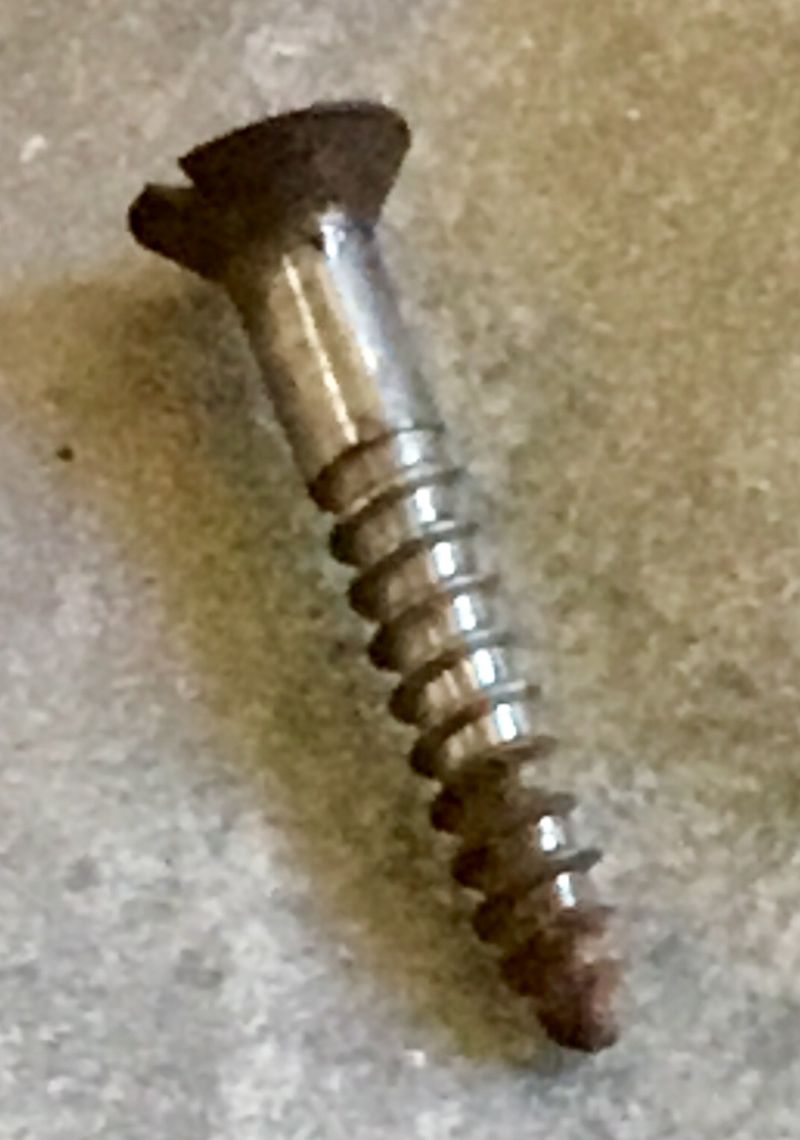
For what it is worth, here is one of the screws used in the front and back of the banjo pot. Not sure if this would help in dating the instrument...
IMBanjoJim - Posted - 03/02/2019: 12:02:31
And here is the latest, after showing the disassembled mt banjo to one of my long-suffering luthier friends...
The bent wooden tension hoop in the middle is oak.
The banjo itself, both the 3 piece pot, and the neck is maple, stained dark (probably oil-based stain).
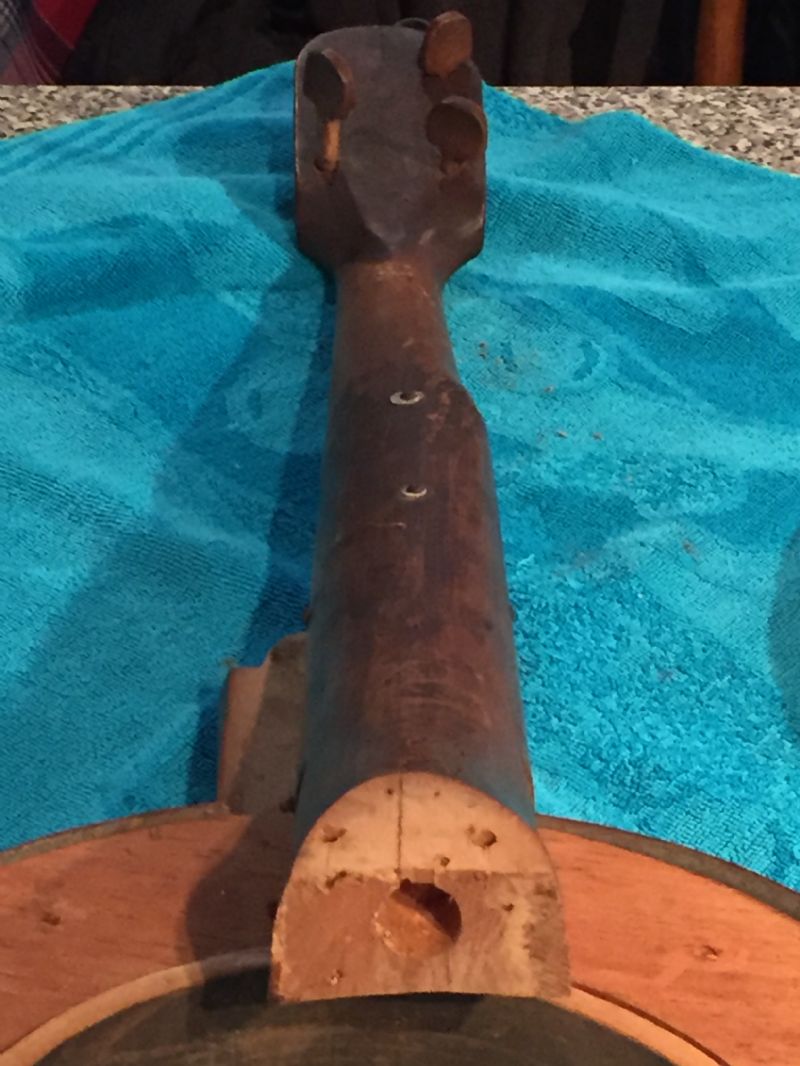
The big news is that there is a round mortice hole in the base of the heel, obviously for a rimstick! Mt. banjos don’t have rimsticks, which means this neck came from another banjo!
The other thing that is apparent to me after taking everything apart is how well thought out eveything is, and how precise all the cuts. Despite how rough the banjo looks now, it is really well made!
Edited by - IMBanjoJim on 03/02/2019 12:04:11
Alvin Conder - Posted - 03/02/2019: 17:01:39
Jim- That screw is machine manufactured. Standard American. 1880 to present. Very common in commercial furniture from the 1880s on.
Love what you discovered about the neck. Just adds to the mystery. Never seen a mountain banjo with that cloth spacer. Also interesting is the inner oak hoop. Most of the banjos of this type that I have seen had either a can or a piece of stovepipe for the what could be called a tone ring.
I’m sure once this is together and playable it’s going. To have a nice tone to it.
You dug up a few nice scores in the recent months. Nice thing about them all is that you shared them here and they brought forth a lot of discussion and knowledge to be shared.
Thank you.
Page: 1 2
Terms of Use | Privacy Policy | Privacy Consent (EU/GDPR Only)
Copyright 2026 Banjo Hangout. All Rights Reserved.