DVD-quality lessons (including tabs/sheet music) available for immediate viewing on any device.
Take your playing to the next level with the help of a local or online banjo teacher.
Weekly newsletter includes free lessons, favorite member content, banjo news and more.
Premier Sponsors


|
Please note this is an archived topic, so it is locked and unable to be replied to. You may, however, start a new topic and refer to this topic with a link: http://www.banjohangout.org/archive/341664
BrooksMT - Posted - 04/09/2018: 13:20:07
This is a long post, so I have broken it into several sections:
1. The offsets (in cents) from Equal Temperment to achieve Just Intonation. If you already want to try JI, then this is for you. Note, it was hard to get the table columns to line up. The related tunings are the same as the lead tuning, except for the strings which are different from the lead. That should help you figure out which oddball to tune differently. BHO editing went on the blink when I tried to fix the lineup, sorry.
2. Why and Why not. If you are wondering why you might want to change from Equal Temperment (modern, electronic tuner) tuning to the older Just Intonation tuning.
3. History of JI vs ET....greatly condensed.
Hope you find this interesting and useful.
Brooks Martin
bkmart@hotmail.com
Edited by - BrooksMT on 04/09/2018 13:45:30
BrooksMT - Posted - 04/09/2018: 13:29:04
Just intonation for Banjo, various tunings, calculated by Brooks Martin 2017
std G, Gmodal(mt. minor), F mountain minor, A Gcapo2, Double C, C open, Double D dCcapo2,
Art Rosenbaum's Ruben D, E rubencapo2
Related tunings are grouped.
Within a group, only offsets different from the lead tuning are listed.
Key tuning 5th 4th 3rd 2nd 1st
G std gDGBD 0 +2 0 -12 +2
Gmodal gDGCD -2
Fmtmnr fDGCD -5
Agcap2 aEAC#E 0 +2 0 -12 +2
CdobC gCGCD +2 0 +2 0 +3
Copen gCGCE -12
Dccap2 aDADE +2 0 +2 0 +3
D RubenArt Rosenbaum
f#DF#AD -12 0 -12 +2 0
Eracap2 g#EG#BE same
BrooksMT - Posted - 04/09/2018: 13:31:28
Purpose of Just Intonation tuning: to make the notes more consonant with each other (sweeter). The word "Just" is used in the sense of "pure" e.g. “The white knight's cause was Just.” Just intonation could be called pure intonation. JI has been in use for about 2000 years.
Purpose of Equal Temperment tuning: to make keyboard instruments able to play songs written with a change of key within the song (modulation). No retuning is needed for each key change with ET, which would be impossible for a piano on stage. ET has been in use for about the last 200 years.
Why bother to switch to JI and discard 200 years of ET?
Good Points of JI:
1) Better sound (not all can hear this, according to BHO threads). Most pros deviate from Snark etc. to make their banjo sound better, e.g. flatting the B string in standard G tuning. From BHO threads, it's apparent that some don't realize they are actually modifying ET towards JI tuning (JI says the standard G banjo tuning B string should be 12 cents flatter than ET tuning).
2) Easier practice - with fewer off-pitch notes, my mind is not always stumbling with "did I just hit the wrong fret?" Think of how hard it is to play with one string out of tune. Magnify that by 5 for ET *smiles*.
3) Unusual (non-major) chords sound good. A story: I was writing guitar chords for Ola Belle Campbell-Reed's "High on a Mountain". I tune my guitar to JI, and came up with some chords that worked nicely for the song. Since I knew most guitarists tune ET, I retuned my guitar to E.T. and tried the chords. Yikes! They sounded terrible! I thought I must have screwed up the retune....but it checked out fine. Then I went back to JI, and the chords sounded good again. So, tuning choice makes a difference, even in a guitar *smiles*.
4) Open strings will be sweet. Fretted strings for modern instruments will be ET (sour). If a key specific tuning allows some open strings in I, IV, V chords (typical of historic banjo tunings), then the whole song will still sound sweeter in JI vs ET, in my experience.
For some tunings, e.g. double C, the I, IV, and V chords can be made with 1 or 2 fingers. That leaves the open strings in JI, if you tuned that way....so is it better that all 4 strings to be out of tune with each other (ET) or is it better to have 2 or 3 of the 4 strings consonant? That's up to the individual musician.
There are guitars available with adjustable frets, so JI can be obtained in all keys. I'm not aware of any banjos with adjustable frets. btw, Earl Scruggs modified the 4th fret of the 3rd string to get better sound. He's the only banjoist to do this that I've read of, but there may be more (maybe I'll do that, too...after all if it's good enough for Earl...).
5) Quick key change via capo is still possible in JI. As far as the instrument is concerned, the capo merely changes the "reference concert pitch", which applies to all the notes, and does not change the intervals between strings. The same JI equations are used in all keys. If the strings represent the same intervals in different keys (eg. Std. G and capo2 A), then a capo won’t require retuning strings just because of ET or JI tuning.
6) Since JI is essentially what your ears hear, you don't need a fancy JI capable tuner. Just adjust your pegs with your Snark, then adjust pegs so that the chords sound good to your own ear.
Now, my ears vary in discernment day-to-day, so I use a Peterson Stroboscope Plus HD tuner. That’s the only tuner that I know of that can be programmed by the user. I programed the JI frequencies for several keys (programmed their offsets from ET), and use the tuner every day. This helps avoid tuning drift when I change keys to match a Youtube song I’m learning.
BrooksMT - Posted - 04/09/2018: 13:32:08
Bad Points (or why not to switch to JI from ET):
1) You have to retune all strings for each key change that can't be obtained with capo, e.g. std G changing to double C. The Math: JI pitches are based on root note of the key. The equations defining the rest of the 11 notes in a scale all modify the root note. Each of the 11 notes has a different equation. So if root note changes (i.e. key change), all the rest of the notes also must change pitch. In contrast, ET pitches are based on modification of the adjacent note, irrespective of starting point. The pitch of C C# D...etc, will be the same in ET no matter what the key.
2) It will take some time for your mind to readjust from what it's heard all your life (ET), to something new (JI). Story: Took me overnight to adjust. When I tuned to JI the first time, banjo sounded weird. I was disappointed, since JI is supposed to sound better. But the next day, before I gave up and retuned back to ET, I played again, and this time the banjo sounded great *big grin*. I have not gone back to ET since.
3) May not be worth the effort in a Jam setting. All the sounds blend; in some jams I can't even hear my own instrument (good wrt my "clams", hoho). Of course, the musician next to you will appreciate sweet notes of JI, even if they don't know why, or where, they are coming from.
BrooksMT - Posted - 04/09/2018: 13:32:57
History of JI and ET
For over 2000 years mathematicians (and musicians) have known Western music has a problem: It is impossible to fit 12 semitones in an octave, and have all notes be consonant (sweet) with each other. If you do pick pitches that are sweet throughout, then the octave over-runs by about 25 cents (100 cents separate semitones). We humans can recognize octaves (and sweetness), so an over-run of the octave would be discernable.
Does this matter? Answer: Anyone can hear 25 cents off, musicians can hear 12 cents off. With practice (and attention and good ears), you can hear 6 cents off. After 2 years of JI tuning, I can, on a good day, hear 2 cents off while tuning. Humans are really much more discerning of pitch than we (and some scientists) think, in my opinion. Typical offsets, in cents, between ET pitches and JI pitches range from 3 to 12 cents (some sharper some flatter).
Various people have come up with different tuning schemes to make the "important" notes consonant. The over-run is dumped on 1 note (7th) in Pythagorus JI tuning scheme (yeah, That Pythoagoras). The over-run is split between several notes in other JI tunings. The over-run is split evenly between all 12 notes in ET. With JI, some of the notes are sweet, some are sour (non-consonant). With ET, all the notes are non-consonant (sour).
For about the last 200 years, ET has been the only scheme any Western musician heard, at least from instruments. So we of today think of ET soumds as "consonant" simply because we have not heard anything else. Piano tuners are well aware of the dissonance in ET, but they have a job to do, so tune to ET like the customer wants.
A capella singing (w/o instruments) is always JI based. When we play (or tune) using only our ears, JI is what we get. Story: I asked a Barbershop singer about JI. He told me that they will learn a tune using a piano or guitar. But as soon as they know the tune, they discard the instrument and just sing. Their sweet harmonies are impossible with ET. The voice is instantly adjustable to get sweetness, be it 4 part Barbershop harmony, or octaves. Choirs revert to JI if they don’t have to match an organ or symphony with ET tuning.
A fretless instrument is fretted according to our ears. That's why a well-played violin sounds so beautiful, ditto a fretless banjo.
Early Fretted instruments dealt with the ET vs JI problem by having more frets than a banjo. The viol (a cello-like, bowed, fretted precursor to the guitar) had moveable frets made of gut. This allowed alteration of fret positions to better match a specific key. Some viols had double frets - one sharper and one flatter. The composer for the viol wrote music that specified which fret to use (choosing consonance or dissonance). Wikipedia has a nice article on the viol.
Modern fretted instruments have a single fret which is sufficient for ET. A Turkish professor and musician makes Microtonal guitars. He plays songs on movable fret guitars and Mid-East instruments, playing songs in Western JI and Mid-East intonations. Search for Microtonal on Youtube for his lectures and music.
BrooksMT - Posted - 04/09/2018: 13:33:27
Summary
Which to pick, ET or JI? Up to you. At home I always use JI. At a jam that allows the poor banjoist time to retune between songs, then I use JI. At other jams, I capo or sit out the song. Bozeman jams don’t allow retune time (ET or JI), so I pretty much have quit them. I could learn to play every key in G tuning, but choose not to.
For you fly fishers (and maybe musicians too): A famous fly fishing writer, Lee Wulff (1905-1991, "Trout on a Fly" and many others), wrote: ”I was in my forties before I decided to make every cast as good as I could.” With Wulff as my guide, I endeavor to make every song I play as good as I can….so I take the time to retune to the key, and I use Just Intonation.
Hope this helps. There are numerous articles on the Internet and Wikipedia dealing with the topics I addressed here.
Edited by - BrooksMT on 04/09/2018 13:39:55
Mooooo - Posted - 04/09/2018: 13:56:48
This is some of the most interesting reading I have seen on this forum. I'll probably have to read it a few more times but thanks a lot. I am really learning great and useful stuff here. I usually make sure my banjo has proper bridge placement then just tune each string to a fretted G note (except the 5th string) do you have any thoughts on that? Do you think it is useful or not? It seems to work fine when I have friends over to jam....at least no one has told me that I am off. Although they may be trying to spare my feelings.
Edited by - Mooooo on 04/09/2018 14:04:15
BrooksMT - Posted - 04/09/2018: 14:03:12
Corrected F mountain minor offsets
Fmtmnr fDGCD -5 +2 0 -2 +2
BrooksMT - Posted - 04/09/2018: 14:36:50
Mike, my knowledge of tuning is as a small creek is to a large lake :-) The main thing is that if you are happy with your tuning, then that's good.
Since the frets are spaced for Equal Temperment, your tuning would be Equal Temperment based. However, since the different strings respond differently to the frets, your tuning method would not generate pure ET, I think.
I was reading recently that the stiffness of the string affects how it responds to fretting. Different string diameters give different stiffness. That's why the 3rd string (thickest core, thus stiffest) frets differently than the 1st string.
Tolgahan Çogulu, the Turkish professor/musician who makes adjustable fret guitars, has an interesting website. If you want your strings to all fret correctly (ET or JI or something else), the frets have to be located all over the place :-)
tolgahancogulu.com/en/microtonal-guitar/
Edited by - BrooksMT on 04/09/2018 14:38:06
chuckv97 - Posted - 04/09/2018: 15:11:03
How about tuning the A to 432Hz instead of 440 Hz,,, you think it might be more conducive to better intonation, by some mysterious force? “A=432Hz—also known as “Verdi's A,” after composer Giuseppe Verdi, who preferred the 432 standard—is said by advocates to be in tune with the laws of nature and mathematically consistent with the universe.” wiki.
Here’s an example....
banjopickingman - Posted - 04/09/2018: 15:58:03
Everyone knows that beans are the most musical fruit, but Pythagoras never ate beans. Thus, I'm not sure why his ideas on musical tuning should be taken seriously.
In all seriousness, I don't think JI is practical in a musical context that features harmonic complexity and a long history of fretted and pretuned instruments.
Listening to the old timers playing banjo, they are often out of tune by any recognized system, but it still sounds good.
No system is best for all situations. Playing fretless banjo by yourself, why not experiment? Lots of cool sounds to discover!
davidppp - Posted - 04/09/2018: 16:02:54
I've always imagined that tuning to harmonics is a fast and easy way to get close to some variant of Just tuning -- at least for open strings. For example, "chime" or touch at the designated fret: 5th open and 3rd at the 12th match the 4th at the 7th; 2nd open matches the 4th at the 12th; and 1st at the 12th matches 3rd at the 7th -- and you're in double-C. Lots of people tune guitars analogously, i.e., using the 5th and 7th fret harmonics.
Rawhide Creek - Posted - 04/09/2018: 16:33:56
quote:
Originally posted by davidpppI've always imagined that tuning to harmonics is a fast and easy way to get close to some variant of Just tuning -- at least for open strings. For example, "chime" or touch at the designated fret: 5th open and 3rd at the 12th match the 4th at the 7th; 2nd open matches the 4th at the 12th; and 1st at the 12th matches 3rd at the 7th -- and you're in double-C. Lots of people tune guitars analogously, i.e., using the 5th and 7th fret harmonics.
Many players of bowed strings do something like this to check after tuning to open fifths.
Rawhide Creek - Posted - 04/09/2018: 16:47:41
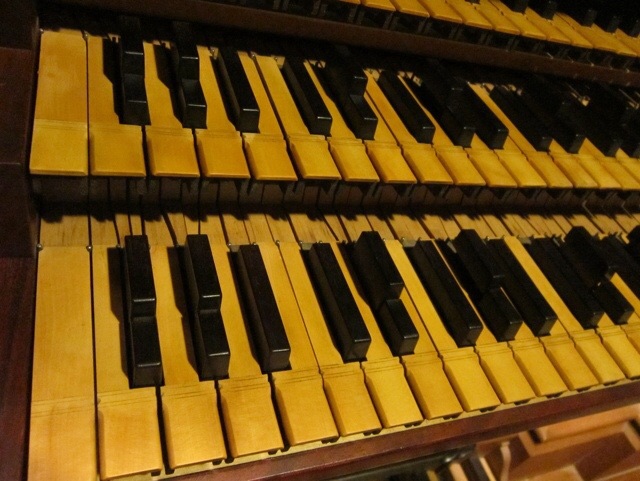
Brooks, you may be interested to note keyboard instruments with “split” black keys intended to help avoid some of the problems associated with 12TET.
Also, I see that you refer to notes being consonant (or not). I think you mean intervals.
Here’s an example of “split” black keys:
Edited by - Rawhide Creek on 04/09/2018 16:49:11
Rawhide Creek - Posted - 04/09/2018: 17:03:21
quote:
Originally posted by chuckv97How about tuning the A to 432Hz instead of 440 Hz,,, you think it might be more conducive to better intonation, by some mysterious force? “A=432Hz—also known as “Verdi's A,” after composer Giuseppe Verdi, who preferred the 432 standard—is said by advocates to be in tune with the laws of nature and mathematically consistent with the universe.” wiki.
. . .
This is better known as “Sauveur’s A”. Sauveur was not a musician, but a physicist. He proposed a tuning based on C4 = 256 Hz, intending that all Cs would be powers of 2. Verdi promoted it briefly, then abandoned it.
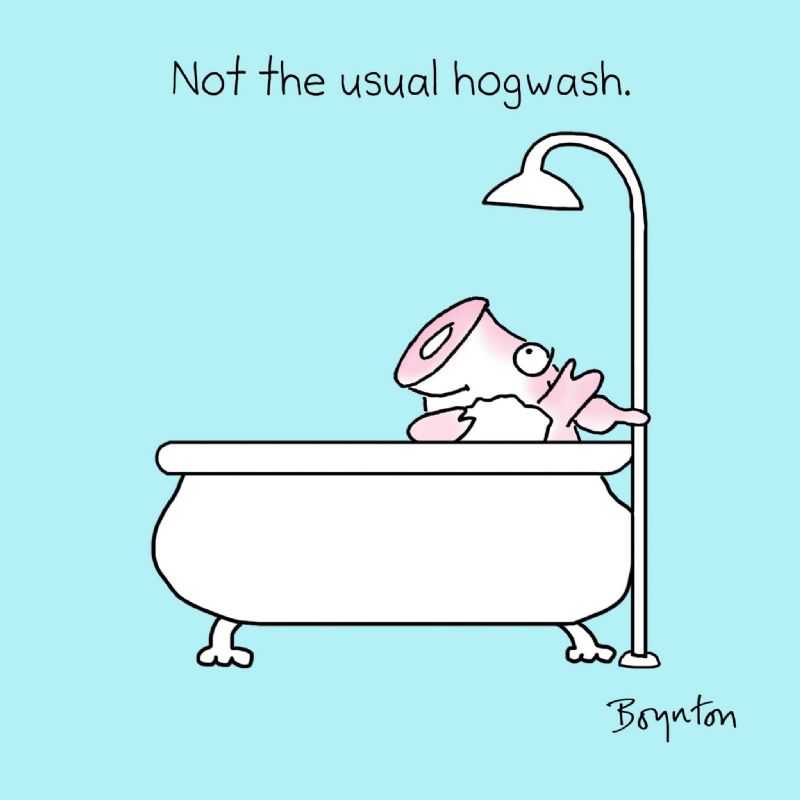
The various claims made for a 432 Hz A are not “mysterious”, merely numerological hogwash.
Rawhide Creek - Posted - 04/09/2018: 18:35:25
quote:
Originally posted by chuckv97Never dis ‘hogwash’ ....
Edited by - Rawhide Creek on 04/09/2018 18:41:33
BrooksMT - Posted - 04/09/2018: 20:47:33
Russ:
You are quite correct. Intervals are consonant or not. Notes are just notes :-) Thank you for the photo of the interesting keyboard.
Chuck:
Clifton Hicks plays a very beautiful piece (on youtube) where his banjo is tuned to 432. Of course, I think most of his pieces are beautiful, irrespective of tuning :-)
I detune my DIY fretless banjo 5 semitones from standard pitch. The DIY has no neck truss rod, so I hesitate to put a lot of stress on it. My standard G tuning is really in key of D, my DoubleC is really G, my Ruben's D is really A. What was unexpected was that the DIY sounds lovely in these lower pitches. It has a voice all it's own, different than my 3 regular banjos. So, I would not argue against changing concert pitch A from 440 to 432 :-)
Speaking as a biologist, I know that low frequencies can be helpful to life. A cat's purring, at a low pitch, has been demonstrated to promote healing, for instance. I don't believe in numerology, but catology, on the other hand......help... my cat made me write that.
banjoak - Posted - 04/09/2018: 20:48:44
I often prefer just intonation... especially on fiddle, or singing... esp on older modal based music. The reason it sounds good and easy to hear has to do with lowest ratios of frequencies combine lock - 3/2, 4/3, 5/4, 5/3, 6/5...
edit to add: intervals have degree of consonance.
A few notes.
1. A few of your numbers are off. Thirds should be -14. Seconds should be +4. The f in your mtmnr is a flat seventh... has 2 versions, either -4 or as +18. (in context, some of the fourths might sound better at +20)
2. It is not really achievable on straight fretted instruments like banjo or guitar. Those are designed for ET. Other than open string, frets will be off... including using a capo... changes the relation. As well, any complexity in chord progression can make the off sound even worse. As mentioned, really either needs special staggered/more frets; use a slide; - or needs to be fretless instrument.
3. The little 2-4 cents differences on fifths, fourths and seconds... aren't probably going to be that significant on a plucked string in the context of playing most music. (quick, short duration, sustain and some other factors) - It's more larger, thirds, sixths and sevenths is where the difference is noticeable.
4. There are some others than JI... such as using neutral (thirds, sevenths, and maybe fourths), common in OT and blues. Fretless can achieve those other options.
The ET is a compromise, that works okay for guitar and banjo... balance in keeping instrument simple, but allowing one to play less limited, more complex note choices, chords and keys; and nothing sounds horribly out,. Other temperaments - like various Meantone tuning scheme, compromise, try to balance.. purposely makes fifths/fourths more off (but still acceptable range for most folks) but better/closer thirds and sixths; only for a few related keys (some keys sound bad). Works on piano, but would still be problem on straight fretted instrument.
Edited by - banjoak on 04/09/2018 20:53:42
BrooksMT - Posted - 04/09/2018: 21:20:06
Banjopickingman:
I guess we will just have to agree to disagree :-)
I am not sure what you mean by harmonic complexity. From my perspective, there was plenty of harmonic complexity during the JI era.
J.S. Bach wrote during the time of transition from Meantone tuning to Equal Temperment tuning. Meantone tuning is one of the JI tuning schemes. His "Well Tempered Clavier" is a series of 24 works in each of the 12 major and minor keys possible in a western octave. WTC has been cited by both ET and JI proponents as support of their tuning scheme. On the ET side, proponents claim that Bach must have supported ET since you can't play all 24 without retuning unless you use ET. On the JI side, proponents claim that only with JI could Bach show that every key has it's own unique feel. Whatever side you support, Bach's work certainly had harmonic complexity.
Mediaeval European music, at least in Church, had little harmonic complexity. Triad chords were forbidden; the only harmony allowed, in some churches, was octave-based. The Church discouraged harmony, seeing it as a tool of the Devil. Non-church music, on the other hand, had harmony more as we think of it today. Since the harmony came from peasants' singing, it necessarily was JI based.
So, from my viewpoint, pre-ET music had harmonic complexity, except for Mediaeval Church.
From my own experience, chords based on JI sound sweeter than the same chords based on ET.
-----------
The Taylor guitar magazine presents their new V bracing scheme (Vol.90 Winter 2018). One of the reasons given for the new scheme is to achieve better intonation. In that issue I learned that some pros will retune their guitar to get sweeter chords in just one section of a song. Obviously they don't retune on the fly, but retune for replacing a section of the recording during the final mix.
If any of us could afford 24 guitars, we could have them fretted to give sweet chords in any key. Looked at like that, buying just one of the new V braced guitars, only found on their top of the line models, would be a real bargain :-).
Edited by - BrooksMT on 04/09/2018 21:29:48
Rawhide Creek - Posted - 04/09/2018: 21:25:50
quote:
Originally posted by BrooksMTRuss:
You are quite correct. Intervals are consonant or not. Notes are just notes :-) Thank you for the photo of the interesting keyboard.
Chuck:
Clifton Hicks plays a very beautiful piece (on youtube) where his banjo is tuned to 432. Of course, I think most of his pieces are beautiful, irrespective of tuning :-)
I detune my DIY fretless banjo 5 semitones from standard pitch. The DIY has no neck truss rod, so I hesitate to put a lot of stress on it. My standard G tuning is really in key of D, my DoubleC is really G, my Ruben's D is really A. What was unexpected was that the DIY sounds lovely in these lower pitches. It has a voice all it's own, different than my 3 regular banjos. So, I would not argue against changing concert pitch A from 440 to 432 :-)
Speaking as a biologist, I know that low frequencies can be helpful to life. A cat's purring, at a low pitch, has been demonstrated to promote healing, for instance. I don't believe in numerology, but catology, on the other hand......help... my cat made me write that.
If you think you’re winning and your cat walks away from you, you’re facing a catastrophy.
Edited by - Rawhide Creek on 04/09/2018 21:26:25
chuckv97 - Posted - 04/09/2018: 21:49:48
quote:
Originally posted by banjoakThe 432 is merely pseudo-science woo.
Russ the Martin says it’s “HOGWASH”
BrooksMT - Posted - 04/09/2018: 22:11:55
Banjoak:
1. I agree that 2 or 3 cents difference between ET and JI are not usually significant in a complex song. On a good ear day, I can hear the dissonances and they bother me. On a bad ear day, I can't hear them. Many on BHO say they can't hear even larger dissonance. That's life.
2.I agree that frets mess things up for JI, and wrote that. I disagree that a chord sounds better in all ET notes, compared to when you have the opportunity to play at least some of the notes in JI. But my ears are not yours, certainly. We do not hear things the same way, and that's ok.
3. My calculated JI offsets are based on 5-limit tuning calculations. There are several schemes for calculating frequencies for JI. My numbers came out the same as 5-limit numbers given in other sources. I wanted to calculate them myself for fun, and for increased understanding of what was going on. There are many sources of JI frequencies on the web, there is nothing wrong with choosing your own source.
"A twelve tone scale can also be created by compounding harmonics up to the fifth. Namely, by multiplying the frequency of a given reference note (the base note) by powers of 2, 3, or 5, or a combination of them. This method is called five-limit tuning." -- Wikipedia
en.wikipedia.org/wiki/Just_intonation
4. My calculations said that the capo2 does not affect offsets for keyG=>keyA, and keyC=>keyD. I always tweek the pegs after adding a capo, but that was true when I was using ET also. A capo does not change the interval between strings; if 1st and 2nd string differed by 3 semitones, they still differ by 3 semitones after you put on the capo. The frequencies of the strings are definitely different after adding the capo, of course.
5. All tuning schemes are a compromise. It comes with the territory - you can't stick 12 halftones in an octave and get perfection (consonance), alas. Our only choice is where to place the compromise. ET compromises all the notes (with respect to consonance in intervals), but achieves some things, which you list. JI compromises some of the notes (with respect to consonance), but achieves different things. Your choice of acceptable compromise is just as valid as my choice...we just differ in which compromises we prefer....and that's ok, by me.
--------------
I presented this information not to convince anybody to change, but to show them how they could try JI if they wished. I've played with people who used ET while I used JI. They did not complain about me, and I did not complain about them. Partly I think that's because most musicians I have played with tweak their Snark ET tuning to get something that better fits their ears, and thus, perhaps without knowing it, gravitate to their own JI tuning.
When I first took up banjo in the '70's (unsuccessfully I might add, and I dropped it for 40 years), I noticed that I could get nicer sounding chords by tweaking the pegs. But since that was "forbidden...the electronic tuner is always right" I dropped the tweeking. One of my hopes for this thread is that it frees up people to try their own ways to improve their music, perhaps by changing the way they tune.
Edited by - BrooksMT on 04/09/2018 22:31:03
G Edward Porgie - Posted - 04/10/2018: 06:35:09
quote:
Originally posted by BrooksMTBanjopickingman:
I guess we will just have to agree to disagree :-)
I am not sure what you mean by harmonic complexity. From my perspective, there was plenty of harmonic complexity during the JI era.
J.S. Bach wrote during the time of transition from Meantone tuning to Equal Temperment tuning. Meantone tuning is one of the JI tuning schemes. His "Well Tempered Clavier" is a series of 24 works in each of the 12 major and minor keys possible in a western octave. WTC has been cited by both ET and JI proponents as support of their tuning scheme. On the ET side, proponents claim that Bach must have supported ET since you can't play all 24 without retuning unless you use ET. On the JI side, proponents claim that only with JI could Bach show that every key has it's own unique feel. Whatever side you support, Bach's work certainly had harmonic complexity.
Mediaeval European music, at least in Church, had little harmonic complexity. Triad chords were forbidden; the only harmony allowed, in some churches, was octave-based. The Church discouraged harmony, seeing it as a tool of the Devil. Non-church music, on the other hand, had harmony more as we think of it today. Since the harmony came from peasants' singing, it necessarily was JI based.
So, from my viewpoint, pre-ET music had harmonic complexity, except for Mediaeval Church.
From my own experience, chords based on JI sound sweeter than the same chords based on ET.
-----------
The Taylor guitar magazine presents their new V bracing scheme (Vol.90 Winter 2018). One of the reasons given for the new scheme is to achieve better intonation. In that issue I learned that some pros will retune their guitar to get sweeter chords in just one section of a song. Obviously they don't retune on the fly, but retune for replacing a section of the recording during the final mix.If any of us could afford 24 guitars, we could have them fretted to give sweet chords in any key. Looked at like that, buying just one of the new V braced guitars, only found on their top of the line models, would be a real bargain :-).
I disagree with your concept of harmonic complexity in earlier music. What was done in Bach's time was not really that complex within a given piece. Although there are key changes in Bach, they are to closely related keys which don't involve major intonation problems and could be played in a non-adjusted temperament. (I won't argue either side in the case of "The Well Tempered Clavier--I can't read minds, especially those of ghosts.) Folk music, too, did not involve many key changes, and being vocally based, could have its intervals adjusted on the fly by the singers.
What was changing in the later eras were the additional key shifts within a piece of music. On a keyboard instrument or a fixed pitch wind instrument this was becoming a real problem. Schubert, for example, many times did not go to the subdominant or dominant key, which would still produce relatively consonant intervals, but to keys based on tertiary intervals, further off from the intervals used in the home key. This trend continued into the latter centuries and involved such things as one Faure sonata which, in one movement alone, runs from C to a passage that alternates between E major and F minor. Those are rather distant keys, and would be rough on sensitive ears should the tuning be just intonation centered on C.
I am not arguing that there are not good things about JI, and I also believe it's fine for folk tunes and, if used properly, for other forms as well. But I do believe that the increasing use of more complex harmonic structures within a piece made equal temperament inevitable.
BrooksMT - Posted - 04/10/2018: 07:57:46
Well explained, George, thank you.
I like songs with key changes within the song (also known as modulation). Modulation makes the song more interesting. However, I don't play any such songs at this time, so JI works for me.
I have several banjos and two guitars The guitars are tuned in banjo intervals: std. G for one, and double C for the other (I frail both of them, per Steve Baughman). My several banjos are tuned in various keys also. So, for home play, JI is convenient. Those of you who have BAS (you know who you are) might consider JI tunings for your collection :-)
Again, thanks George.
G Edward Porgie - Posted - 04/10/2018: 12:02:47
I app5reciate the thank you, Brooks. Many people are not so polite.
I chose to use "key change" instead of "modulation" because I felt there might be a person or two reading this thread who might be unfamilar with the term. In retrospect, I should have used both "key change" and "modulation." I'm glad you pointed out that the terms were basically the same.
banjopickingman - Posted - 04/10/2018: 12:47:15
Tuning is a very fascinating and complex area of study, and I think definitely worth exploring for musicians from all walks of life.
I do find that, when discussing just intonation vs equal temperament, there often arises confusion between mathematical simplicity and universal concepts of consonance and dissonance. It seems quite common for folks to ascribe a quality of "consonance" to intervals for no other reason than they reflect a simple mathematical ratio, and assume that this perception of consonance is universal. For example, intervals derived from JI are often described as "pure" because they coincide with simple ratios such as 3:2, while intervals derived from equal temperament are described as "compromised" or "slightly out of tune" because they do not coincide with simple ratios.
The reality is that concepts such as "purity" and "consonance/dissonance" are context specific and are definitely not universal. If being mathematically convenient was equivalent to musical purity, I would ask: why not use a metric-based system--divide the octave into 10 equal units? In fact, there is no reason not to. It is just that western musical practice developed differently, in its own unique and idiosyncratic way, in conjunction with musical theory that both explained and informed musical practice.
In a equal temperament context, intervals that align with an octave divided equally into 12 parts are consonant, regardless of how closely they align with intervals derived by Pythagoras or anyone else. Ones that do not align in this way are out of tune or dissonant. In music of other cultures, intervals that are believed or taught by a musical authority to be consonant are consonant within that context, regardless of how they might align with perceptions or concepts of consonance derived from outside that context.
In other words, neither JI nor ET result in sounds that are objectively better or worse than the other. I think it's cool to microtune your banjo to be closer to JI, or to any other tuning system that you learn about or invent or stumble on by accident. When playing with others, it might be better to have some common agreement on this matter, but when playing alone, it is all good! Even the notes that are "out of tune"!
Edited by - banjopickingman on 04/10/2018 12:49:19
Rawhide Creek - Posted - 04/10/2018: 17:13:00
There are a lot of middle-school band directors who would like to have some of those “fixed-pitch wind instruments” that George mentioned!

Edited by - Rawhide Creek on 04/10/2018 17:14:50
Rawhide Creek - Posted - 04/10/2018: 19:39:37
Two books worth the shelf space:
J. Murray Barbour, Tuning and Temperament: A Historical Survey (1951)
Available as a Dover reprint (2004), its roots are in Barbour’s Ph. D. dissertation, which began as an in-depth defense of equal temperament. Despite that bit of bastardy, it is remarkably even-handed in its treatment of the subject of temperament as a whole.
Ross W. Duffin, How Equal Temperament Ruined Harmony (and Why You Should Care) (2007)
A much friendlier (i.e., less dense) treatment of the subject.
G Edward Porgie - Posted - 04/11/2018: 12:46:17
One more thing should be said about any tuning system for stringed instruments:
All of those cycles per second are theoretical. In reality the stiffness of a stretched string prevents the partials from being exactly what the figures should say they are. The stiffer the string, the further off they are from the numbers. The term for this is "inharmonicity."
On a low tension instrument such as a banjo, the deviation is so trivial it's pretty much non-existent to the human ear, but on a high tension instrument, it can be heard. It's why piano tuners are said to "stretch the octaves." They are really just matching the upper string of the octave to the overtone produced by the lower string of the octave. If this was not done everybody would think the piano wasn't in tune.
BrooksMT - Posted - 04/11/2018: 13:01:16
Banjopickingman - Interesting post, thanks!
--------------------
There seem to be 3 types of consonance discussed in this thread:
1. Mathematical consonance -
a) "Even division of the octave into 12 notes is consonant by definition", (Equal Temperment).
b) "Perfect integer ratios are consonant", ie perfect thirds, fourths, or fifths (different versions of Just Intonation). Obtaining perfection for all three symultaneously is impossible with "low number integers."
2. Traditional consonance - "This is how we've always done it, so this is the way we want it."
3. Ear consonance - "This sounds better to me, so it's more consonant than (fill in the blank)."
-------------------------
Instrument limitations - Consonance of any sort is hard to achieve with single-fret stringed instruments, alas. By single-fret I mean 1 fret spanning the neck for each semitone. Multi-fretted instruments come closer to perfection, but the Western requirement for 12 semitones per octave prohibits easy answers.
------------------------
The consonance problem has been studied for 2000 years, so I don't feel bad that I don't have a perfect solution. As far as tuning your banjo goes, pick the method that meets your needs is all I can say. It helps me to keep in mind that Music is Art - everyone's opinion of good and bad is different :-)
1. For groups of strangers of unknown musical ability (Jam), or for soloists playing songs with key changes within the song, ET might be the best method.
2. For people who want to sound just like a particular band or soloist, use your ears, and whatever tools you have, to figure out how they tuned their instrument. Musicians pre-Snark (that is, before electric tuners were prevalent) probably used their ears, so JI might be appropriate. Musicians post-Snark may have deviated from key or ET (bands from the 1970's often tuned sharp, for instance, and many pros deviate from ET for personal reasons).
3. For banjoists who want to approach Barbershop type harmonies (which I have personally always thought to be the most perfect), JI is your friend.
4. Outside the realm of banjos, school band leaders who want to win contests have found that JI does better than ET, all other things being equal. Even if the band can't maintain JI thoughout the song, ending on a JI chord impresses judges.
--------------------
Using your electric tuner with the JI offsets from ET:
Some tuners will tell you the actual offset of your string from ET pitch.
a) Peterson Strobo Plus HD will let you find the cents off ET pitch by turning a dial on the tuner. Some JI tuning schemes are programmed in, but I've not tested them. Peterson allows you to program in your own offsets, which is what I have done. Then the tuner reads directly for JI just as it normally does for ET.
b)AP Tuner 3, for computer and cellphone, will show offsets onscreen. The numbers were not real steady in the version I used last year, so I had to combine the tuner results with my ears. The tuner has some JI methods programmed in. I have not tested them.
aptuner.com/aptuner_index.html
-----
Snark's bars span too many cents to be directly applicable, I've found. But the bars do tell you if you are moving you pegs in the right direction. Since JI attempts to mimic what your ear hears, you can fine tune your numerically-unknown offset just by listening.
Polytune displays dots that span smaller pitch ranges than Snark's bars. I've used the Polytune to approximate my offsets. Combined with my ears, it has worked for me. It's a lot more portable than the Peterson Strobo Plus HD.
Rawhide Creek - Posted - 04/12/2018: 10:19:29
quote:
Originally posted by G Edward PorgieOne more thing should be said about any tuning system for stringed instruments:
All of those cycles per second are theoretical. In reality the stiffness of a stretched string prevents the partials from being exactly what the figures should say they are. The stiffer the string, the further off they are from the numbers. The term for this is "inharmonicity."On a low tension instrument such as a banjo, the deviation is so trivial it's pretty much non-existent to the human ear, but on a high tension instrument, it can be heard. . . .
A different way to think of this: As a string becomes stiffer, the more nearly its behavior wants to resemble that of a tube or bar (consider, for instance, chimes or a xylophone).
For bowed strings, when bowed, not plucked (pizzicato)—and for instruments that produce sound by vibrating a column of air (e.g., woodwinds, brasswinds, pipe organ)—inharmonicity is a seldom thing. When the energy used to cause the vibration is effectively equal to the energy used by the vibrating member (string or air column) to produce sound, another phenomenon occurs: “mode-locking”, and the partials (harmonics) are where they belong.
Dan Gellert - Posted - 04/30/2018: 14:13:48
I don't usually check out the theory forum, so am a bit late to this one...
There isn't really any way to tune a fretted instrument justly, but for any given tuning and key, there are adjustments from ET which will make some of the most important intervals in better tune without throwing any of the notes too far off.
Look up "sweetened guitar tuning". I recall seeing a video where James Taylor demonstrated his take on that.
As I'm fond of saying, an electronic tuner is a very good substitute for a tuning fork, but a very bad substitute for an ear. On a banjo, I'll generally use the tuner on whatever string is tuned to the tonic, (or maybe the fifth) note of the key. Everything else gets adjusted by ear to sound right with that note. If I'm playing fretless, I can go for just intervals between the open strings. If it's fretted, AND I'm going to be playing full chords, I might start by using the tuner on all 5, since I know I'll wind up close to 12TET, but I'm not done until I've tried the basic positions up and down the neck and tweaked the tuning so it SOUNDS right. For old-time playing (lots of use of open strings, fretting only one or two at a time) on a fretted banjo, every tuning and scale has its own best compromise between JI and the frets.
BrooksMT - Posted - 04/30/2018: 16:27:02
Thank you for your comments Dan.
Here is a url for James Taylor's suggested guitar tuning:
larryshudra.wordpress.com/2014...-tunings/
James Taylor's guitar tuning:
E A D G B e
-12 -10 -8 -4 -6 -3 (cents off of Equal Temperment tuning, i.e. your Snark etc.)
None of his strings are set to perfect ET pitches (or perfect JI pitches for that matter) *smiles*.
I found it interesting that he tunes the bass strings farther off ET (flatter) than the treble eg. low E vs high e string. I find myself doing something similar, that is flatting the banjo wound string and the string right next to it ( C and G for double C, D and G for standard G). That is, I make them flatter than the JI pitches suggest, but I have not measured how much flatter. It just sounds better, which I think is what Dan is saying we should do.
I like to hear that two pros, Dan And James, think deviating from ET is ok. Sometimes when I go against the grain, I wonder if I'm just crazy :-)
Edited by - BrooksMT on 04/30/2018 16:28:29
Rawhide Creek - Posted - 04/30/2018: 23:41:20
quote:
Originally posted by BrooksMTThank you for your comments Dan.
Here is a url for James Taylor's suggested guitar tuning:
larryshudra.wordpress.com/2014...-tunings/James Taylor's guitar tuning:
E A D G B e
-12 -10 -8 -4 -6 -3 (cents off of Equal Temperment tuning, i.e. your Snark etc.)None of his strings are set to perfect ET pitches (or perfect JI pitches for that matter) *smiles*.
I found it interesting that he tunes the bass strings farther off ET (flatter) than the treble eg. low E vs high e string. I find myself doing something similar, that is flatting the banjo wound string and the string right next to it ( C and G for double C, D and G for standard G). That is, I make them flatter than the JI pitches suggest, but I have not measured how much flatter. It just sounds better, which I think is what Dan is saying we should do.
I like to hear that two pros, Dan And James, think deviating from ET is ok. Sometimes when I go against the grain, I wonder if I'm just crazy :-)
So you’ve now read one or both of these?
J. Murray Barbour, Tuning and Temperament: A Historical Survey (1951)
Available as a Dover reprint (2004), its roots are in Barbour’s Ph. D. dissertation, which began as an in-depth defense of equal temperament. Despite that bit of bastardy, it is remarkably even-handed in its treatment of the subject of temperament as a whole.
Ross W. Duffin, How Equal Temperament Ruined Harmony (and Why You Should Care) (2007)
A much friendlier (i.e., less dense) treatment of the subject.
Pitch, tuning, and temperament are fundamentals of theory.
If you propose to discuss and dissect them, you should be prepared to demonstrate that you have done some homework.
Edited by - Rawhide Creek on 04/30/2018 23:49:30
parlour player - Posted - 05/01/2018: 01:52:29
I use a electronic tuner as a rough guide then by ear, also where you play and weather conditions all play apart in the tuning process.
also before i play in a room to check out the acoustics, I just clap my hands its being done this way for hundreds of years .
BrooksMT - Posted - 05/01/2018: 07:06:01
Parlor player - what do you do to your tunings depending on what the clap test tells you? Or, and this could be a whole different topic thread, what should a player do with everything when acoustics vary between rooms? I notice that playing in different rooms of my house yields subtle differences in the sound I perceive with my ears. Some rooms sound dead, some sound lively. Rugs and what's on the walls make a difference, but I've never adjusted anything in my playing...did not know what I Could adjust :-)
Russ, I did my homework on Internet. But l love reading, so will see if I can find the books. In a sense, though, I don't care about the history of intonation...my main concern is what My ears tell me. Music is art, and to my mind, art is personal....whatever any musician wants to do that sounds good to them is perfectly valid, even if it does not sound good to my ears.
Edited by - BrooksMT on 05/01/2018 07:07:29
Rawhide Creek - Posted - 05/01/2018: 09:30:10
So, in a different realm of expression, you would have us believe that there is inherently no difference between the parietal art of the Chauvet-Pont-d’Arc Cave and the ceiling of the Sistine Chapel?
Edited by - Rawhide Creek on 05/01/2018 09:31:02
Dan Gellert - Posted - 05/01/2018: 11:09:50
Also... No matter how well made and precisely set up a fretted instrument is, it isn't going to produce a perfect 12TET scale everywhere on the fingerboard. Most will deviate quite a bit, especially on the first few frets. Even if you are aiming for equal temperament, your closest approach to it in practice will require intentionally "mis-tuning" some, if not all, of the open strings.
And.. A tuner measures the fundamental frequency of a note. You also hear all the overtones, and no string produces a perfect overtone series. (That is why you can't get a worn-out set of strings to sound in tune). I'm not sure if I'm right, but I think that is why the bass E (and to a lesser degree the A) on a guitar always sound sharp to me (relative to the other strings) when the tuner says they are dead on.
G Edward Porgie - Posted - 05/01/2018: 13:50:00
quote:
Originally posted by Dan GellertAlso... No matter how well made and precisely set up a fretted instrument is, it isn't going to produce a perfect 12TET scale everywhere on the fingerboard. Most will deviate quite a bit, especially on the first few frets. Even if you are aiming for equal temperament, your closest approach to it in practice will require intentionally "mis-tuning" some, if not all, of the open strings.
And.. A tuner measures the fundamental frequency of a note. You also hear all the overtones, and no string produces a perfect overtone series. (That is why you can't get a worn-out set of strings to sound in tune). I'm not sure if I'm right, but I think that is why the bass E (and to a lesser degree the A) on a guitar always sound sharp to me (relative to the other strings) when the tuner says they are dead on.
They sound sharp because the octave overtones (as well as other overtones) produced by those two lowest strings are slightly sharp due to the inharmonicity of a vibrating string. This sharp octave overtone will certainly sound "off" when compared to the strings above. It won't matter when that low "E" is played by itself--it will match the tuner. It's when other strings are played in unison that things can sound off. One way to solve this would be to tune the upper strings to the octave overtones of the lower strings, rather than to a simple electronic tuner. (Piano tuners know this; in order to get clean sounding octaves, they tune to the octave overtone of the initial A-440 rather than to "A-880," which would be the correct note only if vibrating strings behaved as they should in theory.)
Rawhide Creek - Posted - 05/01/2018: 17:14:15
quote:
Originally posted by Dan GellertAlso... No matter how well made and precisely set up a fretted instrument is, it isn't going to produce a perfect 12TET scale everywhere on the fingerboard. Most will deviate quite a bit, especially on the first few frets. Even if you are aiming for equal temperament, your closest approach to it in practice will require intentionally "mis-tuning" some, if not all, of the open strings.
And.. A tuner measures the fundamental frequency of a note. You also hear all the overtones, and no string produces a perfect overtone series. (That is why you can't get a worn-out set of strings to sound in tune). I'm not sure if I'm right, but I think that is why the bass E (and to a lesser degree the A) on a guitar always sound sharp to me (relative to the other strings) when the tuner says they are dead on.
BrooksMT - Posted - 05/01/2018: 20:44:00
Here is a nice piece on a microtonal 8 string guitar. The musician, Tolgahan Ço?ulu, has made his own microtonal instruments, with adjustable frets (on all strings) to achieve better consonance. I'd like to hear him play some western music, but the Turkish and other Mideast pieces he plays are interesting. They use different scales than we do, but the notes are consonant :-) There is one string slightly flat, but I think he did this so he could do a "bending trill" (not sure of the correct musical name).
If he can do it for guitar, we could do it for banjo, don't you think?
This is my favorite of what I've heard, hope you like it.
youtube.com/watch?v=-BbC2M7NIEg
Edited by - BrooksMT on 05/01/2018 20:45:59
Dan Gellert - Posted - 05/02/2018: 10:32:13
Some of the early banjo books included instructions for how to install frets on your banjo. The second fret was made in two parts-- one under the 2nd, 3rd, and 4th strings in the expected place, and a short fret under just the 1st string a bit closer to the nut (about 1/8 of the way back toward the 1st fret). That gave you a just 3rd in the tonic chord of your home key, standard tuning.
There are a few surviving antebellum banjos that are fretted that way.
Edited by - Dan Gellert on 05/02/2018 10:34:56
BrooksMT - Posted - 05/02/2018: 11:24:11
Jeeze, the old ways were the best *smiles*. I regularly flatten the 1st string in doubleC to get a better sounding E for the root chord. Nothing new under the sun.... Thanks for the post, Dan.
janolov - Posted - 05/02/2018: 12:02:54
First, this is a very interesting thread, and I agree that music is more than those twelve chromatic notes that most players learn about..
I don't know if I am thinking right or wrong here. Suppose you play a fretted banjo in open G tuning with Just Intonation. Then there are some I am not sure about::
Am I thinking right or wrong? On a fretless instrument, fiddle or fretless banjo, you can always compensate the position, but a fretted instrument is made for equal temper (electronic tuner) and then JI tuning can give al ot of conflicts.
BrooksMT - Posted - 05/02/2018: 12:35:01
Jan, thanks for commenting.
Since the frets on modern banjos are designed for Equal Temperment tuning, only open strings will be in Just Intonation if you tuned that way.
Whether or not the chords with fretted notes sound better or worse with JI vs ET is somewhat individual, I find. Many people, I don't have a count, on BHO say they can't hear the difference between JI and ET chords. So for those people, your concerns would seem to be a non-issue.
My experience is that some chords (combining open and fretted notes), and I'm thinking of the ones I designed for Ola Belle Reed-Campbell's " High on a mountain", sound good in JI, but terrible in ET. I am only now (after 2 years learning clawhammer) getting into playing up the neck, so I have no experience with how notes sound up there relative to JI or ET tuning.
The best way to answer your questions would be for you to try JI tuning and see if you like it.
As I mentioned earlier in the thread, it may take you a bit of time to get used to the new sounds and consonances of JI. For a good test, give it a week. It took me 24 hours to get used to JI, and this acceptance happened w/o any conscious effort on my part. I've tried ET occasionally, and always go back to JI. I'll also add that some days my ears don't like anything, and getting in tune (ET or JI) is a hassle *smiles*.
I find that I've been doing as Dan suggests, altering my JI tuning to make the individual instrument sound better. I use my ears for these adjustments, starting from a JI base. But it's perfectly feasible to start from an ET base.
Hope this helps.
-----------------
Side note to Dan: I tried flatting the 6th and 5th wound strings of my JI guitar, per James Taylor...and I liked the result. I did not calculate exact flatting for each string, just flatted to the cents he used per string, irrespective of string's original pitch. I could hear that the flatted string's harmonic (string lightly touched at fret 12) sounded better than the pure JI string's harmonic, that was cool :-)
RB3 - Posted - 05/03/2018: 10:32:21
It's just intonation. Nobody expects a banjo player to be in tune anyway.
BrooksMT - Posted - 05/04/2018: 10:22:54
Wayne: Inserting Humor into a SERIOUS TOPIC is........a good idea, thanks for posting :-)
If you have not already paid a visit to this place...
bluegrassbanjo.org/banjokes.html
Terms of Use | Privacy Policy | Privacy Consent (EU/GDPR Only)
Copyright 2026 Banjo Hangout. All Rights Reserved.