DVD-quality lessons (including tabs/sheet music) available for immediate viewing on any device.
Take your playing to the next level with the help of a local or online banjo teacher.
Weekly newsletter includes free lessons, favorite member content, banjo news and more.
Premier Sponsors


|
Please note this is an archived topic, so it is locked and unable to be replied to. You may, however, start a new topic and refer to this topic with a link: http://www.banjohangout.org/archive/334654
OldFrets - Posted - 09/15/2017: 07:50:18
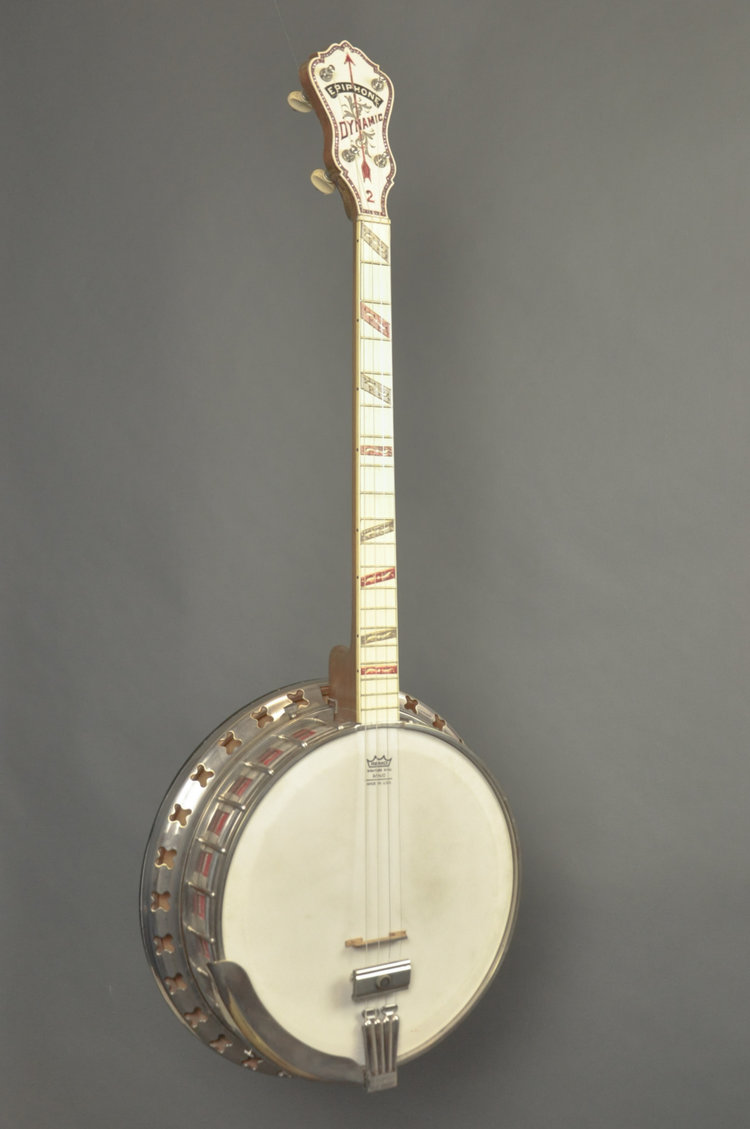
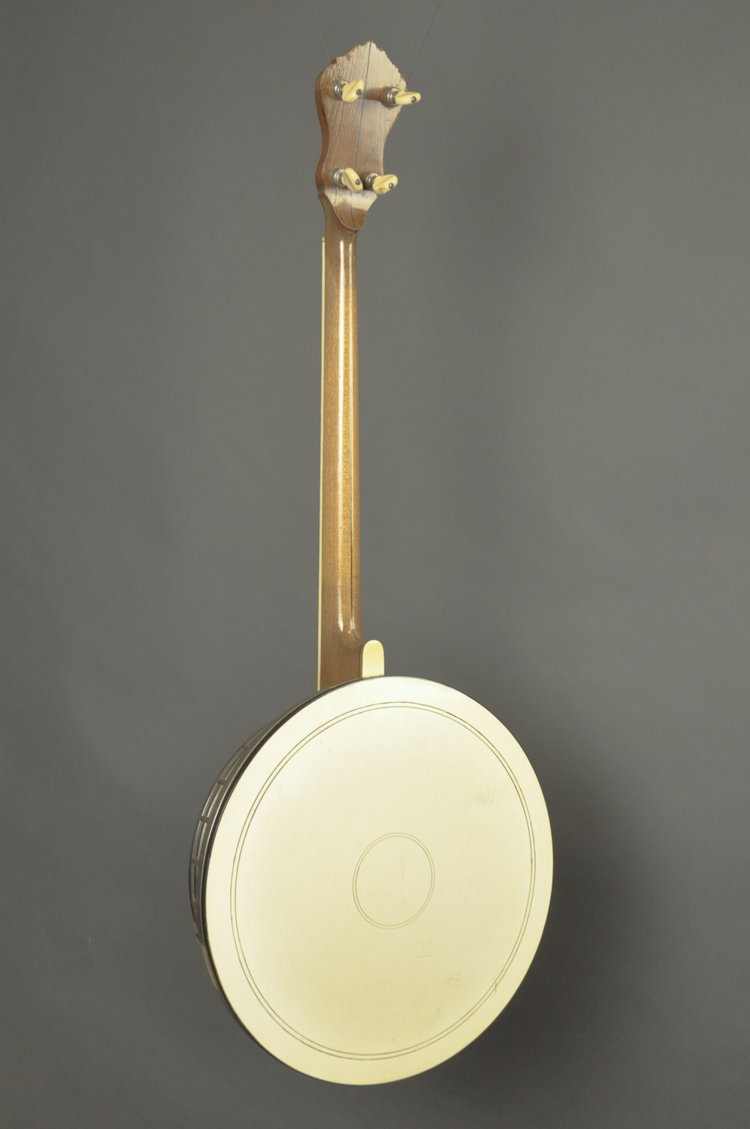
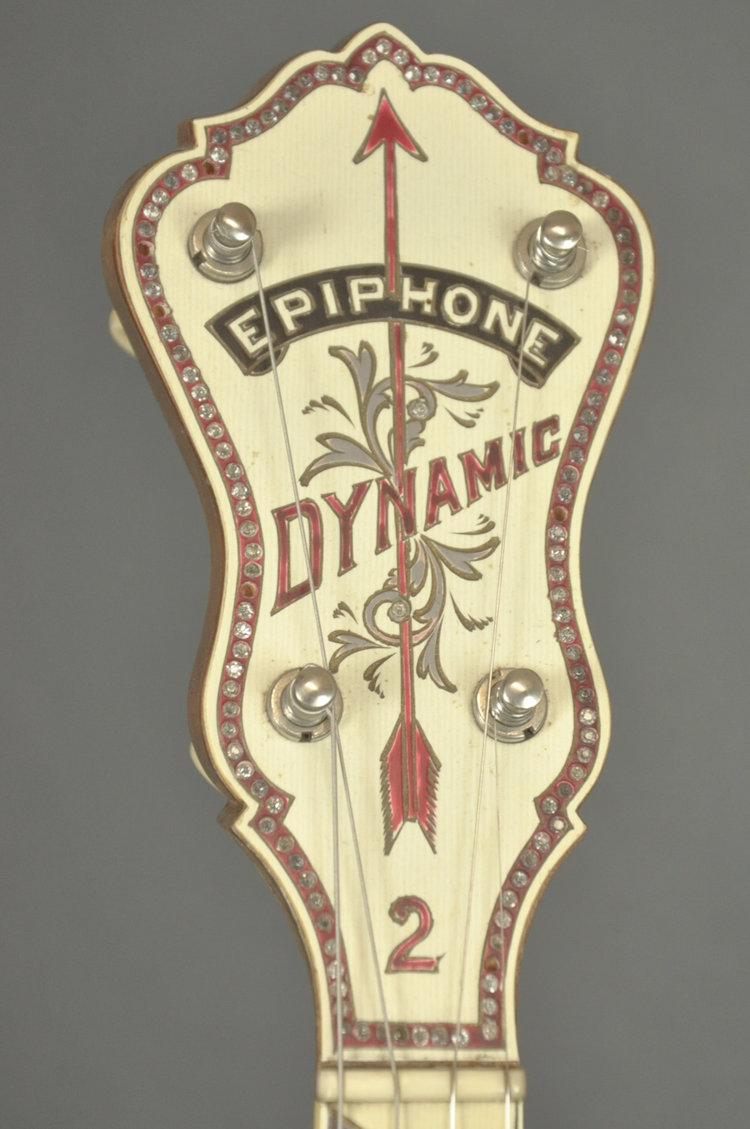
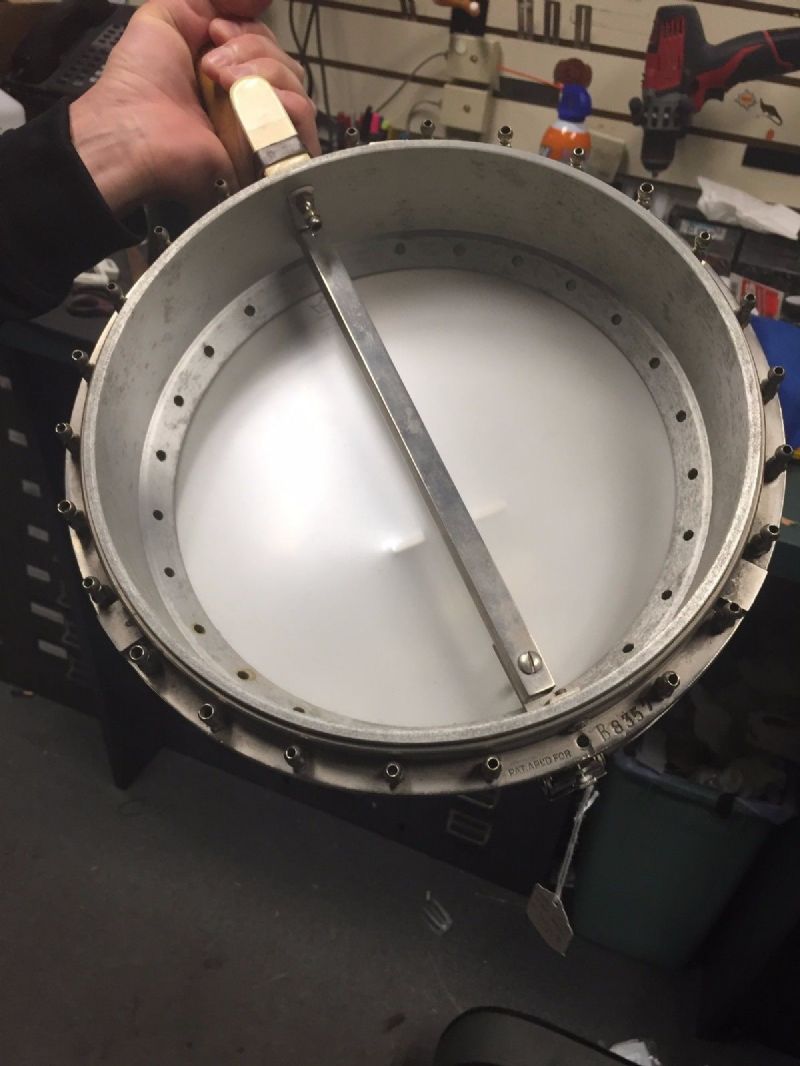
I've never seen anything like this Epi. The headstock says "Dynamic 2" and the rim appears to be made of aluminum. It's constructed very differently from the Recording series, and I've never seen this model documented in catalogs or in books. The serial appears to date to the early 1930s. Has anyone seen one of these before? Any info at all would be appreciated.
G Edward Porgie - Posted - 09/15/2017: 18:01:33
I can't supply any information, but I will say that that's a very unusual Epiphone and I'd like to hear what it sounds like.
kyleb - Posted - 09/16/2017: 04:35:49
I have to say I doubt the aluminum pot is orginal.
seems like that neck was a 1930s product and aluminum wasn't widely used until after world war 2. The processes that make modern cheaper aluminum to allow these type of pots be made were invented in the 30s and the first use was in hydro electric plants, so unless this is late 50s banjo which I doubt , or epiphone was the most innovative banjo and manufacturing company in the 30s I'd say that pot is probably a replacement but i don't know enough to be sure.
OldFrets - Posted - 09/16/2017: 05:26:19
Affordable aluminum was first developed in the late 1880s, and aluminum rims were around in the 1920s (exhibit A). There were several aluminum instrument manufacturers in the 1890s; the metal was regarded as something of a "wonder material" at the time.
Edited by - OldFrets on 09/16/2017 05:27:21
saulsmanb - Posted - 09/16/2017: 08:58:12
Noah
While I can't add any useful information about your banjo, I would like to say that I simply love the peghead design (even the rhinestones which I usually dislike.)
All the best.
Brian Saulsman
OldFrets - Posted - 09/16/2017: 14:18:30
Yeah, I'm not usually a fan of rhinestones either, but these are a bit more tasteful than, say, how Bacon or Stromberg used them. Interestingly, that pattern was previously used on the top-end Emperor model, but this banjo appears to be more of a mid-priced creation.

G Edward Porgie - Posted - 09/16/2017: 19:23:43
Looking again at the photos, I'd have to disagree with Kyle's doubts that the pot is not original. Not only was aluminum in use rather widely in the 1930's (Auto engine parts, including cylinder heads and blocks; even aluminum body work for some cars) but the pot of this banjo in many ways shows Epiphone design characteristics, most notably the arch top.
Epiphone may have been scrambling to find a cheaper means of producing a quality banjo by the early thirties, as there was a major depression and the market was changing due to the inroads of guitars into dance orchestras. A single casting with an integral tone ring, even of a fairly expensive metal, would have certainly been less costly than a complicated wood laminating process and the lathe turnings needed for the usual banjo rim/tone ring set-up.
This one looks to me like an attempt at a professional grade product (it is rather fancy for a budget instrument) but made to be priced a bit lower.
Because there seems to be no catalog references it may even be possible that this was a rejected prototype model which somehow escaped the factory.
OldFrets - Posted - 09/17/2017: 04:32:01
quote:
Originally posted by G Edward Porgie
Looking again at the photos, I'd have to disagree with Kyle's doubts that the pot is not original. Not only was aluminum in use rather widely in the 1930's (Auto engine parts, including cylinder heads and blocks; even aluminum body work for some cars) but the pot of this banjo in many ways shows Epiphone design characteristics, most notably the arch top.
Epiphone may have been scrambling to find a cheaper means of producing a quality banjo by the early thirties, as there was a major depression and the market was changing due to the inroads of guitars into dance orchestras. A single casting with an integral tone ring, even of a fairly expensive metal, would have certainly been less costly than a complicated wood laminating process and the lathe turnings needed for the usual banjo rim/tone ring set-up.
This one looks to me like an attempt at a professional grade product (it is rather fancy for a budget instrument) but made to be priced a bit lower.
Because there seems to be no catalog references it may even be possible that this was a rejected prototype model which somehow escaped the factory.
I took these same pics to a vintage instrument expert yesterday, and he echoed your thoughts almost word for word - and I have to agree with both of you.
The "2" on the headstock reminds me of the first Epiphone guitars (1928-31), which were built in two series and numbered 0 to 4 in order of increasing price. I think Epiphone was intending to revive their banjo sales by introducing a whole series of Dynamic models, and for whatever reason, it never got past the prototype stage. Maybe they were even meant to replace the Recording series. I find it interesting that the flange design looks kinda like a Bacon ripoff, and the slanted fret markers recall the Vega Moderne; they must have been sizing up the competition to see what worked.
I'll have the banjo in hand later this week and will do a sound comparision with my Recording Concert.
beezaboy - Posted - 09/19/2017: 03:14:21
Short story. Several years ago I was looking to document the Gretsch buyout of The Bacon Banjo Co. I got a hint that there might be something about it in the Metronome magazine. WorldCat reported that South Carolina Univ had a lot of Metronome magazines on microfilm. So I went to Columbia and the university library and searched many Metronome issues and found an article from David Day reporting the Gretsch buyout (1940). Voila! While searching I noticed that Epiphone regularly advertised in the Metronome. The launch of the Epiphone Dynamic banjo might be hidden in one of the late 20's early 30's issues of the Metronome magazine.
OldFrets - Posted - 09/22/2017: 16:30:38
It's here!
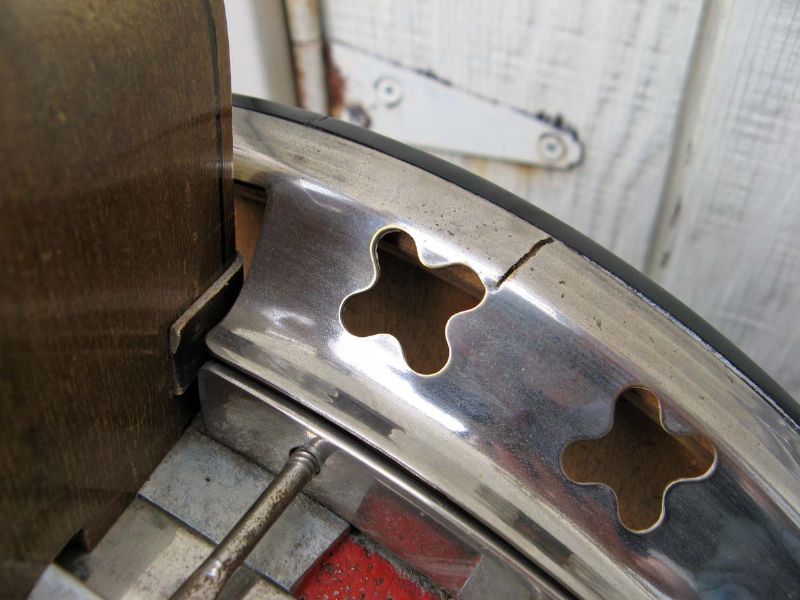
I've looked it over and haven't found anything suspicious. It's in great shape apart from a crack in the flange that may be as old as the banjo. The rim and tone ring appear to be one piece; they were cast and then machined smooth, but there are traces of the casting texture visible from the outside in the red-painted squares. The playability is excellent, though the frets are getting a bit low.
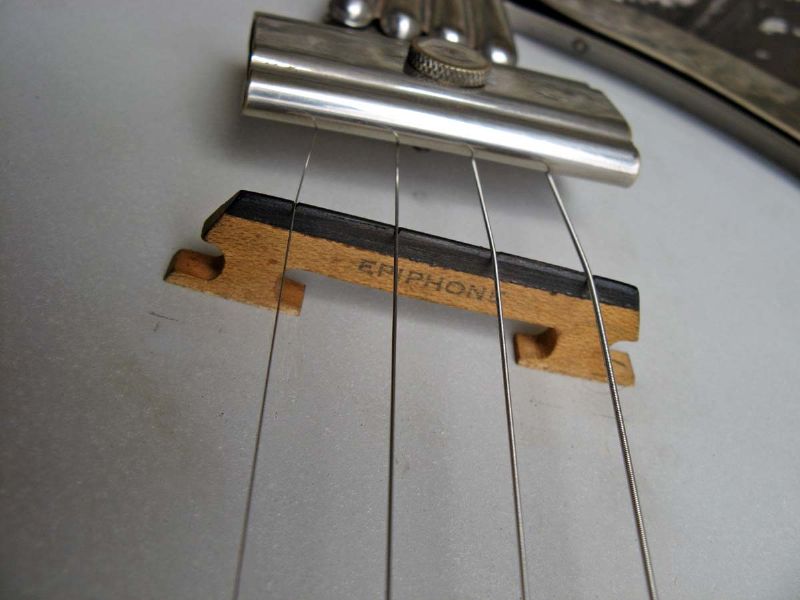
The sound is quite different from my Recording Concert. The Dynamic is about as loud, but considerably brighter. It also has a lot of natural reverb even with the mute attached (normally I leave those off, but on this banjo it's critical to stop unwanted ringing). I recorded a clip of both banjos, first the Concert and then the Dynamic. It sounds like the Dynamic was much further from the mic, but in fact they were the same distance. They do have different bridges and heads, so it's not the most scientific comparison, but I think the brighter banjo actually has the warmer-sounding bridge and head.
If I ever have the frets replaced, I'll probably have a fiberskyn head put on at the same time.
G Edward Porgie - Posted - 09/22/2017: 16:39:26
I would have expected a banjo with an aluminum rim to be brighter than one with a wooden rim.
Still a nice sound.
Terms of Use | Privacy Policy | Privacy Consent (EU/GDPR Only)
Copyright 2026 Banjo Hangout. All Rights Reserved.