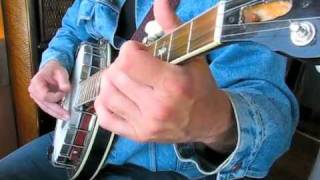
DVD-quality lessons (including tabs/sheet music) available for immediate viewing on any device.
Take your playing to the next level with the help of a local or online banjo teacher.
Weekly newsletter includes free lessons, favorite member content, banjo news and more.
Premier Sponsors


|
Please note this is an archived topic, so it is locked and unable to be replied to. You may, however, start a new topic and refer to this topic with a link: http://www.banjohangout.org/archive/329797
Neil Allen - Posted - 04/12/2017: 23:37:12
I've decided to branch out from clawhammer a little and am very interested in learning two-finger style, to diversify my repertoire.
Having watched Chip Arnold's videos (excellent resource, thanks Chip!) and read contributions from other accomplished players on the hangout, I have experimented with both thumb-lead and index-lead styles. The conclusion I seem to have reached (perhaps wrongly) is that the distinction between these two is artificial and that, if you are playing a style with melody notes mixed in as part of rolls, which I like to do, then the distinction between thumb lead and index lead becomes meaningless. So I seem to have wound up with a combined style where my thumb mostly plays the fifth, fourth and third strings, my index mostly plays the second and first strings but my thumb and index will range over all strings as required (except the fifth string for the index). This seems to work pretty well at slow speeds, which is all I am capable of doing for now, but I have a feeling that the lack of a disciplined index/thumb/index/thumb/etc framework (as recommended by Chip in his video for pure index lead) might cause problems when coming up to speed.
So my question is this: how important is it to constantly alternate between the index and thumb instead of just using whichever digit is nearest the string that you want to hit?
Don Huber - Posted - 04/12/2017: 23:44:33
My term for what you describe, as it pertains to my playing, I define as "mixed picking". I don't play at the level of someone like Chip, but for me it's viable style and adds some nice variety and texture to my playing. I think.
Edited by - Don Huber on 04/12/2017 23:47:39
chip arnold - Posted - 04/13/2017: 06:00:41
Lots of pickers switch between T and I lead. The problem you run into is that at speed, you won't be able to pick two quick notes in a row this the same digit. So in order to switch leads in a stream of quick notes, you'll need to take a rest, a left hand pluck, slide, hammer or some other device, in order to fill the 1/8 note gap caused by changing leads. Are Rosenbaum talks about this in his first book. The tab and instructions for Pete Steel's Coal Creek March are an example. When Pete switched from T to I lead in the chorded part of that tune, he dragged his thumb over two strings for two consecutive notes, so that he'd land on his index lead.
Neil Allen - Posted - 04/13/2017: 06:13:30
Thanks Chip, that's what I was running into when trying to speed up. I have been doing "crossovers" as explained in your video to overcome the timing problem and have no problem doing this. I guess what I am really driving at is this: is it worth trying to discipline myself from the outset to alternate finger/thumb or shouldn't I worry about this unless it becomes a problem at some point, in which case I would just do a crossover?
janolov - Posted - 04/13/2017: 08:59:05
Two-finger playing has no restrictions, only possibilities.
I think that in "traditional" old time music there were several players that were either thumb lead players or index lead players:
I think some of these real old-timers learned one style from the beginning and continued with that style.Howver, several players were multi-style players but they didn't change style within a tune, between the tunes. For example Roscoe Holcomb played frailing/clawhammer (or whatever he called it) on Hook and Line and a kind of up/down picking on Little Birdie (both tunes are played on the same video). Also Morgan Sexton played Little Birdie in the same up-picking style even if he otherwise mostly played thumb lead.
Some more modern players like Nick Hornbuckle plays a true mixed two-finger style where both index and thumb plays on-beat melody notes: listen to Lost Girl and Sail Away Ladies.
So concentrate on the possibilities of two finger playing and develop your own style and don't bother about any rules.
Neil Allen - Posted - 04/13/2017: 09:07:30
Thanks Jan. Yes, Nick Hornbuckle's is really the style that attracts me the most, but without the use of picks.
chip arnold - Posted - 04/13/2017: 09:31:19
Nick has music available as well as tab. He's a really good guy and a great player. I think being able to swap leads is a good thing, which adds to the sound and makes some notes easier. There are a lot of tricks to make the transition smooth. Keep it up :-)
Nick Hornbuckle - Posted - 04/13/2017: 15:58:57
Hi Neil....two finger is an incredibly versatile way of picking, as evidenced by the great players mentioned by Jan and by the lyrical playing of the wonderful Chip Arnold. I came to it from a three finger, Scruggs style background and one of the most important features to me is that 'Earl never done it that way'...if you get my drift!
I play in a bluegrass band so am always using picks in that context but for some tunes I prefer the complexity of tone I can get from not using picks....it's a whole different thing! I'm attaching a video I made several years ago of my version of 'Sally Goodin'. Let me know if I can help, Nick
Neil Allen - Posted - 04/13/2017: 21:44:32
Thanks Nick. It was actually your playing, particularly your outstanding version of Cold Frosty Morning, that inspired me to start working on two-finger style in the first place!
Edited by - Neil Allen on 04/13/2017 21:45:37
KHO - Posted - 04/14/2017: 19:54:24
Nick thanks for sharing your 2 finger playing with us.....do you have any cds or lesson books that actually covers how to play 2 finger bluegrass with some of your licks and rolls and that sort of thing?
Neil Allen - Posted - 04/15/2017: 09:03:14
quote:
Originally posted by KHO
Nick thanks for sharing your 2 finger playing with us.....do you have any cds or lesson books that actually covers how to play 2 finger bluegrass with some of your licks and rolls and that sort of thing?
Nick does have tab available via his website, but personally I don't like learning from tab and find it of limited use. However, I'd recommend just a close study of his videos, here and and on YouTube. They generally give the tuning and the camera tends to home in on the picking, which is very instructional. If you click "settings" you can slow it right down and see exactly what he is doing.
The way I have been transposing songs from clawhammer to two-finger style is just to pick out the basic melody, then fill in the gaps with appropriate rolls that fit in with the melody notes, in the same way that drones or bum-ditty might be used in clawhammer. I don't know whether this is what Nick does but it seems to work fine so far :-)
Nick Hornbuckle - Posted - 04/16/2017: 12:30:56
Hi K Ho and Neil,
As far as the mechanics of what I'm doing, for the more Bluegrass-y stuff I substitute TTI for TIM, and IIT for MIT. Since there is an upper limit to this speed wise I've found that I can 'suggest' notes with hammer-on's and pull-offs and that seems to work reasonably well. I've also discovered some interesting rhythm back-up techniques that sound good, to me, and are relatively easy to do.
When I'm arranging fiddle tunes, I try to play what the fiddle plays while playing to the strengths of the banjo tone and timbre. I don't really consider myself a thumb or index lead player...more whatever works at the moment. In addition, I really like the differences in tone I can get from getting notes using hammer-ons or pull-offs and the technique of hammering on/pulling off on a string that I haven't picked.
Without sounding too mercenary, I do teach via Skype, etc. and can go into more depth there. I have been thinking about producing a DVD that details my approach but I'm not sure of the interest as my approach is fairly idiosyncratic. Thanks, Nick
Neil Allen - Posted - 04/16/2017: 16:03:56
Thanks Nick,
It's certainly an approach I wish I'd discovered earlier. I have long struggled to get good tone with clawhammer (although I am well aware that very many people do get good tone with clawhammer). I hate having long fingernails and even when I have tried growing one long enough, it is just not tough enough to ring out clearly. So I have been using various picks, which do work, although I have never been entirely happy with the tone. Changing playing style in this way has been something of a revelation for me due to the much richer tone that I get from all three of my banjos.
banjo bill-e - Posted - 04/16/2017: 16:47:47
Neil I am another who was relieved by the ease of getting a nice tone up-picking. I really enjoy playing Two Finger, but I also still hang with clawhammer even though desired tone still eludes me because I'm addicted to that unique rhythmic approach to music making. I learn all tunes both ways and keep going back and forth as to which version I like best. I think (my) Two Finger sounds better but clawhammer is more fun to play.
mbuk06 - Posted - 04/17/2017: 03:20:41
Interesting and informative thread Neil and I just want to chime in and echo what Bill said above. Also to say that from a listener POV I think your clawhammer playing does have a really nice tone. Not that I'm suggesting that as a reason not to learn to up-pick too.
If I was to describe the plus of being able to pick both up and down-picking styles (is that ambipixtrous?  ) it is the breadth of expression this opens up.
There are some wonderful up-picking banjo players here on the Hangout. Seek them out. Chip and Nick are among them and you will learn a lot if you pay attention to their music-making. And explore and try things out for yourself. Up-picking techniques are incredibly versatile and building idiosyncracy that sounds good is no bad thing. I think that's adding stitches to the rich tapestry and is part of the fun.
Edited by - mbuk06 on 04/17/2017 03:34:17
Neil Allen - Posted - 04/28/2017: 15:52:13
quote:
Originally posted by Nick Hornbuckle
Hi Neil....two finger is an incredibly versatile way of picking, as evidenced by the great players mentioned by Jan and by the lyrical playing of the wonderful Chip Arnold. I came to it from a three finger, Scruggs style background and one of the most important features to me is that 'Earl never done it that way'...if you get my drift!
I play in a bluegrass band so am always using picks in that context but for some tunes I prefer the complexity of tone I can get from not using picks....it's a whole different thing! I'm attaching a video I made several years ago of my version of 'Sally Goodin'. Let me know if I can help, Nick
Nick, that's a great video. I'd be grateful if you'd be kind enough to briefly describe the pros and cons of the mixed two-finger style as opposed to Scruggs style and why you have chosen this style? I'm assuming that it must be more versatile and more suited to playing melodic instrumental pieces rather than fast breaks to accompany other instruments and that Scruggs gives you the speed and off kilter rhythm patterns, while the mixed two-finger style is perhaps more suitable for a wider range of musical styles and a more "old-timey" feel. Am I right in thinking this and are there any other pros and cons?
Thanks,
Neil
Nick Hornbuckle - Posted - 04/29/2017: 17:18:51
Hi Neil.
Thanks for your kind words. As far as the two finger style, it pretty much chose me! I started out playing three finger when I was twelve and continued that way for many years. Around 1999 I started to notice that my right hand middle finger was giving me problems. It still worked fine but it felt 'funny'. After a less than satisfactory experience with the medical establishment, and years of frustration, I realized that I had to either quit playing or figure out a way to play that wouldn't use the middle finger.
As it happens, one day while playing along with Foggy Mountain Banjo, Fireball Mail to be precise, I tried to play a three finger forward roll (TIM) with thumb and index...TTI. It came to me instantly and I found I could play a three finger roll better with two fingers than three. It took several months to 'come out of the closet' as a two finger picker, but in the end I'm glad it worked out the way it has. I've been able to develop and refine my style, instead of copying Earl Scruggs style and when I play now everything is just easier...easy is good!
As far as playing up tempo Bluegrass I'm attaching a video of the band I play in, John Reischman and the Jaybirds, backing up a friend of ours, Nell Robinson. As you can see from the video I may not play as many notes as most three finger players but I think it sounds ok...despite using 33.3% less fingers!
Edited by - Nick Hornbuckle on 04/29/2017 17:26:58
KHO - Posted - 04/30/2017: 06:31:13
Hey Nick... i had asked earlier in this post about your rolls and licks and i got an answer from a member that is off base from what i was trying to ask and you just touched on it in your last post......im interested in your advice and tips on how you make them bluegrass rolls with 2 fingers and get that b.g. drive and what are some good 2 finger licks that fit in with b.g. style tunes....it appears that you are TTI for the forward roll so i bet that takes a lot of practice to get the thumb to take up the slack to keep the roll even and have drive.... .BTW man i love your playing style and thanks for sharing!
Nick Hornbuckle - Posted - 05/01/2017: 17:10:39
Thanks for you kind words K Ho! As I started out playing three finger Scruggs style my basic vocabulary is composed of variations on the hand full of rolls three finger players use. The forward, TIM, becomes TTI; backward, MIT, becomes IIT; forward/reverse, TIMTMITM, becomes TTITIITI; and the alternating, TITM, is TITI. There is definitely an upper speed limit on these steady 1/8 note rolls, and on a good day I can push 150 BPM.
However, my favorite era of Earl Scruggs' banjo playing was after he moved away from the unrelenting eight note patterns and I really appreciate his use of space in his music. I have found that a lot can be 'suggested' by the use of hammer-ons and pull-offs and as I will never be able to play conventional roll patterns at high speed I'm OK with leaving a little more room...strategically picking my notes rather than running on auto pilot.
I'm not trying to drum up business, but maybe an online lesson would fit the bill better than describing here? Thanks...
chip arnold - Posted - 05/02/2017: 05:38:03
Nick, it's amazing how you get those 1/8 note rolls with dragging your thumb or finger. Pete Steel did it in Creek March and Tom Sauber showed me how he did it with his index, but I could never get the hang of it! Staying on index lead my forward roll is ITI and backward is ITI. Forward/reverse is ITITITIT, with the T ending on the 5th string for each half of the roll. I seldom lead with my thumb, but if I do, I either leave a 1/8 space or use a left hand device to switch leads.
Anyway, I'm amazed at your ability to get two 1/8 notes in a row with the same digit! Your playing is just beautifully smooth.
Nick Hornbuckle - Posted - 05/02/2017: 10:44:49
Thanks Chip! I think it comes from all those years playing Scruggs' style. Earl often lead with his thumb and I guess that is lodged pretty deeply in my brain. I didn't know I could play two thumbs in a row until I tried it. In fact, the 'experts' actively discourage it so I guess I'm doing it wrong? 😉
RG - Posted - 05/02/2017: 12:37:07
Hahaha...shows what the "experts" know Nick! Always reminded about the drive and speed of two finger thumb lead by the playing of Jackie Phelps...
BobTheGambler - Posted - 05/02/2017: 14:50:46
Edit: orginally stated that Pegram was a two-finger picker. Remembered that he really was a three-finger player who used the old-time thumb lead pattern. I'll leave the recording up for posterity, as its worth listening too!
Edited by - BobTheGambler on 05/02/2017 15:02:43
gottasmilealot - Posted - 05/04/2017: 07:51:50
I see people playing different ways, but I like the use and sound of 2 drones with a melody note interspersed with hammer-ons, slides, and pull-offs, to produce a sound with a distinct beat in the background like in the John Henry recording above. What I don't care for is equally spaced notes that sound like 3 finger picking, just my personal choice.
Also, see Aaron's explanation at youtube.com/watch?v=T0Pv-RmNzKQ
gottasmilealot - Posted - 05/04/2017: 07:59:37
The picking on the "Last Old Shovel" video above is great too. An altogether different sound. So many styles, so little time.
bart_brush - Posted - 05/08/2017: 16:43:15
I would like to offer a different view to the idea that two-finger-thumb-lead and index-lead should be combined for greater versatility. I love all good picking, including that by musicians who combine the two. However, is increased versatility a prerequisite for better musical expression? Who is the "best" musician--Bela Fleck, Earl Scruggs or Roscoe Holcomb? Tommy Jarrell or Itzak Perlman? I'm not referring to musical virtuosity or influence, but to musical expression and communication. I think most of us would agree that they are all master musicians capable of profound musical expressions, regardless of the amount of technique, repertoire, influence or money they possess. They sound different because they use the basic elements of music in different ways to express themselves.
Those elements (with some banjo applications) are: melody (including slides, hammers, bends, and the extra notes in rolls); harmony (including the banjo tuning used); rhythm (continuous 8th notes, or spaces here and there?); tone color (picks? resonator? gut head?); dynamics (loudness, attack); form and repertoire (variations, words to songs). The choices a musician makes comprise his or her style, and different styles of music effect different people in different ways.
Thumb-lead, index-lead, and combined-lead are three different styles (at least). The basic rhythms and picking patterns are different, and the rhythmic and melodic possibilities are different. Not better or worse or more versatile, just different. If I make the choice to pluck melody notes only with my thumb, and only on the inside strings, that doesn't "limit" me, it forces me to use different fingerings and note sequences, and this results in a style that is different from index-lead and combined-lead. Specifically, in thumb-lead----
1. My 5th string drone will always be squarely on the upbeat (the "and" of 1-a-and-a, 2 a-and...), whereas in index-lead (and clawhammer), the 5th string sounds on the "a" that follows the "and". In combined-lead, the rhythm of the 5th string drone shifts.
2. My index finger will be sounding an additional drone on the 1st string, often twice each beat, and only rarely on the downbeat or the upbeat.
3. I must go up the neck on the 2nd and 3rd strings when the melody goes high, and this produces new sequences of notes for my four basic picking patterns (T-TI, T-pinch, TITI, and TI-I), plus new possibilities for hammers, pulls, slides and bends.
Styles and variety are often expanded by the limits we choose to put on ourselves, or are forced to accept. A few examples from beyond the banjo world: Mississippi John Hurt (2 fingers and thumb), Reverend Gary Davis (1 finger and thumb), Mance Lipscomb (1 finger and thumb, but no alternating bass with thumb). The film Schindler's List, filmed in black and white. Works from Picasso's Blue and Cubism periods. Poetry.....and the rhyme schemes of song lyrics!
Great thread, and thanks to Nick and Chip for the details about their picking patterns.
Neil Allen - Posted - 05/09/2017: 05:45:11
quote:
Originally posted by bart_brush
I would like to offer a different view to the idea that two-finger-thumb-lead and index-lead should be combined for greater versatility. I love all good picking, including that by musicians who combine the two. However, is increased versatility a prerequisite for better musical expression? Who is the "best" musician--Bela Fleck, Earl Scruggs or Roscoe Holcomb? Tommy Jarrell or Itzak Perlman? I'm not referring to musical virtuosity or influence, but to musical expression and communication. I think most of us would agree that they are all master musicians capable of profound musical expressions, regardless of the amount of technique, repertoire, influence or money they possess. They sound different because they use the basic elements of music in different ways to express themselves.
Those elements (with some banjo applications) are: melody (including slides, hammers, bends, and the extra notes in rolls); harmony (including the banjo tuning used); rhythm (continuous 8th notes, or spaces here and there?); tone color (picks? resonator? gut head?); dynamics (loudness, attack); form and repertoire (variations, words to songs). The choices a musician makes comprise his or her style, and different styles of music effect different people in different ways.
Thumb-lead, index-lead, and combined-lead are three different styles (at least). The basic rhythms and picking patterns are different, and the rhythmic and melodic possibilities are different. Not better or worse or more versatile, just different. If I make the choice to pluck melody notes only with my thumb, and only on the inside strings, that doesn't "limit" me, it forces me to use different fingerings and note sequences, and this results in a style that is different from index-lead and combined-lead. Specifically, in thumb-lead----
1. My 5th string drone will always be squarely on the upbeat (the "and" of 1-a-and-a, 2 a-and...), whereas in index-lead (and clawhammer), the 5th string sounds on the "a" that follows the "and". In combined-lead, the rhythm of the 5th string drone shifts.
2. My index finger will be sounding an additional drone on the 1st string, often twice each beat, and only rarely on the downbeat or the upbeat.
3. I must go up the neck on the 2nd and 3rd strings when the melody goes high, and this produces new sequences of notes for my four basic picking patterns (T-TI, T-pinch, TITI, and TI-I), plus new possibilities for hammers, pulls, slides and bends.
Styles and variety are often expanded by the limits we choose to put on ourselves, or are forced to accept. A few examples from beyond the banjo world: Mississippi John Hurt (2 fingers and thumb), Reverend Gary Davis (1 finger and thumb), Mance Lipscomb (1 finger and thumb, but no alternating bass with thumb). The film Schindler's List, filmed in black and white. Works from Picasso's Blue and Cubism periods. Poetry.....and the rhyme schemes of song lyrics!
Great thread, and thanks to Nick and Chip for the details about their picking patterns.
Very good point. The distinctive sounds and drive of some playing styles arise from the very fact that they do stick to a restrictive framework and I don't think this should be seen in any way as a criticism but rather as a discipline that leads to a certain sound.
Terms of Use | Privacy Policy | Privacy Consent (EU/GDPR Only)
Copyright 2026 Banjo Hangout. All Rights Reserved.