
DVD-quality lessons (including tabs/sheet music) available for immediate viewing on any device.
Take your playing to the next level with the help of a local or online banjo teacher.
Weekly newsletter includes free lessons, favorite member content, banjo news and more.
Premier Sponsors


|
Please note this is an archived topic, so it is locked and unable to be replied to. You may, however, start a new topic and refer to this topic with a link: http://www.banjohangout.org/archive/311158
frailin - Posted - 11/11/2015: 11:35:21
There I was, having a friendly conversation with one of my favorite Old-time players, when low-and-behold, a Clifford Essex suddenly appears.

Now, North American banjos I'm pretty familiar with. But this was something new to me.
The Old-time great (Rafe Stefanini) began to play. As most of us know, he's a very proficient player of both 2 and 3-finger styles as well as clawhammer. And this banjo... well, as I've heard you folks from over the pond say for years, this banjo was amazing! Turns out, the banjo was "available." So, not being one to miss opportunity, I came home with a souvenir. Now... what the heck did I buy?! 
I'm hoping some of you UK aficionados (and the good folks down under) can fill me in a bit on this particular Clifford Essex (ie. year made, level of player that might own one, who played 'em, where and what kind of music... and, of course, value).
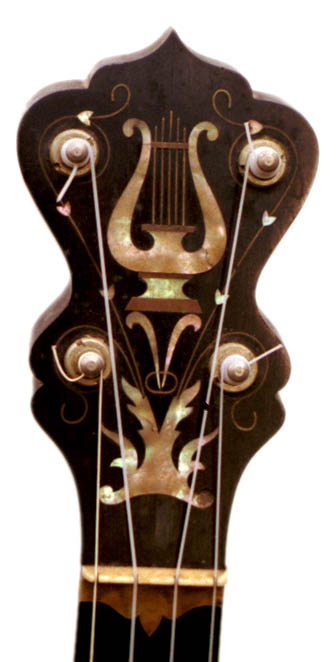
So here's some pics.


The spunover pot is close to 13" and dang near 3" deep!!


Sorry the next one is upside down. Photobucket ain't cooperating.

This one is also upside down. Think the serial # is 236. When was this made?


Beyond its interesting voice, this banjo has a great deal of chuztpah. Not exactly "refined", but certainly full of genuine character and verve!
Ok you Essex folks, what can you tell me about this banjo? And thanks in advance for the education!!
Frailin
hobogal - Posted - 11/11/2015: 12:29:03
I think you are pretty lucky, as I don't think many Professional models were made. I have a CE Special which has an 11" skin head - the spunover rim and deep pot give it a really deep sound. I love it. It has a slim, neat neck which is perfect for my little hands and is really easy to play. I have it strung with nylon strings and it is surprisingly loud - it fills the room! The Clifford Essex banjos are really sought after by Classic-style players. William J Ball played the Professional model - I'm pretty sure it had a wooden tone-ring: youtube.com/watch?v=boKvCRFrJpE I think Ian (thereallyniceman) owns one and can probably tell you more detailed info at: classic-banjo.ning.com
Also, the Clifford Essex Paragon tenor banjo is highly prized by Irish players.
Hope you enjoy your new banjo!
oldwoodchuckb - Posted - 11/11/2015: 13:51:06
I haven't seen an Essex since the early 1960s. At the time I played Classical Banjo which I actually thought was going to involve classical music (I was also studying classical guitar then) so I never heard what it sounded like frailed. The Seeger Strum was as close as I came to clawhammer.
I don't remember the one I saw as having as large or as deep a pot - but we are talking 50 years ago, I didn't own a banjo at the time, and I got to play it for all of 10 minutes. It was probably in the shop for a week or so. I don't remember what it was in for or what we did to it. I do remember I was impressed by the scallops on the tension hoop.
I've often wondered if that feature was found on all high end Essex Banjos or just one model, or just the ones built in the summer of... etc.
I have a 13 inch banjo, built circa 1892. I love the deeper tone. It is strung with nylon, and I did add geared tuners and a tailpiece (actually, over the years it has had several tailpieces).
Edited by - oldwoodchuckb on 11/11/2015 14:07:53
 J.B. Schall circa 1893 | 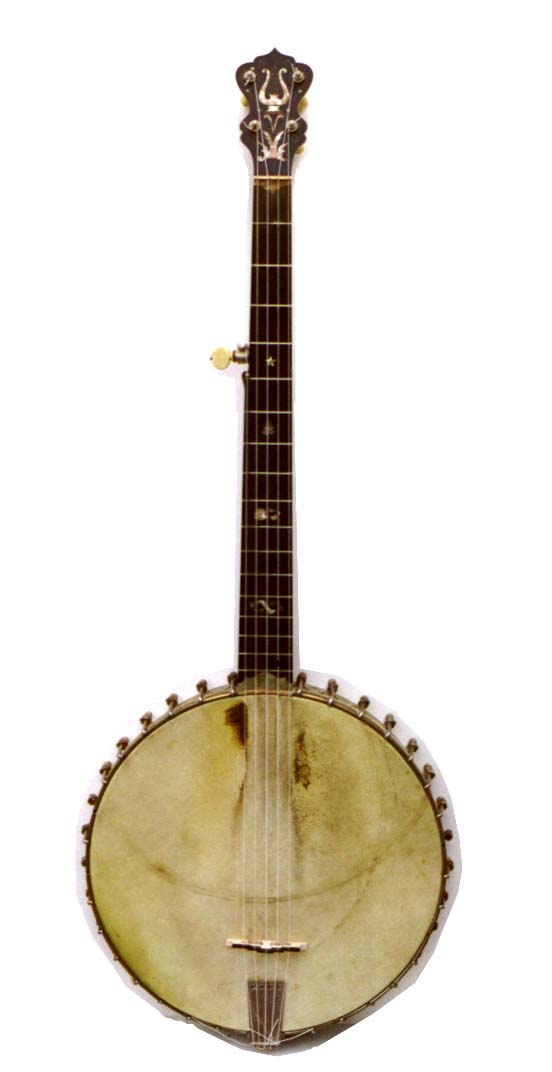 Jackie O |
CEParagon124 - Posted - 11/12/2015: 18:02:49
There is published info on the internet that would date your banjo from about 1900 to about 1919, but that data, as it applies to the Clifford Essex Paragon, has been called into question. The label, Clifford Essex Co / 15a Grafton St / Bond Street London was said to have been changed to Cliiford Essex and Son in 1919.
Data is apparently very subjective.
Here is a link to a Clifford Essex website, with good historical data that is published by a new resurgent Clifford Essex company that sells and services banjos, parts, accessories, etc.
cliffordessex.net/index.php?_a...p;docId=1.
Here is a Cliiford Essex collectors website, but it has not been well maintained, is not up to date and most of the various models do not have good illustrative photos.
cliffordessex.co.uk/pages/home.htm
The scalloped tension hoop was present on the high end banjos like the Paragon Artiste, Paragon Deluxe and Paragon and then down the line, but I don't know when they stopped being present, although I have seen one or two spun-over rims without the scalloped ring.
Possibly some of the photos at the second site above will come close to answering that question.
Charlie Noyes
Edited by - CEParagon124 on 11/12/2015 18:15:39
banjotrader - Posted - 11/15/2015: 05:36:32
As Charlie mentions the dating of these banjos using company address has been proven to be erroneous.
Re: banjohangout.org/topic/302651
With such a low SN, finding the year of the Professional type introduction would likely give you an extremely good estimate to year of manufacture .
Very nice banjo!
Joel Hooks - Posted - 11/15/2015: 06:49:05
Hi Craig, I don't think anyone has really has answered a major part of your questions.
I am no expert on British banjos by any means! But here is what I have gathered as I find the quality to be top notch and have a passing interest.
Motivation--- "Who played 'em, where and what kind of music?" These five string banjos (regular banjo) were pretty much exclusive to classic banjo players and popular music. Clifford Essex published a HUGE VOLUME of banjo solos (many were taken directly from American publications by US banjoists like Paul Eno and George Lansing). They continued to publish this music into the 1970s.
Right at the turn of the century our Vess L. Ossman traveled to England with a ton of his arrangements for banjo. He worked with Essex and they published a lot of them (if not all). This is important historically as many of the pieces were still in copyright in the US and had not been published for banjo. Additionally, (and more importantly to me) they show us how he played each piece as the fingerings for right and left hand are indicated.
The company catered to the British upper classes and sold very high quality well crafted banjos (like yours). The metal work always seems top notch.
For the most part they were gut or silk strung and played with bare fingers with thimble style coming in second. The exception to gut strings were that some of the British players (like Emile Grimshaw) started using a wire first string (perhaps because of the humidity? There was also a huge shortage of strings just before, during and after WW1-- they made sutures out of gut).
The popular sound at the time was very sharp and clear-- almost tinny and extremely loud. Your banjo with the right nylon strings and bridge would be much louder and clearly toned than it is now with wire and a "modern" bridge.
Players? Here is one...
youtube.com/watch?v=YIkGXKV4SFU
Here is William Ball playing a Joe Morley piece (Morley likely played them too).
youtube.com/watch?v=6qlKQbq72R0
And here he is again playing one of my favorite solos "The Banshee" by Grimshaw (composed by yet another player).
youtube.com/watch?v=O6Q_32s_8Ys
As far as I can tell the British did not fall into the "folk" banjo playing of the 1940s+ (Pete Seeger, etc) like the US did. Classic banjo remained consistent throughout the run eventually ending in the 1970s.
frailin - Posted - 11/15/2015: 07:03:57
OMG! This is so fun! Thank you folks for helping me appreciate another aspect of this instrument that I didn't know. This is fascinating stuff! I've especially enjoyed the videos.
Is there more? :).
zac987 - Posted - 11/15/2015: 14:01:15
It's fascinating that Tarrant Bailey Junior mostly uses his thumb and index fingers, with the middle being used mostly for plucking full chords. I do that for the most part while playing classic tunes, as my middle finger doesn't want to cooperate most of the time.
trapdoor2 - Posted - 11/15/2015: 18:26:04
Here's me and mine... Dated to 1934 via Eli Kaufman. My current 'go to' classic player.
CEParagon124 - Posted - 11/18/2015: 08:05:05
Very nice Marc and good to now have a face to picture when reading your timely and informative posts.
Very nice porcelain collection!
Charlie Noyes
frailin - Posted - 11/18/2015: 09:42:12
Wow, Marc! WAaay cool post! So informative (and fun!). Thanks!
banjo bill-e - Posted - 11/18/2015: 09:53:06
Craig, congrats on acquiring a banjo, I was worried that you would have nothing to play! ; >
I would love to hear this one with the steel strings on it.
Maybe post a little ditty?
frailin - Posted - 11/18/2015: 10:38:58
I might do better than that, Bill. How'd you like to hear RAFE playing it? In fact, I think that's a great idea! I'm also now itching to put gut strings on it. But let me post Rafe's playing first.
banjo bill-e - Posted - 11/18/2015: 11:09:40
Rafe will do! I wanted to hear it with steel because with nylon/gut they all sound the same! (ducking!)
Love the photo you posted, he looks quite happy to be playing a bit of banjo for you.
Bill
frailin - Posted - 11/18/2015: 11:12:03
Here's a short excerpt from Rafe's "Conversation" for the Old-time Performer series. There's LOTS more music (banjo and fiddle), but this is a short snippet of him playing this classic old Essex.

Bill Rogers - Posted - 11/19/2015: 05:29:10
Great banjo; I used to have one that was "defretted". It's a 12 1/8" head, btw. 28" scale length. Preferred banjo of the great classic-style player William J. Ball (q.v.). and other British classic-style players. To hear what it was made to sound like, get some high-tension nylon guitar strings (or gut if you want). It's loud and clear and has no need of steel strings to be heard. Enjoy it; there's no other banjo quite like it.
Terms of Use | Privacy Policy | Privacy Consent (EU/GDPR Only)
Copyright 2026 Banjo Hangout. All Rights Reserved.


