DVD-quality lessons (including tabs/sheet music) available for immediate viewing on any device.
Take your playing to the next level with the help of a local or online banjo teacher.
Weekly newsletter includes free lessons, favorite member content, banjo news and more.
Premier Sponsors


|
Please note this is an archived topic, so it is locked and unable to be replied to. You may, however, start a new topic and refer to this topic with a link: http://www.banjohangout.org/archive/309875
rudy - Posted - 10/08/2015: 19:46:10
Hi all,

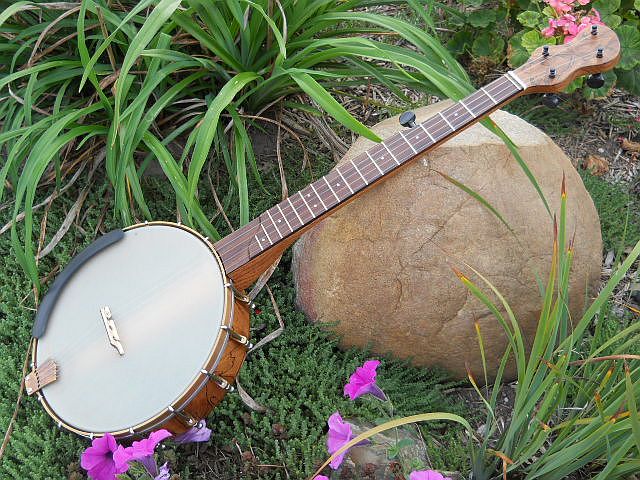
Here’s something a bit different for your viewing pleasure. I try and limit my “new banjo” forum postings to instruments that have something a bit different to show, and this one meets the criteria.


Features:
23” scale neck with 15 full / 2 partial
EVO frets over Ogee scoop
EVO zero fret
bone string spacer
set up to use steel or synthetic strings
Deco style raw brass adjustable down force tailpiece accepts loop, ball, or tied string ends
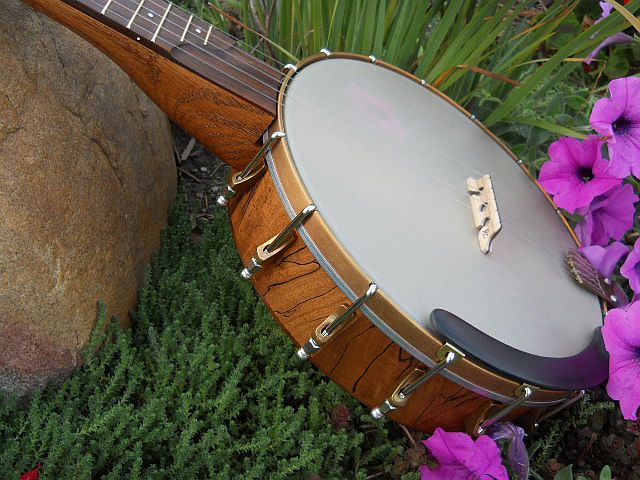
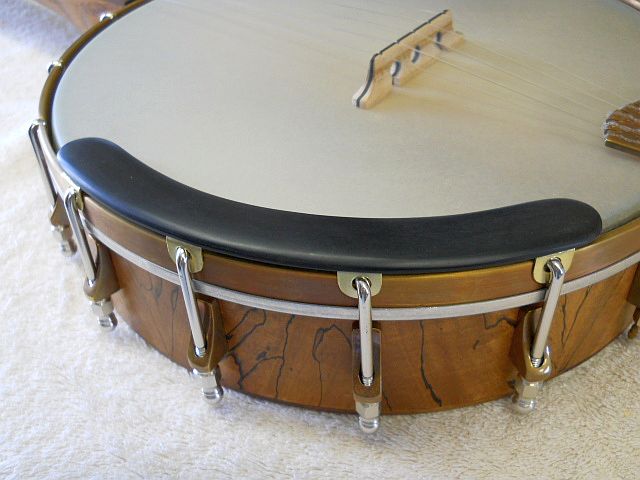
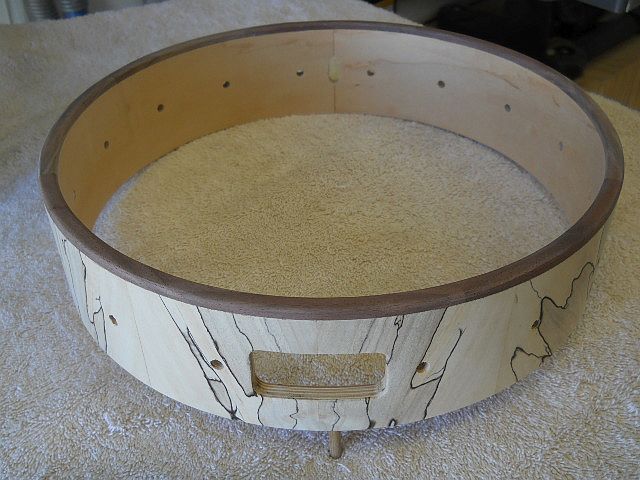
11” Spalted maple over Keller VSS maple multi-ply rim with walnut cap
1/4” rolled brass tone ring
Remo Renaissance high crown head
Patina finished raw brass tension band and shoes
16 Nickel plated steel round hooks with Nickel plated Vega-style nuts
All screws used are stainless steel
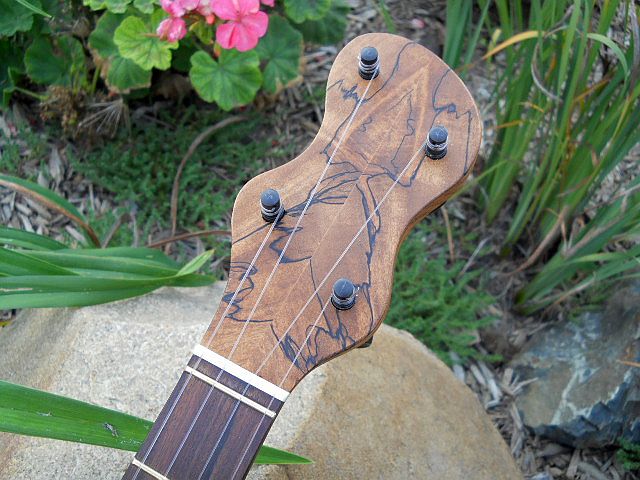
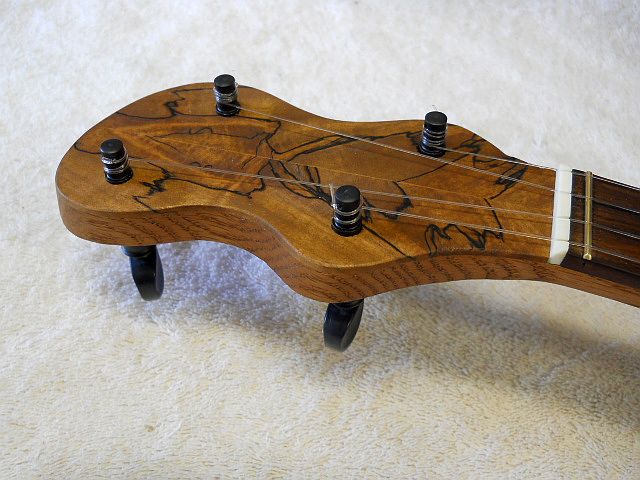
Spalted maple peg head overlay
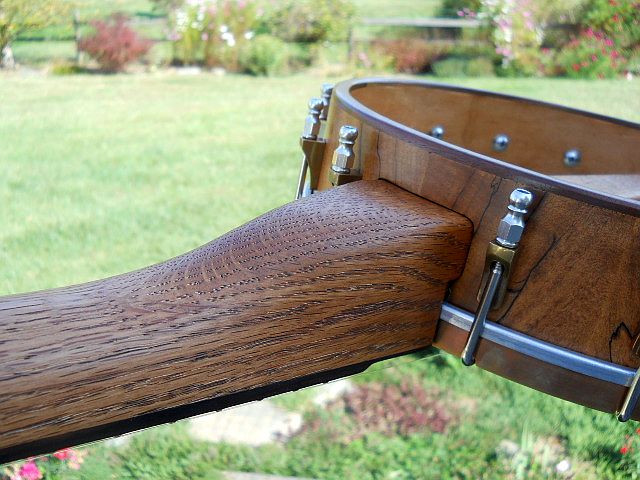
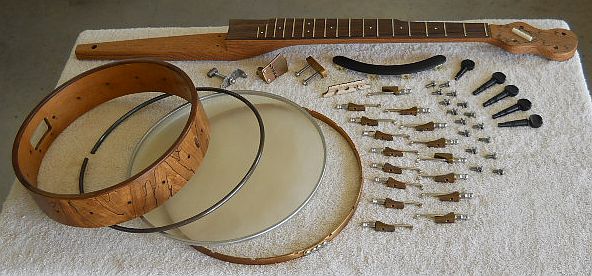
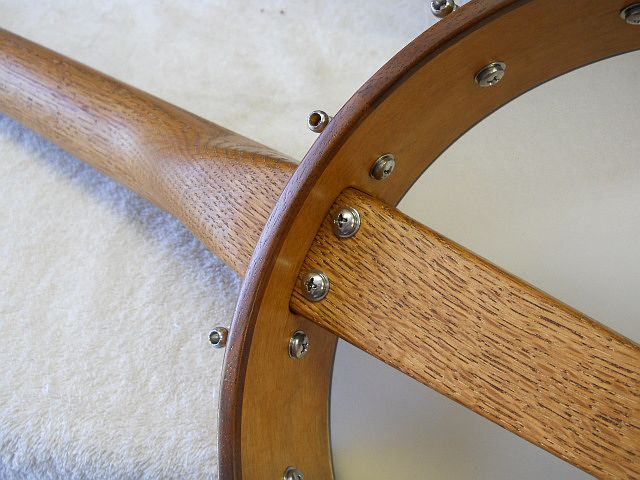
Oak neck with integral neck extension
3/8” 2024-T4 aluminum bar neck reinforcement, 18” length tapering from 3/8” to 5/8”
Neck extension extends through rim at neck heel and anchors at tailpiece end
Single end nut for easy string height adjustment under string tension
Neck extension anchors with barrel nut and allows 5/8” vertical adjustment range
Pau Ferro fret board with white ABS side and front position markers
Bluestem standard laminated bridge (maple-ebony-maple)
Garolite XX opaque black contoured armrest

If the bridge was modified to not have the ebony center you could take this one anywhere, as there’s no pearl or ebony otherwise used.

The through neck design has two screws extending into a brass block attached to the rim, but their addition is not necessary, but were installed for another purpose which I’ll post about later. That one you’ll have to wait on...

All of the wood components are stained in colonial maple, the rim finished with satin lacquer and the neck finished in heat-applied pure beeswax.

I’ll most likely add some sound clips later to compare straight fluorocarbon leader (what it’s shown with here), Nylgut Reds, and steel strings.  I have some other pressing shop stuff before I get those done, though.
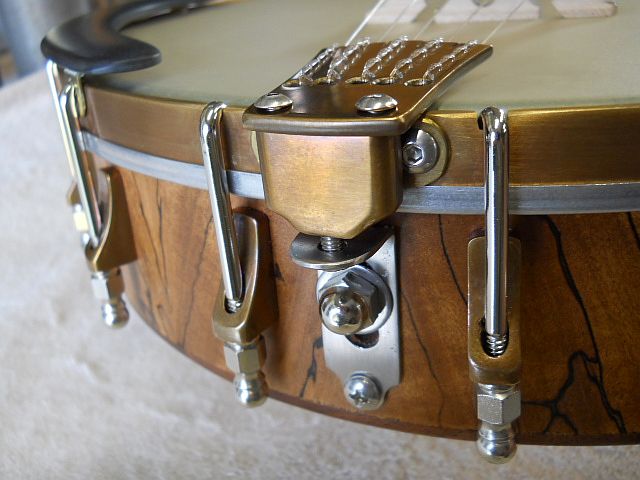
I love the ability to effortlessly adjust string height over the upper frets!
Edited by - rudy on 10/08/2015 19:51:34
 1 | 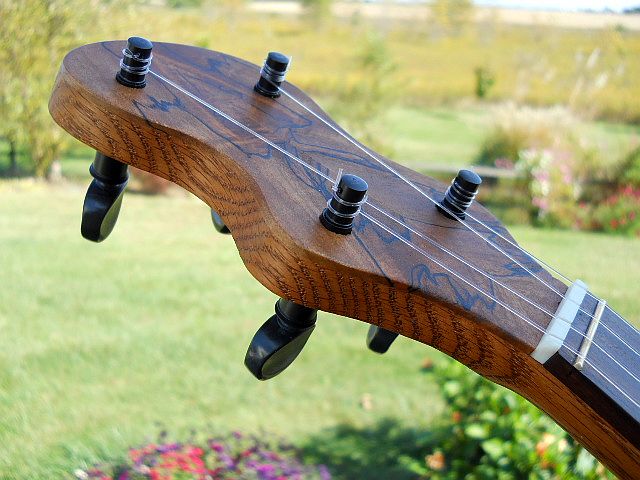 5 | 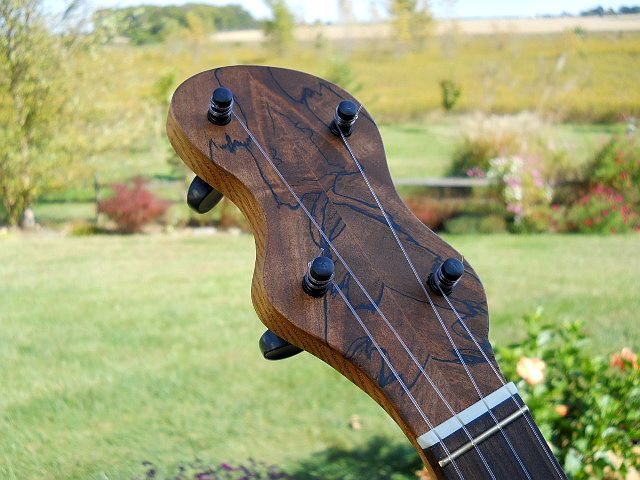 6 | 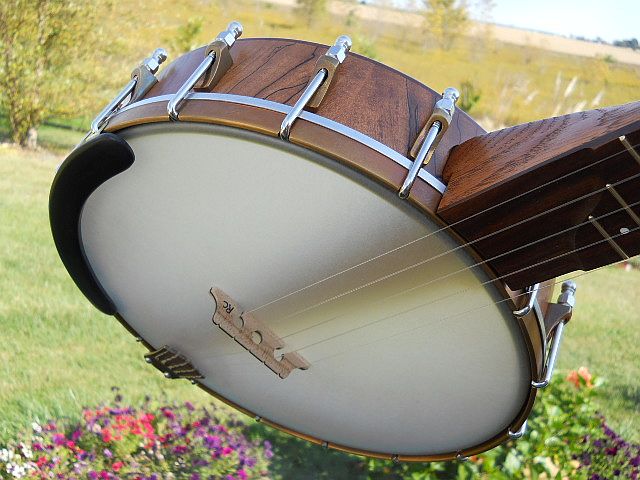 9 |
 10 | 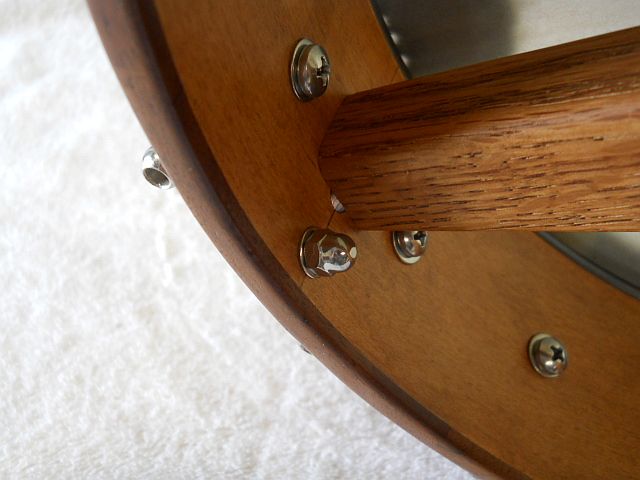 11 | 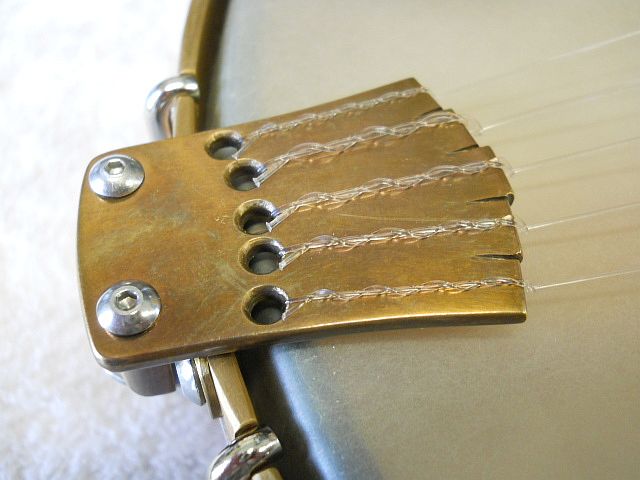 12 | 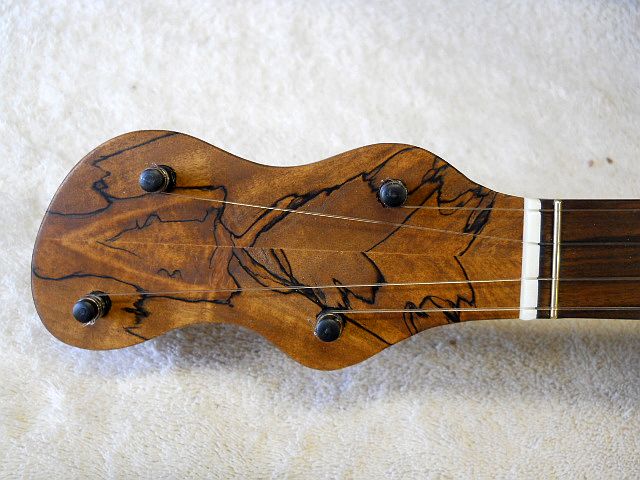 14 |
 15 | 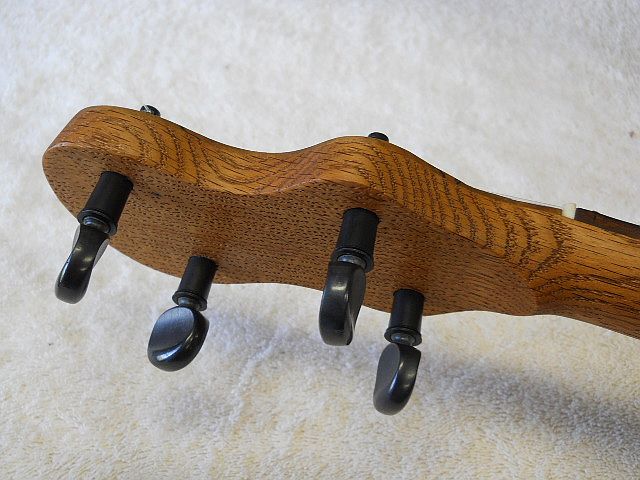 16 | 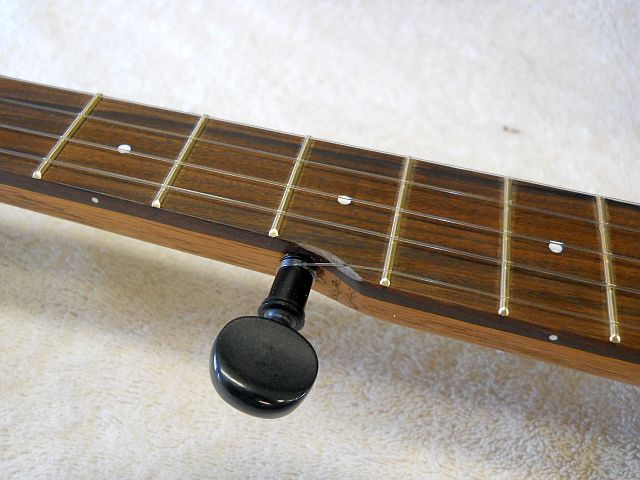 17 | 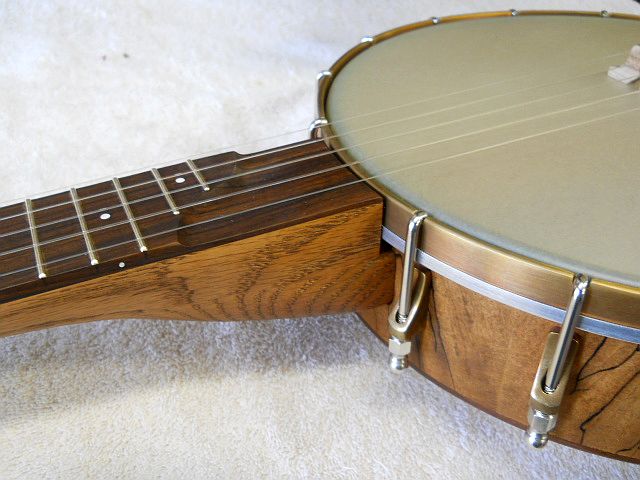 18 |
 19 | 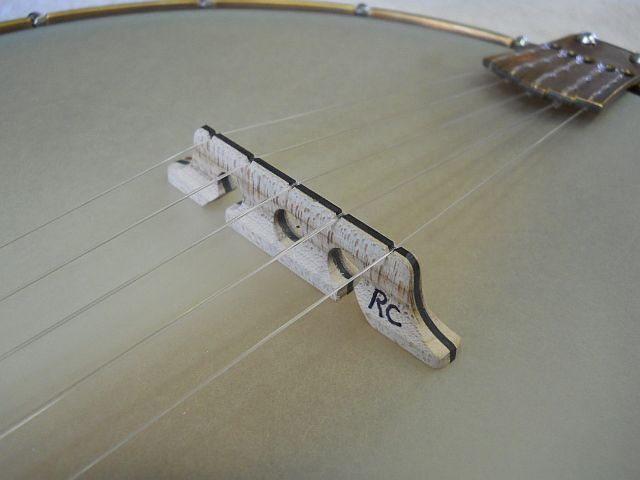 20 | 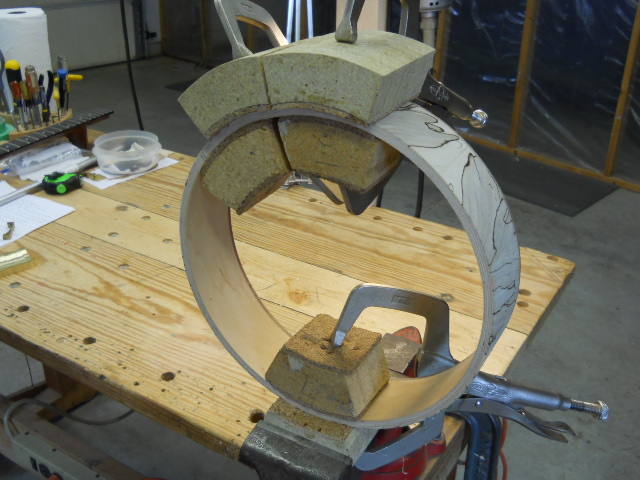 21 | 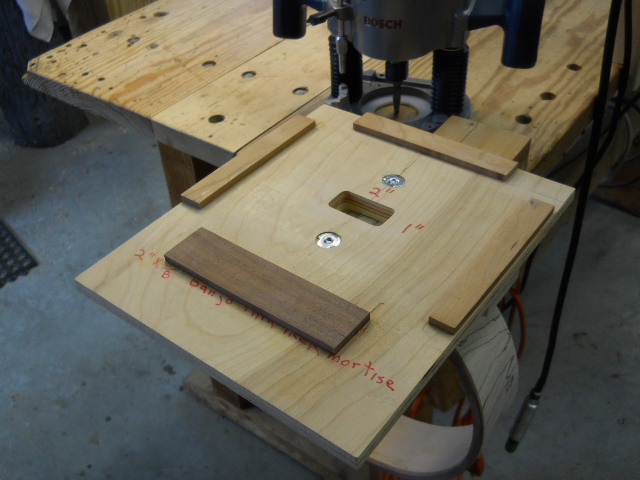 22 |
 23 | 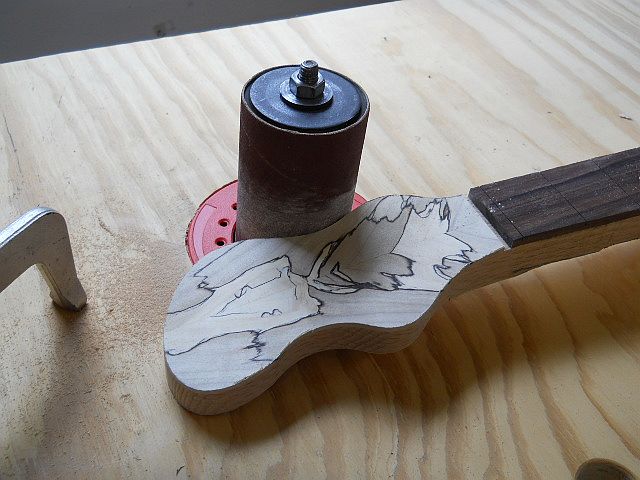 24 | 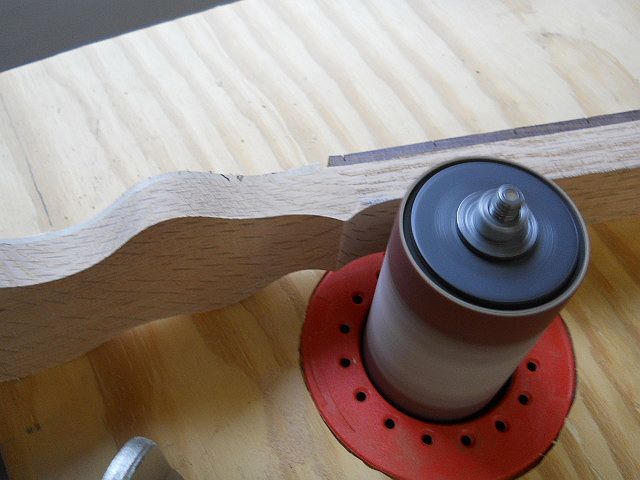 25 |
cbrianroll - Posted - 10/08/2015: 21:12:51
Been a while since I checked in.....once again Rudy's turned out a beautiful new banjo! Nice work rudy....keep em coming!
Quickstep192 - Posted - 10/08/2015: 22:50:49
Wow! I love the book matched headstock overlay. Totally awesome.
Lyndon Smith - Posted - 10/09/2015: 01:09:25
Very nice and very innovative. There's a few ideas for everyone on this...
Hawgfiddle65 - Posted - 10/09/2015: 01:18:08
Hi Rudy
Lovely! I love spalted beech.
Could you show us a photo of the underside of the rim routing jig .I'm not sure I can work out how you hold it in place.
Ta
Jim
BrentSims - Posted - 10/09/2015: 01:54:48
It is beautiful. I suspect it sounds even better than it looks.
pollywaffle - Posted - 10/09/2015: 03:42:22
Love the new shoe design. Longer so I assume less chance of digging in and marking the rim. What's the oak neck feel like. I have plenty of oak I could practice shaping necks with but assumed it wouldn't make a keeper, wrongly it appears.
rudy - Posted - 10/09/2015: 04:48:41
quote:
Originally posted by Quickstep192Wow! I love the book matched headstock overlay. Totally awesome.
Thanks, Quick.
The spalting lines are a bit tricky to get a good bookmatch as they rapidly change orientation within the wood. It's not too difficult as long as you aren't looking for a perfect mirrored design. I'm pleased with how the bookmatched spalting worked with the asymetric shape of the peg head.
rubicon - Posted - 10/09/2015: 05:00:44
Beautiful workmanship that's quite an attachment system ! I assume that much adjustment is possible because you don't have to adjust the heel to rim fit as on a conventional banjo heel ?
OldPappy - Posted - 10/09/2015: 05:08:08
Oak ( I prefer White Oak), or Hickory both make an excellent banjo neck. I think the density of the wood is important to tone.
rudy - Posted - 10/09/2015: 05:08:34
quote:
Originally posted by pollywaffleLove the new shoe design. Longer so I assume less chance of digging in and marking the rim. What's the oak neck feel like. I have plenty of oak I could practice shaping necks with but assumed it wouldn't make a keeper, wrongly it appears.
Not so much longer as wider. I use 3/8" brass bar stock so the footprint ends up being 3/8" by 1". Tiny shoes hurt my feet!
Oak makes a great neck wood; it's not my favorite to work with as it can be a bit splintery when it's worked. It's also a bit trickier to sand as the grain is more pronounced and the softer portions of the wood betwwen the harder grain lines will sand more easily. As long as you take care to prevent any unevenness it works very well. It takes the heat applied beeswax very nicely, and ends up with a really lovely "speed neck" feel.
rudy - Posted - 10/09/2015: 05:21:13
quote:
Originally posted by Hawgfiddle65Hi Rudy
Lovely! I love spalted beech.
Could you show us a photo of the underside of the rim routing jig .I'm not sure I can work out how you hold it in place.
Ta
Jim
I don't have a photo of the underside, but it's actually not complicated to explain.
1. There's a long board fastened to the bench with a single bolt so it overhangs the bench.
2. The top surface of that mounting board is slightly rounded so the inner diameter of the rim rests on it.
3. The rim is positioned on the mounting board and the routing jig is positioned over the rim with the hole aligned to the proper rim location.
The routing jig has a curved and cork padded caul on the bottom side surrounding the hole that is positioned against the rim's outer face.
4. Two pieces of all thread rod extend through matching holes in the mounting board into the tee nuts
5. Two wing nuts and flat washers sandwich the rim between the routing jig and mounting board.
rudy - Posted - 10/09/2015: 05:37:15
quote:
Originally posted by rubicon
Beautiful workmanship that's quite an attachment system ! I assume that much adjustment is possible because you don't have to adjust the heel to rim fit as on a conventional banjo heel ?
That's exactly it. It's actually a very simple system, and the through neck design also ensures the strings always center over the neck heel. It's a further adaptation of the original "Backstep" design I posted a while back, all of the design details are covered more thoroughly in that topic:
Another benefit of this design is that it is really robust without the heel connection point. You can apply a considerable amount of force on the rim at the heel area and the pitch stays solid. That's one of my quickie tests for how well a neck is mounted to a rim. No molly-coddling necessary on this one!
guitarman8491 - Posted - 10/09/2015: 06:01:51
Randy..every banjo you build only seems to get better! The spalted maple is very cool. The entire banjo is unique!
dpgetman - Posted - 10/09/2015: 06:40:37
Rudy,
I suspected this was the technique you were referring to in my build post! Really an elegant design and stunning as well. I always and especially appreciate the shop pics!
DPG
Helix - Posted - 10/09/2015: 06:51:14
What I like is that old ways are being preserved with new innovations that are not even visible.
It looks like you are not using any filler or glazing on the neck, I agree with that, probably for different reasons.
It has to sound good 25 years from now, what's next?
rudy - Posted - 10/09/2015: 06:54:22
quote:
Originally posted by dpgetmanRudy,
I suspected this was the technique you were referring to in my build post! Really an elegant design and stunning as well. I always and especially appreciate the shop pics!
DPG
Thanks, David. I appreciate all the kind comments.
I had to go check your topic to refresh my memory of what I said. The "new to me technique" was something MUCH simpler and less grandiose than the neck system shown here... Perhaps I'll get a chance to post it as a separate topic today.
Zachary Hoyt - Posted - 10/09/2015: 10:40:49
The design and range of adjustment are very impressive. I would like to try a through-neck design this winter. The spalted maple is really nice too. Thanks for posting this.
Zach
pollywaffle - Posted - 10/09/2015: 10:51:00
quote:
Originally posted by rudy
quote:
Originally posted by pollywaffleLove the new shoe design. Longer so I assume less chance of digging in and marking the rim. What's the oak neck feel like. I have plenty of oak I could practice shaping necks with but assumed it wouldn't make a keeper, wrongly it appears.
Not so much longer as wider. I use 3/8" brass bar stock so the footprint ends up being 3/8" by 1". Tiny shoes hurt my feet!
Oak makes a great neck wood; it's not my favorite to work with as it can be a bit splintery when it's worked. It's also a bit trickier to sand as the grain is more pronounced and the softer portions of the wood betwwen the harder grain lines will sand more easily. As long as you take care to prevent any unevenness it works very well. It takes the heat applied beeswax very nicely, and ends up with a really lovely "speed neck" feel.
OK, I left out "compared to mine". The shoes I make are 3/8" x 3/4". Didn't realize you used to make them thinner.
They must be different species of oak I have or maybe different grades or something because the oak I have that has wonderful figure is quite a bit softer than the boring looking stuff. Obviously I'd want to use the stuff with figure but always thought that it might be too soft for a neck design. I'll have a closer look in the morning. They came from different sources, as the boring stuff came from walls I've knocked down and the nicely figured stuff (that almost looks like Silky Oak) was found at a friend's work. It was used to separate slabs of lego style roofing and considered rubbish in his workplace.
rudy - Posted - 10/09/2015: 11:31:45
quote:
Originally posted by pollywaffle
quote:
Originally posted by rudy
quote:
Originally posted by pollywaffleLove the new shoe design. Longer so I assume less chance of digging in and marking the rim. What's the oak neck feel like. I have plenty of oak I could practice shaping necks with but assumed it wouldn't make a keeper, wrongly it appears.
Not so much longer as wider. I use 3/8" brass bar stock so the footprint ends up being 3/8" by 1". Tiny shoes hurt my feet!
Oak makes a great neck wood; it's not my favorite to work with as it can be a bit splintery when it's worked. It's also a bit trickier to sand as the grain is more pronounced and the softer portions of the wood betwwen the harder grain lines will sand more easily. As long as you take care to prevent any unevenness it works very well. It takes the heat applied beeswax very nicely, and ends up with a really lovely "speed neck" feel.
OK, I left out "compared to mine". The shoes I make are 3/8" x 3/4". Didn't realize you used to make them thinner.
They must be different species of oak I have or maybe different grades or something because the oak I have that has wonderful figure is quite a bit softer than the boring looking stuff. Obviously I'd want to use the stuff with figure but always thought that it might be too soft for a neck design. I'll have a closer look in the morning. They came from different sources, as the boring stuff came from walls I've knocked down and the nicely figured stuff (that almost looks like Silky Oak) was found at a friend's work. It was used to separate slabs of lego style roofing and considered rubbish in his workplace.
Ah... Yes, the length is a valuable asset to prevent shoes from heeling in under tension. I've permutated my shoe designs over the last few years to reach the current one as shown here. This one is approaching a maximum length that still allows good clearance between the top of the shoe and bottom of the head bead so the head can be tightened without thought to running out of room to pull it down sufficiently. The other length factor is the bottom of the shoe (or contact surface for the nut) needs to be far enough above the rim cap so the nuts aren't located where they can dig into the legs or other body parts.
If there's anyone who wishes to replicate the shoes shown here there is a pictorial guide with accompanying text that details how they are made. You can find it here:
bluestemstrings.com/BanjoBuildingShoe.html
Yes, oak comes in a variety of flavors and within the diverse species the appearance can be quite different based on the cut; be it flat, rift, or quarter-sawn.
Ken LeVan has some excellent photos of banjos he has made in oak. They are some of the nicest examples I've ever seen.
Ken LeVan - Posted - 10/09/2015: 15:23:50
Very cool, Rudy.
Spalted maple is very difficult to work with, especially to bend. Great banjo!
Dan Drabek - Posted - 10/09/2015: 16:08:31
I've never been a big fan of spalted maple. But adding the stain to it has definitely made it tasty. I hope I look that good when I rot. :->
DD
rudy - Posted - 10/09/2015: 16:53:59
quote:
Originally posted by Dan DrabekI've never been a big fan of spalted maple. But adding the stain to it has definitely made it tasty. I hope I look that good when I rot. :->
DD
It might be the box wine, but that made me do a spit take!
Terms of Use | Privacy Policy | Privacy Consent (EU/GDPR Only)
Copyright 2026 Banjo Hangout. All Rights Reserved.