
DVD-quality lessons (including tabs/sheet music) available for immediate viewing on any device.
Take your playing to the next level with the help of a local or online banjo teacher.
Weekly newsletter includes free lessons, favorite member content, banjo news and more.
Premier Sponsors


|
Please note this is an archived topic, so it is locked and unable to be replied to. You may, however, start a new topic and refer to this topic with a link: http://www.banjohangout.org/archive/296369
MOUNTAIN GOAT - Posted - 12/19/2014: 20:38:31
It is a common scientific approach to use simple models to explain the behaviour of physical systems, because it’s easier to understand basic behaviour when using simplified components. Factors that give rise to very complex behaviour, or only have a small effect, are often just ignored. For example vibrating strings are often assumed to be uniform, to be under constant tension and to have length and mass, but no stiffness. In diagrams, strings are often shown as vibrating freely, all the way up to the fixing points at either end and it’s the distance between these two points (in the case of the guitar the distance between the nut and the saddle) that is taken as the vibrating length and used to calculate the strings vibrating pitch.
Stiffness is quite a major factor that’s missing from the simplistic approach and is one of the major problems that string technology has had to minimise. If strings had no stiffness they would sustain for far longer than they actually do. Real vibrating strings have significant stiffness and don’t flex freely at the nut and saddle, but behave as though their vibrating length is slightly shorter than their physical length. To complicate things further, stiffness has a gradually increasing effect on the higher harmonic modes of a vibrating string. Also, as the higher notes are played and the vibrating length of a string is shortened, because the stiffness is a constant, it becomes gradually more significant. This effect is known as inharmonicity. A short and very thick string will sound discordant because even low order harmonics won’t be correctly related to the fundamental, but will be slightly sharp. All vibrating strings suffer from some degree of inharmonicity, instrument designers just have to choose a long enough scale for gauge of the strings they are using so that the inharmonicity is minimised. This also explains why it can be more difficult to tune a guitar with new strings. New strings sound brighter – the upper harmonics are more prominent. Because of inharmonicity, these harmonics are not perfect multiples of the fundamental note and the overall pitch is perceived as sharp. Low quality, stiff and non-uniform strings will sound even more out of tune.
A string can be tuned to a lower note by reducing its tension, but at some point a string may be so slack that it produces a note that audibly falls in pitch as it decays. All vibrating strings do this, since the tension is raised when the string is plucked and then gradually reduces as the string sounds and the note decays. At normal tensions the pitch change is small enough not to matter. Although this slight pitch drop is one factor that may distinguish real instrument sounds from synthesised sounds. Pitch in general (this is true for all non-synthesised instruments) also rises slightly as you play louder.
The other ways to get lower notes are to use longer or thicker/heavier strings. Unfortunately just making strings thicker tends to make them stiffer and their inharmonicity gets worse. This was a real problem for the early string makers in their attempts to make bass strings. Shortcomings in string manufacture had a big effect on the design of early instruments and on instruments like the Arch Lute, long auxiliary necks were added for extra bass strings.
String makers first had to develop the multi-strand twisted gut string and then the metal wire-wound string, to produce bass strings that had relatively high mass or weight, but remained reasonably flexible. Winding metal wire around a core makes a string heavier, while leaving the flexibility almost the same as the inner core.
MOUNTAIN GOAT - Posted - 12/19/2014: 23:18:24
Another thing that affects the stiffness is when the parts of the banjo are not in harmony. That makes the strings "feel" stiff.
xnavyguy - Posted - 12/20/2014: 01:51:03
quote:
Originally posted by MOUNTAIN GOATAnother thing that affects the stiffness is when the parts of the banjo are not in harmony. That makes the strings "feel" stiff.
This is a banjo characteristic that I call "constipation".
JoePasko - Posted - 12/20/2014: 05:22:00
Every musical instrument has some degree of imperfection, including the human voice. When a skilled player or singer pushes right up against the inherent limitations, and
makes something beautiful of it without going over the edge into ugly noise .. that's what I call 'soul'.
G Edward Porgie - Posted - 12/20/2014: 07:09:26
I have to agree with Mike on this one, although I think the actual term "inharmonicity" might be new to some.
Most every player and builder experiments and eventually develops their own preferences as to the sound and playability they desire, so the term isn't really very useful except perhaps to science. The formulas for calculating inharmonicity are not perfect, anyway, and much of the "science" of design is still based on experiments that have worked in the past. I think that in the case of musical instruments intuition will always play as big or bigger a part than mathmatics. I doubt seriously if Segovia, Scruggs, or Reser, or William Lange, Orville Gibson, or Stradivaius worried much about inharmonicity; they just found what worked and used it.
MrManners - Posted - 12/20/2014: 07:17:01
probably the reason i built my baritone5 string with a longer 30 inch scale,so i could drop the range down,7 frets.Tom Nechville suggested this,baritone guitars are sometimes done this way.
for years i tried it with a reg mastertone,but the big strings and 11inch head did not put out much
MrManners - Posted - 12/20/2014: 07:19:59
i am not seeing anything scientific in a generalized ''not in harmony'',can someone give an example please?
banjo bill-e - Posted - 12/20/2014: 08:50:21
It was news to me, as I have never really thought about it before. But it makes sense and I found it interesting.
JoePasko - Posted - 12/20/2014: 15:15:42
are there pics floating around of your bari banjo, Mr. Manners ? Like to see that.
MOUNTAIN GOAT - Posted - 12/20/2014: 16:53:17
I didn't post this because it was new news to me. I posted it because I saw it written out by a Guitar builder. I didn't want to start an argument if I said it. I do find it amazing though, that when certain parts are not in harmony, the strings feel very stiff. And I have pretty thoroughly tested that as a fact. I don't know how or why it happens.
MrManners - Posted - 12/20/2014: 18:04:24
joe slide this vid upto the 5;30 mark for a look i need to post some pics sometime
Aradobanjo - Posted - 12/21/2014: 05:08:41
Hello,
Stiffness is resistance to uncontrolled movement to elongation (thinning). The trick has always been with finding material where the stiffness lasted enough to claims of long lasting.
The angle to the nut from the post and the bridge to the tailpiece contribute to the stiffness. Loose strings have more uncontrolled movement than stiff strings. The change in stiffness are present on how the string leaves the post.
For example, comparing a string exiting the top of the post and the bottom one may find the stiffness change the lower from the post a string exits. On slotted instruments strings exiting the top of the post are less stiff than exiting from under the post. Thank you for the post.
Siminoff - Posted - 12/21/2014: 08:47:18
Bill… Interesting info - can you share the name of the author?
 |
MrManners - Posted - 12/21/2014: 08:55:53
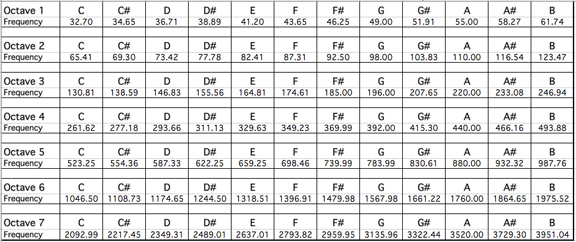
back in the summer we had a fun discussion about the mystery note,where i talked about this fourth partial but maybe by another name ,it is the one earl said was the mystery note b at the ninth fret in his book,if you measure from the nut to the ninth fret and divide that in half,you get the same harmonic there or any multiple of that increment.
i'll have to try to transpose and'' chime'' some of these higher ones shown with a knife edge
Edited by - MrManners on 12/21/2014 08:59:28
G Edward Porgie - Posted - 12/22/2014: 10:53:36
Roger, I have to disagree with you somewhat on your mention of "finessing" of unisons by piano tuners. Perhaps the tuners in your neck of the woods do things differently, but I tuned pianos for 30 plus years and discussed numerous issues with some of the best in the business, including those who wrote books on the matter and one who devised a simpler and probably more accurate way to set a temperament by using mostly thirds and sixths rather than the usual fourths and fifths. To a man every one of them tuned unisons to be perfect, and not one of them ever mentioned anything about "finessing." The tempered scale and the inharmonicity of a piano string (which is of far greater stiffness than any banjo string) takes care of making it not sound like a pure tone. The only reason to ever mistune the three strings of a single piano note is when one or more of them is "wild," meaning it vibrates against itself, generating its own beats. One then must compensate by mis-tuning the other two strings in an effort to cancel the beating of that one string.
Also, when tuning a piano, the octave overtones are not in tune, but are slightly sharp. This is probably not so much of a problem when touching a string on a banjo; at least it's not so noticeable. Part of that is because a person's finger can't manage a single point when touching anything, so the "overtone" depends a lot on how the player himself compensates. Logic alone should tell a person that an octave on a stringed instrument will never be perfect because there are points on any string (most particularly at the ends and at any of the string's "nodes" (which includes the very center where the string breaks into the octave segments), due to its inherent stiffness, that will not vibrate in any way like the simple patterns we see so often in books. There's also the problem that no matter the anchor point, be it nut or bridge, there is some "leakage" of vibrations beyond that point (in the case of a banjo, the bridge is not even fixed, and is thus free to vibrate on its own, subtly but effectively changing the speaking length of the string with each movement).
In the foreward to his book, Piano Rebuiders' Handbook of Treble String Tensions (And Other Characteristics)," James H. Donaldson states "The inharmonicity of the 2ND PARTIAL (emphasis mine) is shown on the tables as the OCTAVE HARMONIC (again, emphasis mine), all other partials will fall into line in relation to the 2nd partial."
Another source I would recommend is "The Calculating Technician," by David Roberts. The book goes into great depth to explain and calculate inharmonicity due to string tension, gives formulas for calculating that inharmonicity and also touches on sustaining factors and hammer/string contact time, which could probably also be intrepreted a "finger/string contact time. Much of the book has to do with the heavier piano strings, but I'm certain that many of his conclusions and calculations would apply to any instrument with strings.
Edited by - G Edward Porgie on 12/22/2014 11:00:09
Siminoff - Posted - 12/22/2014: 21:10:28
George... Thanks for the info and you are not the first one to tell me that "finessing" is not done. However, it's not a term or concept I dreamed up, but something I learned from an interesting conversation with two piano tuners and John Norris (who used to be the acoustic engineer for PetersonElecto-Musical - the folks who make Peterson tuners) about six or seven years ago at the NAMM show in Anaheim, California. (As you might imagine, the day before the show, there are 20 or more piano tuners readying and perfecting the many pianos on display - from high end Bosendorfer's to less expensive Yamaha's.) "Finessing" was the term John used - I think one of the piano tuners said he called it "sweetening" but that may not be the exact word he used. In fact, at the end of the discussion one of them asked if it was possible to develop a tuner that could read and measure - as a whole - the pair or triple strings being tuned. Both of the tuners we spoke to generally agreed on the concept, and it was a very interesting discussion of what they were listening for. On the other hand, my local piano tuner (who admittedly I have not seen for 3 or 4 years) echoed your comment that he tunes for a perfect unison and never heard of "finessing."
My interest prior to this - and what prompted my discussion with John and sent us on a mission to talk to the two tuners - was in watching musicians tune the string pairs on their mandolins, and how some felt better with one of the strings being ever so slightly off - maybe a quarter to a third of a Hz where the beats were just below the threshold of being noticeable but with the strings not in perfect unison. I guess one could argue that it was just an error in tuning, or that the tuning device he was using was not accurate enough. Regardless, it's interesting to watch a mandolin player re-tune a mandolin that someone who just played it has already tuned.
Anyway, I find the concept interesting and was just sharing what I had learned from others. Thx... Roger
MOUNTAIN GOAT - Posted - 12/22/2014: 21:18:55
Roger I was looking for information on this string deal, when I ran across that writing for data on a Guitar. They wrote it better than I could put it, so I posted it just for information. I too find it facinating. But I it even more interesting how a bridge affects the stiffness of the string. And that stiffness may be a different distance from the bridge, with each different bridge. The stiffer the strings feel to pluck, the more dead the banjo is.
Aradobanjo - Posted - 12/23/2014: 03:12:04
Hello,
I guess the trouble I see with these discussions is word description usage. Dead? How about less volume?
Consider the setup of several professional (earn a living) banjoists. Each are different. Some like the tailpiece nearly touching the head. Others take a different approach.
What I find with higher tension is less string slap while playing. The hiss of strings is audible to me. Included in the package is more power in the delivery.
Some like a looser head than G for tap tuners or 90 for Drum Dial. The lower the frequency/setting the taller the bridge must be to elevate the action.
What seems to allow this to work is stiffness. When sweet stiffness is obtained, an instrument seems to be more powerful. I look at the features of a certain RB-75 in use currently. The neck is custom crafted. The fingerboard is above the head about the width of the board. The peg head seems to have a little more break angle.
I like its sound. The sustain I hear in YouTube videos is long on open 4th strings. String movement under tension is restricted to a lower amplitude. The bridge feet on this RB-75 appear to wider than standard bridges. This would seem to limit movement of the bridge. If energy loss is found in the end points moving, reducing energy loss could be another form of sweetness.
G Edward Porgie - Posted - 12/23/2014: 06:42:23
Roger, I hope I didn't come off as being obnoxious and overly argumentative in my previous comment. I did say that "Perhaps the tuners in your neck of the woods do things differently..." All things considered, I think you are putting some much overdue thought into string design.
I find that terminology tends to be different, and that over the years, it also has a tendency to change (Note the comment above by John Robison, who thinks of "dead" as a lack of volume, whereas I would consider it a lack of sustain). It's possible that by "finessing" a particular tuner might be refering to adjustments made in order to compensate for the slight differences between the three strings of a single note; they're still basically trying to find a "perfect" unison. Due to slight manufacturing discrepancies the three strings of a single note are rarely the same length (I've even encountered some pianos where those differences were designed right into the product) and there is, of course, no way to get a true unison out of that without affecting tension, which affects downbearing over the bridge. That doesn't even include those "wild" strings mentioned before. Tests have shown, too, that two tuners will end up with slightly different results after tuning the same piano. (That could possibly explain the activities of those mandolin players--we all hear a little differently.)
I did, however, think that your comments about touching strings and getting the octave partial was perhaps a little simplistic, perhaps so as not to confuse people. Testing does show inharmonicity even at the first partial. It's my belief that if extremely close measurements could be taken (probably impossible due to the difficulty of determining the exact portion of finger flesh that's actually touching) that most players actually make contact a billionth or so of an inch away from dead center, or that the partial is in reality a billionth of a cent sharp. I also think that although the piano is a far different beast in many ways than the banjo, that you might gain some very useful information about the physical characteristics of vibrating strings from the sources I mentioned.
While much of this, even to me, seems about as useful as calculating the width variations of the flagella on a microbe, it's possible that that one tiny extra calculation could be useful.
rudy - Posted - 12/23/2014: 07:05:08
Roger,
If you're interested in the original source material you can grab a few sentences and paste into a Google search to find the website.
In the interest of fairness to the original author "copy and pastes" should always cite the source of the information. Many copy / pastes without attribution are assumed to be the original work of the poster, so it's good practice to identify the source so anyone interested in further reading can go directly to the website.
Edited by - rudy on 12/23/2014 07:07:42
Siminoff - Posted - 12/23/2014: 07:40:34
Bill: Your comment about how each string reacts differently with the bridge is the very core premise of how and why we developed Straight Up Strings (do a search here on BH for "Straight Up Strings" and you'll learn more about our focus there).
George: Yes, the comment about touching a string at various points and forcing it to vibrate in different modes is quite "simplistic" but it is what players do when they create harmonics - whether they are using it just to hear the harmonic, to use the harmonic within a musical piece, or to check the correct location of the bridge (by verifying the octave harmonic compared to the fretted string at the 12th fret).
...R
PS: About two months ago, I prepared a video for BH readers on string modes - in case any of you missed it, you can find it at: youtube.com/watch?v=-7AwyUDQI_Q
Edited by - Siminoff on 12/23/2014 07:44:48
Aradobanjo - Posted - 12/23/2014: 08:52:14
Hello George,
Interesting that my comment on the word dead was taken as a root belief. Contrary, I said more power. That is what I said.😊
MOUNTAIN GOAT - Posted - 12/23/2014: 12:30:50
Roger I did follow that thread for a bit. In my own testing, I find that the strings one uses is critical to the performance of the banjo and how stiff they feel. But if you change the bridge or set up, it could require a different set of strings. Bart Veerman and I tested about 20 to 25 of his bridges, and about a dozen of mine. Most of Bart's bridges looked the same dimensionally but were different woods. Each one had a different point out from the bridge where the string picked freely. This distance from the bridge changed for no apparent reason. Some sounded very similar, and some quite different. Some just gave it a different personality. And a few gave a large change. We were checking every aspect. When the combination was a certain way, the strings felt very stiff to pick, had less volume, less sustain and felt wrong. Like you were picking a cable. Change the set up to what the bridge liked and it all came back in. Anyone experimenting with different bridges needs to fiddle with string diameters and set up to give the bridge a true fair shot on what it might do for your banjo. It is not as simple as just replacing the bridge and saying it is better or worst. The weight of a bridge is important to the performance of the banjo in every aspect, but the range of weights that work is much larger than typically stated on the HO. What is ignored on bridges is their stiffness. In fact the stiffness of the entire banjo is very important to how it performs. Funny how people talk about the weight of a part of a banjo, when stiffness is much more important. You can have a heavy part that is not as stiff as a lighter part. Both will perform differently. Back to the original idea here of the parts being in harmony. If the parts are all vibrating in a clashing manner, it feels strange and does not perform well. How do we know what the right manner is? I don't think we know that yet. Some have an idea about it, but can we prove it? I don't think anyone has proven it yet. I really respect what Roger has done, but even that work is relative to a standard banjo. I question if a banjo is made in a manner that optimizes its own performance. I don't think so yet. And even if it was made right, that changes with atmospheric conditions, sometimes not in a good way. How can we fix that? From my work, and I am new at this noise maker, I see more wrong, than right. I am going to keep going with new ideas, trying to get every last bit of horse power out of this contraption. At some point Roger, we are going to need to add some different aspects to your book. But it sure does give a good basic understanding of what is going on. I hope to have some new ideas and parts to test within a week, that on paper show great promise. Paper isn't always right though. One thing for sure, this noise maker is extremely complex. Some parts beyond my brain power to fully understand.
Aradobanjo - Posted - 12/23/2014: 14:05:14
Hello,
First off, slots are cut by human hands or effort. None of this is ISO controlled. 20 different variances look like well variations. I am glad I am not perfect.
I enjoy Bart's bridge. It solved a problem with me. The truisms about the banjo being complex is what keeps me playing it.
Terms of Use | Privacy Policy | Privacy Consent (EU/GDPR Only)
Copyright 2026 Banjo Hangout. All Rights Reserved.


