
DVD-quality lessons (including tabs/sheet music) available for immediate viewing on any device.
Take your playing to the next level with the help of a local or online banjo teacher.
Weekly newsletter includes free lessons, favorite member content, banjo news and more.
Premier Sponsors


|
Please note this is an archived topic, so it is locked and unable to be replied to. You may, however, start a new topic and refer to this topic with a link: http://www.banjohangout.org/archive/285500
pjxndvm - Posted - 05/26/2014: 10:27:51
So I have an old Vega Tubaphone, 1924 vintage, with a skin head on it. Sounds wonderful. I don't know how long the head has been on, but I bought it from Gryphon Stringed Instruments last summer, and it always sounds great. I decided to have skin heads put on my other banjos, and I had Elderly do it. They look great, but the overtones are very prominent, and the sounds are not anywhere near my Vega. One is a Bart Reiter Galax and the other is a custom Tubaphone that Bob Anderson built with Bill Rickard parts. Moon bridges on all three. I don't have to put a rag in the pot of the Vega to make it sound good. I have read a lot of pros and cons of skin heads, so I know things are tricky with them, but is there some sort of break in time that makes them sound better? They all have the same size bridges and same strings. Controversial topic I know, but I do like the patina and look of a skin head, and at a recent workshop with Adam Hurt, he felt he got better sound out of a skin head. Any tips would be appreciated.
beegee - Posted - 05/26/2014: 10:52:04
I don't know if one could reasonably expect a new calfskin head to sound as good as a well-aged vintage head. I also don't know if a calfskin head ever truly
break-in." as they are subject to whatever climatic conditions they live in. I had a vintage Rogers on my Granada for several years, but it was temperamental. There's also the variability factor: how uniform can a bunch of skin heads be? No matter how good the craftsmanship, the hides themselves can never be the same, even if they came from the same animal. I guess you'll just have to tweak the head tension until you find its happy place...today. There is no way to predict how long it takes for a skin head to settle down
pjxndvm - Posted - 05/26/2014: 10:55:17
I did forget to mention, I got the hides from Bob Smakula, so they are not the inexpensive hides, they are really nice ones.
tomberghan - Posted - 05/26/2014: 12:13:53
I use hide on most of my banjos (but not all). Occasionally a friend will ask me what my method is. Here it is. My personal preference is for a tight head, such that when tapped it will produce a pitch in neighborhood of G# to A. The exact pitch is unimportant, it is just the result of the head being at a tension that produces a nice resonant timbre. NOTE: for a 12" diameter head the instructions are the same but cut your stick to 11 inches and use a dime instead. Stuffing: Sometimes I will use a small soft towel inside the pot, just as many drummers do. It depends on the banjo and how the head is interacting with the tone ring (if there is one) and the rim. Adam usually places a towel in his as well, as do many banjoists regardless of OT or BG playing styles.
Hide Heads - How to tension the head of a 11" rim banjo
1. First go to the hardware store and buy a wooden paint stir stick (many hardware stores give them away for free). Or, go to the drugstore and buy a wooden ruler. Also buy a little can of 3-in-1 Oil. Cut either the stick or the ruler to 10 inches in length. Return to the banjo.
2. Now you begin. Take the strings off of the tailpiece and take the head off. Remove all of the J-Bolts.
3. Get a paper towel and wet a small spot with 3-in-1 oil. Turn all the j-bolt threads on the oil spot. Do this every time you change a head (which should be a rare event). Oiled threads last longer, don't bind up, don't give you a false sense of torque (resistance), and don't squeak and squawk.
4. Place the head on the rim
5. Get everything even on the tension hoop (no high spots).
6. put on four j-bolts at the 12, 3, 6, and 9 o'clock positions . . . finger tighten only
7. hold the rim up and look at it horizontally all the way around and make sure the tension hoop is even (head to tension hoop . . . no high spots, even all the way around)
8. adjust if needed
9. set the rest of the j-bolts, finger tighten only . . . NOT tight
10. repeat steps 5 and 6
11. start tightening the nuts just one-eighth turn - go clockwise (or CCW) one after the other, all the way around - not a star pattern (you're not putting a wheel on your car)
12. repeat step 5 and 6
13. NOTE: some say one quarter turns . . . but what is your hurry? I like one eighth turns because the whole process stays in finer control.
14. keep repeating steps 7, and 8
15. Now when the head seems to be getting pretty tight but not yet too tight, put your bridge strings back on and tune them up. If the bridge sags too much repeat step 11 (keep tightening)
16. When the bridge is just sagging just a little and the strings are up to pitch, take the straight edge and lay it on edge along side of the bridge (near the feet of the bridge - and the straight edge should be centered evenly, fitting just inside the tension hoop). The straight edge should be running parallel to the strings.
17. Look at the gap under the straight edge by the foot of the bridge. See it? It should be something like maybe 3/16th of an inch.
18. Keep tightening (step 11) until the gap will hold a quarter snug (a 25 cent piece)
19. If the banjo sounds good then stop there, but if it sounds a little "hollow" try going around again by 1/8th turns.
20. You're done. Go play your banjo.
21. Take your straight edge once a week, for one month and check the gap. If the head stretched, then go around again tightening by 1/8th turns. If you ever think you have it too tight, just go around loosening by 1/8th turns.
Fathand - Posted - 05/26/2014: 21:36:08
I put a hide head on my banjo uke, it sounded great as soon as I got it up to tension. I like the extra overtones although they seem few. The nature of overtones is that they are a more complex tone( I think of it as richer), it would seem normal that a natural product like leather (hide) with its inherent imperfections would create more overtones than a homogenous product like mylar plastic.
Edited by - Fathand on 05/26/2014 21:38:42
pjxndvm - Posted - 05/27/2014: 14:05:40
Thanks very much for the information. I will put it to good use trying to figure out what might solve the overtone problem
tomberghan - Posted - 05/27/2014: 15:05:39
quote:
Originally posted by pjxndvmThanks very much for the information. I will put it to good use trying to figure out what might solve the overtone problem
You know . . . the "overtone" problem is a weird one and can be frustrating. I have a beautiful old 1926 Gibson TB2 which I have tuned as a baritone GDAE. It had a very old hide head on it that had a bad case of mildew. But it sure sounded good. Unfortunately it smelled so bad that my family banned it from the house. I had a spare renaissance head lying around so I put that on there and man it sounded great! But I wanted to have a hide head on it just because . . . so I got a really nice hide head and installed it and it just never sounded right . . . always had bothersome overtones.
One day I could not tolerate it anymore and I put the ren-head back on it. It is still on there and it still sounds great. I don't like the way it looks, but the sound is terrific.
Then I took the hide head that had the bad overtones on the TB2 and put it on my best bluegrass banjo (A Granada reproduction) which previously had a frosted Mylar head. And MAN . . . that head sound GREAT on that banjo and no funny overtones! So go figure. I got nothin' for you other than sympathy. But before you swap heads . . . make sure you have tried tuning it as I described above and see if that does the trick. But sometimes, you just have to match the right head with the right banjo!
stevel - Posted - 05/27/2014: 20:52:57
hi tom- any discernable differences in head thickness at casual glance?
steve
tomberghan - Posted - 05/28/2014: 10:20:16
quote:
Originally posted by stevelhi tom- any discernable differences in head thickness at casual glance?
steve
Hi Steve, Yes, I think thickness certainly plays a part in timbre. A really thin translucent hide tends to sound soft of similar to Frosted Mylar (brighter). The thicker the hide, the more solid the fundamental pitch sounds. Some say "plunky" versus "plinky." (plinky thin - plunky thick) I myself tend to prefer medium thick hides. Or somewhere between thin and medium. As for those troublesome overtones . . . I'm just not sure . . . I think that maybe if a head has a lot of thickness variation across the head it may contribute to unwanted overtones - but I also have empirical evidence that refutes that . . . so . . . heck in I can understand it! I have had Mylar heads also produce unwanted overtones.
I think the main thing is to find just the right head tension where you hit that magic resonance and don't get the nasty overtones. Hide is problematic because it will keep changing with the weather and needs occasional adjustment. Now I find that Mylar is not 100% trouble free either. It needs to be touched up every now and then too. But it is much more stabile than hide. But hide sounds so damn good when it is tuned (tensioned) just right.
stevel - Posted - 05/28/2014: 15:20:25
hi tom- so would you consider the very old smelly head that was on the gibson originally to have been of medium thickness as well? i guess that's what i was implying. whether you felt that skin heads of similar thickness (again, just at causual glance) acted differently on the same banjo.
tomberghan - Posted - 05/28/2014: 16:49:25
quote:
Originally posted by stevelhi tom- so would you consider the very old smelly head that was on the gibson originally to have been of medium thickness as well? i guess that's what i was implying. whether you felt that skin heads of similar thickness (again, just at causual glance) acted differently on the same banjo.
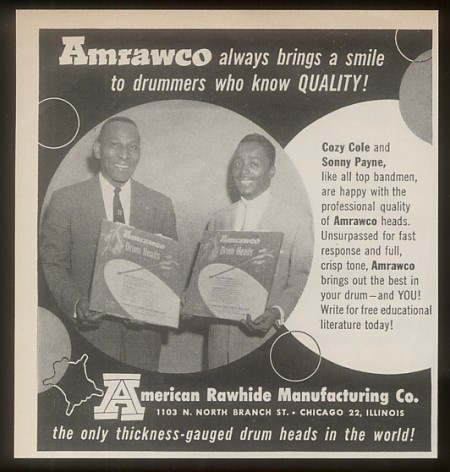
The old head (Amrawco . . . which stood for American Rawhide Company . . . was a company that went out of business many decades ago) . . . The head was sanded smooth as they often did in those days . . . and some still do today. Remember the main market was for hide drum heads not just banjo heads. It is solid white - no translucent areas - no mottling what-so-ever . . . and I would call it medium thick. I still have it and it doesn't stink so much any more. It has been getting fresh air for two years now! So I may put it on a banjo again.
I think that sanded-heads may perform better because after sanding the thickness should be pretty even across the surface of the head. But the head I have on my Hatfield is not sanded . . . and it sounds REALLY good on that banjo . . . but didn't sound good on my old TB2. I think I understand hide heads as well as I understand magic fairy pixie dust . . . but I do know that when I match the right hide head to a banjo it beats Mylar hands-down in my opinion. As for Mylar, I like the way the Renaissance heads sound but they look terrible to my eye . . . I don't like clear or translucent heads. But thats just me. I know that in Ireland, it seems that they love the clear plastic heads. But not me! To me they look weird!
Here is the old Amrawco Head
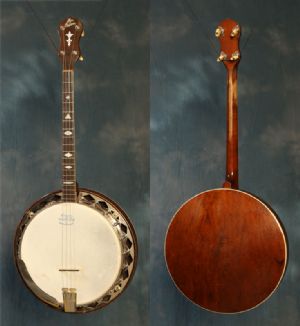
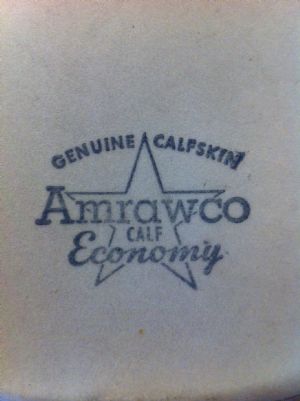
Edited by - tomberghan on 05/28/2014 16:51:43
stevel - Posted - 05/28/2014: 18:24:45
Thanks again tom. I have a very thin old hide head on my old Thompson and Odell banjo. I can make out the date 1910 written below someone's name. But when I say thin, wow, this head seems awfully delicate. But luckily it doesn't smell!
jbalch - Posted - 05/29/2014: 04:19:12
AMRAWco heads were marketed as the only heads available in specific thickness gauges. They were machine sanded for uniformity and smoothness.
Jeff Stern - aka the Stern Tanning Co., bought the equipment and business of the old United Rawhide Co. Jeff's calf and goat hides are machine sanded to precise even thickness (as were the AMRAWCo heads referenced above). From what I understand, these the only hides processed in that manner that are available today.
Edited by - jbalch on 05/29/2014 04:24:56
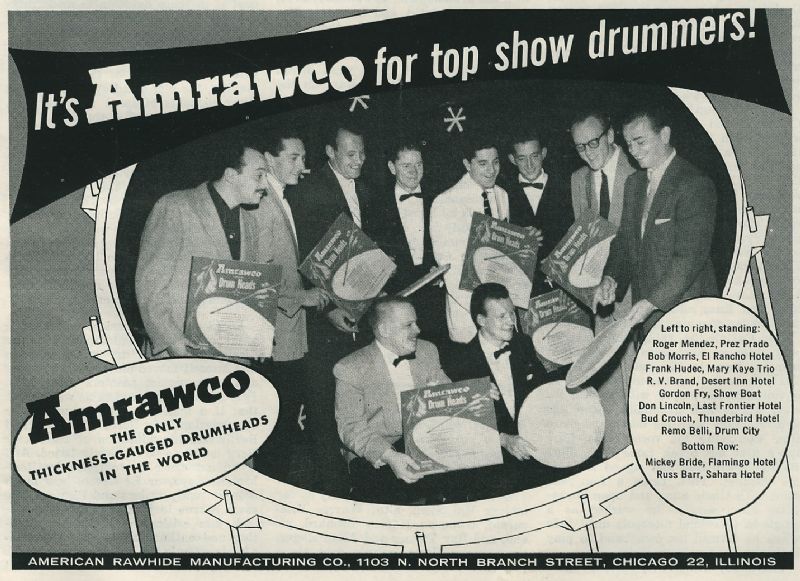 AMRAWCo Ad | 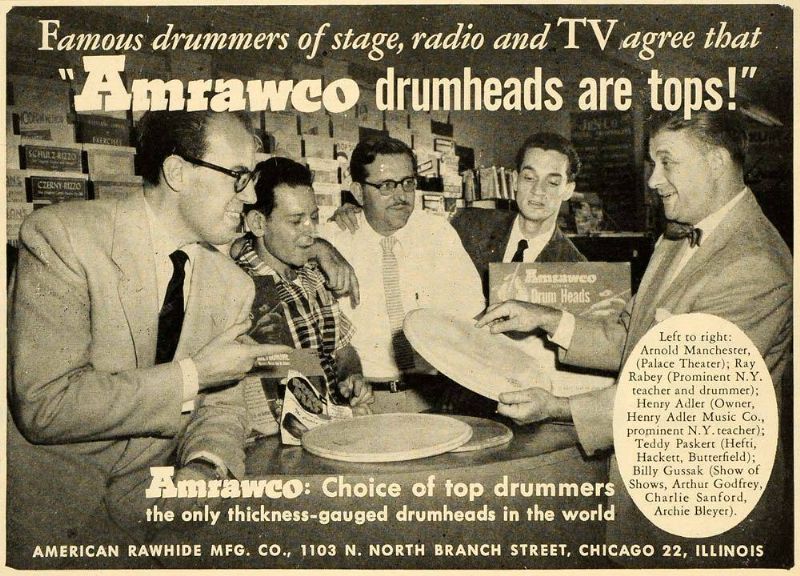 AMRAWCo Ad | 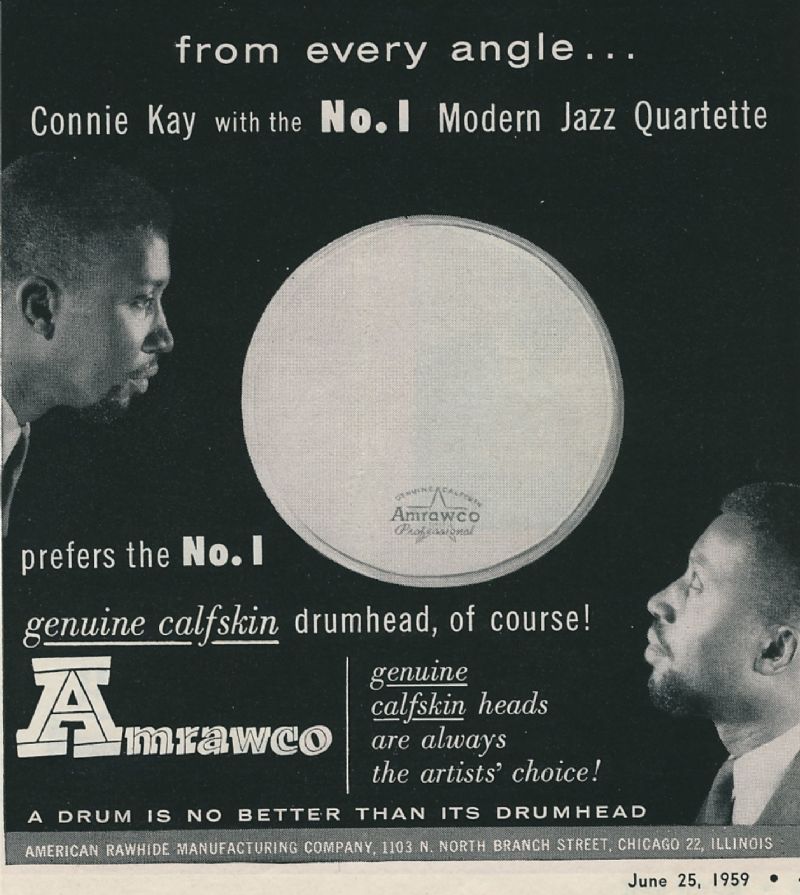 AMRAWCo Ad | 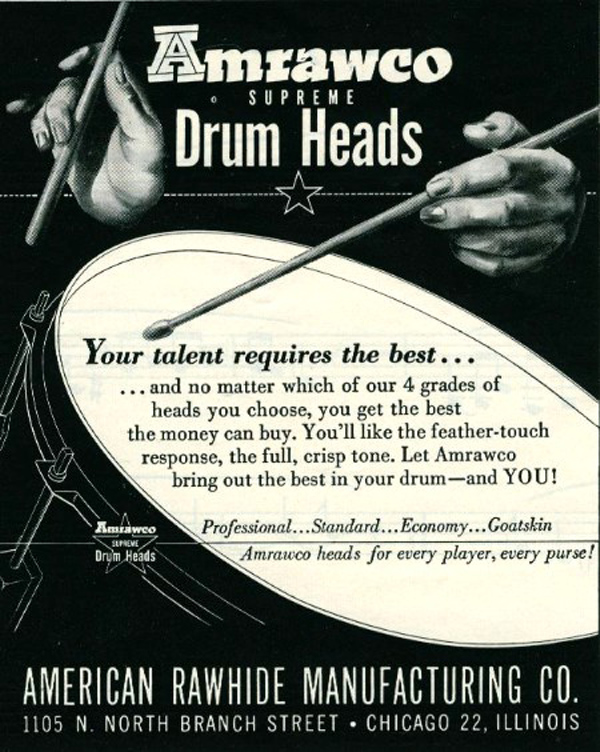 AMRAWCO 1955 ad |
 AMRAWCo Ad | 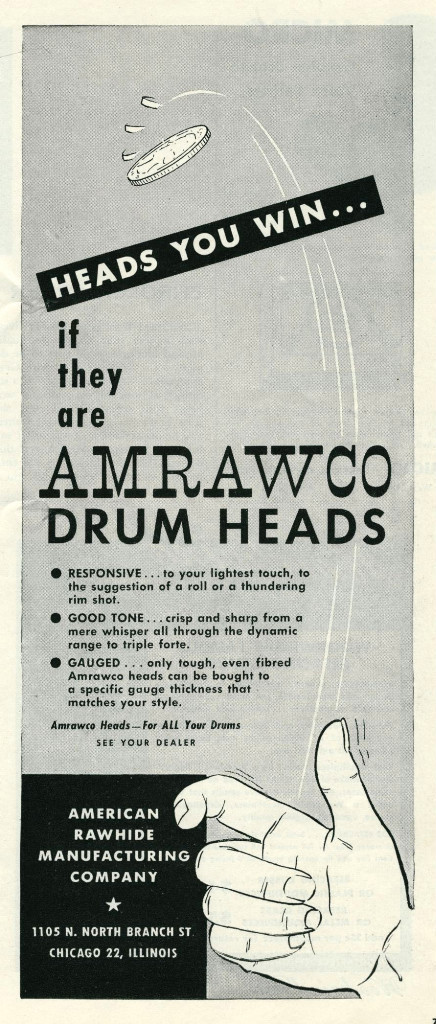 AMRAWCo Ad |
superdave - Posted - 06/01/2014: 12:36:32
I have hide heads on both my Openback banjo's. A John Balch hide head on my Reiter and a no name on my Ramsey. My Reiter settled right in and sounds awesome but the one on my Ramsey is still stretching and has some overtones I'm trying to work thru. I still love hide heads over synthetic for sound and looks but I haven't been playing out much lately so no climate change issues.
Dave
Terms of Use | Privacy Policy | Privacy Consent (EU/GDPR Only)
Copyright 2026 Banjo Hangout. All Rights Reserved.


