
DVD-quality lessons (including tabs/sheet music) available for immediate viewing on any device.
Take your playing to the next level with the help of a local or online banjo teacher.
Weekly newsletter includes free lessons, favorite member content, banjo news and more.
Premier Sponsors


|
Please note this is an archived topic, so it is locked and unable to be replied to. You may, however, start a new topic and refer to this topic with a link: http://www.banjohangout.org/archive/284303
cbcarlisle - Posted - 05/04/2014: 21:38:51
I'm always willing to take a chance on a possible mountain banjo as long as it's not too pricey. I recently obtained what was described as a "homemade banjo like instrument," from the Seattle Goodwill. The pictures were typically fuzzy but I figured it could either be an "original" Watauga County instrument or a recently-made version based on the Foxfire books. Either way, I was interested. Upon receipt I am still puzzled: there are clues to support both premises. I hope someone will recognize it and contact me to clear it up.
At first glance it seems to be made of redwood but dings and scratches (and the innards upon disassembly) show the color is a stain. The squarish neck is a massive (26") log with straight, fine grain; at the "heel," roughly 5 1/2" from the pot, it is 2 7/16" wide and 1 13/16" thick. The banjer is 34 1/2" long with a 9" pot, the head being 6 1/8," which is roughly standard for Watauga Co. instruments. The three pieces of the pot are made from a rough plywood; the plies are 1/16" and 1/8" thick. The back of the pot has a round hole pattern with four smaller holes roughly in an X. The screws follow this design with an added screw at the bottom. There is also a plugged screw hole at the top, 12 o'clock, position (which would have been right behind the top screw on the front). The rear (5") long neck tab has three screws. The front/top section has four screws in a cross pattern with two extra screws: one to the left and right of the 12 o'clock screw. The front neck tab is 3" with three screws.
The dilemma I face is the attribution of the unmarked instrument. Most urban makers would have inscribed their names and my experience with such banjers is that they tend to hew quite closely to the Foxfire pattern or, on the other extreme, tend to want to show their individuality, with influences from modern banjos or flights of fancy. This instrument does neither; most of the elements are completely within the general tradition but there are enough distinctive touches to suggest a maker outside the usual family traditions: the unusual, but restrained, peghead design is such an element. The two (and a half) remaining pegs, as well as the nut seem to be made of the same wood, perhaps hickory. The exciting, and frustrating, thing about history (and collecting) is that one never has enough information; it's as if Clio were the origin of the phrase, "always leave them wanting more."]
Edited by - cbcarlisle on 05/05/2014 08:22:30
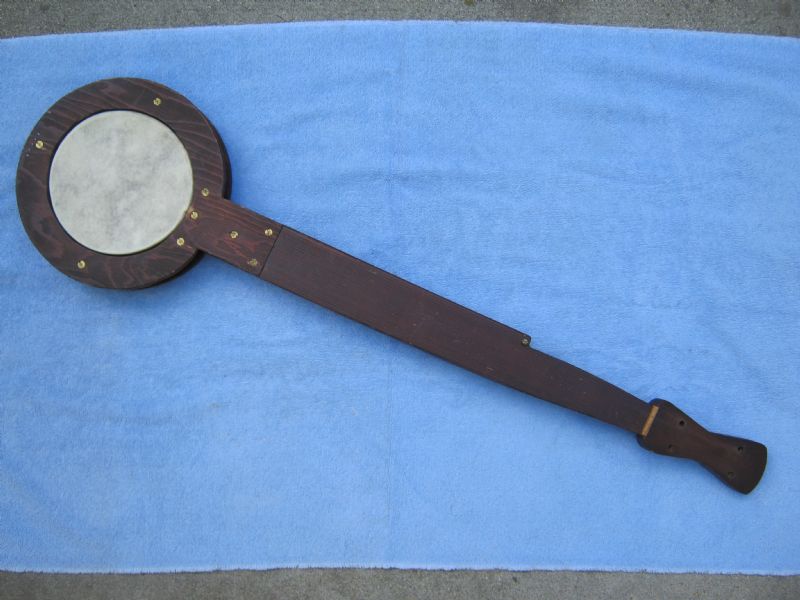 Seattle Mt Banjer | 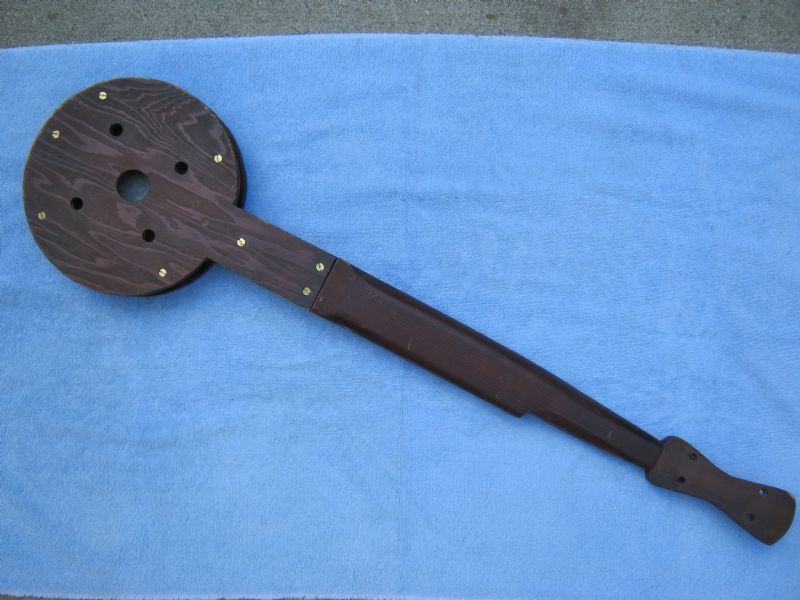 SMB back | 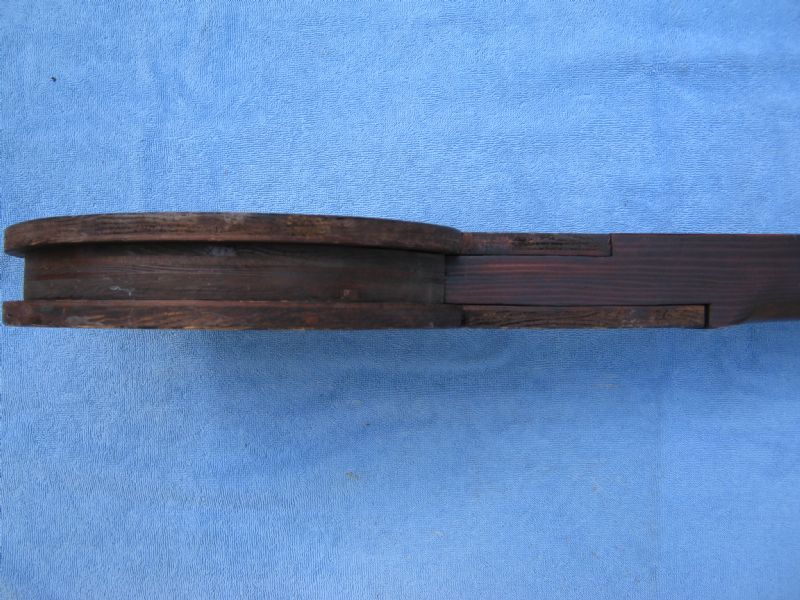 SMB pot side | 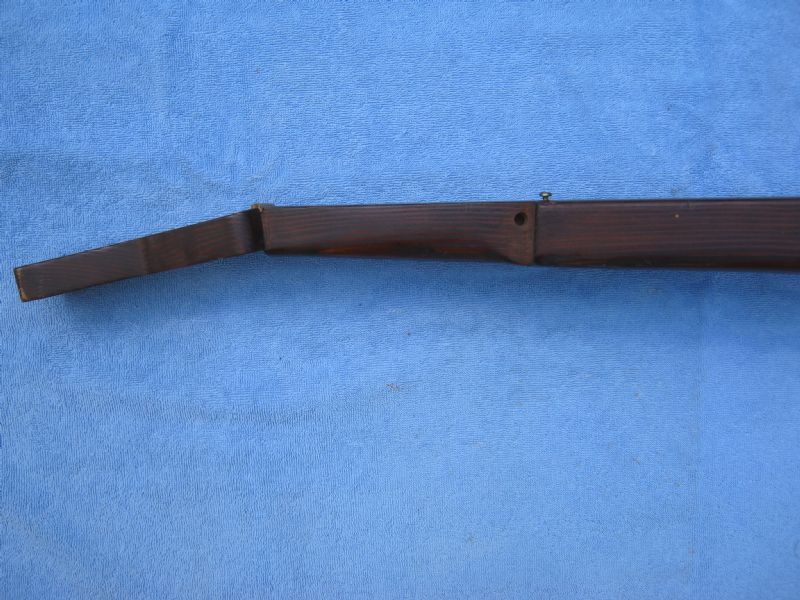 SMB neck side |
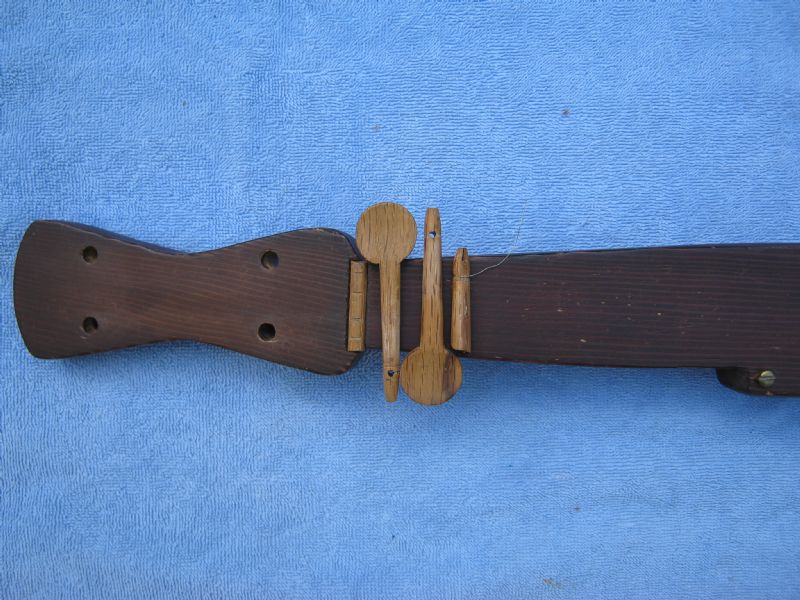 SMB details |
Terms of Use | Privacy Policy | Privacy Consent (EU/GDPR Only)
Copyright 2026 Banjo Hangout. All Rights Reserved.


