
DVD-quality lessons (including tabs/sheet music) available for immediate viewing on any device.
Take your playing to the next level with the help of a local or online banjo teacher.
Weekly newsletter includes free lessons, favorite member content, banjo news and more.
Premier Sponsors


|
Please note this is an archived topic, so it is locked and unable to be replied to. You may, however, start a new topic and refer to this topic with a link: http://www.banjohangout.org/archive/282816
Watermuse - Posted - 04/06/2014: 10:24:40
History: My mother who is 77, said that it was her mother's but she never saw her play it. So I would assume it is at least 80 years old. My grandmother was Irish and German.
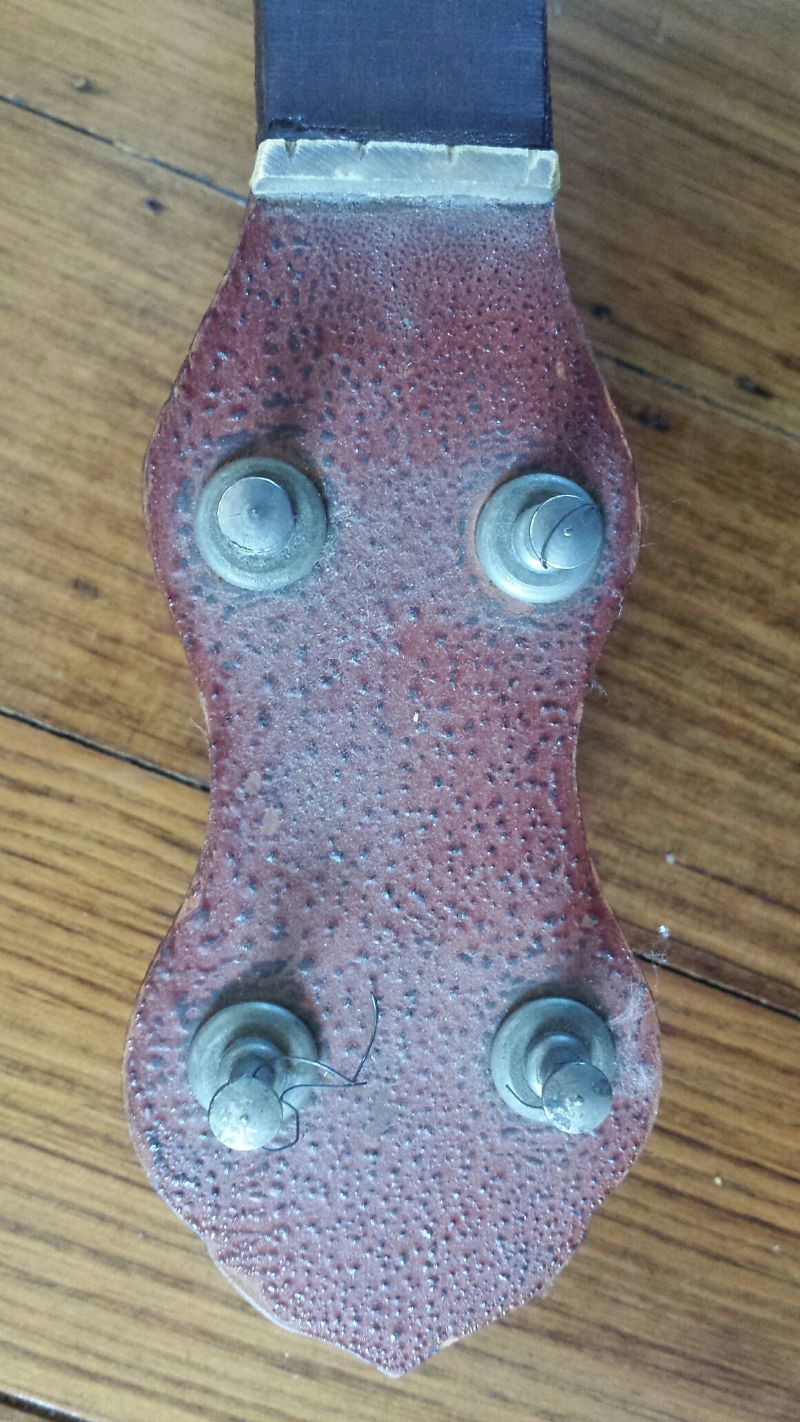
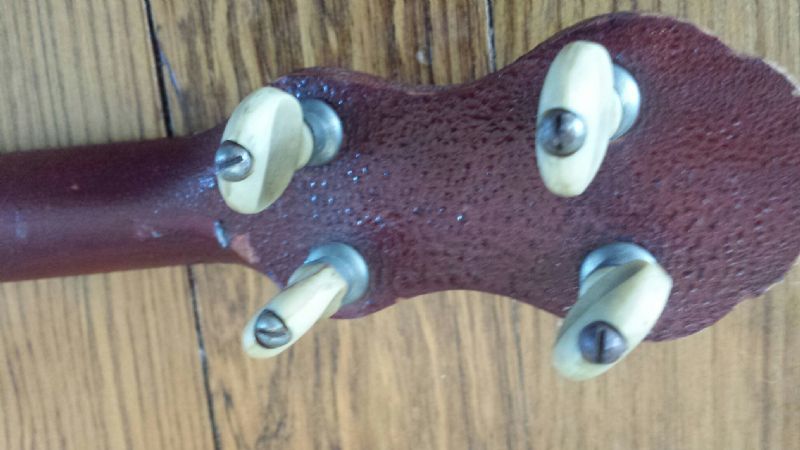
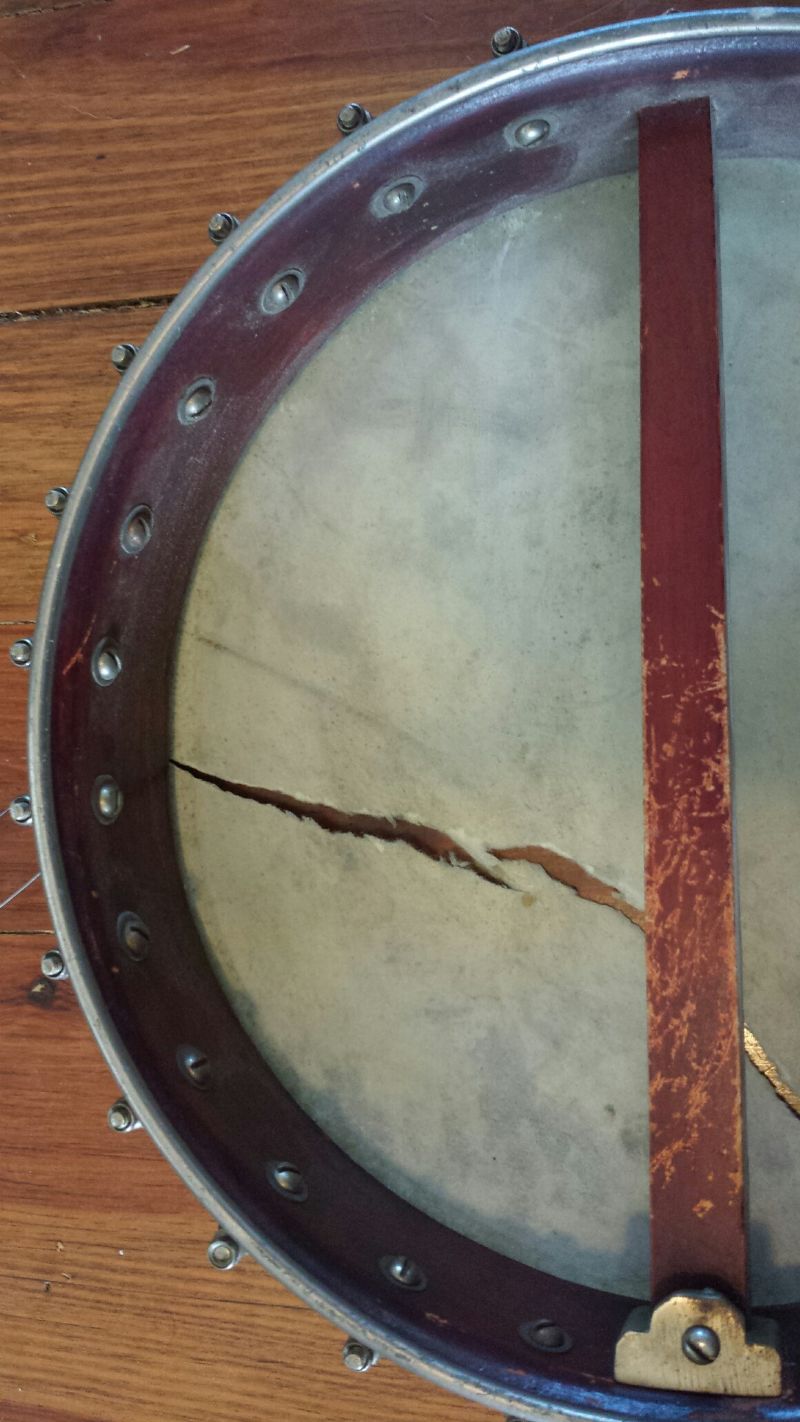
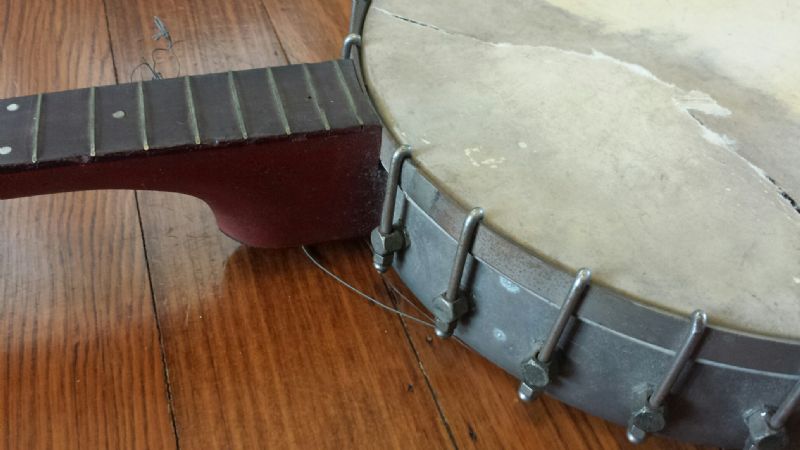
Banjo has no markings. Open back, 17 fret, 4 string. (Tenor? Melody? Tango? Banjeunine? ) Nut might be ivory. At first thought pegs ivory but I think I see mold marks. Sized about 20. Was last played (70 years or so ago?) with skin head and metal strings. (Used for parlor? orchestra? Irish?????) Varnish blistered from being stored for years in very hot attic.
Would like to make authentically playable. (Appropriate bridge and sticking with metal strings etc) Would like to know what it is, then what should be tuned to (C?) and what stylistically would have been played on it.
Oh forgot to mention it's a standard 11 inch head
Edited by - Watermuse on 04/08/2014 12:28:56
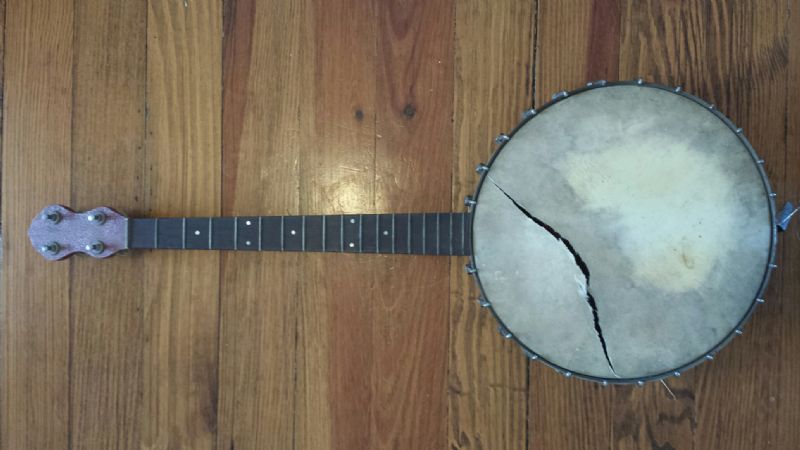 |  |  |  |
 |  |  |  |
mikehalloran - Posted - 04/07/2014: 09:01:32
The pegs are Champions. Low end tenor from the 'teens or '20s. Would have been strung CGEA like a viola and used in the dance music of the day. Nowadays, Celtic players tune these a fifth lower to play fiddle tunes.
Not worth much money but can be made playable. If you replace the pegs with planets, the white Champion knobs are no longer made and make the tuners worth $25-50 to someone.
Fix it and have fun. Elderly and Smakula can get oddball sized heads or you can learn to fit a new skin head.
beezaboy - Posted - 04/07/2014: 10:06:51
A few thoughts about refurbishing to approximate original per your great-grandmother's era if that was your intent..
1. "What it is?" - This is a Tenor Banjo. It is strung with steel strings and played with a flat pick a la mandolin
2. "What should be tuned to?" - CGDA just like the viola.
3. "What played on it?" - Popular songs of the 1920's. Single string melody or chord accompaniment (rhythm instrument) or (much more difficult) chord melodies - or a combination.
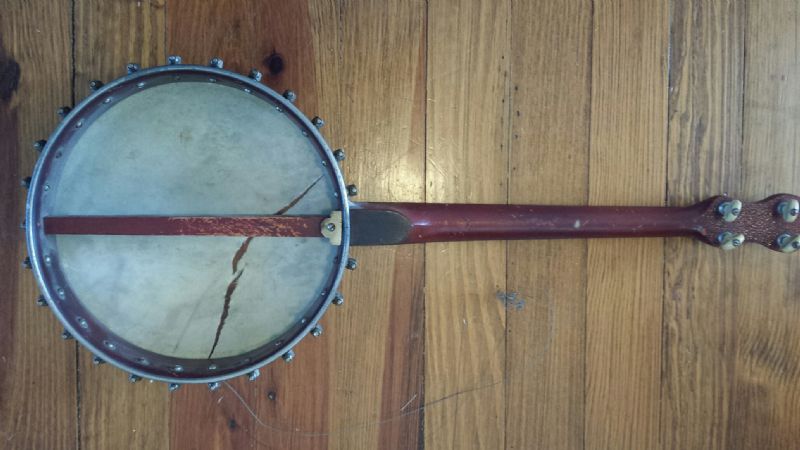
Your banjo has what is often called a spun rim. Thin wood shell clad in metal. This build style was declining in popularity by the early-mid teens so I would estimate your banjo to be pre-1920. Sears continued to sell spun rim banjos later than most so perhaps your great-grandmother got her banjo from Sears.
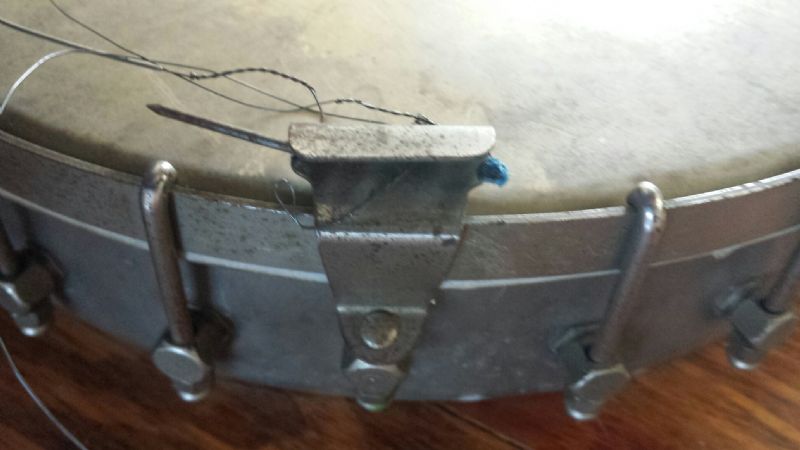
If you are going to restore this banjo to a condition that you will be proud of you will need to receive some help. It is not terribly difficult but is somewhat daunting at first. A banjo (as you can see) is just a series of parts. Banjos (unlike acoustic guitars) can be disassembled, cleaned and reassembled. Your skin head and tailpiece must be replaced. The friction tuners can be removed and cleaned. While tuners off you could even refinish the peghead. We don't know how far you want to take the project. Our Banjohangout repair forum has folks who can give you advice as you go.
Good luck with the project.
PS - Do not take your banjo to local music store. As a rule they know nothing about banjos and will likely mess up your project. Better to put it back in the closet.
G Edward Porgie - Posted - 04/07/2014: 11:07:37
I agree with the above. A music store is the worst place to take a banjo. They are not repair specialists, and modern stores many times wouldn't even know what you mean by "tenor banjo."
I'd keep the friction tuners. This was a budget instrument when new, and high grade tuners would be worth more than the rest of the instrument. Your main concern will be replacing the head. The tailpiece could be replaced also, but I think you could get by with the existing one.
Check some of the Hangout discussions for helpful hints, or post questions when they arise. We're all eager to help with advice.
It should be a great experience bringing this back to life, and wonderful to learn to plunk on it a little when it's fixed. It might turn out to be a nice way perhaps to hear and learn some of the tunes your grandmother was familiar with and maybe even loved.
Watermuse - Posted - 04/08/2014: 12:52:11
Was not familiar with the spun rim terminology and that really helps.
No sign of the bridge.
Not sure why some feel the tailpiece needs replaced? Is it damaged?
Immediate goal to make playable and prevent any further degeneration.
Blistered varnish gives it character but worry about the metal tarnish on rim - whether to leave original patina as collectors say, or try to clean up.
I have very small hands - octave reach on piano, so feel this may be a good size for me.
Familiar with 20's pop genre, activities director at retirement communities. Also a big jazz fanatic but never cared much for the banjo accompaniment style in early Dixieland music. Had wondered about its use in Irish music since my grandmother was Irish.
mikehalloran - Posted - 04/08/2014: 14:39:02
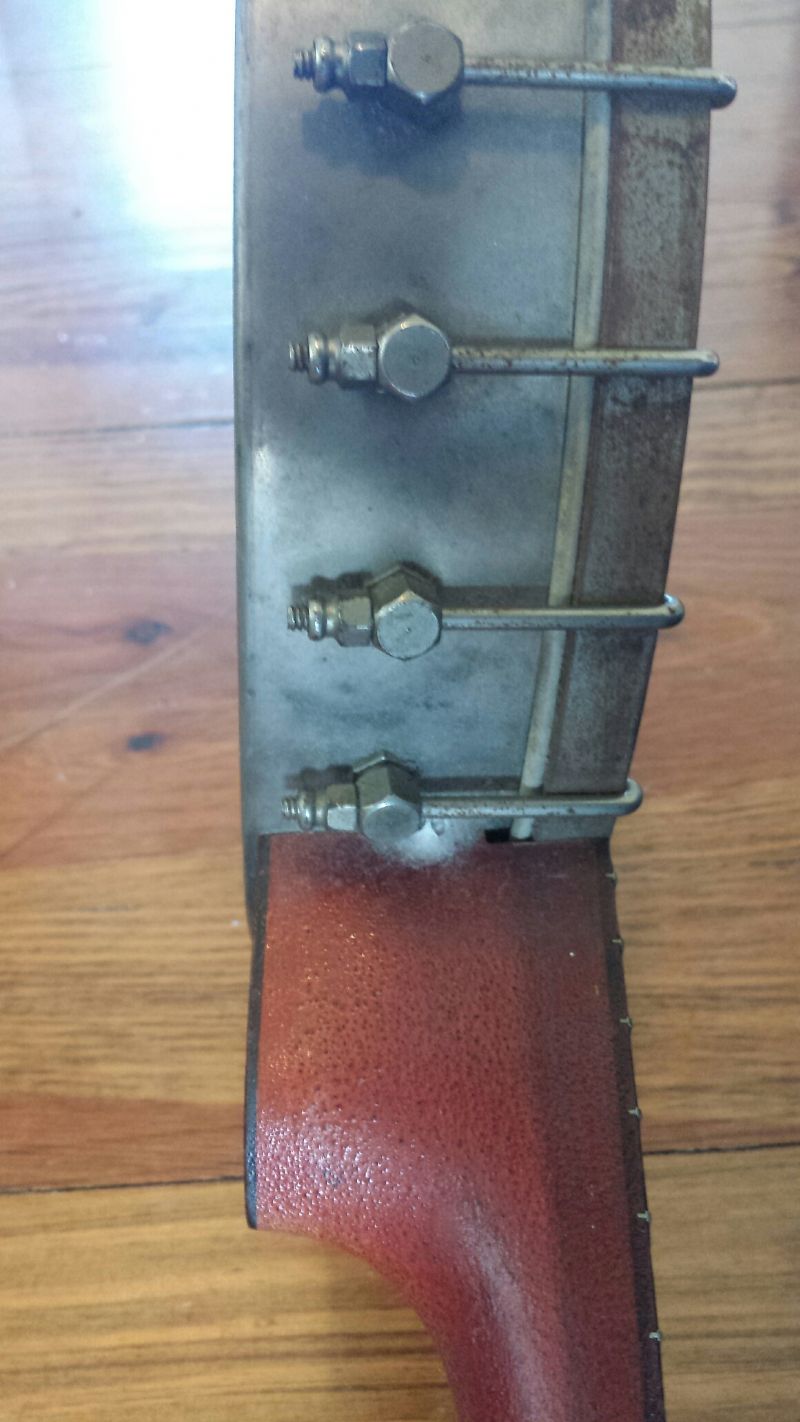
I love music stores! I have bought a few banjos at a very low price because the owner got terrible advice and figured I knew nothing. 16 brackets and 3 thumb screws makes it a Kay, right (no, probably makes it a low end Gibson).
Anyway, if high strung for jazz/Dixieland, you may find you don't like the Champion tuners. Even though Celtic tuning takes heavier strings, the lower tension should be fine with the friction tuners. It's a personal choice but not high on the priority list.
Plenty of good advice here about fixing this up.
trapdoor2 - Posted - 04/08/2014: 14:41:34
quote:
Originally posted by WatermuseWas not familiar with the spun rim terminology and that really helps.
No sign of the bridge.
Not sure why some feel the tailpiece needs replaced? Is it damaged?
Immediate goal to make playable and prevent any further degeneration.
Blistered varnish gives it character but worry about the metal tarnish on rim - whether to leave original patina as collectors say, or try to clean up.
I have very small hands - octave reach on piano, so feel this may be a good size for me.
Familiar with 20's pop genre, activities director at retirement communities. Also a big jazz fanatic but never cared much for the banjo accompaniment style in early Dixieland music. Had wondered about its use in Irish music since my grandmother was Irish.
70+ yrs ago it would have been unlikely to have made Irish traditional music as is common now. Much more likely to have been used for pop tunes of the day and earlier 'standards'. No reason it couldn't be used for Irish trad. now (that's how I learned IT, I bought a very similar el-cheapo tenor and went after it). Heck, you can play anything you want on it. These are great for TPA classics like "Ain't She Sweet", "Bye, Bye Blues", "Four Leaf Clover", etc., etc. They're not overwhelmingly loud like a better or resonated instrument of the same period.
The tailpiece is simply a low-end chunk of metal...and they're often difficult to put strings on. There are better modern ones which are easier to deal with...but unless it is cracked or broken, it can be used.
Patina is for collectors. This isn't a collector grade instrument...it is a family heirloom. You get to choose and nothing you do to it will cause it to go up or down in value. Personally, I'd give it a good dusting and perhaps a wipe down with mild detergent. A good wax on the shiny (or once-shiny) bits will keep them from getting rustier. If the blistered finish is stable, leave it alone. If it is crumbly, you might want it re-finished. Oil the fingerboard with a decent nut or seed oil (like sesame oil). It might take a couple of applications to get all the grunge off of the fingerboard.
Hide heads are pretty easy to mount yourself...but that first one will always be a nightmare until you actually do it. Then it will be, "oh, that was easy!" BHO guru John Balch sells pre-mounted hides. You can contact him here: banjohangout.org/myhangout/hom...p?id=1896
Billybiltbanjo - Posted - 04/08/2014: 15:34:46
My guess is one of the Oscar Schmidt brands due to the peghead shape and the neck brace
Edited by - Billybiltbanjo on 04/08/2014 15:38:11
trapdoor2 - Posted - 04/12/2014: 06:34:35
quote:
Originally posted by WatermuseTailpiece has 5 holes
Very common. The tailpiece is probably not original to the banjo and is easily replaced. Many of these "low end" instruments had the most pitiful tailpieces; they just didn't last. Many manufacturers didn't actually make 4-string specific tailpieces, they kept using their old 5-string ones until stock ran out. The 4-string banjo supplanted the 5-string (in the teens) as the most popular type of banjo.
Terms of Use | Privacy Policy | Privacy Consent (EU/GDPR Only)
Copyright 2026 Banjo Hangout. All Rights Reserved.


