
DVD-quality lessons (including tabs/sheet music) available for immediate viewing on any device.
Take your playing to the next level with the help of a local or online banjo teacher.
Weekly newsletter includes free lessons, favorite member content, banjo news and more.
Premier Sponsors


|
Please note this is an archived topic, so it is locked and unable to be replied to. You may, however, start a new topic and refer to this topic with a link: http://www.banjohangout.org/archive/282305
Page: 1 2
frailin - Posted - 03/29/2014: 07:56:52
Hi group. I'm delighted to announce, I've believe I've settled into project "next." 

I've had several inspiring conversations with my friends at Smithsonian Folkways over the past few weeks. The Banjo Builder archives are now changing hands and, in the process, we started talking about other personal, music-related "stories worth saving." Through the Banjo Builder project, I discovered 1:1 conversations with creative people doing what they love to be among the most exciting exchanges of my life.

Capturing people's dreams, influences and work on camera for posterity is not only fun, it's humbling... and worthy. Allowing future generations the opportunity to "learn from a master" could be the inspiration a future student/potential contributor needs to start down their own (rewarding/fulfilling) creative path. Besides, I've decided I'm not yet ready to hang up my cameras. So, it's time to return to the road.
The next DVD series? "Conversations with Folk Legends."
Why folk? You may ask.

Some background: In 1960, at the age of 8, my father took me to hear the New Christy Minstrels at Buena Vista College in Storm Lake, IA. I can, without hesitation, state that that evening changed my life. I can't imagine living without the music that turned me into a giant goose bump for 2 hours that evening (the length of their incredible performance). From there it was Peter Paul & Mary, Tom Paxton, Buffy St. Marie and many, many more. The hook set deep.

With Pete Seeger's passing, I think we were all alerted to the fact that the incredible legends of the last folk revival are aging... and, to some degree have been forgotten. Those stories - who was playing what, where, why, musical influences and what happened - I seriously can't let that disappear.
*****
Ok. I know MANY of you have also been touched by folk music (to be defined later). I'm hoping you will share your stories with me. As with the Banjo Builders, I'm wanting to keep this a grass roots program. To that point, if you're willing, here are a few questions I'd really like you old folkies to weigh in on:
1 - What about folk music captivated you? Why? How old were you? Where did this happen? Please share your story.
2 - Who are your favorite folk legends and why? IDEALLY 1 or 2 of them ARE STILL LIVING!! Those are the names I most want since I can still capture their stories.
3 - Who are the LIVING folk legends you'd recommend to be included in this series? There's a generic list of the top 100 (based on influence and contribution) here: digitaldreamdoor.com/pages/bes...folk.html
4 - What's the best book you've ever read on folk music? Why? How about movie or documentary?
5 - In your opinion, who are the best LIVING experts that could talk about folk music and the legends of the last revival? Teachers, performers, radio show hosts, authors are all included here.
Any other comments or ideas are appreciated. All this is still in the early/formulative stage... but dang it's exciting!! Hope you feel the same. 
Edited by - frailin on 03/29/2014 19:25:14
blacksmith52 - Posted - 03/29/2014: 08:48:39
Bob Dylan, Byrds, Beau Brummel, Kingston Trio, And of course Pete Seeger
mike gregory - Posted - 03/29/2014: 09:00:18
#4
Herbert Haufrect's "EVERYBODY"S FAVORITE SONGS".
It's not ABOUT folk music.
It was just a bunch of songs popular with immigrants to the U.S. from all over the planet, in rhyming English translations, plus the original lyrics in whatever it was Over There in the Old COuntry.
Also piano music, with picture chords for guoitar, tenor banjo, and uke.
Since I could follow the uke chords, I went from uke to 4-string banjo to guitar, to 5-string banjo (over a period of several years).
#2
In order of impact
Kingston trio
Peter,Paul, &Mary
Gordon Lightfoot
Harry Belafonte (esp. the At Carnegie Hall album)
Tom Paxton
#1 SInce it had WORDS (unlike symphonies) and since it told STORIES, and since it didn't need a full orchestra, and unlike brass and woodwinds, one could sing AND play it the same time, it seemed like it would be easier and fun.
raharris - Posted - 03/29/2014: 09:11:24
Read Dick Weissman, Which Side Are You On for a lot of good idears --
Sounds like a great project – best of luck!
wizofos - Posted - 03/29/2014: 10:13:54
1 - What about folk music captivated you? Why? How old were you? Where did this happen? Please share your story.
I grew up listening to country music. Dad was raised in a farm in Texas and used to sing the cowboy songs. As a teen we lived not far from Olde Towne School of FolK Music in Chicago. What turned me on about folk music was that the songs that lasted for generations were the ones that could be sung by the average person. Most rock and roll will be forgotten in 50 years but people will still be singing some form of Greensleeves because it can be easily played and sung as you work or with acoustic instruments. I have an uncle who played fiddle at grange dances in Texas and if a pretty girl asked him real nice he would bring it out and play at family gatherings. Family history has it that he used to sit in with Bob Wills when he was still playing grange halls and barn dances.
2 - Who are your favorite folk legends and why? IDEALLY 1 or 2 of them ARE STILL LIVING!! Those are the names I most want since I can still capture their stories.
Ian and Sylvia, Gordon Lightfoot, Dylan, Peter, Paul and Mary, Kingston Trio, Pete Seegar, Wood Guthrie, Chad Mitchell Trio, Joan Baez, Judy Collins. too many to detail here.
3 - Who are the LIVING folk legends you'd recommend to be included in this series? There's a generic list of the top 100 (based on influence and contribution)
Gordon Lightfoot, Ian Tyson, Sylvia Fricker, Arlo Guthrie, Ronnie Gilbert. Frank Hamilton(founded Olde Towne School of Folk Music)
5 - In your opinion, who are the best LIVING experts that could talk about folk music and the legends of the last revival? Teachers, performers, radio show hosts, authors are all included here.
Ian and Sylvia, they were there in the beginning in the late '50's the story I read that Bob Zimmerman used to crash on their couch in Greenwich Village. I heard Arlo Guthrie mention in one of his concerts that one of is sisters, I think it is Nora has been cataloging everything woody collected and might be a good source of information. Any of the living Weavers (Ronnie Gilbert, Frank Hamiton. Bernie Krause)
privard - Posted - 03/29/2014: 11:11:48
I marvel at Taj Majal only making honorable mention, as well as Flaco Jimenez, the great Tex-Mex accordionist. And where is John Hartford? John Herald? Norman Blake? Stan Rogers? There also seems to be a dearth of cajun and zydeco folk stylists on that list. Anyway, any one of us could nitpick. Top 100 anything is a fool's errand.
I remember going to see Procol Harum at Temple University in Philly in the early '70s and the lights went down and the sound of an electrified fiddle stung the air. Then the lights went up and Steel Eye Span jigged, as a band, to the front of the stage, playing away, fiddle, acoustic guitar and mandolin with as hard rocking a bass and drummer as you could ask for. Maddy Prior began to sing and it was over for me. I was transformed. I was changed forever. The idea that you could take medieval ballads and reawaken them with a rock sensibility had never before been demonstrated so powerfully to me.
I've been a folkie ever since.
Klondike Waldo - Posted - 03/29/2014: 11:21:00
I'd add Bill Staines, The Bothy Band. Jean Redpath, The Clancy Brothers and Tommmy Makem. Sean O' Riada.
twelvefret - Posted - 03/29/2014: 11:56:34
I think more more players and other should know about Clyde Davenport. Very few are alive who are acquainted with the archaic solo fiddle style he processes. He was an accomplish banjo player. He is also very available. I have done several field recordings myself. He and Lorraine are most willing to show their hospitality.
Paul R - Posted - 03/29/2014: 12:59:04
Craig:
1. To answer your first question would take far too much space and waste your time. Suffice it to say that I've considered myself a "folkie" since I've known the term. There was always some old song to sing in school or wherever. Take it from there, through The Great Folk Scare, and on.
2 & 3. Just dealing with the living here.
If you're talking folk performers, top of my list would be Michael Cooney. He epitomizes the essence of folk music presented to audiences not just as performance, but also as education. 'Don't just give them what they want; give them what they need." Michael's career has spanned several decades and has included Folksinger in Residence at Guelph U., Artistic Director of the Mariposa Folk Festival, and more festival appearances and coffee house gigs than, well, you get the picture. He plays several instruments, from banjo to concertina, and knows songs of many genres - and can give the background to all of them.
Arlo Guthrie and Ramblin' Jack Elliot, for their connections to Woody, Cisco, and that whole era.
Buddy Guy, James Cotton and whoever else is still around from the earlier Chicago blues. John Hammond, Geoff Muldaur, Jim Kweskin and anyone else from an acoustic blues or jug band perspective. And don't forget John Sebastian. I'll second the Taj Mahal nomination.
Another on my list would be Roger McGuinn. He took his folk background (Old Time School of Folk Music), turned it into a new pop music phenomenon, and eventually returned to his roots. How many more people know about Pete Seeger today because he turned "Turn! Turn! Turn!" into a sixties anthem?
We shouldn't leave out Jean Ritchie, either - dulcimer revivalist (pretty much single-handedly) and authority on home-grown music of her heartland.
4. Baby Let Me Follow You Down, by Eric Von Scmidt and Jim Rooney, is a comprehensive look at the Cambridge/Boston folk scene in the sixties. For What Time I Am in This World is a selection of anecdotes from Mariposa Folk Festival performers, with insights into their personal histories. The Country Blues by Sam Charters gives a look at the old blues and jug band musicians.
5. Oscar Brand is in his nineties, if he's still around. He was interviewed on CBC Radio about a year ago or so. His book, The Ballad Mongers, is an interesting take on folk music of the fifties. Michael Cooney, mentioned above, would be a huge source of information. Ken Bloom should know lots about various styles. Colin Linden spent some time in his youth looking up old bluesmen. The archives of CBC Radio should yield lots of interviews (I'm sure NPR has plenty of stuff, too). Saturday Night Blues has featured interviews with all sorts of performers for over two decades. What about John Cohen of the New Lost City Ramblers? And I've continued to be captivated by the informative posts by our own R.D. Lunceford, giving background on Appalachian string band music.
Best of luck with this project - it could go on forever!
Paul
ramjo - Posted - 03/29/2014: 14:04:19
What an amazing list that Paul_R put up. I don't have anything much to add except that guy that worked in your home town for a while, Craig: Greg Brown.
I heartily endorse Paul_R's recommendation to talk to Michael Cooney. He is an walking encyclopedia and a engaging personality. I'd LOVE to hear from him and anyone else on Paul's and others' lists.
What captivated me and brought hard into folk music out of my teenage rock addiction? The Grateful Dead, "Cumberland Blues"--the way the acoustic instruments cross fade with the electric ones. That made me go back and look at Doc Watson who I remember seeing in about 1966 with Merle on the Mike Douglas Show. When I happened across Norman Blake, I thought I was hearing Doc's brother. Norman Blake led me to David Bromberg, and, of course, to John Hartford, after which there was nothing left to be said. That jones is still on me now--and I ain't going to rehab, no, no, no!
Edited by - ramjo on 03/29/2014 14:05:42
ramjo - Posted - 03/29/2014: 14:51:28
A few other books worth mentioning:
The Land Where Blues Began, by Alan Lomax (or anything else by Lomax)
Ramblin' Man: The Life and Times of Woody Guthrie, by Ed Cray
The Rose and the Briar: Death, Love, and Liberty in the American Ballad, edited by Sean Wilentz and Grel Marcus
The Beautiful Music All Around Us: Field Recordings and the American Experience by Stephen Wade
And although these cover some of the same ground, they are distinct and compelling:
Chronicles, Bob Dylan
A Freewheelin’ Time: A Memoir of Greenwich Village in the Sixties, by Suze Rotolo
The Mayor of MacDougal Street: A Memoir, by Dave Van Ronk and Elijah Wald
skiptomylou - Posted - 03/29/2014: 16:12:50
dead - Woodie Guthrie
alive - Peggy Seeger, Bob Dylan, Joan Baez
could mention others but i presume you are just talking about American aritists?
Ewan MacColl and Ralph McTell are a couple of British artist who i feel have made a major contribution. also Martin Carthy whose arrangements/guitar styling of old traditional songs had a huge influence on Dylan and Simon and Garfunkel. as you probably know S & G used his arrangement of Scarborough Fair without crediting/acknowledging him (although they did eventually). and Dylan used his arrangement of Lord Franklin for Girl From the North Country. Carthy continues writing, playing traditional songs, and touring the folk clubs around Britain to this day - as does McTell
oldwoodchuckb - Posted - 03/29/2014: 16:32:26
I think you are going to need to make a distinction between genres
1) There are actual "Folk Performers" still around, although most of them are long gone. Tommy Jarrell and Roscoe Holcomb would be examples. the only one I know for sure is alive would be Clyde Davenport.
2) There are still some of the City bred "Traditional Folk Performers" like Michael Cooney and Martin Carthy about. Most of the early string band revival people - from groups like The Highwoods Band, Indian Creek, and The Fuzzys are still with us.
3) Lord knows how many Pop Folk people are still about. A few years ago my brother, who keeps track of such things told me that at least 5 members of the Kingston Trio had died - and yet they were still performing - despite the fact there must be - 2 people on the stage. Sort of like Elvis's Jacket.
Montanarick - Posted - 03/29/2014: 16:40:05
frailin, I'm very excited about your project!!!!!!!!!!!!
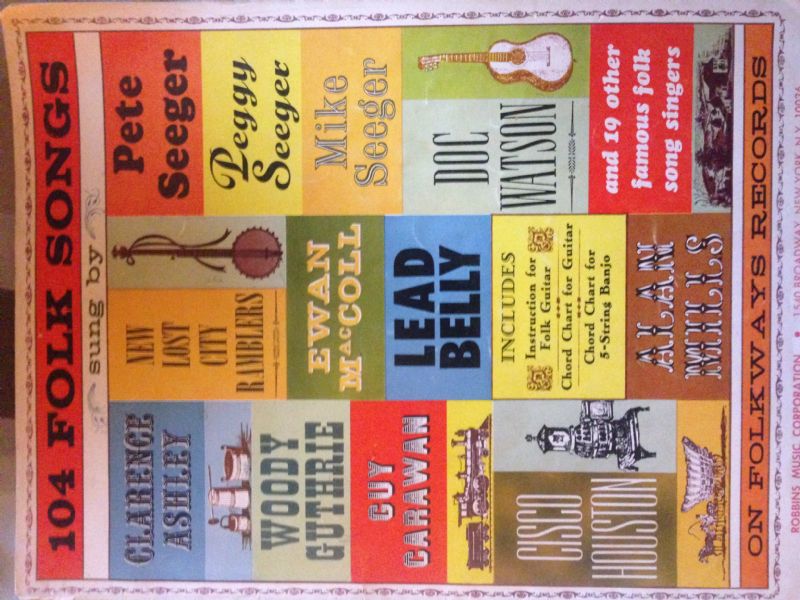
I got the attached book (which I still have) when I was 11 (1964), along with a cheap guitar and lessons with a women who looked, to my young eyes like Joan Baez....I was instantly hooked....even to the music eventually!!!!!!!!!!!!! I think the suggested interviews already given are great and I know based on your past work you will make awesome choices...!!!!!!!!!!!!! Thanks, Rick

Edited by - Montanarick on 03/29/2014 16:47:36
 |
rbergesch - Posted - 03/29/2014: 16:47:12
A neat project.
Judy Collins is quite alive and still kickin'; she signed a CD for me a years or so ago. She probably has some great stories, at least... I saw the original singers of the Chad Mitchell Trio recently on some very late at night TV show; saw them live once "...back in the Day". Of the Kingtston Trio, only Bob Shane is still living; he basically owns the name "Kingston Trio" and apparently rents it to the fellows who perform and do KT "fantasy" camps. I believe Alex Hassilev of the Limelighters is still living, as is Glen Yarborough.
And don't forget the Tarriers: Eric Weissberg and I believe Marshall Brickman were in this group...
Give us some updates from time to time.
Edited by - rbergesch on 03/29/2014 16:58:14
pbaker0815 - Posted - 03/29/2014: 17:27:43
1 - What about folk music captivated you? Why? How old were you? Where did this happen? Please share your story.
Grew up in Los Angeles. My parents had a 10" recording of Odetta--Odetta Sings Ballads and Blues, released in 1956. I probably started listening to it when I was 10. Bob Dylan's first album came out when I was 11. My consciousness of this music was through the lineage of Pete Seeger and Woody Guthrie, the labor movement and then the civil rights movement. Don't see how the folk revival can be discussed outside of the context of the civil rights struggle.
Ry Cooder, Bonnie Raitt, and Taj Mahal were all playing (sometimes together) at the Ash Grove, where Doc Watson and Bill Monroe had also played within a few years previously. Bonnie Raitt and Ry Cooder were becoming immersed in the culture and music of the forgotten Black Delta blues artists and saw preserving that music as a particular responsibility of young musicians. Mississippi John Hurt was an influence when he was rediscovered in 1963; he was brought to UCLA for a concert not long after. Acknowledging the contribution of these musicians was an important subtext of the folk revival and its intersection with the Civil Rights movement. Odetta and then Bernice Johnson Reagon continue to inspire me.
2 - Who are your favorite folk legends and why? IDEALLY 1 or 2 of them ARE STILL LIVING!! Those are the names I most want since I can still capture their stories.
Bearnice Johnson Reagon belongs in your pantheon. Buffy St. Marie. Joan Baez. I mention them because some of the previous posters have I am sure inadvertently overlooked the women.
frailin - Posted - 03/29/2014: 19:12:16
Wow! Great stuff, folks! I knew you'd have thoughts and suggestions to share.
Dan Drabek - Posted - 03/29/2014: 19:33:56
Don't forget the Greenwood County Singers. Also, on a different continent, John Renbourn, Bert Jansch and the Pentangle.
The Nitty Gritty Dirt Band were an early influence on me, as was Norman Blake and Vassar Clements. David Lindley was also one of my heroes when I started playing the banjo.
DD
raharris - Posted - 03/29/2014: 20:29:37
Frailin', can't wait to see what you come up with for your 75th birthday!
mainejohn - Posted - 03/30/2014: 07:00:36
Craig...this is an exciting topic for me because of the influence it has had on my life in addition to the endless hours of enjoyment it has provided me. When the first Kingston Trio album came out in 1958, I was a sophomore in high school, and my musical taste changed forever. If it hadn't been for them, I seriously doubt there ever would have been a folk revival, or if there had been, it wouldn't have looked or sounded the same. Sure, there were other folk singers around before '58 (Pete Seeger and Bob Gibson come immediately to mind), but no one really launched the movement as did Nick Reynolds, Bob Shane, and Dave Guard. When I heard that album, I knew I had to learn to play the banjo, and remain a long-neck playing old folkie, six and a half decades later. Alas, Nick and Dave have passed, but Bob Shane is still alive and well, having just turned 80 and living in AZ, managing the current Trio configuration. My other folk heroes, Pete Seeger and Bob Gibson have passed, but others you might contemplate (if they haven't already been suggested) are Billy Faier and Eric Weissberg, both of whom came out of the Washington Square (NYC) folk scene of the pre- KT 50's.
You might check with Gordon Titcomb, a BHO member who grew up in Roxbury CT (my home town) and who played professionally with many of the old folkies. I think he'd be an excellent resource.
And for proof of my pathetic loyalty to my original folk heroes:
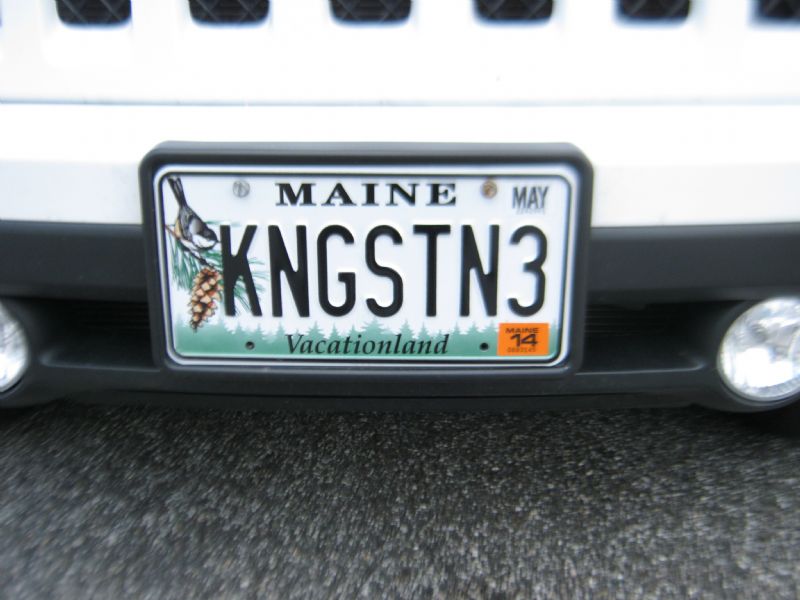 Kingston Trio tribute |
Marc Nerenberg - Posted - 03/30/2014: 07:04:38
This project makes me wonder how one defines the terms "folk" and "legend". A lot of obvious "folk legends" are really "pop idols" and are neither "folk" nor "legends" in my opinion. I would hope you will include "unsung heroes" in there - the people who play real folk music, and never consequently become famous enough to be called legends.
twelvefret - Posted - 03/30/2014: 07:10:36
quote:
Originally posted by Marc NerenbergThis project makes me wonder how one defines the terms "folk" and "legend". A lot of obvious "folk legends" are really "pop idols" and are neither "folk" nor "legends" in my opinion. I would hope you will include "unsung heroes" in there - the people who play real folk music, and never consequently become famous enough to be called legends.
I agree, but if they are that obscure how would anyone know they existed?
The reason I mentioned Clyde Davenport was that he still plays a style that has links going back several generations and knew Leonard Rutherford of Rutherford and Burnett fame. I am amazed that fiddler Bruce Greene is listed in the OT Fiddlers Hall of Fame and Mr. Davenport is glaringly absent.
frailin - Posted - 03/30/2014: 07:18:06
Point well taken Marc. I do not want to make this and "all hits review." Part of the reason I first announced this on banjo hangout is I know the depth of understanding this audience has for this genre of music. I'm delighted to see they are giving me names of the lesser knowns as well as those of higher profile.
That's also how I intend to release the volumes. On each there will be recognized artists and lesser-known's. They go hand-in-hand.
Thank you again everybody for your suggestions. As with the banjo builders, I will not be able to get to everyone. But all recommendations are thoughtfully considered. :)
More later. Off to church.
kwl - Posted - 03/30/2014: 07:25:19
What a great project Craig! I came in to folk music through square dancing. Growing up in suburban New York City I attended a weekly square dancing class in my neighborhood. Besides enjoying the dancing, I was captivated by the music. I wanted to learn more about the music to which we danced and that led to an interested in guitar, then banjo and now dulcimer as well. I was going to suggest you do a series on dulcimer builders as you did for banjo builders, but I guess I'm too late for that.
I haven't seen Ronald D. Cohen mentioned yet. His book Rainbow quest is a good survey of the so called "folk revival."
Best wishes for a great new series of DVDs.
Ken
Marc Nerenberg - Posted - 03/30/2014: 07:29:51
quote:
Originally posted by twelvefretquote:
Originally posted by Marc NerenbergThis project makes me wonder how one defines the terms "folk" and "legend". A lot of obvious "folk legends" are really "pop idols" and are neither "folk" nor "legends" in my opinion. I would hope you will include "unsung heroes" in there - the people who play real folk music, and never consequently become famous enough to be called legends.
I agree, but if they are that obscure how would anyone know they existed?
The reason I mentioned Clyde Davenport was that he still plays a style that has links going back several generations and knew Leonard Rutherford of Rutherford and Burnett fame. I am amazed that fiddler Bruce Greene is listed in the OT Fiddlers Hall of Fame and Mr. Davenport is glaringly absent.
When I say not "famous enough to be called legends" I don't mean "totally unknown". I just mean people who didn't achieve some sort of "pop stardom" as their ticket to "legendary" status. Clyde Davenport is a perfect example of the kind of unsung hero I'm hoping will be included (along with those more famous people who I think may be ultimately less interesting).
edit: I see Craig has already responded to this point, while I was composing my answer.
Edited by - Marc Nerenberg on 03/30/2014 07:33:25
kwl - Posted - 03/30/2014: 07:41:28
A contemporary folk singer who travels all over the US giving programs in school, libraries and other venues, is Adam Miller from Drain, Oregon. He would be an interesting person to interview. He has a passion for sharing the old songs with all who will listen.
Marc Nerenberg - Posted - 03/30/2014: 08:02:49
A couple of suggestions of people to interview:
Stephen Wade - both as an artist and a historian and an outstanding story-teller.
Ramblin' Jack Elliot, who bridges the gap between Woody Guthrie and Bob Dylan, having been the acolyte of one and the mentor of the other - and having lead a damn interesting life of his own.
Marc Nerenberg - Posted - 03/30/2014: 08:07:27
quote:
Originally posted by skiptomyloudead - Woodie Guthrie
alive - Peggy Seeger, Bob Dylan, Joan Baez
could mention others but i presume you are just talking about American aritists?
Ewan MacColl and Ralph McTell are a couple of British artist who i feel have made a major contribution. also Martin Carthy whose arrangements/guitar styling of old traditional songs had a huge influence on Dylan and Simon and Garfunkel. as you probably know S & G used his arrangement of Scarborough Fair without crediting/acknowledging him (although they did eventually). and Dylan used his arrangement of Lord Franklin for Girl From the North Country. Carthy continues writing, playing traditional songs, and touring the folk clubs around Britain to this day - as does McTell
I thought Dylan used "Lord Franklin" for "Bob Dylan's Dream" not "Girl From The North Country". To my mind, "Girl From The North Country" is related to "Scarborough Fair".
Cottonmouth - Posted - 03/30/2014: 08:37:57
Ian Tyson with Sylvia Fricker, Gordon Lightfoot, The Limelighters.
Joe Connor - Posted - 03/30/2014: 08:57:43
Here are some people I would suggest for interviews:
1. Bob Sherman, who has hosted a radio program called Woody's Children in New York City for several decades. wfuv.org/staff/bob-sherman He's had a lot of legends on his show, including Pete Seeger on several occasions.
2. Oscar Brand is still around. oscarbrand.com/ He's one of the few still alive from the Seeger-Gurthrie-Lee Hays-People's Songs days in New York City.
3. Fred Hellerman and Ronnie Gilbert, the two surviving Weavers, must have interesting stories to tell. I would also include Frank Hamilton, who replaced Erik Darling, who replaced Seeger. I don't think I've ever seen an interview where Hellerman and Gilbert shared their Weavers' memories.
4. Bob Shane (kingstontrio.com). While some may not see him as either folk or legend, the fact remains that the Kingston Trio introduced an entire generation (or two) to folk-oriented music and inspired a lot of us to pick up banjos and guitars and learn to play. Bob is a great guy and has some wonderful stories to share.
5. Art Podell (artpodell.com/). Art was a member of the Greenwich Village crowd in the late '50s and early '60s and then became a member of the New Christy Minstrels. Thus, he was one of the few guys who was part of perhaps the two polar extremes of the folk revival. Art is also a helluva nice guy.
Edited by - Joe Connor on 03/30/2014 09:06:06
frailin - Posted - 03/30/2014: 10:51:50
Wow! Great memories, recommendations and musings!
Thank you!
Edited by - frailin on 03/30/2014 10:52:40
jbalch - Posted - 03/30/2014: 12:07:33
Craig:
Check out The Cumberland Trio. These guys made arguably some of the BEST records of the (late) folk era working with top producers like Chet Atkins. They were well on their way to big things, when the British invasion changed the music scene forever. They have an amazing story.
The Cumberland Trio has been performing again and just released a new CD of their recordings from the 1960s.
contact: Jerre Haskew: facebook.com/JerreHaskew?fref=ts
They are a trio ... but there are four of them in this old photo - go figure...


Edited by - jbalch on 03/30/2014 12:15:39
skiptomylou - Posted - 03/30/2014: 13:14:07
marc i stand corrected - you are right - girl from north country is definitely related to Scarborough Fare. i originally wrote a much longer post which i edited down, hence the confusion.
all the best
Jill
mainejohn - Posted - 03/30/2014: 14:47:50
I'd heard of the "Cumberland Three" which included John Stewart before he replaced Dave Guard in the Kingston Trio in 1961, but until now I'd never heard of the "Cumberland Trio." Assuming they were in existence at the same time, I wonder if they knew of each other.
Joe Connor - Posted - 03/30/2014: 16:41:47
John:
I think the Cumberland Three disbanded shortly after John Stewart left in 1961. From the Cumberland Trio's website, it looks like they didn't get going until about 1964. If both groups had been performing at the same time, I'll be somebody's manager or record company would have raised hell about the similarity in names.
banjoike - Posted - 03/30/2014: 19:36:54
Well i must say the Kingston Trio started it all for me....Bob, Nick, and Dave....and the first notes on the banjo of Three Jolly Coachman. And i must say one of the finest Folk Musicians living besides Bob Shane is Steve Gillette. A nice guy who is a 'musician's musician. He wrote the song 'Darcy Farrow! What a legend!!!
Scrat - Posted - 03/31/2014: 04:43:52
Peter Stamphel
Steve Weber
Sam Shepard
Michael Hurley
Jim Kewskin
Geoff Muldaur
Scrat - Posted - 03/31/2014: 05:53:26
You could also look into people that were involved with the Old Towne School in Chicago from its founding in 1957 to ?
Ted Johnson is one that you may get some interesting perspectives from.
JanetB - Posted - 03/31/2014: 05:56:26
Michelle Phillips of the Mamas and the Papas
"Dedicated to the One I Love:" youtube.com/watch?v=4M7gKZqgHn4
"California Dreamin:" http:/g/youtube.com/watch?v=N-a...-aK6JnyFmk
dmf823 - Posted - 03/31/2014: 06:13:46
I saw Peter Yarrow of Peter Paul and Mary a few weeks ago. He puts on a great concert and does a meet and greet after. He signs autographs and poses for pictures. He also tells stories. He would be a great interview.
frailin - Posted - 03/31/2014: 06:34:04
Does anyone know of a radio DJ that specializes in folk music? Is there a LIVING Wolfman Jack of folk?

kwl - Posted - 03/31/2014: 06:50:45
In Philadelphia, Gene Shay is a folk institution. Here is his Wiki page: en.wikipedia.org/wiki/Gene_Shay As an aside, Mark Moss from Sing Out magazine, would be another good interview or source of information.
Ken
Edited by - kwl on 03/31/2014 06:52:32
Marc Nerenberg - Posted - 03/31/2014: 07:17:22
quote:
Originally posted by JanetBMichelle Phillips of the Mamas and the Papas
"Dedicated to the One I Love:" youtube.com/watch?v=4M7gKZqgHn4
"California Dreamin:" http:/g/youtube.com/watch?v=N-a...-aK6JnyFmk
Not that I don't like Michelle Phillips or The Mamas and The Papas, but I watched those two videos, because I figured there must be something in them that I missed. But I must still be missing it. I fail to see any connection whatsoever between the pop music of the Mamas and Papas and anything I would define as folk music. What would make Michelle Phillips a "Folk Legend" under any definition of the term?
frailin - Posted - 03/31/2014: 07:32:14
Ok. We all have opinions about our music and favorites.
In order to avoid hard feelings here on this thread (which usually happens in "heated debates"), let's let the ethnomusicologists and folks authorities weigh-in with their "criteria" and "suggestions." You know I'm seeking them out right now.
Love you knowledgeable guys and gals but please, let's keep this focus expanding/going out (versus coming back in). There'll be plenty of time for debate later. And, as we all know, in addition to having our individual likes and dislikes, there's NO way to include everyone in this series.
Edited by - frailin on 03/31/2014 07:47:59
frailin - Posted - 03/31/2014: 07:35:15
Ken, thanks for the Gene Shay suggestion! I'd completely forgotten about him. He's EXCELLENT. And John, your recommendation of individuals in the Cumberland Trio is equally as helpful!
Thank you for your insights, folks!
frailin - Posted - 03/31/2014: 07:40:30
I have a conversation scheduled with the astonishingly brilliant, amazing and fun-loving Jeff Place, Archivist at Smithsonian Folkways this afternoon and I'm scrambling to get my notes together in time.

Here's an example of an "expert" I'm VERY happy to engage. Among Jeff's accomplishments:
Jeff Place has been at the Center’s Ralph Rinzler Folklife Archives and Collections since 1988. He holds an MLS from the University of Maryland and specializes in sound archives. He oversees the cataloging of the Center's collections and has been involved in the compilation of over fifty CDs of American music for Smithsonian Folkways Recordings including the Lead Belly Legacy Series, Lead Belly Sings for Children; the Pete Seeger American Favorite Ballads series; andThe Asch Recordings (Woody Guthrie). Place has been nominated for four GRAMMY Awards and eleven Indie Awards, winning two GRAMMYs and five Indies. He was one of the producers and writers of the acclaimed 1997 edition of the Anthology of American Folk Music and The Best of Broadside, 1962-1988(2000). He has served on the curatorial team for a number of exhibitions including the traveling Woody Guthrie exhibition This Land is Your Land. In 2003, he co-curated the Smithsonian Folklife Festival program on Appalachian culture. In 2012, he is produced and co-authored (with Robert Santelli) the publication and CD-box set Woody at 100.
Marc Nerenberg - Posted - 03/31/2014: 08:17:17
quote:
Originally posted by frailinOk. We all have opinions about our music and favorites.
In order to avoid hard feelings here on this thread (which usually happens in "heated debates"), let's let the ethnomusicologists and folks authorities weigh-in with their "criteria" and "suggestions." You know I'm seeking them out right now.
Love you knowledgeable guys and gals but please, let's keep this focus expanding/going out (versus coming back in). There'll be plenty of time for debate later. And, as we all know, in addition to having our individual likes and dislikes, there's NO way to include everyone in this series.
Well then you might as well include Frank Zappa, the Beatles and the Grateful Dead.
frailin - Posted - 03/31/2014: 08:20:22
As problematic as "a selection criteria for Folk Legend candidates" is a definition of "Folk Music."
Edited by - frailin on 03/31/2014 08:27:26
Page: 1 2
Terms of Use | Privacy Policy | Privacy Consent (EU/GDPR Only)
Copyright 2026 Banjo Hangout. All Rights Reserved.


