DVD-quality lessons (including tabs/sheet music) available for immediate viewing on any device.
Take your playing to the next level with the help of a local or online banjo teacher.
Weekly newsletter includes free lessons, favorite member content, banjo news and more.
Premier Sponsors


|
Please note this is an archived topic, so it is locked and unable to be replied to. You may, however, start a new topic and refer to this topic with a link: http://www.banjohangout.org/archive/278348
56peaches - Posted - 01/23/2014: 22:26:57
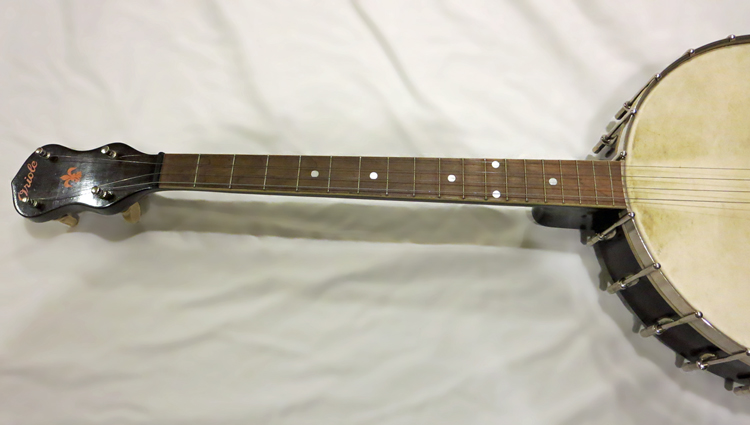
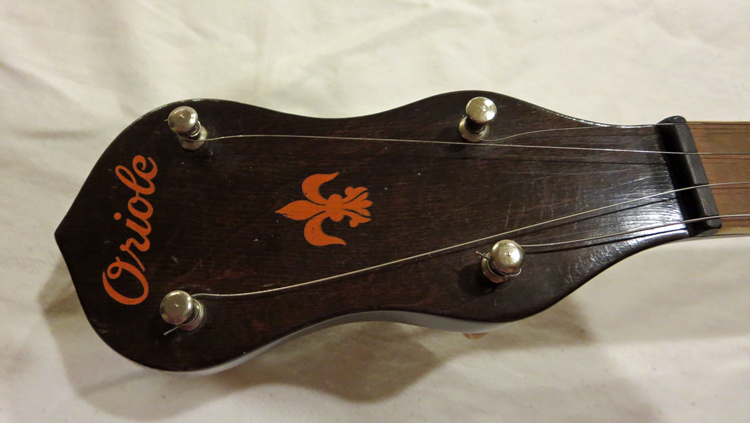
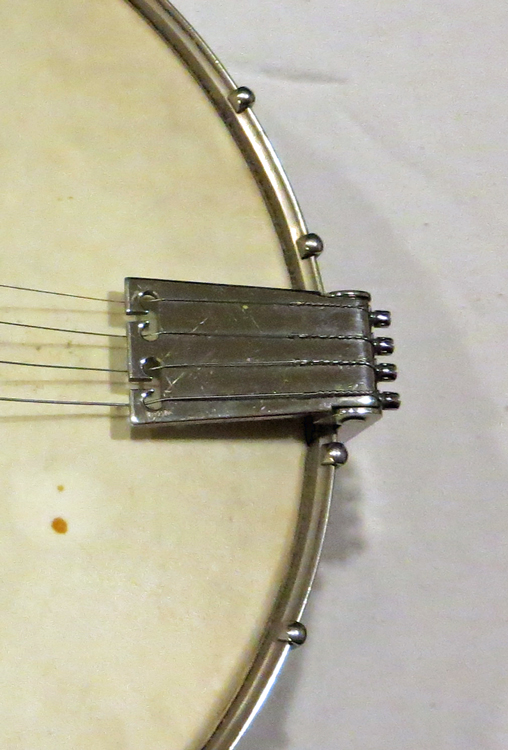
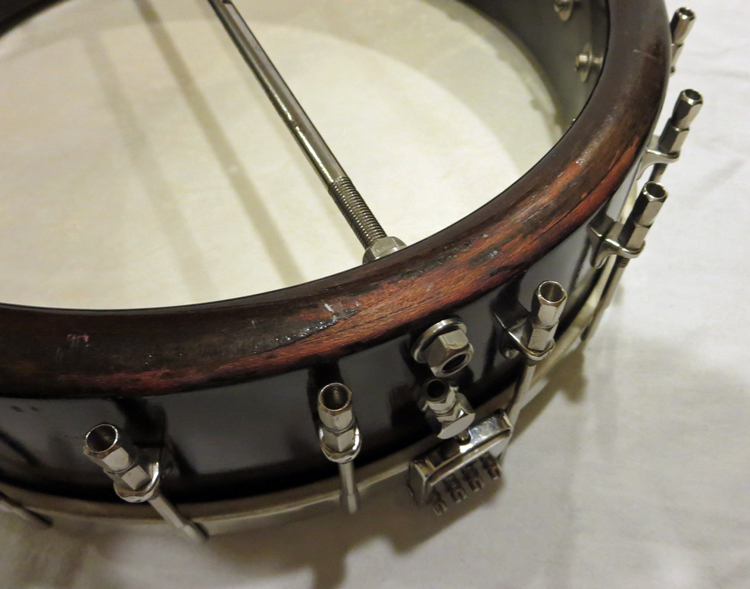
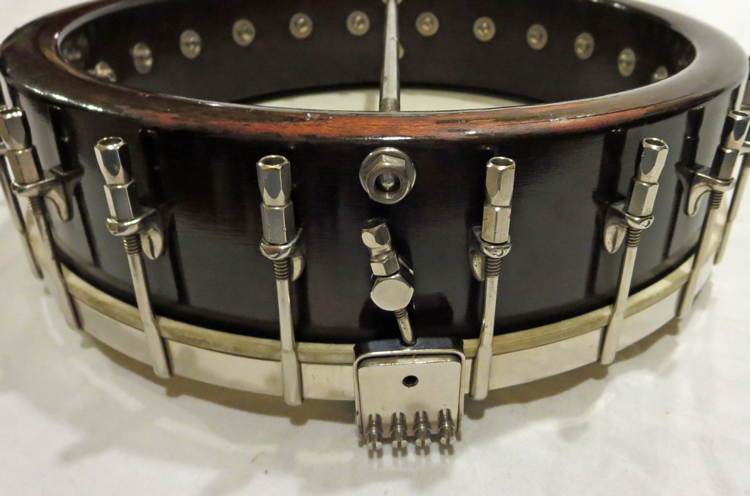
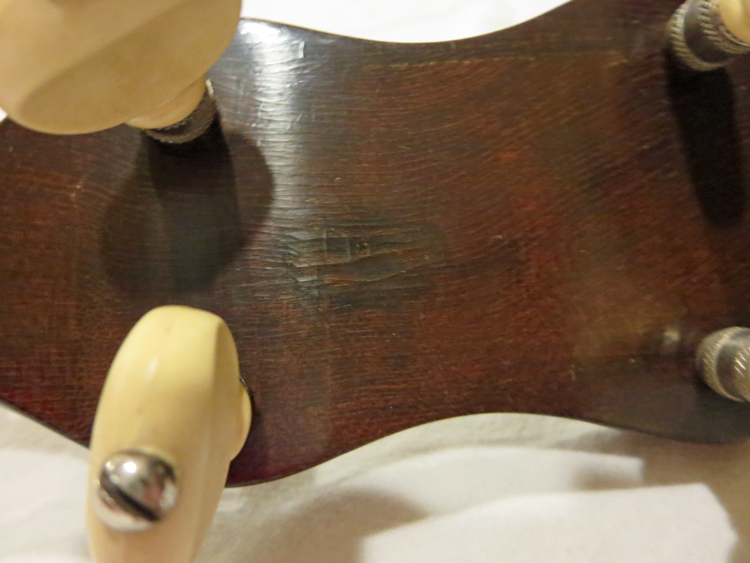
The other old banjo we had in the closet is a Gibson Oriole Tenor. It has an 11 inch rim (width of the head right?) that's 3/4 inch thick. I'm not sure how old this banjo is except that it's circa 1920-1930 I think. There's what looks to me like a new tailpiece on it but otherwise I think all the hardware and pegs are original. It has some wear on the lower back rim but there's no apparent wear on the fretboard or the back of the neck. There's 18 frets and I'm not sure how to figure out the scale. Is it the same as on the Whyte Laydie? Measure from the nut to the 12th fret and double the measurement? I've posted pics. Thanks so much.
Edited by - 56peaches on 01/23/2014 22:33:51
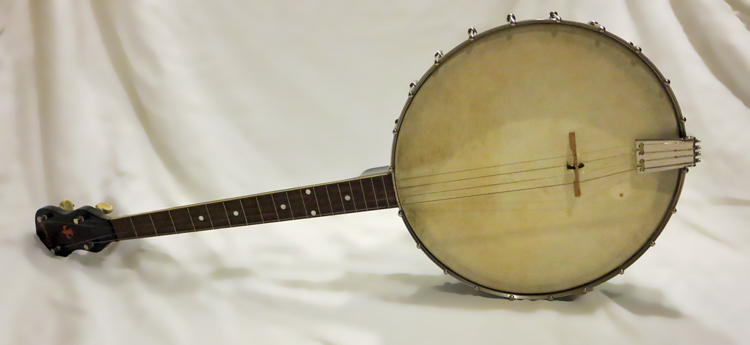 Front view | 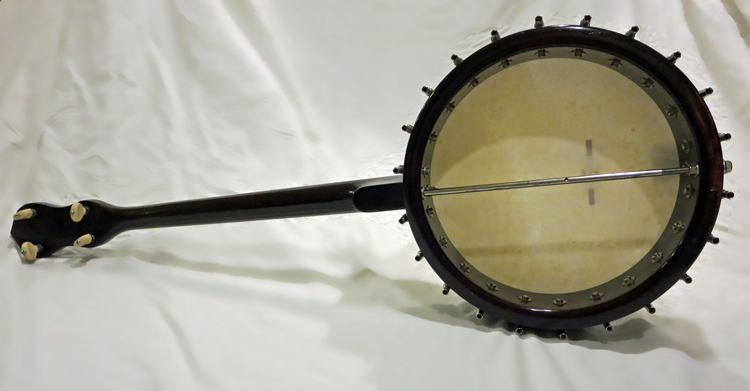 Rear view | 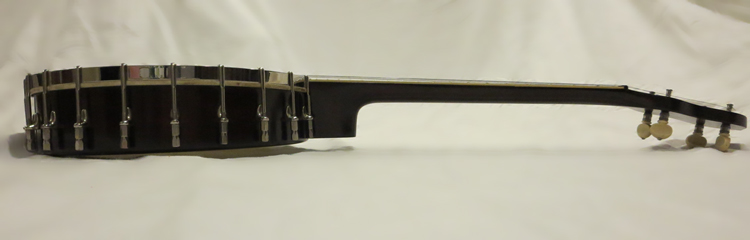 Side view |
revellfa - Posted - 01/24/2014: 03:26:52
Awesome! Those are great banjos! I've owned two of them. This one looks all original. I'm not sure about the tailpiece, I owned one once that had the Waverly style tailpiece and I'm pretty sure it was original.
country frank - Posted - 01/24/2014: 04:48:46
Great find...that looks like a really nice condition example. Are you keeping it as is, or considering converting ?
Edited by - country frank on 01/24/2014 04:50:11
trapdoor2 - Posted - 01/24/2014: 08:38:06
quote:
Originally posted by 56peachesThe other old banjo we had in the closet is a Gibson Oriole Tenor. It has an 11 inch rim (width of the head right?) that's 3/4 inch thick. I'm not sure how old this banjo is except that it's circa 1920-1930 I think. There's what looks to me like a new tailpiece on it but otherwise I think all the hardware and pegs are original. It has some wear on the lower back rim but there's no apparent wear on the fretboard or the back of the neck. There's 18 frets and I'm not sure how to figure out the scale. Is it the same as on the Whyte Laydie? Measure from the nut to the 12th fret and double the measurement? I've posted pics. Thanks so much.
Yes, scale on any stringed instrument is always determined in the same way...unless it ain't got a 12th fret (like a violin or viola or cello or...).
Oddly enough, scale length isn't something we generally discuss on tenor banjos. More important is the number of frets, some folks preferring 17 and some preferring 19. The number of frets is usually a clue to the generic scale length, 17 fret instruments usually being shorter and 19 fret instruments usually longer. Also, there is this (often mistaken) idea that a 17 fret Tenor is ideal for Irish music while a 19 fret tenor is better for Jazz/Dixieland. Tain't necessarily so. Many Irish musicians favor the 19 fret instruments...and vice versa.
The real market for this banjo is the Bluegrass "conversion" market. These are prized for their rim (as it is a Gibson), the neck means virtually nothing. They have been consistently undervalued in the market because they are usually sold as "Oriole" banjos rather than "Gibson"...and thus command a lower price. The market also runs a bit lower as buyers are usually only interested in the rim...and don't want to pay for the parts they're going to toss.
Edited by - trapdoor2 on 01/24/2014 08:47:31
56peaches - Posted - 01/24/2014: 10:30:42
We're planning to sell the banjo as is once we have a little more information.
So what does it mean that this has 18 frets instead of 17 or 19?
Thanks for the info on the tailpiece. Everything looks shiny new on this but something about the tailpiece made me hesitate and I am definitely not knowledgeable about banjos. I know it's been sitting in closets for most of its life because it was passed down through family and only one that we know of ever played it.
trapdoor2 - Posted - 01/24/2014: 11:25:35
quote:
Originally posted by 56peachesWe're planning to sell the banjo as is once we have a little more information.
So what does it mean that this has 18 frets instead of 17 or 19?
LOL, it means that it sits in the middle somewhere. 
When it was designed, it was for CGDA tuning. That puts the 18th fret (highest note) as a D. If you felt you needed that high D, I presume you would either buy an Oriole or something else that had 18 or 19 frets. The Oriole brand name was primarily targeted towards the lower end of the market...it may have been something as simple as the tooling or materials the shop had available. I don't recall ever seeing and advertisement touting the benefits of 18 over 17 or 19.
Really, it makes very little difference, the banjo will almost certainly be bought by someone to convert it to a 5-string.
56peaches - Posted - 01/24/2014: 12:25:41
LOL Thanks for the info. I'll just post it in classifieds and not worry about it.
bluenote23 - Posted - 01/24/2014: 13:10:42
I have a Waverly style 4 string tailpiece like that on my Kel Kroydon. I'm pretty sure my banjo originally had a Preto style tailpiece but I read somewhere on the internet that they stopped making 4 string Waverly tailpieces in the 40's.
G Edward Porgie - Posted - 01/24/2014: 13:16:50
Some of the less expensive Gibsons sold in the mid-twenties, such as the TB-1 also had eighteen frets. Don't ask me why, though, because I don't know.
mutantmoose - Posted - 01/24/2014: 21:52:08
Fuunny, I read your post, and then was browsing the banjo ads on Craigslist and saw the same pictures. Very cool stuff.
mikeyes - Posted - 01/27/2014: 12:54:40
These banjos make excellent GDAE Irish tenor banjos they are loud and complex in tone. The tailpiece is original, I've had several and they all had Waverlys. Top price is around $450 or so but in today's economy don't hold your breath.
Edited by - mikeyes on 01/27/2014 12:58:36
mikeyes - Posted - 02/06/2014: 19:44:49
Just an update on this banjo. I bought it in order to pass it on to a young Irish banjo player - I let them pay me off over the course of a few years as they can - and I have to say this one is a real gem. The neck is straight, there are a few finish flaws from the little use it got, and it sounds great (and loud.) Thanks to Patricia for selling it to me.
Gerry O'Connor played the Clark/Oriole I bought a while back and he was impressed at how good these banjos sound when they are set up for GDAE tuning. It has a lot to do with the rim, of course, and the scale is just right for anyone transitioning from mandolin. It is long enough for a good sound and short enough to use mandolin fingering without too much trouble. These are fast becoming my favorite ITM banjo as they are a terrific value in spite of being a Gibson.
Mike Keyes
Terms of Use | Privacy Policy | Privacy Consent (EU/GDPR Only)
Copyright 2026 Banjo Hangout. All Rights Reserved.