
DVD-quality lessons (including tabs/sheet music) available for immediate viewing on any device.
Take your playing to the next level with the help of a local or online banjo teacher.
Weekly newsletter includes free lessons, favorite member content, banjo news and more.
Premier Sponsors


|
Please note this is an archived topic, so it is locked and unable to be replied to. You may, however, start a new topic and refer to this topic with a link: http://www.banjohangout.org/archive/276855
emaych - Posted - 12/31/2013: 09:01:43
Greetings all, and a Happy upcoming New Year to you!
I'm looking to have a banjo converted to use for classic-style nylon-stringed playing. The banjo is a Bart Reiter 'Regent' banjo. The conversion would involve widening and smoothing the nut, changing the 5th string nut, and retrofitting a new tailpiece to accommodate nylon strings.
Any thoughts about someone who could do this?
Thanks!
Michael Hughes
jbalch - Posted - 12/31/2013: 09:21:07
I have installed Nylgut strings on Reiter banjos with almost no changes required. In my experience, it was not necessary to widen the nut sluts for the four (4) long strings. All I did was:
1. widen and slightly deepen the string slot on the 5th string pip (a small needle file will do the job).
2. install a no knot tailpiece for easier installation of the strings.
Note: It is not absolutely necessary to change tailpiece. You can tie a loop in the end of the nylon strings and use the OEM tailpiece if you want. But whatever tailpiece you use, be sure to ease any sharp edges where the strings may contact - to prevent cutting the nylon. Do this with appropriate sandpaper or fine files. Modern no-knot tailpieces have sharp edges on the string post slots. It you don't round them a bit, you will probably break strings.
Also - if the long strings are too tight in the nut, you can enlarge those slots too. Try to widen the slots without deepening them. I would not do this unless necessary - so that you can convert back to steel if desired.
Finally - when I install nylon strings - I avoid bringing them up to standard pitch too quickly. I usually tune them a step or two lower than standard and allow time for them to stretch and settle. After sufficient time, they can be raised with less risk of breaking.
I'm linking this to the Bart Reiter group: banjohangout.org/group/bartreiterbanjos
Edited by - jbalch on 12/31/2013 09:24:34
The Old Timer - Posted - 12/31/2013: 13:14:00
I played nylon strings on a Bart Reiter with no alterations at all. Try 'em first, before you start cutting or filing.
RV6 - Posted - 12/31/2013: 13:31:31
I asked Bart the same question. His reply: "You just need to widen the nut slots a tweak with a small round edge needle file, a one minute job".
I used welding tip cleaners to accomplish the task, including enlargement of the 5th string pip groove. Turned out just fine and the Chris Sands mediums work great on the Buckbee.
As John stated, you need to watch out for burrs on the tailpiece. I decided to make a walnut tailpiece (and two footed bridge) which worked well. (Pictures on homepage.)
Bob
Edited by - RV6 on 12/31/2013 13:32:08
jacktraylor - Posted - 12/31/2013: 13:33:55
Here is a discussion of the reproduction noknot tail piece that you should consider in your conversion
Be well
Vintage tailpiece - Discussion Forums - Banjo Hangout
this is a cammed noknot tailpiece I have one on my 1924 Regent. Perhaps earlier . For those interested, Gil Rickard has reproductions available ...
banjohangout.org/archive/262081
Edited by - jacktraylor on 12/31/2013 13:38:04
jacktraylor - Posted - 12/31/2013: 14:15:34
The attachment below shows a cammed model in action.
Enjoy
 No Knot |
jbalch - Posted - 12/31/2013: 17:16:36
quote:
Originally posted by jacktraylorThe attachment below shows a cammed model in action.
Enjoy
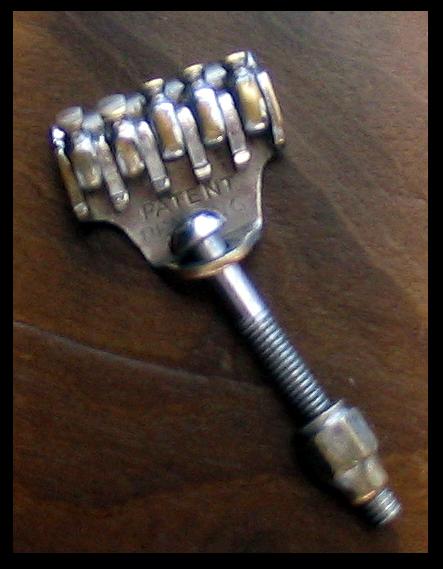
That reproduction cammed no-knot is on my Reiter Internal resonator (fretless). It is a fantastic design that works great! The originals are rare and very expensive (see attached photo). The reproductions are excellent and readily available here: elderly.com/accessories/items/P115DLX.htm
But while both the cammed and standard no-knot designs are convenient and work quite well, it is not absolutely necessary to change tailpieces in order to use nylon strings. I have seen nylon strings successfully used on Waverly (as were OEM on many Reiter banjos), Presto, Kershner, and other tailpieces.
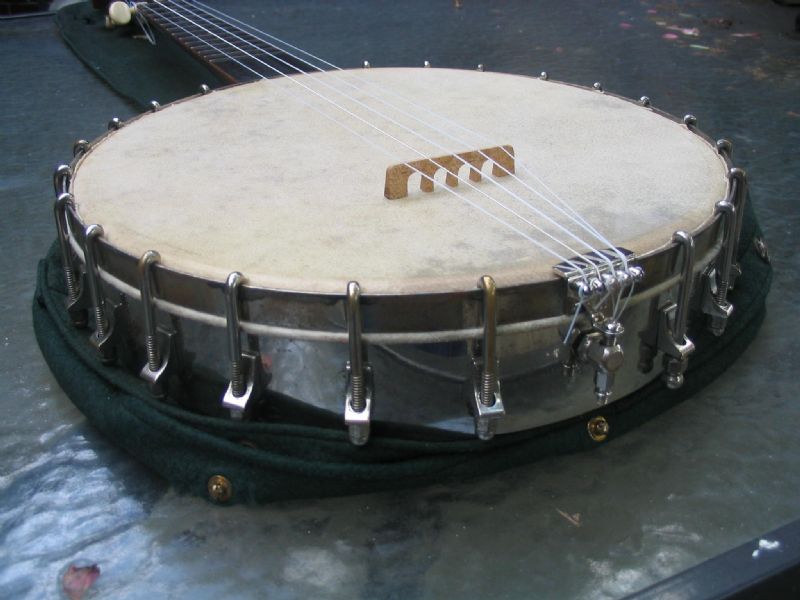
Here is a reproduction standard no-knot in use on an old Buckbee style banjo:
 |
Terms of Use | Privacy Policy | Privacy Consent (EU/GDPR Only)
Copyright 2026 Banjo Hangout. All Rights Reserved.


