
DVD-quality lessons (including tabs/sheet music) available for immediate viewing on any device.
Take your playing to the next level with the help of a local or online banjo teacher.
Weekly newsletter includes free lessons, favorite member content, banjo news and more.
Premier Sponsors


|
Please note this is an archived topic, so it is locked and unable to be replied to. You may, however, start a new topic and refer to this topic with a link: http://www.banjohangout.org/archive/275553
UnknownUser - Posted - 12/09/2013: 06:10:46
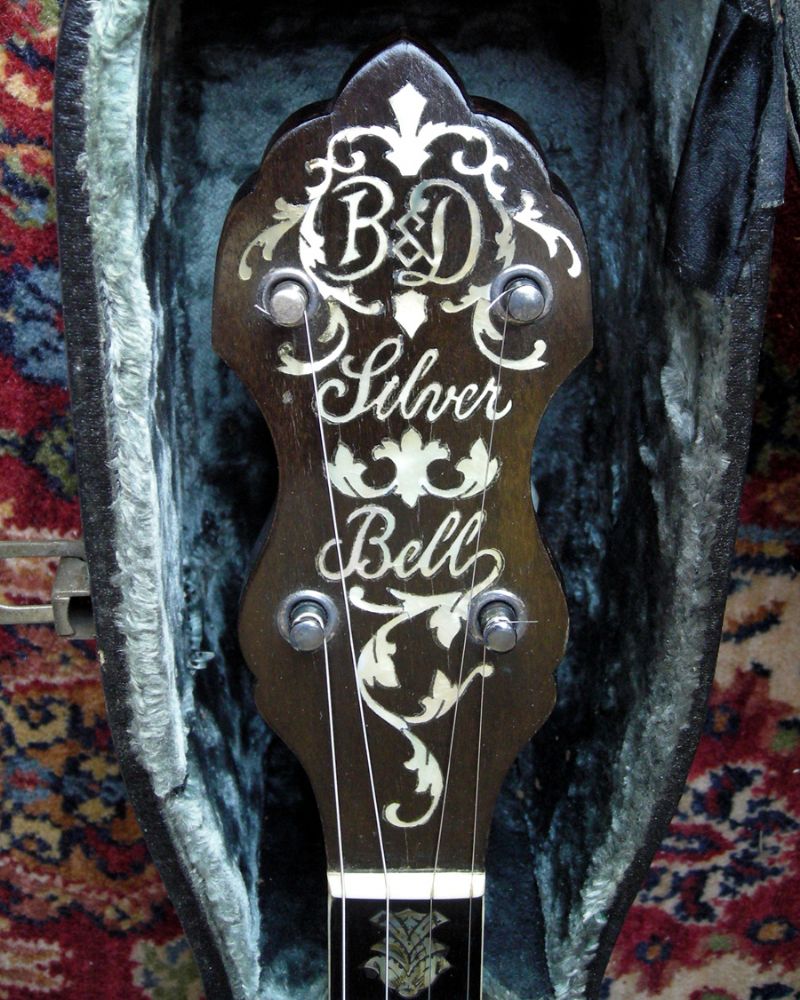
Hi folks, I've taken the time to collect various design schemas (Inlays, Resonators & Pegheads/Headstocks) used throughout the Groton era for No.1 Silverbells. I'd like to share these with you via my homepage/link below:
banjohangout.org/myhangout/pho...umid=8446
Please compare your instruments against this photoset and do share any additionals that I may have missed... Good to have in one spot.
It would be interesting to know if certain designs were used for specific years as insight.
PS - I've avoided Tonering / Tailpiece / Tuner designs in this topic as they have been extensively covered in other topics.
Peter
Edited by - UnknownUser on 12/09/2013 09:31:36
NYCJazz - Posted - 12/09/2013: 06:49:13
My tiny terror:
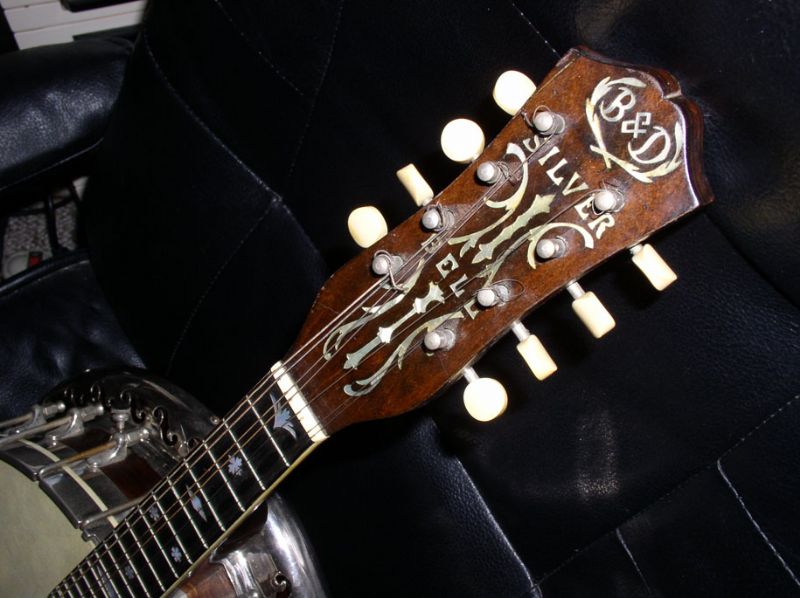
I have this tuned FCEG (CGBD +4) using standard mandolin strings. Once it's in tune, it sounds pretty special!.
It's from 1925, type ll tone ring and no mute.

UnknownUser - Posted - 12/09/2013: 07:05:56
For convenience of the topic, I'll also post the images within as well:


Edited by - UnknownUser on 12/09/2013 07:06:31
UnknownUser - Posted - 12/09/2013: 07:08:44
The second peg head attached is from a discussion: banjohangout.org/topic/269367/2 by EdBritt
Polle Flaunoe - Posted - 12/09/2013: 08:14:31
I have ALL designs - plus all features and construction details etc. - inclusive of their introductions and changes over time - embedded in my extended Bacon/B&D database / pics archive. Far far too large to be published at the internet.
However I´m - as expressed by you in harsh words - not a person to be trusted.
So - Good Luck inventing the wheel yet again!
Polle
UnknownUser - Posted - 12/09/2013: 08:25:11
@Polle, as a project in opensource (by the way storage is dirty cheep - so I doubt anything you have is too large for the internet to handle), wondering how you might be able to easily share (and others) into a common pool? If you got hit by a bus tomorrow (for example), how would BHO member re-invent the wheel? However, your rational is out of context, yet again!
Look forward to your response... Worth some thought as we all have expiring digits...
Peter
Edited by - UnknownUser on 12/09/2013 08:32:25
jbalch - Posted - 12/09/2013: 09:33:48
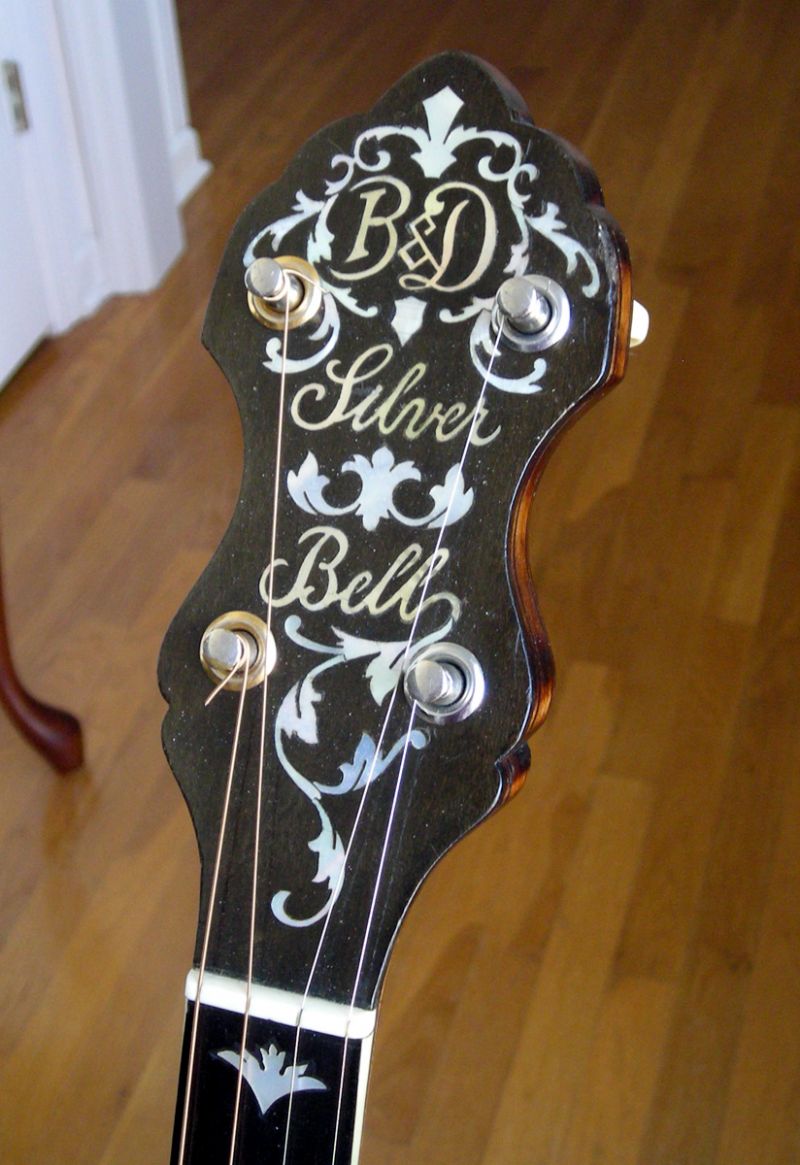
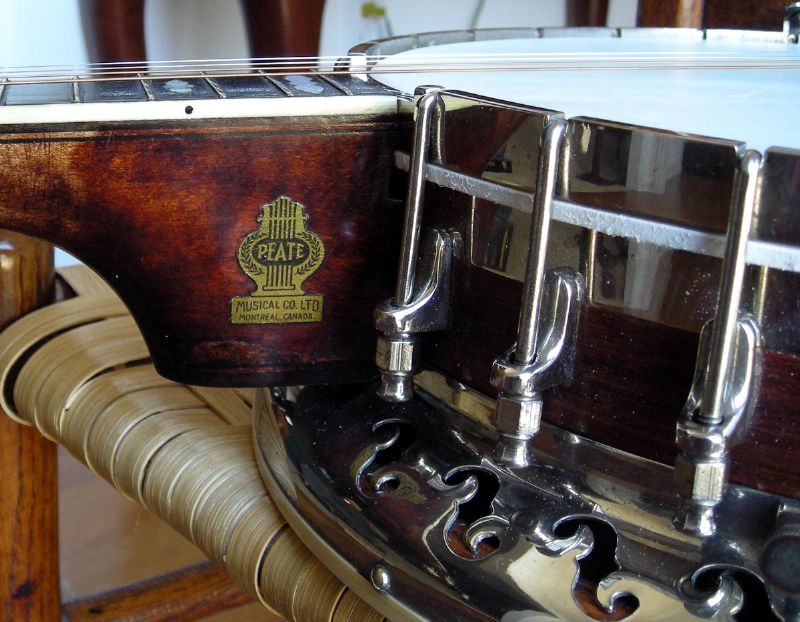
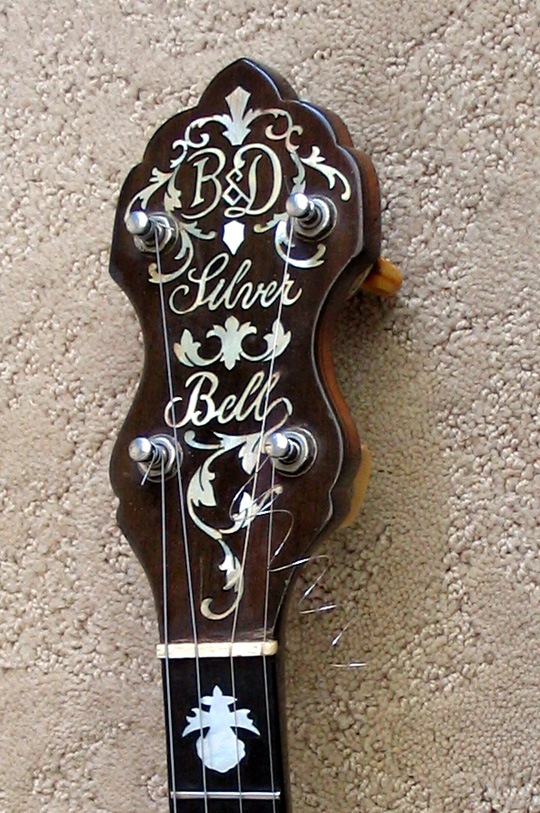
Here are links to some photos:
I like the music store decal on the heel of this example. The neck had been shaved to a slim profile. Otherwise it was basically original: banjohangout.org/myhangout/pho...umid=2919
The fingerboard was replaced on this one - so that inlay is not original. banjohangout.org/myhangout/pho...umid=4982
Last is a number 2 - with very unusual, original, engraved inlay (like several number 5 examples from the period) banjohangout.org/myhangout/pho...umid=3269
Edited by - jbalch on 12/09/2013 09:35:42
 |  |  |  |
budbennett - Posted - 12/09/2013: 09:58:20
"The fingerboard was replaced on this one - so that inlay is not original. http://www.banjohangout.org/myhangout/photos.asp?id=1896&albumid=4982"
John- do you know where that inlay came from? original or from another builder or a mish-mash?
UnknownUser - Posted - 12/09/2013: 10:13:45
Wow, what a beautiful piece Jim... Congrats! Mind if I keep a picture of this in my reference? Is this from a No.1? If so, what year?
rudykizuty - Posted - 12/09/2013: 10:35:28
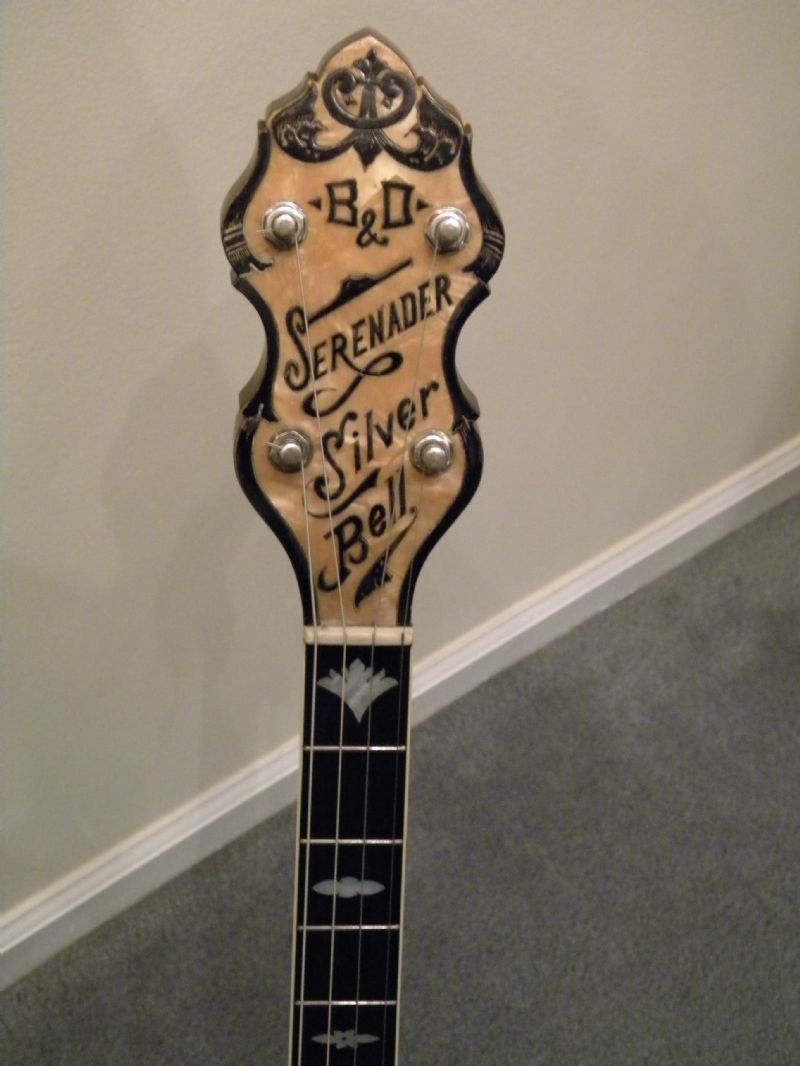
There is yet another peghead shape that was introduced with the Serenader model in the early 30's. Note the Serenader also has the large fan inlay at the 1st fret, which was also on some earlier standard Silver Bell models.
Edited by - rudykizuty on 12/09/2013 10:36:06
jbalch - Posted - 12/09/2013: 10:38:42
quote:
Originally posted by budbennett
"The fingerboard was replaced on this one - so that inlay is not original. http://www.banjohangout.org/myhangout/photos.asp?id=1896&albumid=4982"
John- do you know where that inlay came from? original or from another builder or a mish-mash?
When I had this banjo I put put some feelers about it here on the BHO. It might have been Ed Britt that responded. The inlays were apparently an off-the-shelf pattern that is seen commonly on Paramount or Lange-made (New York area) instruments. Sometimes they are engraved - these were not. I assume that the original fingerboard was worn out so someone replaced the whole thing with a new board. Perhaps it was pre-inlaid from some supplier...who knows? The banjo came from the Memphis, TN area. It appeared to have been played a lot prior to the restoration. The work was well-done (but not original or collector-grade). It was a very good "players'" banjo.
Edited by - jbalch on 12/09/2013 10:40:09
Polle Flaunoe - Posted - 12/09/2013: 10:51:04
quote:
Originally posted by petercorfield
@Polle, as a project in opensource (by the way storage is dirty cheep - so I doubt anything you have is too large for the internet to handle), wondering how you might be able to easily share (and others) into a common pool? If you got hit by a bus tomorrow (for example), how would BHO member re-invent the wheel? However, your rational is out of context, yet again!
Look forward to your response... Worth some thought as we all have expiring digits...
Peter
Doubt, mistrust, disbelief, disregard, hate-mail (anyone want a copy?) etc. - it´s like being hit by a bus. With you being the driver.
So let it be - do re-invent the wheel your way. The Bacon/B&D banjo community world wide - inclusive of all collectors, major music stores, owners, museums, dealers, historians etc. will be looking forward for this.
jims38134 - Posted - 12/09/2013: 10:59:54
Peter,
Yes, resonator is from a No1; circa 1928. And yes, you are welcome to use the pic in your reference, thanks for asking.
jim
UnknownUser - Posted - 12/09/2013: 11:07:27
@Polle - why are you compelled to slap it on the table incessantly? Nobody cares... Let it go... Contribute to this, or don't... But it is a shame to have a wealth of experience and knowledge about these models we are currently conversing about, but only for admiring eyes... Opensource isnt for all... As for the email I sent you - it wont get you any additional support or pats on the back, but rather break confidence in your privacy rank... Up to you... As for me, I am confident in what I wrote... Now be a big boy...
UnknownUser - Posted - 12/09/2013: 11:29:17
@rudykizuty, this one is "purty!" I see the inlays remain fairly consistent in this version of the silverbell.
@jbalch, John I've come across your picture sometime ago while doing seperate research... This one always fascinated me. Similar to Jim's ask, mind if I take note?
@NYCJazz - Nathan, these are little beasts for sure... A man not far from me has one. Its unfortunate that more are available on the market.
Like most Silverbells, they are a kept secret in the irish tenor world.. Both price overseas and availability have made them virtually "unknowns" next to Tom Cussen's Clareens and Dave Boyles archtops
Edited by - UnknownUser on 12/09/2013 11:29:52
UnknownUser - Posted - 12/09/2013: 20:28:48
Polle - I'd like for you to reconsider such a measure and continue to share your hard work. Please don't lash out at your friends/coworkers on my behalf. If your experience on BHO would be improved without my presence, I will gracefully bow out and continue my work outside of your playground. There is a greater good than odds.
However, if it is your wish to officially terminate on your own behalf, I would ask that you continue to host yours&contributors serials such that your "customers" can continue to be, at a minimum, served.
All the best...
Peter
jims38134 - Posted - 12/10/2013: 08:50:55
Polle, if you are offering up your database to a new administrator I would gladly attempt to take on the task. I am also sure that several others on "the hangout" that love the vintage B&D banjos would offer to help keep it up as well.
Jim
NYCJazz - Posted - 12/11/2013: 17:37:50
Hmm... I provided information to Polle's database under the assumption that it would be freely available to myself and others.
I'm a professional visual artist. If someone doesn't like my work, or has an objection to my opinion that I post online, I may defend my opinion, or I may simply ignore the post. Being an artist is the most subjective of professions.
No one is required to respond to any post. If something bothers you, don't take the bait.
Polle Flaunoe - Posted - 12/12/2013: 04:23:19
Guys,
Encouraged by many supportive and positive PM´s lately received have I decided to ignore a recent off-line hate-mail etc. and open my web sites again.
My extended database - inclusive of the associated huge photo and documentation archive - is meant for my own studies and research of all-thing Bacon/B&D. The construction and use of this requires an insight and scientific approach not to be expected by others. Hence only abstracts etc. have been published from time to time - as you may have noticed in the past. More - inclusive of a site overview - will follow.
The B&D / BACON BANJOS - GENERAL DATABASE as published is an extract from the extended DB - it can be used by all and is btw. - in the same way as all other published Bacon/B&D sites of mine - open-source - feel free downloading and saving them.
The B&D CLASSIC SILVER BELL DEVELOPMENT site as published contains a general overview - going for all styles/grades of the standard/classic SB. When focusing on only one specific standard/classic SB style/grade - as in this thread - the overview can be somewhat misleading.
As for the various resonator back constructions and designs for a standard/classic Silver Bell No. 1 - as dealt with here - B&D used 7 (possibly 8) versions during the 1923-30 period. I´ll have in mind putting up an overview and a time scheme for the consistent use of these, once I get the time.
Polle
UnknownUser - Posted - 12/12/2013: 11:06:59
Much appreciated! This will tie a lot of the loose ends together for those of us who are not as knowledgeable and engaged. From my perspective, I see all these designs and changes within the SB #1. But it's hard to pin-point why the changes may have been made, and for that matter, when. The hardest part of the analysis is the inter-changeability of parts that ends in formed hybrids, and that of changeover periods. This will be a great contribution. Thanks for changing your mind Polle...
Look forward to taking in your summary - when it comes...
As for my email:
Although it may have affected you in a negative way, I would suggest taking it with a grain of salt, trusting in your own abilities - not bound to my commentary, and less dramatic public lashing episodes.
I'd hope that your position in the band isn't solely based on the need of your equipment.
For that I am sorry.
Peter
Edited by - UnknownUser on 12/12/2013 11:14:26
Polle Flaunoe - Posted - 12/13/2013: 04:32:26
Regarding resonator back constructions and designs for a standard/classic Silver Bell No. 1 - in theory there could in fact be 22 (or more) different versions - it will take me some time (that I don´t have for now) ruling out some of these - either because they were used only on higher grade SB´s or because they were most likely never used.
I have general datings for all - but for the SB No. 1 there are both gaps and overlaps. Again I don´t for now have the time finding out about these.
A rough overview for now (I´ll have to check for any missing versions - due to my sometimes poor memory). Don´t mind the order.
SOLID MAPLE
LAMINATED - FIGURED MAPLE WITH 4 TURNED RINGS
LAMINATED - WITH 4 INLAID RINGS - EITHER FIGURED, TIGER, BIRDSEYE OR BURL MAPLE
LAMINATED - WITH 3 INLAID RINGS - EITHER FIGURED, TIGER, BIRDSEYE OR BURL MAPLE
LAMINATED - WITH 3 CARVED AND PAINTED RINGS - EITHER FIGURED, TIGER, BIRDSEYE OR BURL MAPLE
LAMINATED - WITH 3 "SCRATCHED" RINGS - EITHER FIGURED, TIGER, BIRDSEYE OR BURL MAPLE
LAMINATED - WITH NO RINGS - EITHER FIGURED, TIGER, BIRDSEYE OR BURL MAPLE
Polle
jbalch - Posted - 12/13/2013: 04:57:46
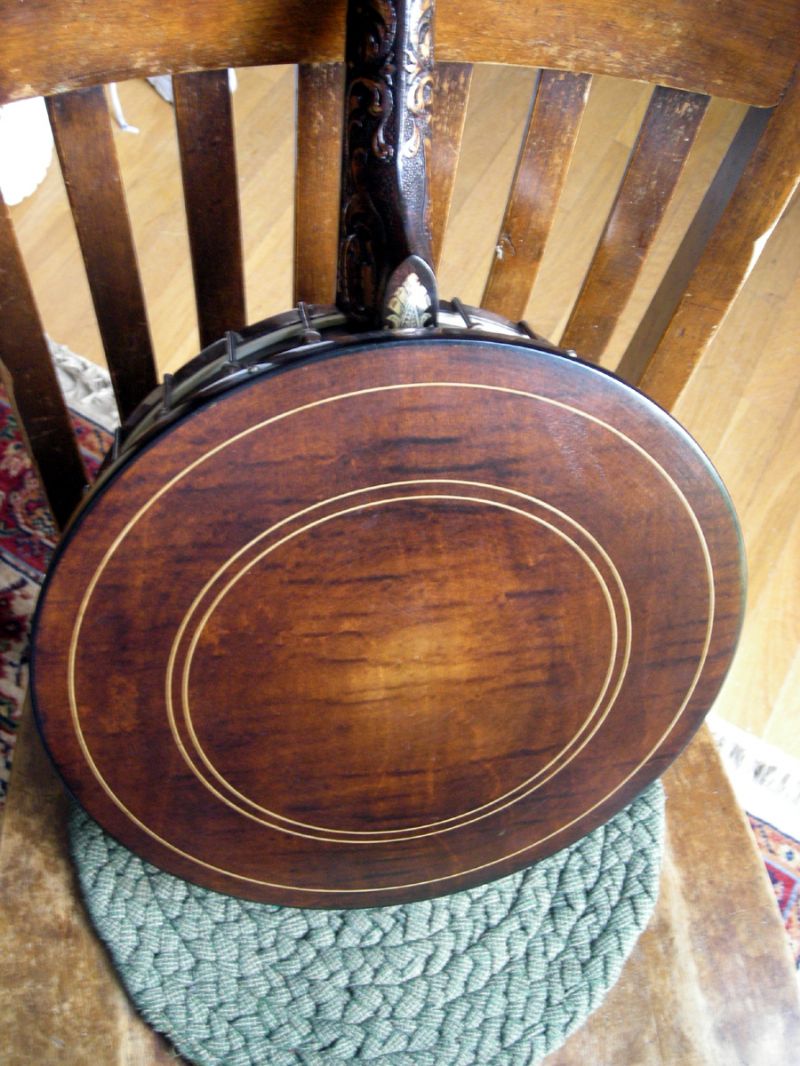
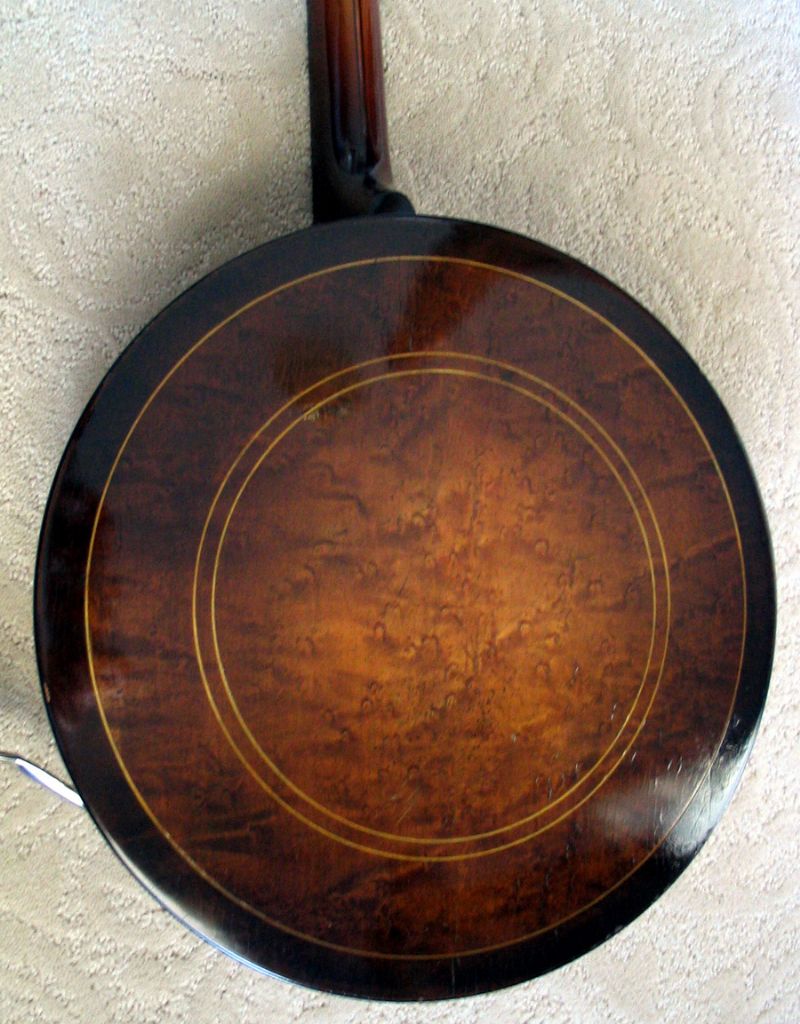
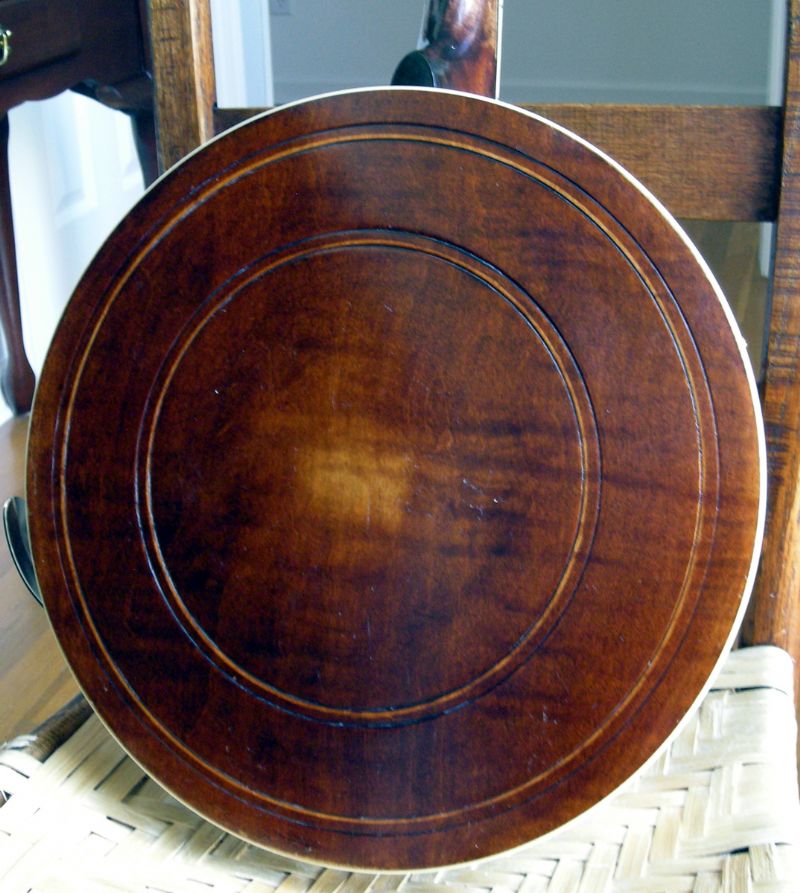
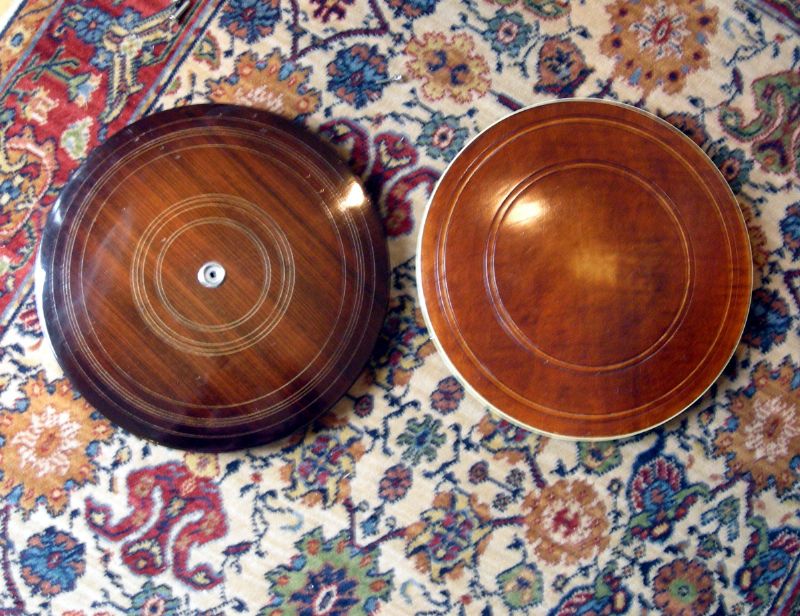
Resonators...
1. 1925 SB #2,
2. 1927 SB #1
3. 1925 SB #1
4. compare: 1925 SB & 1934 Special #2
 |  |  |  |
Polle Flaunoe - Posted - 12/13/2013: 05:19:51
John,
The SB #2 - if yours - is from late 1924.
Do you have the SN for the banjo in the 3rd and 4th picture?
Polle
UnknownUser - Posted - 12/13/2013: 05:24:48
Should this also be listed (looks like 6 inlays)? SN 28002:
Polle Flaunoe - Posted - 12/13/2013: 05:35:23
Peter,
This is one of the "extras", that I had in mind - only, I have so far seen only this example with 2 rings - so I did not include it at first hand.
For statistical reasons I´m always going for at least 2 or better 3 examples.
Polle
jbalch - Posted - 12/13/2013: 05:47:59
Polle:
1. Silver Bell # 2 - sn: 14543
2. Silver bell #1 1927? (I have lots of photos - but unfortunately none show the serial number)
3. Silver Bell #1 sn 14198 (1924?)
4. Special # 2 sn 33308
UnknownUser - Posted - 12/13/2013: 05:50:59
Also for SN 29072 has what looks to be upward of 8-9 rings (found at: billcampbanjos.com/BGT_84_Baco...Tenor.htm)
Polle Flaunoe - Posted - 12/13/2013: 05:58:04
Peter,
Yes - yet another "one-of-a-kind". I have some more in my archive. All ab 1929 - and mostly with "scratched" rings.
Do have in mind, that the standard SB in 1929/30 was more or less discontinued - sales were low - and other SB models seem to have been preferred by customers.
Polle
Edited by - Polle Flaunoe on 12/13/2013 06:03:27
Polle Flaunoe - Posted - 12/13/2013: 06:02:37
John,
Thanks - what a relief! I was afraid, that you had ruined my version datings - LOL!
Do you still have it? If so, I would very much like you to take some inside measures - for comparison with the later version(s).
I have it in the general DB - I´ll now be able adding some infos to the extended version.
Polle
Edited by - Polle Flaunoe on 12/13/2013 06:05:29
UnknownUser - Posted - 12/13/2013: 06:12:09
quote:
Originally posted by Polle Flaunoe
Peter,
Yes - yet another "one-of-a-kind". I have some more in my archive. All ab 1929 - and mostly with "scratched" rings.
Do have in mind, that the standard SB in 1929/30 was more or less discontinued - sales were low - and other SB models seem to have been preferred by customers.
Polle
Polle, this is of course another topic that I'd like to bring up in the future... I've reviewed your SN Database view an eye to understand product life cycle... the 1925-26 vols are as you've stated previously, their highest grossing year(s) - taking y/y SN deltas to proxy avg yearly output. One thing that catches my eye is the large number of models types being churned out in the later years. Is this indicative of the competitive pressure, lack of buyers due to the depression and thus trying to stimulate sales... Its seems that with such large model turnover, their internal costs would have gone up. Imagine lower sales, higher product cost structures, less employees, etc... seems like a tailspin.
Edited by - UnknownUser on 12/13/2013 06:17:31
Polle Flaunoe - Posted - 12/13/2013: 06:33:27
Peter,
We can only guess about the reasons, I take. Plus it can be hard to point out the one or the most important reasons.
Do however have in mind, that all constructions, features, geometry, costly tools, machines and facilities, use of various materials and procedures etc. - including the improved flange attachment and the Type IV archtop tone ring - were finally developed and at hand early 30s.
Also - B&D managed to get some orders for private-labeled models/versions during the 30s.

But - in the end it came to an end. What a pity!
Polle
Edited by - Polle Flaunoe on 12/13/2013 06:35:57
rudykizuty - Posted - 12/13/2013: 07:23:41
I'm at work at the moment, but later today I'll post photos of my #1 sn 11527 with the lathed bump rings.
UnknownUser - Posted - 12/13/2013: 07:26:01
Yes I arrived at approximately the same model with a separate proxy to TB/PB/RG/etc. distributions. Do you mean, they were able to supplement gross output on another label for items such as rims/neck/flanges/etc.. (Also - B&D managed to get some orders for private-labeled models/versions during the 30s.)??
Peter
Polle Flaunoe - Posted - 12/13/2013: 07:39:37
John,
OK! I´ll maybe get the measures elsewhere.
But the SN is great for my research - it does partly confirm my dating for the shift from the first version of a laminated resonator to the next and somehow final version of this (as on your #2). I have for now this dating at appr. SN 143XX ~ late fall 1924.
Also - your comparison of the heights for these versions at your homepage is indeed interesting. Hence my wish for some internal measures.
Polle
Polle Flaunoe - Posted - 12/13/2013: 07:48:49
quote:
Originally posted by petercorfield
Yes I arrived at approximately the same model with a separate proxy to TB/PB/RG/etc. distributions. Do you mean, they were able to supplement gross output on another label for items such as rims/neck/flanges/etc.. (Also - B&D managed to get some orders for private-labeled models/versions during the 30s.)??
Peter,
No - all private-labeled banjos were built in Groton and are included in the Bacon SN sequence. And AFAIK they never sold parts to others.
Polle
UnknownUser - Posted - 12/13/2013: 08:08:03
Thats the part I wondered about... Aside, do we know if they sourced anything of their construction to sub-contracts... ie. did a separate co. build any of their parts to cut on labour expense? If not, this points to a "Ride it into the ground approach". With all that sunk capital after their peak year, Im wondering who was at the money wheel ?
Edited by - UnknownUser on 12/13/2013 08:09:36
Polle Flaunoe - Posted - 12/13/2013: 12:14:28
quote:
Originally posted by petercorfield
Thats the part I wondered about... Aside, do we know if they sourced anything of their construction to sub-contracts... ie. did a separate co. build any of their parts to cut on labour expense? If not, this points to a "Ride it into the ground approach". With all that sunk capital after their peak year, Im wondering who was at the money wheel ?
Except for usual metal parts I don´t think so. Only - Bacon had some nice guitars built by others - to be finished/decorated etc. by themselves.
Also - many banjo manufacturers had gone by early 30s or so.
As for the money - all records were burnt early 40s - so we don´t know about this. Bacon had some sleeping partners over time - Ed Britt knows more about these - maybe that´s were a lot of the money came from and went to. Besides - putting up a very modern, sort of "state-of-the-art" factory early/mid 20s had most likely been very costly.
Polle
rudykizuty - Posted - 12/13/2013: 15:53:11
quote:
Originally posted by petercorfield
Should this also be listed (looks like 6 inlays)? SN 28002:
Peter, this resonator is not inlaid. I have this type of resonator on both the Serenader models I have. The rings are thin engravings that are cut into the wood of the resonator surface. Same for the photo you posted that follows later.
Edit: Never mind. Just getting caught up after a long day at work and my mind is less sharp right now. I see that Polle already replied, referring to these as the "scratched" rings 
Edited by - rudykizuty on 12/13/2013 15:57:22
Polle Flaunoe - Posted - 12/15/2013: 01:21:05
CLASSIC SILVER BELL – BASIC RESONATOR BACK TYPES
TYPE A EARLY 1923 – EARLY 1924 SOLID MAPLE
TYPE B EARLY 1924 – LATE 1924 LAMINATED – 4 TURNED RINGS - FIGURED MAPLE
TYPE C LATE 1924 – LATE 1939 LAMINATED - FIGURED, TIGER, BIRDSEYE OR BURL MAPLE
TYPE C 1 LATE 1924 – LATE 1927 3 (4) INLAID RINGS
TYPE C 2 LATE 1927 ??? 3 CARVED AND PAINTED RINGS
TYPE C 3 LATE 1927 – MID 1929 3 "SCRATCHED" RINGS
TYPE C 4 LATE 1927 – MID 1929 NO RINGS
TYPE C 5 MID 1929 – LATE 1939 VARIOUS NUMBERS OF “SCRATCHED” RINGS
I hope this overview helps - and that I haven´t forgotten some.
Polle
UnknownUser - Posted - 12/15/2013: 03:00:36
Hi Polle, wondering how flexible you think the dating may be for Type B. Here is SN 10905 (i.e. late 1923)??
Polle Flaunoe - Posted - 12/15/2013: 03:25:57
Peter,
I doubt, that the resonator is original to this banjo. As mentioned earlier you´ll have to expect various overlaps - but hardly of this size.
For now I have the shift at SN 126XX - with many examples close to this - Type A before and Type B after.
Polle
UnknownUser - Posted - 12/15/2013: 04:26:06
K its just that I had a second example S/N from Gruhm 9906 that led me to believe 1923 may have had Type B
Polle Flaunoe - Posted - 12/15/2013: 05:02:44
Peter,
I take great care when recording the modular S&B´s - many of the early examples are hybrids and/or updated - my extended DB is filled with questing marks and remarks regarding this.
Polle
UnknownUser - Posted - 12/15/2013: 06:43:05
Agreed... Easy to be misled based on my finding no doubt...
I do wonder if the replacement resonators of this period are mainly due to the problems with the Type A.
thanks Polle.
Edited by - UnknownUser on 12/15/2013 06:52:34
Polle Flaunoe - Posted - 12/15/2013: 07:45:36
Peter,
Yes - the Type A turned out problematic very soon, I guess - it and its flange was under certain climate conditions sort of self-destructive - LOL!
Also - the first few months of 1924 were extremely innovative - from this period you´ll for the first time see the 23" scale tenor, the soft pedal mute, the use of planet geared tuners, the large peghead design (with small ears), the F-hole flange, the shift to Type II tonering for SB´s, a widely use of Oettinger TP´s, the Pyralin covered laminated resonator for Montana´s - plus f.ex. the Type B resonator back for SB´s.
Mr. Day was for sure busy those days!
Polle
Terms of Use | Privacy Policy | Privacy Consent (EU/GDPR Only)
Copyright 2026 Banjo Hangout. All Rights Reserved.


