
DVD-quality lessons (including tabs/sheet music) available for immediate viewing on any device.
Take your playing to the next level with the help of a local or online banjo teacher.
Weekly newsletter includes free lessons, favorite member content, banjo news and more.
Premier Sponsors


|
Please note this is an archived topic, so it is locked and unable to be replied to. You may, however, start a new topic and refer to this topic with a link: http://www.banjohangout.org/archive/198555
Paul Roberts - Posted - 02/03/2011: 13:25:59
I've been listening to Tom Berghan's rendition of Kitchen Girl and think there are some noteworthy things going on here.
banjohangout.org/topic/192336
There are several obvious attributes that distinguish Tom's playing. Here are two of those attributes which I'd like to use to start off this conversation:
1. What became readily apparent to me (after the 3rd listening) is the varying dynamics that are constantly changing throughout the piece. There's a certain flow, an aliveness, which keeps unfolding - the opposite of the approach of rattling a tune off the same way over and over; not that there's anything wrong with the latter. What Tom is presenting is a highly sophisticated musical approach to orchestral-quality playing.
2. The way Tom plays into the "ring." The sustaining ring of the instrument takes on a significant tonal interplay in the music.
What are you're impressionistic impressions?
PauL banjocrazy.com/
UNYBP - Posted - 02/03/2011: 13:33:55
I listen to Tom's stuff a lot, in fact he's among a few from BHO who are on my ipod. I think the thing that draw me to his playing is just the relaxed sound that comes out. I totally agree with your statement about the varying dynamics and the flow but the overall feel I get is just a very nice relaxed smooth playing. It really can set an entire mood. If I can ever play 1/2 that well I'll be thrilled.
Marc Nerenberg - Posted - 02/03/2011: 13:48:20
I agree with your assessment. And I wouldn't hesitate to say that, for me at least, it's much more interesting to listen to than hearing someone "rattling a tune off the same way over and over" (as you put it).
trick420 - Posted - 02/03/2011: 13:56:47
This is one of the reasons I don't like to "stuff" my banjo. Everyone seems to get so hung up on getting that choked up, plunk, that you loose so much dynamic range and musicality. Sustain is king for me as long as you practice controlling it. I love the open, ringy sound he gets on this. His banjo sounds so open and free... And it still falls squarely into old time clawhammer!
I also think that dynamics use in playing is a sign of musical maturity, and it's something many of us either dismiss, or just plain don't even think about practicing. As a classically trained violinist, it was more or less beat into me to practice the notes, but only at the correct dynamic marking - I don't think I've ever seen a tab with dynamics marked on it! Now, I'm nowhere hear Tom's league on the banjo, I'm as guilty as anyone! So, if you aren't taught to worry about the dynamics, I think it's more or less lost until you reach that level that you start fine tuning what you know, and it comes along as a natural progression.
I also think song familiarity has a lot to do with it - there are tunes that I play so much that I can hold a conversation and just let my fingers work. At that point, I think you can really work on dynamics and artistic inflection. If the song is unfamiliar then you spend a lot of energy just trying to get it right.
Tom is an amazing player. You may also want to chalk some of it up to pure, raw talent on his part. He's got that in spades.
jbalch - Posted - 02/03/2011: 14:01:17
Tom is a first-class musician and a great fellow too. I love his banjo playing and a very pleased to have met him on a recent trip to Nashville.
"Sophisticated" is a very good descriptor of Tom's music. BTW....if you have not heard his lute playing...check it out here: cs.dartmouth.edu/~wbc/tom/#listen
Tom seems to really be in-touch with the wide range of tonal and sustain capabilities of his various banjos. I think he uses all of those capabilities deliberately and with great skill. The result is very musical...and beautiful.
Edited by - jbalch on 02/03/2011 14:07:58
Rob MacKillop - Posted - 02/03/2011: 14:41:31
People find themselves listening instead of hearing. That's rare on any instrument. We are lucky to have him play our beloved instrument.
bluemule_77 - Posted - 02/03/2011: 15:32:38
And if I'm not mistaken... he's a clawhammer newbie! Amazing.
Marc Nerenberg - Posted - 02/03/2011: 16:02:46
quote:Yeah, but he's a stringed instrument oldbie ... and he sure knows and feels music to the depth of his soul!
Originally posted by bluemule_77
And if I'm not mistaken... he's a clawhammer newbie! Amazing.
BrittDLD1 - Posted - 02/03/2011: 19:58:30
quote:Yeah... And here's the FLIP-side:
Originally posted by jbalch
"Sophisticated" is a very good descriptor of Tom's music. BTW....if you have not heard his lute playing...check it out here: cs.dartmouth.edu/~wbc/tom/#listen


Edited by - BrittDLD1 on 02/03/2011 19:59:30
Paul Roberts - Posted - 02/03/2011: 20:03:42
I take it the reference means that Tom was in that band?
"Tom seems to really be in-touch with the wide range of tonal and sustain capabilities of his various banjos. I think he uses all of those capabilities deliberately and with great skill. The result is very musical...and beautiful."
"tonal and sustain capabilities" - that's a nice description.
PauL banjocrazy.com/
BrittDLD1 - Posted - 02/03/2011: 20:13:48
quote:
Originally posted by Paul Roberts
I take it the reference means that Tom was in that band?
Marc Nerenberg - Posted - 02/03/2011: 21:23:42
quote:
Originally posted by BrittDLD1quote:Yeah... And here's the FLIP-side:
Originally posted by jbalch
"Sophisticated" is a very good descriptor of Tom's music. BTW....if you have not heard his lute playing...check it out here: cs.dartmouth.edu/~wbc/tom/#listen
myspace.com/201376070/music-pl...eat=false
Best-
Ed Britt
(I'm a sucker for rock-a-billy!)
Edited by - Marc Nerenberg on 02/03/2011 21:26:09
Don Borchelt - Posted - 02/04/2011: 03:15:08
Tom plays with amazing skill, elegance and grace. A true gifted musician.
BrittDLD1 - Posted - 02/04/2011: 06:02:38
quote:
Originally posted by Marc Nerenberg
... Well, you gotta admit...the guy's got range...enormous range!
(Thanks for posting these links...They're soooo cool!)

Edited by - BrittDLD1 on 02/04/2011 06:03:59
stevel - Posted - 02/04/2011: 06:05:40
quote:
Originally posted by trick420
This is one of the reasons I don't like to "stuff" my banjo. Everyone seems to get so hung up on getting that choked up, plunk, that you loose so much dynamic range and musicality. Sustain is king for me as long as you practice controlling it. I love the open, ringy sound he gets on this. His banjo sounds so open and free... And it still falls squarely into old time clawhammer!
.............
Tom is an amazing player. You may also want to chalk some of it up to pure, raw talent on his part. He's got that in spades.
majikgator - Posted - 02/04/2011: 08:25:30
He's not all that newbie but his background in music definitely shines through in his playing, this is music not just rattling off notes as fast as you can muster. Dynamics, yes including volume. i have been keeping up with Tom's playing and thoughts on playing for a good bit now and am consistently impressed with both. i didn't catch this great recording of Kitchen Girl before though, thanks for bringing it to my attention Paul.
bluemule_77 - Posted - 02/04/2011: 16:09:13
I hope no one thought I was being negative in saying Tom was a relative "newbie!" Far from it. i was trying to emphasize his musicianship, as evidenced by his "quick" mastery of clawhammer.
tomberghan - Posted - 02/04/2011: 16:35:45
Dear Friends,
As the great Minnie Pearl said, I am so proud to be here. Your kindnesses and compliments are truly a treasure for me. Thank you so very much.
Yes, that is me in the above photos holding that 1954 Gibson L5-CES (a VERY fine guitar!) . . . and yes, it took almost an entire can of Aqua Net hairspray before each performance. (Oh the glamorous life of a rockabilly)
Now . . . I guess it is OK if I join in on this discussion too? A lot of words have been written in this thread about “dynamics” . . . but I think we should rather talk about phrasing.
Food for thought:
First, what is musical phrasing? Well, it is completely analogous to speaking. If we speak at a constant tempo with no punctuation (no commas, no accents, no periods, etcetera) then the speech is rendered nearly unintelligible. It is almost painful to listen to. It is exactly the same when we play. We should (according to the taste of many listeners) use various tools as punctuation in our musical lines to communicate ideas in our musical performance (love, anger, melancholy, sadness, joy, excitement, and etcetera)
Dynamics is only one of the tools we use as we build a musical phrase.
Here is a list of “tools” for us to consider for building a phrase.
* Loud / Soft (dynamics: forte & piano)
* Faster / Slower (tempo)
* Call and Response (like an echo)
* Accents (stressing one or more notes more or less than others)
* Attack - Long / Short (staccato / legato)
* Swing (making a series of otherwise equal notes unequal, meaning to play every other note just a little longer or shorter)
* Ornamentation (approaching a note from above or below, slurs, mordents, trills, appoggiatura, etcetera)
* Rubato: This term generally means to expand or contract the time, typically within a measure
* Speeding up (Accelerando) / Slowing down (Ritardando)
There are more tools, but this is a very good list to begin with.
I hope this will give all of us something to consider in our playing as we build our musical phrases.
Best Wishes,
Tom
(And by the way, yes, I am a newbie!)
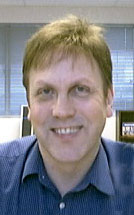 Me |
dbrooks - Posted - 02/04/2011: 19:08:13
Great thread about a fine player. Lots of comments here to make us better listeners and, ultimately, better players.
David
tomberghan - Posted - 02/07/2011: 04:07:23
What happened? I start talking about "phrasing" and everyone leaves the room?!
BrittDLD1 - Posted - 02/07/2011: 05:05:47
ME...
(Sorry...) 
Back to our regularly scheduled program.
Best-
Ed Britt
GMB - Posted - 02/07/2011: 06:40:46
Tom, Do you find that once you learn a song and have it down cold and then add phrasing, it becomes part of the way you play the song? Or is it something that evolves as your playing does? Or is it something that you apply differently each time you play as it suits your mood that day? Great to be a multi-instrumentalist...gives you a better understanding of the music itself I think. Jerry
Marc Nerenberg - Posted - 02/07/2011: 06:52:02
quote:I've been too busy working on my phrasing to talk about it!
Originally posted by tomberghan
What happened? I start talking about "phrasing" and everyone leaves the room?!
Rob MacKillop - Posted - 02/07/2011: 06:54:28
Ditto everything about Tom...
Phrasing - I always sing my solos. I have a TERRIBLE voice, but that doesn't matter. By trying to sing the tune or parts I get closer to the phrasing. Everyone has heard the comment, 'He makes the instrument sing' - well, to do that you have to sing through and with your banjo. I even sing the intervals of chords. The pitch, curiously enough, is not so important as finding out the energy that is contained in a chord or melody, the distance between a series of intervals, packed together like a kernal. If you sing it one way, and play it another, something is wrong.
tomberghan - Posted - 02/07/2011: 08:11:49
quote:
Originally posted by GMB
Tom, Do you find that once you learn a song and have it down cold and then add phrasing, it becomes part of the way you play the song? Or is it something that evolves as your playing does? Or is it something that you apply differently each time you play as it suits your mood that day? Great to be a multi-instrumentalist...gives you a better understanding of the music itself I think. Jerry
Edited by - tomberghan on 02/07/2011 08:14:55
Marc Nerenberg - Posted - 02/07/2011: 08:33:42
So Tom, do you ultimately settle on a definitive version, or does it keep varying with every playing?
My own personal process involves constant varying, I find I never play anything exactly the same way twice - in terms of phrasing, ornamentation, dynamics, etc.
This was a constant source of frustration when I was in a band: two of us were that way, always changing what we were doing, and the third member wanted everything highly arranged and set in stone. (That particular configuration of the band didn't last too long!)
Edited by - Marc Nerenberg on 02/07/2011 08:34:26
slc - Posted - 02/07/2011: 09:44:40
I love to think about this stuff - what makes a tune *work*? What makes a tune different than just a pile of notes? One idea that I always think of is that each tune is like a unique person - a personality unique to itself. Like getting to know a real person, it takes time to know who they really are, and the ability/awareness to give that person space to show who they really are. Sometimes a tune seems to *want* glitzy/gimmicky tricks all over it, other tunes have a more spare and introspective feel to them. Others are ponderous and bombastic. Also the relationship to the tune changes over time - you might first think that a new friend is a fun/outgoing type but as you get to know them you discover there are 'deep waters' there.
And there are tunes you hate and if you're lucky you might get to know them in a new way... but that thread has been handled very nicely already :-)
And of course the tune doesn't exist as an objective thing in itself, separate from the player. It's a relationship, and the tune as its played really evolves out of the relationship between player and tune.
Obviously, Tom is really good at this stuff (and only a couple years playing? sheesh)
farmer bob - Posted - 02/07/2011: 11:08:46
Great job Tom, I like all your music you upload this site...phrasing is 99% of the song after all the the foundation is no more than 5 notes. The phrasing makes those 5 notes sound like the tune we identify as Kitchen Girl... Bob.
GMB - Posted - 02/07/2011: 13:10:19
Tom, Thanks for the reply. I start off playing a new song slowly and after I can play it pretty well I start playing more attention to the embellishments. I've been playing clawhammer for 7 months now but don't approach your skill level yet. I remember hearing Tony Bennett explain his approach to a song...first he tries to understand what the composer was saying/playing, then he would focus his full attention on conveying that to the audience; the feeling of the song...different genre but the application is similar I think. Thanks for the explanations! Jerry
tomberghan - Posted - 02/07/2011: 17:20:16
quote:
Originally posted by Marc Nerenberg
So Tom, do you ultimately settle on a definitive version, or does it keep varying with every playing?
My own personal process involves constant varying, I find I never play anything exactly the same way twice - in terms of phrasing, ornamentation, dynamics, etc.
This was a constant source of frustration when I was in a band: two of us were that way, always changing what we were doing, and the third member wanted everything highly arranged and set in stone. (That particular configuration of the band didn't last too long!)
Edited by - tomberghan on 02/07/2011 17:22:45
tomberghan - Posted - 02/07/2011: 19:03:14
This is an example of true variations and divisions. But . . . you know . . . its Mozart!
youtube.com/watch?v=CH2zlb1pwd...e=related
Terms of Use | Privacy Policy | Privacy Consent (EU/GDPR Only)
Copyright 2026 Banjo Hangout. All Rights Reserved.


