


Hi all,
I bought another banjo. I'll probably fettle this, then play it for a while then pass it on.
I don't need to know what it's worth because it's a low grade build and the answer is not much. Also I know there is a lot of interest in FBC and his teaching, but I don't need much about that. Joel Hooks has published lots of information already about that, and I can dip in at leisure.
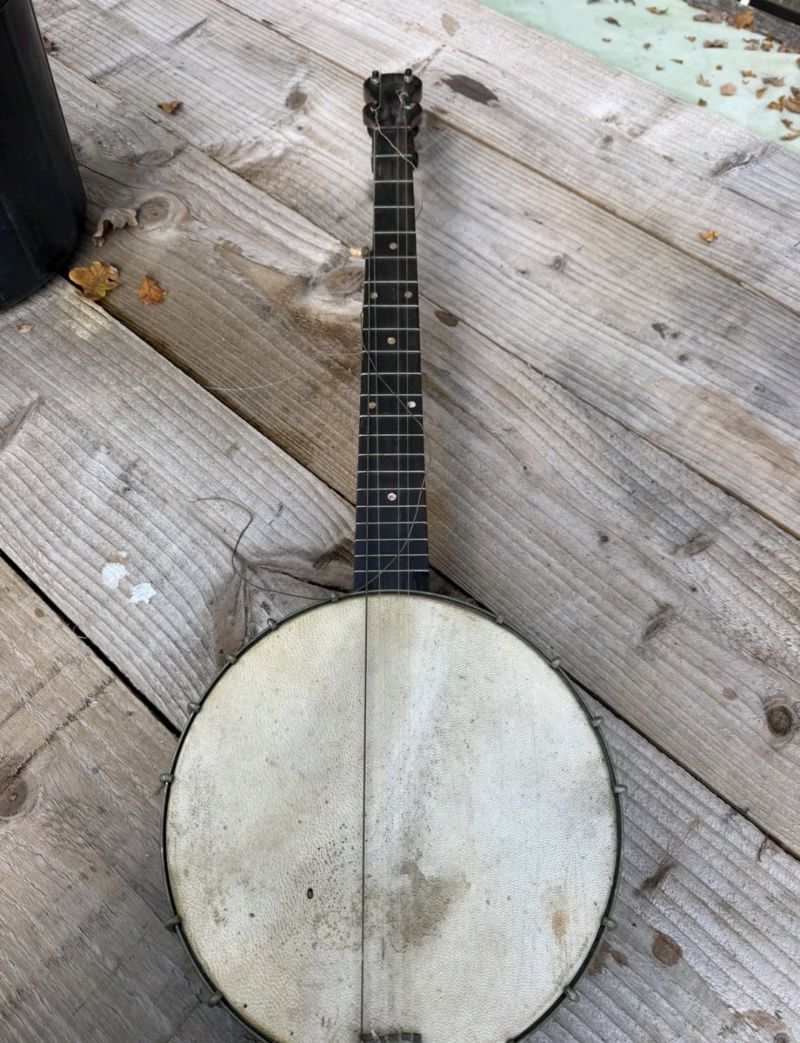
I'm more interested in the history of the trade mark and its use on instruments, any clues to the actual maker, and any tips on things like an appropriate tailpiece, tuning pegs, stabilising the cracking peg head / fretboard veneers etc.
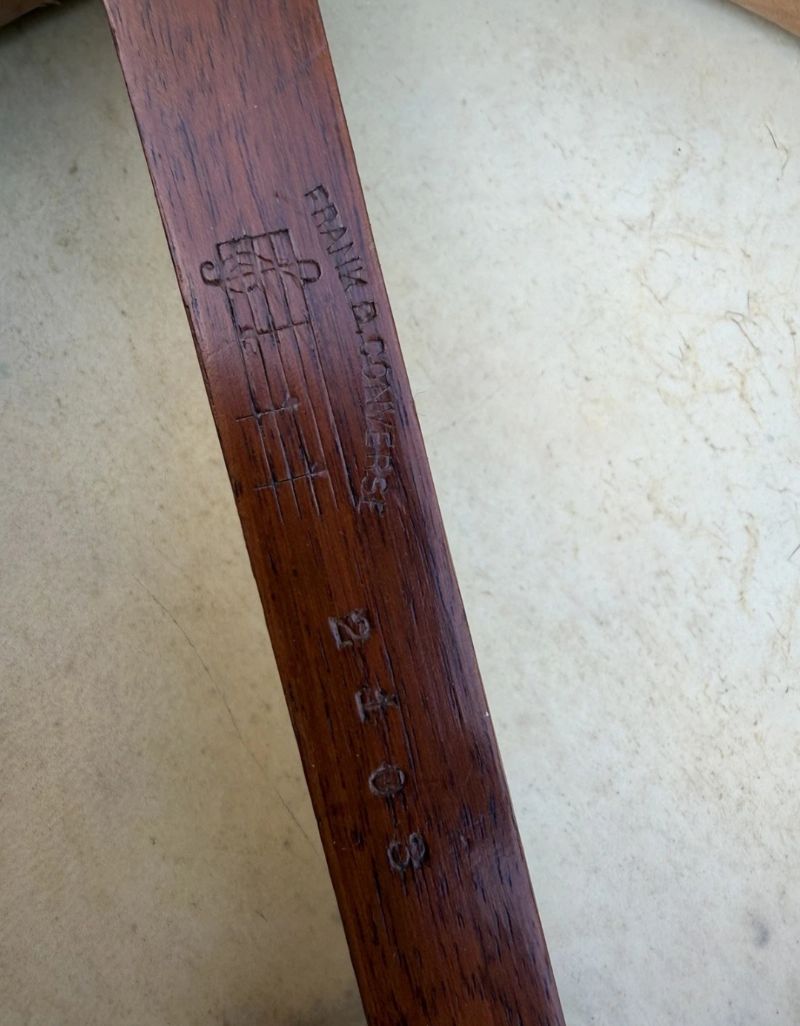
Any ideas what the numbering means and is it any use to date the banjo?
I think I have a few old hooks to replace the missing ones.
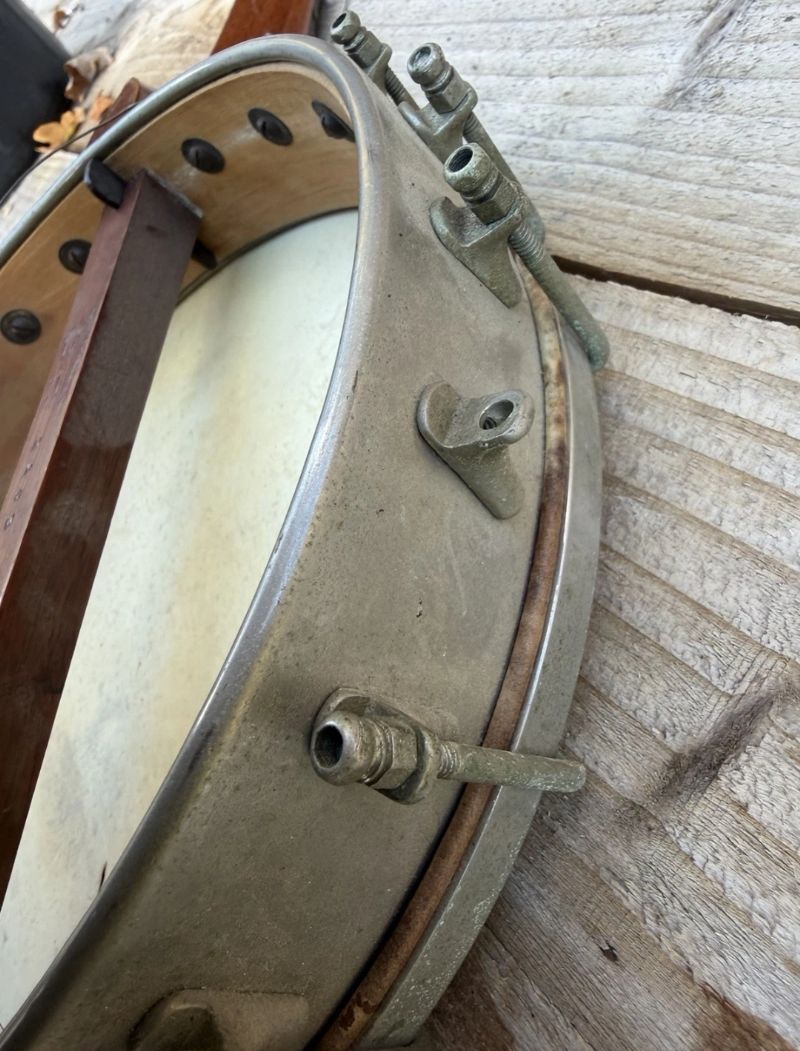
I don't have the actual banjo yet, images from the listing attached.
Edited by - Andyrhydycreuau on 11/18/2026 05:16:38

Every Converse banjo of this type I've seen was made either by Buckbee/Rettberg & Lange or one of the other shops in the NYC area.

quote:
Originally posted by Andy FitzGibbonEvery Converse banjo of this type I've seen was made either by Buckbee/Rettberg & Lange or one of the other shops in the NYC area.
Thanks Andy,
Is that single ebony wedge neck brace common on NY banjos of this period? I've seen them on Chicago banjos before, like Schall. But I've not seen many NY banjos so just curious.
The trademark was initially registered by John F. Stratton, and Stratton was supposed to make them. He had been making banjos for Converse to resale before this trademark.
Stratton then decided to rebrand Buckbee parts or made banjos. This resulted in a lawsuit, Converse sued and won. After getting his trademark back, Converse went to Hamilton Gordon and struck a deal (Gordon had been publishing some of Converse's music and books).
Gordon then supplied these. They were supposed to be "Strong arm", meaning that the neck and dowel were made from one piece. But the Stratton rebrand were not as far as I know.
The Gordon banjos were (at least the few that I have seen). Also, while they look very similar to the "Buckbee", there are distinct tool marks for rim fabrication and finishing methods that differ from known Buckbee made banjos. While some or all of the parts came from Buckbee or shared sources, in all likelihood the final fabrication and finishing came from Gordon's shop.
Kyle VanMeter did some excellent critical viewing on the different construction methods used by the various jobbers that have often all been lumped into the "Buckbee made it" category. He pointed out very distinct differences in many of these that make it likely that different tool sets and persons were doing the final work and fabricating the rims.
That means that they were likely not made by Buckbee any more than all the Gibson copies today are made by First Quality or Prucha (suppliers of parts).
But we cannot know for sure.
Your images manage to exclude the tailpiece.
The Converse banjos really only had a few distinct features from the normal New York pattern banjos of that era:
The "Strong Arm" construction.
The Converse patent hinged tailpiece (nearly always ripped apart by wire string use, so if you have this, that is a bonus). This tailpiece was designed around Converse's ideas that there should be no added pressure on the bridge for free vibration. Converse was also one of only a few who taught NOT to anchor the pinkey.
The Converse patent bridge. This had the legs scooped out a little as a way to prevent slipping.
And that is pretty much it.
A little too much back history. Professional banjoists of the late 1850s and early 1860s were using (or wished they could get) banjos made by Wilson and Farnham of Troy NY or, a little later, Jimmy Clarke. These banjos, the first to use "silver rims" (aka "spun") evidently had the necks attached with a big steel bolt through the heel with no dowel. As one might expect, this caused problems. The bolt would vibrate loose, the neck would twist, etc..
When Stewart started making banjos he tried various things in response to this. His early banjos added a metal angle bracket to support the inside of the rim. Other makers before SSS, like Joseph Rickett added blocks of wood to support the rim against the dowel. Weaver did this in England.
Converse came up with the "strong arm" banjo, the idea is that the dowel neck joint would never slip if it was made from one piece of wood.
@joel_hooks that's outstanding information - thanks so much.
I'll see if it's a strong arm when it arrives.
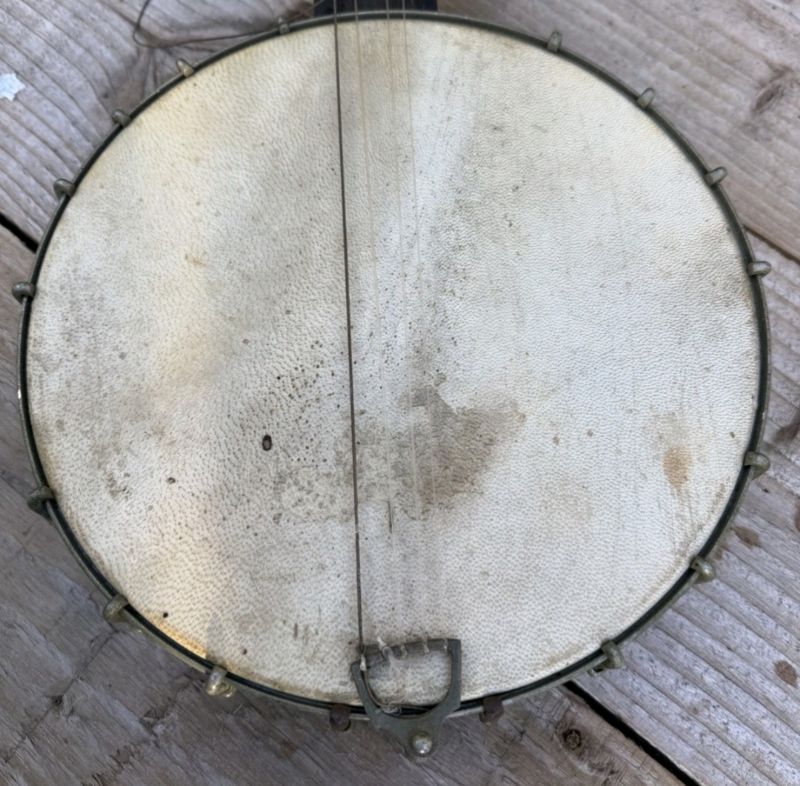
Here's the tailpiece - alas not a Converse.
The catalogue confirms ebony pegs, I think I have an ebony fifth peg, fingers crossed for a fit.
Andy
Terms of Use | Privacy Policy | Privacy Consent (EU/GDPR Only)
Copyright 2026 Banjo Hangout. All Rights Reserved.


