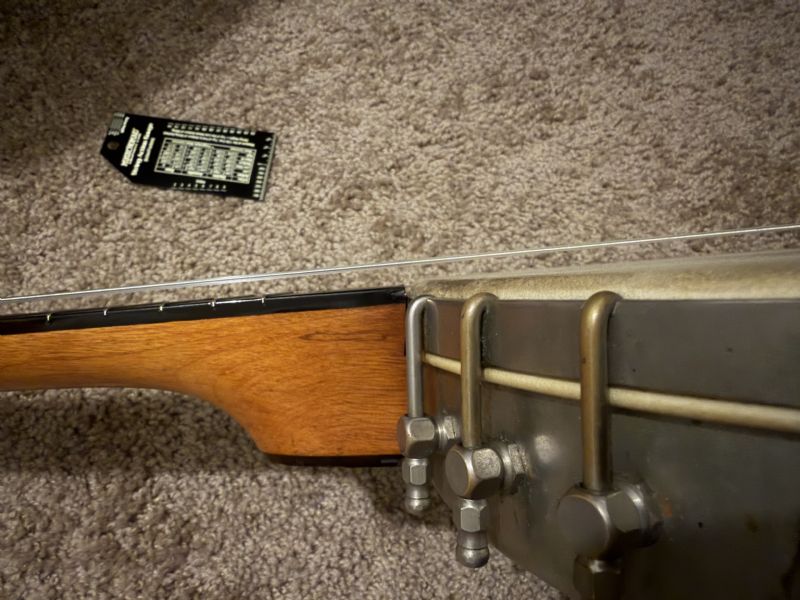
In order to correct the action on an old Lyon & Healy, I had to modify the end of the dowel stick with another piece of wood on the bottom. I've seen other old banjos with this type of repair, some using a piece of metal or aluminum with a tab. Action is now good and banjo sounds great. Is this type of repair amateur? Is it worth leaving as is or will it degrade the banjo?
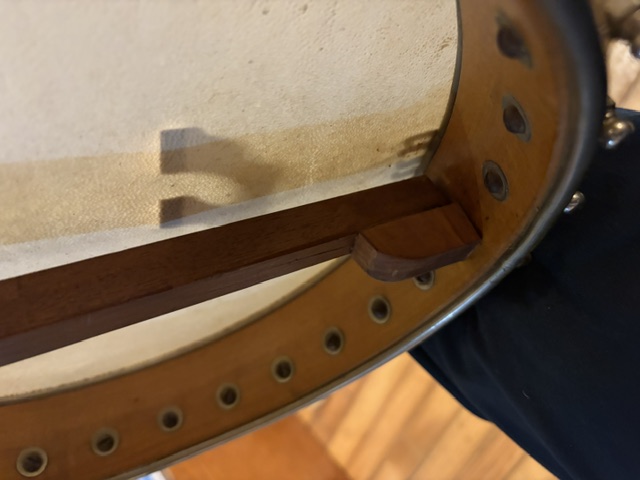
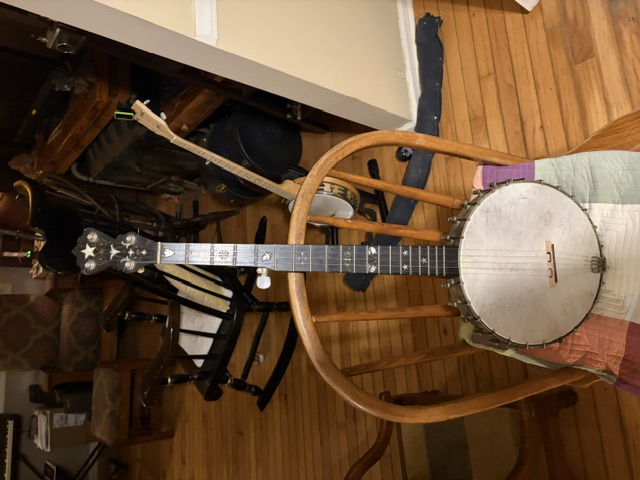
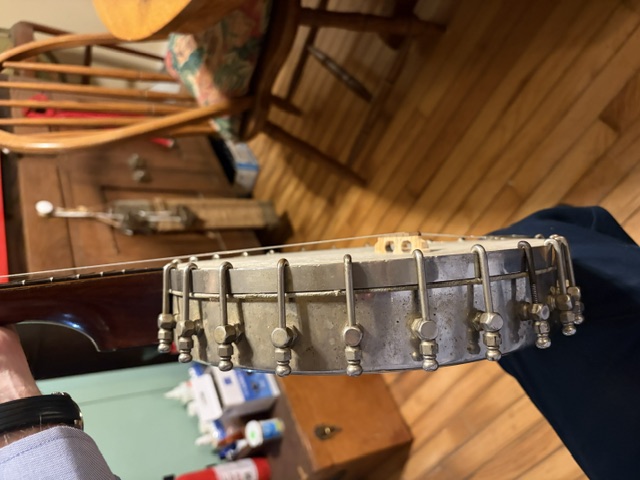

In all transparency, you’ve likely degraded the value of and could impact the banjo more by doing this modification. I have a very similar Lyon and Healy with the same tailpiece, it was originally intended for gut (nylon would be suitable nowadays) strings, and is not at all constructed for metal strings.
A few kind individuals on this forum when I posted mine, walked me through that these banjos were built to have no neck angle, and therefore seem like they have higher action than they should at the upper frets. I can’t tell whether you have metal or nylon strings on this one from the pictures, but I’ll attach a picture of the neck angle and action from mine for your reference

'Repair' in this context is an oxymoron. Ironically you now have a damaged banjo.
Edited by - EEB on 11/07/2026 00:18:29
Easily correctable, but action will be high despite that the neck is straight.
A couple thoughts.....
It's your banjo, do what you want with it
A banjo that is unplayable has no value to most people
If that banjo isn't a musuem quality banjo make it playable
I've done a similar modification before, but I used metal to "clamp" the new piece of wood on, and it is fully reversible.
Exactly, it’s now playable and sounds nice. Not hard to reverse either.
The banjo was likely perfectly playable before this "repair" (which, by the way, will bend the rim out of shape over time).
Turn-of-the-century banjos have high action. That's simply how they were designed. But it was understood they'd be strung with gut, which needs more clearance to vibrate than steel.
As always: It's your banjo. Just don't assume that because other people do something, that makes it necessary/advantageous/appropriate/authentic etc.
Terms of Use | Privacy Policy | Privacy Consent (EU/GDPR Only)
Copyright 2026 Banjo Hangout. All Rights Reserved.