Can anyone please tell me if the 84 crowe gold star had burled gold the same as the 81 model[ as mentioned by Russ Carson].any information would be appreciated.

You can try asking @desertrose, he probably knows more about the old Gold Stars than anyone else on the Hangout

The 84 Crowe model Gold Star had a burnished gold flange and tailpiece,
a shiny gold tone ring and the tension hoop and armrest were engraved
with a mix of burnished and shiny gold. I don't know that the 84 is exactly
the same as the 81 but I think they're the same or very similar.
Burnished might not be the right word. Matte may be more accurate.
Edited by - bill t on 10/21/2026 06:19:19
Here's definition of "burnished" from Google
google.com/search?q=definition...&ie=UTF-8
Gibson contributed to this confusion way back in their 1920s banjo catalogs, bragging on the "hand burnished" gold plate on the Granada and Style 5. As anyone knows who has tried to keep their gold plate clean, if you do ANY rubbing/polishing on it, it wears right off. So I think Gibson's claim to "hand burnished" gold is another creative idea from the "marketing" geniuses who wrote the catalog.
Edited by - The Old Timer on 10/21/2026 07:13:38
I can't answer the OP's original question... but for context, here are a few pics of the metal bits on my 1981 JD (#15):
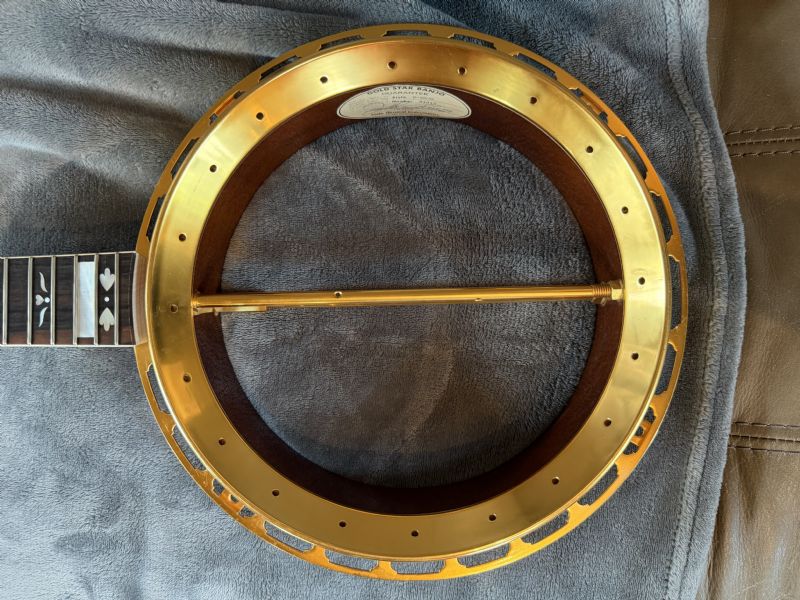
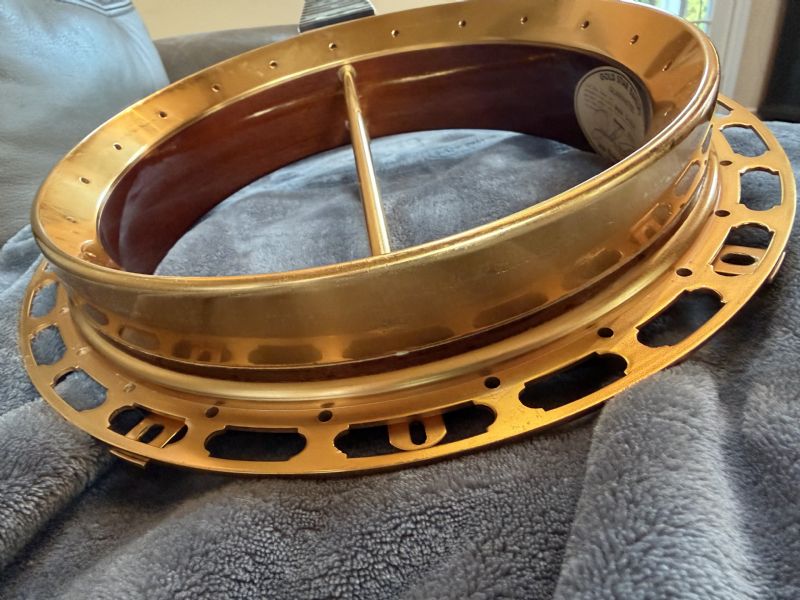
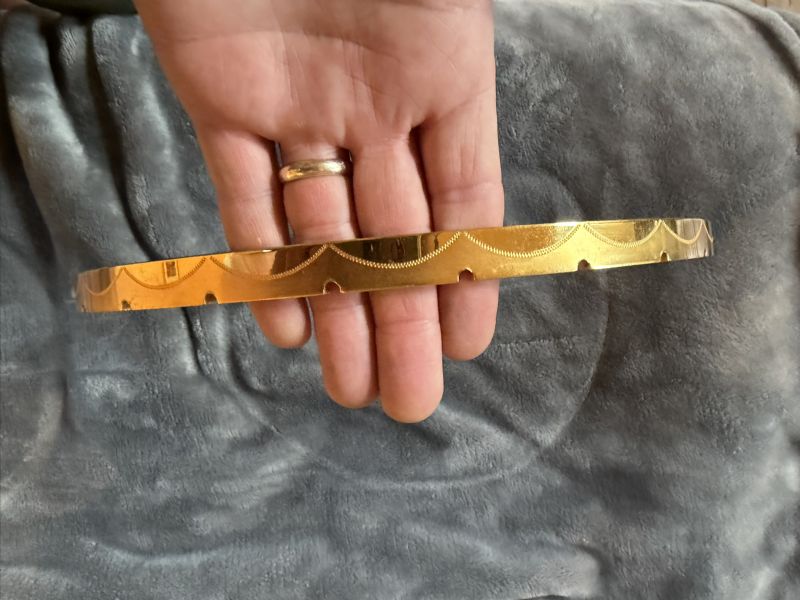
Edited by - TimFoster on 10/21/2026 08:25:43
Ken I got your email and just saw this so Ill reply and hit both targets, first and foremost there is nothing in the plating world called vurled gold, and the answer is supplied here BURNISHED IS THE CORRECT WORD. The prewar Granada as explained had a combination of polished and burnished plating and engraving
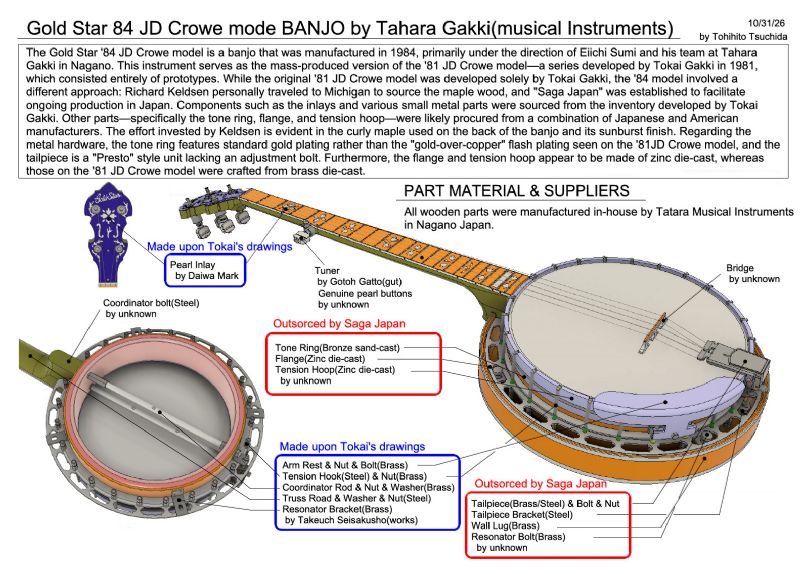
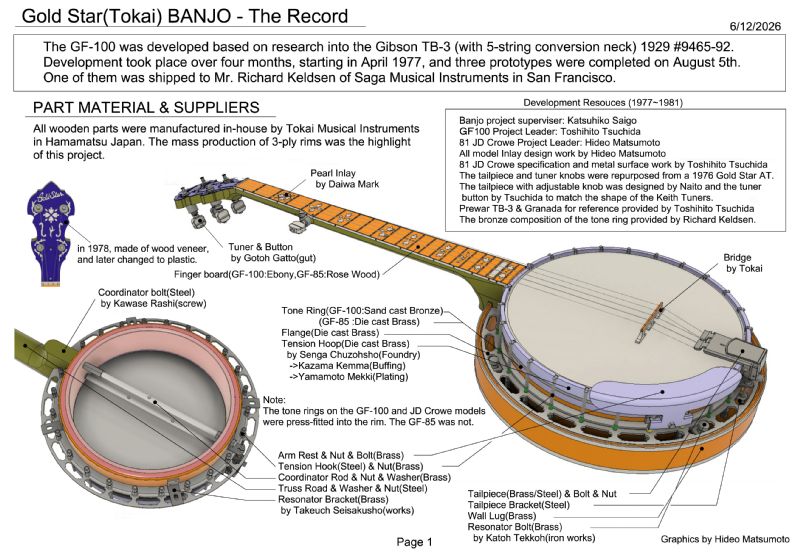
I did not personally witnessed the production process for the Tokai-made '81 JD Crowe model. However, based on production-related documentation and my own ownership of a JD Crowe model, I can provide highly accurate information. Regarding the '84 JD Crowe model—produced by Tahara Gakki and involving Mr. Sumi—my assessment is based on information found online, as well as my personal ownership of two Gold Star banjos made by Tahara Gakki. I have confirmed with the owner that the tone ring on the '84 JD Crowe model in question features a polished gold-plated finish, rather than the "copper flash" finish found on its flange, tension hoop, armrest, and tailpiece. While some components are shared between the '81 and '84 JD Crowe models, the origin of the most critical parts—the tone ring, flange, and tension hoop—remains unknown; I asked Mr. Sumi, but he was unable to clarify. Furthermore, it is unclear whether the flange and tension hoop are made of zinc die-cast (as opposed to the brass die-cast used in the '81 model). Any additional information the owner could provide would be greatly appreciated. Please refer to the attached documents for further details. I am re-attaching the data regarding the Gold Star product (manufactured by Tokai), which was issued in June, for your reference. As can be inferred from these details, Tokai launched its GF series in 1978; meanwhile, Gold Star—manufactured by Tahara Gakki—began incorporating Tokai-made components into its own GF series, a practice that commenced with the production of the 1984 "JD Crowe" model. Within this arrangement, the GF200—a nickel-plated version of the JD Crowe model—was produced, a variant that was not part of Tokai’s own lineup. I will continue my efforts to improve the accuracy of our information.
Terms of Use | Privacy Policy | Privacy Consent (EU/GDPR Only)
Copyright 2026 Banjo Hangout. All Rights Reserved.