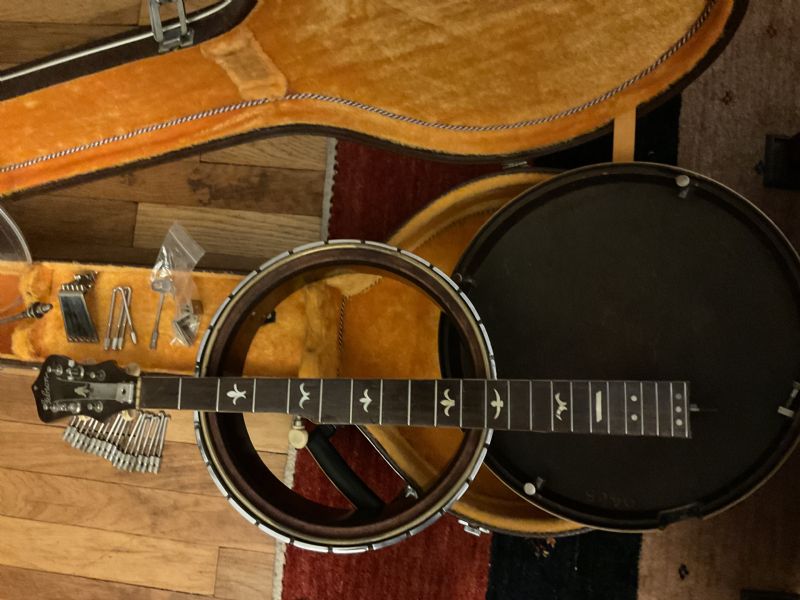
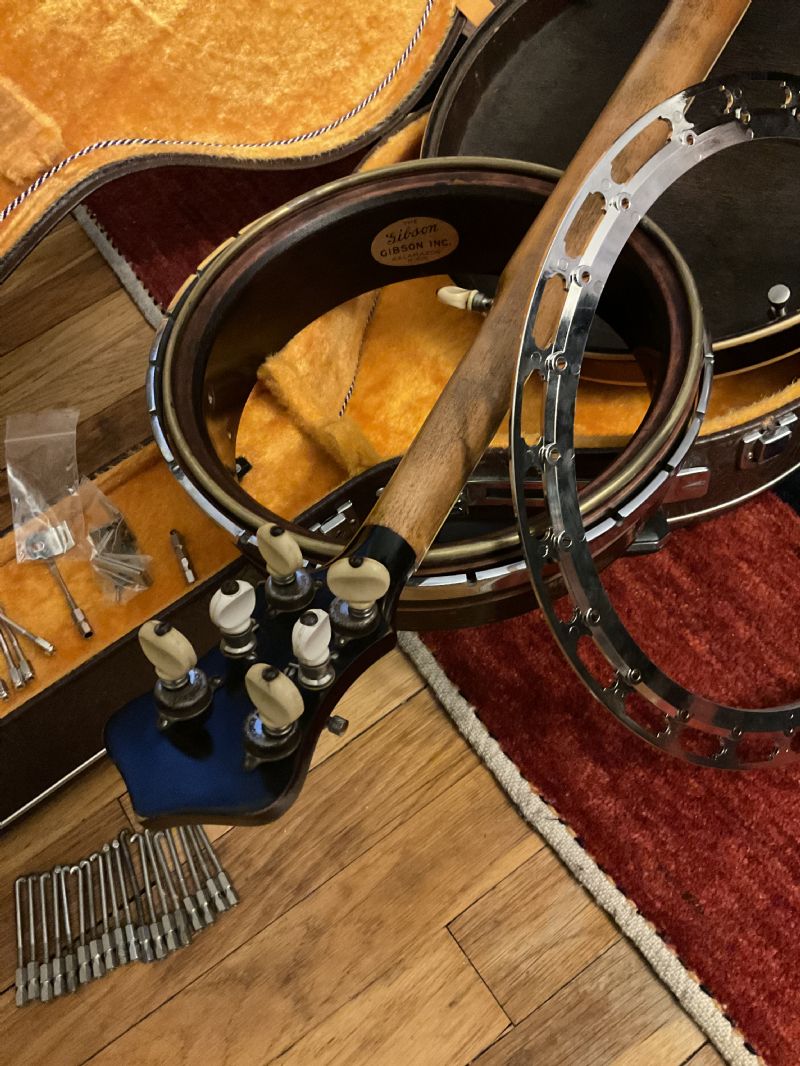
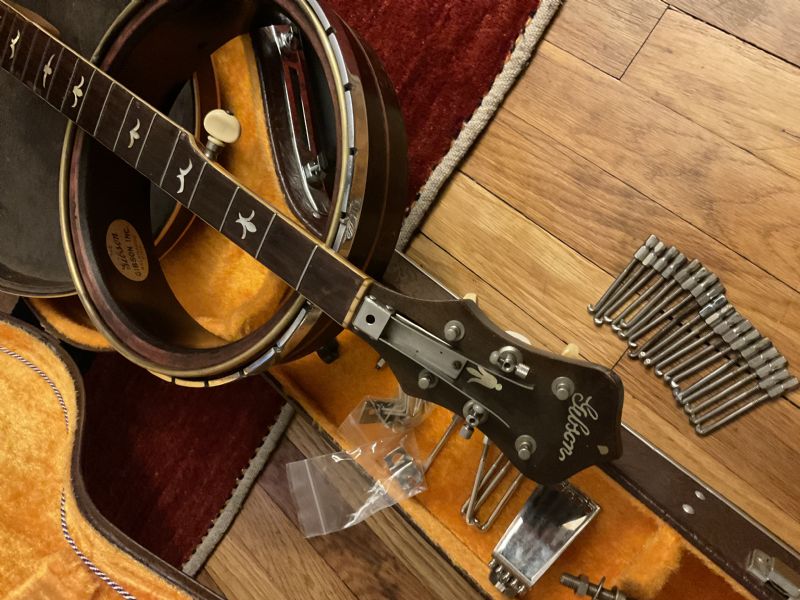
I bought what looks like a 1929 gibson style one banjo, but the flange is too tight to cross the last 1/4 inch when i try to fit it. Could this be an after market flange for a later banjo? Also, how to tell if mine was born a five string? there was definitely an attempt at refinishing the neck at some point and there is finish on the fret board. But to my eye, other than play wear, it looks otherwise unmolested. Any advice on how to proceed would be appreciated.
Edited by - Texasbanjo on 10/16/2026 11:04:13

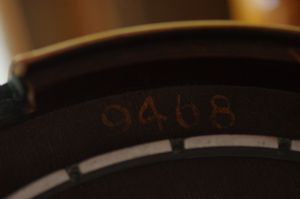
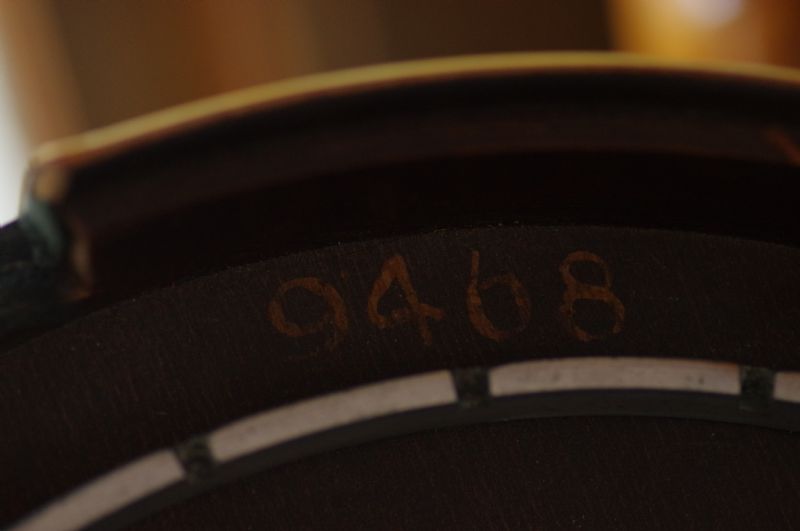
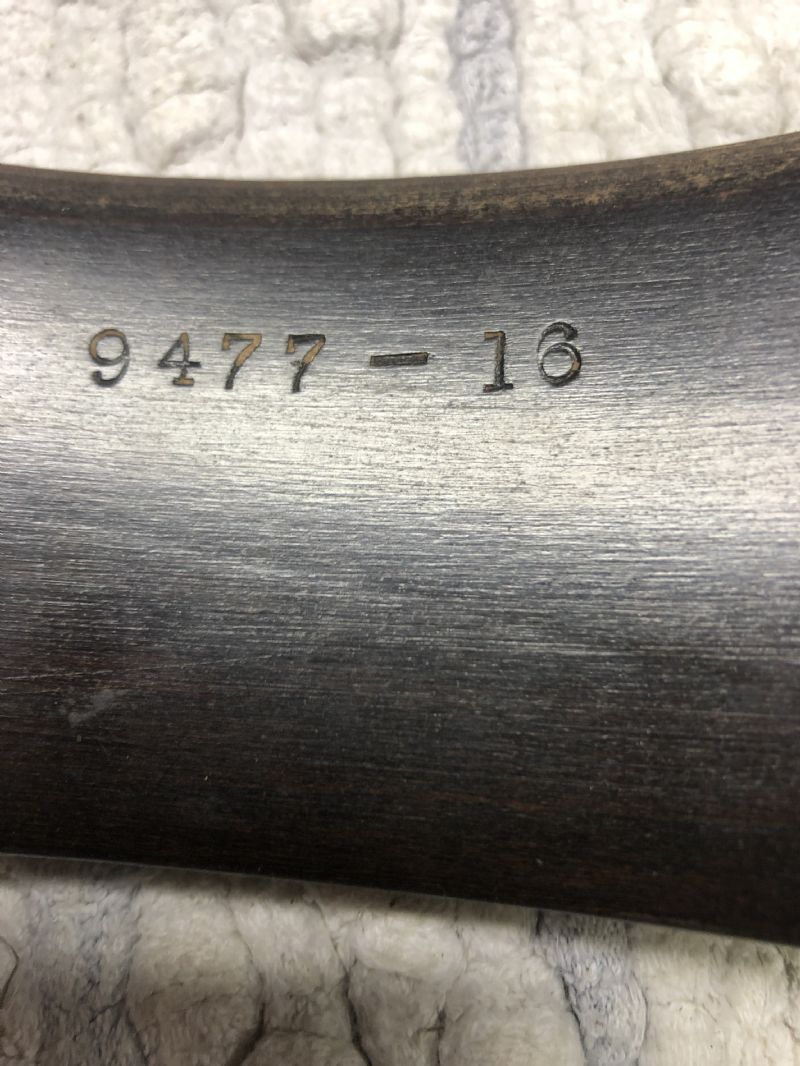
the fon is 9468

quote:
Originally posted by deanbthe fon is 9468
Is the FON pencilled on the heel's inside?
Also look under the thrust rod cover. If you're seeing traces of black paint in the cavity, you might have an original Gibson neck.
That neck does have some original five string look to it but that flange is definitely not original...Some of the 1929s were fat boy rims and most modern AND vintage Gibson flanges will not fit them without modification.
You probably want to post in this forum
Look at the face of the heel. Post photos. Key items like "carving" or wood removal on the face have "tells" for Gibson factory work. Also the precise thickness of the fingerboard can help ID factory work.
You have old tuners, including friction 5th peg. All positive signs it "might be" original. Measure frets for width and how the fret tangs are handled around the binding. Factory work shows in these details.
As for the flange not going the last bit, do you mean you can get it up over the bottom edge of the rim, but somehow it "hangs up" before you can push it all the way up to the turned ledge on the outside of the rim? Or you can't get the entire flange on over the bottom lip of the rim? To see if it's an original flange, look for the Doehler cast mark in the underside, in the area of the neck heel. Also, your rim might be slightly out of round. Measure inner and outer diameter at several spots and average them, to the sixteenth of an inch, then compare to your flange inner diameter. Original flanges in the 9400 FON range often had zinc pest which led them to crumble and crack. Someone might have bought a replacement but the inner diameter is a bit too small. That was part of Gibson's "fix" of the flange issue. Later FONs all had slightly smaller inner diameter. If so, you can have your "too small inner diameter" flange lathe turned to remove "just enough" inner surface to be a correct fit for the banjo. This is a frequent issue in contemporary MASTERTONE fat rim banjos. To fix it, either make the hole in a repro flange a bit bigger, or lathe turn the wood rim to make it just a bit smaller to fit a later flange.
Those metal parts do look NEW and SHINY though, a bit out of character for a banjo this old. Do you see the Doehler cast mark in the underside of the flange?
You present us with a good puzzle. MORE PHOTOS!!!! Please.
Edited by - The Old Timer on 10/15/2026 14:35:54
quote:I can check on the heel in a couple days. on the reso it is an off white paint. If you look at the photo of the reverse side, there is a line where the refin started. above that the only mod i see is the scruggs tuners.Originally posted by RB-1quote:Originally posted by deanbthe fon is 9468Is the FON pencilled on the heel's inside?
Also look under the thrust rod cover. If you're seeing traces of black paint in the cavity, you might have an original Gibson neck.
To my novice eye, it's a Gibson neck that someone removed the finish to convert it to a speed neck. The rim and copper hoop look like the real deal. The flange looks more modern, I've never seen that many casting holes (marks? whatever they are called) on a Gibson flange. The hoop you have seems to fit just fine Gibson or not.
So my guess is it's authentic but someone cannibalized the original flange for another project. I think that happens a lot with sub-Mastertone models where the flange can be used to restore a more valuable Gibson. The neck may have been abandoned because of its modifications? Just guesses...
All banjos are parts banjos after all, with varying degrees of originality, from all original to frankenbanjos. As far as what to do with it, if it were me, I'd find a flange that fits and put it all back together and enjoy it.
Edited by - banjoy on 10/16/2026 03:55:15
Well, your choice is pretty much have rim lathed a tad so repro flange will fully seat, or have repro flange machined to enlarge hole so it will fully seat. Or, spend big bucks and time hunting a stock one that’ll fit. Big bucks.
I'm guessing there is a reason you have unassembled parts and not an assembled banjo. If it all fit together, it would likely be sold assembled.
quote:
Originally posted by deanbquote:I can check on the heel in a couple days. on the reso it is an off white paint. If you look at the photo of the reverse side, there is a line where the refin started. above that the only mod i see is the scruggs tuners.Originally posted by RB-1quote:Originally posted by deanbthe fon is 9468Is the FON pencilled on the heel's inside?
Also look under the thruss rod cover. If you're seeing traces of black paint in the cavity, you might have an original Gibson neck.
No that is a picture of the resonator.
This is the truss rod cover (yellow arrow)
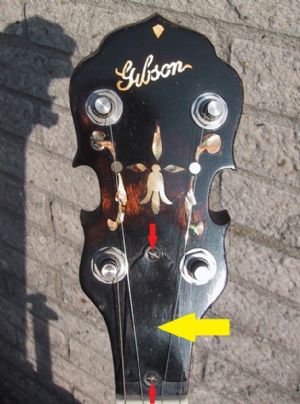
Take out the two screws ( (non-flying)red arrows).
Look in the cavity beneath it. If there are traces of black paint (dye) spilt into the cavity, you might have an original neck there, like mine.
In my case, the amateur that added the extra inlays, sanded through this paint layer and didn't bother restoring the damage. But... it sounds and plays like an old Gibson, so why complain?
Edited by - RB-1 on 10/18/2026 12:42:28
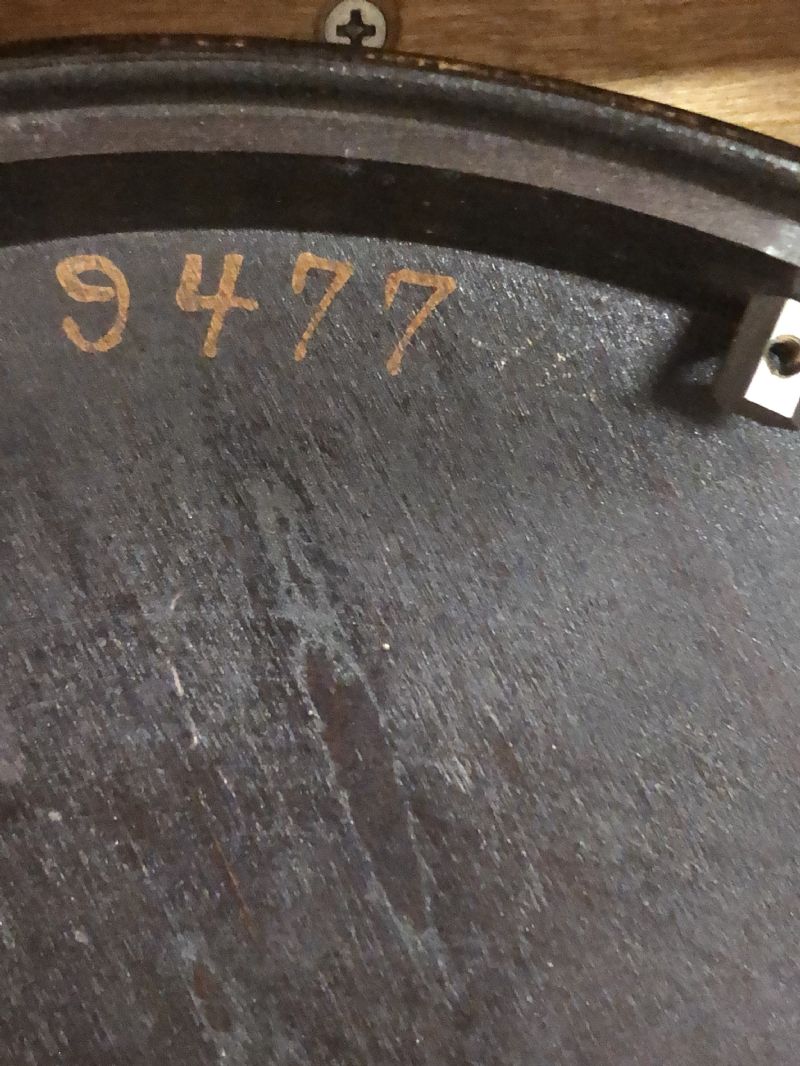
I have #9477, a TB-1 also in the 1929 production, pot metal flange was uneven and missing a piece, so I opted to fit with a newer flange. Best of luck with your project..
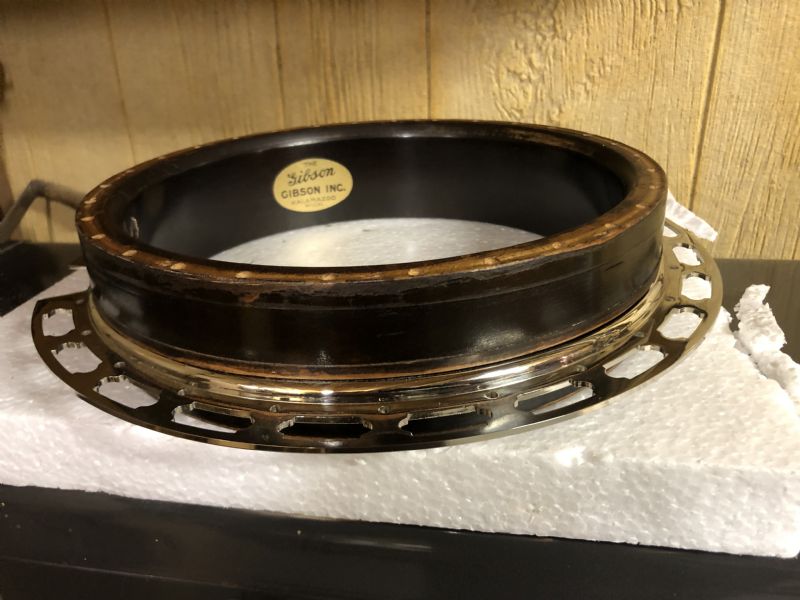
quote:That's pretty cool. Here are some more photos. Unfortunately, all but a trace or the face color was removed in the refin. as well as any thing penciled onto the end of the neck.
Originally posted by RB-1quote:
Originally posted by deanbquote:I can check on the heel in a couple days. on the reso it is an off white paint. If you look at the photo of the reverse side, there is a line where the refin started. above that the only mod i see is the scruggs tuners.Originally posted by RB-1quote:Originally posted by deanbthe fon is 9468Is the FON pencilled on the heel's inside?
Also look under the thruss rod cover. If you're seeing traces of black paint in the cavity, you might have an original Gibson neck.
No that is a picture of the resonator.
This is the truss rod cover (yellow arrow)
Take out the two screws ( (non-flying)red arrows).
Look in the cavity beneath it. If there are traces of black paint (dye) spilt into the cavity, you might have an original neck there, like mine.
In my case, the amateur that added the extra inlays, sanded through this paint layer and didn't bother restoring the damage. But... it sounds and plays like an old Gibson, so why complain?
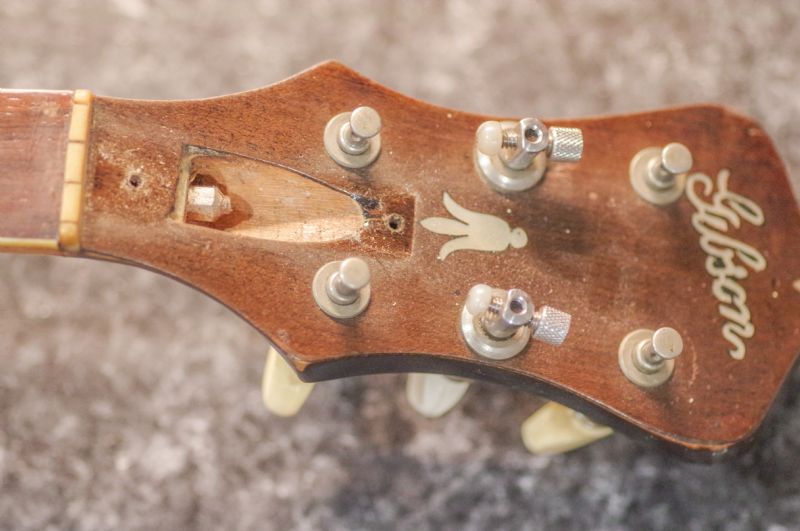
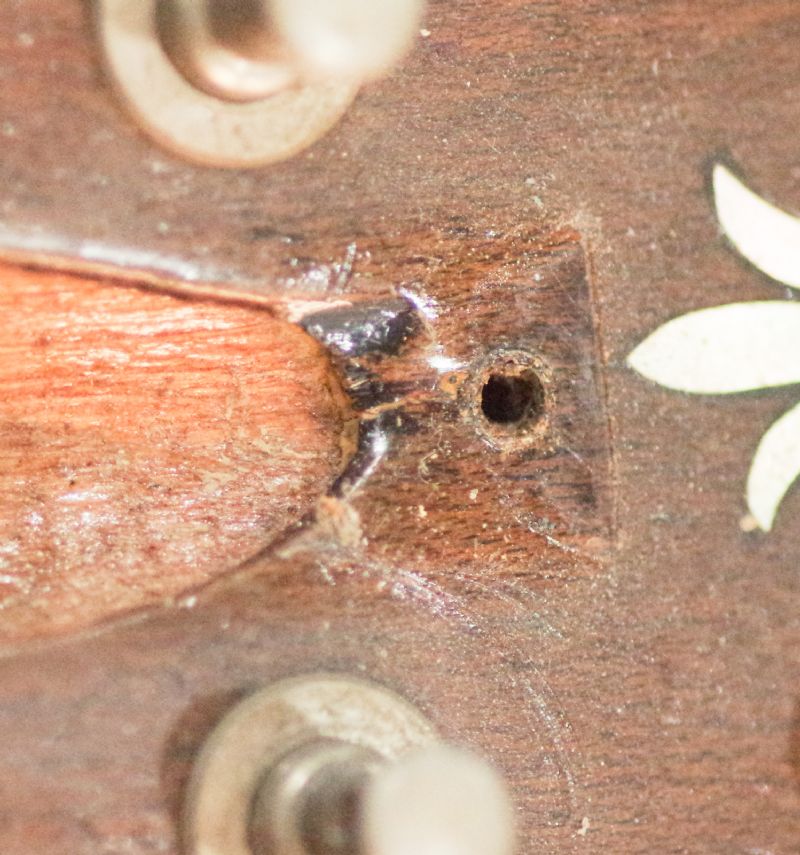
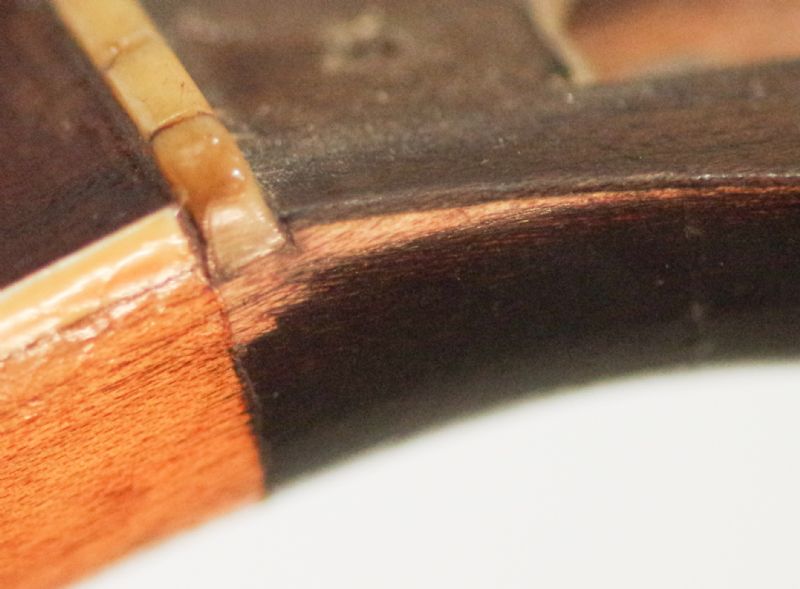
quote:That is reassuring. I am a bit out of mey element, but i am having a lot of fun. I am not really sure about formatting here. so i am using my reply to add some more photos
Originally posted by kbiinde2I have #9477, a TB-1 also in the 1929 production, pot metal flange was uneven and missing a piece, so I opted to fit with a newer flange. Best of luck with your project..
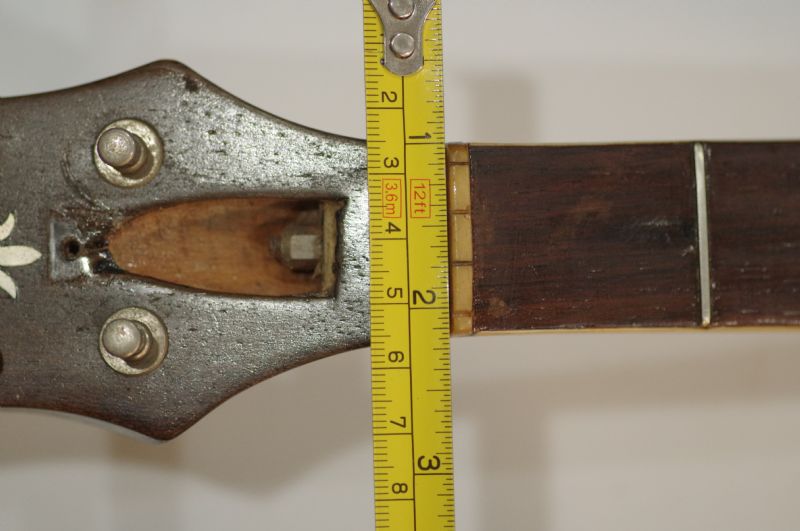
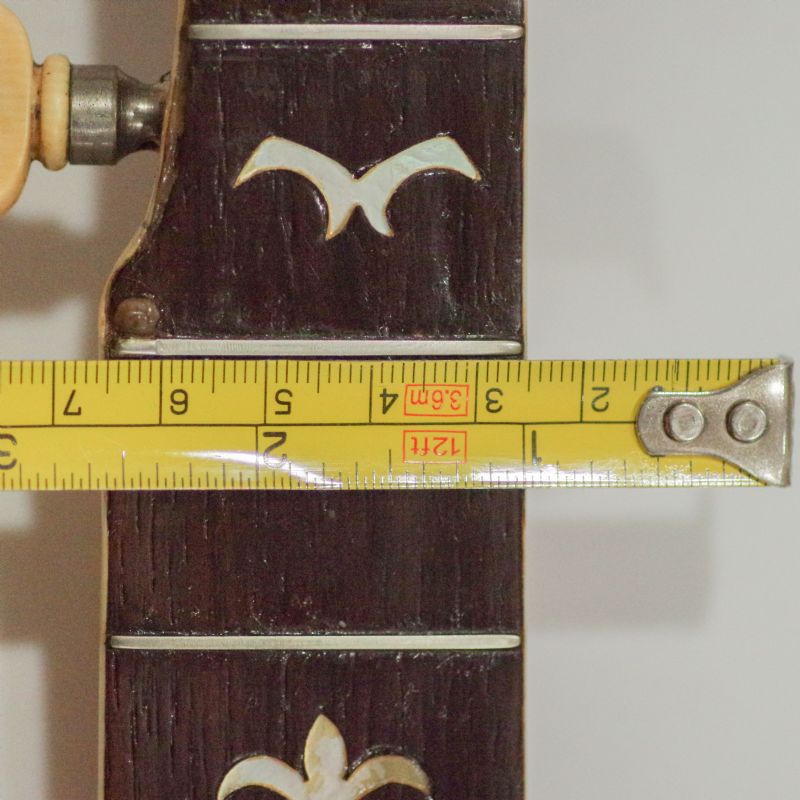
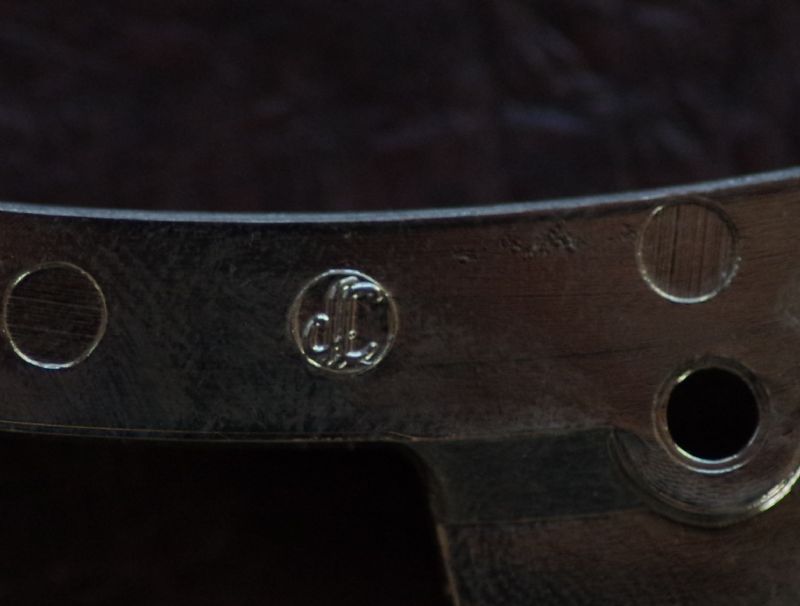
quote:this is the only cast mark i see
Originally posted by The Old TimerLook at the face of the heel. Post photos. Key items like "carving" or wood removal on the face have "tells" for Gibson factory work. Also the precise thickness of the fingerboard can help ID factory work.
You have old tuners, including friction 5th peg. All positive signs it "might be" original. Measure frets for width and how the fret tangs are handled around the binding. Factory work shows in these details.
As for the flange not going the last bit, do you mean you can get it up over the bottom edge of the rim, but somehow it "hangs up" before you can push it all the way up to the turned ledge on the outside of the rim? Or you can't get the entire flange on over the bottom lip of the rim? To see if it's an original flange, look for the Doehler cast mark in the underside, in the area of the neck heel. Also, your rim might be slightly out of round. Measure inner and outer diameter at several spots and average them, to the sixteenth of an inch, then compare to your flange inner diameter. Original flanges in the 9400 FON range often had zinc pest which led them to crumble and crack. Someone might have bought a replacement but the inner diameter is a bit too small. That was part of Gibson's "fix" of the flange issue. Later FONs all had slightly smaller inner diameter. If so, you can have your "too small inner diameter" flange lathe turned to remove "just enough" inner surface to be a correct fit for the banjo. This is a frequent issue in contemporary MASTERTONE fat rim banjos. To fix it, either make the hole in a repro flange a bit bigger, or lathe turn the wood rim to make it just a bit smaller to fit a later flange.
Those metal parts do look NEW and SHINY though, a bit out of character for a banjo this old. Do you see the Doehler cast mark in the underside of the flange?
You present us with a good puzzle. MORE PHOTOS!!!! Please.
That's not a Doehler die mark on that flange in the picture. I believe it is a Prucha logo.
Prucha is a Czech banjo builder and supplier of high quality Mastertone-style parts.
Edited by - RioStat on 10/18/2026 19:40:01
Where in Cleveland are you? Pack that stuff and bring it down to Akron, I'll help you put that banjo together.
I've got several flanges on hand, made by different companies ( no pre-war Gibson flanges though !) and I'm pretty sure one of them will fit your rim.
Send me a message if you want to.
quote:I agree that the mark looks like the prucha. I would love to meet up. I am about 45 minutes away from akron
Originally posted by RioStatWhere in Cleveland are you? Pack that stuff and bring it down to Akron, I'll help you put that banjo together.
I've got several flanges on hand, made by different companies ( no pre-war Gibson flanges though !) and I'm pretty sure one of them will fit your rim.
Send me a message if you want to.
As Bill Monroe told the old feller who was complaining about his poor health and said he was 83 years old, "Well there's your problem!"
The cast mark in that flange shows it came from Prucha (I think) not Gibson, and most likely has an improper inner diameter for your particular banjo.
My 9469-44 resonator painted number uses a 4 like this one rather than the open top.
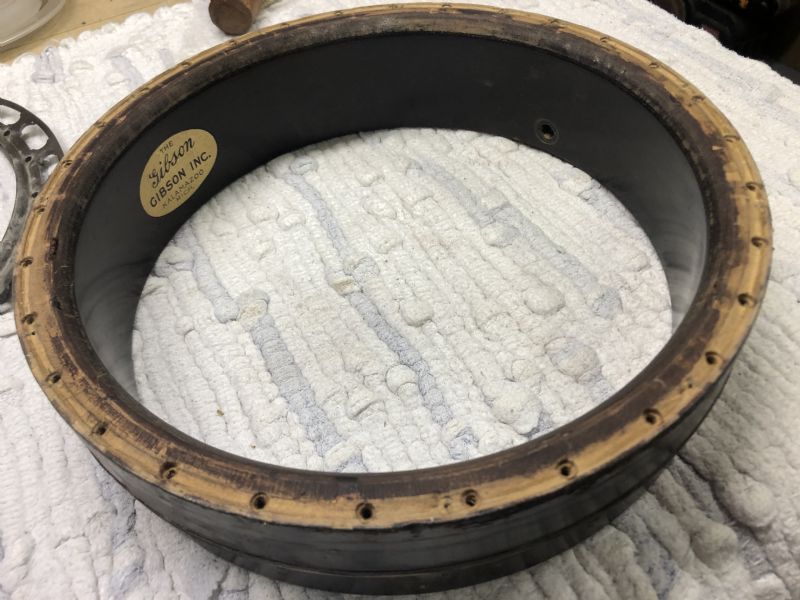
Looks like the rim was originally destined for bbs and springs?
My '29 2 rim has shallow pilot holes for shoes under the flange.
Is the number stamped into the inner wall of the rim?
Edited by - steve davis on 10/19/2026 10:57:30
quote:
Originally posted by deanbquote:That is reassuring. I am a bit out of mey element, but i am having a lot of fun. I am not really sure about formatting here. so i am using my reply to add some more photos
By the sight of the headstock, it looks like a 'coke bottle' shape.
These were seen on -at least- Style 1 banjo's from the late 1920-ies.
By the presence of scruggs tuners, it very well could be these were fitted somewhere later in life and the front of the peghead being sanded at that occasion.
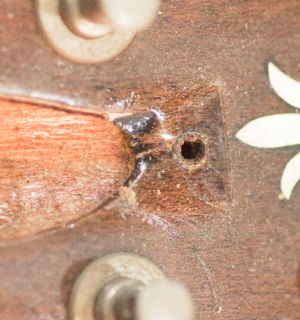
The tiny specks of black paint left, could point in that direction.
I'd say, take it to Scott and you might gain a lot of insight there!
Once put together again it might turn out a killer banjo, provided it has/gets a quality flathead tone ring...
Edited by - RB-1 on 10/22/2026 02:13:57
Thats so cool. I nearly have the prucha fit . I an having a little trouble fitting the profile of the quarter circle to match the neck profile. Do you have a close photo of the neck cutout on your modified flange?quote:
Originally posted by kbiinde2I have #9477, a TB-1 also in the 1929 production, pot metal flange was uneven and missing a piece, so I opted to fit with a newer flange. Best of luck with your project..
I read somewhere that there were i think four distinct handwritings on these. quote:
Originally posted by steve davisMy 9469-44 resonator painted number uses a 4 like this one rather than the open top.
The shoe holes are there. One has the holes punched in reverse. quote:
Originally posted by steve davisLooks like the rim was originally destined for bbs and springs?
My '29 2 rim has shallow pilot holes for shoes under the flange.Is the number stamped into the inner wall of the rim?
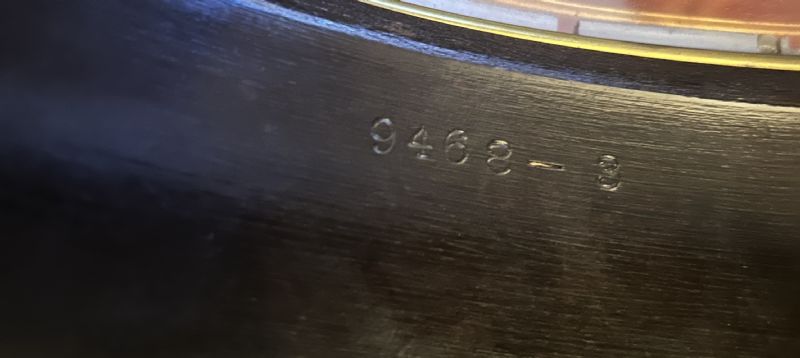
My Tenor was BB/Spring with brass ring at one time, the head was split and went to the shop for replacement.
It came into my possession in the late '60's and was completed shortly thereafter, minus BB/Springs..
Terms of Use | Privacy Policy | Privacy Consent (EU/GDPR Only)
Copyright 2026 Banjo Hangout. All Rights Reserved.