


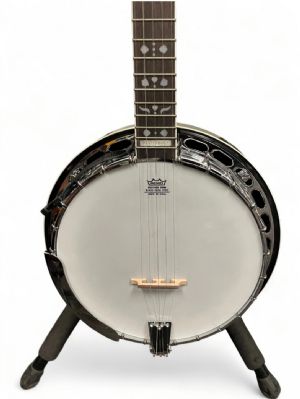
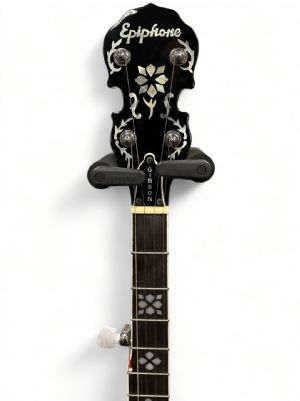
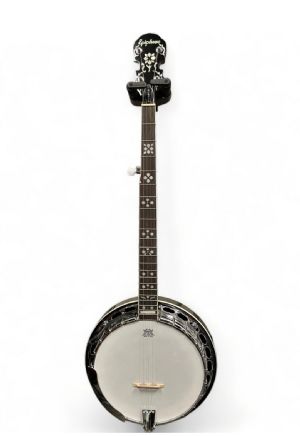
Looking at a used Epiphone in good condition online. Plugged in the serial (X960041138) into some online tools and got nothing. It says masterbuilt at the base of the neck, gibson right above the nut, and has a flower pattern on the head.
Can anyone tell what year or country this was made? Thanks!

Pics on my profile!
Edited by - Eagle22 on 10/13/2026 18:44:31

quote:
Originally posted by Eagle22Pics on my profile!
I have an mb350, same year (1996). From a previous thread on here the consensus was that it was made in Korea. I think later production went to china.
Made by Samick in Korea in 1990s. Not like specific year means anything in these.
With "Gibson" on the truss rod cover, this is the second version of this model. The original one said "Epiphone by Gibson" in the same large letters on the peghead. Looked awful. Then came this design. The final version (made in China, I think) eliminated Gibson branding entirely and had an Epiphone "E" logo on the truss rod cover.
One thing puzzles me: Your banjo appears to have a one-piece flange, which I thought came very late. MB-250 originally had a two-piece, tube-and-plate, flange. So either they went to one-piece sooner than I thought or this banjo is later than I think. Possibly 2000s, made in China.
These are great intermediate, near professional level, banjos. Very jam- and gig-worthy. Great to learn on and to serve you well for years. The ones I've played had very comfortable necks and good sound. I believe the tone rings were pot metal instead of brass or bronze, but still sounded good. I could be wrong.
quote:
Originally posted by Old HickoryMade by Samick in Korea in 1990s. Not like specific year means anything in these.
With "Gibson" on the truss rod cover, this is the second version of this model. The original one said "Epiphone by Gibson" in the same large letters on the peghead. Looked awful. Then came this design. The final version (made in China, I think) eliminated Gibson branding entirely and had an Epiphone "E" logo on the truss rod cover.
One thing puzzles me: Your banjo appears to have a one-piece flange, which I thought came very late. MB-250 originally had a two-piece, tube-and-plate, flange. So either they went to one-piece sooner than I thought or this banjo is later than I think. Possibly 2000s, made in China.
These are great intermediate, near professional level, banjos. Very jam- and gig-worthy. Great to learn on and to serve you well for years. The ones I've played had very comfortable necks and good sound. I believe the tone rings were pot metal instead of brass or bronze, but still sounded good. I could be wrong.
My MB350 has one piece flange as well, so I think the switch happened earlier.
I agree, if you don't want to spend a ton, these can be decent enough instruments. I did some tweaking: 5 star tuners, tweaked the tone ring fit because the inside ledge was floating.
I'm no expert 5 string player, though. It fits my abilities just fine. I played a friends prewar flathead... realized real quick it didn't make any difference with my mediocre playing!
quote:
Originally posted by jt80
My MB350 has one piece flange as well, so I think the switch happened earlier.
Thanks for the info. Happy to learn.
I played one at my neighborhood music shop a long time ago, maybe early 2000s, and it definitely was the two-piece flange version. I can't recall the peghead naming. Shop was selling it for $300 or $350. Even then a really good price for that level of instrument. I was impressed.
The only thing I don't like about them -- and it's been a design issue in most Asian imports for decades -- is the excess wood beyond the 22nd fret. This forces the bridge a little more towards the center of the head, away from the tailpiece. Maybe only a little. But I prefer to see a lot less wood after 22.
Terms of Use | Privacy Policy | Privacy Consent (EU/GDPR Only)
Copyright 2026 Banjo Hangout. All Rights Reserved.


