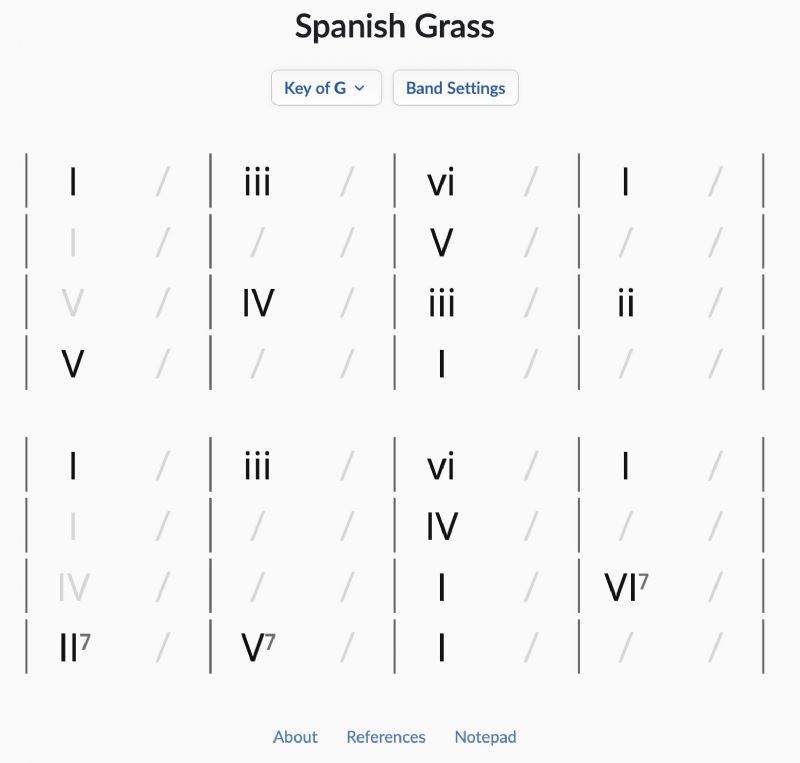
Trying to determine whether my chord chart that I've compiled from various sources is all the way accurate or just mostly accurate. Help appreciated.

This works. As you've determined, it's one of several ways the tune could be played.
What's happening in the descending melody lines starting at measures 1 on the G chord and 9 on the D chord is called a "line cliché": movement of a note step-by-step against a stationary chord. The movement can be in the bass, top voice, or inside. This movement creates the effect of a chord change.* Which means keeping the chord on the G (I chord) for measures 1-6 and then the D (V chord) on the second line in measures 9 through 12 is just as accurate as calling for the chords to changes within those lines.
This 1969/70 recording by Emerson Waldron (maybe the first) sounds to me as I describe: The band is holding G and D chords and the sound of chord changes comes from what the lead instrument is doing on top.
*Movement through one, three minor, six minor is a common line cliché. Plus, three minor and six minor are often chord substitutions for the one Major/tonic.

quote:
Originally posted by Old HickoryThis works. As you've determined, it's one of several ways the tune could be played.
What's happening in the descending melody lines starting at measures 1 on the G chord and 9 on the D chord is called a "line cliché": movement of a note step-by-step against a stationary chord. The movement can be in the bass, top voice, or inside. This movement creates the effect of a chord change.* Which means keeping the chord on the G (I chord) for measures 1-6 and then the D (V chord) on the second line in measures 9 through 12 is just as accurate as calling for the chords to changes within those lines.
This 1969/70 recording by Emerson Waldron (maybe the first) sounds to me as I describe: The band is holding G and D chords and the sound of chord changes comes from what the lead instrument is doing on top.
*Movement through one, three minor, six minor is a common line cliché. Plus, three minor and six minor are often chord substitutions for the one Major/tonic.
Very informative thank you! Yes it does seem like the main principle is a walk down on the bass note and it may or may not make much of a difference in a jam setting whether I'm fretting a Bm vs. a D major or an Em vs. a C major at frets 16 and 14, respectively.
quote:
Originally posted by The Eclectic BanjoYes it does seem like the main principle is a walk down on the bass note and it may or may not make much of a difference in a jam setting whether I'm fretting a Bm vs. a D major or an Em vs. a C major at frets 16 and 14, respectively.
To my ear, the walk down is the melody happening on the top. But, yes, the bass can move, too.
What I've bolded is an important realization about banjo lead playing in general. If you're going to be in a band situation, or at least playing with a guitar, the banjo doesn't have to play full chords. Other instruments will play the other chord notes. You're free to play only the notes you need. Even if you're playing completely solo, you don't have to express full chords all the time. If you want to, fine.
You can play most of this tune fretting no more than two notes at a time. It's totally possible, and relatively easy, to play the first 4 measures of the G chord descending melody line fretting only one note at a time. Start on 2nd string at 8, work down from there, fretting only notes on 2nd string. The open 5th and 1st will be drones.
I actually prefer working down the fourth string @ 17th fret G chord. I get a wider range and I do really like my chord shapes. But I agree that hitting all the notes of a chord are less important than moving with the melody.
To my ear, and keeping to F and D shapes, the break sounds great at measures 1-4 with:
Measure 1 @17 G chord
Measure 2 @16 D chord
Measure 3 @14 C chord
Measure 4 @12 D chord
If I wanted to keep to the chord chart’s integrity as written, it would be more complicated to fret, especially since I’m still working on my muscle memories for minor chord shapes:
Measure 1 @17 G chord
Measure 2 @16 Bm chord
Measure 3 @14 Em chord
Measure 4 @12 G barre chord
Again to my ear, I really don’t hear that much of a difference between the D chord at 16 and the Bm at 16, for instance.
Bm notes @ 16, strings 4-1 = F#-B-D-F#
D notes @ 16, strings 4-1 = F#-A-D-F#
The difference between 1 note, B vs. A or 1 whole step apart in a cloud of sound and with a discernibly conspicuous descending melody line. Could A be considered a drone tone?
So you mentioned only needing to fret 1 or maybe 2 notes for any given chord shape. Which combination would you recommend with the root, the 3rd, and the 5th, or other chord tones?
The band is just playing G C and D chords as back up to the lead walking the scale
quote:
Originally posted by The Eclectic BanjoSo you mentioned only needing to fret 1 or maybe 2 notes for any given chord shape. Which combination would you recommend with the root, the 3rd, and the 5th, or other chord tones?
Well . . .
First 4 measures of G chord melody can be played fretting only 8, 7, 5 on 2nd string, with 4th measure starting on a choice of 1st open, 2nd at 3, or 2nd with 2-3 hammer. I sort of like 1st open on quarter note followed by 2-3 hammer on 2. The run is any roll you want. You can start on 2nd string and do various forward roll patterns. Or do Foggy Mountain Breakdown roll with or without a hammer into the fretted notes I named above.
Second 4 measures of G chord melody are "G noise" licks but ending on or resolving to a D. So one way I'd play it is landing on the open 4th then filling on the partial D that frets only 3rd string at 2 and plays only 4th, 3rd and 1st strings.
A two-fretted-notes version of the D chord melody works on 2nd and 1st strings: 7-7, 5-5, 3-4, 1-2, again picked in any pattern you want. Starting with 1st string quarter note then hammering into the 2nd string fretted note sounds good. It's a pattern you can repeat in lots of other songs. The next measures are lick/filler again. Here, I'd use one of the all-purpose D to G licks.
There you have it.
I'm sure similar ideas will work in the rest of the song.
quote:
Originally posted by The Eclectic Banjo...you mentioned only needing to fret 1 or maybe 2 notes for any given chord shape. Which combination would you recommend with the root, the 3rd, and the 5th, or other chord tones?
A day later, I want to come back to this because I don't think that in responding to this yesterday I expressly conveyed the specific point I wanted to make in response to your exact question.
I did describe one way I'd play the main G- and D-chord melodies with only ore or two fretting fingers. But I should have clearly said my approach had nothing to with intentionally including root, 3rd, 5th or other chord tones. Or intentionally or consciously playing chords at all. I wasn't playing chords. I was playing a moving MELODY with no regard for the place of the other roll notes in the implied chords that resulted. If I was thinking about a chord at all, it was that the open 5th and 1st were part of the underlying G chord against which the melody was descending so I could safely play them with nothing clashing.
That is: On measures 1-4, where I think the literal chord is G the whole time, I'm making absolutely no effort to play the B-minor or E-minor triads you've called out. As I said: my descending melody on the 2nd string against the open 5th and 1st implies the sound of the other chords, but I'm not even after that. I believe the descending melody works not because it creates the effect of those other chords but because it works. Period. Or maybe it works because it's following SCALE or KEY notes, which are almost always safe.
My melody against the D or D7 chord takes two fingers because that sounded better to me. I suppose if I went up to the A at 10th fret of 2nd string I could have played four measures of the D7 descending melody using one finger on the 2nd string. Didn't occur to me.
My larger point is: Chords are important. But we don't always have to play chords.
Bill Emerson, in what I assume is the original banjo solo for this tune, is not playing chords. As far as I can tell he's almost never fretting even two notes.
Also, does Don Stover's "Black Diamond" (1972) copy "Spanish Grass" (1970)?
Don,
Played a very nice style of Scruggs banjo and he was quite good....Jack
Edited by - Jack Baker on 10/14/2026 15:52:11
Terms of Use | Privacy Policy | Privacy Consent (EU/GDPR Only)
Copyright 2026 Banjo Hangout. All Rights Reserved.