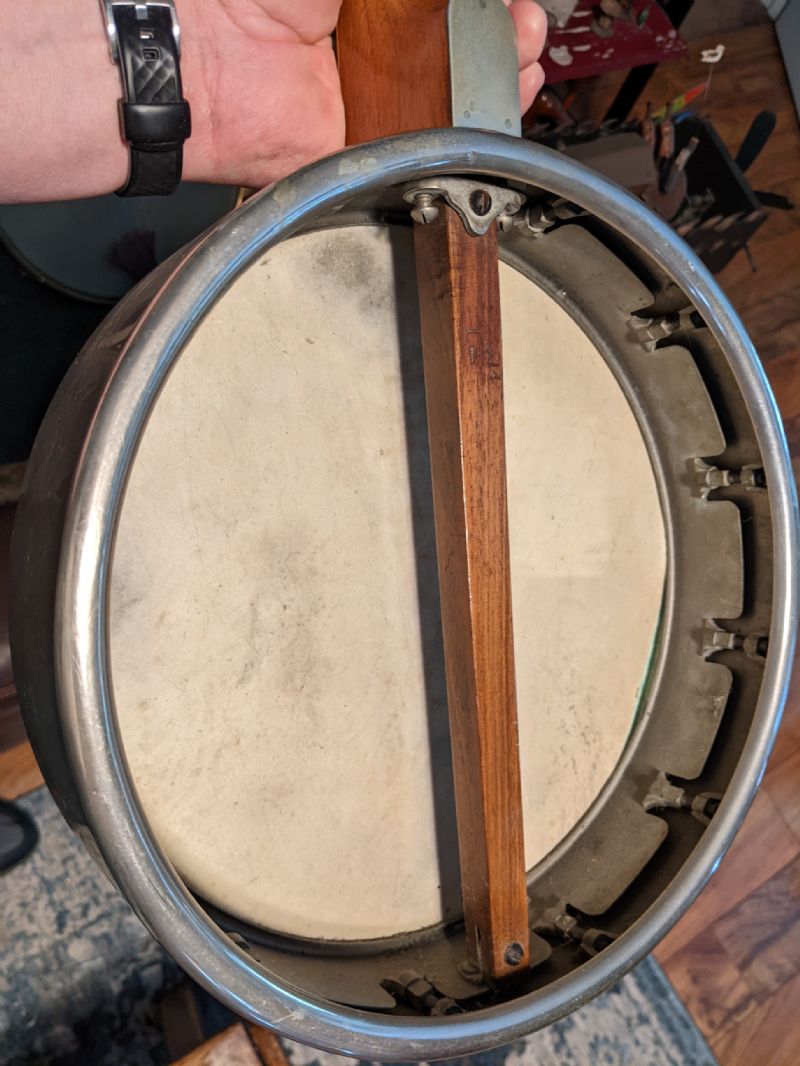
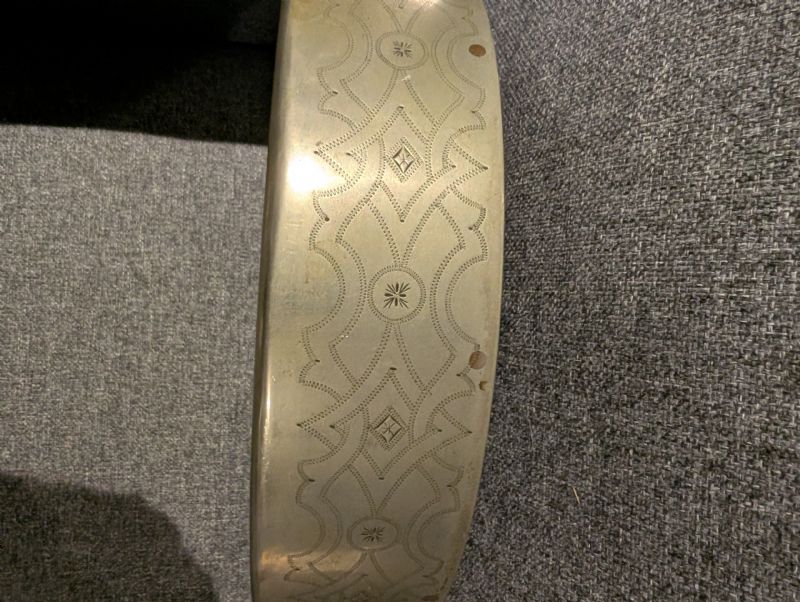
I am interested in finding more out about this 5 string fretless. It has a beautiful walnut (I think) neck with nice inlay. The body is very unique. The tension screws are on the inside of the body and the outside is nicely engraved. From my research there is not much info out there but believe it is a George Mathews. Does it have any value and would you recommend fiction pegs or geared?
Thanks for your time!
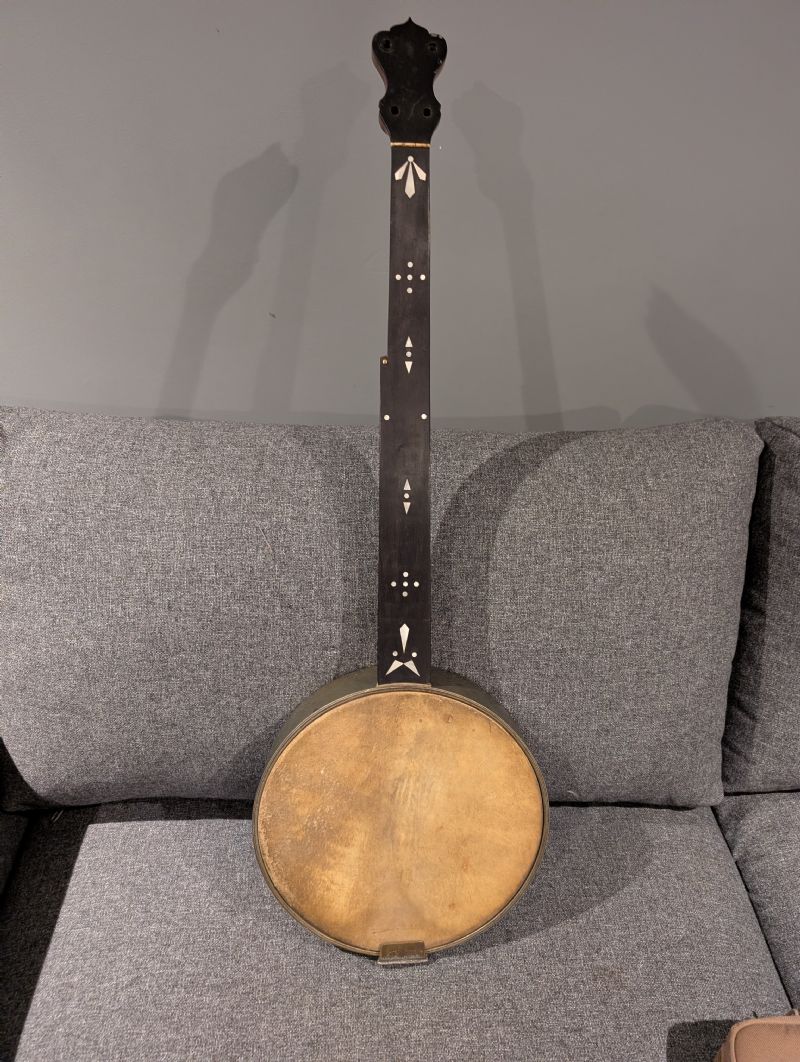
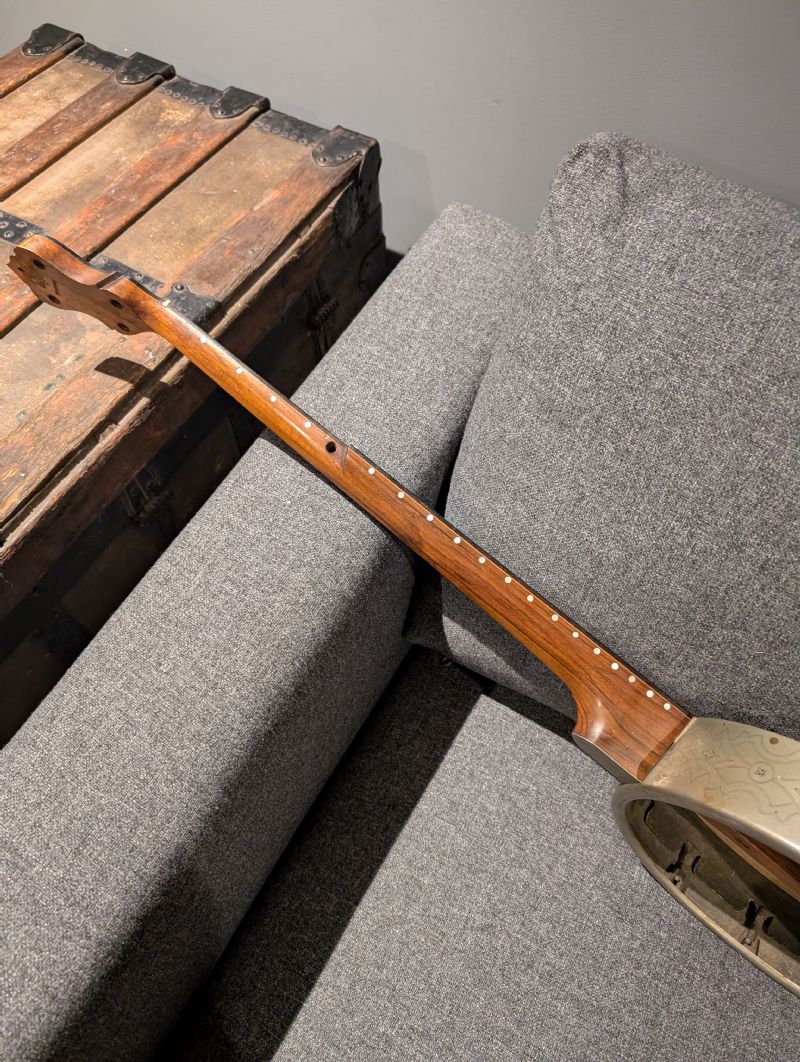
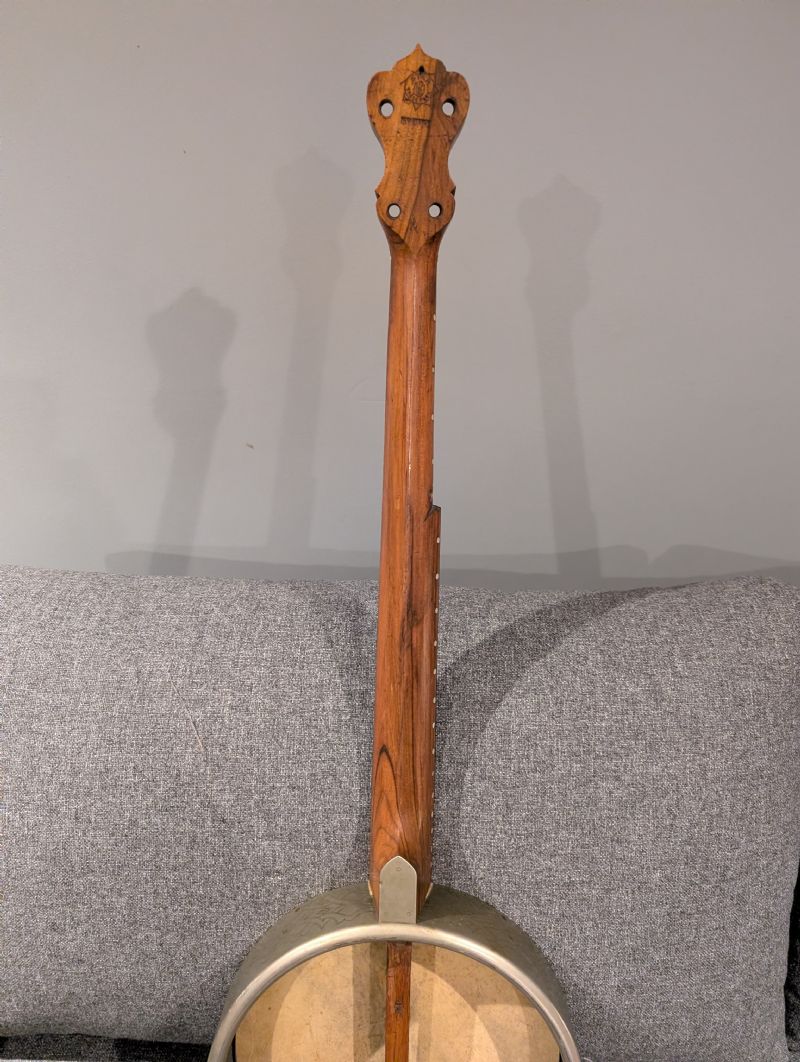
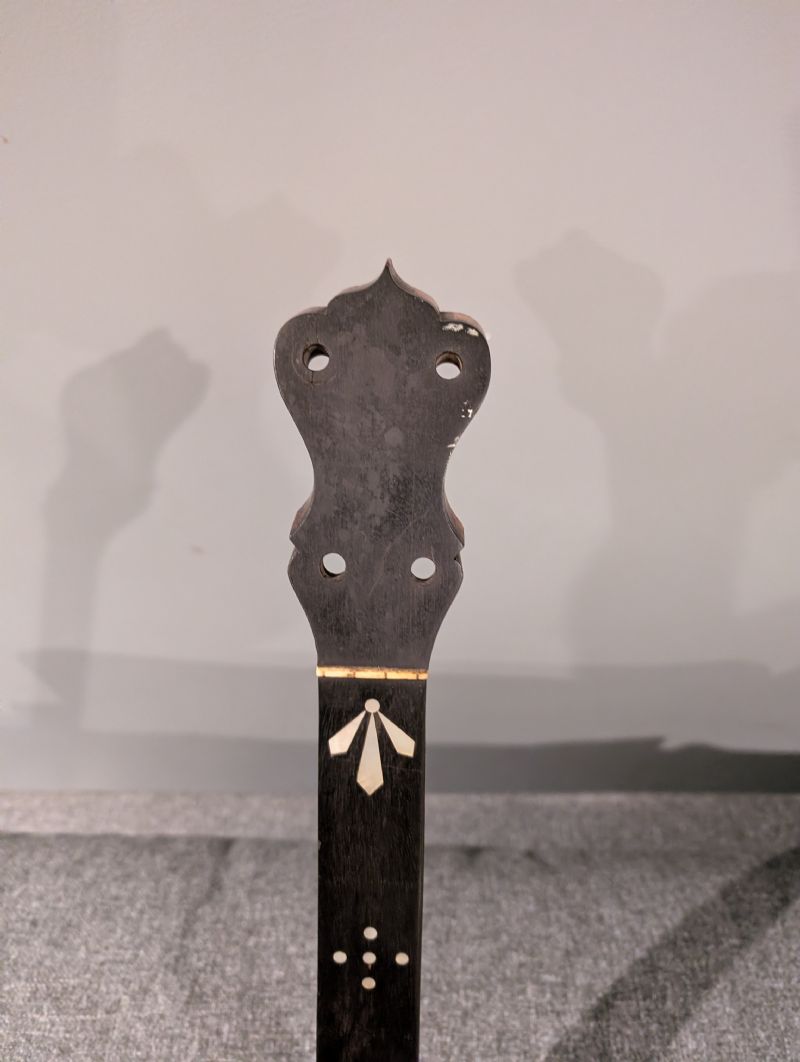

I don't know the maker but judging by the age it's probably friction pegs and don't use metal strings. Nylon or gut strings for a banjo from this era. I sure would love to hear it playing. Figure things out and post a sound bite for everyone to enjoy.

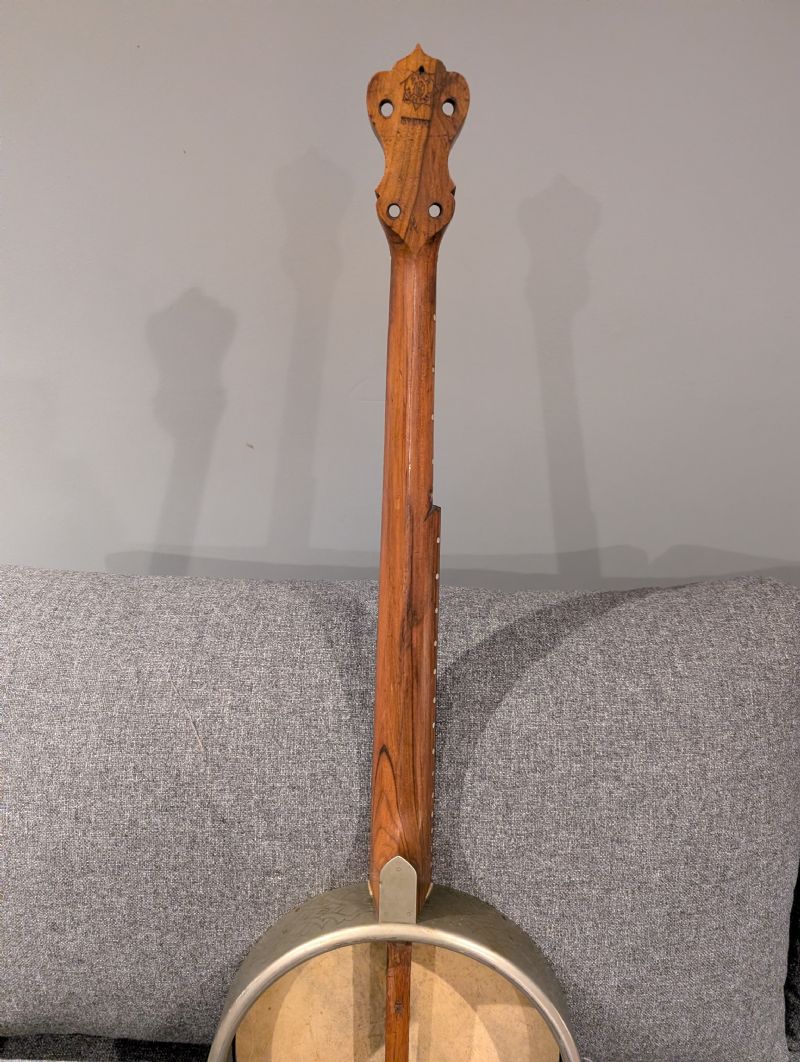
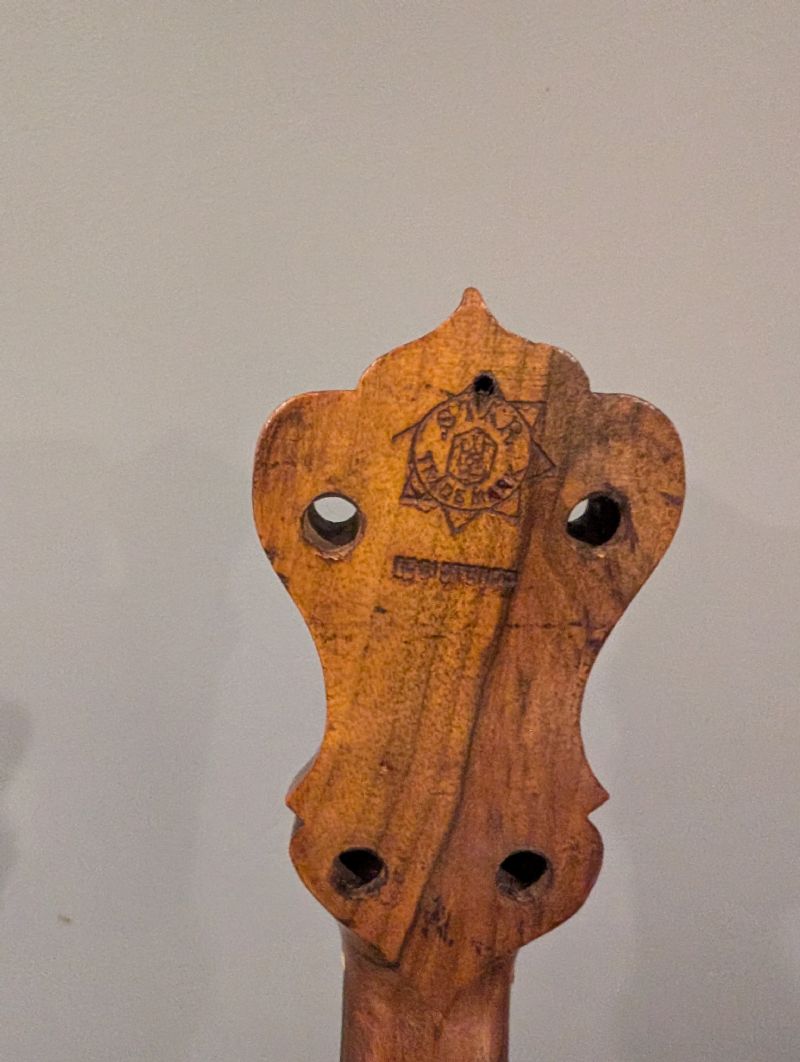
What is printed on the back of the peghead? Would you take a closeup photo of it please?
Thank you for your consideration.
Hi Brian,
Please do not use anything other than friction pegs. It is entirely possible that you could find an original set, or a very similar set. As Chip said, don't use metal strings. If you click on Forums and then Groups, you'll find the George P. Matthew Research Group; make contact with people that are knowledgeable about Matthew's banjos.
Edited by - ALCO on 10/05/2026 22:35:30
It definitely has value from an historical perspective, if restored to near original condition and used to play what is currently called the 'classic banjo' repertory.
Very interesting and rare Matthew. I have only seen one other with that style of rim. As Ian says well worth restoring.
Restored this will be a fine banjo, and a rare survivor.
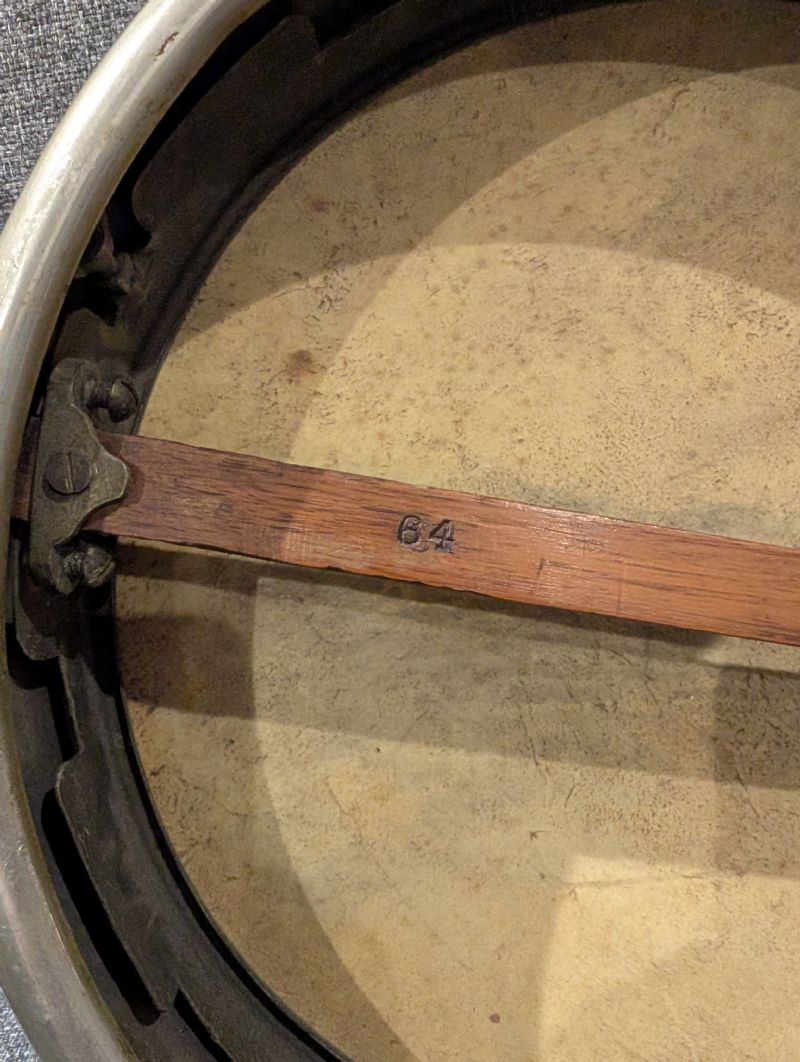
The neck pattern is familiar. Steve has seen one example of this rim pattern; I haven’t seen one at all. This is the first example for me. The Star banjo mark was a trade name that Matthew used. The fun part, and what I suggest you do first, is look at the reverse of the perch pole. Matthew practice was to stamp the back of the pole with his maker’s mark and a full serial number. The number visible on the top of the pole and/or rim is typically the last three digits of the serial number.
That makes me curious that the number we can see is only two digits.
I love that ‘new’ information continues to come to light like ships emerging from the mist. Thank you for sharing the photos.
Edited by - EEB on 10/06/2026 03:02:42
As Ian advised above, please don’t fit modern tuners. That would diminish value by compromising the original build. Violin-style friction pegs were the original design. Reference for Matthew pattern pegs can be seen on the Matthew research group page. The peg holes may need attention as they don’t look in great shape but can be repaired and correct taper fit restored. Properly-fitted friction pegs function perfectly with gut or nylon strings.
Edited by - EEB on 10/06/2026 03:14:15
quote:
Originally posted by EEBRestored this will be a fine banjo, and a rare survivor.
The neck pattern is familiar. Steve has seen one example of this rim pattern; I haven’t seen one at all. This is the first example for me. The Star banjo mark was a trade name that Matthew used. The fun part, and what I suggest you do first, is look at the reverse of the perch pole. Matthew practice was to stamp the back of the pole with his maker’s mark and a full serial number. The number visible on the top of the pole and/or rim is typically the last three digits of the serial number.
That makes me curious that the number we can see is only two digits.
I love that ‘new’ information continues to come to light like ships emerging from the mist. Thank you for sharing the photos.
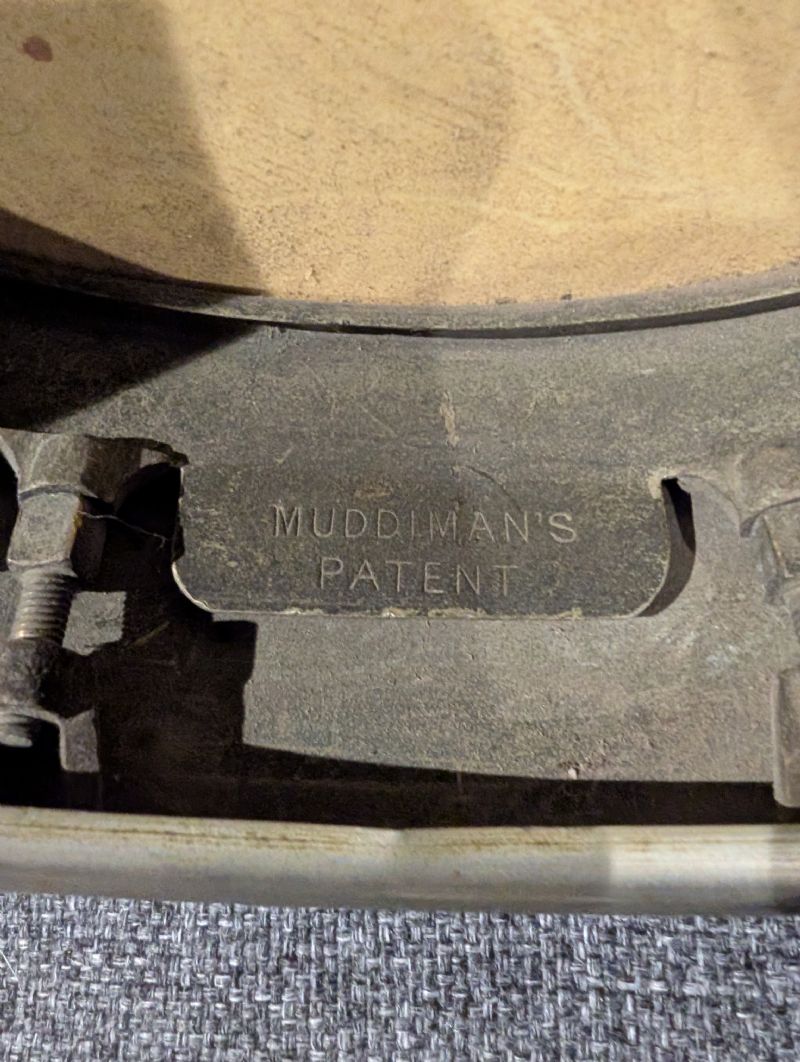
Hi Mike. Perhaps you don't recall but I sent you a photo of another back in November 23. A friend of Jim Bollman had one and was trying to identify it. The Muddiman plate is certainly of interest.
Thanks for the reminder Steve. I will have filed the photos you sent me. I’ll take a look at them and also see what I may have on Muddiman.
quote:
Originally posted by ALCOHi Brian,
Please do not use anything other than friction pegs. It is entirely possible that you could find an original set, or a very similar set. As Chip said, don't use metal strings. If you click on Forums and then Groups, you'll find the George P. Matthew Research Group; make contact with people that are knowledgeable about Matthew's banjos.
Smakula has some sets of vintage pegs (plain and screw-tensioned). They sometimes pop up on Ebay as well.
The original tuners would have been the same pattern beaded edge type as fitted to this banjo.
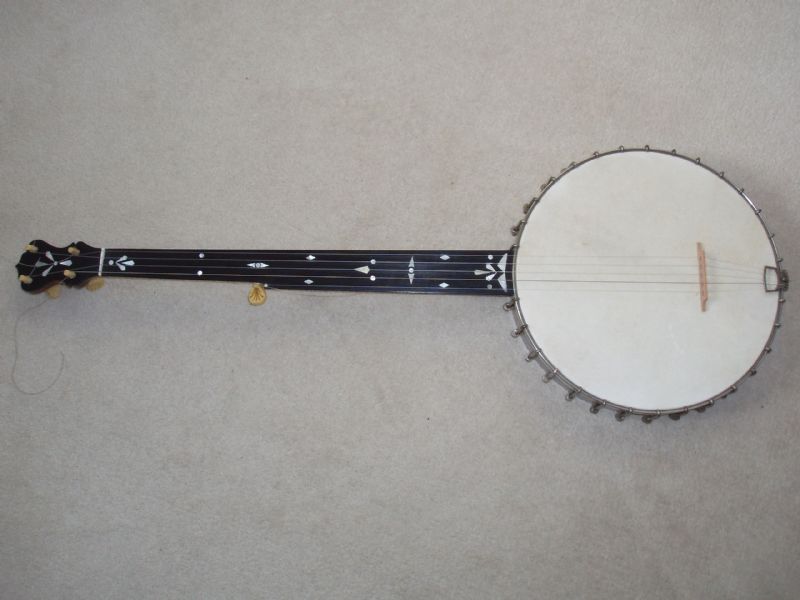
So this banjo was made by George Muddiman, as the patent on the rim states, star trademark sold for different manufacturers.
quote:
Originally posted by lapsteelWhat is printed on the back of the peghead? Would you take a closeup photo of it please?
Thank you for your consideration.
It is too small too see clearly from this photo. Enlarging that section, my first instinct was that it's Hindi script i.e. Indian. Not that I read Hindi, just from the characteristic shapes of the lettering. But the enlargement is very blurry.
A sharp detail photo would be helpful.
Edited by - EEB on 10/06/2026 08:50:36
Published Dec. 22, 1893
New Patents
Patents Sealed
No. 14,285 - J. G. Muddiman, of Ship Street, Cubitt Town, London, for an invention of “Improvements in banjoes.”
The Matthew manufactory was in Birmingham. Another relationship to investigate…
This post from 2014
banjohangout.org/archive/296158
quote:
Originally posted by EEBquote:
Originally posted by lapsteelWhat is printed on the back of the peghead? Would you take a closeup photo of it please?
Thank you for your consideration.It is too small too see clearly from this photo. Enlarging that section, my first instinct was that it's Hindi script i.e. Indian. Not that I read Hindi, just from the characteristic shapes of the lettering. But the enlargement is very blurry.
A sharp detail photo would be helpful.
Registered.
quote:
Originally posted by EEBPublished Dec. 22, 1893
New Patents
Patents Sealed
No. 14,285 - J. G. Muddiman, of Ship Street, Cubitt Town, London, for an invention of “Improvements in banjoes.”
Excellent. Thanks Mike.
quote:
Originally posted by ALCOThis post from 2014
banjohangout.org/archive/296158
Well found Ian. Looks like 26 on that one with a simpler pattern neck. So likely separate numbering system by Matthew on these.
quote:
Originally posted by Stephen John Priorquote:
Originally posted by ALCOThis post from 2014
banjohangout.org/archive/296158Well found Ian. Looks like 26 on that one with a simpler pattern neck. So likely separate numbering system by Matthew on these.
Also we now know that Matthew made at least 74 of them. Sadly I can't make out the number on the photo Jim sent me.
Terms of Use | Privacy Policy | Privacy Consent (EU/GDPR Only)
Copyright 2026 Banjo Hangout. All Rights Reserved.