


I've been searching the web for a simple chord chart for sawmill tuning without much luck. Does anyone have a link to a source?

Try this.
Https://chords.cc/en/
Chord charts for many instruments with lots of tuning selections.

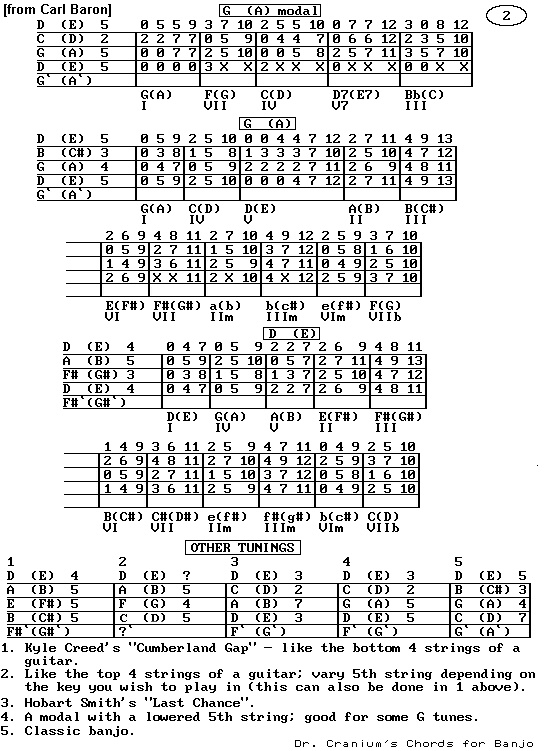
Here's a chart with the common chord shapes for Sawmill tuning - G modal. If playing a tuning in A modal with a capo on the second fret, the chord shapes stay the same while the chord names and pitch adjust up a whole step to A modal.
David
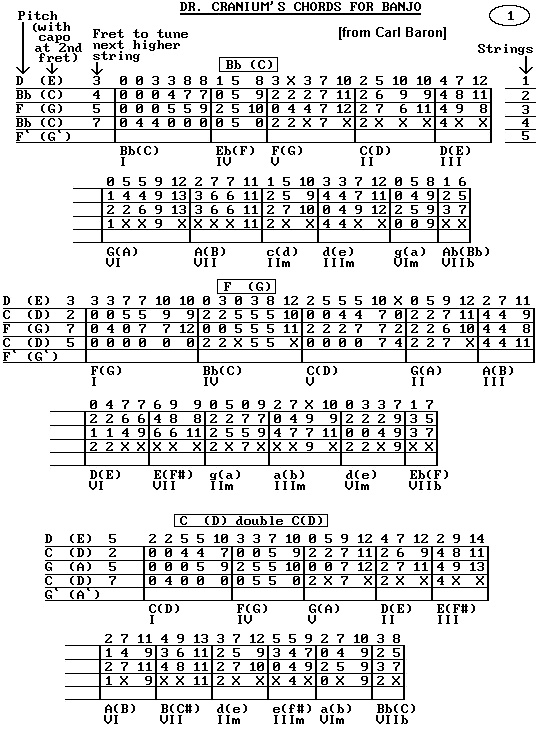
You'll find a some in my chord chart.
The exact origin of the name "Sawmill tuning" for gDGCD is rooted in Appalachian folk music tradition, though musicologists and folk historians trace its widespread usage to a combination of cultural imagery and specific song associations:
Association with Clarence "Tom" Ashley: The term is strongly tied to early 20th-century Appalachian musician Clarence Ashley. His 1929 recording of "The Cuckoo Bird" (and later "Dark Holler Blues") popularized this modal tuning, and he often referred to it as "sawmill tuning." Since many early mountain musicians worked in Appalachian logging camps and sawmills, names for tunings and songs frequently reflected everyday industrial and rural work life.
The "Buzzing" or "Droning" Sound: Raising the second string from B up to C changes the open chord from a standard G major triad (G-D-G-B-D) to a suspended 4th chord (G-D-G-C-D). Removing the major 3rd creates a "modal" (Dorian/Mixolydian) sound with a strong, continuous drone that can sound ambiguous, tense, or repetitive—reminiscent of the persistent, buzzing whine of a circular saw in a sawmill.
Ease of Play for Working Musicians: Modal tunes played in gDGCD (such as "Shady Grove", "Pretty Polly", and "Cluck Old Hen") require very little fretting to maintain a rich, rhythmic drone. It was a favorite tuning for playing after long shifts in sawmills or coal mines because it allowed clawhammer players to produce a full, hypnotic sound with simple hand movements.
While formally known in music theory as G Modal or G Mountain Minor, the informal title "Sawmill" stuck as folk revivalists in the mid-20th century preserved the traditional mountain names passed down by older players.
Terms of Use | Privacy Policy | Privacy Consent (EU/GDPR Only)
Copyright 2026 Banjo Hangout. All Rights Reserved.


