Hi y'all! I'm a K-8 school music and guitar teacher and mom with two little boys and a rock band history, but a lifelong love of gospel, country, blues, bluegrass, etc.
I have gathered quite the collection of string instruments from antique stores and online over the years and am adequate at them. I've always wanted to play banjo but have been quite intimidated.... I've never purchased one but yesterday I finally did! Who knowsssss if it's going to be playable or practical but by golly I knew it was special when I saw it. I paid $257. The shop owner told me a bit about the previous owners, a gentleman and his wife who were folk musicians and played a lot starting in the 50/s and 60s. He passed away more than a decade ago, but she remained an active musician and is still alive.
After some research, including perusing some truly wonderful and helpful previous posts in this amazing forum, I'm very cautiously going to ask if this is what I think it is. I'm embarrassed about potential getting schooled for being way off the mark haha.
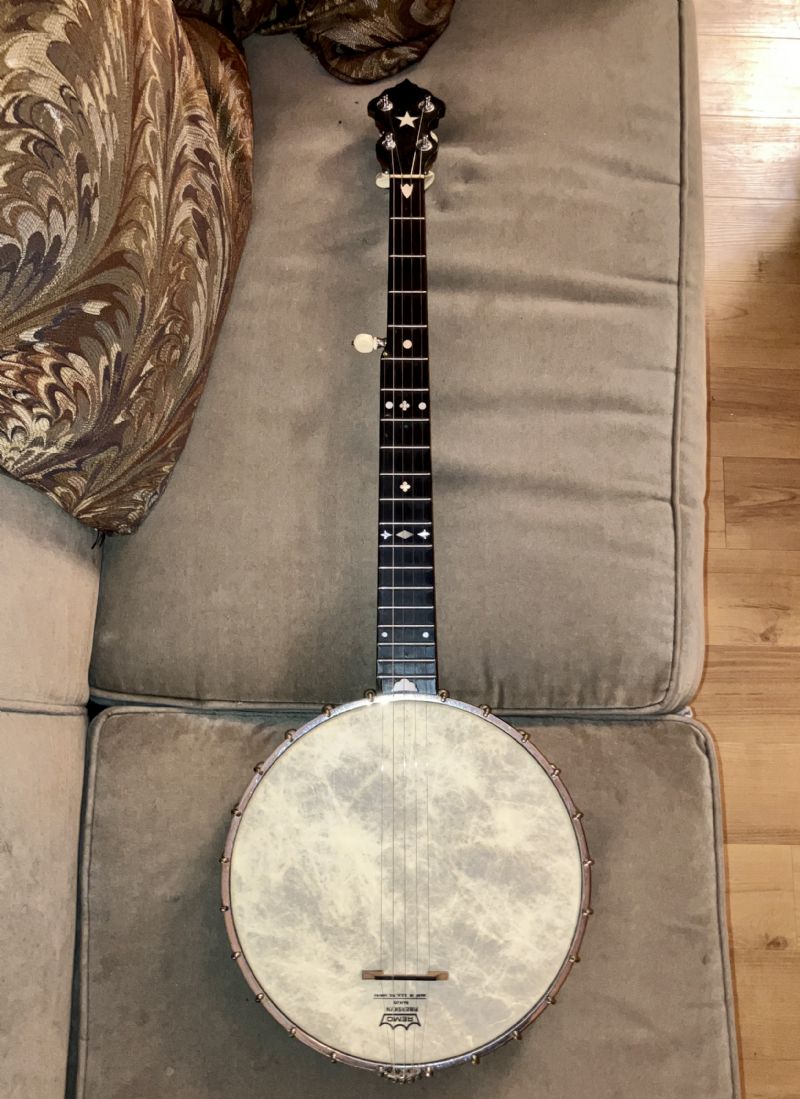
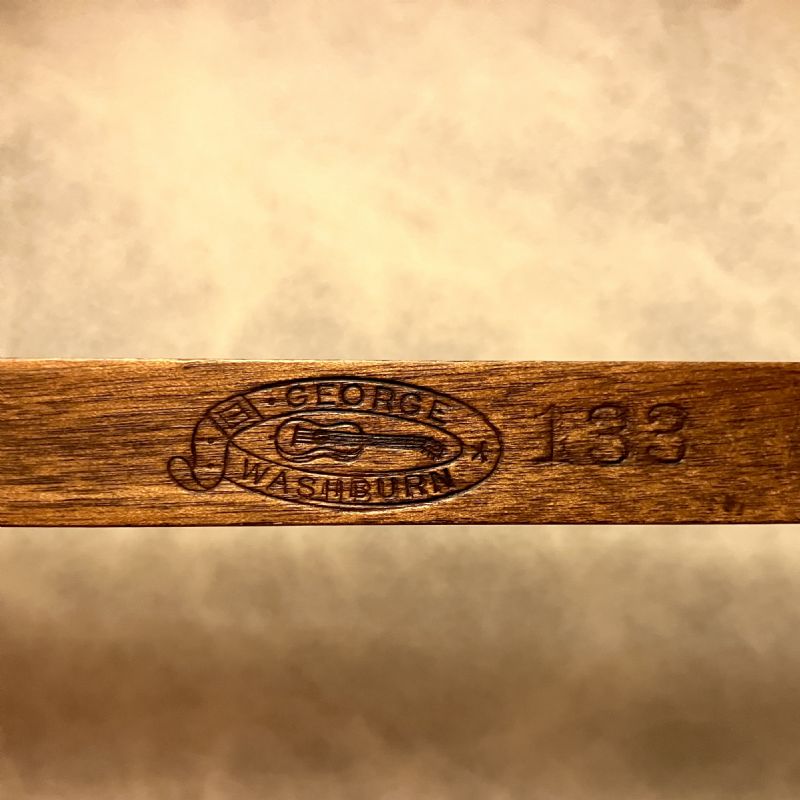
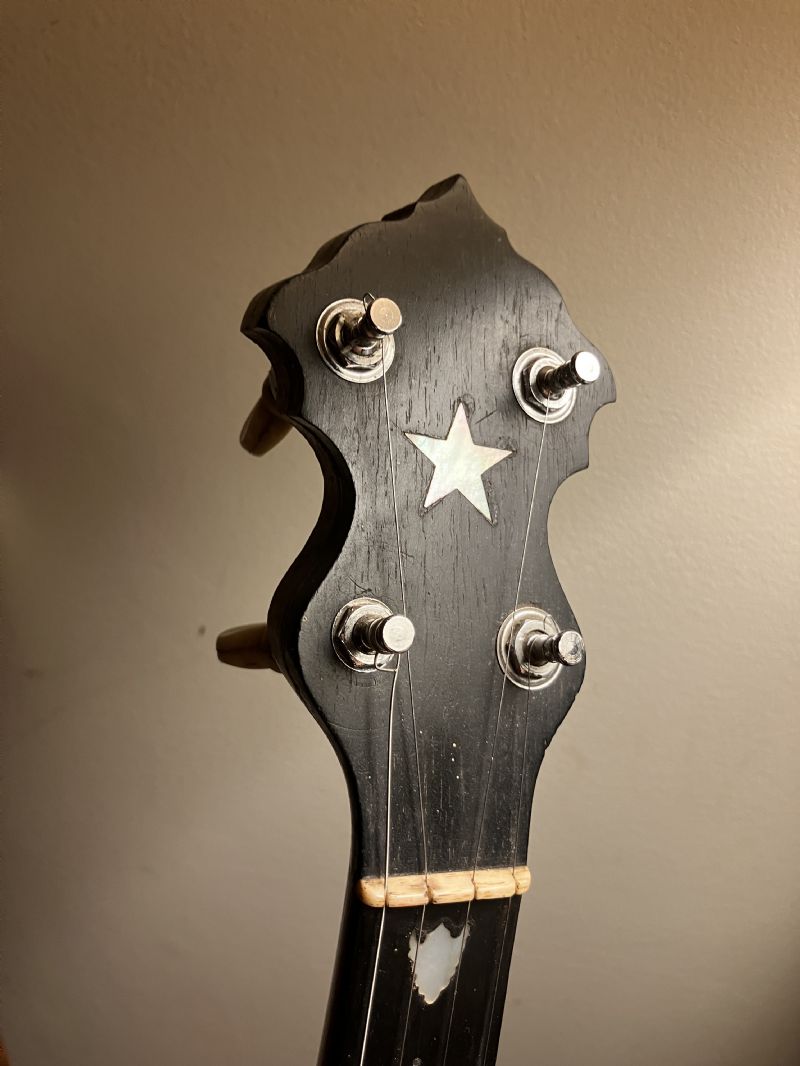
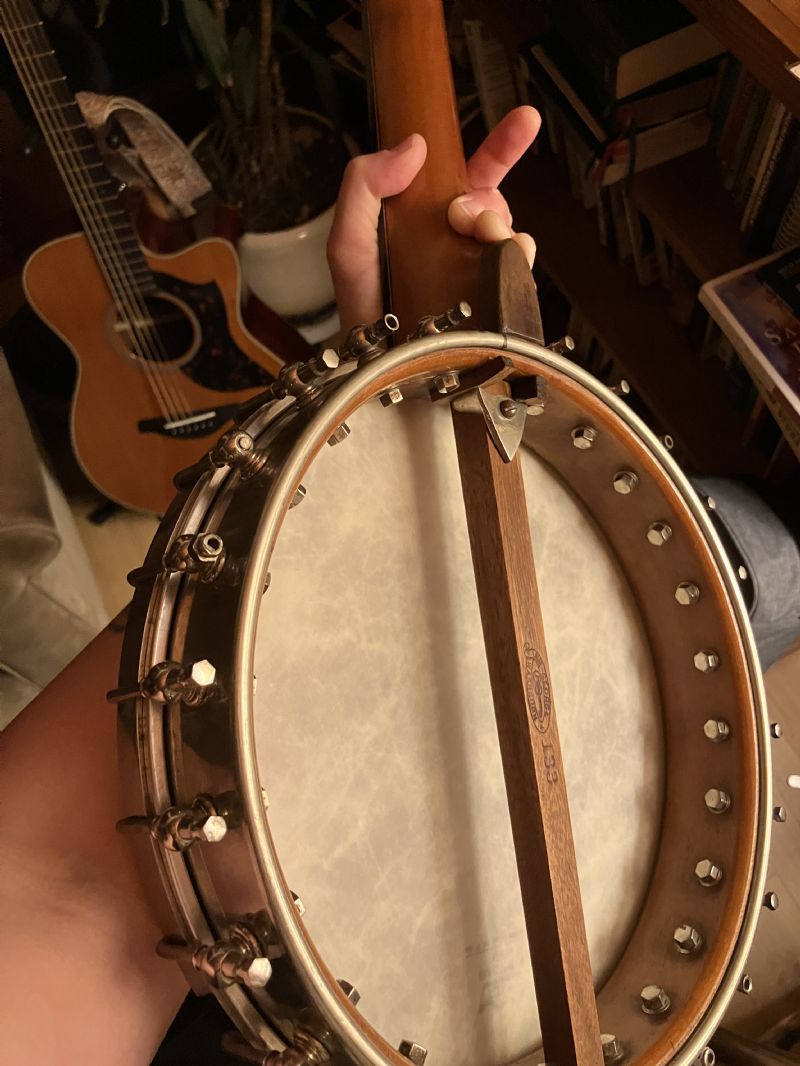
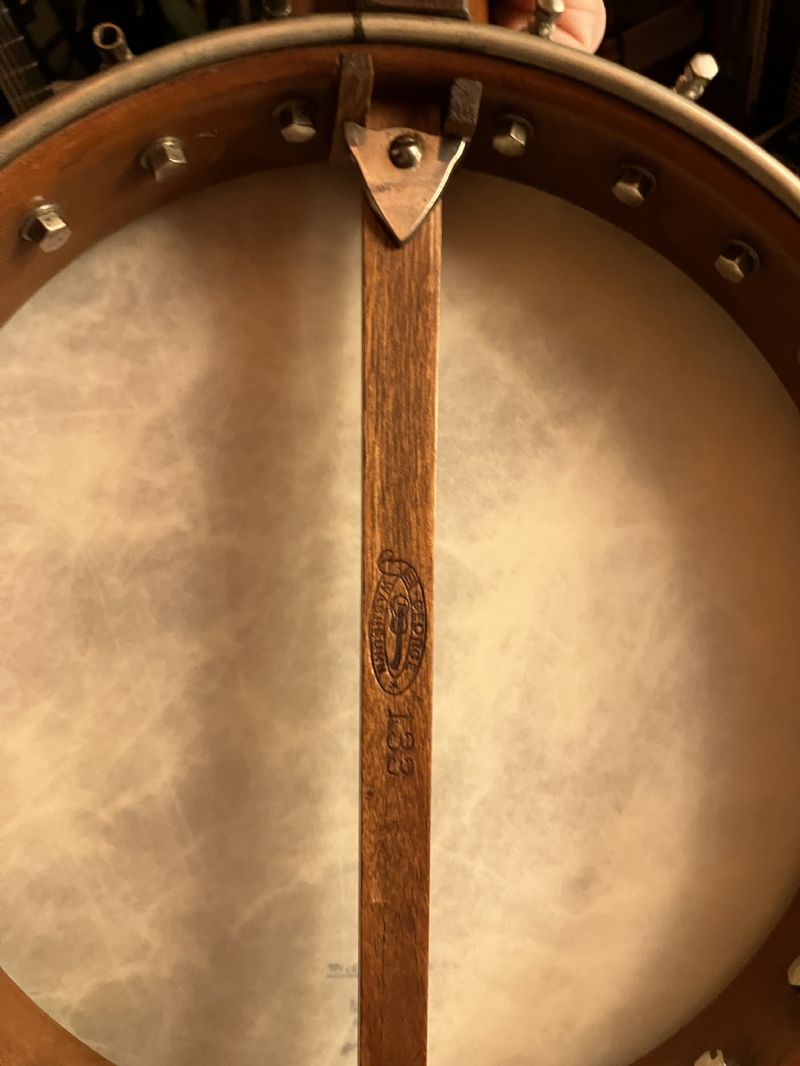
Is this a Washburn 411 from approx 1892? Am I nutso?
I don't have the Hubert Pleijsier Pre-War Washburn instruments book, but I've gathered bits and pieces of his research and relevant information online. However, there aren't many photos of these floating around online.
Any interest in chatting about this neat find?
Thanks!!!
-Lexi
P.S. If photos don't post here for some reason, they're in the Banjo Sept '26 folder on my profile
Edited by - Lexi_ on 09/28/2026 23:09:07

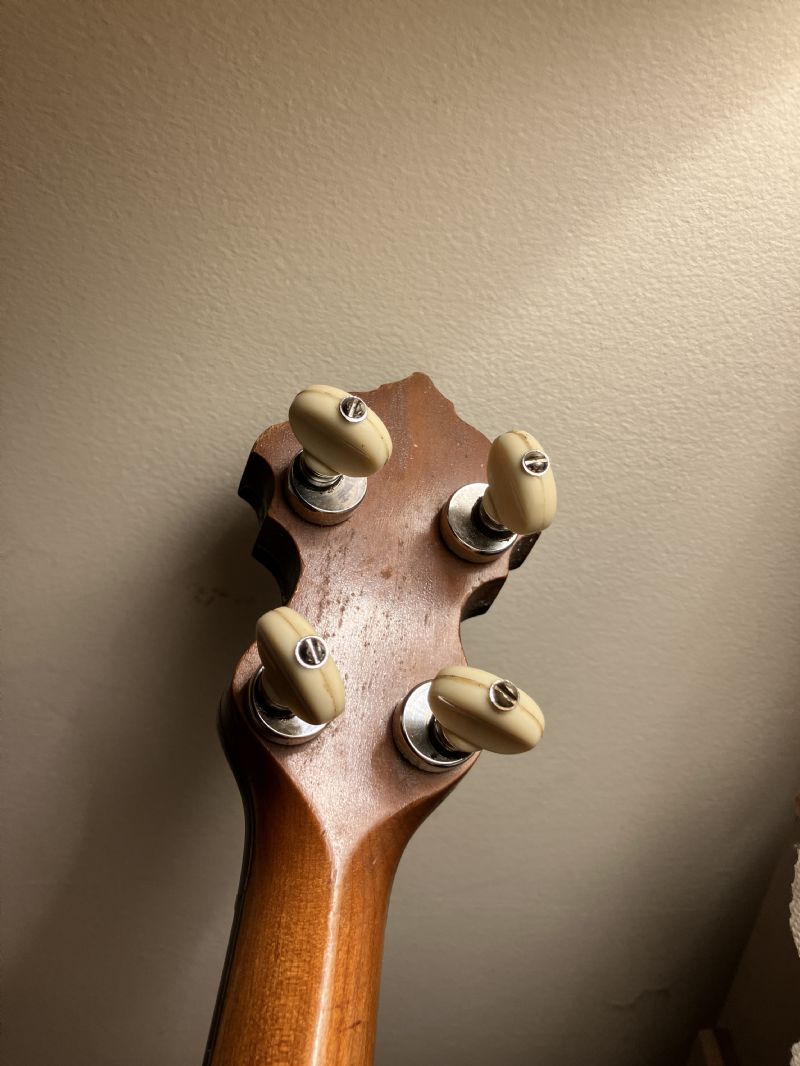
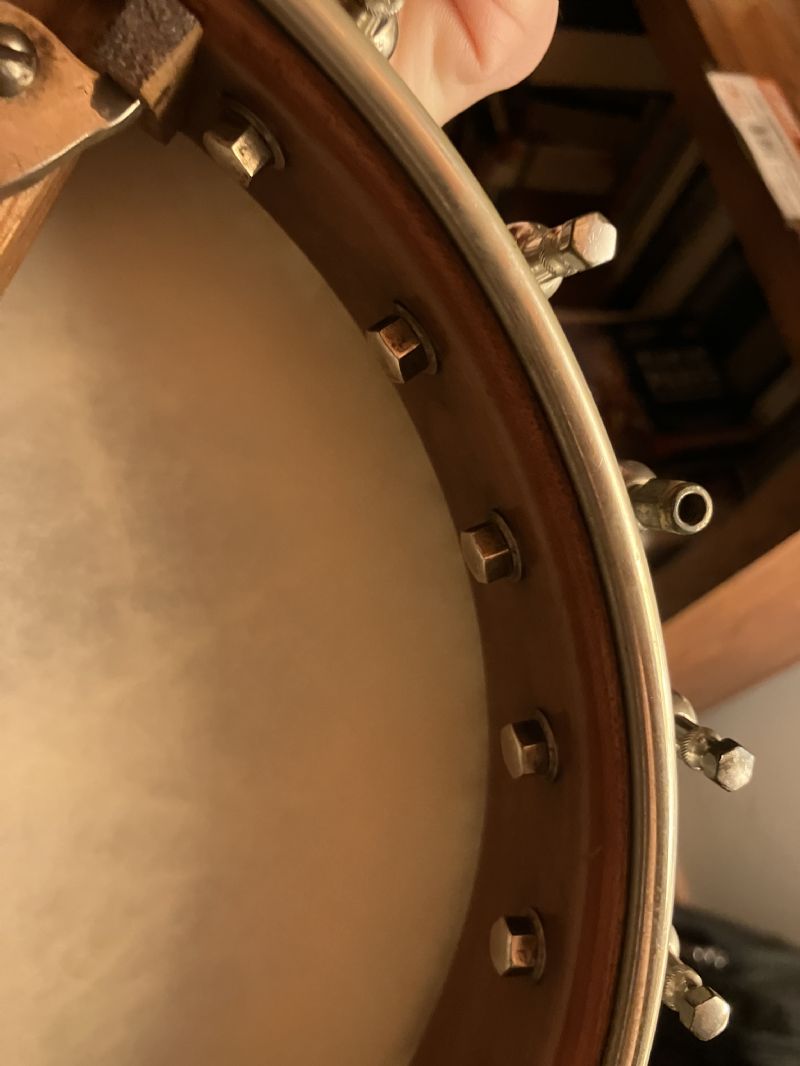
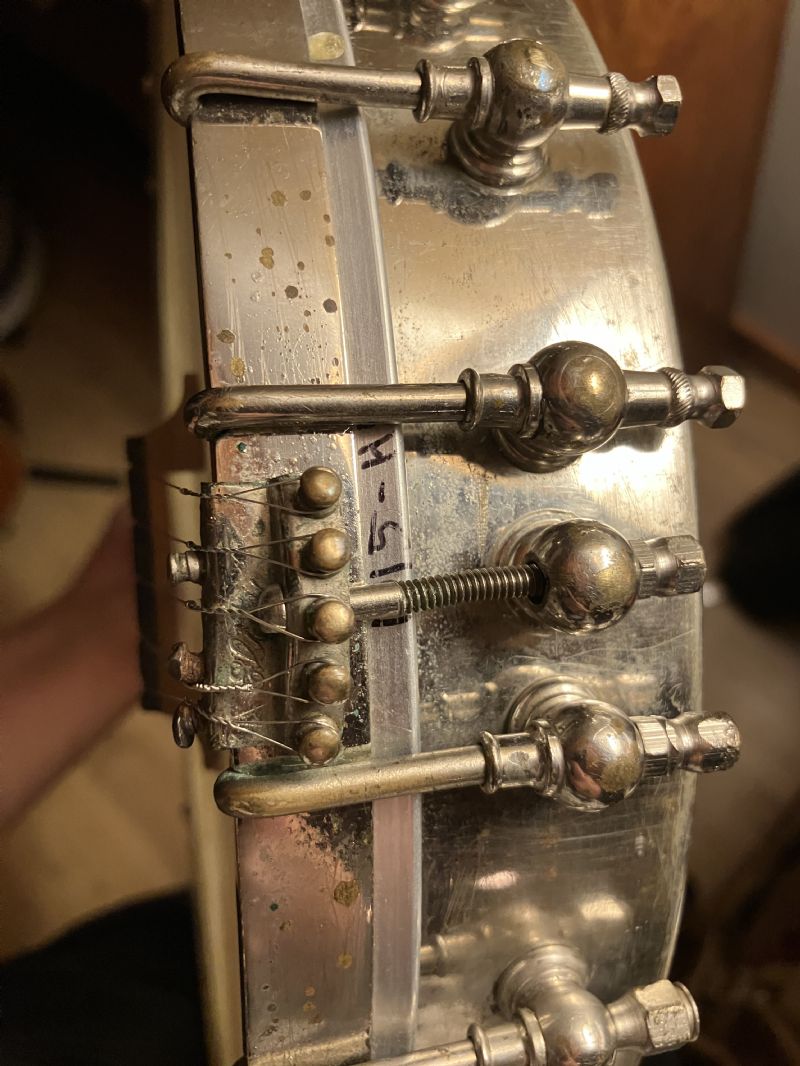
Yes you have a 411. Very nice find. Very good price. The tuners and tailpiece are later. Best remove the steel strings and fit nylon or gut. Down side, missing some of the original Imperial nuts which are virtually impossible to find.

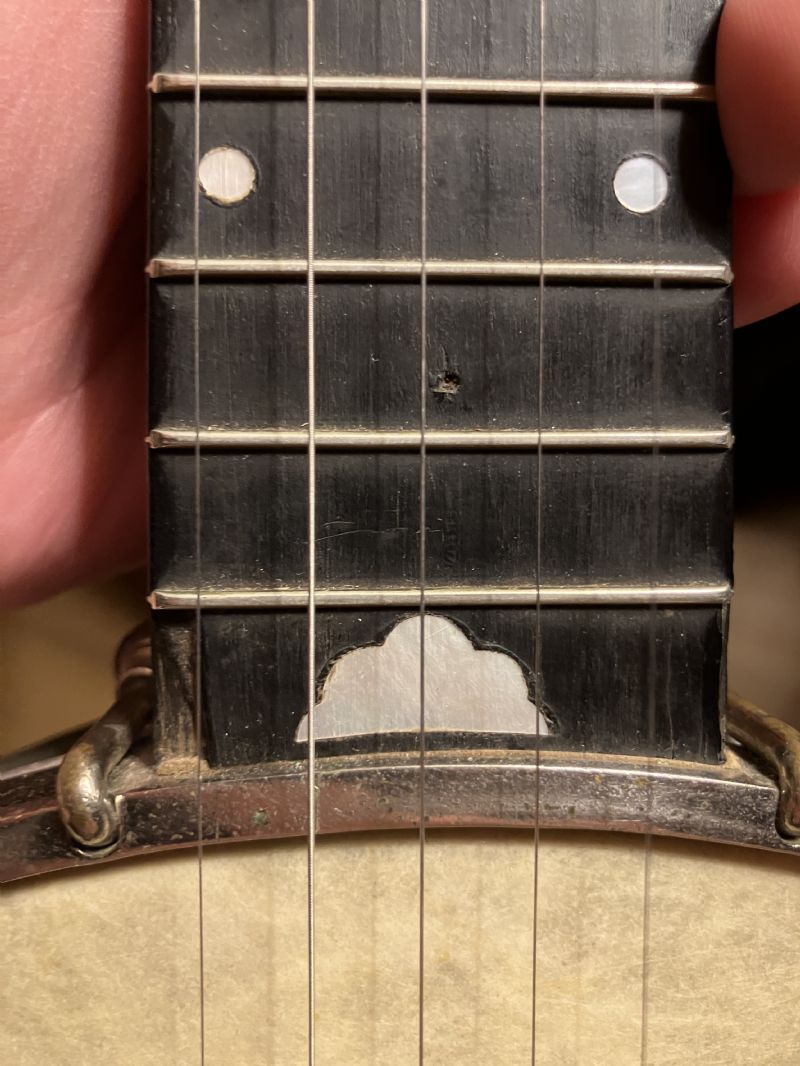
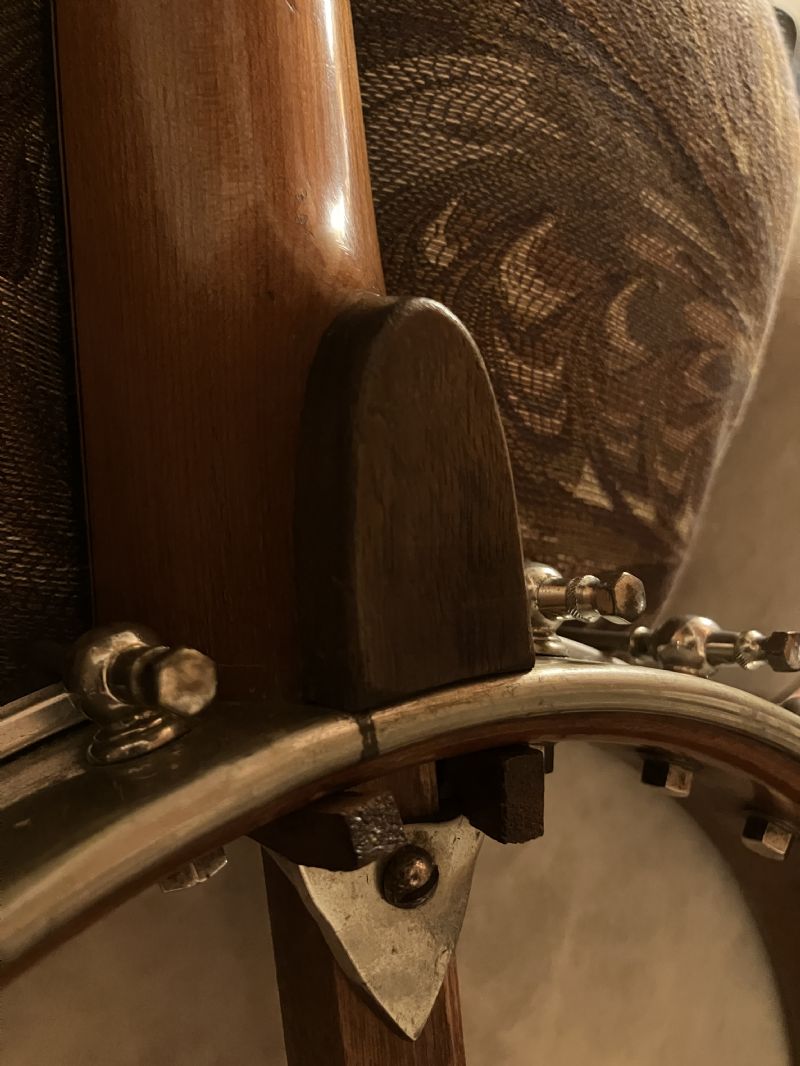
The heel cap is a replacement, which is not uncommon, as many if these had a heel cap made of dyed wood which deteriorates and falls off.
Most (but not all) Washburns had an inlay in the heel cap, which covered a factory-installed wood pin through the dowel tenon. Most (again, not all) Washburns also have a steel reinforcing bar in the neck. This can be checked for with a magnet.
Edited by - Andy FitzGibbon on 09/29/2026 04:26:25
Since you are an educator you might be interested to learn that there is a tradition of learning, teaching, sharing, buying and selling banjo music using standard notation that has been concurrent for over a century and a half.
The best instruction method (in my opinion) ever published is still in current print. The Mel Bay Banjo Method, by Frank C. Bradbury. It starts out with you knowing nothing about playing banjo (or music) and through a course of study teaches you the skills needed to play any of the tens of thousands of compositions and arrangements for banjo that are now in public domain (and freely available).
In addition to the Bradbury method, there are MANY instruction books that are in public domain and may be freely downloaded.
Your banjo exists because of this music.
Welcome. Sweet banjo!
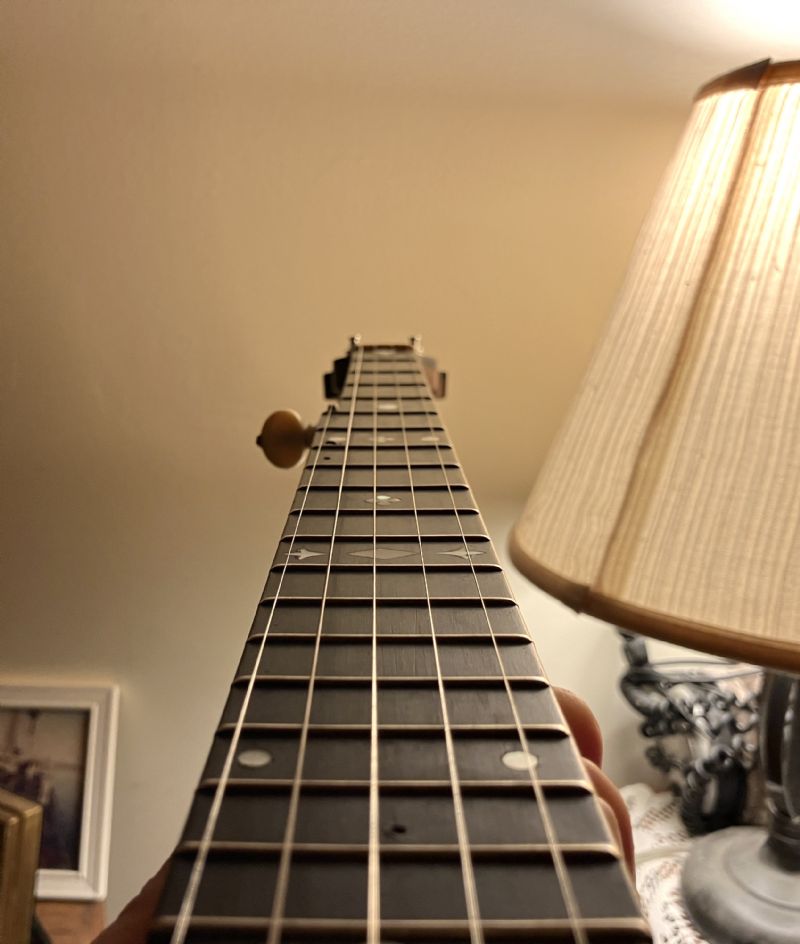
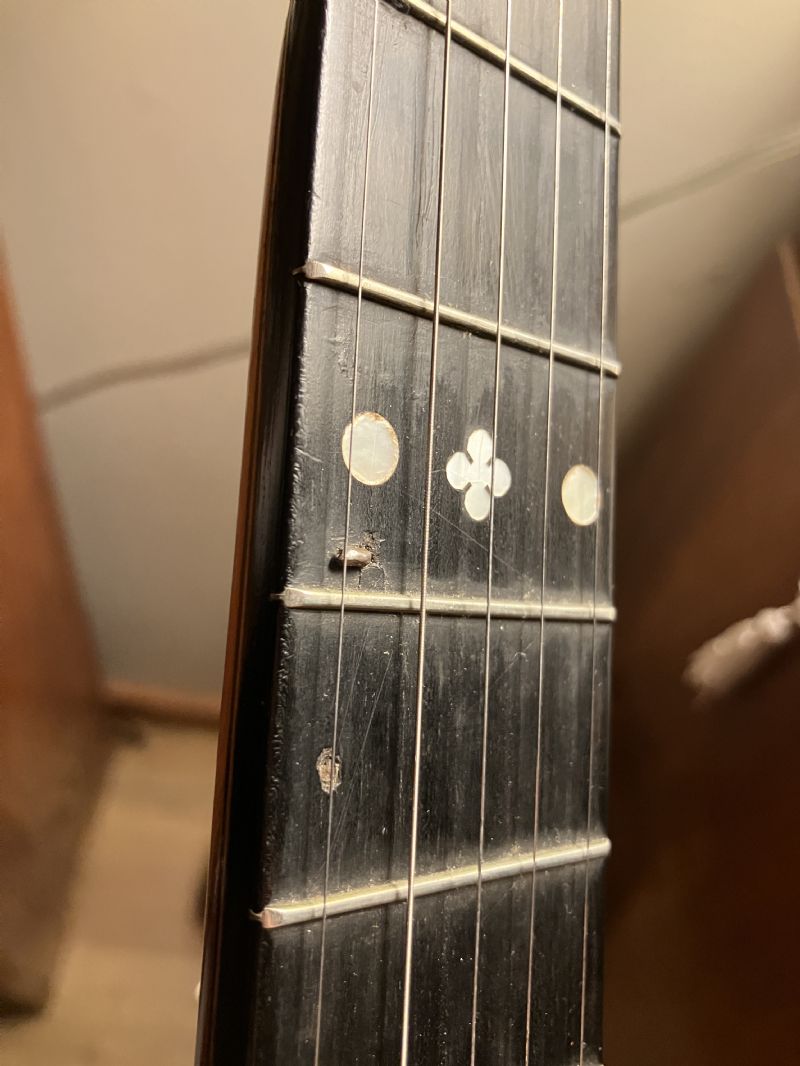
The "protuberance" is a spike, for capoing the top string for playing in the key of A (with a normal capo across the 2nd fret.) deeringbanjos.com/products/5th...jo-spikes (random link to illustrate. I have no affiliation with Deering.)
You can find information about them online. The next hole over is probably another spike hole that was filled.
Cheers.
Thank you, Andy! (I'm not sure if I'm tagging correctly as I'm new to the forum)
that's great to know about the heel cap, as I saw a photo online of one with the inlay and was curious.
I have a strong magnet at work, I'll check the neck! It's so straight (from my amateur eyes) that I'm hopeful that's the case.
i appreciate you sharing your knowledge!
-Lexi
quote:
Originally posted by Andy FitzGibbonThe heel cap is a replacement, which is not uncommon, as many if these had a heel cap made of dyed wood which deteriorates and falls off.
Most (but not all) Washburns had an inlay in the heel cap, which covered a factory-installed wood pin through the dowel tenon. Most (again, not all) Washburns also have a steel reinforcing bar in the neck. This can be checked for with a magnet.
Edited by - Lexi_ on 09/29/2026 09:48:18
Thanks for the response, Steve! It's interesting about the nuts-- it looks like these are replacement nuts that happen to be hollow. There is something screwed into the place where the original nuts were, so they're held tight. There is one that is totally snapped off, but the rest seem to have alternative hardware that is doing the trick (I think)
I ordered some nylgut strings, I'm excited to give them a whirl!
The tail piece would be nice to have, but seems like it's not unusual it's missing. That part of the banjo looks a little rough, I'm curious about its functionality! I'll post any updates.
I appreciate you taking the time to share what you know with a stranger!
-Lexi
quote:
Originally posted by Stephen John PriorYes you have a 411. Very nice find. Very good price. The tuners and tailpiece are later. Best remove the steel strings and fit nylon or gut. Down side, missing some of the original Imperial nuts which are virtually impossible to find.
Joel, thanks for the book suggestion!! I have a history degree, which was my intended path before (very happily) becoming a music teacher-- so that side of it is of immense interest to me. I appreciate the pointers and look forward to taking a look back at the countless materials! It's nice to have a recommendation for where to start with learning the instrument.
Be well!
Lexi
quote:
Originally posted by Joel HooksSince you are an educator you might be interested to learn that there is a tradition of learning, teaching, sharing, buying and selling banjo music using standard notation that has been concurrent for over a century and a half.
The best instruction method (in my opinion) ever published is still in current print. The Mel Bay Banjo Method, by Frank C. Bradbury. It starts out with you knowing nothing about playing banjo (or music) and through a course of study teaches you the skills needed to play any of the tens of thousands of compositions and arrangements for banjo that are now in public domain (and freely available).
In addition to the Bradbury method, there are MANY instruction books that are in public domain and may be freely downloaded.
Your banjo exists because of this music.
Thanks so much, P R!
The capo idea fits! The string cannot slide under it, as it seems to be pushed down. It just looks like a little nail, but the way it's curved it could have absolutely served as a 5th string capo. Thanks for that fantastic revelation! And the tidbit about using that with a capo across the second fret is helpful. Fabulous info!
I truly appreciate you giving of your time to chime in. Have a good one!
-Lexi
quote:
Originally posted by picklemeisterWelcome. Sweet banjo!
The "protuberance" is a spike, for capoing the top string for playing in the key of A (with a normal capo across the 2nd fret.) deeringbanjos.com/products/5th...jo-spikes (random link to illustrate. I have no affiliation with Deering.)
You can find information about them online. The next hole over is probably another spike hole that was filled.
Cheers.
I wouldn't use nylgut strings. They are far too thick and have intonation problems. Also, the unwound fourth string they usually come with doesn't sound good and isn't historically accurate.
If I were you, I'd try LaBella 17's, or, if you want truly period-correct gauges, order a custom set of LaBella singles in .017'', .019'', .023'', .024'' wound, .017''.
Hi John,
Thank you so much! Sure enough, I got my nylgut strings just now and you called it-- too thick!
I'm flying blind so I really appreciate the LaBella recommendation! I'll order the 17s and perhaps a custom set too.
Just for clarity, for your recommendation on the custom set: Are you saying to have all of them wound except for one of the .017s? Or did you mean the reverse? On their site I'm seeing .020 as the lowest gauge for nylon.
Thanks for giving of your time to someone you've never met! It's immensely helpful.
-Lexi
quote:
Originally posted by csacwpI wouldn't use nylgut strings. They are far too thick and have intonation problems. Also, the unwound fourth string they usually come with doesn't sound good and isn't historically accurate.
If I were you, I'd try LaBella 17's, or, if you want truly period-correct gauges, order a custom set of LaBella singles in .017'', .019'', .023'', .024'' wound, .017''.
Setting aside any "period correctness", there is a good reason the 4th string was wound from the first popular form banjos (1840s) until Aquila decided to change it some years ago.
One company, with no banjo experience beyond the input of a handful of wire string banjo players, has caused a major problem for banjoists.
Why? Because they got complaints about the 4ths string windings wearing out. Yes, strings wear out. But instead of simply being honest and explaining "strings wear out, replace them and use that as an excuse to wipe the crud off of your fingerboard" they did the old switcheroo.
I'm sure it had nothing to do with the fact that monofilament is MUCH cheaper to make than a silver plated copper wound 4th.
Strings became thicker to try and simulate wire string tension. The result is that some of these very thick sets can exceed the tension of light steel sets.
If one wants a steel string banjo, these are being made and easy to get.
Back to the 4th. The banjo really has only one bass string, the 4th (though one can borrow the third). Due to this, when adding two voices the bass needs to stand out. The wound 4th has a slightly different tone color which may be used to great effect.
The rise of the unwound 4th (from one company) follows the general trend of "old time" banjo's role in the social structure of the jam. In this, the banjo is to sound very dull, plunky and somewhat percussive, and most importantly, not offend the fiddle.
Unwound 4ths are generally dull and flabby sounding.
The OP's banjo was made to be a solo instrument. To be the lead (or play chord accompaniment to the solo or voice). Properly set up, this banjo will be loud and clear with strong note separation and full dynamics.
Regarding the capo spike-- take some needle nose pliers and yank it out. One can play in any key they want without transposing clamps and spikes. While there are the "natural keys" of the banjo that are the easiest to play (this goes for most instruments), one is fully able to play in any key without changing the "tuning".
Lexi_ I do not know where you are located geographically, but if you are anywhere near the Rochester NY area, I'd like to invite you to the American Banjo Fraternity Fall Rally (you don't need to be invited, everyone interested are welcome).
banjofraternity.org/rally-news/
Joel, such a fantastic history lesson!!! Thank you so much!! I love hearing this detailed account of the strings and the change in the styles offered and the way that shift has impacted the sound. You've done me a great favor. I will make sure and update you on how this instrument performs once I get it set up! I ordered some LaBella 17s (thanks also to the recommendation of John in a previous post).
Im in Washington state, so that fabulous banjo gathering is out of my reach, but I appreciate the info!
-Lexi
quote:
Originally posted by Lexi_Hi John,Thank you so much! Sure enough, I got my nylgut strings just now and you called it-- too thick!I'm flying blind so I really appreciate the LaBella recommendation! I'll order the 17s and perhaps a custom set too.Just for clarity, for your recommendation on the custom set: Are you saying to have all of them wound except for one of the .017s? Or did you mean the reverse? On their site I'm seeing .020 as the lowest gauge for nylon.Thanks for giving of your time to someone you've never met! It's immensely helpful.-Lexiquote:
Originally posted by csacwpI wouldn't use nylgut strings. They are far too thick and have intonation problems. Also, the unwound fourth string they usually come with doesn't sound good and isn't historically accurate.
If I were you, I'd try LaBella 17's, or, if you want truly period-correct gauges, order a custom set of LaBella singles in .017'', .019'', .023'', .024'' wound, .017''.
Oh my goodness, Joel-- I just looked at my email and realized I purchased two sets of strings from you yesterday for this banjo to have shipped to Washington! I'd say it's a coincidence, but it makes perfect sense!
Thanks!
Lexi
quote:
Originally posted by Joel HooksLexi_ I do not know where you are located geographically, but if you are anywhere near the Rochester NY area, I'd like to invite you to the American Banjo Fraternity Fall Rally (you don't need to be invited, everyone interested are welcome).
banjofraternity.org/rally-news/
Terms of Use | Privacy Policy | Privacy Consent (EU/GDPR Only)
Copyright 2026 Banjo Hangout. All Rights Reserved.