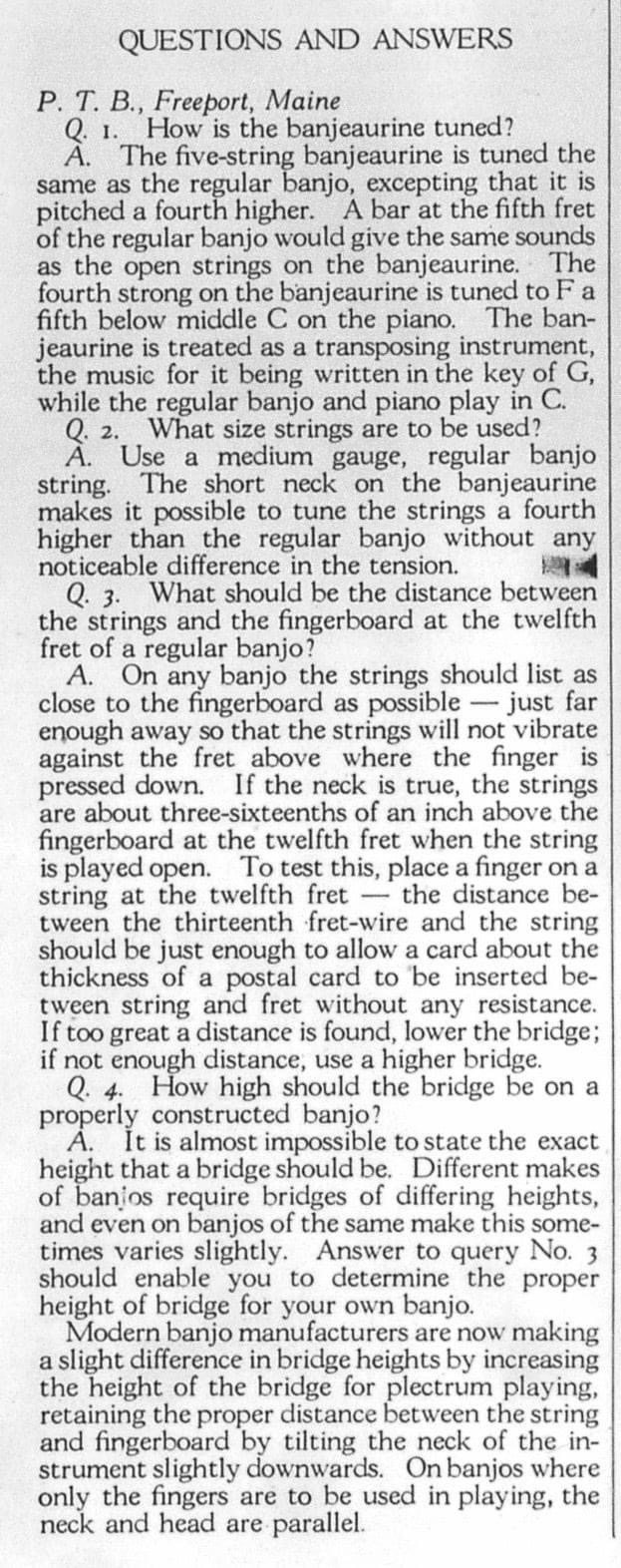
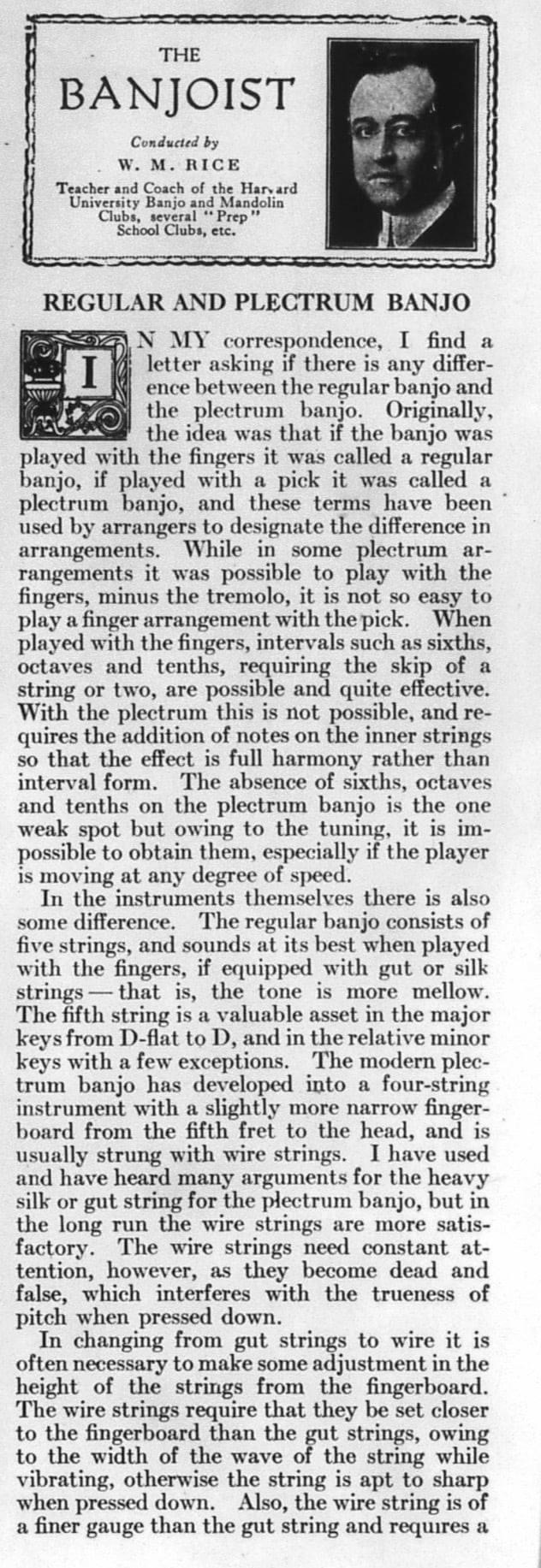
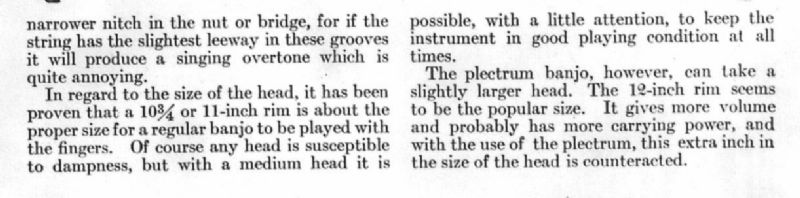
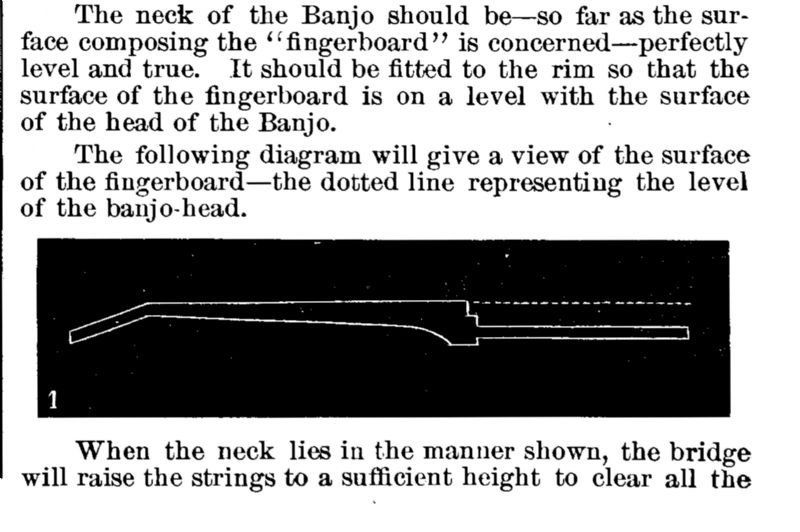
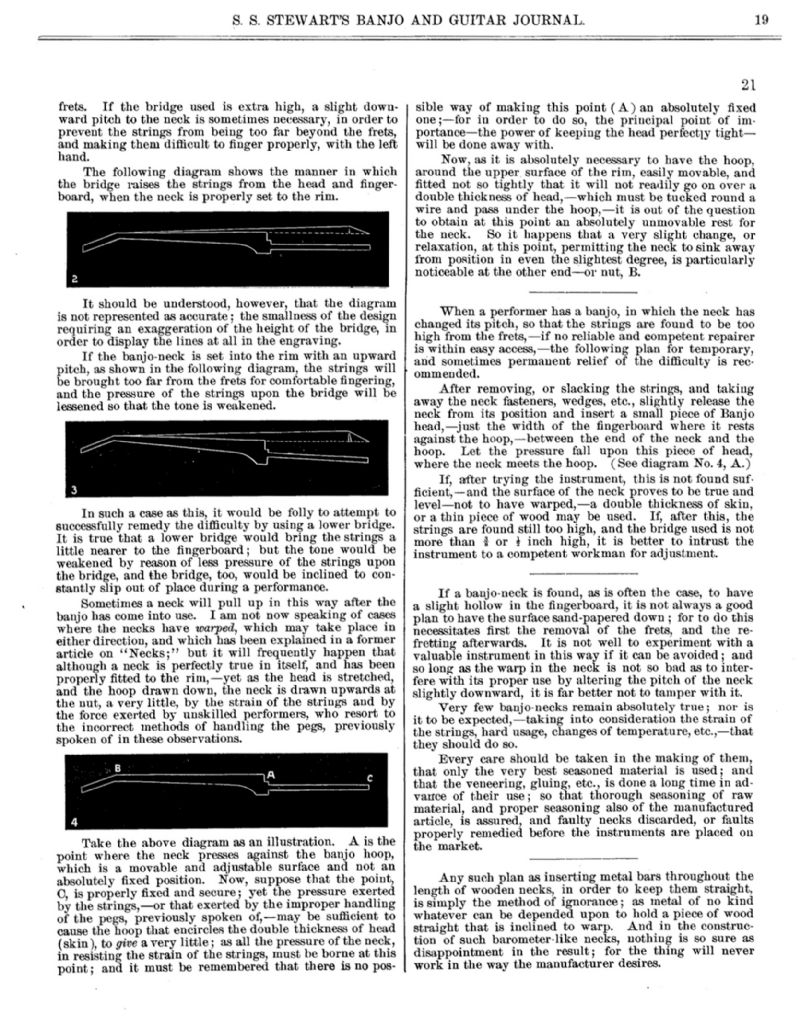
A practical aspect of finger-style is that traditionally it is played on banjos the design of which were intended to specifically enable and develop this playing technique. Banjos with zero neck-angle.
Examples of original vintage finger-style banjos can be found They were manufactured in the U.S. and U.K. in high volume over a period of at least 50 years; today quality, condition and price varies. Usually some renovation is required to bring these vintage finds up to full playability. Tonally, some are gems, some less so. But the vintage marketplace is inevitably characterised by unpredictability and random availability i.e. what just happens to be for sale when a buyer is looking.
Maybe here we can begin a discussion of current new build banjos intended for finger-style. Despite claims to the contrary, these do exist.
Edited by - EEB on 09/17/2026 02:53:14

The Clifford Essex 5-string ‘Weaver’ banjo.
Based on the design of London (Long Acre) banjo maker Alfred Weaver who made specific model range banjos for the Clifford Essex company up until 1906. This wooden hoop and ebony tone ring construction is not by any means a copy of a typical Weaver build, or a copy of the ‘Special’ model that he supplied to Clifford Essex, but is nonetheless based on careful research.
cliffordessex.com/product/clif...ver-banjo
Edited by - EEB on 09/17/2026 03:08:17

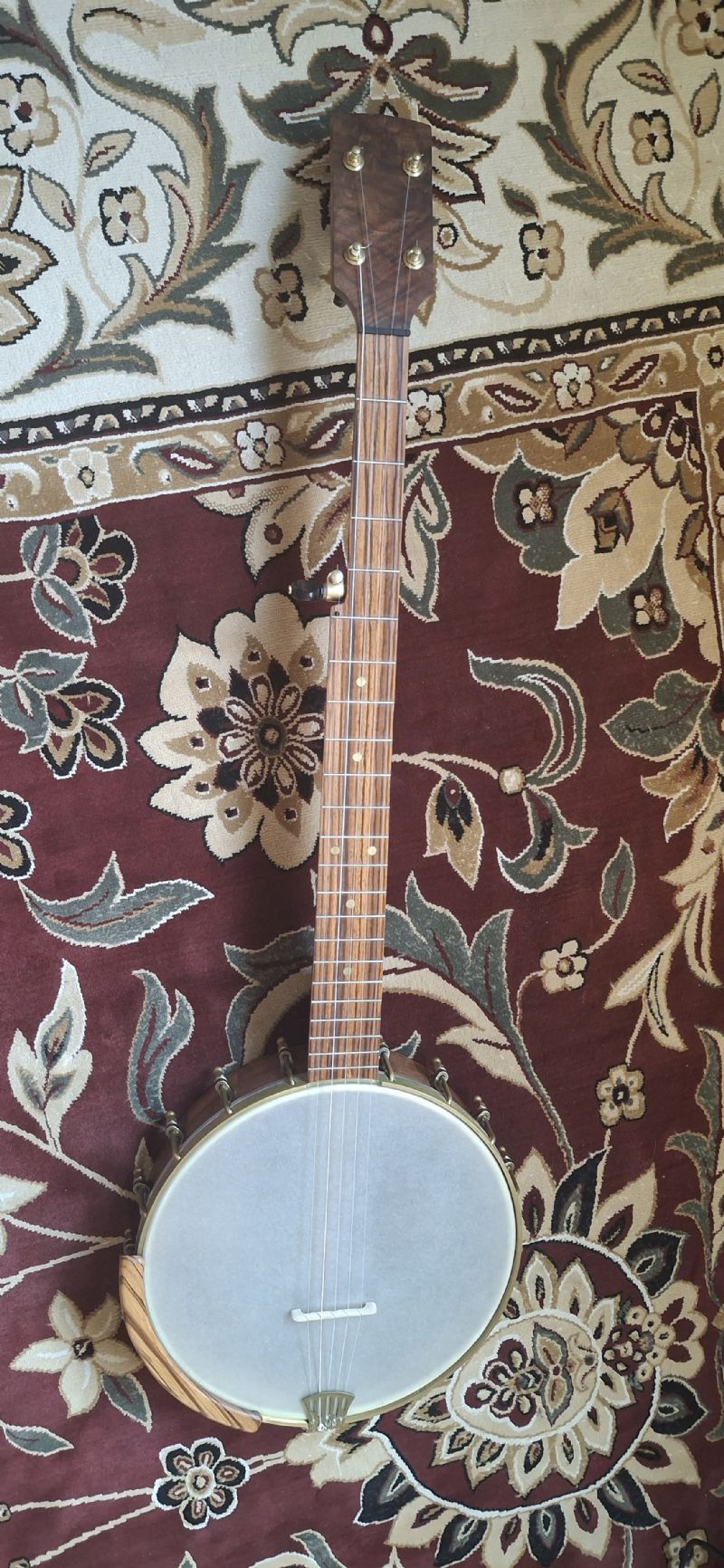
My wonderful 2025 custom banjo by Zachary Hoyt.
27" scale with full 22 frets
11" rim with a brass Electric-style tone ring
Zero-angle neck
"Vintage-sized" i.e. mandolin fretwire
Position dot at the 9th rather than 10th fret
For the uninitiated (me), why is zero angle neck important?
quote:
Originally posted by Laurence DiehlFor the uninitiated (me), why is zero angle neck important?
I would like to see proper nylon string banjos at the entry level price point. Deering Goodtimes could be factory configured this way. I have previously made this suggestion to Janet. She said that there was no demand. She also said that Deering invented the curved bottom bridge, so...
It would be fairly easy to get a Chinese factory (there is one that is doing direct banjo sales on Amazon) to do this but someone would need to take the financial risk to order, import, warehouse and distribute them. Then there is promotion as people would need to know the difference and why the difference matters. And there would be nothing keeping that factory from direct sales if the concept was successful.
quote:
Originally posted by Joel HooksI would like to see proper nylon string banjos at the entry level price point. Deering Goodtimes could be factory configured this way. I have previously made this suggestion to Janet. She said that there was no demand. She also said that Deering invented the curved bottom bridge, so...
It would be fairly easy to get a Chinese factory (there is one that is doing direct banjo sales on Amazon) to do this but someone would need to take the financial risk to order, import, warehouse and distribute them. Then there is promotion as people would need to know the difference and why the difference matters. And there would be nothing keeping that factory from direct sales if the concept was successful.
There's also the problem that most nylon players play clawhammer and seem to believe that it's impossible to do so without a tall, modern bridge.
quote:
Originally posted by csacwpquote:
Originally posted by Joel HooksI would like to see proper nylon string banjos at the entry level price point. Deering Goodtimes could be factory configured this way. I have previously made this suggestion to Janet. She said that there was no demand. She also said that Deering invented the curved bottom bridge, so...
It would be fairly easy to get a Chinese factory (there is one that is doing direct banjo sales on Amazon) to do this but someone would need to take the financial risk to order, import, warehouse and distribute them. Then there is promotion as people would need to know the difference and why the difference matters. And there would be nothing keeping that factory from direct sales if the concept was successful.There's also the problem that most nylon players play clawhammer and seem to believe that it's impossible to do so without a tall, modern bridge.
My guess is that the volume, brightness, and note seperation from thin nylon strings in a traditional set up would really surprise quite a few clawhammer players who play nylgut or nylon without changing what is essentially a steel string set up?
Edited by - EEB on 09/17/2026 12:05:17
IMO the key would be to normalize the idea among small/mid-size builders in the old-time world. There is a potential market for OT players looking for a "historical" setup and sound but who are either unable or unwilling to deal with the vintage banjo market.
quote:
Originally posted by Laurence DiehlFor the uninitiated (me), why is zero angle neck important?
My unpopular opinion: it isn't important at all.
Changing the bridge height 1/8" in either direction (1/2" to 5/8") produces output differences which are insignificant in the real world. Same goes for a 0-3 degree difference in neck angle. I have had nylon strings on my Stelling and steel strings on a Stewart. They both sound like banjos and play like banjos.
My Flesher somehow got a very steep neck angle from Bob's shop...even though I stipulated zero angle (and he agreed to make it so). Frankly, I simply did my normal setup and found it played its best with a 1" bridge. I worried a few minutes about how my right hand might like that...and once I started playing, I never noticed.
I have two Clifford Essex banjos: a Special and a Professional. The Special is flat and the Professional has been modified to have a degree or two of neck angle. I defy anyone to be able to tell the difference in neck angle blindfolded. They are both outstanding players and I use them equally. At first, I gave a lot of thought to converting the Professional back to a zero neck angle...and then I came to my senses. It just doesn't make any difference.
For a vintage banjo, my preference is to keep it in its original configuration. That is the only vital thing for me. It isn't the neck angle, it is the originality.
I have set up about a half-dozen modern banjos for nylon fingerstyle, all having angled necks. They all sound and play like banjos. There is so much variability from one banjo to the next that I think such things (like neck angle) produce differences (if any) that are in the noise floor.
I think the Deering Goodtime banjos produce excellent nylon fingerstyle banjos. They are about the right size and easy to set up. High quality at their price point. No, they don't look "right" for a 19th C. instrument (esp. the "Gumby" headstock versions), but they can get the job done. I think they're a heckuva lot better than any original made to fit the same "student" price range.
FWIW I have a Weaver with birdseye neck that was pretty much untouched when I got it (even has the original terrible end load leather case). The peghed shield is engraved "1910" and the heel shows clear gouge fitting (not machine mill fitting).
It requires a 5/8" bridge to prevent buzzing. Neck looks straight to me. But anything could have happened to it between London 1910, Sydney, then to me. Basically no fret wear to the small frets.
I play it all the time, but have a Hartnett tone bar on it.
That said, I'd rather have it take a 1/2" bridge.
Regarding Goodtimes-- frankly, the rims on these are great. Deep and heavy maple. That said, the changes could potentially make them cost less.
Violin pegs are cheaper than gear. Champion are not that much more. Improving the way they look would be very easy. Exclude all the inlay (which looks cheap) except for plastic side dots. Change the peghead shape to rectangle (faster to cut on CNC). Put "Derring" on the back of the peghead (and "nylon only"). Keep the front of the peghead blank.
If they did that and changed the heel shape to the tapered style as found on many 1870s/1880s NY banjos (and Weaver) then I think they would look good. Heck I might consider getting one.
Keep the rim rods and pressure tailpiece.
quote:
Originally posted by Joel HooksI would like to see proper nylon string banjos at the entry level price point. Deering Goodtimes could be factory configured this way. I have previously made this suggestion to Janet. She said that there was no demand. She also said that Deering invented the curved bottom bridge, so...
It would be fairly easy to get a Chinese factory (there is one that is doing direct banjo sales on Amazon) to do this but someone would need to take the financial risk to order, import, warehouse and distribute them. Then there is promotion as people would need to know the difference and why the difference matters. And there would be nothing keeping that factory from direct sales if the concept was successful.
Go on reddit and like every week someone is asking or posting pics about converting something to nylon strings. However, maybe more to her point, they aren't buying expensive banjos; quite the opposite, many new players on reddit are just trying to get an instrument in their hands for as cheap as possible. I do think a cheap chinese option would probably sell a whole bunch if they were playable as instruments.
quote:
Originally posted by trapdoor2quote:
Originally posted by Laurence DiehlFor the uninitiated (me), why is zero angle neck important?
My unpopular opinion: it isn't important at all.
Changing the bridge height 1/8" in either direction (1/2" to 5/8") produces output differences which are insignificant in the real world. Same goes for a 0-3 degree difference in neck angle. I have had nylon strings on my Stelling and steel strings on a Stewart. They both sound like banjos and play like banjos.
My Flesher somehow got a very steep neck angle from Bob's shop...even though I stipulated zero angle (and he agreed to make it so). Frankly, I simply did my normal setup and found it played its best with a 1" bridge. I worried a few minutes about how my right hand might like that...and once I started playing, I never noticed.
I have two Clifford Essex banjos: a Special and a Professional. The Special is flat and the Professional has been modified to have a degree or two of neck angle. I defy anyone to be able to tell the difference in neck angle blindfolded. They are both outstanding players and I use them equally. At first, I gave a lot of thought to converting the Professional back to a zero neck angle...and then I came to my senses. It just doesn't make any difference.
For a vintage banjo, my preference is to keep it in its original configuration. That is the only vital thing for me. It isn't the neck angle, it is the originality.
I have set up about a half-dozen modern banjos for nylon fingerstyle, all having angled necks. They all sound and play like banjos. There is so much variability from one banjo to the next that I think such things (like neck angle) produce differences (if any) that are in the noise floor.
I think the Deering Goodtime banjos produce excellent nylon fingerstyle banjos. They are about the right size and easy to set up. High quality at their price point. No, they don't look "right" for a 19th C. instrument (esp. the "Gumby" headstock versions), but they can get the job done. I think they're a heckuva lot better than any original made to fit the same "student" price range.
I have two Goodtime Banjos set up with nylon strings and I like them both very much and neither of them are set up optimally with proper bridges.
quote:
Originally posted by trapdoor2
I think the Deering Goodtime banjos produce excellent nylon fingerstyle banjos. They are about the right size and easy to set up. High quality at their price point. No, they don't look "right" for a 19th C. instrument (esp. the "Gumby" headstock versions), but they can get the job done. I think they're a heckuva lot better than any original made to fit the same "student" price range.
This relates precisely to why I posted this topic. And I agree with you entirely.
If the tacit 'criteria' for a contemporary new-build banjo intended for finger-style playing is that it has to 'look like' a vintage instrument we are literally designing, signalling and complicit in our own obsolescence. It is a tragic mindset that erases the potential of creativity, in the same way that zealous over-focus on historic repertoire - in practice - is a worship of inertia.
If a banjo has suitable playing spec the innovation and skill of modern banjo makers should be nurtured and respected in our turn. Learn from the past; to create in ways that reflect our experience.
Past banjo makers and fingerstyle musicians left us an extraordinary, uniquely inspiring legacy. Implicit in that legacy is the understanding on trust that inheritors of that legacy continue in that creative vein. It's about time we woke up, turned our heads to face forward and celebrated contemporary new-build finger-style banjos playing contemporary finger-style compositions.
That creative impetus is the core characteristic of finger-style banjo that leaps out of primary source research wherever you care to look.
Edited by - EEB on 10/01/2026 04:27:23
Terms of Use | Privacy Policy | Privacy Consent (EU/GDPR Only)
Copyright 2026 Banjo Hangout. All Rights Reserved.