Good evening
This past week in an attempt convert my Deering Goodtime to nylon I've burnt through three sets of strings.
Every time I get the 1st string near to pitch it snaps, just above the knot near the tail piece. (I've also had the 5th string snap once near to pitch)
I've gone through two sets of Pisgah Nylgut frailing strings and one set of Aquila 11B, both claim to be suitable for standard tuning.
There's no sharp edges anywhere on the banjo near the strings, I've tuned up gradually (over several days), not getting any pinching from the nut, head tension is low. Using a generic no-knot tailpiece and a maple bridge of the correct height.
The knots I'm tying aren't coming undone, the string is definitely snapping.
Does anybody know where I might be going wrong?
I've been wanting to make the switch for ages and I quite annoyed I've made such a mess of it so far.

I can't help but thinking you are missing sharp edges slicing into the strings. Use sandpaper anywhere the strings are touching – tail piece, bridge, nuts, tuner. banjered

Photos might help, including where on the strings, relative to the instrument the breaks are occuring.
I put nylguts on a a similar banjo setup about a month and a half ago and haven't had any issues. I do usually have it tuned down to F, but have definitely gone up to G several times, including immediately after installation to help stretch. They took about a week to fully stabilize but were playable within 24 hrs.
Edited by - jwwallace on 09/15/2026 16:32:38
You could also try labelle 17s. They are true nylon and supposedly stronger.
I tried them but had buzzing on the 4th string that I gave up on figuring out after a couple of days. They sounded nice otherwise. If you were closer I'd send you my set.
Edited by - jwwallace on 09/15/2026 16:35:19
I'd try replacing the 1st and 5th strings with some nylon monofilament fishing line of about the same diameter.
You might try an overhand with a stop knot. It's a pretty strong knot and easy to tie.
If your tailpeice is of lower quality, there could be a rough edge you're not seeing.
All of the above advice is excellent & should be investigated, but also try to tune synthetic strings at a very slow pace with some brief brakes in between tightening, to allow for stretching. ( I believe this advice can be found in various books on guitar & banjo set up).
Edited by - tdennis on 09/15/2026 19:19:22
I put a set of LaBellas (and a no-knot) on my Goodtime with no issues.
Before I put the strings on, I buffed all the potential metal contact points, including the spikes, with 1000 grit metal sandpaper.
I use a simple slipknot - seems to work fine.
The point of breakage just above the knot would appear to rule out the common cause of sharp edges on the tailpiece. Frustrating.
Nylgut is a trademark material; it is not nylon. Clifford Essex nylon strings are available here in the U.K. and offer choice of gauge to suit what I assume is your clawhammer playing.
These nylon sets should avoid this frustrating material failure. No-knot tailpieces really offer nothing other than the absolute minimum point of attachment. If the breakages do continue I'd be inclined to change to a wooden tailpiece. And even when the breakages are a memory, I'd recommend swapping to a wooden tailpiece for use with nylon strings.
Edited by - EEB on 09/16/2026 00:12:46
It’s good to counter frustration with thoughts about playing. If you haven’t already, I suggest fitting an uncapped bridge for use with nylon strings. The hard ebony protective cap is unnecessary with nylon, and more relevantly, actually functions as a mute
Clifford Essex medium weight classic nylon set are suitable for clawhammer:
https://cliffordessex.com/product/5-string-banjo-classical-sets
Edited by - EEB on 09/16/2026 00:33:16
It's crazy we still put up with Nylguts -- which seem to snap if you so much as look at them the wrong way -- given that they aren't sold as singles. How much money has Aquila made selling additional sets just because someone's 1st string snapped on installation?
Nylon (or alternatively, fluorocarbon) strings are cheap, available as singles, and they won't snap with normal installation and use.
"Nylgut" are polyester. Polyester is not abrasion resistant. The "special formula" was used for brush bristles.
Not only do they break, but they are also subject to being "false" or uneven in thickness and will not intonate.
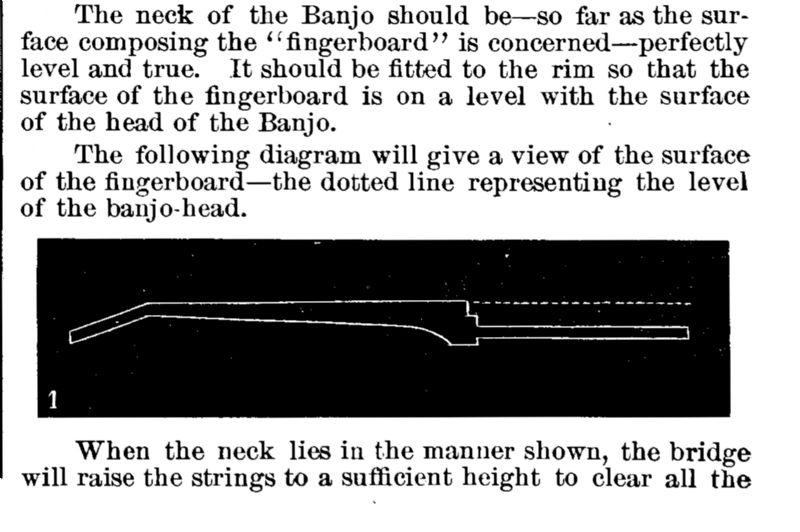
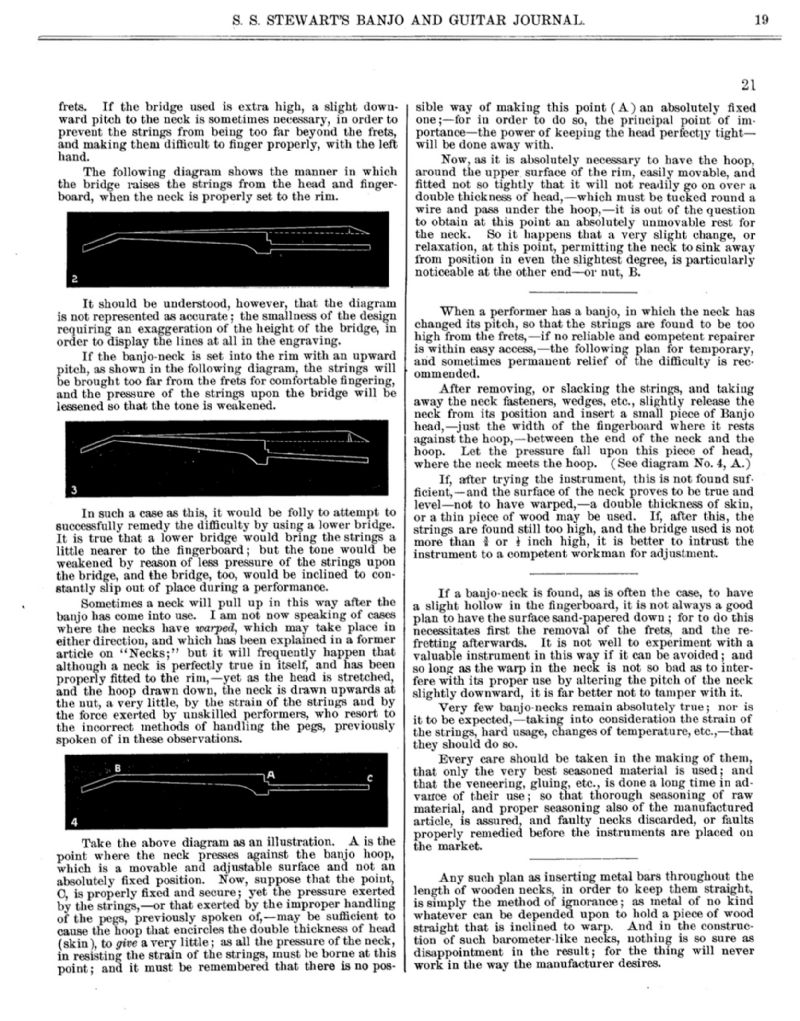
Buzzing-- this has to do with putting nylon (or polyester) on a steel string banjo, mainly, the back angle on the neck (which was originally done for plectrum playing).
To overcome this angle and avoid buzzing one needs a 3/4" or 1" tall bridge.
I cannot figure out why makers refuse to even consider making banjos proper for nylon strings. Zero angle neck, small mandolin frets, violin friction pegs. Actually pretty easy.
quote:
Originally posted by Joel Hooks
I cannot figure out why makers refuse to even consider making banjos proper for nylon strings. Zero angle neck, small mandolin frets, violin friction pegs. Actually pretty easy.
If you're including individual banjo makers, I imagine it's just a question of asking?
For bigger companies the assumed lack of demand makes it unprofitable. Heaven forbid one has the imagination to develop a market and grow demand...
...I mean who's ever heard of a business doing that???
A show-and-tell that demonstrates how finger-style/guitar-style is not welded to the era of steam, combined with the availability of affordable, cool modern-looking zero neck angle banjos would be a start. If only we had a designated space to support and encourage this... ;-)
Edited by - EEB on 09/16/2026 10:00:46
Hi Everyone
Thanks for all your input.
I wasn't so aware of the nylon/nylgut dichotomy. I've seen those terms used somewhat interchangeably elsewhere.
Sounds like it's worth me trying some Clifford Essex/Labella and see if I have the same problem. And also going at my tailpiece with some fine sandpaper just to make sure.
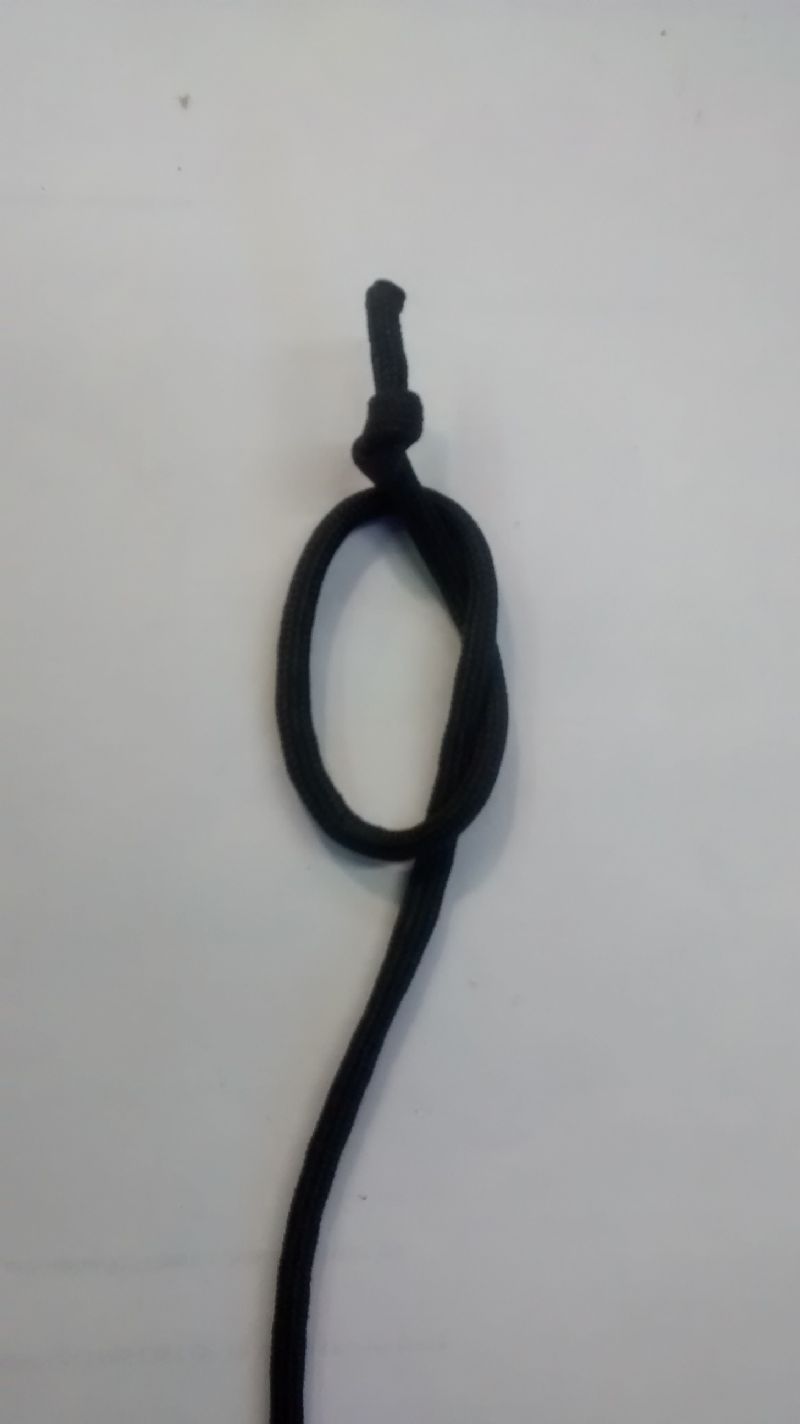
I've also been wondering about my knot choice (bowline) potentially creating a stress point as the string gets up to tension. As they seem to be always breaking around the knot (though it was difficult to tell exactly where)
I'll order some real nylons and have a play around with the remnants of my string sets/different knots.
Thanks again
Keep it simple, tie a figure eight knot and use the bottom loop over the peg. The Deering tailpiece is fine, just clean it up a little.
The 8 knot works fine. I've switched to even simpler (to me): double the end of the string about 2-3 inches and tie a simple overhand knot, the kind you use to tie your shoes. I use a nail in the loop to help tug the loop tighter to the smaller size as you jimmy the knot smaller. Works perfectly and looks better (to me). You are right, a bowling knot can over stress the strings to breakage, too much contortions for fickle Nylguts. banjered
Re: a bowline knot: that's the knot that I use with rectified nylon strings and I’ve never had the knot cause a breakage. I can’t comment in regard to knots with Nylgut as I don’t use it.
Any knot that holds tension without slipping - and which you’re comfortable tying - is fine; it's really just personal preference and convenience.
Edited by - EEB on 09/17/2026 00:44:37
quote:
Originally posted by Joel HooksKeep it simple, tie a figure eight knot and use the bottom loop over the peg. The Deering tailpiece is fine, just clean it up a little.
I ditched the Goodtime tailpiece - it's cheaply made and ugly and adds an additional contact point for the string (not to mention added weight to the banjo). It was easy enough to find the bracket to fit a no-knot on it. I prefer the look of this as well.
I also changed the bridge to an uncapped maple bridge.
Terms of Use | Privacy Policy | Privacy Consent (EU/GDPR Only)
Copyright 2026 Banjo Hangout. All Rights Reserved.