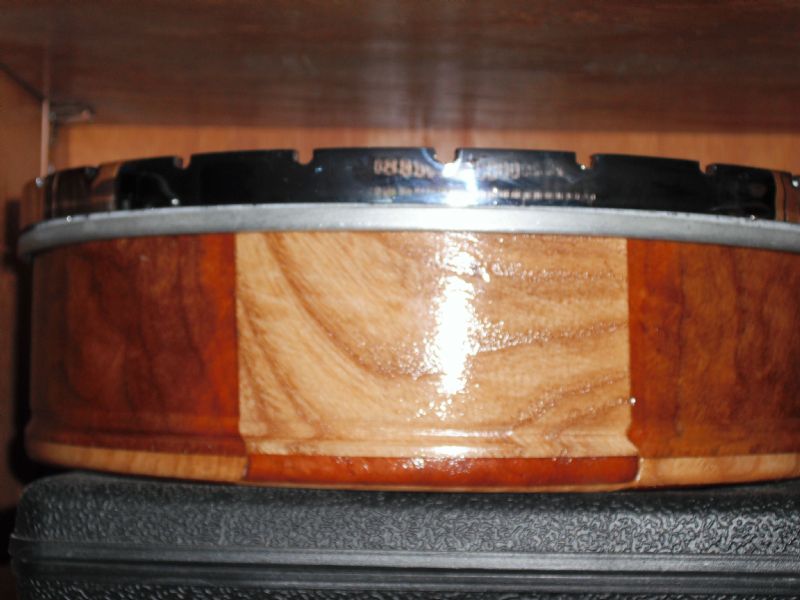
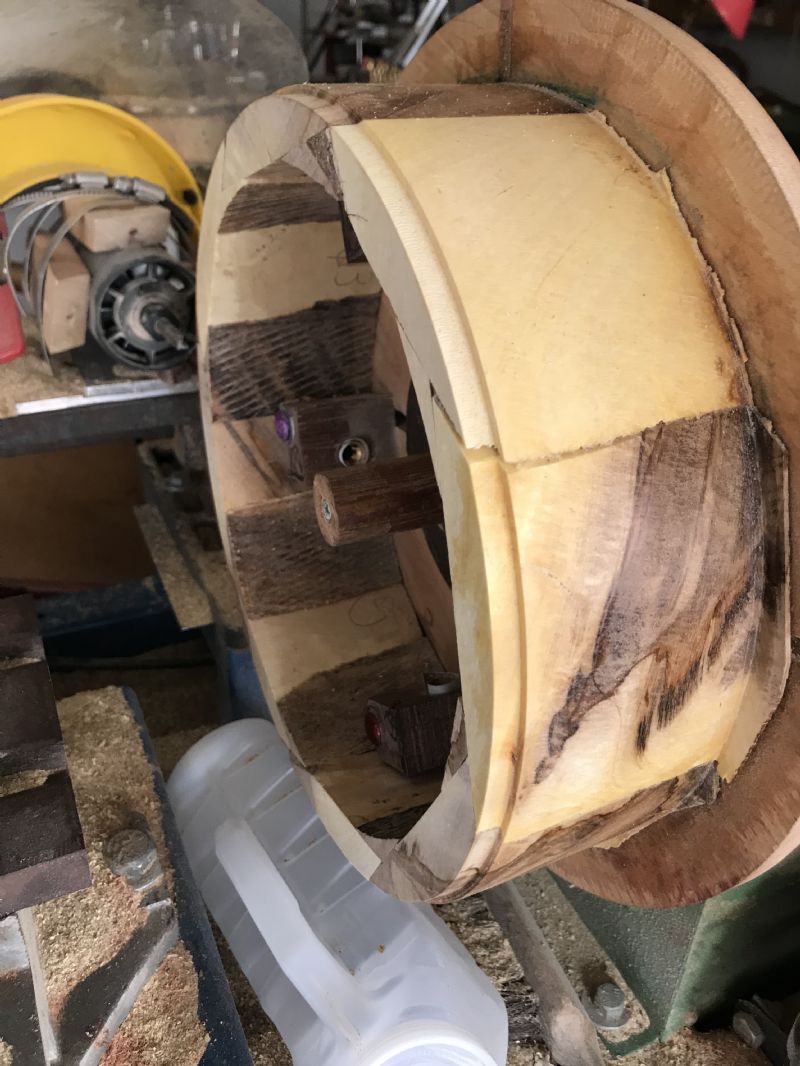
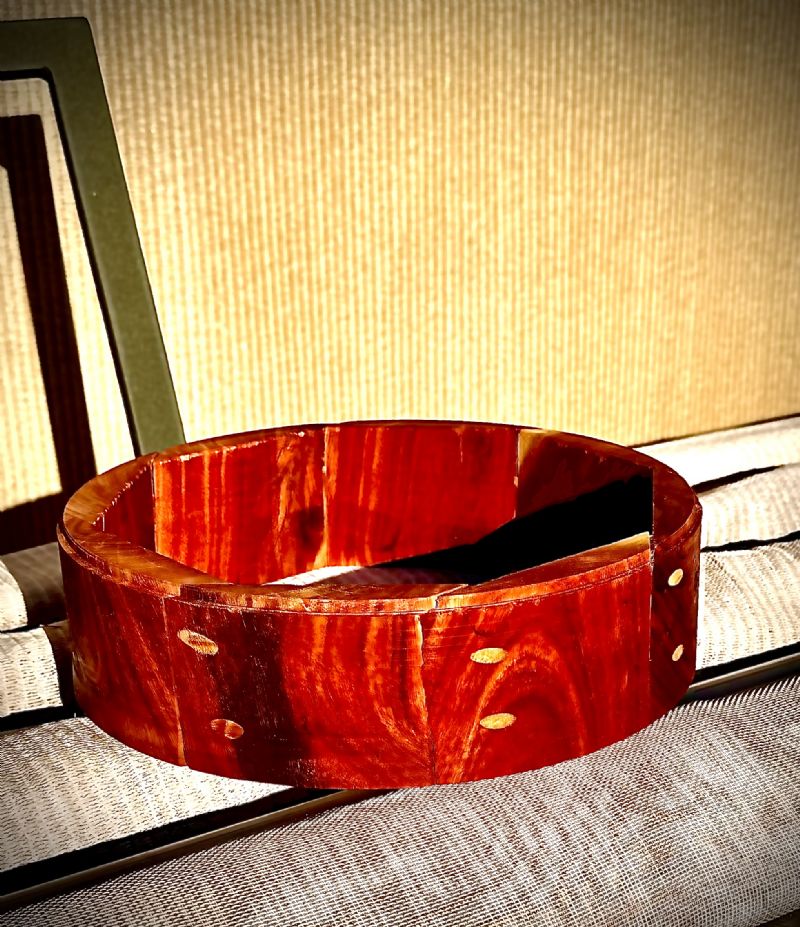
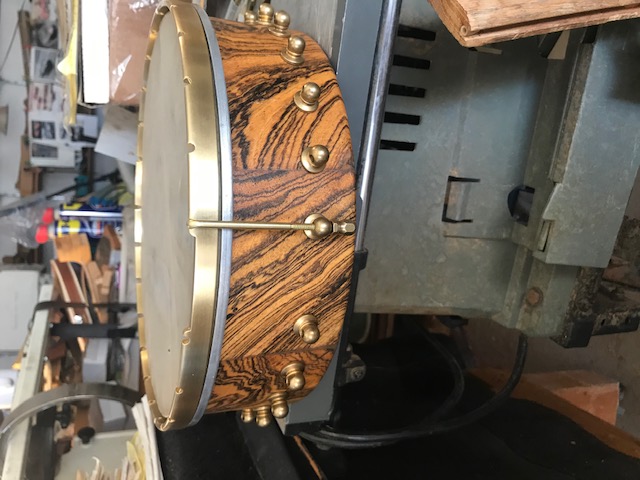
A few years ago I took an order from a player who works daily at high altitude @ 4-6 k feet. He gave me specs at what time of year to cut the rim and neck.
Then I was to mail them both to him assembled but unfinished, in the case.
He worked on them for about a year and returned them to me looking like glass for a proper set up. I was using coats of lacquer/ and maybe gun oil if spec’d.
He said he had a hobby of buying cheaper instruments and French polishing them to make them sound really good. We agreed over here. He said he played the banjo out of its case in cold weather, hot dry weather, and rain or shine.
When a spot needed touching up, he did so returning the finish to its original luster! So it’s repairable.
I remember other people mentioning they used the lathe to do French polishing.
IF I were to go into production with this method, I would use it on necks, rims, armrests and resonators. Being a very good method of sealing without the deeper penetration of oils.
I had other HeliX rims and necks mounted to compare with.
I found French polishing to be worthwhile in producing deeper and more controlled sound production with superior sealing properties.
Any thoughts or experiences are welcome.

My only input is that pretty much all "classic era" banjos were French Polished. Basically any banjo made before about 1920, and many after.

FP requires a level of skill that I have never been able to acquire, mostly because I've never put the time in to develop the skill. I can do a pretty good job of touching up FP finishes, but something like a full guitar from bare wood is out of my league. There is an acknowledged learning curve, so if you want to get good at it, put in the time!
I french polish 99% of the banjos I work on, mostly tenor banjos from the 1920's. I think the FP highlights the beauty of wood better than any of the finish. It's also pretty durable. I do not like the feel of a lacquer finish and they just look wrong on a 1920's tenor, especially if it's a thick finish. It does take longer, but I enjoy the FP process more than flat sanding a sprayed finish.
Thank you, Sincerely , each and every one.
I’m glad to study the old days and hand processes. I studied with the retired master cabinet makers who knew there was a name for the kind of rim I thought I had dug up = a build up!! No kidding. The standard bricklayer’s rim is called a layup, they work just ok, but they have structural flaws that came out when pre and postwar production rims went to 3-ply strap rims.
Here’s an example of what a Central American hardwood HeliX type rim looks like with 3/32” dowels before FP = Cherry/Ash, Grapefruit, Carob and Bocote with dowels.
Edited by - Helix on 09/02/2026 13:36:03
The hard part these days is finding denatured alcohol. The best that is sold in many states is now 150 proof. I finally found some 100% denatured alcohol on Amazon but it came in at about $20 a pint! But it did a great job dissolving the shellac!
And here I was wondering why you capitalized French in the thread title, but not Polish. I was waaaay off.
Yeah, as opposed to Polish french.
Dry Ridge. What form of “protection” do you use like a respirator or fresh air?
Terms of Use | Privacy Policy | Privacy Consent (EU/GDPR Only)
Copyright 2026 Banjo Hangout. All Rights Reserved.