


I have a 1930s TB-11 that came to me in pretty rough shape. Some meatball really did a number on it (e.g. painting all the metalwork silver with a brush). Wondering if others might be able to deconstruct what happened so I can figure what direction to go with it.
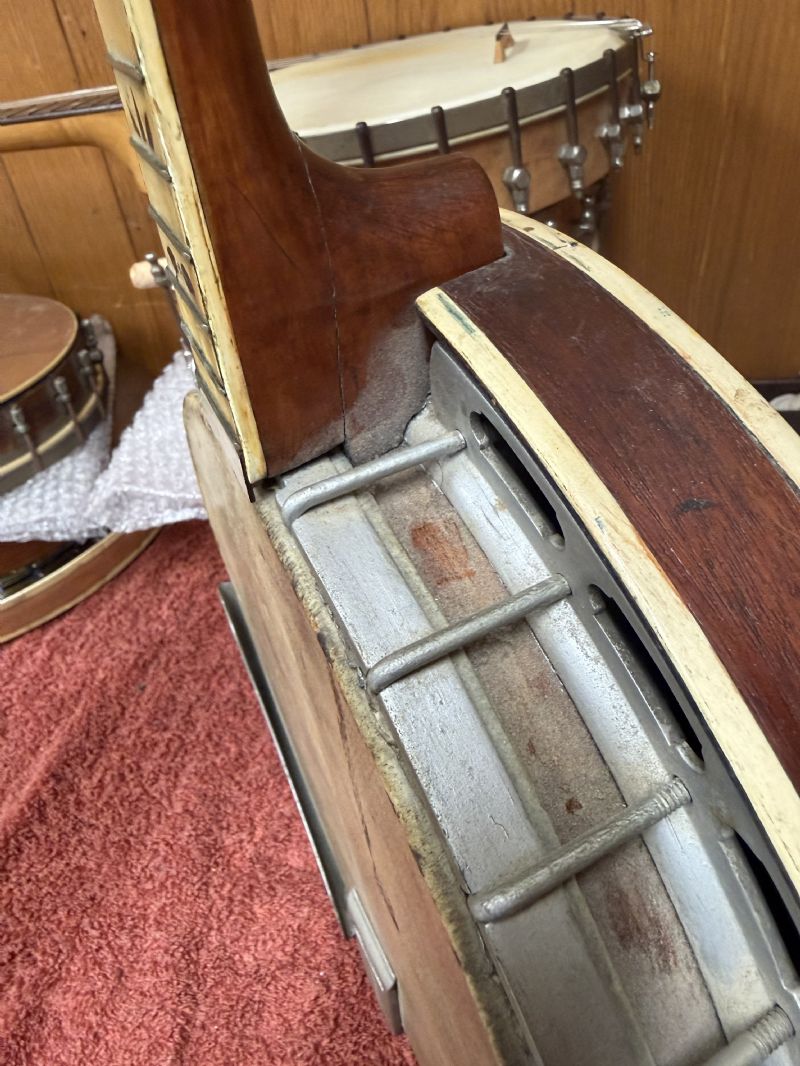
1. The inside of the rim is the correct blue. Even though the Gibson sticker is in poor condition, it is real and it doesn't see like the rim was painted around it. All the scratches and gouges appear authentic on the blue parts.
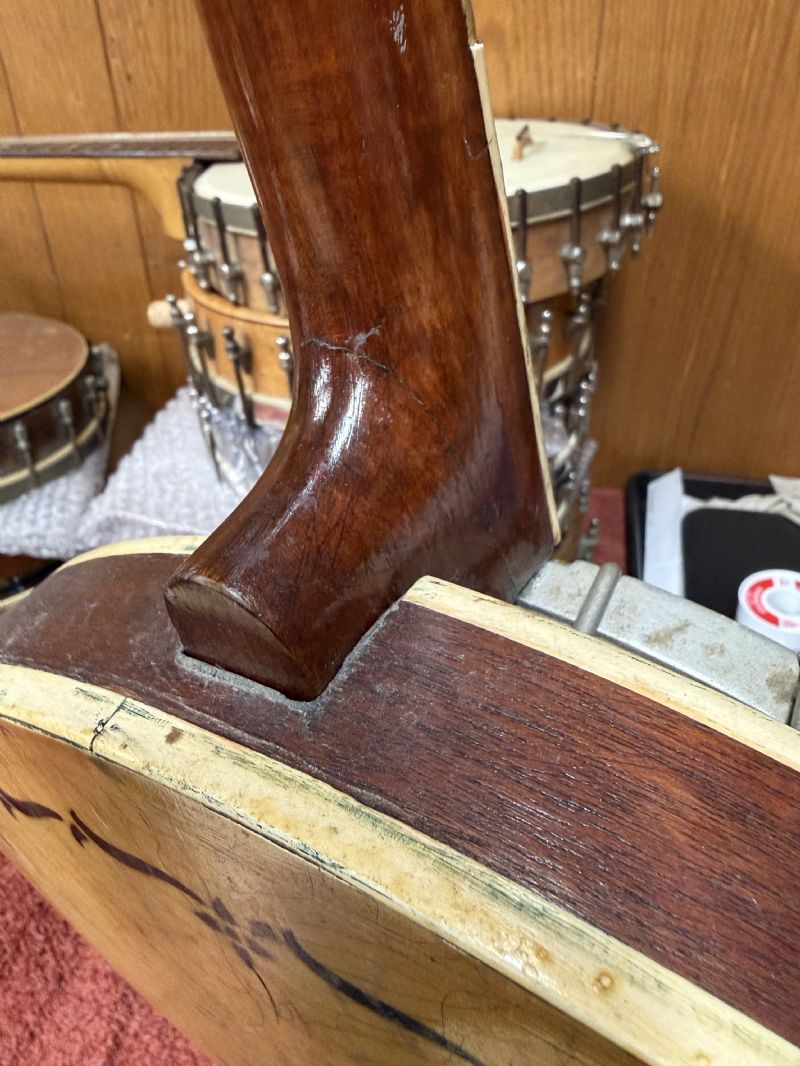
2. The outside rim wood (above the flange) is natural wood. This natural wood color matches the back of the tenor neck and the outer edge of the resonator between the bindings. With the resonator on you can't see any of the remaining blue. The MOTS resonator back is a slight brown color.
I know the factory blue paint on these models often chipped. Is is safe to assume someone stripped off all the flaking blue paint and had it refinished to look more like natural wood? I've never see a natural wood TB-11 in person. Could it be a parts banjo of two TB-11s (a brown and blue)?

Here are a few pics.
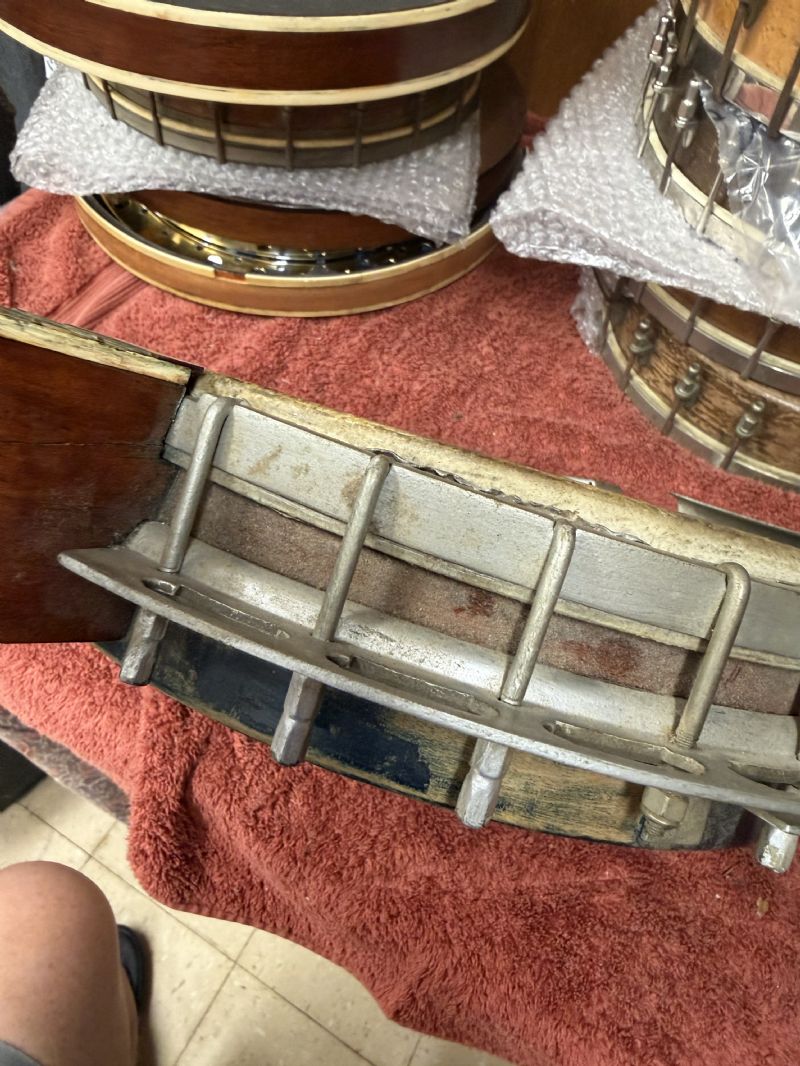
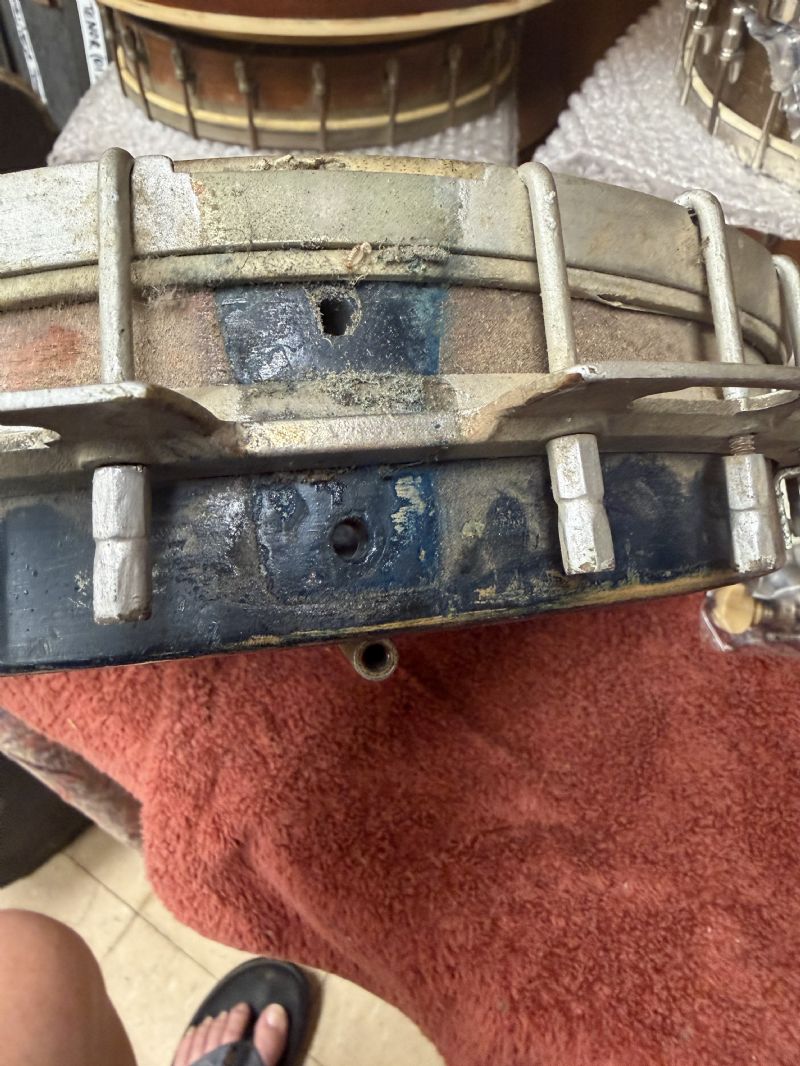
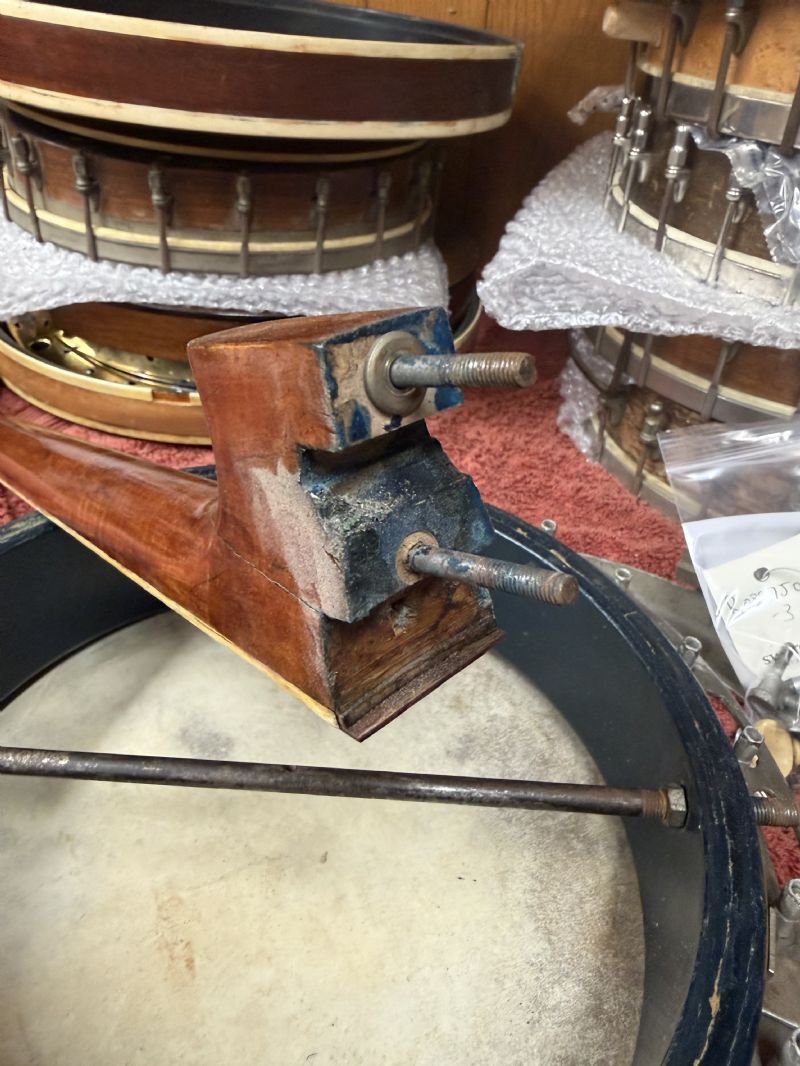

A few more.
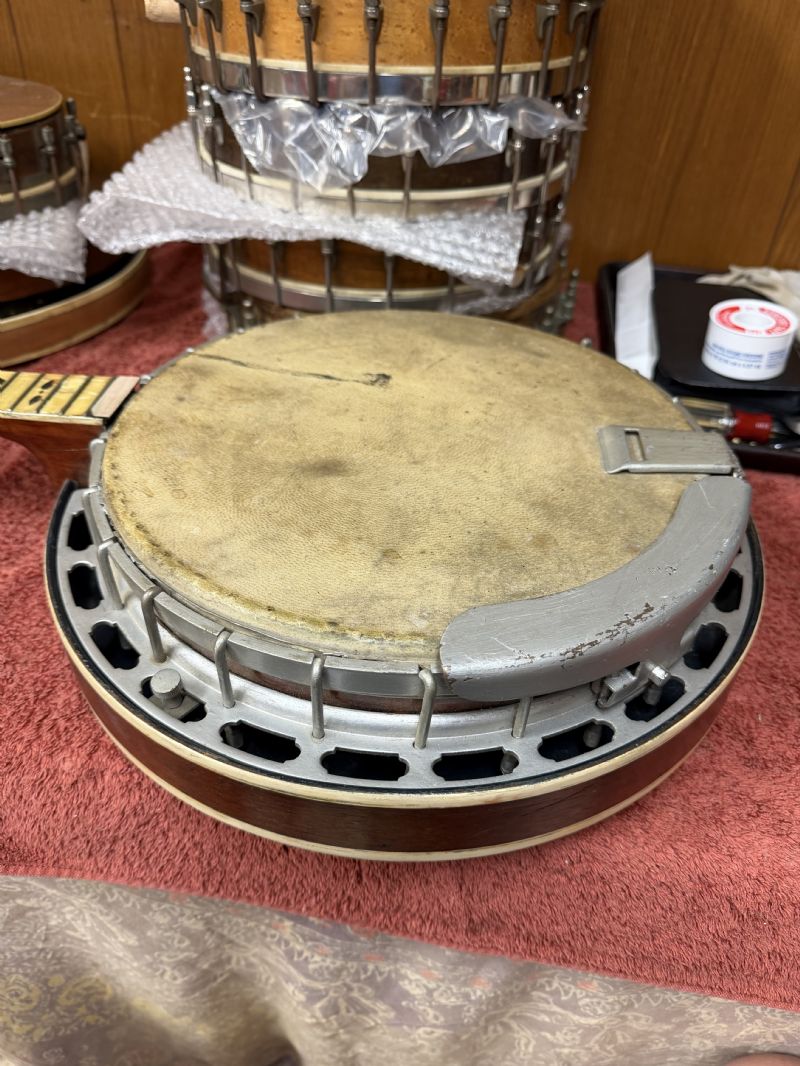
Corey - the answer to your question may be a bit more complex than you think! The Gibson style 11 was "normally" maple that was painted some shade of very dark blue, to sometimes nearly black. However - some have been seen that are in fact natural wood. Furthermore, to complicate things - some have been seen (natural wood color, brown of some sort) that are in fact made of walnut instead of maple. Also - even the normal banjos, that is - the black or blue versions, - the stenciled designs on those banjo varied tremendously. that "pearloid has been seen in such a wide variety of colors and shades that's an interesting story in itself. It has been seen in green, greenish' yellow, orange, robin egg blue, dark gray, blue - green, and I think the most rare of all, is a very distinct RED. I'm sure there are other colors and shades. Also, and this is interesting - some style 11 banjos have been seen, that underneath that pearloid on the back side of the resonator, were in fact resonators that, apparently were originally intended for a style 6 banjo - YES!! The pearloid was peeling and an owner found black/white checkerboard or gold speckle binding at the edge, which was covered by the pearloid. The explanation for this is - that although the resonator WAS in fact originally intended for a style 6 banjo, someone decided that it "didn't quite cut the mustard" due to some cosmetic flaw or something of that nature.... so Gibson, in their infinite wisdom, were absolutely NOT going to trash a perfectly good resonator... they covered the back side with pearloid and used it on a style 11. (sometimes a style 10 also)
Edited by - GStump on 08/31/2026 15:33:33
GStump - thanks for the detailed history of factory variations! I'd never heard that about the style 6 'seconds' getting covered with pearloid for style 11a. That makes total sense that they would do that.
I have a pristine blue/green TB-11 5 string conversion (Dotson neck), but I'm less familiar with the maple versions. I mostly want to know exactly what I have so I can figure to either go the blue route or maple route. It just almost seems like it was a blue pot with maple neck and resonator. I may have to pull off the flange to see what is underneath.
Terms of Use | Privacy Policy | Privacy Consent (EU/GDPR Only)
Copyright 2026 Banjo Hangout. All Rights Reserved.


