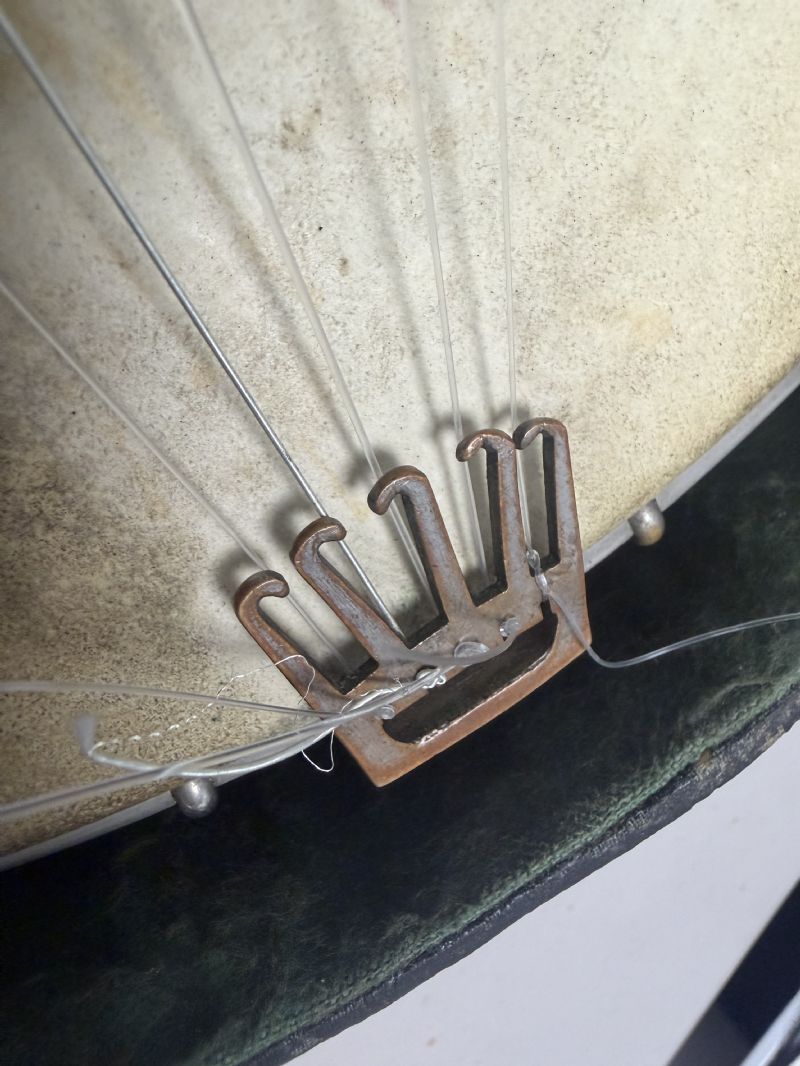
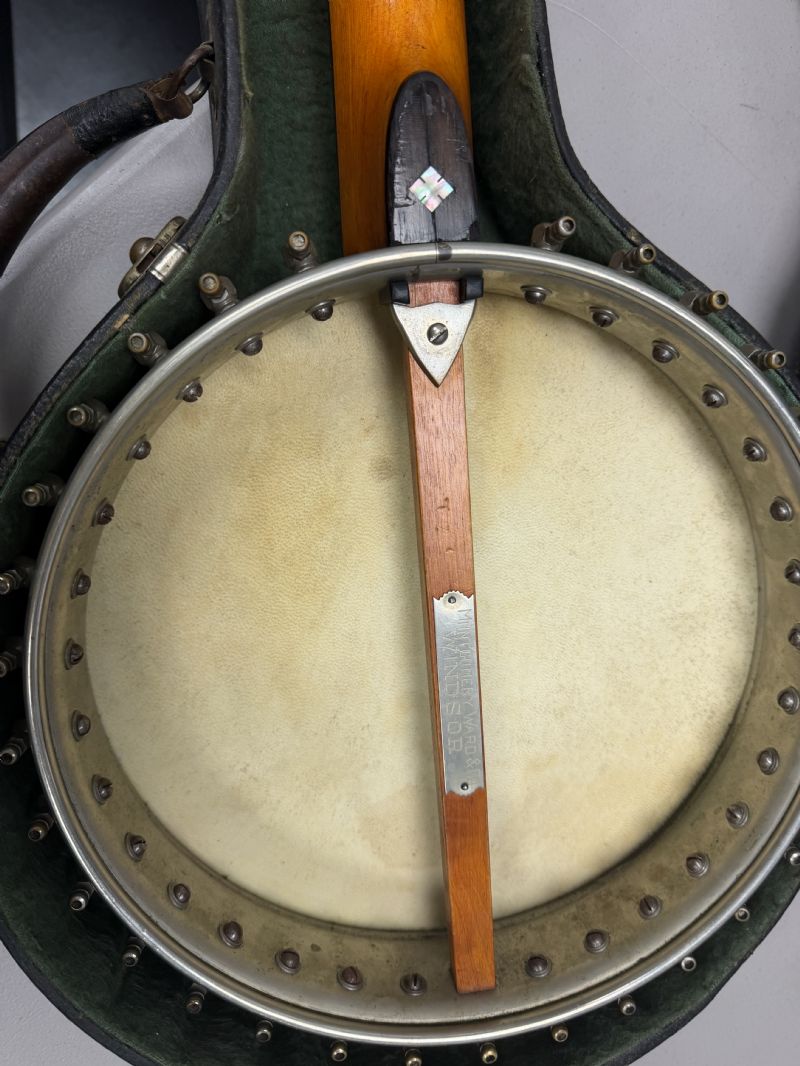
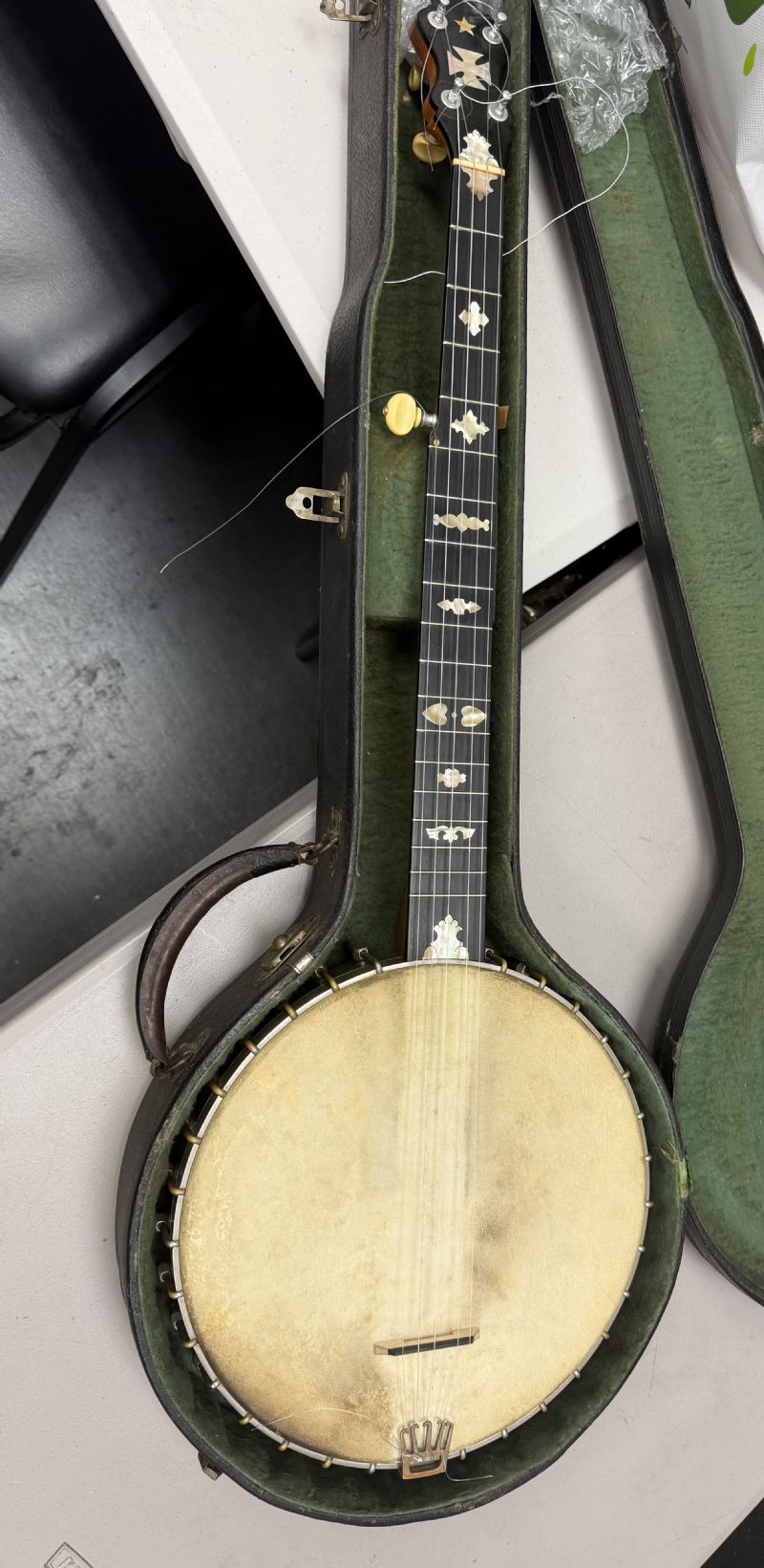
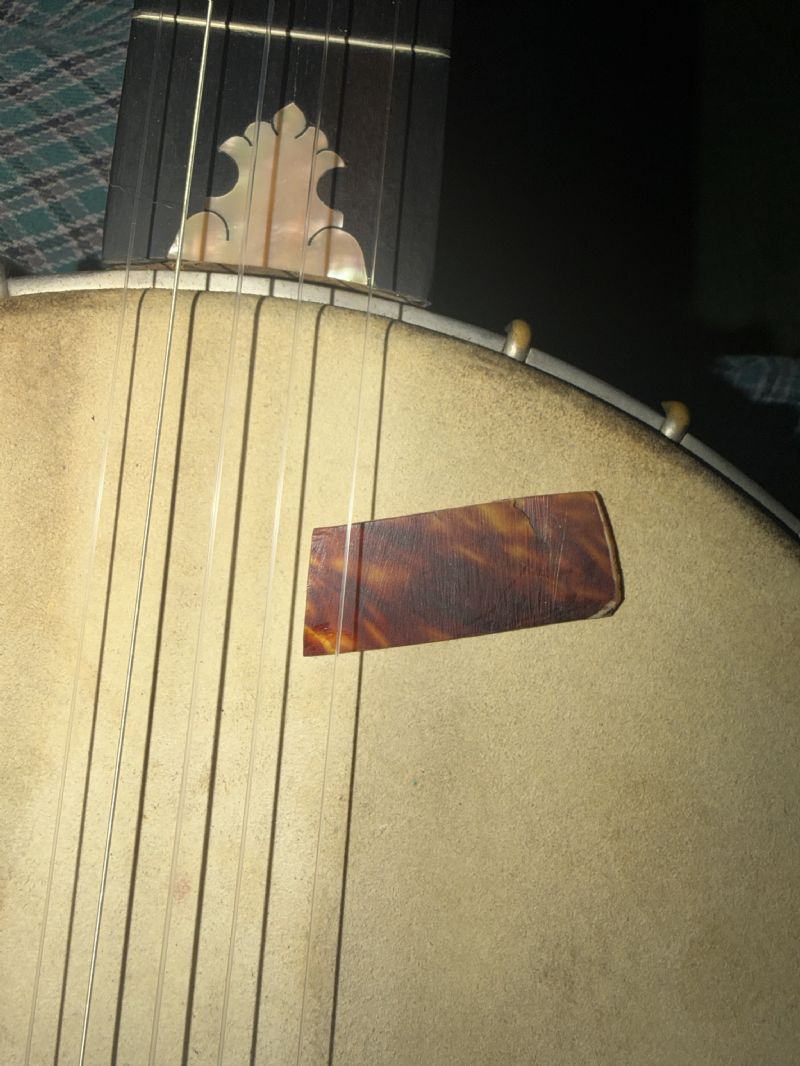
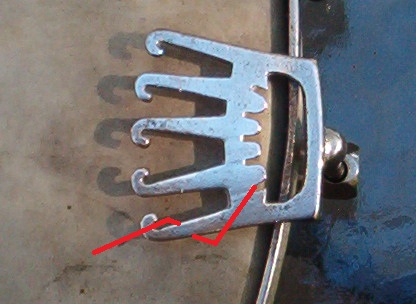
I acquired what is marked as Montgomery Ward Windsor from the early 1900s, but from some quick research (feel free to correct if wrong) is actually a Lyon and Healy/Washburn make. At the time of my purchasing, it was strung with metal strings, which I’m assuming the neck is not reinforced to handle and purchased some nylons for it, but I’m having trouble figuring the right way to attach the strings to the tailpiece. I’ve found at least three different ways possible, with a knot resting on top and going under, which is what I have most strings doing as pictured, knotted around the slot and going under the finger as shown on the high string, and then also having a knot under the tailpiece, string going over and then under the fingers, which is not pictured.
Additionally, been having trouble keeping the strings under the fingers, and they have a tendency to pop out, but that probably has more to do with string spacing of the bridge and will need to purchase a classic style banjo bridge, and have it slotted, correct? It had one originally but was pretty wrecked from the metal strings so I’m getting by with a Grover for now.
Thanks to anyone that has any insight!

I think the proper way to string that talon tailpiece is to wrap the string around the claw

quote:
Originally posted by jbalchI think the proper way to string that talon tailpiece is to wrap the string around the claw
I would wrap the other direction. Hook the stopper knot then wrap once where the working end goes underneath the hook. The idea was for a quick string change while taking the stress off of the knot.
Like Joel, I tend to put the knot underneath and then wrap so that the string passes under the hook then up to the bridge.
Frankly, I don't think it matters much either way. Wrapping it adds a bit of friction and reduces the stress on the knot itself.
I have one where the knot notches have been cut too wide for knots. I tied all the strings to a short bit of music wire and hung it below the notches, each string in its own notch...then gave each a wrap on the way out.
This advice is from p.7 of 'Turner's Further Instructions On The Banjo' by Aug. C. Clark.
"In tying Knots in these strings, a minute roll of paper can be enclosed in the loop so as to prevent cutting where the Knot is tied, or another good way is to thread a small bead on the end before running it through the tailpiece."
Edited by - ALCO on 08/15/2026 09:13:28
The wrapping did the trick! Actually fixed most of the problems except action is a bit high, but I think a shim should get it most of the way
Thanks jbalch Joel Hooks trapdoor2 ALCO!
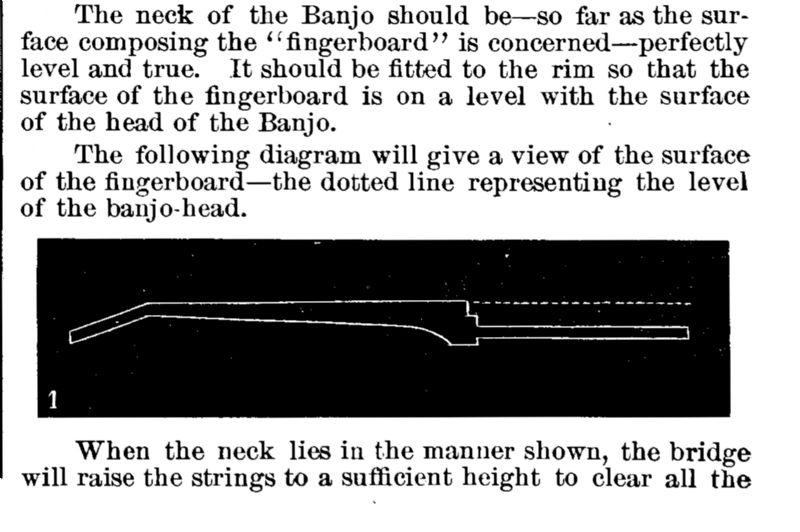
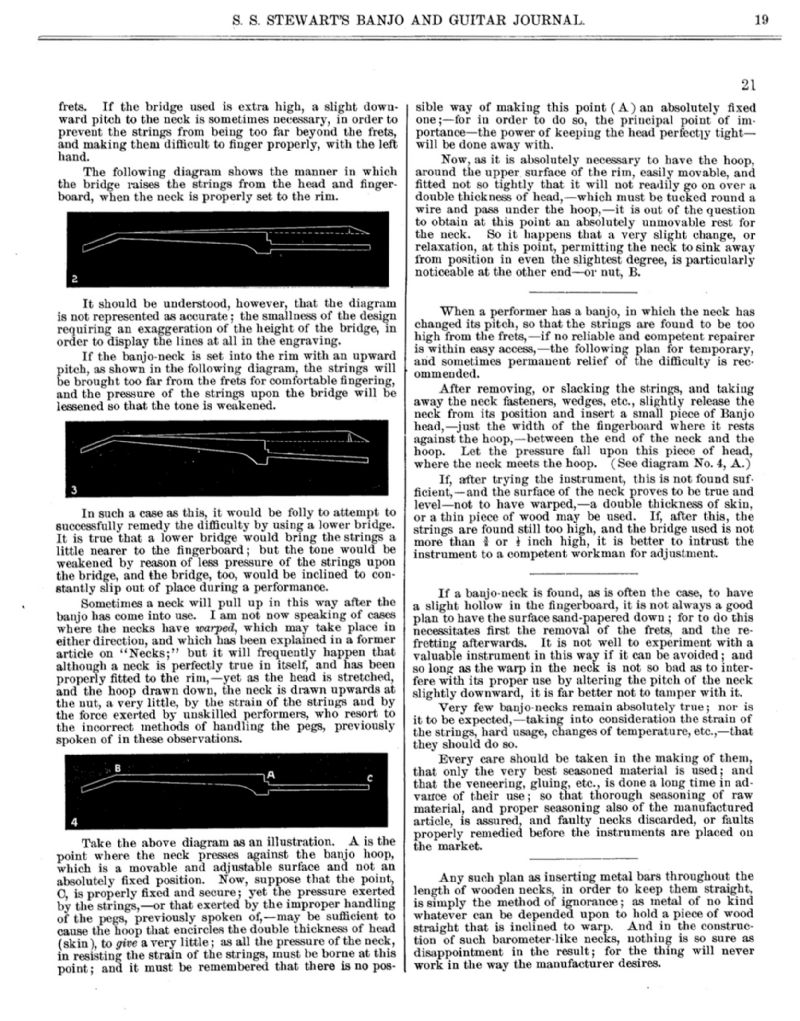
I suggest that you do not use a shim to alter the string height, but rather wait until you have the new bridge. Have you tried the original, damaged bridge with the new strings, just to see what the string height is? Also, place a long straight edge on the fingerboard and across the tension hoop. Both parts should be parallel with each other, that is to say, with no back or forward angle of the neck. I'm sure other members will comment on this.
What type of music are you going to use this banjo for?
Edited by - ALCO on 08/15/2026 20:45:03
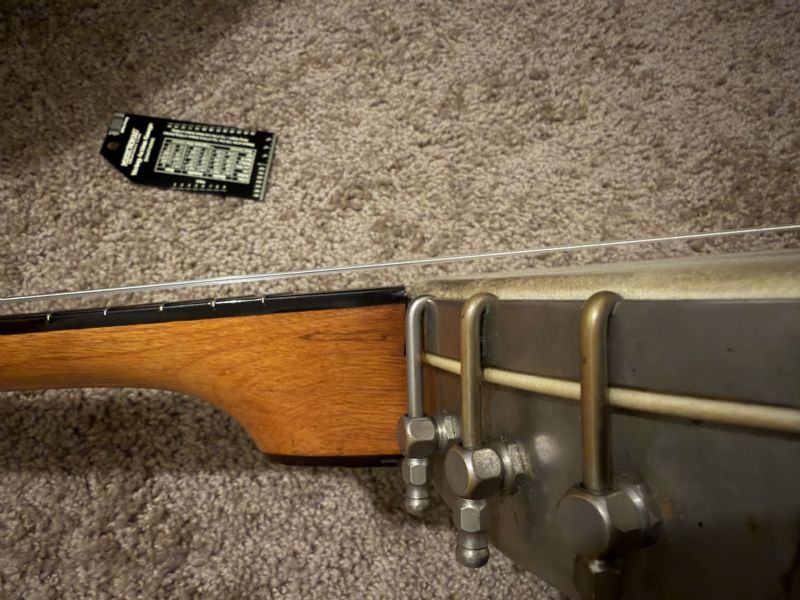
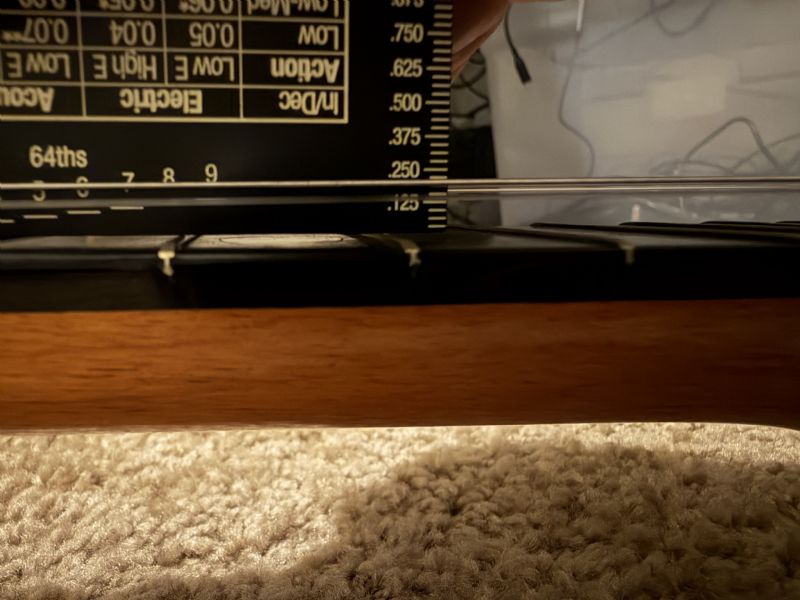
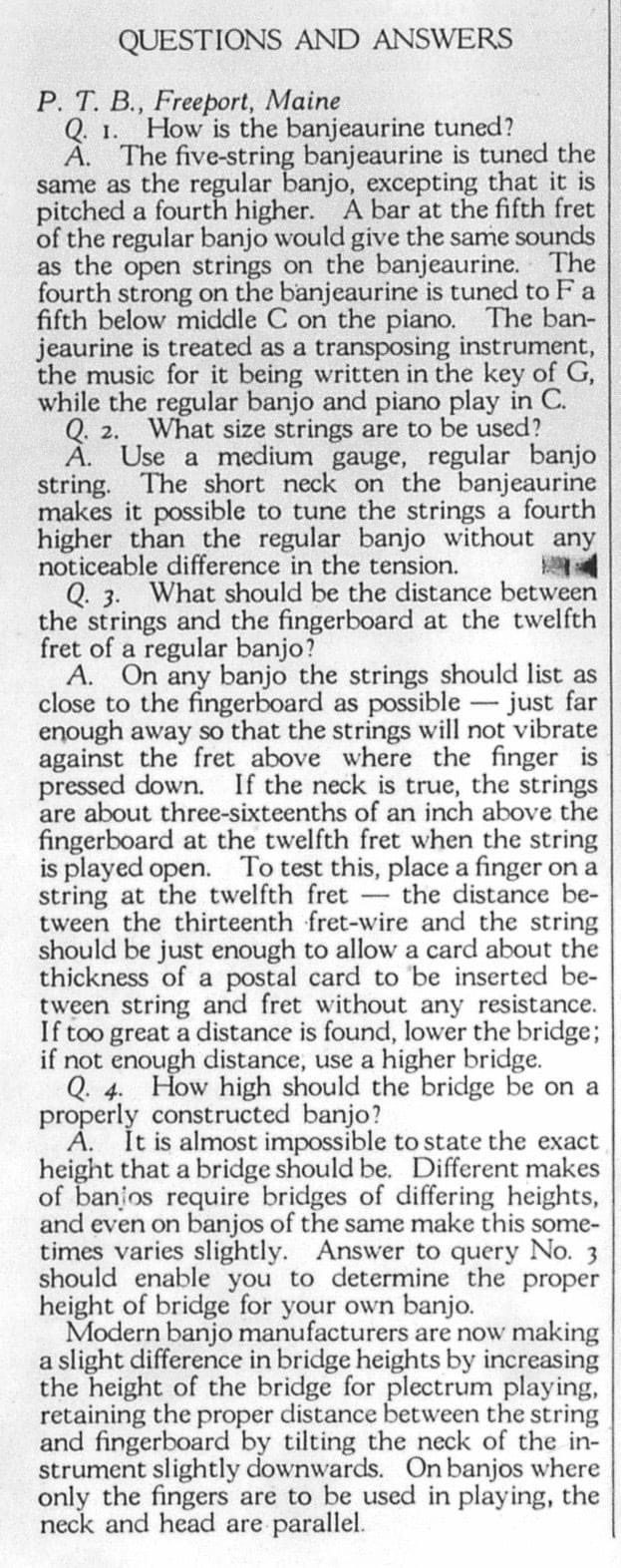
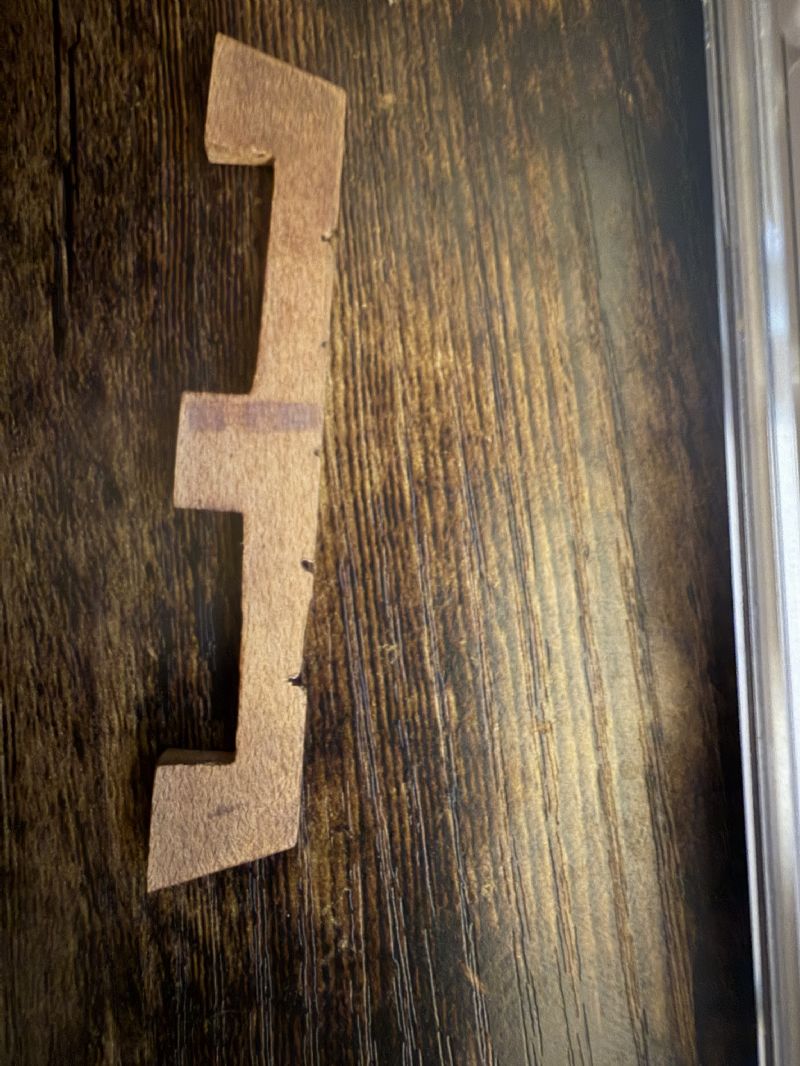
ALCO Here are a couple of pictures of the action height with the original 1/2” bridge. It seems to have settled a bit, but still might be a touch high. I know it’s been shimmed before as there is a massive wedge of tortoiseshell in the case pocket the right size to fit under the heel.
My plan is to begin with clawhammer, but eventually classic banjo
Nothing wrong with that action. The shim is a product of ignorance and an attempt to imitate plectrum banjos (which is what the "modern banjo" with steel strings actually is).
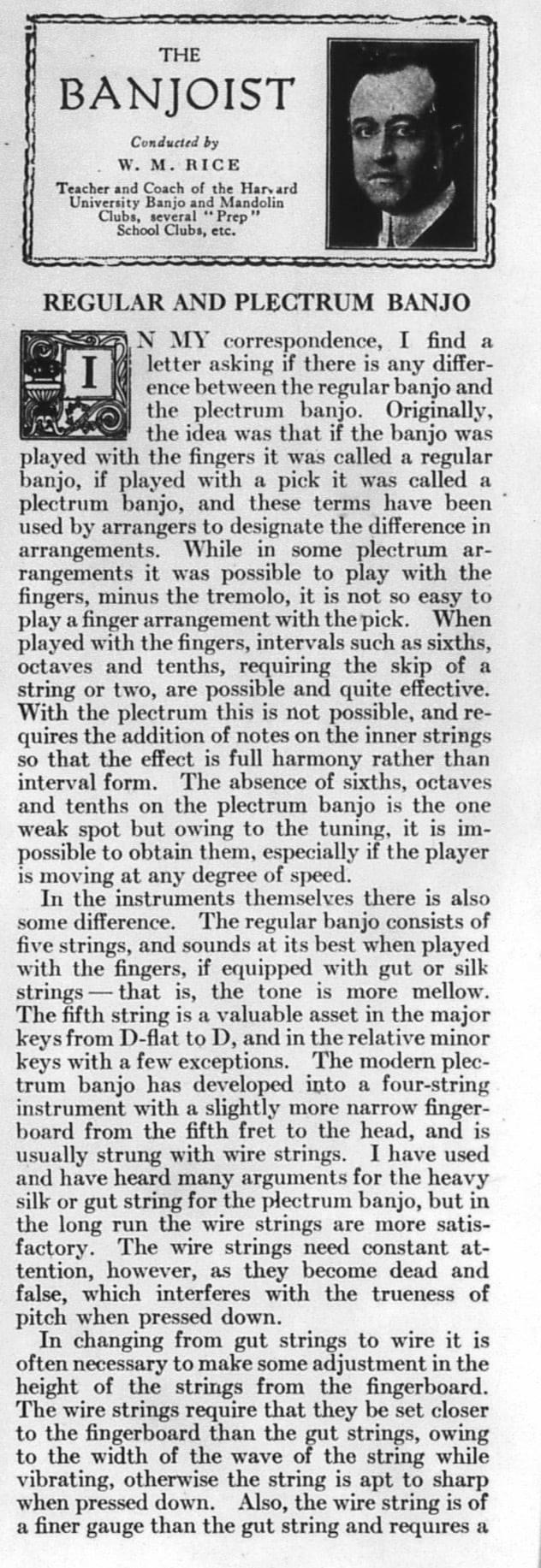
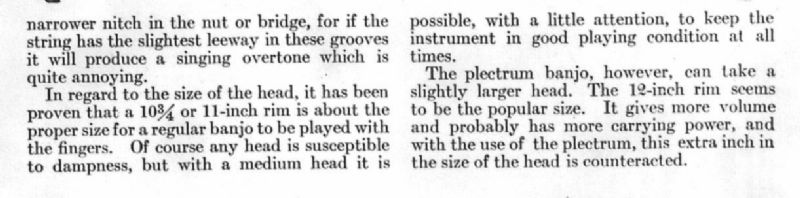
Back angle was added to increase the height of the bridge and lower the less elastic wire strings. The bridge was raised to provide more room to keep the plectrum from scratching the head.
Can you please post a plan view photo of the bridge that was on the banjo and also one of the piece of tortoise shell?
It's really good to hear that you are interested in exploring the classic repertory.
ALCO Sure thing! Here’s both of those pictures for you.
Thank you Joel Hooks for confirming that the action is fine for playing!
I would try tidying up the notches and using that bridge. The tortoise shell, whether it is real or imitation, would make several fine plectrums.
Rather than starting off learning to play clawhammer, from what I imagine would be modern tutors, have you considered Frank B. Converse's 'Analytical Banjo Method' and his instructions for playing both "Banjo" style and "Guitar" style? I'm sure Joel is better able to comment on this.
I love Converse's ABM, but it has shortcomings. Converse sort of devised his own language that you must learn to speak. He explains all this in the text of the book but one must pay very close attention to the small details as missed things become confusing later.
Additionally, Converse only gives one mention and one exercise to alternate fingering. Perhaps this is a product of the time the book was published, but alternate fingering is the key to smooth fingerstyle playing.
The ABM shines in taking full advantage of the very limited ability of playing two voices or self accompaniment on the banjo. Many of the musical pieces are fully fleshed out. On the other hand, this makes "easier" pieces in the book more difficult for the beginner.
The real power of the ABM is in the banjo style (aka stroke style/ thimble style/ "clawhammer") section. The exercises are well graded and the music is some of the most intricate ever published with extremely interesting syncopation. But by the time you get to that section you are half way through the book and perhaps many months into your course of study.
If starting with banjo style ("clawhammer"), I would recommend rolling back to Converse's 1865 complete book (not the elementary book published that same year).
For fingerstyle learning, many of the other A notation books work great. George Lansing's, Partee, Eaton, Sherwood, pick one that includes focus on alternate fingering then start with page one and don't skip around.
I did flick through the ABM and it boggled my brain!
This is Tim Twiss demonstrating the complexities of the tunes, as described by Joel.
youtube.com/playlist?list=PL7A...E3CC3FA02
In his playlists, Tim also plays through the 'Green Book' by Converse.
The books are available to download on Joel's Internet Archive page.
I don't want to give the wrong impression about the ABM, one may certainly use it as primary text for learning. But it can be a bit confusing without help navigating it. Converse also decided to exclude standard scales and just tells you to figure it out on your own.
Tim is an amazing ambassador for stroke style banjo but he has a personal interpretation that does not exactly reflect the source material. That is fine as there is no "wrong way" to interpret music.
Tim plays this using the anachronistic "Briggs'" pitch which was abandoned by the late 1850s.
In the Analytical method, Converse explains that pitch is arbitrary, but context is that this would either be played at A pitch (one octave lower than written) or C, which had generally become common as "concert pitch" by 1886.
It is also pretty clear that Converse was writing for raised fret banjos, of the pattern shown on the cover (basically what we think of today as a "modern banjo").
Tim has also refused to play with a thimble and dismissed using them, despite an overwhelming amount of evidence of the very common use. With practice, one can achieve sensitive dynamic control down to a whisper and nearly no "pick noise" using a thimble.
Basically, Tim's work is filtered through the "reenactor" version of "early banjo" that took form during the years of the Early Banjo Gatherings, an event largely attended by American Civil War reenactors. Reenactors can often freeze their agreed upon narrative despite more info becoming available.
I remember Tim telling me that when he attended his first Early Banjo Gathering he could not figure out how everyone was getting such high clarity and volume. Then he noticed we were all using thimbles.
I posted Tim because I thought he was the only one to have recorded any Converse tunes in the banjo style. With a more thorough search, I've just found your 'Sugar Cane Dance', which is what I originally had in mind for syodes and his newly aquired banjo. Maybe you can provide the link to it and any others that I've not found?
Edited by - ALCO on 08/18/2026 12:40:29
Joel Hooks Just to make sure I’m looking at the right book, is it this one you recommend?
archive.org/details/Converse1865Green
Would you recommend ABM or anything else after or concurrent to this one?
Hi syodes,
If you go to classic-banjo.ning.com and in the video section search box, put in Frank Converse you will find several fine performances of tunes from his publications. There are three by Joel using the "banjo" style (clawhammer), 'Sugar Cane Dance' , 'Horace Weston's' and 'Bangor March'. The other videos of Converse's tunes, demonstrate the "guitar" style (fingerstyle/classic), as do, I'm pretty sure, all the other recordings in the videos section.
I've not made any videos that I would exactly recommend as a good reflection of Converse's work. I am merely an enthusiast of the banjo and do not claim any special playing abilities.
However, I would recommend a standalone metronome (not a phone app). I like the Korg KDM-3 but I just checked and the price has skyrocketed for some reason and is well over twice as much as I paid for mine. Not sure what is up with that. But the good thing about this is the headphone jack and that it sounds pretty close to my wind up. It also uses old fashioned AAA batteries so you don't have to worry about it catching on fire (like with all other inexpensive rechargeable devices-- seriously, you should worry about those catching on fire).
For repertoire, any of the "early" books will work. Rice, Buckley, Buckley, etc.. For reading practice I like the Langey Fischer tutor which is really just a collection or folio of music.
Terms of Use | Privacy Policy | Privacy Consent (EU/GDPR Only)
Copyright 2026 Banjo Hangout. All Rights Reserved.