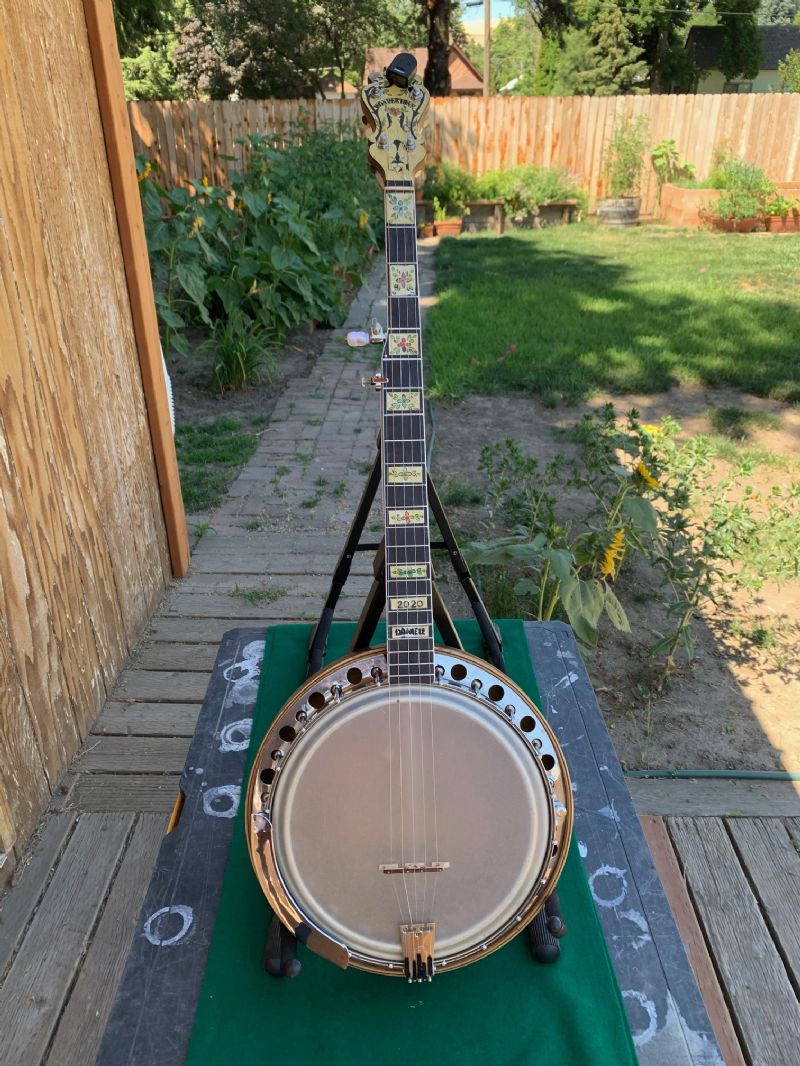
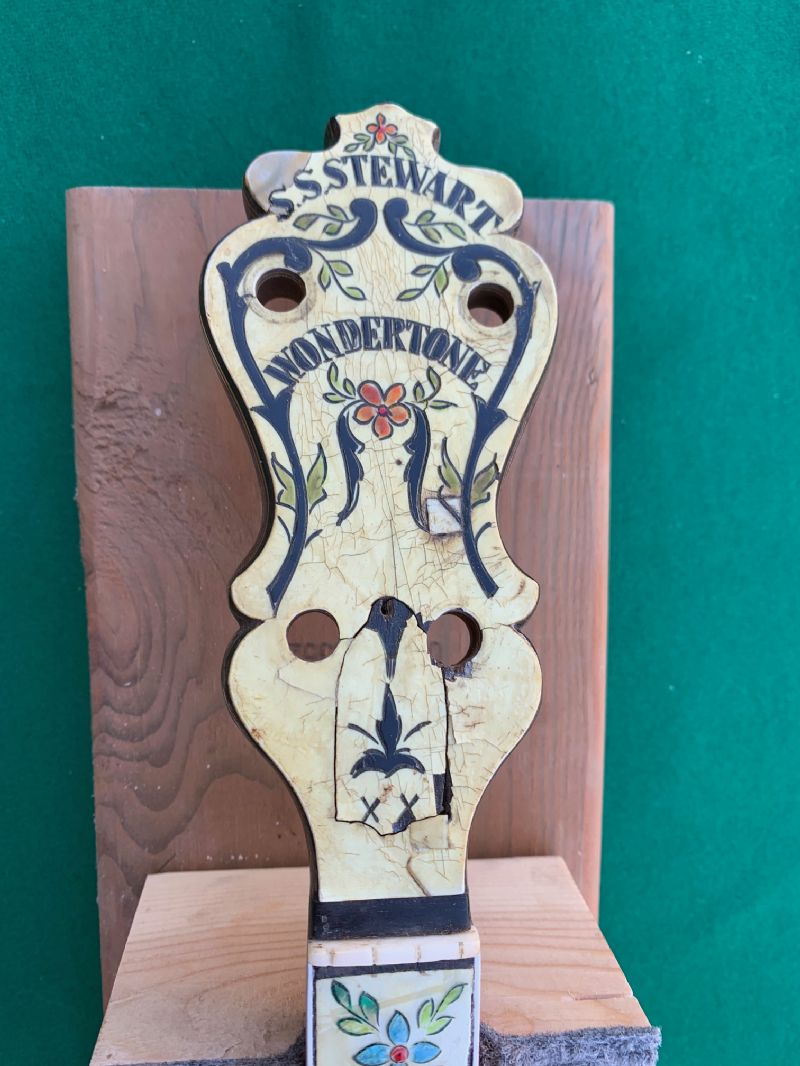
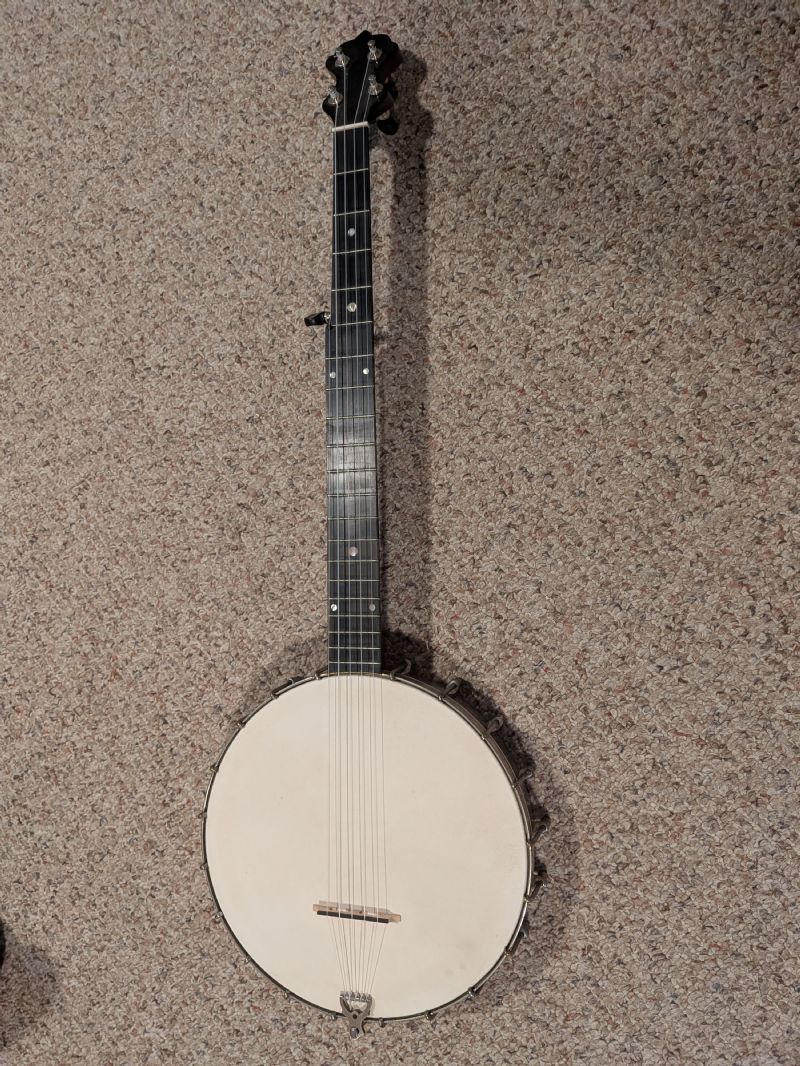
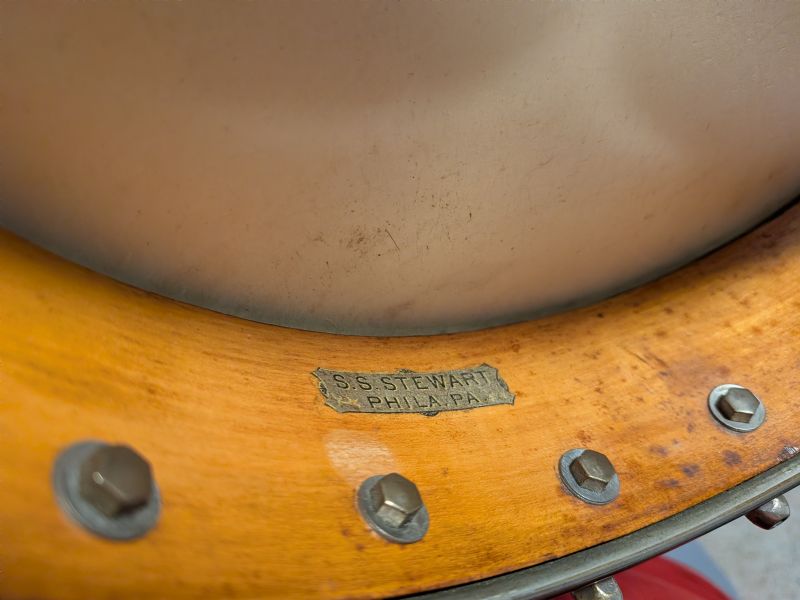
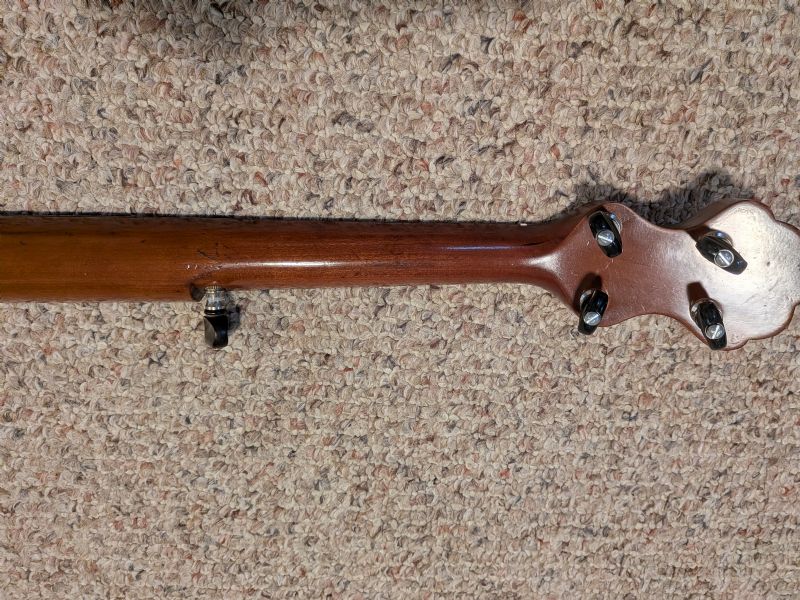
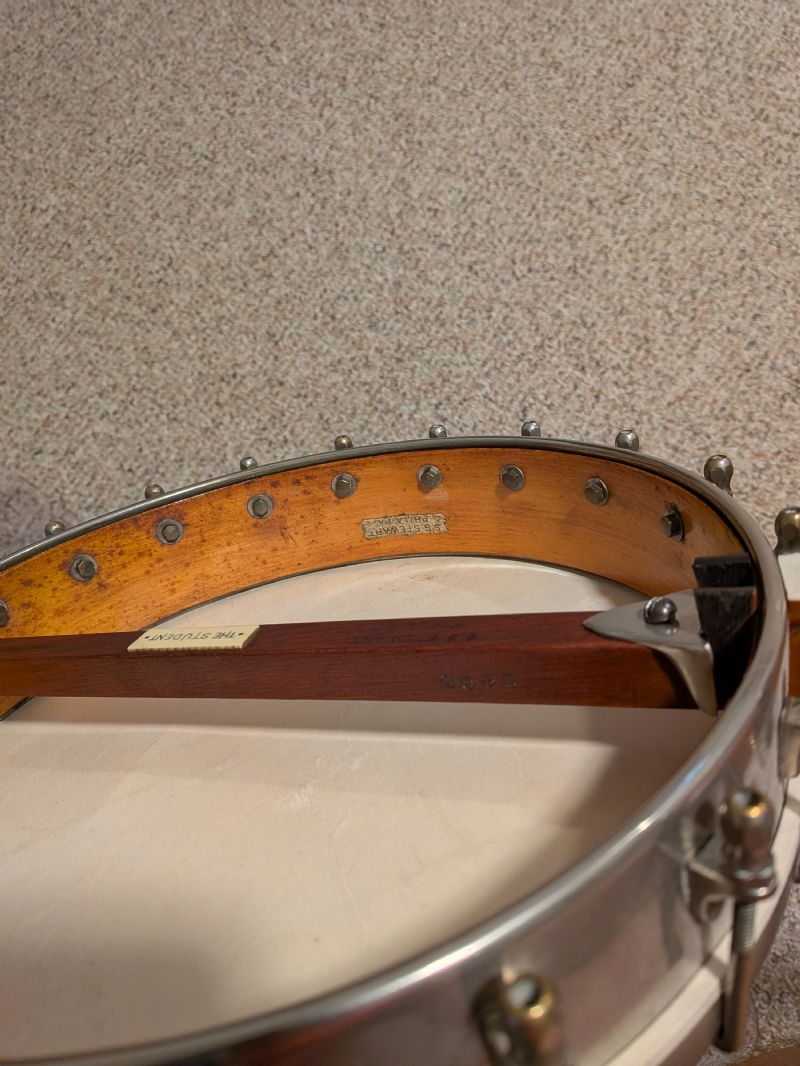
I've been a bluegrass banjo player for several years, but I've recently been dabbling in classic style banjo. I thought it might be fun to practice on a period-consistent instrument, so I picked up this SS Stewart Student "Grade 2" model at a banjo event recently. The bit of internet research I have done indicates it was most likely built sometime between 1890-1895. I am no expert, but it looks like it is mostly original, with the exception of the tailpiece.
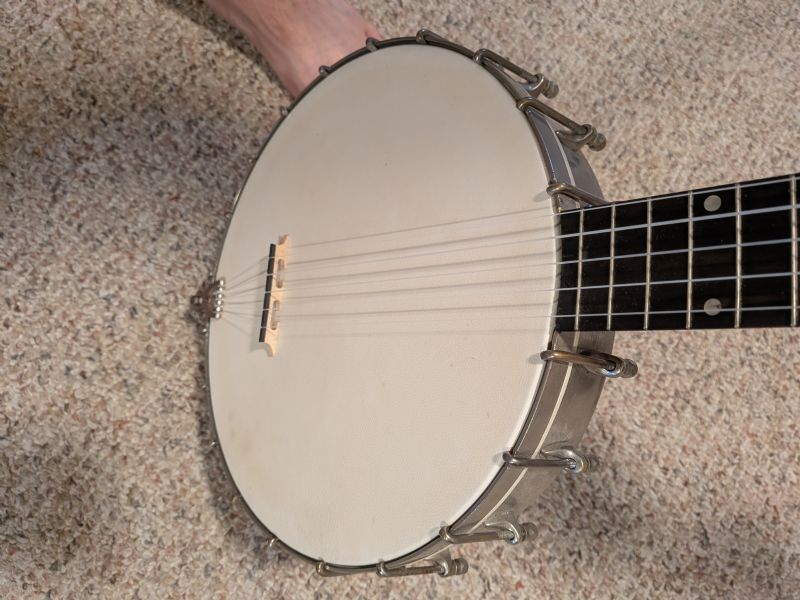
Generally, it seems to be in good condition considering its age, but the action seems very high to me (measuring almost 1/4" at the twelfth fret). I know that action wouldn't work for a typical bluegrass setup, but I don't know whether this would also be considered high for this type of banjo. I consider myself an upper-intermediate Scruggs-style player, but I am finding it difficult to cleanly fret strings up the neck compared to my other banjos.
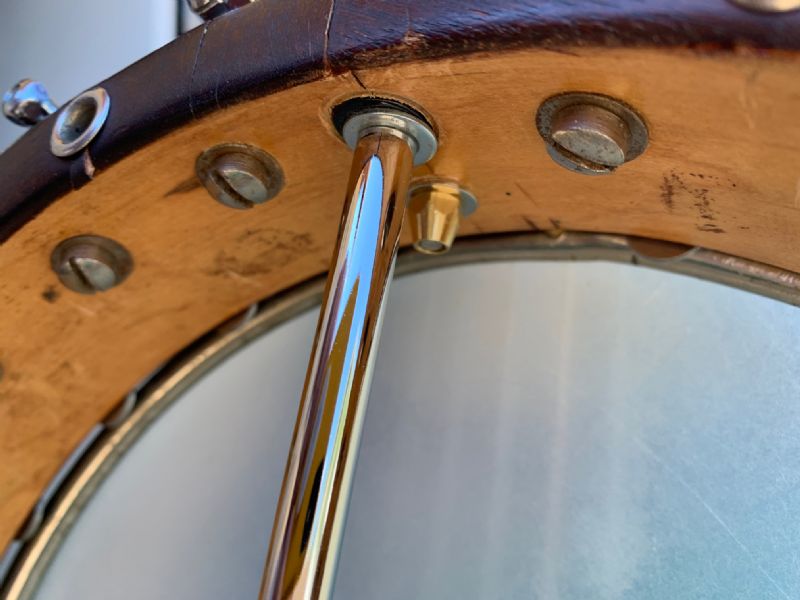
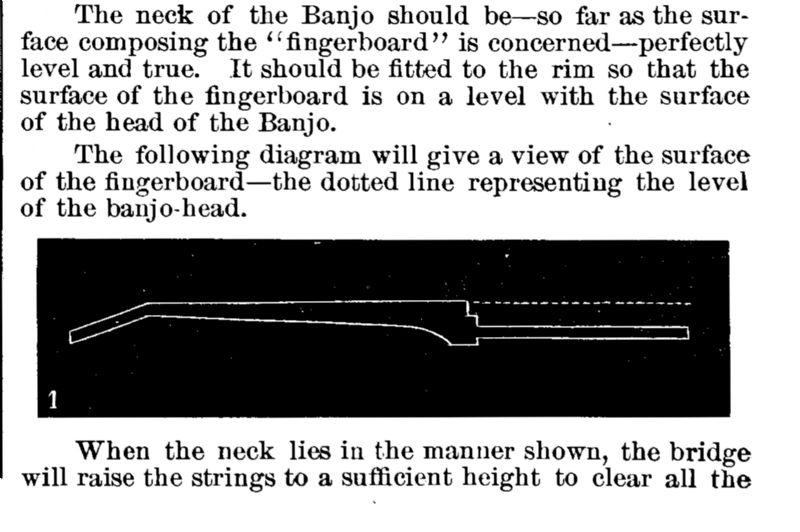
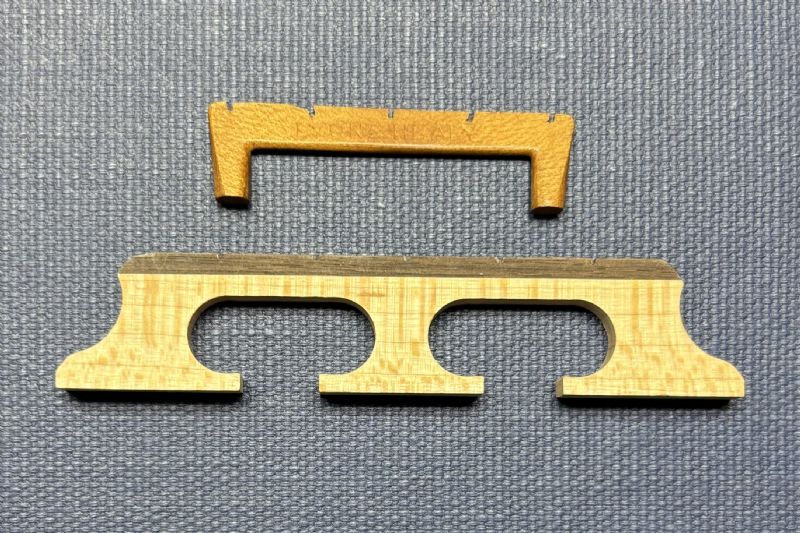
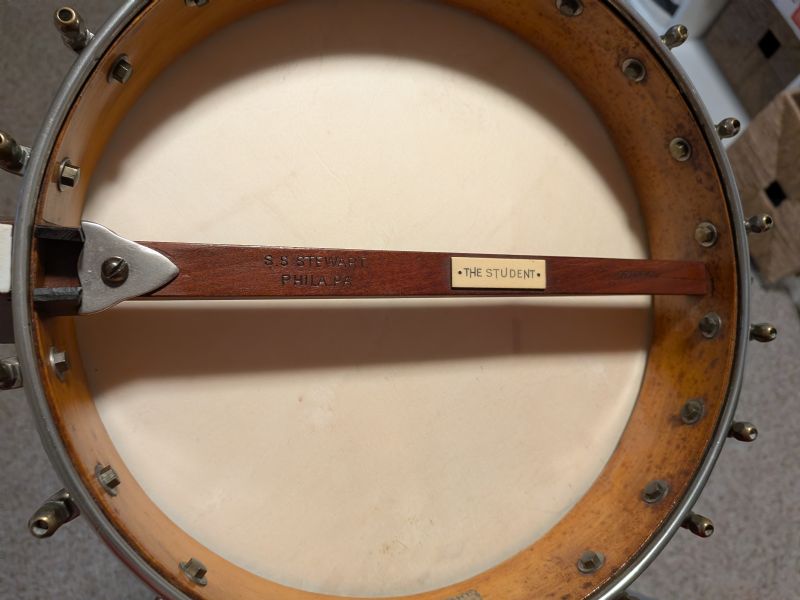
My question is: is this action normal for a Stewart banjo, or is there something else amiss? The neck seems pretty straight, and the bridge is already very short at slightly below 1/2" (it actually looks like the previous owner may have sanded the feet down slightly). The head appears to be calfskin, but the tension is uneven (ranging between 74-80psi on my drum dial). The previous owner had nylon strings on it, which I have kept. I did notice that the screw attaching the plate to the dowel stick is slightly exposed and crooked -- perhaps a symptom of something.
I'm OK with this just being a wallhanger, given how little I paid for it. But it would be cool to get it more playable if that can be done without too much cost/effort. Pics below -- thanks for looking.

Hi there, I had a vintage SS Stewart (see attachment) with a similar problem. The dowel stick was not performing as it should have. I resorted to a shim. That took care of the issue. Despite the controversy about shims, I never regretted using it. It turned out to be the best banjo neck I played on. As for the head, I replaced the slunk calf skin with a Remo Renaissance.

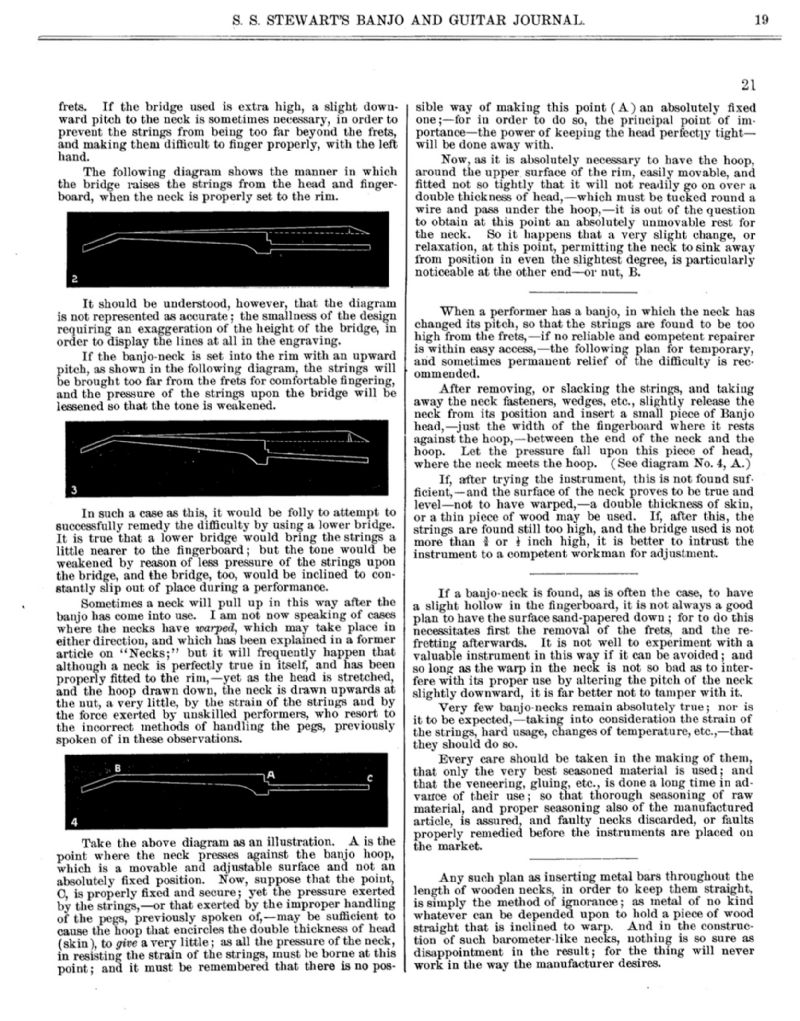
With that dowelstick brace, the screw holds the metal piece on the dowel while the ebony wedges are driven in to tighten the heel to the rim. I've seen some where the screw is driven in at an angle.
3/16-1/4" with a 1/2" bridge with no neck angle is the typical setup for banjos of this era with then gut strings, or nylon today to allow for clean fretting without buzz.
Edited by - Noah Cline on 08/12/2026 13:54:38
quote:
Originally posted by maurodanielrossiHi there, I had a vintage SS Stewart (see attachment) with a similar problem. The dowel stick was not performing as it should have. I resorted to a shim. That took care of the issue. Despite the controversy about shims, I never regretted using it. It turned out to be the best banjo neck I played on. As for the head, I replaced the slunk calf skin with a Remo Renaissance.
This is a diffrent thing. Apples to oranges.
To the OP.. don't shim.
quote:
Originally posted by Noah ClineWith that dowelstick brace, the screw holds the metal piece on the dowel while the ebony wedges are driven in to tighten the heel to the rim. I've seen some where the screw is driven in at an angle.
3/16-1/4" with a 1/2" bridge with no neck angle is the typical setup for banjos of this era with then gut strings, or nylon today to allow for clean fretting without buzz.
This is correct.
Toss the unwound 4th string. If you want the fullness of tone for classic playing you need a wound 4th. There is a reason the 4th was always wound. Aquila has done the banjo would a huge disservice.
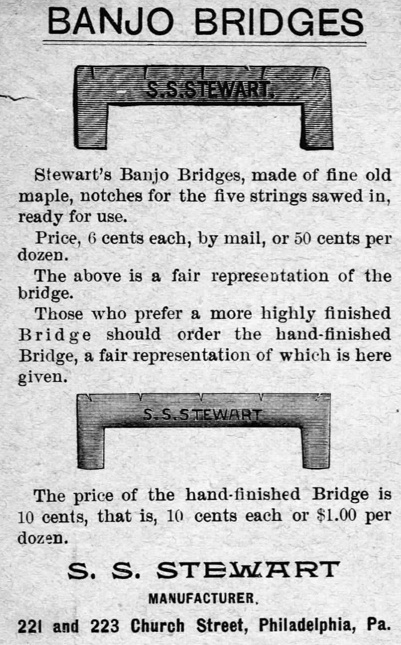
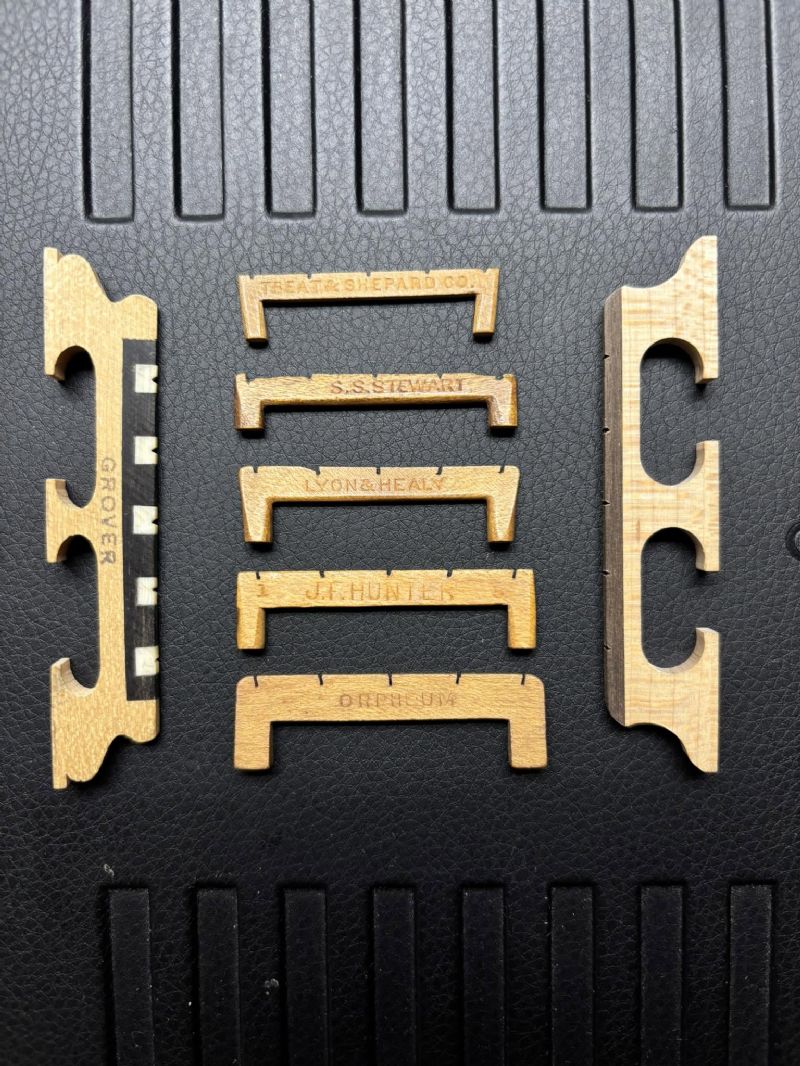
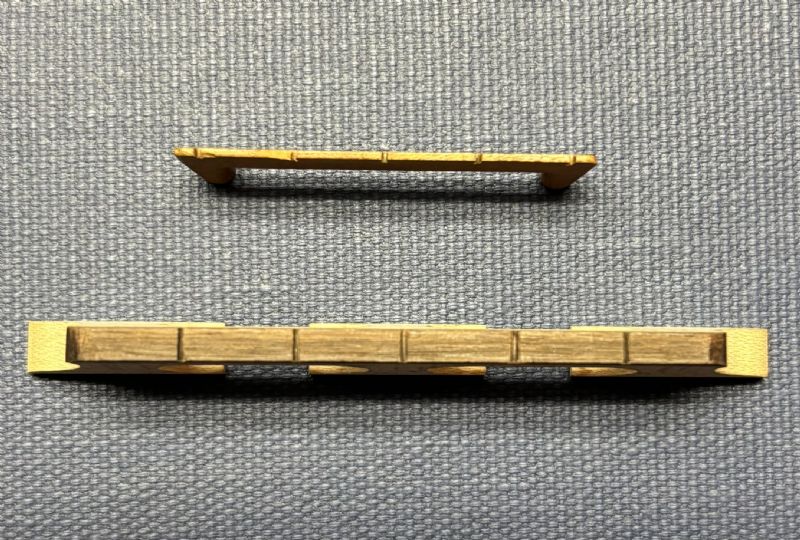
Next, if you want the full tone, full volume and full clarity you need to get rid of that bridge and find or make a suitable one.
Do this, string the strings while pinching the bridge with your fingers. Then let go. Hear the difference? Now consider what the mass of your bridge is doing to the tone compared to what it should have.
What course of study are you working with? Are you starting with A notation or C notation?
Action sounds right, mine is the same. You get used to it with practice.
Also I believe this banjo was made later. IIRC the serial numbers got reset sometime after 1900.
+1 to putting on a light 2-foot bridge and some more appropriate strings. really helps the banjo sound right
also a warning: when tightening the head, make sure the j-hooks have clearance and don't bind against the rim. I broke 3 hooks on my Student due to this. I've never found identical replacements.
Edited by - A Drum On A Stick on 08/12/2026 16:13:22
Thank you all for the responses. They are super helpful.
quote:
Originally posted by Noah Cline3/16-1/4" with a 1/2" bridge with no neck angle is the typical setup for banjos of this era with then gut strings, or nylon today to allow for clean fretting without buzz.
Good to know that 1/4" is within normal range. I imagine the action will lower slightly with the head tightened, but it sounds like I will just have to get used to action this high if I want to play this banjo.
quote:
Originally posted by Joel HooksIf you want the fullness of tone for classic playing you need a wound 4th.
OK. I purchased a pack of LaBella 17s.
quote:
Originally posted by Joel HooksNext, if you want the full tone, full volume and full clarity you need to get rid of that bridge and find or make a suitable one.
Yeah, the bridge on this is way more substantial than the two-footed bridges in the picture you posted. Would something like this be a reasonable replacement?
quote:
Originally posted by Joel HooksWhat course of study are you working with? Are you starting with A notation or C notation?
I'm very slowly working my way through the Frank Bradbury method published by Mel Bay -- so C notation.
quote:
Originally posted by A Drum On A StickAlso I believe this banjo was made later. IIRC the serial numbers got reset sometime after 1900.
The serial number is 8466, which some brief internet research pegged at 1892, but I have no idea how accurate that estimate is.
quote:
Originally posted by A Drum On A Stickalso a warning: when tightening the head, make sure the j-hooks have clearance and don't bind against the rim. I broke 3 hooks on my Student due to this. I've never found identical replacements.
Thank you for the warning. How tight should these skin heads be? Right now, the head tension is all over the place (between 74 and 80 psi measured using a drum dial). I imagine I'll want to even out the head tension first and then let the head settle for a bit. But I'm not sure how tight it ultimately needs to be.
Edited by - Steve Perreault on 08/12/2026 18:17:00
Naturall skin isn't uniformly thick!
That's why it's not advisable to set the “Drum Dial” to the same tension all around.
Please use the forum search for this topic;
my English isn't good enough to explain it in detail, my English isn't good enough to explain it precisely, and the KI makes everything worse.
quote:
Originally posted by TuedelbandNaturall skin isn't uniformly thick!
That's why it's not advisable to set the “Drum Dial” to the same tension all around.
Please use the forum search for this topic;
my English isn't good enough to explain it in detail, my English isn't good enough to explain it precisely, and the KI makes everything worse.
Thank you - I will do that.
I would go with their "Parke Hunter" bridge as it is closer to period.
Drum dial rules only go for mylar. Just tighten the head to sound good without too much deflection.
My advice is to approach this as if you have never touched a banjo before. Start on page one and work from there. Pay very special attention to "alternate fingering" when you reach that point in the course of study. This is the key to playing smoothly, don't cheat yourself.
Terms of Use | Privacy Policy | Privacy Consent (EU/GDPR Only)
Copyright 2026 Banjo Hangout. All Rights Reserved.