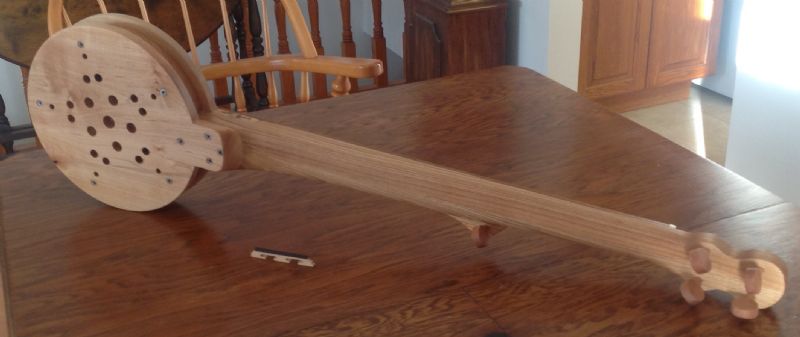
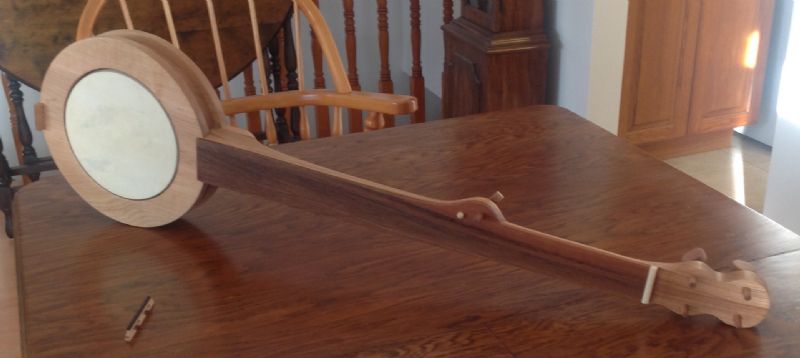
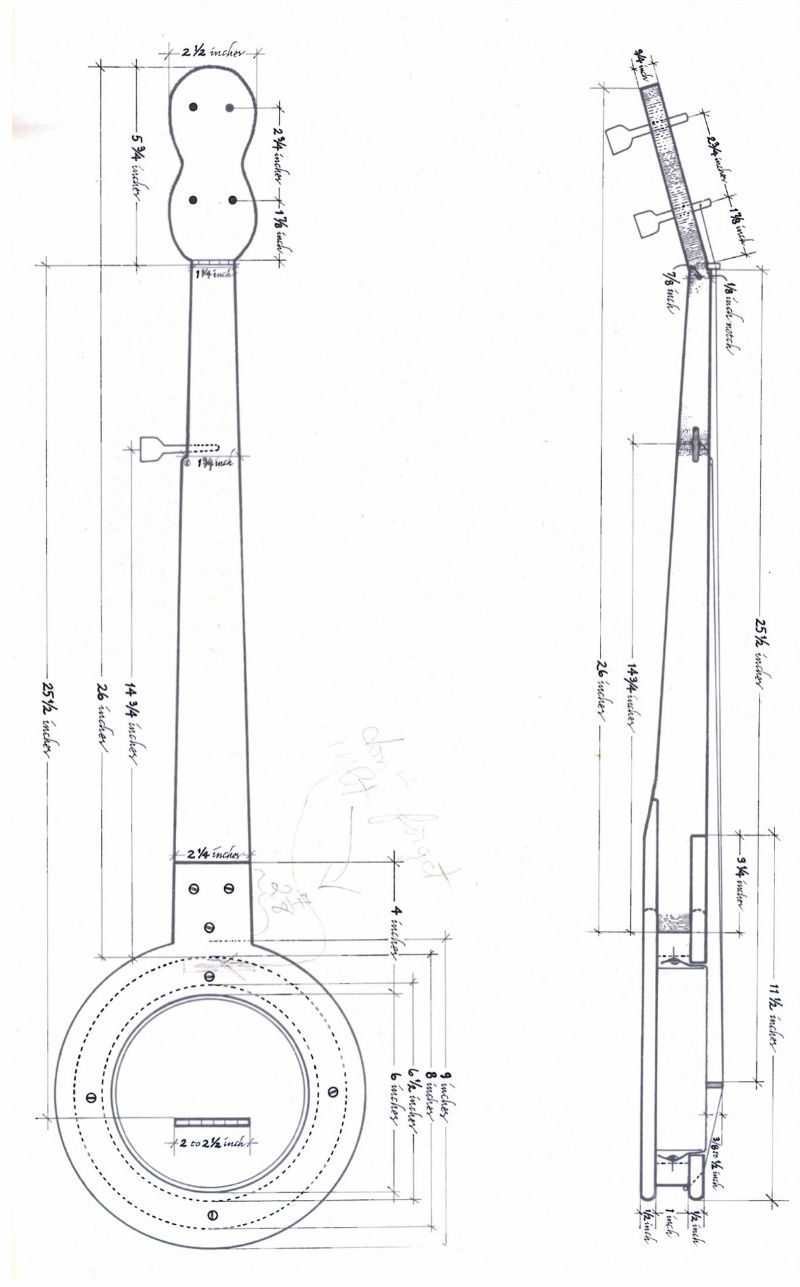
Hello everyone, I was looking to learn to play fretless banjo (i have experience playing fretless instruments and I like the particular flexibility with them). However, I found that fretless banjos were particularly expensive and thus, like many others, I too have decided that I want to build a fretless mountain banjo. I have been reading Foxfire 3 and it has helped tremendously, and I plan to use bluestemstrings template to try to make my first banjo, but before I begin I just had some questions before I fully dived in.
This one has probably been asked before but where do y'all recommend that I acquire good enough hardwood (maple or cherry?) that's relatively affordable but will be fitting for banjo building dimensions (almost 10" wide with a depth of 1"/1/2" based on Profitt style plans)? I saw others say they got poplar from home depot but also again don't see wood with proper dimensions. I'm in Phoenix, AZ and not really sure where to get wood and I searched on local lumber stores' websites yet don't see wood wide enough for this build... Maybe my financial assumptions on budget are just way too underestimated.
I also had questions about the neck, in particular, how to make sure the action is well regulated and good for playing. I also plan to be going cross country with it and was scared that changes in temperature or humidity could affect the wood or warp the neck. Maybe I should also use synthetic skin...
Also decided to use a cake pan for the metal tone ring, dunno if anybody has any other thoughts about that.
If y'all happen to have any other walkthrough videos/papers on a build or additional tips or tricks I would greatly appreciate it. Thank you everybody and I'll make sure to post progress pics and updates when I get started :)

Have you seen Carver Banjos website? It solves the wood acquisition problem. I don't have the woodworking tools, so the pre-cut wood is good for me. If you order, be prepared to wait a few weeks for shipment. There's videos and other info too.
carverbanjos.com/product-categ...njo-kits/

Here’s an alternative to the Foxfire book:
Use a coffee can for a “tone ring”. Noah Cline makes a wooden tone ring.
If you are looking for suitable woods you can check these out.
Edited by - Culloden on 08/09/2026 05:43:08
You really need to be honest and reflective. Do you want to “build” one or “ play” one.
Building can take a lot of time and can be very fulfilling. But it can take a lot of your “playing time”.
Another option is to buy a cheap banjo, remove the frets. Plug fret slots if you choose.
Start playing fret less.
Dont ask how I know this
quote:
Originally posted by NediaHoHello everyone, I was looking to learn to play fretless banjo (i have experience playing fretless instruments and I like the particular flexibility with them). However, I found that fretless banjos were particularly expensive and thus, like many others, I too have decided that I want to build a fretless mountain banjo. I have been reading Foxfire 3 and it has helped tremendously, and I plan to use bluestemstrings template to try to make my first banjo, but before I begin I just had some questions before I fully dived in.
This one has probably been asked before but where do y'all recommend that I acquire good enough hardwood (maple or cherry?) that's relatively affordable but will be fitting for banjo building dimensions (almost 10" wide with a depth of 1"/1/2" based on Profitt style plans)? I saw others say they got poplar from home depot but also again don't see wood with proper dimensions. I'm in Phoenix, AZ and not really sure where to get wood and I searched on local lumber stores' websites yet don't see wood wide enough for this build... Maybe my financial assumptions on budget are just way too underestimated.
I also had questions about the neck, in particular, how to make sure the action is well regulated and good for playing. I also plan to be going cross country with it and was scared that changes in temperature or humidity could affect the wood or warp the neck. Maybe I should also use synthetic skin...
Also decided to use a cake pan for the metal tone ring, dunno if anybody has any other thoughts about that.
If y'all happen to have any other walkthrough videos/papers on a build or additional tips or tricks I would greatly appreciate it. Thank you everybody and I'll make sure to post progress pics and updates when I get started :)
Edensaw.com
@NediaHo Good luck with you fist Mt. banjo.
The Firefox books are a great resource. For more Mt. banjo inspiration check out.
curt.bouterse.com/the-mountain-banjo/
The nice thing about Mt. banjos is there is no standard design. You can combine anything you like into your own design. I would suggest keeping it simple for your 1st. one. A tack head banjo may be easier 1st build for some?
I have built several traditional Mt banjos over the years, cutting the logs, splitting out the wood... Mostly Inspired by Leonard Glen and Tedra Harmond. Happy to share any information that may be helpful, too much to list here. Feel free to contact me.
Bill West
quote:
Originally posted by GallaherYou really need to be honest and reflective. Do you want to “build” one or “ play” one.
Building can take a lot of time and can be very fulfilling. But it can take a lot of your “playing time”.
Another option is to buy a cheap banjo, remove the frets. Plug fret slots if you choose.
Start playing fret less.
Dont ask how I know this
Ditto. I was in the same place when I first started playing; I really wanted a legit fretless banjo (like a Reiter or Enoch) but there was no way I could afford one. So I defretted a cheap Asian banjo. It worked. Results will be better with a used mid-tier/name-brand banjo (Gold Tone, Recording King, etc.), which you might be able to get for cheap if you hunt around.
I have a fretless "mountain" banjo, and while it is fun to play, it's really a different beast than a "modern" banjo -- tone-wise and volume-wise. I would really recommend that you find a way to try one out before committing to a building project.
I also second Carver, if you decide you still want to go in that direction. But then you might also consider the "minstrel" style model.
Gold Tone sells composite-rim fretless banjos in both 11" and 12" sizes. $314.99 / $399.99.
quote:
Originally posted by ancient tonesHave you seen Carver Banjos website? It solves the wood acquisition problem. I don't have the woodworking tools, so the pre-cut wood is good for me. If you order, be prepared to wait a few weeks for shipment. There's videos and other info too.
carverbanjos.com/product-categ...njo-kits/
I did... but for $400 I might as well do what others said and get a regular banjo and just de-fret it... save me $400 and all the work
quote:
Originally posted by lapsteelHere’s an alternative to the Foxfire book:
Use a coffee can for a “tone ring”. Noah Cline makes a wooden tone ring.
Thank you so much for this, might just follow this roughly and make a smaller banjo... Might be the move rather than try to find 11" wood!
Like you, I was inspired by Foxfire 3 to build my first banjo….way back in 1976. I still have it and love playing it. I encourage you to move forward with this project. Suitable wood (11” or more) is hard to find, but edge gluing smaller pieces to achieve this width is not hard to do, and a basic skill to develop in woodworking. Straight, square edges can be accomplished with a sharp hand plane or a jointer if you access to a machine equipped shop. Once you have straight, square edges, coat the mating edges of the boards with a uniform coat of wood glue like Titebond red cap. Redcap cures very hard and is preferred by luthiers. Dowels will help align the pieces of wood, but are not necessary. Contrary to common belief, they do not add to the strength of edge gluing. A proper edge joint done with Titebond glue (and other wood glues) is stronger than the wood around it.
quote:
Originally posted by KW2Like you, I was inspired by Foxfire 3 to build my first banjo….way back in 1976. I still have it and love playing it. I encourage you to move forward with this project. Suitable wood (11” or more) is hard to find, but edge gluing smaller pieces to achieve this width is not hard to do, and a basic skill to develop in woodworking. Straight, square edges can be accomplished with a sharp hand plane or a jointer if you access to a machine equipped shop. Once you have straight, square edges, coat the mating edges of the boards with a uniform coat of wood glue like Titebond red cap and clamp the pieces until you achieve a uniform bit of squeeze out along the joint. Redcap cures very hard and is preferred by luthiers. Dowels will help align the pieces of wood, but are not necessary. Contrary to common belief, they do not add to the strength of edge gluing. A proper edge joint done with Titebond glue (and other wood glues) is stronger than the wood around it.
Terms of Use | Privacy Policy | Privacy Consent (EU/GDPR Only)
Copyright 2026 Banjo Hangout. All Rights Reserved.