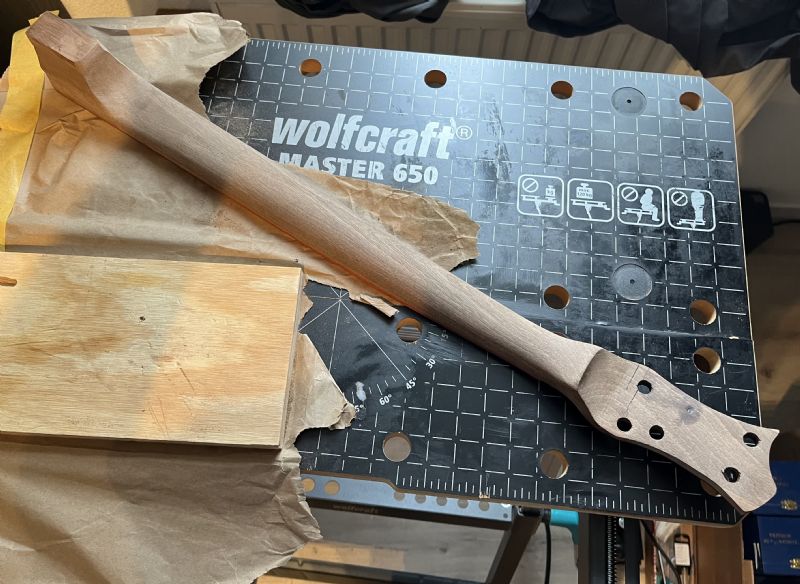
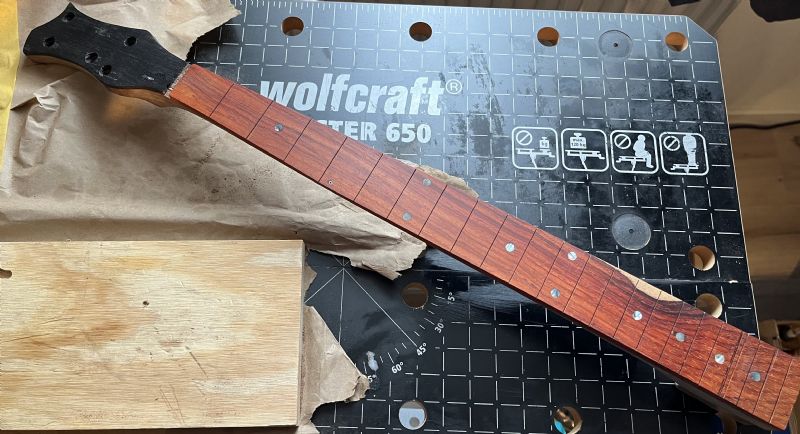
Sharing the current state of my first from scratch neck build.
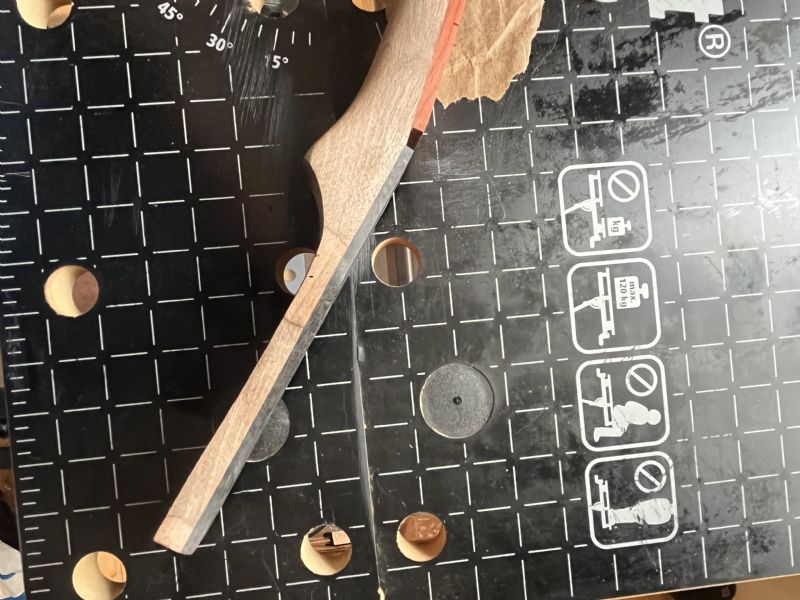
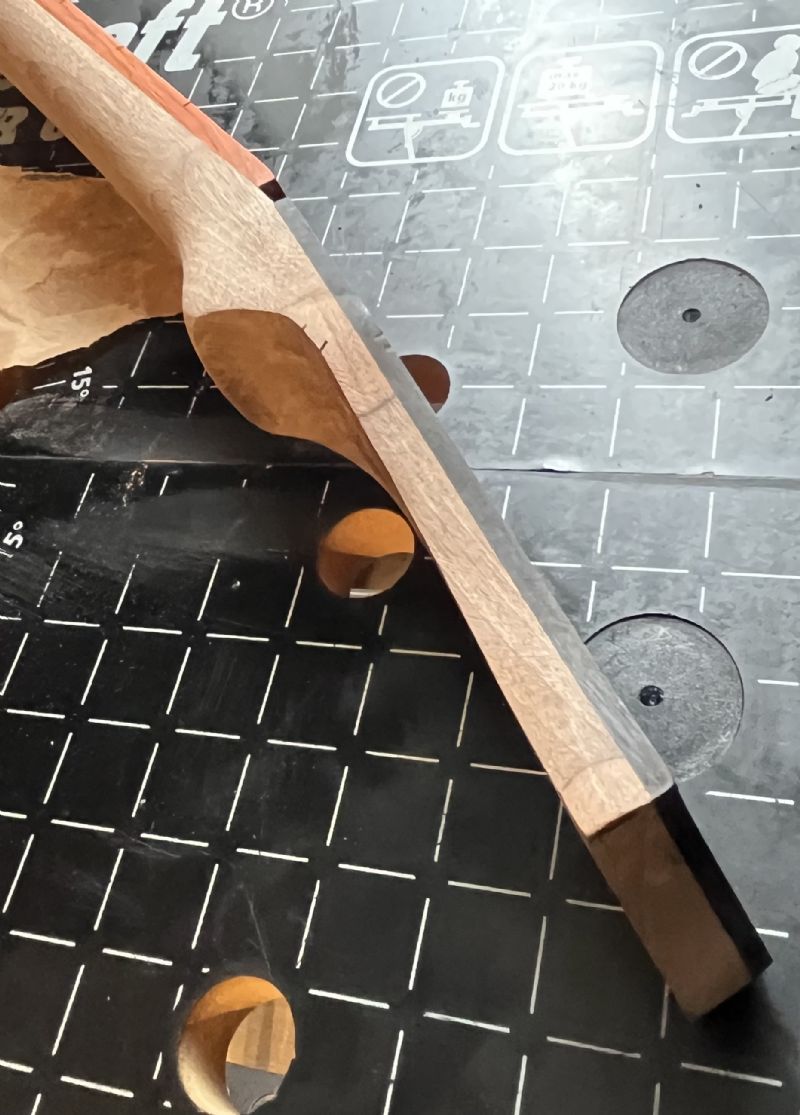
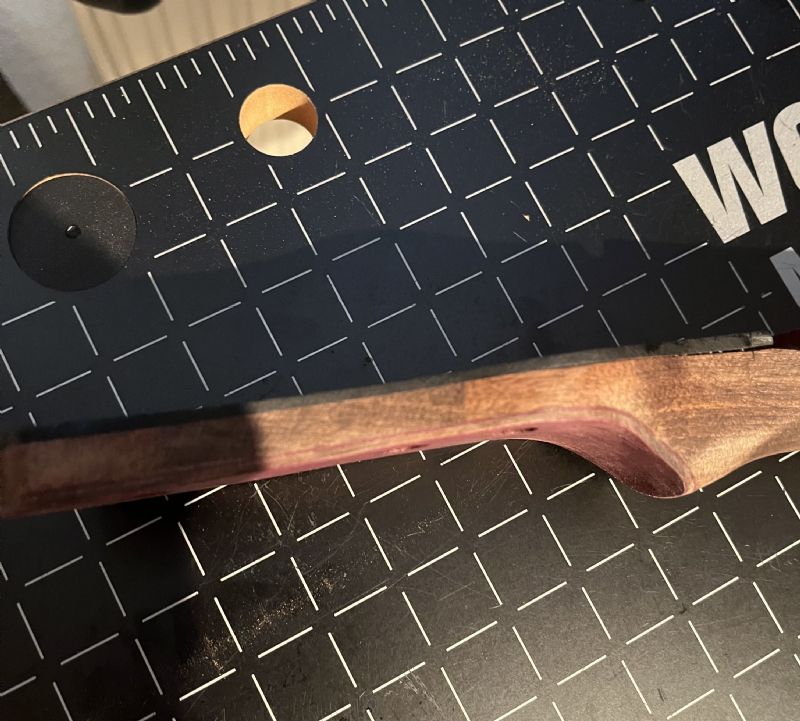
Walnut and cocobole, tunneled fifth, truss rod from heel. I am pretty satisfied, lots of fun. I noticed, that the right side of the peghead bottom is uneven (I sanded by hand) and now I need to decide how to deal with it.
Options could be:
- leave as is and declare it art
- add ebony overlay on bottom and even it out
- build bottom with walnut and even it out
The peghead is pretty thin, I am using small guitar tuners here. As the truss rod is from the heel and ends at first fret, the connection peghead/neck is super solid.
Any suggestions how to fix the uneven peghead?

If it were me. I’d forge ahead and be more careful next time.

You can use a heavy rasp, I use a farrier’s rasp (horseshoer).
File/rasp it down even. It needs to be uniform thickness. Sand it smooth to at least 220 grit.
Then you can glue a veneer onto the back to bring it back to the thickness you need.
You may need to bend the added wood over the volute (steam/hot water).
When I do this I use a contrasting wood. I’d probably use the same as the peg head overlay.
The idea is to make it look purposeful.
I’ve cut peg heads thin on purpose and accident. 100% of the time they come out fine.
Just know you can fix anything and enjoy the experience
Read your post again. I don’t think you’ll ever be able to bend Edony to form to the back of the peg head. Too stiff. But walnut will work
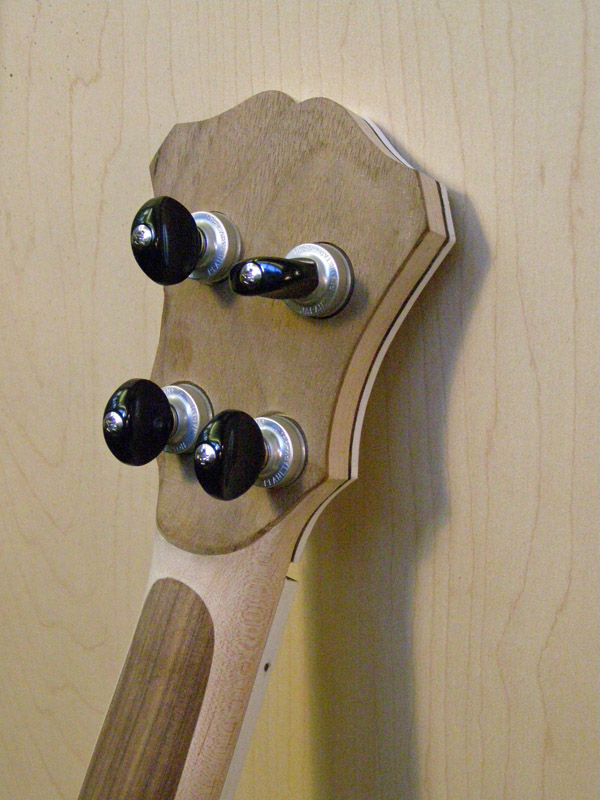
Look at my media. I will upload a picture of a neck I built 20 years ago. The exact issue you have.
quote:
Originally posted by GallaherRead your post again. I don’t think you’ll ever be able to bend Edony to form to the back of the peg head. Too stiff. But walnut will work
Look at my media. I will upload a picture of a neck I built 20 years ago. The exact issue you have.
Thanks George! I will go that route.
How thick is the peghead at the thinnest part counting the thickness of the overlay? If it's anywhere close to 1/2" thick, you could probably just call it folk art and play it as is. That ebony overlay on top is pretty thick. That will stabilize it quite a bit.
Leave as is and declare it art.
Years from now you'll be revered as the inventor of the highly coveted Graeber assymetric peghead. PhD theses will be written about the sonic characteristics, the proper thicknesses and tapering, whether it should be linear or not, and why didn't anyone think of this sooner?
quote:
Originally posted by reubenstumpLeave as is and declare it art.
Years from now you'll be revered as the inventor of the highly coveted Graeber assymetric peghead. PhD theses will be written about the sonic characteristics, the proper thicknesses and tapering, whether it should be linear or not, and why didn't anyone think of this sooner?
I am looking forward to this! Genius advice.
I applaud your work..! :0)
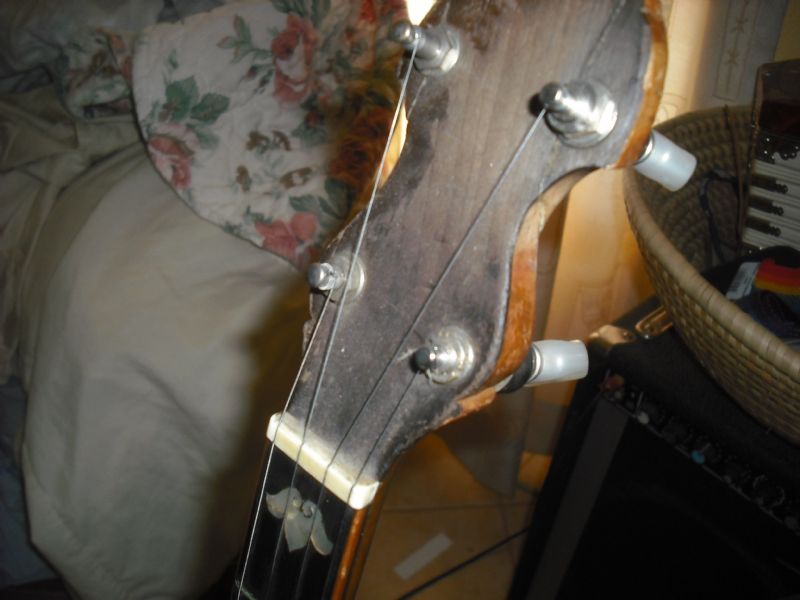
The peghead does NOT need to be the same thickness.
Older luthiers knew to taper the peghead to adjust for different tuner shaft lengths
Edited by - Helix on 08/05/2026 09:14:54
The weakest point is at the curve. I would make the thick part the same thickness. Then glue three pieces of 1/16" thick of alternating pieces of mahogany and 1/32" maple veneer (maple in the center) to the back. Not only will it strengthen the area but will add aesthetics. You can add the same sandwiched veneers as a heel cap. It will look like it was the plan all along. Attached is a photo of a cigar box banjo with just one piece of walnut veneer added to the back.
Thanks for all the great advice. In the meantime I did the inlay on the peghead.
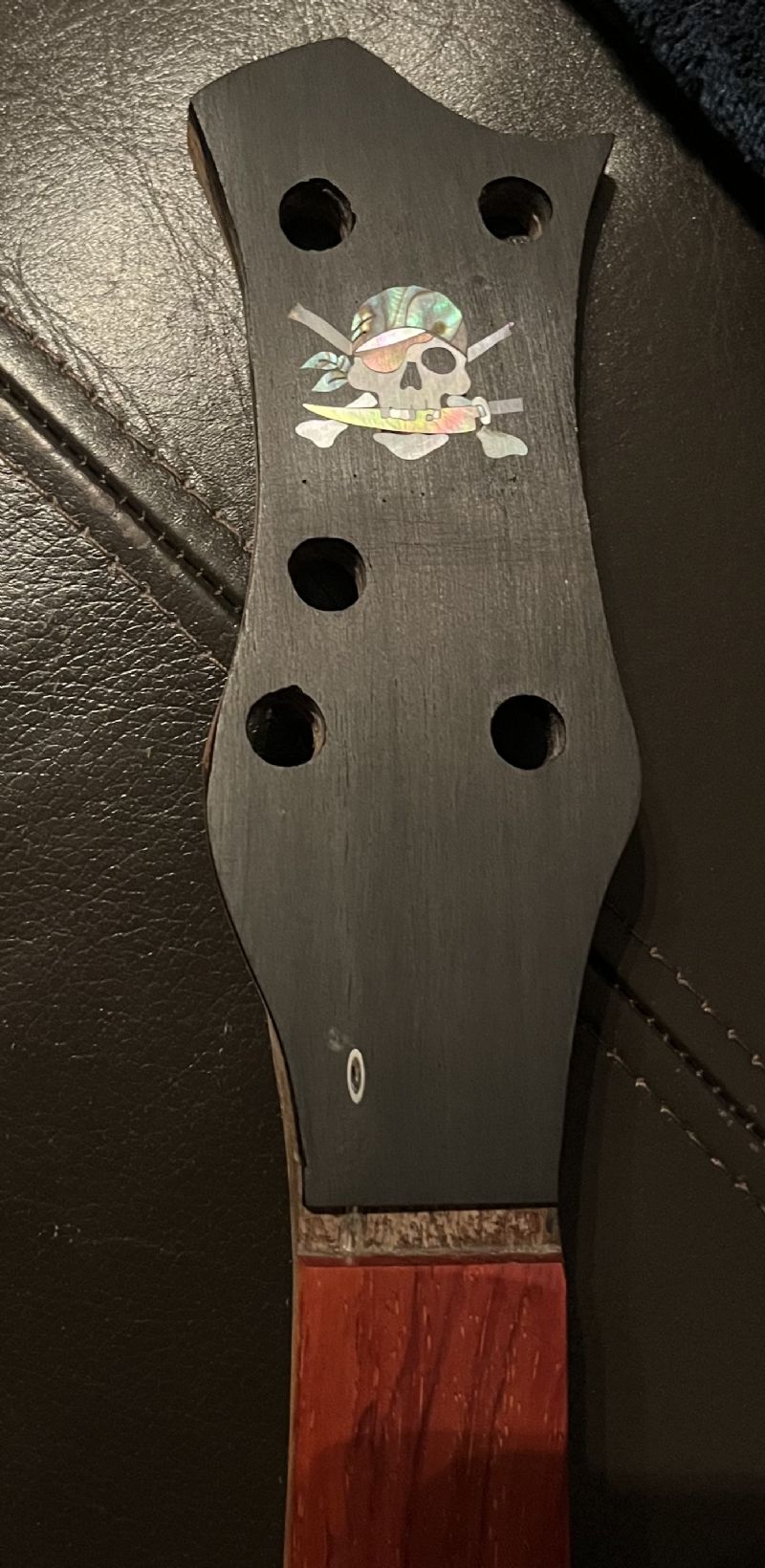
Nice
BNJOMAKR Marvin, thank you so much for your advice! I did layers of purpleheart and walnut veneer, and it already turns out great before final sanding.
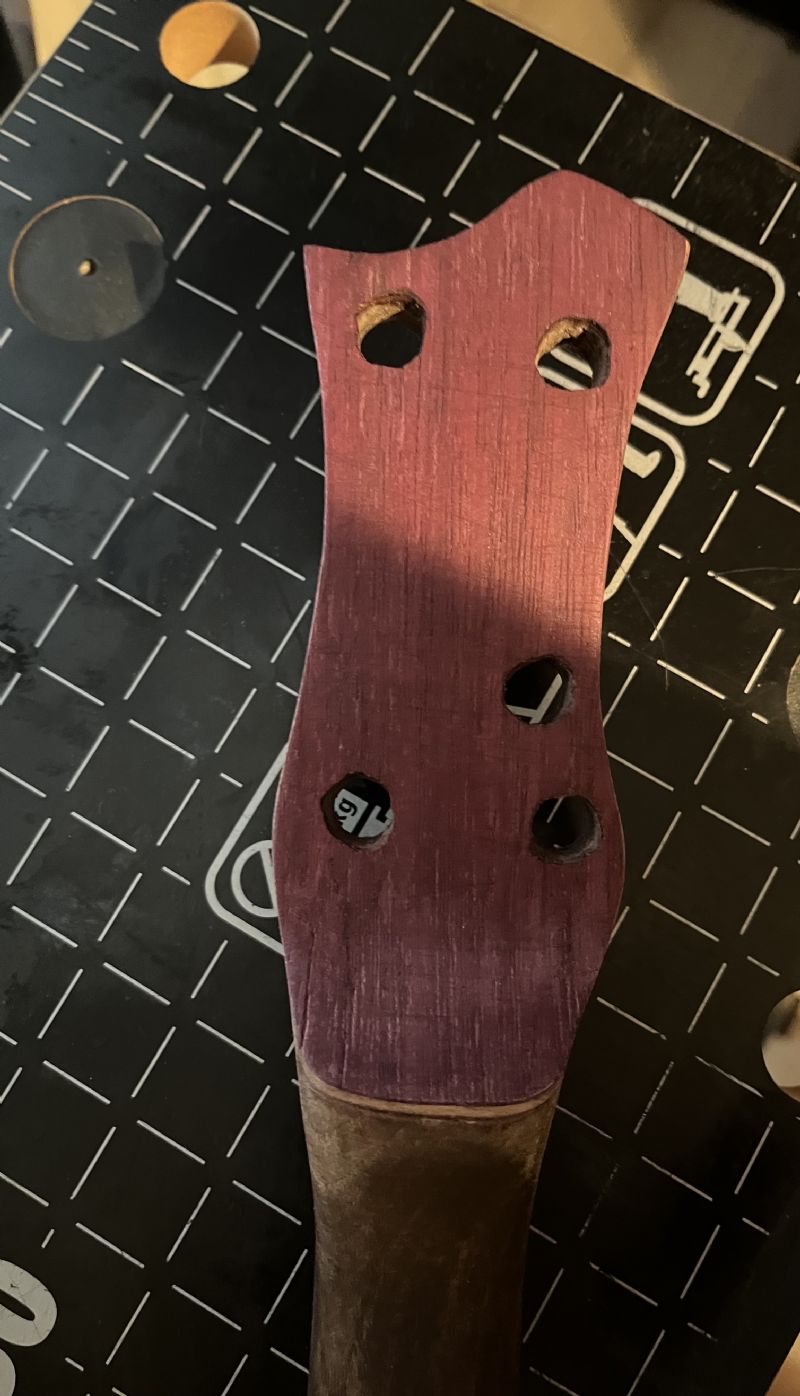
Martin, nice veneer and pirate against the black.
In the past I added a bit of "steampunk", cover with a thin copper plate and add some copper rivets glued into the headstock like dowels. Also use a ball peen hammer to gently texture the copper to give a unique effect
Are you referring to the curvature on right and left sides of the peghead being slightly different? I like that asymmetry. It reflects and complements your asymmetric tuning peg layout.
Sometimes our ‘errors’ turn out better than what we had intended. You could make this asymmetry a feature of your peghead designs.
Edited by - EEB on 08/16/2026 04:16:06
quote:
Originally posted by conicMartin, nice veneer and pirate against the black.
In the past I added a bit of "steampunk", cover with a thin copper plate and add some copper rivets glued into the headstock like dowels. Also use a ball peen hammer to gently texture the copper to give a unique effect
Do you have a picture of this? Sounds cool!
quote:
Originally posted by pfalzgrassquote:
Originally posted by conicMartin, nice veneer and pirate against the black.
In the past I added a bit of "steampunk", cover with a thin copper plate and add some copper rivets glued into the headstock like dowels. Also use a ball peen hammer to gently texture the copper to give a unique effectDo you have a picture of this? Sounds cool!
Unfortunately no, i gave it away, I used the thin copper plate and glued it on the headstock then used some thin dome head rivets pushed through the plate into holes like a dowel
Terms of Use | Privacy Policy | Privacy Consent (EU/GDPR Only)
Copyright 2026 Banjo Hangout. All Rights Reserved.