


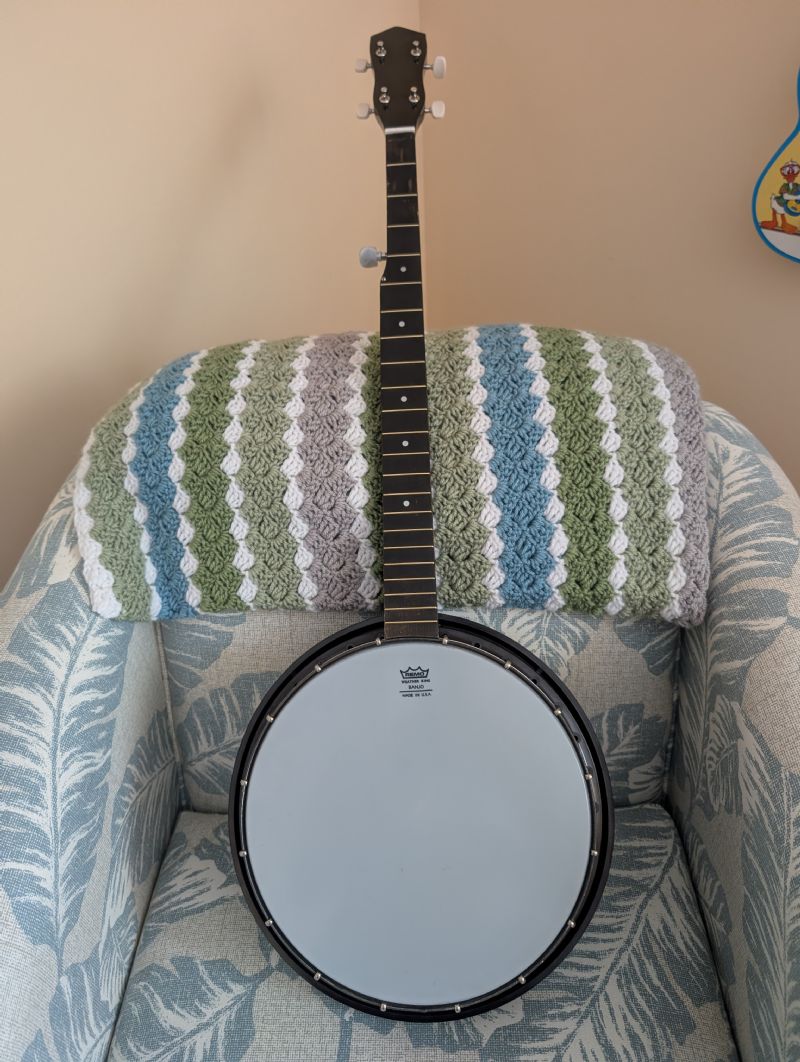
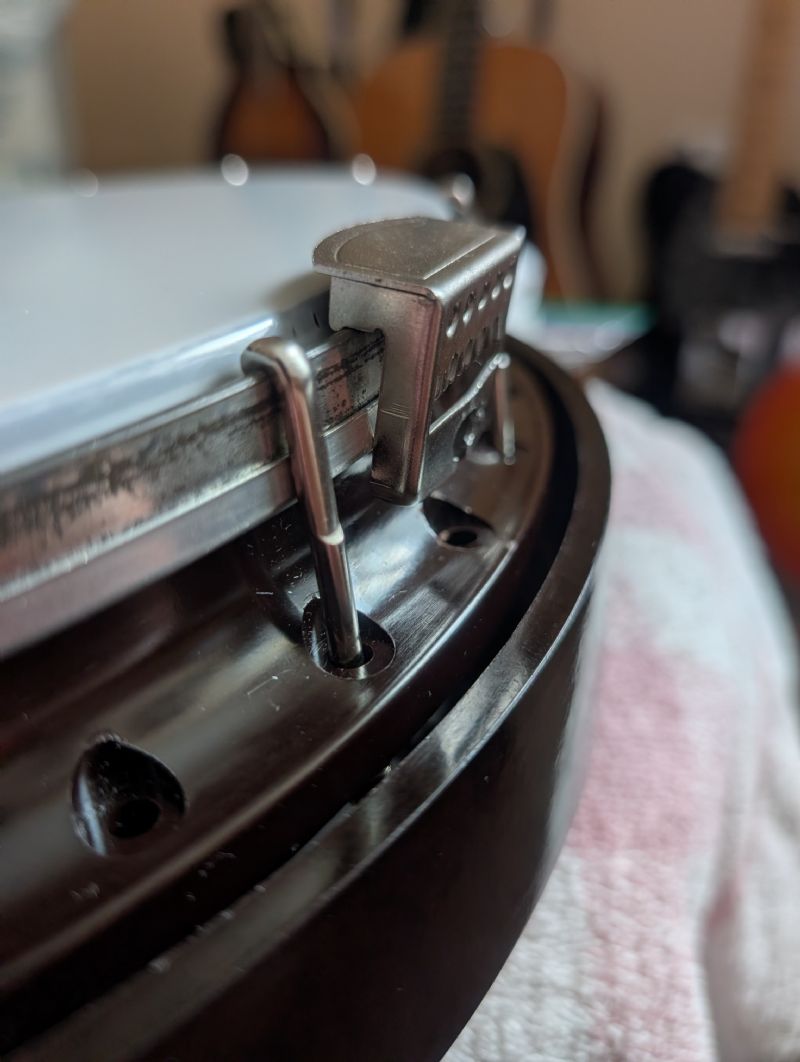
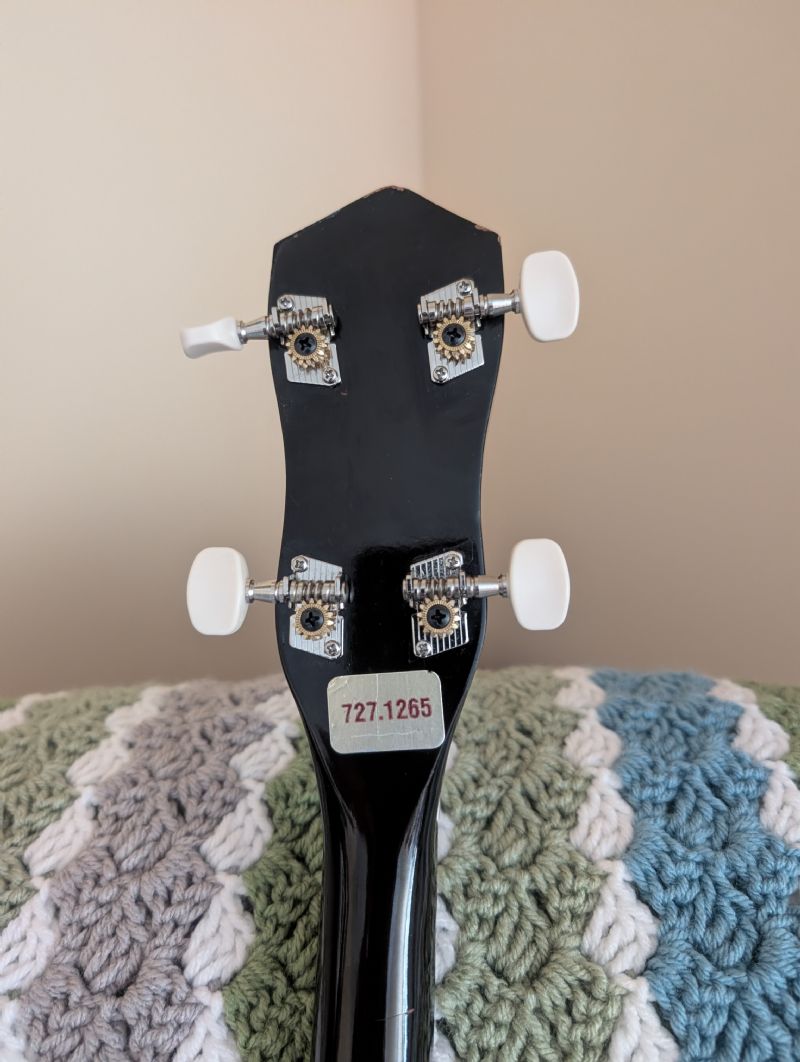
Hello all, I just picked up this Kay banjo and I'm in the process of trying to get it setup and playable. If you notice I replaced the tuners and one is a little lop-sided...oh well, it works. I have to get a tailpiece screw because someone just had a regular screw in it and it was not holding it secure. I'm not sure if the tailpiece sits exactly how it's supposed to when I put a couple strings on to check it out, it looked like the strings were touching the head, which I don't think that's correct, but I've never worked on a banjo. It had another issue which I corrected where the large wooden dowel came loose from the neck heel and had to be reglued, now it's secure. What is the proper position for the tailpiece? I guess the proper screw for it will pull it down level? Thanks for any comments or advice. By the way...is there a more modern tailpiece that will work? The original is a pain to string up IMO.
Edited by - ColeJRSmith on 07/19/2026 11:25:15

I can’t help with any advice but a Bakelite banjo sounds pretty cool to me. A fun project!

You can use a bolt from Home Depot to attach the tailpiece. Just file off two sides of the head so it fits in the notch. If you get a bolt exactly the right length, you can use an acorn nut to attach it.
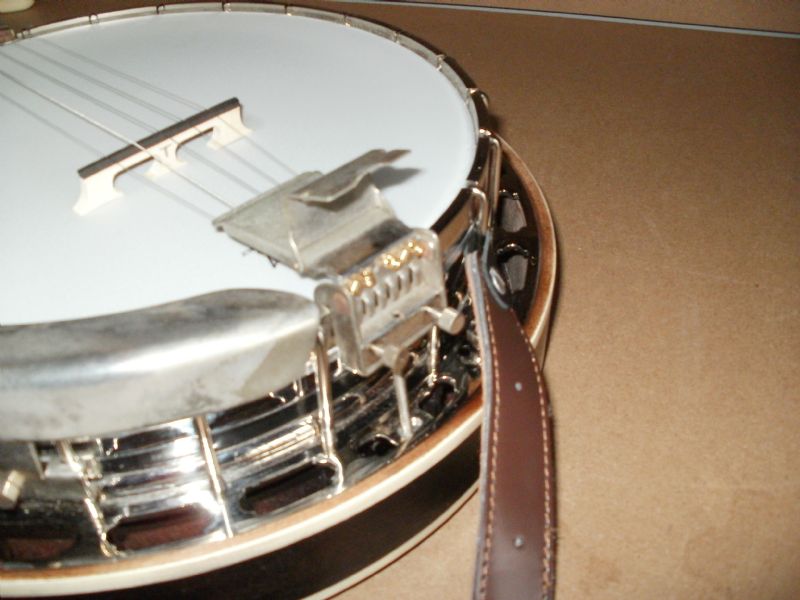
As far as the tailpiece is concerned, try stringing it with ball end strings. It's far easier than trying to fiddle with the loops around the hooks, then getting the strings through the holes. That process would make a preacher swear. D'Addario and GHS both make loop end banjo strings. Just run the string through the hole and tune it up. Here's a picture of my RB150 with the tailpiece strung that way.
ColeJRSmith
Where does it say Kay? I have never seen a Kay with a Resotone rim.
This one looks like a Chicago brand banjo made by Fred Gretsch Enterprises after Harmony went bankrupt. Fred Gretsch purchased rims from the manufacturer that supplied Harmony with their Resotone rims and used cheaper hardware and necks to supply music distributors with thousands of affordable banjos, filling the void left by Harmony.
Of course the early 1980's was not a good time for acoustic instrument sales and Gretsch lost interest in banjos and ramped up production of other instruments.
Bob Smakula
smakulafrettedinstruments.com
Edited by - Bob Smakula on 07/19/2026 14:26:02
Well, you're correct that the strings are NOT supposed to touch the surface of the head.
The problem on your banjo is the banjo has too high a crown in the head. When the head is pulled tight, the tension band/hoop/ring that pulls down on the head has come down so low that the tailpiece which rests on those little "feet" on top of the tension hoop is way below the plane of the TOP of the head. Since this is where your tailpiece must rest, it leaves the strings dragging on the surface of the head.
The correct solution would be to buy a new head specifying a LOW crown (if it's an 11" diameter head, no problem, low crown heads exist for 11" -- if it's not an 11" head than you probably can't find a low crown head). A low crown head will get tight much quicker and without the tension hoop pulling down so low. The top of the tension hoop will ride slightly ABOVE the plane of the head, and the strings will no longer drag.
As already mentioned you can adapt a hardware store screw of the proper length to drop down through that hole in the bakelite rim, and fastened with a nut (and perhaps a washer to keep the nut tight) such that the tailpiece is secured in place, resting on the top of the tension hoop.
The only other solution I can think of is to buy a repro "Grover Presto" tailpiece, the ones made in Asia aren't terribly expensive, maybe $25? Without needing to change the head or the position of the tension hoop, a Presto doesn't rest on anything metal. It is supposed to "float" maybe 1/8" ABOVE the surface of the head. It has no "feet". So the strings don't drag on the head.
There is one other old Grover brand tailpiece no longer sold, the 1937 Gibson catalog called it "banjo uke" tailpiece # 23. Very very basic with 5 metal tabs to hook loop end strings. It's just a piece of plated brass with two bends in it so it looks like a letter "S" or a number "5". It has no feet, so like the Presto it can just float above the surface of the head depending how far down you pull it with the hanger screw. I have one of these in my old parts box, maybe you can find one near you.
To tell you the truth I didn't know what it was... I just thought it was a good project and starter banjo.
quote:
Originally posted by The Old TimerWell, you're correct that the strings are NOT supposed to touch the surface of the head.
The problem on your banjo is the banjo has too high a crown in the head. When the head is pulled tight, the tension band/hoop/ring that pulls down on the head has come down so low that the tailpiece which rests on those little "feet" on top of the tension hoop is way below the plane of the TOP of the head. Since this is where your tailpiece must rest, it leaves the strings dragging on the surface of the head.
The correct solution would be to buy a new head specifying a LOW crown (if it's an 11" diameter head, no problem, low crown heads exist for 11" -- if it's not an 11" head than you probably can't find a low crown head). A low crown head will get tight much quicker and without the tension hoop pulling down so low. The top of the tension hoop will ride slightly ABOVE the plane of the head, and the strings will no longer drag.
As already mentioned you can adapt a hardware store screw of the proper length to drop down through that hole in the bakelite rim, and fastened with a nut (and perhaps a washer to keep the nut tight) such that the tailpiece is secured in place, resting on the top of the tension hoop.
The only other solution I can think of is to buy a repro "Grover Presto" tailpiece, the ones made in Asia aren't terribly expensive, maybe $25? Without needing to change the head or the position of the tension hoop, a Presto doesn't rest on anything metal. It is supposed to "float" maybe 1/8" ABOVE the surface of the head. It has no "feet". So the strings don't drag on the head.
There is one other old Grover brand tailpiece no longer sold, the 1937 Gibson catalog called it "banjo uke" tailpiece # 23. Very very basic with 5 metal tabs to hook loop end strings. It's just a piece of plated brass with two bends in it so it looks like a letter "S" or a number "5". It has no feet, so like the Presto it can just float above the surface of the head depending how far down you pull it with the hanger screw. I have one of these in my old parts box, maybe you can find one near you.
If the Grover Presto tailpiece doesn't attach to anything metal, how does it attach to make it stable? I assume the one screw isn't the only way it attaches to the banjo.
The Presto is a terrible piece of mechanical design as far as securing it. The single hanger screw is all there is to regulate the overall height of the tailpiece above the head. The string tension pulling the opposite direction is all there is to hold it in place, but string tension is enough. The strings pull the tailpiece toward the neck; the hanger bolt pulls/holds the tailpiece stationary at the 6 o clock position on the pot. In fact, you can move such a tailpiece side-to-side with your thumb and finger of one hand. String tension is often enough to pull it back to where it belongs. When you string the banjo up, you have to hold the tailpiece sort of centered in the 6 o clock position so that the strings will line up over the fingerboard without being "cocked" to one side or another.
For decades I thought/assumed that the tailpiece was supposed to rest on the top of the tension hoop to sort of secure it place. I learned here on the BHO that the best tone performance seems to be with the underside of the tailpiece floating well above the tension hoop. So that's how all my banjos are set up now.
It's true there are several types of tailpieces with "feet" under the tailpiece, and they should indeed rest on the top of the tension hoop. They are a more secure design. Your tension hoop however has pulled downward so far that setting a footed tailpiece will sit so low that its underside is actually touching the head, which no one recommends. So your fundamental problem is how low the tension hoop is positioned, which can only be corrected by a lower crown head if you can find one.
Some tailpieces (very good tailpieces in fact) don't have "feet" but they do have as many as three screws that bear against the outer face of the tension hoop to give a good solid contact with the tension hoop. Some brands of banjos even had screws that threaded into the tension hoop outer face to give a SOLID connection.
But almost all tailpieces are made with the presumption that the top surface of the tension hoop will ride at least a bit higher than the plane of the head. I can't think of a tension made to work correctly when the top of the tension hoop is significantly LOWER than the plane of the head.
quote:
Originally posted by The Old Timer
The correct solution would be to buy a new head specifying a LOW crown (if it's an 11" diameter head, no problem, low crown heads exist for 11" -- if it's not an 11" head than you probably can't find a low crown head). A low crown head will get tight much quicker and without the tension hoop pulling down so low. The top of the tension hoop will ride slightly ABOVE the plane of the head, and the strings will no longer drag.
Resotone banjos require 10-7/8" diameter heads. Measure the height of the tension hoop to determine the crown height. Most, but not all, Chicago banjos have a 3/8" tall tension hoop and a low crown is necessary for the parts to line up properly. My shop has several banjo head options available for purchase in that size
Bob Smakula
Edited by - Bob Smakula on 07/19/2026 18:38:01
Those tuners are not original to this banjo—and they were poorly installed.
These Bakelite banjos are just cool regardless if they say Kay or not.
I’ve had a few. I am just finishing a replacement neck for one now. Compliments to you for taking on the project. Everyone who plays one is surprised by the sound quality.
Probably not trading in their Gibsons but these are great around the campfire.
The rub on them is the neck is too narrow at the nut. I’m resolving that here with a new neck. But that’s another conversation….i have a ton of tools and time.
Maybe get a new tailpiece that is more user friendly, even if you have to make one. Buy or make some new bridges from 1/2 tall to 3/4. Use what works for your action.
Use the tuners you have if they work. This isn’t a beauty contest.
Of course make sure your head is correct.
quote:
Originally posted by GallaherThese Bakelite banjos are just cool regardless if they say Kay or not.
I’ve had a few. I am just finishing a replacement neck for one now. Compliments to you for taking on the project. Everyone who plays one is surprised by the sound quality.
Probably not trading in their Gibsons but these are great around the campfire.
The rub on them is the neck is too narrow at the nut. I’m resolving that here with a new neck. But that’s another conversation….i have a ton of tools and time.
Maybe get a new tailpiece that is more user friendly, even if you have to make one. Buy or make some new bridges from 1/2 tall to 3/4. Use what works for your action.
Use the tuners you have if they work. This isn’t a beauty contest.
Of course make sure your head is correct.
I think the point is that none of them say "Kay".
My friend Lasse had one; I think it was a Harmony. It sounded great. Gold tone has a rather similar composite banjo AC-traveller and AC-5 (with resonator). You can see and hear it on the net. Gold tones version sound very close to how I remember Lasses. They are in the cheapest end, but common for them is that they have a VERY likable and "rounded" tone, that just sounds right. (In my ears). Steen
Replacing the tailpiece @ $25 is 1/4 to 1/2 to total monetary value of this banjo.
The Waverly tailpiece you have is fine. It was designed to be able to attach any kind of string or be used on any kind of banjo. It works, keep it. Might be the best part of this banjo.
If you are going to make any changes, replace the head with the correct size and crown (consider that the cost of a head proportional to the total "value"-- might not be worth it). Otherwise, just get a bolt from the hardware store (or your garage) for the tailpiece. You might find (or fabricate) something to put between the tailpiece and the hoop to raise it up if you think it is problem.
Save your $25 for a better banjo.
quote:
Originally posted by ColeJRSmithI put a couple strings on to check it out, it looked like the strings were touching the head, which I don't think that's correct, but I've never worked on a banjo. It had another issue which I corrected where the large wooden dowel came loose from the neck heel and had to be reglued, now it's secure. What is the proper position for the tailpiece? I guess the proper screw for it will pull it down level? Thanks for any comments or advice. By the way...is there a more modern tailpiece that will work? The original is a pain to string up IMO.
You don't mention the bridge-- The strings SHOULD be touching the head, if there's no bridge under them!
You say you reglued the dowel to the neck. What's the relationship of the plane of the fingerboard to that of the head, now? Do you have the original attachment hardware, and do you know if you've re-installed it correctly?
That style of tailpiece is indeed hard to string, if you're using loop-end steel strings (>95% of the banjo strings sold, I'd bet!), and there are several better choices to be found on Amazon for under $20, but you do have a bunch of other things to deal with before thinking about that.
Can you post some more photos? I'd like to see some closeups of where the heel attaches to the rim, on the inside of the rim as well as the outside. How about laying a straightedge on the fingerboard, extended over the head, and shooting that from the side to show the angle of the neck?
That is a Harmony neck on that banjo. These were sold under many names and none at all depending on the distributor.
Those tuners are much later and either replace friction tuners or original Waverlys that wore out due to lack of lubrication. Although I have a period quartet of Waverly tuners from the '50s–'60s, I can't recommend installing them on any but a valuable vintage piece that needs them. If those tuners work well, leave them alone. There is also the possibility that this banjo was assembled post-bankruptcy by one of the companies that scooped up parts during one of the many liquidation sales—but these tuners are installed poorly.
Waverly tailpiece is probably original. I don't agree that it's the best part of the banjo but I see no reason to replace it. I have similar Grover and Elton tailpieces with fingers instead of the Waverly attachment scheme.
Properly set up with the right head, Bakelite Resophonic banjos don't sound bad. I like them better than the "composite" imitations being sold nowadays.
I straightened out those tuners and like you said the banjo isn't worth good vintage parts. I like working on a project just to get a playable instrument to learn on and have around for fun. I probably will change the head to the correct one...I don't mind spending a little on it. I have a brother-in-law who's a bluegrass musician so I can get some parts cheaper.
Way to go. Just get the car started and worry about nothing, it’ll get you a good 30 mpg during these hard times.
That is the very first banjo I ever played. I learned up picking from Pete Seeger’s book
The capo spike we used was a real HO model train kind. Use your noggin.
There’s a users group here. I think.
We had strap hinges, I think.
Everything you have is entirely adequate
The enjoyment you can get is priceless and the banjo can play real clawhammer or up picking or other names in different variations of same and then even real BLUEgrass.
Up picking, down stroke or claw and bluegrass all have the same basic 4 beats or rests or combination of such as you move forward
Make up your own with your ears, as you go.
Stuff a rag, towel or whatever to mute the banjo for neighbors or loving ones.
Resist any rigidity in any attitude even your own. Get in there. Make your own resonator from hubcap or Tupperware, whatever works
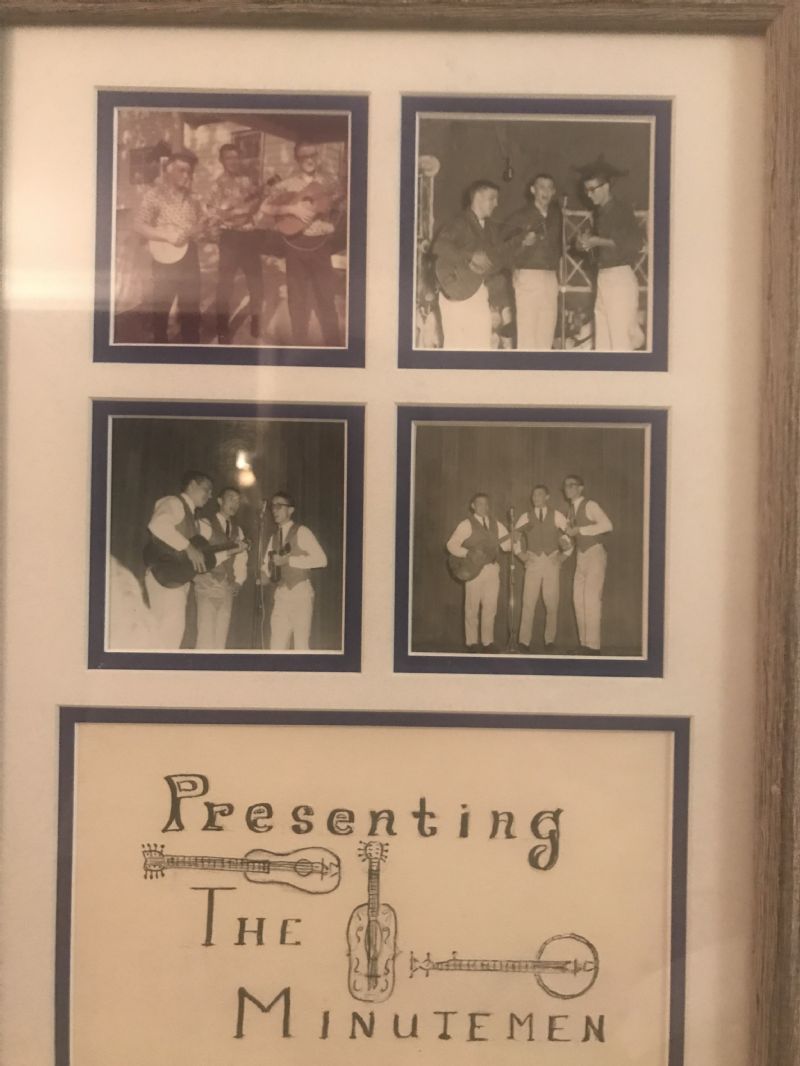
Here’s a photo:
( ):)====‘== : :]
Edited by - Helix on 07/21/2026 18:58:03
Terms of Use | Privacy Policy | Privacy Consent (EU/GDPR Only)
Copyright 2026 Banjo Hangout. All Rights Reserved.


