I know theres a lot of really good teachers/players on this site..has anyone ever done a video on how to take a simple melody and turn it into a Scruggs style song? Like how does one figure it out, step by step, the nuts and bolts of doing an arrangement? For example: how would one take two simple songs, one in 4/4 and the other 3/4, something like You are My Sunshine and Down in the Valley, focusing on the principles so that one could eventually do it with any simple melody...would make for an awesome instructional video, IMHO.

I don’t know if there is a video, but the book/cd combo “Splitting the Licks” by Janet Davis is an excellent resource for what you want .

Try this video from Eddie Collins: youtube.com/watch?v=oc0RPoNL0HU
I don't know how anyone else does their arrangements, but years ago I learned how by first listening to the song, getting the feel of the melody. Then I figured out the key and the chord sequence (sometimes I could find that elsewhere). Then I took only the melody and tabbed it out, making sure that melody notes were in the right bar and on the right count. From there, I figured out I could slide into a melody note and finish off with a partial roll or do a hammer-on into a melody note and finish off with a partial chord. At the end of a musical phrase, I'd find a hot lick that would fit.
After doing that numerous times on numerous songs, I found I didn't have to tab it out, I could just use "musical phrases" that I'd figured out and plug them into any new song I came across.
I agree with Sherry. The first thing to do is to identify the chord sequence and the melody (you can do that in either order). The two songs you've named are both vocal numbers, so the melody is easy: it's the notes the singer sings, with spaces in between.
Tab out the melody only, leaving the spaces. From there, you can fill in the rolling notes.
... and if you [i.e. me] don't have the ability to match the sound of the voice to the sound of the instrument [and/or vice versa]???
Edited by - Owen on 07/05/2026 12:06:23
Alan Munde has two instructional products that address this very topic.
One is the DVD, Creating Your Own Bluegrass Banjo Solos. The other is his book, Getting into Bluegrass Banjo, which contains a chapter or chapters on applying what's taught in the book to developing your own solos.
His website is almundesbanjocollege.com
The previously mentioned Splitting the Licks by Janet Davis is exactly about this.
In my opinion, the basic requirements for working out your own solos are:
Those basics can get you to a solo that's musically appropriate, though maybe not totally expressive of the melody. The next level is being able to figure out how to play just enough of the melody to be recognizable while either having the melody notes fit into roll patterns you know OR adjusting your picking (including breaking out of established or practiced patterns) to hit melody notes and surround them with chord tones or other pleasant sounding notes.
Of course there's more to it than that. And many of us have discussed this topic at tremendous length before. So search the Hangout for previous discussions of creating your own solos or playing melody.
Good luck.
quote:
Originally posted by Owen... and if you [i.e. me] don't have the ability to match the sound of the voice to the sound of the instrument [and/or vice versa]???
Perhaps another hobby would be suitable. Might I suggest hockey? 

Seriously, can you hum along with the melody, even if your voice isn't great? Can you HEAR the melody? Is it sufficiently in your head so that you could hum or sing it without the record? It doesn't need to be in the same octave - it just needs to maintain the correct relationship between the notes.
Once at that point, the task of finding the melody notes becomes pretty straightforward. Generally they're all below the fifth fret. A lot of 'em are found in the first three frets.
Edited by - eagleisland on 07/05/2026 12:59:45
I had my vocal range assessed some months back ..... it's 6 notes .... the way I see it, I should be able to stay in "the same octave" without a lot of effort. 
So far, the link between being able to hum/sing/whistle a song and match notes with an instrument escapes me. I can take something like Jingle Bells or Happy Birthday and might get the first four or half a dozen or so [melody?] notes to sound passable, but beyond that, nothing sounds right. Just replicate whatever I did with those first 4 or 6 one might advise? Sounds reasonable, 'cept, for whatever reason, I can't make it happen.
Anyhow, my intention isn't to hijack the thread. IF conventional advice works for most people then I guess the universe is unfloding as it should. 
Sherry, Skip, and Ken have outlined the procedure. I’ve done some easy arrangements with tutorials. Here are a couple - you hopefully might glean some tips from them
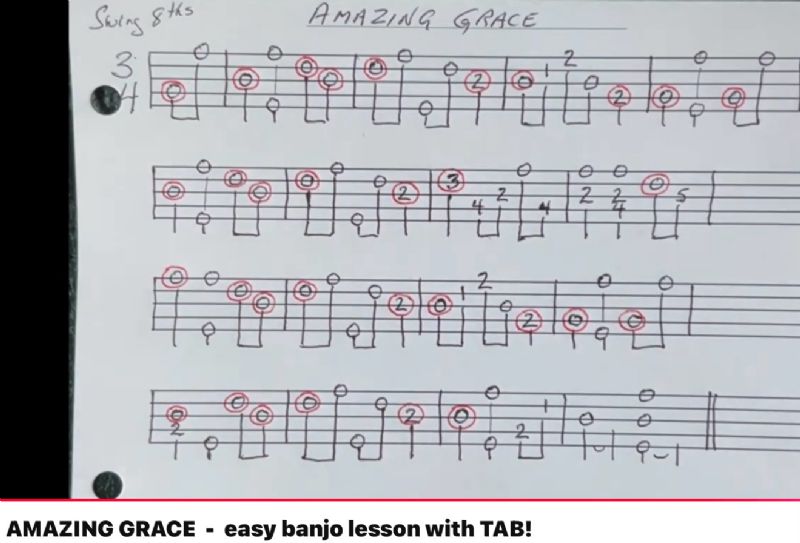
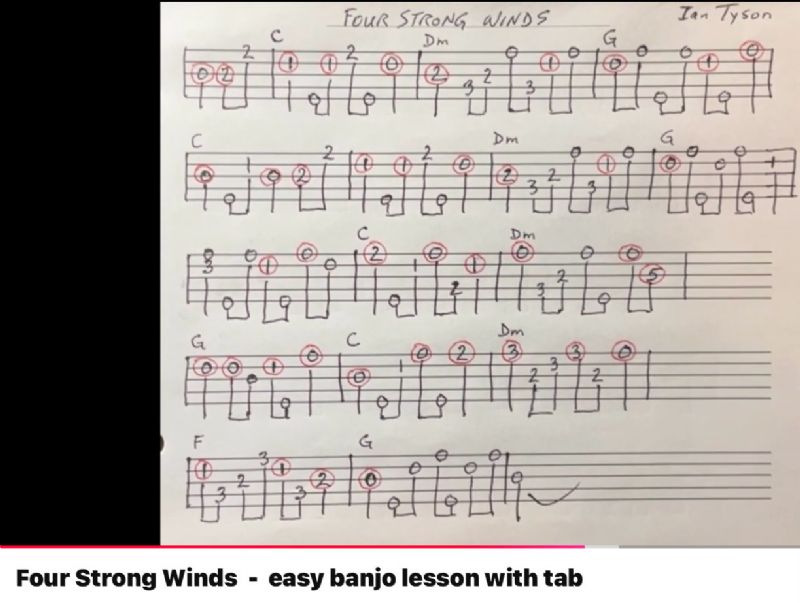
Edited by - chuckv97 on 07/05/2026 15:25:14
Sorry, I missed posting the one you mentioned, Patrick,,, here it is
Patrick, there are two books I would strongly recommend: first, Jack Hatfield's You Can Teach Yourself Banjo By Ear; and second (as mentioned above), Janet Davis' Splitting the Licks. Both have one thing in common: both start you off weaving the simple melody line into the same TM TIM TIM forward roll (on the roll's first, fourth, and seventh notes). Only then do they introduce alternate rolls, quarter notes, slurs, phrasing licks, etc. The difference is that Hatfield starts you off with the roll and no melody (over chords only), and then gradually swaps in melody notes. Davis starts you the other way: with the melody alone, and then adds the roll fill around it. It's valuable to try it both ways, to see which one clicks with you. (I compare it to painting a sign. Do you paint the letters first and then fill in between with the background color, or do you color the entire background first, let it dry, and then paint the letters over it?)
I thought 'arrangement' was some iteration of, 'intro, Verse, Chorus, break, 2nd verse, 2nd chorus, 2nd break, or outro?' Of a song you already know.
quote:
Originally posted by NopixI thought 'arrangement' was some iteration of, 'intro, Verse, Chorus, break, 2nd verse, 2nd chorus, 2nd break, or outro?' Of a song you already know.
That'd be the colloquial 'rangement out west,,,,,
Now a Waltz is different. A Waltz is hook, hook, turn-around, hook. In 3/4 time. How many do you want by bedtime? To me they are a fiddler's curse. Playing the exact same notes every time is not in me. Thank goodness! Otherwise there would be no new Waltzes. Hahahaha
Edited by - Nopix on 07/05/2026 19:03:57
Thanks everybody! Knew I could count on you all...will probably check out Janet Davis' book as it sounds closer to what I am trying to do/understand and that video by Eddie Collins was very helpful. I have tried to figure this out on my own from dissecting various tabs after ascertaining the melody notes but I cant seem to detect a discernible pattern framework to apply it generally to any given song...yet...sometimes being old, stupid, and stubborn can be beneficial..lol
quote:
Originally posted by OwenI had my vocal range assessed some months back ..... it's 6 notes .... the way I see it, I should be able to stay in "the same octave" without a lot of effort.
So far, the link between being able to hum/sing/whistle a song and match notes with an instrument escapes me. I can take something like Jingle Bells or Happy Birthday and might get the first four or half a dozen or so [melody?] notes to sound passable, but beyond that, nothing sounds right. Just replicate whatever I did with those first 4 or 6 one might advise? Sounds reasonable, 'cept, for whatever reason, I can't make it happen.
Anyhow, my intention isn't to hijack the thread. IF conventional advice works for most people then I guess the universe is unfloding as it should.
Owen, try this. Start with the chords. If you know, or can figure out, a song's chord progression, finding the melody is much easier. A lot of a song's melody will be notes in the chord you are holding at the time. If not in the chord, the melody will be in a few (but only a very few) other frets adjacent to the chord. The relationship between these other frets and the chord will remain the same for all chords of the same shape. Besides, identifying the chords first prevents you from starting the melody on a note from an odd key (as any song can start on any note, if you don't care what key you're in).
I can show you some approaches.
quote:
Originally posted by NopixI thought 'arrangement' was some iteration of, 'intro, Verse, Chorus, break, 2nd verse, 2nd chorus, 2nd break, or outro?' Of a song you already know.
Planning the structure of a song is just one of the several actions included in the concept of "arrangement" in music.
Arrangement also includes the assignment of parts in a song (which voice or instrument sings or plays which part) as well as the writing of the various parts. This includes writing or working out the harmonies as well as writing specific musical lines for various instruments (when the instrumental parts aren't entirely improvised).
And because it includes the writing of parts, "arranging" a song for five-string banjo also means creating the totality of what the banjo plays. In other words, creating the banjo version of a song is "arranging."
Terms of Use | Privacy Policy | Privacy Consent (EU/GDPR Only)
Copyright 2026 Banjo Hangout. All Rights Reserved.