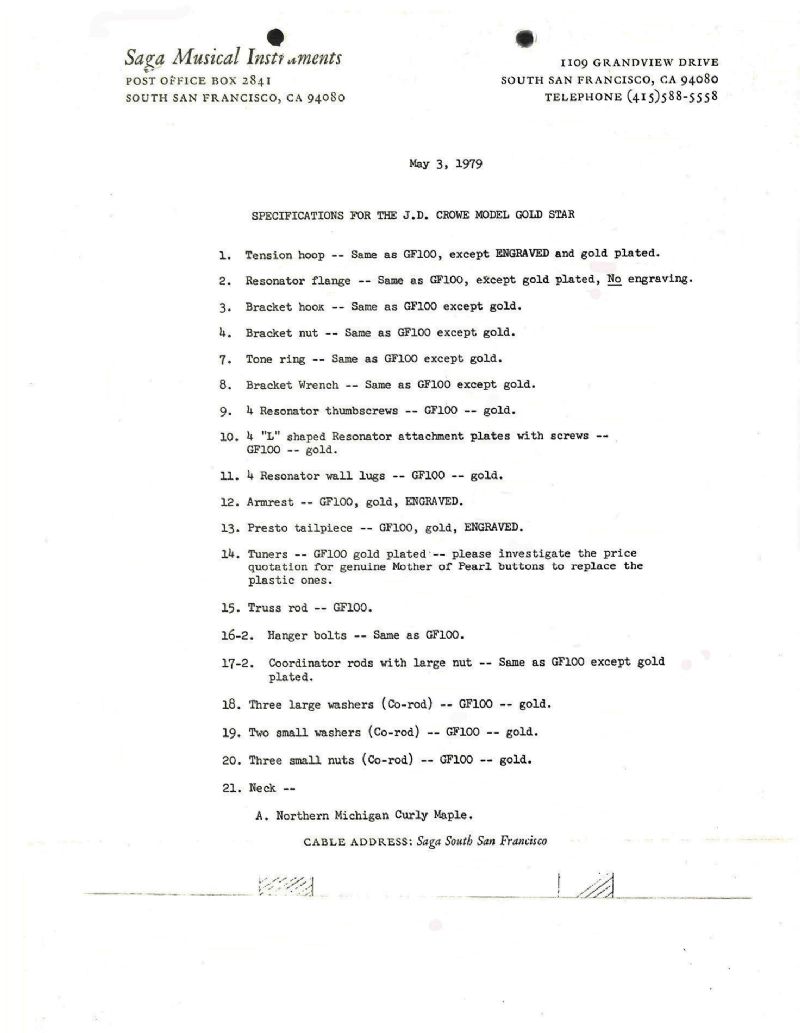
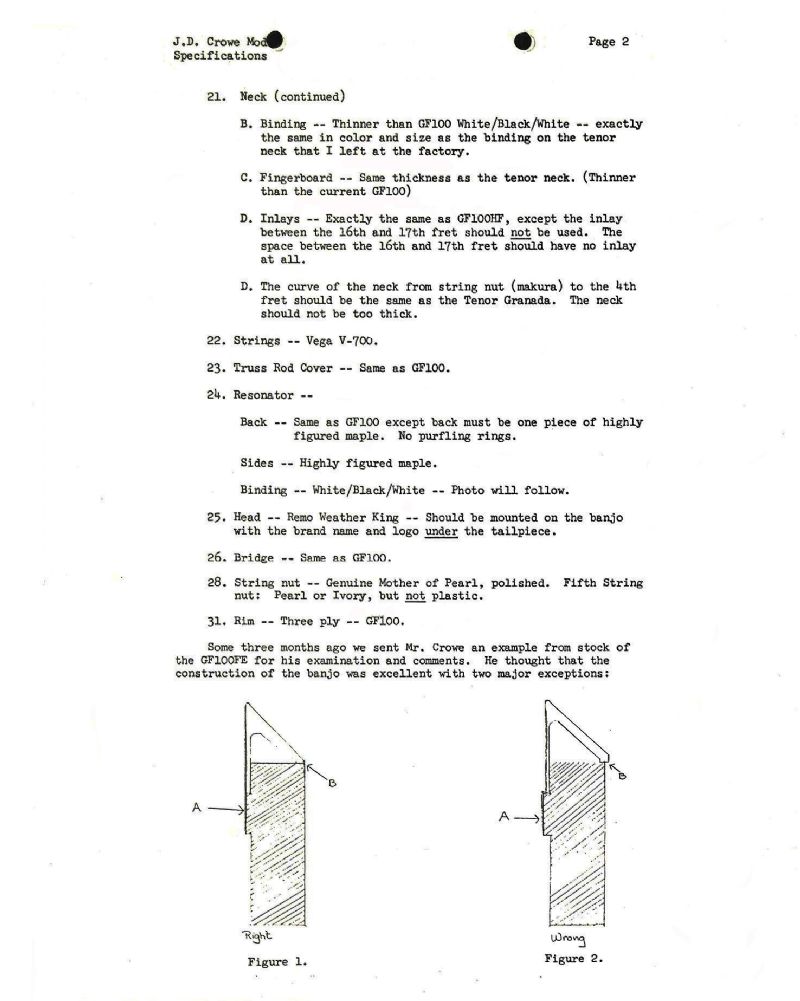
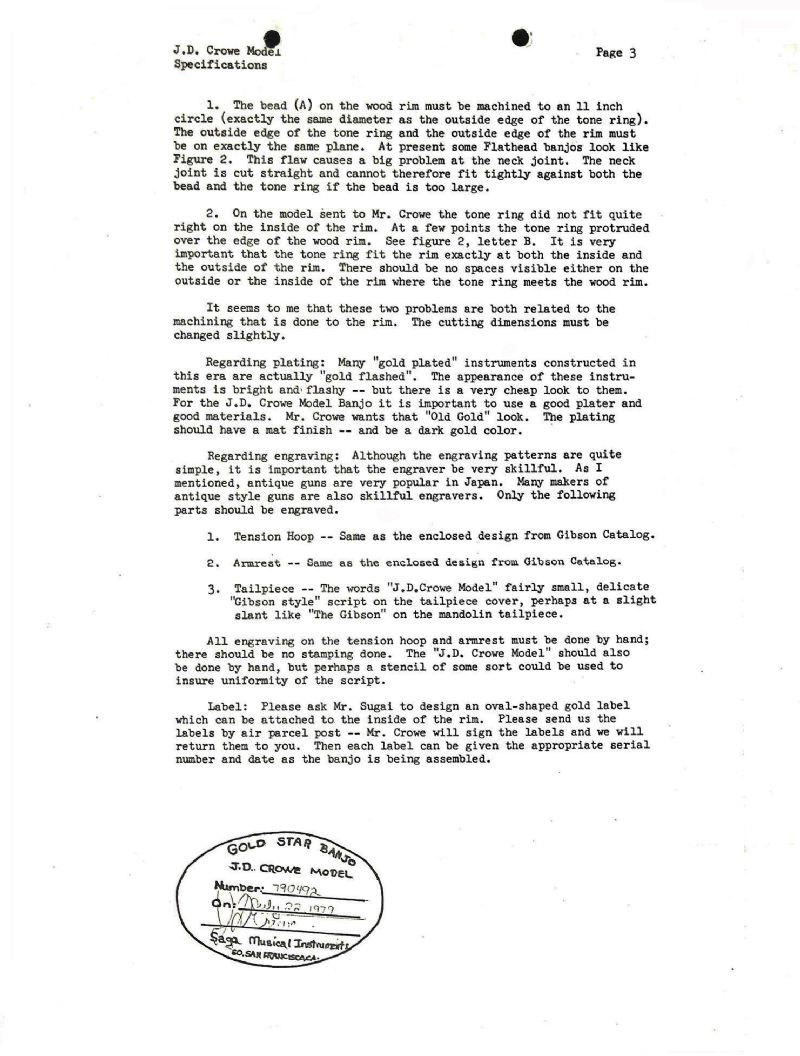
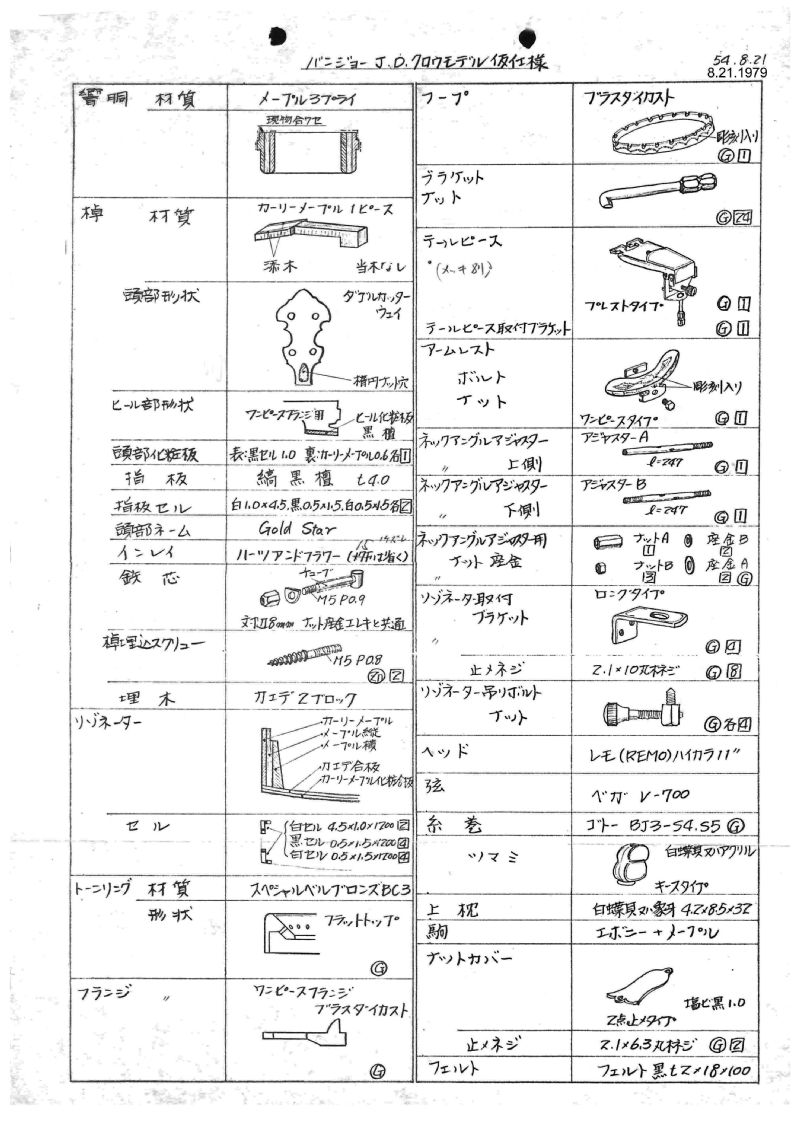
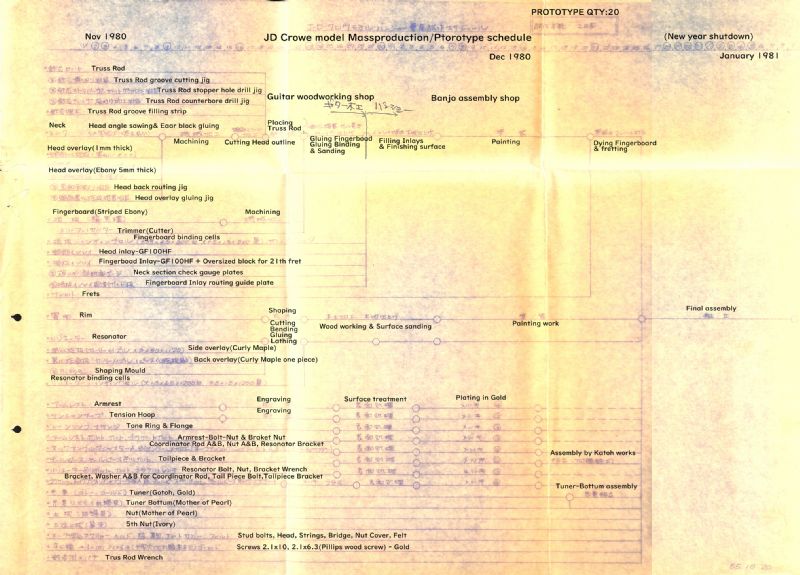
I contacted Mr. Richard Keldsen of Saga Musical Instruments to request permission to make the 81 JD Crowe model materials public. Just the other day, he gave his approval, noting that the documents serve as excellent evidence of our development efforts and that he saw no reason to withhold them from the public.
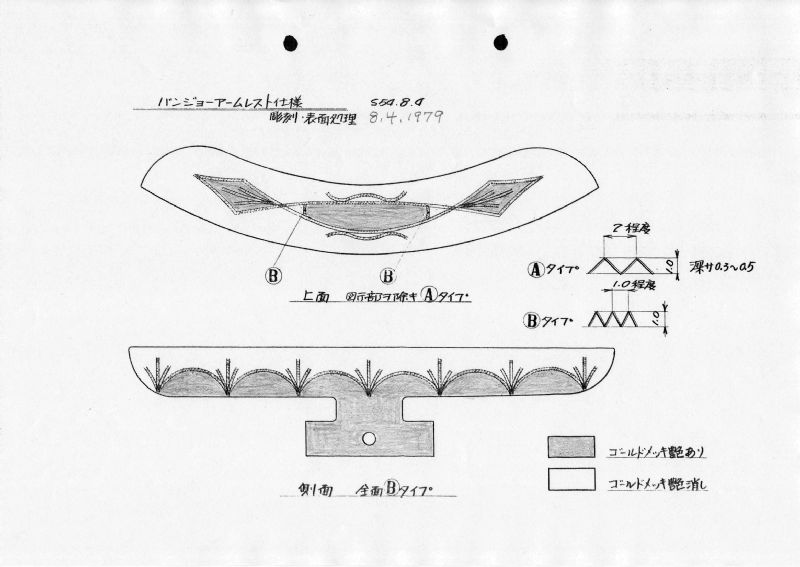
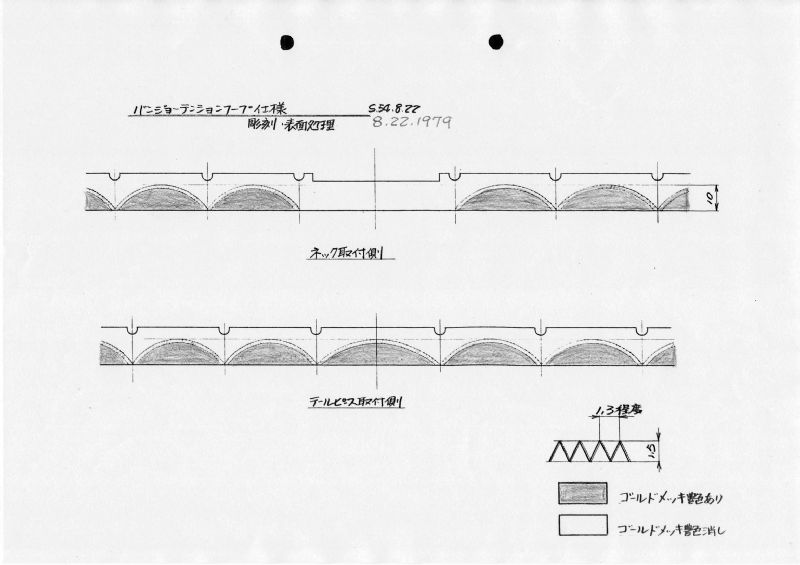
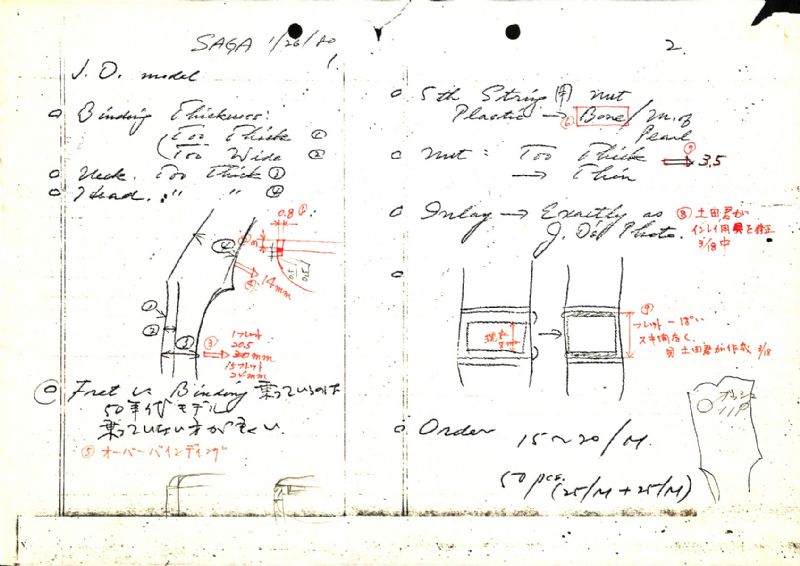
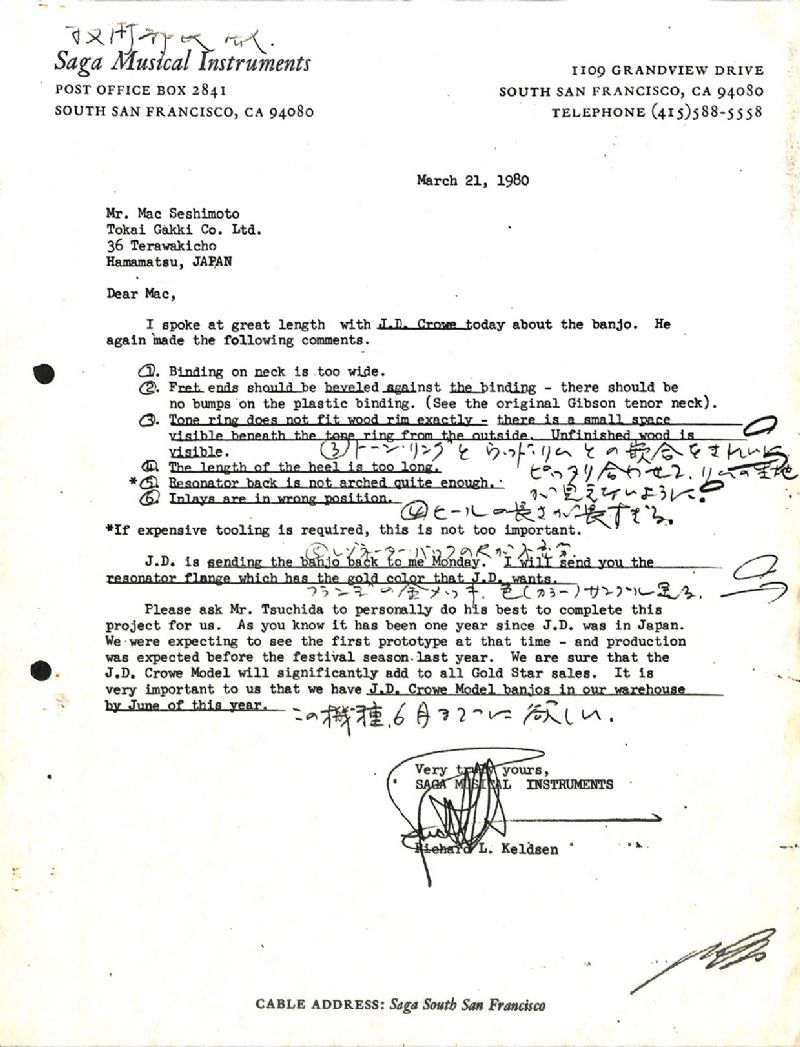
The factory that manufactured the last vintage Gold Star banjos is still in operation today, and the young man who worked on those banjos back then is now the owner. I learned of the factory's continued existence three years ago and discovered that they had preserved the original banjo parts and production records. Upon reviewing these documents, I found not only the blueprints but also correspondence—including the initial request from Saga regarding the development of the '81 Gold Star JD Crowe model and mails demonstrating JD Crowe’s deep involvement in the project—as well as the subsequent production preparation documents from the manufacturing side (Tokai). The materials date from May 1979 to November 1980, meaning about 47 years have passed since their creation. I was responsible for the blueprints, process planning and the specification for the GF-100 and '81 JD model, as well as the metal surface finishing for the '81 JD Crowe model. Hideo Matsumoto handled the inlay design and served as the project leader for the '81 JD Crowe model.
While the total production figure for the '81 JD Crowe model remains uncertain, the attached documentation suggests a total of 70 units—comprising an initial batch of 20, followed by two months of production at a rate of 25 units per month, but unclear. A key point to note is that all '81 JD Crowe models were built to prototype specifications. In contrast, the '84 JD Crowe model featured wood components that adhered more faithfully to the original specifications—utilizing specific maple quality and finishing—and was manufactured at a different workshop(Eiich Sumi); additionally, the flange and tension hoop were changed from brass to zinc die-cast, and the tone ring featured a gold-plated mirror finish. Apart from the tailpiece, the other metal parts and inlays were the same as those on the '81 JD Crowe model.
Unfortunately, the schedule data has become compressed and is difficult to read.

Extremely interesting! Thank you.

Very interesting! Thank you for taking the time to post this information!
Russell Carson will like this
Terms of Use | Privacy Policy | Privacy Consent (EU/GDPR Only)
Copyright 2026 Banjo Hangout. All Rights Reserved.