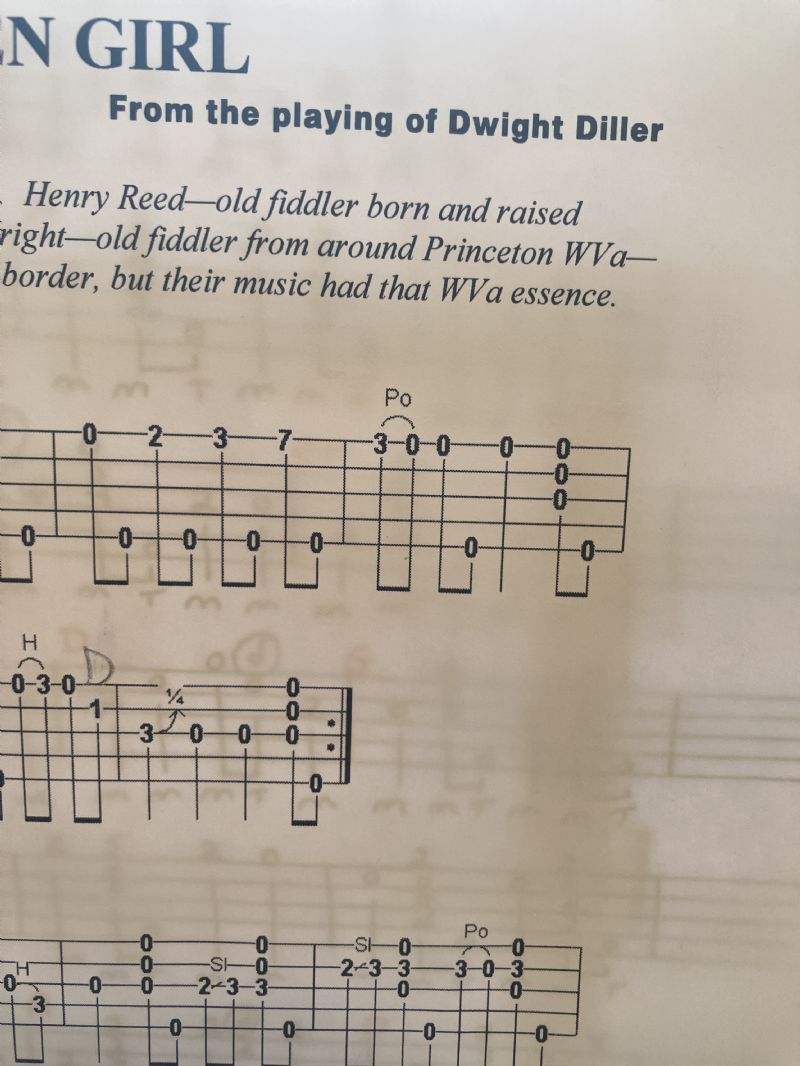
This has come up for me before where intuitively I would use my pinky, everyone I see playing it is typically shifting their first or second finger down instead.
take below as an example. The 2-3-7 to me seems natural to use index - middle-pinky (especially with the pull off coming right after), yet everyone I have ever see playing it just moving their hand up and down the neck.
Is this for a specific reason (the inbetween slides perhaps) or more not everyone trusting their pinky strength/hand strength?

There is certainly no "right" way to do it.
Funny story: I took classical guitar lessons when I was a kid, and when my teacher learned I was interested in picking up the banjo, he told me he was concerned that I would develop a poor right hand technique which would lead to injury.
It's also conventional in classical guitar to use the pinky to fret three frets beyond your index finger. My teacher always told me this was proper and that it had to do with economy of motion, which in many circumstances is true.
I still use my pinky on some occasions when I pick my banjo. But I also often use my ring finger instead. It's stronger, and sometimes that feels more comfortable.
I think how a man picks his banjo is his own business :) :)

TScottHilton i started out with violin which probably ingrained it in me as well. Ideally I know you want both in your repertoire- just curious if there is a reason beyond hand stretching or pinky strength. The one instance where I definitely stray towards moving the hand is if it allows for chord structure. Although if I am playing an A chord between the 5th and 7th fret I am using my pinky on the 1st string anyways.
What Tyler said. Go for economy of motion.
For all you know, your instinct to keep your hand in one place to use index at 2, middle at 3 and pinky stretched to 7 may well be better technique than others you see moving their hand up and down the neck for who-knows-what reason. By your description, your middle finger, having fretted a note at 3rd fret in the first full measure shown, would be in position to execute the 3-0 pull-off in the following measure.
I tend to default to the pinky on the 1st string for most things. That 2-3-7 run on the 1st string can have the 2-3 moved to the 2nd string (depending on tuning) for further economy...and since there's an open-string 5th note, getting back to the pulloff shouldn't be an issue.
I usually let comfort be my guide and I may change strategies several times when working up a tune. I use my pinky a lot, regardless of style.
When playing, I'm using all 5 fingers on my left hand, where needed.
Otherwise I simply couldn't play my music.....
Use all the fingers you can, your nose too if that will work. Have to say on guitar and banjo use all you can, not only the pinkie but the thumb if you have to fretting. Learn the scale and then run your scales up and down the neck using all 4 fingers. I dont see how anyone can do adequate single string lead playing without using the pinky.
Taking it to the extreme, as he often did, Gus Cannon added in the Pinky on his picking hand (he played mostly ragtime finger style) to the other 4 fingers he used when he did tremelos.
I'm surprised no one has mentioned LH grip. If you use more of a classical guitar grip (thumb on back of neck, hand rounded like holding a ball), it keeps your ring and pinky over the fretboard. If you use a fiddle grip (neck in crook of thumb, palm facing body), shifting with the index/middle may be easier than rotating the hand to bring the pinky into play.
I tend to use whatever fingering works to give me a satisfactory result. I never think about it. Since I use standard C tuning rather than double-C for most tunes, my left hand fingers may be somewhat more active, and indifferent ways, than for those using double-C. Do what works for you; don’t lose sleep over it
banjoboyd that is interesting because I was thinking the opposite- where the “fiddle grip” might be more difficult for shifting due to maneuvering around the 5th string tuner.
Using fingers that set me up for the following passage is one thing I do.
I've played a number of other instruments that require a good amount of left hand dexterity, for example Irish tenor banjo where I used a finger per fret rather than the mandolin fingering scheme- as such my little finger got a real workout.
As Bill said: I tend to use whatever fingering works to give me a satisfactory result. I never think about it.
I used to switch from tenor banjo to mandolin with their different fingerings without thinking about it. It was more about getting to the required fret most economically rather than thinking about which finger to use.
Edited by - R.D. Lunceford on 07/04/2026 22:10:38
Economy of motion relates not to a singular note, rather the pattern within which that note occurs.
Options open up when we bring the whole fingerboard and alternative fingerings into play.
The pinkie is always available to use and sometimes it’s the efficient choice. But there's also positional movement up and down the neck which by definition involves the L/H occupying a new 'base'. That 1st string/7th fret may not be where I'm going for that note. It depends on what's happening around it.
A weakness of tab is that it being a visual 'map' it has an overriding effect of predetermining fingering. Those who know no different assume that's it. Choice is your best friend.
Edited by - EEB on 07/05/2026 05:57:30
quote:
Originally posted by pghmattbanjoboyd that is interesting because I was thinking the opposite- where the “fiddle grip” might be more difficult for shifting due to maneuvering around the 5th string tuner.
Sure, you gotta get your thumb out of the way. It's more a matter of whether the neck stays in that thumb crook when shifting. Another thing I should have mentioned is neck angle. If your neck is parallel to the ground (as clawhammer players today seem to gravitate toward), maintaining a thumb-behind-neck grip puts major strain on the wrist. With the fiddle grip, the side of the index finger is also doing some work to support the neck.
Terms of Use | Privacy Policy | Privacy Consent (EU/GDPR Only)
Copyright 2026 Banjo Hangout. All Rights Reserved.